LMS
LMS
Last updated on 01st Nov 2025| 12948

- C Pattern Programs
- Why Learn C Pattern Programs?
- Key Concepts in C Pattern Programs
- Types of Patterns You Can Create
- Building Your First Star Pattern: A Simple Example
- Crafting Number Patterns in C
- Advanced Patterns and Logic Building
- Practical Applications of Pattern Programming
- Your Path to C Proficiency
C Pattern Programs
Have you ever seen those nice designs printed on a piece of paper, made out of stars or numbers? A significant part of them are standardized by basic C pattern codes. Beginners can learn C using these programs, as well as learn to be strong in logic. To extend those foundational skills into scalable, real-world applications, explore Cloud Computing Course a hands-on program that connects programming logic with cloud infrastructure, teaching how distributed systems, virtualization, and service models power modern software delivery. They appear to be simple, but they discuss the important concepts required in more serious coding assignments. Consider them as the blocks to your programming path.
Why Learn C Pattern Programs?
Pattern programs in C involve more than printing shapes. It introduces you to the operation of loops and the ability to control them precisely. You will know how to move in both rows and columns and select what should be printed on each point. To reinforce such control flow mastery with mathematical logic, explore Factorial Program in C a foundational guide that demonstrates how loops and conditionals work together to compute factorials, strengthening your grasp of algorithmic thinking and structured programming. The workout is necessary to develop problem-solving skills and logic problem-solving skills, which will be the basis of any future C program. Moreover, it is an entertaining, interactive method of solidifying your understanding of the main concepts of C.
To Earn Your Cloud Computing Course Certification, Gain Insights From Leading Cloud Computing Experts And Advance Your Career With ACTE’s Cloud Computing Course Today!
Key Concepts in C Pattern Programs
Here are some core ideas you’ll encounter and master when working with C pattern programs: nested loops, conditional logic, and spatial control. To build on these foundations with object-oriented design and real-world applications, explore C++ Programs a curated collection that transitions learners from procedural logic to class-based architecture, reinforcing key concepts through hands-on coding challenges.
- Nested Loops: This is the heart of most pattern programs. You’ll use an outer loop to control the rows and an inner loop to control the columns or elements within each row.
- Loop Counters: Understanding how the loop counters (i for rows, j for columns) change is vital. Their values determine what gets printed.
- Conditional Statements (Optional but helpful): Sometimes, if-else statements can be used to add more complex logic, like printing different characters or numbers based on specific conditions.
- printf() Function Mastery: You’ll become very familiar with the printf() function to display characters, numbers, and spaces precisely where you want them.
- Star Patterns: These are the most popular. You’ll learn to create simple right triangles, inverted triangles, pyramids, diamonds, and more using the asterisk symbol (*).
- Number Patterns: Instead of stars, you’ll print sequences of numbers. This could include increasing numbers, decreasing numbers, or patterns based on the row or column number.
- Alphabet Patterns: You can even create patterns using letters of the alphabet, often following similar logic to number patterns.
- #include <stdio.h>
- int main() {
- int rows = 5; // You can change this number
- // Outer loop for rows
- for (int i = 1; i <= rows; i++) {
- // Inner loop for columns (stars)
- for (int j = 1; j <= i; j++) {
- printf(“* “); // Print a star followed by a space
- }
- printf(“\n”); // Move to the next line after each row
- }
- return 0;
- }
- #include <stdio.h>
- int main() {
- int rows = 5; // You can change this number
- // Outer loop for rows
- for (int i = 1; i <= rows; i++) {
- // Inner loop for columns (numbers)
- for (int j = 1; j <= i; j++) {
- printf(“%d “, j); // Print the column number followed by a space
- }
- printf(“\n”); // Move to the next line after each row
- }
- return 0;
- }
- Data Visualization: Creating charts and graphs.
- Game Development: Drawing game elements and levels.
- User Interface Design: Arranging elements on a screen.
- Algorithm Design: Developing efficient solutions for complex problems.
Would You Like to Know More About Cloud Computing Course? Sign Up For Our Cloud Computing Course Now!
Types of Patterns You Can Create
The world of pattern programs in C is exciting. Here are some common types that are great for practice: pyramids, diamonds, and right-angled triangles. As you build these, understanding memory allocation becomes crucial. Explore Stack and Heap a foundational guide that explains how memory is managed during program execution, highlighting the differences between static and dynamic allocation in C and C++.

Develop Your Skills with Cloud Computing Course Certification Course
Weekday / Weekend BatchesSee Batch DetailsBuilding Your First Star Pattern: A Simple Example
Let’s look at how to create a basic right-angled triangle using stars in a C program. Once you’ve mastered such foundational logic, it’s time to apply those skills in real-world scenarios. Explore C++ Project Ideas to Practice a curated guide featuring hands-on projects that reinforce control flow, pattern generation, and object-oriented design through practical coding challenges.
In this C coding example, the outer loop runs from i = 1 to 5. For each i, the inner loop runs i times. So, in the first row (i=1), it prints one star. In the second row (i=2), it prints two stars, and so on. This simple C program demonstrates the power of nested loops.
Gain Your Master’s Certification in Cloud Computing by Enrolling in Our Cloud Computing Master Program Training Course Now!
Crafting Number Patterns in C
Now, let’s elevate your skills by creating a number pattern. Here’s an example that prints numbers in increasing order in a right-angled triangle:
This pattern program in C is very similar to the star pattern. The main difference is in the inner loop. Instead of printing a fixed character like *, we print the value of the inner loop counter j. This allows us to print sequential numbers within each row, which is a great way to practice number patterns C.
Preparing for Cloud Computing Job Interviews? Have a Look at Our Blog on Cloud Computing Interview Questions and Answers To Ace Your Interview!
Advanced Patterns and Logic Building
You are free to advance your designs to more complex ones as you are familiar with the simple ones in C, including star and number shapes. Think of having inverted triangles, pyramids or diamond shaped. These patterns demand attentive manipulation of loop settings and in most cases inclusion of spaces to get the effect that is wanted. To scale such logic into real-world systems, explore Cloud Computing Course a hands-on program that connects algorithmic thinking with distributed computing, teaching how cloud platforms execute complex logic across scalable infrastructure. As an example, you may have to print a particular number of spaces and then print the stars in each row. Learning such patterns of stars in C improves the creation of high levels of logics.
Practical Applications of Pattern Programming
While printing shapes might seem like a purely academic exercise, the skills you develop are highly transferable. To deepen your understanding of access control and inter-class collaboration, explore Friend Function in C++ a focused guide that explains how friend functions bypass encapsulation boundaries to enable controlled access between classes, reinforcing key principles in object-oriented programming. The logic building C you hone through pattern programs is fundamental for many real-world applications. Understanding how to loop, iterate, and control output precisely is key in areas like:
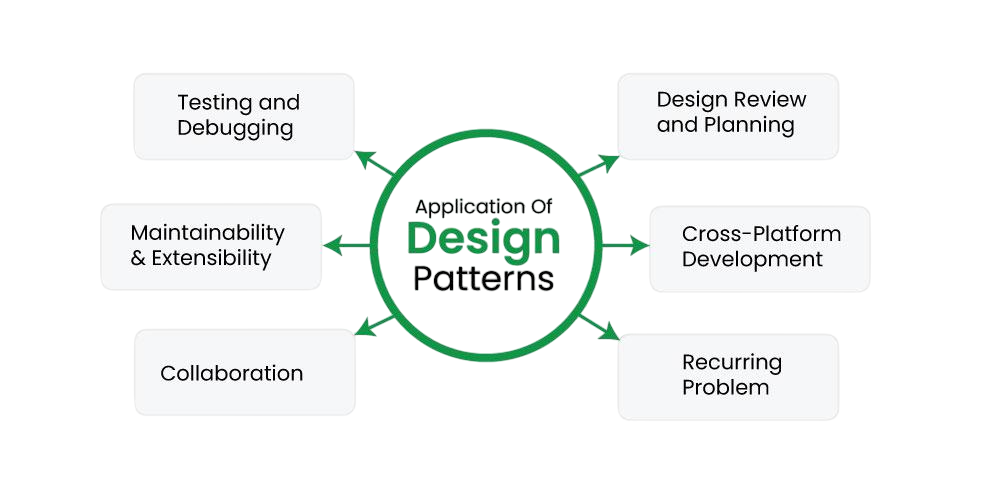
Every C program, no matter how complex, relies on these foundational programming constructs that you practice so well with pattern programs.
Your Path to C Proficiency
Finally, C pattern programs are a valuable and crucial step to be taken by C programmer learners. They provide an interactive, graphical means of understanding fundamental concepts like loops, conditionals and have a fundamental idea on the logic of building on the concepts of C. To extend these programming foundations into scalable, infrastructure-ready solutions, explore Cloud Computing Course a practical program that connects core logic with cloud-native development, teaching how virtualized environments and service models support modern software delivery. Using a multifarious array of C program illustrations, including those which are simpler, such as star-pattern codes, and those more complicated, such as number-pattern codes, you gain confidence and have a good feel of the manner in which program flow is to be controlled. Plunging into the depth of a C programmer is never too late and test yourself with various sample examples of C and have a wonderful adventure on your way to fully utilizing C programming language.