LMS
LMS
Last updated on 05th Sep 2026| 9359

- Introduction to Zoho Full Stack Developer Careers
- How to Create a Zoho Full Stack Developer Resume
- Essential Skills to Highlight on a Zoho Full Stack Developer Resume
- Full Stack Projects and Experience to Include in Your Resume
- Frontend, Backend, Database, and API Skills for Zoho
- Resume Format, Keywords, and Common Mistakes to Avoid
- Zoho Full Stack Developer Interview Process and Rounds
- Common Zoho Full Stack Developer Interview Questions
- How to Prepare for a Zoho Full Stack Developer Interview
- Conclusion: Building a Strong Zoho Full Stack Developer Profile
Introduction to Zoho Full Stack Developer Careers
A Full Stack Developer career at Zoho can involve building web applications and software products across frontend, backend, database, API, and application development layers. Zoho develops a broad range of business applications, creating opportunities for developers to work with different programming languages, frameworks, databases, and software development practices. For candidates preparing for Zoho Full Stack Developer roles, having a well-structured resume is important because it should clearly present technical skills, projects, education, work experience, and relevant achievements. Candidates looking to strengthen their practical knowledge can also explore the Full Stack Developer Course to build skills across frontend and backend technologies. The interview process may evaluate programming fundamentals, frontend and backend development, databases, object-oriented programming, data structures, problem-solving, APIs, and project knowledge. Freshers can strengthen their profile by developing practical projects that demonstrate how they apply full stack concepts to real applications. Experienced candidates can focus on measurable contributions, technical responsibilities, system development experience, and the technologies used in previous projects. Understanding what to include in a resume and preparing for different technical and interview stages can help candidates approach Zoho Full Stack Developer opportunities with better preparation and clarity.
How to Create a Zoho Full Stack Developer Resume
- Professional Summary: Write a concise summary highlighting your experience level, full stack development knowledge, programming strengths, and the type of software development role you are seeking.
- Technical Skills: Clearly list relevant technologies such as Java, Python, JavaScript, HTML, CSS, React, Node.js, Spring Boot, databases, REST APIs, Git, and other tools you genuinely know. For a better understanding of the skills employers expect, explore Full Stack Developer Skills to Master.
- Projects: Include practical full stack projects that demonstrate your ability to develop frontend interfaces, create backend services, work with databases, integrate APIs, and solve application-level problems.
- Education: Mention your degree, specialization, institution, graduation year, and other relevant academic details in a simple and organized format.
- Work Experience: Experienced candidates should describe their responsibilities, technologies used, development contributions, and measurable outcomes rather than simply listing job duties.
- Achievements and Certifications: Add relevant coding achievements, technical certifications, internships, hackathons, or other accomplishments that demonstrate your interest and practical involvement in software development.
Get Your Full Stack Certification by Learning from Industry-Leading Experts and Advancing Your Career with ACTE’s Full Stack Course.
Essential Skills to Highlight on a Zoho Full Stack Developer Resume
- Programming Skills: Highlight strong knowledge of programming languages such as Java, Python, JavaScript, or other languages relevant to the projects you have completed. Include only technologies you can confidently explain during an interview.
- Frontend Development: Mention skills in HTML, CSS, JavaScript, responsive design, and frontend frameworks or libraries such as React, Angular, or Vue when applicable.
- Backend Development: Include experience with backend technologies such as Node.js, Spring Boot, .NET, or other server-side frameworks, along with knowledge of application architecture and server-side programming.
- Problem-Solving and Development Practices: Include data structures, algorithms, object-oriented programming, debugging, Git, testing, version control, and collaborative development skills. You can also review How to Become a Full Stack Developer for additional guidance on the skills and development path.
- Database Knowledge: Highlight SQL and familiarity with relational databases, database design, queries, joins, normalization, transactions, and other database concepts used in your projects.
- API and Integration Skills: Mention experience creating or consuming REST APIs, handling JSON data, authentication, third-party integrations, and connecting frontend applications with backend services.

Full Stack Projects and Experience to Include in Your Resume
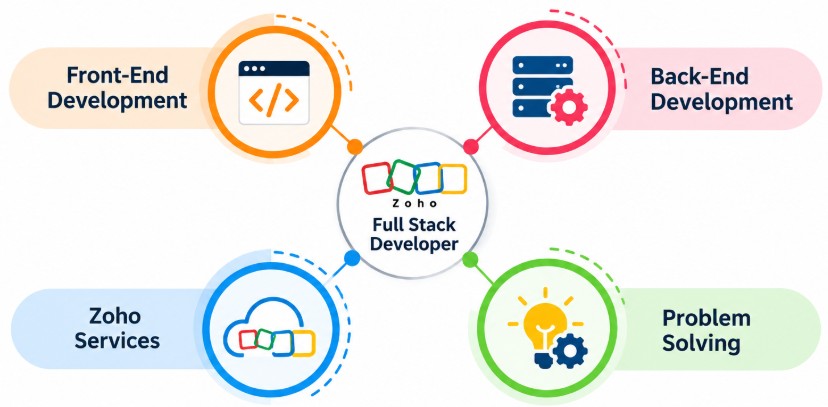
- Project Title and Overview: Mention the project name and briefly explain its purpose, target users, and the problem it solves. Keep the description focused on your actual contribution.
- Technology Stack: Clearly list the programming languages, frontend frameworks, backend technologies, databases, APIs, and development tools used to build the application.
- Frontend Development: Describe your contribution to user interfaces, responsive layouts, form handling, client-side validation, navigation, reusable components, or other frontend functionality. Candidates can strengthen these practical skills through a Full Stack Developer Course covering modern frontend and backend development concepts.
- Backend and Database Work: Explain how you developed server-side functionality, implemented business logic, created APIs, designed database structures, or handled data processing and storage.
- Features and Functionality: Highlight important features such as user authentication, search, dashboards, payment integration, notifications, role-based access, or real-time functionality where applicable.
- Results and Contributions: Whenever possible, describe measurable outcomes such as improved performance, reduced processing time, increased automation, successful deployment, or other results that demonstrate the project’s practical value.

Get JOB Oriented Full Stack Training for Beginners By MNC Experts
- Instructor-led Sessions
- Real-life Case Studies
- Assignments
Frontend, Backend, Database, and API Skills for Zoho
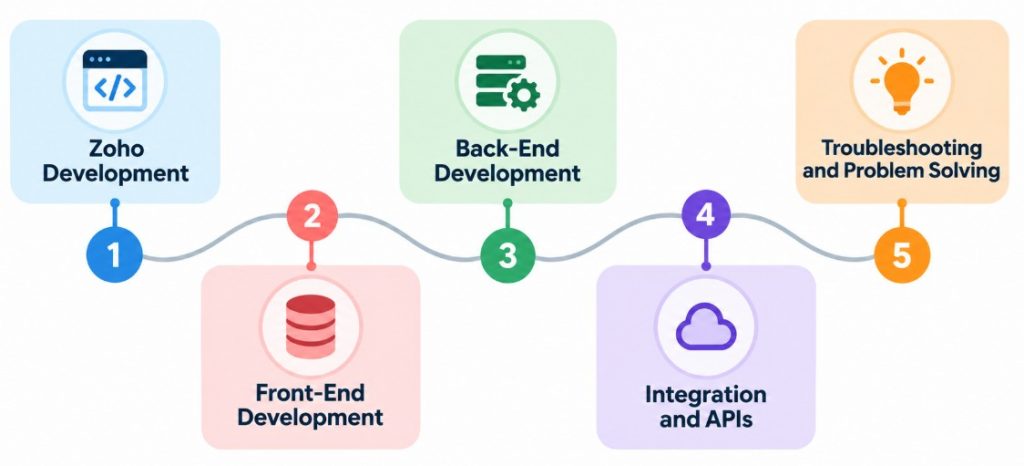
- Frontend Development: Build a strong understanding of HTML, CSS, JavaScript, responsive design, DOM manipulation, and frontend frameworks such as React or Angular. Be prepared to explain how you create interactive and user-friendly web interfaces.
- Backend Development: Understand server-side programming, application architecture, authentication, business logic, error handling, and backend frameworks such as Spring Boot, Node.js, or .NET.
- Integration and Debugging: Know how different application components communicate For additional career context, explore Full Stack vs Front End vs Back End Developer and how to identify and resolve frontend, backend, database, and API-related issues during development and testing. .
- Database Management: Develop practical SQL knowledge, including queries, joins, subqueries, indexes, constraints, normalization, transactions, and database design. Be familiar with relational database concepts and data management.
- REST API Development: Learn how REST APIs work, including HTTP methods, status codes, request and response structures, JSON, authentication, validation, and API integration between frontend and backend applications.
- Object-Oriented Programming: Understand core OOP principles such as encapsulation, inheritance, polymorphism, abstraction, classes, objects, and interfaces, and be ready to apply them while solving programming problems.
Want to Master Full Stack? Explore the Full Stack Master Program Offered at ACTE Today!
Resume Format, Keywords, and Common Mistakes to Avoid
- Keep the Format Simple: Use a clean, professional layout with clear headings for summary, skills, education, projects, experience, and achievements. Avoid excessive graphics, tables, or decorative elements that can make important information difficult to find.
- Use Relevant Keywords: Include technologies and skills that genuinely match the job description, such as Java, JavaScript, React, SQL, REST APIs, data structures, algorithms, Git, and backend development.
- Proofread Before Submission: Check the resume carefully for spelling mistakes, inconsistent formatting, incorrect technology names, broken links. For additional resume guidance, explore Full Stack Developer Resume and outdated contact or project information.
- Highlight Relevant Experience: Place your strongest full stack projects, internships, and professional experience where recruiters can easily identify your practical development capabilities.
- Write Specific Achievements: Instead of listing only responsibilities, describe what you developed, improved, automated, or contributed to. Use measurable results when they are available and accurate.
- Avoid Unnecessary Information: Remove outdated technologies, unrelated personal details, lengthy objective statements, and skills that you cannot confidently explain during an interview.
Want to Learn About Full Stack? Explore Our Full Stack Interview Questions and Answers Featuring the Most Frequently Asked Questions in Job Interviews.
Common Zoho Full Stack Developer Interview Questions
- Programming and OOP: Be prepared for questions on classes and objects, inheritance, polymorphism, abstraction, encapsulation, exception handling, memory management, and programming fundamentals.
- Data Structures and Algorithms: Interview questions may involve arrays, strings, linked lists, stacks, queues, trees, sorting, searching, recursion, time complexity, and solving programming problems efficiently.
- Frontend Development: Candidates may be asked about HTML, CSS, JavaScript, DOM manipulation, responsive design, asynchronous programming, frontend frameworks, component design, and browser-related concepts.
- Backend Development: Prepare topics such as server-side programming, application architecture, authentication, error handling, business logic, backend frameworks, and designing reliable application services. Candidates can strengthen their understanding of these areas through a Full Stack Developer Course focused on practical development skills.
- Database and SQL: Common areas include joins, subqueries, indexes, normalization, transactions, constraints, database design, query optimization, and writing SQL queries for practical scenarios.
- Projects and Problem Solving: Candidates should be able to explain their projects, technology choices, individual contributions, challenges, debugging approaches, API integrations, and how they would improve or scale their applications.
How to Prepare for a Zoho Full Stack Developer Interview
- Revise Programming Fundamentals: Strengthen your understanding of variables, functions, OOP concepts, exception handling, data structures, algorithms, and basic problem-solving before attempting technical interviews.
- Practice Coding Problems: Regularly solve problems involving arrays, strings, linked lists, stacks, queues, sorting, searching, recursion, and other commonly used data structures. Focus on writing clear and efficient solutions.
- Strengthen Full Stack Concepts: Revise frontend technologies, backend development, databases, REST APIs, authentication and the flow of data between different application layers. Practical learning through a Full Stack Developer Course can also help candidates develop structured knowledge across these areas.
- Prepare Your Projects: Review every project mentioned on your resume. Be ready to explain the architecture, technology choices, features, database structure, APIs, challenges, testing methods, and your individual contribution.
- Practice SQL and Technical Questions: Solve SQL queries and revise database concepts such as joins, indexes, normalization, transactions, and query optimization. Practice explaining technical concepts clearly.
- Improve Communication and Mock Interviews: Participate in mock interviews and practice explaining your solutions step by step. Prepare concise responses about your background, projects, technical interests, learning approach, and career goals.
Conclusion: Building a Strong Zoho Full Stack Developer Profile
Preparing for a Zoho Full Stack Developer opportunity requires a combination of a well-structured resume, practical development skills, and focused interview preparation. Candidates should ensure that their resumes clearly present programming knowledge, database expertise, APIs, relevant projects, internships, and professional experience. Practical projects can demonstrate the ability to apply full stack concepts and solve real development problems. Candidates looking to strengthen their practical knowledge can explore a Full Stack Developer Course to build and apply skills across modern development technologies. Interview preparation should cover programming, data structures and algorithms, object-oriented programming, SQL, frontend and backend technologies, APIs, and project-based discussions. Candidates should also be prepared to explain the technologies and contributions mentioned on their resumes with clarity. Regular coding practice, technical revision, project development, and mock interviews can help improve overall preparation. Since specific hiring requirements and interview stages may vary depending on the position and recruitment process, candidates should review the relevant job information carefully and align their preparation accordingly.