LMS
LMS
Last updated on 21st Jul 2026| 7673

TCS Digital Interview Questions: Latest Sample MCQs for Freshers help candidates prepare for every stage of the TCS Digital hiring process, including aptitude, coding, technical, and HR interviews. These questions cover important topics such as Quantitative Aptitude, Logical Reasoning, Verbal Ability, Programming, Data Structures, Algorithms, SQL, Operating Systems, Computer Networks, Software Testing, And Object-Oriented Programming. Practicing these latest sample MCQs improves problem-solving ability, coding accuracy, and technical knowledge while building confidence for interviews. The questions are designed according to the latest TCS Digital interview pattern and reflect the types of problems frequently asked during the selection process. Regular practice helps freshers strengthen core concepts, improve speed and accuracy, and perform well in both online assessments and technical interview rounds.
1. What Is The Probability Of Getting A Head When A Fair Coin Is Tossed Once?
Ans:
A fair coin has two equally likely outcomes: Head and Tail. Only one favorable outcome is Head. Therefore, the probability is the number of favorable outcomes divided by the total number of outcomes. Probability questions test logical thinking and basic mathematical concepts. They are frequently asked in TCS Digital Aptitude tests.
- Total Outcomes = 2
- Favorable Outcomes = 1
- Probability = 1/2
- Answer = 1/2
2. What Is The Probability Of Rolling A 4 On A Fair Die?
Ans:
A standard die has six equally likely outcomes. Only one outcome is 4. Therefore, the probability is 1 divided by 6. Probability questions improve analytical and logical reasoning skills. They are common in placement aptitude exams.
- Total Outcomes = 6
- Favorable Outcomes = 1
- Probability = 1/6
- Answer = 1/6
3. A Bag Contains 5 Red And 3 Blue Balls. What Is The Probability Of Selecting A Red Ball?
Ans:
The total number of balls is 8. The favorable outcomes are the 5 red balls. Therefore, the probability is 5 divided by 8. Such questions test basic probability concepts. They frequently appear in TCS Digital Aptitude tests.
- Total Balls = 8
- Red Balls = 5
- Probability = 5/8
- Answer = 5/8
4. A Bag Contains 4 Green And 6 Yellow Balls. What Is The Probability Of Selecting A Yellow Ball?
Ans:
There are 10 balls in total. Six are yellow. The probability is the favorable outcomes divided by the total outcomes. This equals 6/10 or 3/5. Probability questions develop logical reasoning abilities.
- Total Balls = 10
- Yellow Balls = 6
- Probability = 3/5
- Answer = 3/5
5. A Box Contains 7 White And 5 Black Balls. What Is The Probability Of Drawing A Black Ball?
Ans:
The total number of balls is 12. The favorable outcomes are 5 black balls. Divide 5 by 12 to obtain the probability. These questions are frequently asked in aptitude exams.
- Total Balls = 12
- Black Balls = 5
- Probability = 5/12
- Answer = 5/12
6. Milk And Water Are Mixed In The Ratio 3:2. If The Total Mixture Is 25 Litres, How Much Milk Is Present?
Ans:
The total ratio is 5. Milk occupies 3 parts. Therefore, milk = (3/5) × 25 = 15 litres. Mixture questions test proportional reasoning. They commonly appear in TCS Digital Aptitude tests.
- Ratio = 3:2
- Total Parts = 5
- Milk = (3/5) × 25 = 15 Litres
- Answer = 15 Litres
7. Rice And Wheat Are Mixed In The Ratio 4:1. If The Mixture Is 20 Kg, Find The Quantity Of Rice.
Ans:
The total ratio is 5. Rice occupies 4 parts. Therefore, rice = (4/5) × 20 = 16 kg. Ratio-based mixture problems are important in placement tests.
- Ratio = 4:1
- Total Parts = 5
- Rice = (4/5) × 20 = 16 Kg
- Answer = 16 Kg
8. Sugar And Salt Are Mixed In The Ratio 5:3. If The Mixture Is 40 Kg, Find The Quantity Of Salt.
Ans:
The total ratio is 8. Salt occupies 3 parts. Therefore, salt = (3/8) × 40 = 15 kg. Mixture questions improve proportional calculation skills.
- Ratio = 5:3
- Total Parts = 8
- Salt = (3/8) × 40 = 15 Kg
- Answer = 15 Kg
9. Tea A And Tea B Are Mixed In The Ratio 2:3. If The Total Mixture Is 25 Kg, Find The Quantity Of Tea B.
Ans:
The total ratio is 5. Tea B occupies 3 parts. Therefore, Tea B = (3/5) × 25 = 15 kg. Such questions frequently appear in aptitude examinations.t.
- Ratio = 2:3
- Total Parts = 5
- Tea B = (3/5) × 25 = 15 Kg
- Answer = 15 Kg
10. Gold And Silver Are Mixed In The Ratio 1:4. If The Mixture Is 50 Kg, Find The Quantity Of Gold.
Ans:
The total ratio is 5. Gold occupies 1 part. Therefore, gold = (1/5) × 50 = 10 kg. Mixture questions test ratio application skills.
- Ratio = 1:4
- Total Parts = 5
- Gold = (1/5) × 50 = 10 Kg
- Answer = 10 Kg
11. Ravi Is 20 Years Old. His Father Is 45 Years Old. What Is Their Age Difference?
Ans:
Subtract Ravi’s age from his father’s age. The age difference is 45 − 20 = 25 years. Age problems test arithmetic reasoning. They are common in placement aptitude exams.
- Father’s Age = 45
- Ravi’s Age = 20
- Difference = 25 Years
- Answer = 25 Years
12. A Person Is 18 Years Old. What Will Be The Age After 7 Years?
Ans:
Add 7 years to the present age. Therefore, 18 + 7 = 25 years. Age questions test simple arithmetic calculations.
- Present Age = 18
- After 7 Years = 25
- Calculation = 18 + 7
- Answer = 25 Years
13. A Mother Is 35 Years Old. Her Daughter Is 10 Years Old. Find Their Age Difference.
Ans:
Subtract the daughter’s age from the mother’s age. The difference is 35 − 10 = 25 years. Age difference always remains constant.
- Mother = 35
- Daughter = 10
- Difference = 25 Years
- Answer = 25 Years
14. A Boy Is 12 Years Old. What Was His Age 5 Years Ago?
Ans:
Subtract 5 from the present age. Therefore, 12 − 5 = 7 years. Such questions are common in aptitude tests.
- Present Age = 12
- 5 Years Ago = 7
- Calculation = 12 − 5
- Answer = 7 Years
15. A Man Is 30 Years Old. What Will Be His Age After 15 Years?
Ans:
Add 15 to the current age. Therefore, 30 + 15 = 45 years. Age questions strengthen arithmetic skills.
- Present Age = 30
- After 15 Years = 45
- Calculation = 30 + 15
- Answer = 45 Years
16. One Pipe Can Fill A Tank In 10 Hours. What Part Of The Tank Is Filled In One Hour?
Ans:
The pipe fills one complete tank in 10 hours. Therefore, in one hour it fills 1/10 of the tank. Pipe questions test work-rate concepts.
- Total Time = 10 Hours
- One Hour Work = 1/10
- Tank Filled = 1/10
- Answer = 1/10
17. One Pipe Can Fill A Tank In 8 Hours. What Part Of The Tank Is Filled In One Hour?
Ans:
The pipe fills one tank in 8 hours. Therefore, one-hour work equals 1/8. These questions frequently appear in placement exams.
- Total Time = 8 Hours
- One Hour Work = 1/8
- Tank Filled = 1/8
- Answer = 1/8
18. One Pipe Can Empty A Tank In 12 Hours. What Part Of The Tank Is Emptied In One Hour?
Ans:
The pipe empties one full tank in 12 hours. Therefore, one-hour work equals 1/12. Pipe questions measure work-rate understanding.
- Total Time = 12 Hours
- One Hour Work = 1/12
- Tank Emptied = 1/12
- Answer = 1/12
19. A Pipe Fills A Tank In 5 Hours. How Much Tank Is Filled In One Hour?
Ans:
The work done in one hour is the reciprocal of the total time. Therefore, 1/5 of the tank is filled in one hour..
- Total Time = 5 Hours
- One Hour Work = 1/5
- Tank Filled = 1/5
- Answer = 1/5
20. A Pipe Fills A Tank In 20 Hours. What Fraction Of The Tank Is Filled In One Hour?
Ans:
One-hour work is the reciprocal of 20. Therefore, the pipe fills 1/20 of the tank in one hour. This is a standard pipes and cisterns concept.
- Total Time = 20 Hours
- One Hour Work = 1/20
- Tank Filled = 1/20
- Answer = 1/20
21. A Boat Travels 30 Km Downstream In 2 Hours. If The Speed Of The Stream Is 3 Km/H, Find The Speed Of The Boat In Still Water
Ans:
The downstream speed is 30 ÷ 2 = 15 Km/H. Downstream Speed = Boat Speed + Stream Speed. Therefore, Boat Speed = 15 − 3 = 12 Km/H. Boats And Streams questions test speed calculations and formula application. They are frequently asked in TCS Digital aptitude tests.
- Downstream Speed = 30 ÷ 2 = 15 Km/H
- Stream Speed = 3 Km/H
- Boat Speed = 15 − 3 = 12 Km/H
- Answer = 12 Km/H
22. A Boat Travels Upstream At 8 Km/H. If The Stream Speed Is 2 Km/H, Find The Boat Speed In Still Water.
Ans:
Upstream Speed = Boat Speed − Stream Speed. Therefore, Boat Speed = 8 + 2 = 10 Km/H. Boats And Streams questions evaluate understanding of upstream and downstream concepts. They are common in placement exams.
- Upstream Speed = 8 Km/H
- Stream Speed = 2 Km/H
- Boat Speed = 8 + 2 = 10 Km/H
- Answer = 10 Km/H
23. A Boat Covers 48 Km Downstream In 3 Hours. Find The Downstream Speed.
Ans:
Downstream Speed = Distance ÷ Time. Therefore, 48 ÷ 3 = 16 Km/H. This type of question tests speed calculation using basic formulas. It is frequently asked in aptitude tests.
- Distance = 48 Km
- Time = 3 Hours
- Speed = 48 ÷ 3 = 16 Km/H
- Answer = 16 Km/H
24. A Boat Speed Is 14 Km/H And Stream Speed Is 4 Km/H. Find The Downstream Speed.
Ans:
Downstream Speed = Boat Speed + Stream Speed. Therefore, 14 + 4 = 18 Km/H. Boats And Streams questions improve formula application skills.
- Boat Speed = 14 Km/H
- Stream Speed = 4 Km/H
- Downstream Speed = 18 Km/H
- Answer = 18 Km/H
25. A Boat Speed Is 15 Km/H And Stream Speed Is 5 Km/H. Find The Upstream Speed.
Ans:
Upstream Speed = Boat Speed − Stream Speed. Therefore, 15 − 5 = 10 Km/H. These questions frequently appear in TCS Digital aptitude exams.
- Boat Speed = 15 Km/H
- Stream Speed = 5 Km/H
- Upstream Speed = 10 Km/H
- Answer = 10 Km/H
26. A Company’s Sales For Four Months Are 100, 120, 140, And 160 Units. Find The Average Sales.
Ans:
Average = (100 + 120 + 140 + 160) ÷ 4 = 520 ÷ 4 = 130. Data Interpretation questions test the ability to analyze numerical data
- Total Sales = 520
- Months = 4
- Average = 130 Units
- Answer = 130 Units
27. A Student Scores 70, 80, 90, And 60 Marks. Find The Total Marks.
Ans:
Add All Marks = 70 + 80 + 90 + 60 = 300. Data Interpretation questions often require quick calculations..
- Marks = 70, 80, 90, 60
- Total = 300
- Simple Addition
- Answer = 300
28. The Number Of Employees In Three Departments Are 40, 35, And 25. Find The Total Employees.
Ans:
Add The Employees = 40 + 35 + 25 = 100. These questions test interpretation of simple data tables.
- Department Employees = 40, 35, 25
- Total = 100
- Simple Data Interpretation
- Answer = 100
29. The Production Of A Factory Increased From 200 To 260 Units. Find The Increase.
Ans:
Increase = 260 − 200 = 60 Units. Data Interpretation questions commonly involve comparison and growth calculations.
- Initial Production = 200
- Final Production = 260
- Increase = 60 Units
- Answer = 60 Units
30. A Pie Chart Shows 25% Of Students Chose Science Out Of 400 Students. How Many Chose Science?
Ans:
Science Students = 25% × 400 = 100. Pie Chart questions evaluate percentage calculations from graphical data.
- Total Students = 400
- Science = 25%
- Science Students = 100
- Answer = 100
31. Is 36 Divisible By 6?
Ans:
Since 36 ÷ 6 = 6 Without Any Remainder, The Number Is Divisible By 6. Data Sufficiency questions test logical verification of conditions.
- 36 ÷ 6 = 6
- No Remainder
- Condition Satisfied
- Answer = Yes
32. Is 45 A Multiple Of 9?
45 ÷ 9 = 5 Exactly. Therefore, 45 Is A Multiple Of 9. Such questions test divisibility concepts.
- 45 ÷ 9 = 5
- No Remainder
- Multiple Of 9
- Answer = Yes
33. Is 28 Even?
Ans:
A Number Ending In 0, 2, 4, 6, Or 8 Is Even. Since 28 Ends With 8, It Is Even. These are basic reasoning and data sufficiency questions
- 28 Ends With 8
- Even Number Rule
- Condition True
- Answer = Yes
34. Is 51 Divisible By 3?
Ans:
The Sum Of Digits = 5 + 1 = 6. Since 6 Is Divisible By 3, 51 Is Divisible By 3.
- Digit Sum = 6
- 6 Is Divisible By 3
- 51 Is Divisible By 3
- Answer = Yes
35. Is 49 A Perfect Square?
Ans:
49 = 7 × 7. Therefore, It Is A Perfect Square. These questions test number properties.
- 7 × 7 = 49
- Perfect Square
- Condition True
- Answer = Yes
36. Simplify: 24 + 18 ÷ 6
Ans:
Apply BODMAS. First Divide 18 ÷ 6 = 3. Then Add 24 + 3 = 27. Simplification questions test arithmetic accuracy.
- 18 ÷ 6 = 3
- 24 + 3 = 27
- BODMAS Applied
- Answer = 27
37. Simplify: (15 + 5) × 4
Ans:
First Solve The Bracket: 15 + 5 = 20. Then Multiply 20 × 4 = 80. Brackets Have The Highest Priority In BODMAS.
- 15 + 5 = 20
- 20 × 4 = 80
- BODMAS Rule Applied
- Answer = 80
38. Simplify: 72 ÷ 8 + 9
Ans:
First Divide 72 ÷ 8 = 9. Then Add 9 + 9 = 18. Division Comes Before Addition.
- 72 ÷ 8 = 9
- 9 + 9 = 18
- BODMAS Applied
- Answer = 18
39. Simplify: 50 − (12 + 18)
Ans:
First Solve The Bracket: 12 + 18 = 30. Then Subtract 50 − 30 = 20. Solving Brackets First Gives The Correct Answer..
- 12 + 18 = 30
- 50 − 30 = 20
- BODMAS Applied
- Answer = 20
40. Simplify: 8 × 5 − 12
Ans:
According To BODMAS, Multiply First: 8 × 5 = 40. Then Subtract 40 − 12 = 28. Multiplication Has Higher Priority Than Subtraction.
- 8 × 5 = 40
- 40 − 12 = 28
- BODMAS Applied
- Answer = 28
41. Pointing To A Man, A Woman Said, “He Is The Son Of My Father’s Only Son.” How Is The Man Related To The Woman?
Ans:
The Woman Says That Her Father’s Only Son Is Her Brother. The Man Is The Son Of That Brother. Therefore, The Man Is The Woman’s Nephew. Blood Relation Questions Test Family Relationship Analysis. They Require Careful Interpretation Of Statements. Such Questions Frequently Appear In TCS Digital Aptitude Tests. Practicing Similar Family Tree Problems Improves Accuracy In Solving Relationship Questions. Understanding Generational Connections Makes Blood Relation Problems Easier To Solve. Answer = Nephew
42. A Is The Brother Of B. B Is The Sister Of C. How Is A Related To C?
Ans:
- A Is The Brother Of B. B Is The Sister Of C, Which Means A And C Are Siblings. Since A Is Male, A Is The Brother Of C. Blood Relation Questions Test Logical Thinking And Family Tree Concepts.
- They Improve Analytical Skills. These Questions Are Common In Placement Exams. Carefully Identifying Gender And Relationships Helps Avoid Confusion.
- Regular Practice Increases Speed And Confidence In Solving Such Questions. Answer = Brother
43. P Is The Mother Of Q. Q Is The Father Of R. How Is P Related To R?
Ans:
P Is The Mother Of Q. Q Is The Father Of R. Therefore, P Is The Grandmother Of R. Blood Relation Problems Require Identifying Generations Correctly. They Improve Reasoning Ability And Logical Analysis. Such Questions Are Frequently Asked In TCS Digital Tests. Drawing A Simple Family Tree Can Help Solve These Questions Faster. Understanding Parent And Child Relationships Is The Key To Accuracy. Answer = Grandmother
44. If CAT Is Written As DBU, How Is DOG Written In The Same Code?
Ans:
Each Letter Is Shifted One Position Forward In The Alphabet. D Becomes E, O Becomes P, And G Becomes H. Therefore, DOG Is Coded As EPH. Coding And Decoding Questions Test Pattern Recognition Skills. They Require Observing Alphabetical Relationships Carefully. These Questions Are Common In Aptitude Tests. Always Check Whether The Pattern Uses Forward Or Backward Shifts. Recognizing The Rule Quickly Helps Solve Similar Questions Efficiently. Answer = EPH
45. If PEN Is Written As QFO, How Is MAP Written In The Same Code?
Ans:
Each Letter Is Advanced By One Alphabet Position. M Becomes N, A Becomes B, And P Becomes Q. Therefore, MAP Is Written As NBQ. Coding Questions Test Logical Observation And Pattern Identification. They Frequently Appear In Competitive Examinations. These Questions Improve Analytical Thinking. Identifying The Coding Pattern Is More Important Than Memorizing Answers. Regular Practice Improves Speed In Solving Alphabet-Based Codes. Answer = NBQ
46. If BOOK Is Written As CPPL, How Is READ Written In The Same Code?
Each Letter Is Shifted Forward By One Position. R Becomes S, E Becomes F, A Becomes B, And D Becomes E. Therefore, READ Is Coded As SFBE. Coding And Decoding Questions Measure Pattern Recognition Ability. They Are Frequently Asked In Placement Tests. These Questions Improve Logical Reasoning Skills. Carefully Compare Each Letter Before Applying The Coding Rule. Continuous Practice Helps Identify Coding Patterns Quickly. Answer = SFBE
47. Statements: All Cats Are Animals. All Animals Are Living Beings. Conclusion: All Cats Are Living Beings.
Ans:
- According To The Statements, Every Cat Is An Animal. Every Animal Is A Living Being. Therefore, Every Cat Must Also Be A Living Being.
- The Conclusion Logically Follows From The Given Statements. Syllogism Questions Test Deductive Reasoning Skills. They Are Frequently Asked In TCS Digital Aptitude Tests.
- Always Verify Whether The Conclusion Is Fully Supported By The Statements. Avoid Making Assumptions Beyond The Given Information. Answer = Conclusion Follows
.
48. Statements: All Pens Are Stationery. Some Stationery Are Books. Conclusion: Some Pens Are Books.
Ans:
The Statements Do Not Confirm Any Direct Relationship Between Pens And Books. Only Some Stationery Are Books. Therefore, It Cannot Be Concluded That Some Pens Are Books. Syllogism Questions Test Logical Deduction. They Require Careful Analysis Of Statements. Never Assume Facts That Are Not Clearly Mentioned. Reading Every Statement Carefully Prevents Incorrect Conclusions. Answer = Conclusion Does Not Follow
49. Statements: All Roses Are Flowers. All Flowers Need Water. Conclusion: All Roses Need Water.
Ans:
Every Rose Is A Flower. Every Flower Needs Water. Therefore, Every Rose Also Needs Water. The Conclusion Correctly Follows From The Given Statements. Syllogism Questions Test Logical Inference Skills. They Frequently Appear In Placement Exams. Following The Logical Chain Step By Step Ensures The Correct Answer. Such Questions Improve Critical Thinking And Analytical Ability. Answer = Conclusion Follows
50. Heavy Rain Fell Throughout The Night. The Roads Were Flooded The Next Morning. What Is The Cause?
Ans:
The Heavy Rain Is The Cause Because Continuous Rain Leads To Water Accumulation On Roads. Flooding Is The Natural Effect Of Excessive Rainfall. Cause And Effect Questions Test Logical Relationship Analysis. They Improve Critical Thinking Skills. Such Questions Frequently Appear In TCS Digital Aptitude Tests. Identifying The Original Event Helps Determine The Correct Cause. Understanding Real-Life Situations Makes These Questions Easier. Answer = Heavy Rain
51. A Student Studied Regularly For Three Months. The Student Secured High Marks In The Examination. What Is The Cause?
Ans:
Regular And Consistent Study Is The Reason Behind The High Examination Score. Hard Work Generally Produces Better Academic Results. Cause And Effect Questions Test Logical Connections Between Events. They Improve Analytical Thinking. These Questions Frequently Appear In Placement Tests. Focus On The Event That Directly Produces The Result. Logical Analysis Helps Eliminate Incorrect Options Quickly. Answer = Regular Study
52. The Company Introduced Employee Training Programs. Productivity Increased Significantly. What Is The Cause?
Ans:
- The Introduction Of Employee Training Improved Skills And Work Efficiency. Better Skills Resulted In Higher Productivity. Cause And Effect Questions Test The Ability To Identify Logical Relationships.
- They Are Common In Aptitude Examinations. Such Questions Improve Decision-Making Skills. Understanding Workplace Scenarios Helps Solve These Questions Correctly.
- Always Identify The Action That Leads To The Final Outcome. Answer = Employee Training
53. Rearrange The Words: Mango, Apple, Orange, Banana.
Ans:
Arrange The Words In Alphabetical Order. Apple Comes First, Followed By Banana, Mango, And Orange. Input And Output Questions Test Sequencing And Arrangement Skills. They Require Careful Observation Of Patterns. These Questions Frequently Appear In TCS Digital Tests. Alphabetical Arrangement Is A Common Pattern In Placement Exams. Practicing Word Ordering Improves Accuracy And Speed. Answer = Apple, Banana, Mango, Orange
54. Arrange The Numbers In Ascending Order: 45, 12, 67, 23.
Ans:
Ascending Order Means Smallest To Largest. The Correct Sequence Is 12, 23, 45, And 67. Input And Output Questions Test Sorting And Data Arrangement Skills. They Improve Logical Thinking And Accuracy. Such Questions Frequently Appear In Placement Exams. Compare All Numbers Carefully Before Finalizing The Order. Regular Practice Helps Reduce Calculation Errors. Answer = 12, 23, 45, 67
55. Arrange The Numbers In Descending Order: 18, 42, 9, 30.
Ans:
Descending Order Means Largest To Smallest. The Correct Sequence Is 42, 30, 18, And 9. Input And Output Questions Evaluate The Ability To Organize Data Correctly. They Improve Analytical Skills. These Questions Are Common In Aptitude Tests. Always Begin With The Largest Number And End With The Smallest. Careful Comparison Ensures The Correct Sequence. Answer = 42, 30, 18, 9
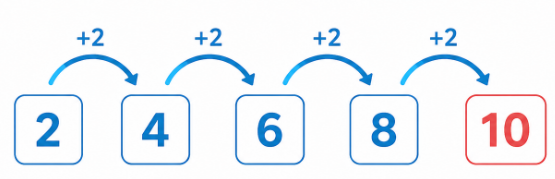
56. Find The Next Number: 2, 4, 6, 8, ?
Ans:
The Pattern Increases By 2 Each Time. After 8, The Next Number Is 10. Number Series Questions Test Pattern Recognition And Arithmetic Logic. They Improve Observation Skills. These Questions Frequently Appear In TCS Digital Aptitude Tests. Identifying The Common Difference Makes The Pattern Easy To Predict. Arithmetic Progression Questions Are Common In Placement Exams. Answer = 10
57. Find The Next Number: 5, 10, 15, 20, ?
Ans:
- Each Number Increases By 5. Therefore, The Next Number After 20 Is 25. Number Series Questions Evaluate Logical Thinking And Pattern Identification.
- They Require Careful Observation Of Numerical Sequences. Such Questions Frequently Appear In Placement Exams.
- Always Compare Consecutive Numbers To Identify The Rule. Consistent Practice Improves Pattern Recognition Skills. Answer = 25
58. Find The Next Number: 3, 6, 12, 24, ?
Ans:
Each Number Is Multiplied By 2. Therefore, The Next Number Is 48. Number Series Questions Test Multiplication Patterns And Analytical Ability. They Improve Speed And Accuracy In Competitive Exams. These Questions Are Frequently Asked In TCS Digital Tests. Recognizing Multiplication Patterns Helps Solve Questions Quickly. Practice Different Series Types To Improve Accuracy. Answer = 48
59. Find The Next Number: 81, 27, 9, 3, ?
Ans:
Each Number Is Divided By 3. Therefore, The Next Number After 3 Is 1. Number Series Questions Test Recognition Of Division Patterns. They Improve Numerical Reasoning Skills. Such Questions Frequently Appear In Placement Examinations. Always Check Whether The Sequence Uses Division Or Multiplication. Careful Observation Helps Identify The Correct Pattern. Answer = 1
60. Find The Next Number: 7, 14, 21, 28, ?
Ans:
The Pattern Increases By 7 At Every Step. Therefore, The Next Number Is 35. Number Series Questions Test Arithmetic Sequence Recognition And Logical Thinking. They Improve Calculation Speed And Observation Skills. These Questions Are Common In TCS Digital Aptitude Tests. Finding The Common Difference Is The Simplest Way To Solve Such Questions. Regular Practice Builds Confidence In Solving Number Series. Answer = 35
61. What Is The Meaning Of The Word Diligent?
Ans:
The Word Diligent Means Hardworking And Careful In Completing Tasks. A Diligent Person Performs Duties With Consistent Effort And Attention To Detail. This Quality Helps Achieve Better Results In Studies And The Workplace. It Reflects Responsibility, Discipline, And Dedication Toward Assigned Work. The Opposite Of Diligent Is Lazy Or Careless. Vocabulary Questions Test Word Meanings And Usage In Different Contexts. They Are Frequently Asked In TCS Digital Verbal Ability Tests.
62. What Is The Meaning Of The Idiom Break The Ice?
Ans:
The Idiom Break The Ice Means To Start A Conversation In An Uncomfortable Or Formal Situation. It Helps People Feel More Relaxed And Comfortable With Each Other. This Idiom Is Commonly Used During Meetings, Interviews, And Social Gatherings. It Does Not Refer To Breaking Real Ice But Has A Figurative Meaning. Understanding Idioms Improves English Communication Skills. Idiom Questions Frequently Appear In Placement And Competitive Exams. Learning Common Idioms Enhances Verbal Ability.
63. What Is The Meaning Of The Idiom Once In A Blue Moon?
Ans:
- The Idiom Once In A Blue Moon Means Something That Happens Very Rarely. It Is Used To Describe Events That Do Not Occur Frequently.
- For Example, Visiting A Particular Place Once In Several Years Can Be Described Using This Idiom. It Has A Figurative Meaning Rather Than A Literal One. Idiom Questions Evaluate Knowledge Of Common English Expressions.
- They Frequently Appear In TCS Digital And Other Placement Tests. Knowing Such Idioms Improves Vocabulary And Language Skills.
64. What Is The Meaning Of The Word Abundant?
Ans:
The Word Abundant Means Available In Large Quantities Or More Than Enough. It Is Commonly Used To Describe Resources, Opportunities, Or Natural Wealth. For Example, A Region With Plenty Of Rainfall Has Abundant Water Resources. The Opposite Of Abundant Is Scarce. Vocabulary Questions Test Understanding Of Word Meanings And Their Correct Usage. They Frequently Appear In TCS Digital Verbal Ability Sections. A Strong Vocabulary Improves Reading And Communication Skills..
65. What Is The Meaning Of The Idiom Hit The Nail On The Head?
Ans:
The Idiom Hit The Nail On The Head Means To Say Or Do Something Exactly Right. It Is Used When Someone Gives The Correct Answer Or Identifies The Exact Cause Of A Problem. The Idiom Is Figurative And Does Not Refer To A Real Nail. It Is Frequently Used In Daily Conversations And Professional Discussions. Idiom Questions Test Understanding Of Common English Expressions. They Are Commonly Asked In TCS Digital And Other Placement Exams. Learning Such Idioms Improves Overall Verbal Communication Skills.
66. What Is A Class In C++?
Ans:
A Class In C++ Is A User-Defined Data Type That Acts As A Blueprint For Creating Objects. It Combines Data Members And Member Functions Into A Single Unit. Classes Help Implement Object-Oriented Programming Concepts Such As Encapsulation And Inheritance. They Improve Code Organization And Reusability. Multiple Objects Can Be Created From The Same Class. C++ Interview Questions Frequently Test Knowledge Of Classes And Objects. This Is One Of The Most Common Topics In TCS Digital Interviews.
67. What Is Inheritance In C++?
Ans:
Inheritance Is An Object-Oriented Programming Feature That Allows One Class To Acquire The Properties And Methods Of Another Class. It Promotes Code Reusability And Reduces Duplication. The Existing Class Is Called The Base Class, While The New Class Is Called The Derived Class. Inheritance Makes Programs Easier To Maintain And Extend. C++ Supports Single, Multiple, Multilevel, Hierarchical, And Hybrid Inheritance. Interview Questions Often Test The Purpose And Benefits Of Inheritance. It Is A Fundamental Concept In C++ Programming.
68. What Is The JVM In Java?
Ans:
The JVM Stands For Java Virtual Machine. It Is Responsible For Executing Java Bytecode On Different Operating Systems. The JVM Makes Java Platform Independent By Allowing The Same Program To Run Anywhere. It Also Handles Memory Management And Garbage Collection Automatically. Java Programs Are Compiled Into Bytecode Before Execution By The JVM. Understanding The JVM Is Essential For Java Interviews. This Topic Is Frequently Asked In TCS Digital Technical Interviews
69. What Is The Difference Between JDK, JRE, And JVM?
Ans:
- The JDK Is The Java Development Kit Used To Develop And Compile Java Programs. The JRE Is The Java Runtime Environment Required To Run Java Applications.
- The JVM Is A Part Of The JRE That Executes Java Bytecode. The JDK Includes The JRE And Development Tools Such As The Java Compiler.
- Each Component Has A Different Purpose In The Java Environment. Interview Questions Commonly Test The Relationship Between These Components. This Is A Frequently Asked Java Interview Topic.
70. What Is Exception Handling In Java?
Ans:
Exception Handling In Java Is A Mechanism Used To Handle Runtime Errors Without Stopping Program Execution. It Uses Keywords Such As Try, Catch, Finally, Throw, And Throws. Proper Exception Handling Makes Programs More Reliable And User Friendly. It Helps Detect And Manage Unexpected Situations Efficiently. Java Provides Both Checked And Unchecked Exceptions. Interview Questions Often Focus On Exception Types And Their Usage. This Topic Is Important For Freshers Preparing For TCS Digital.
71. What Is Python?
Ans:
Python Is A High-Level, Interpreted, And General-Purpose Programming Language. It Has A Simple Syntax That Makes Coding Easy To Learn And Read. Python Supports Object-Oriented, Functional, And Procedural Programming Styles. It Is Widely Used In Web Development, Data Science, Artificial Intelligence, And Automation. Python Has A Large Standard Library And Strong Community Support. Many Companies Prefer Python For Rapid Application Development. It Is A Frequently Asked Programming Topic In TCS Digital Interviews.
72. What Are Python Lists?
Ans:
A Python List Is A Collection That Stores Multiple Items In A Single Variable. Lists Are Ordered, Mutable, And Allow Duplicate Values. Different Data Types Such As Integers, Strings, And Floating-Point Values Can Be Stored In The Same List. Lists Support Operations Like Adding, Removing, And Updating Elements. They Are One Of The Most Common Data Structures In Python. Interview Questions Frequently Test List Operations And Methods. Lists Are Essential For Python Programming.
73. What Is The Difference Between A List And A Tuple In Python?
Ans:
A List Is Mutable, Which Means Its Elements Can Be Modified After Creation. A Tuple Is Immutable And Cannot Be Changed Once Created. Lists Use Square Brackets While Tuples Use Parentheses. Tuples Generally Consume Less Memory And Execute Faster Than Lists. Lists Are Suitable For Frequently Changing Data, Whereas Tuples Are Used For Fixed Data. Interview Questions Often Compare Lists And Tuples. This Is A Common Python Programming Topic.
74. What Is A Dictionary In Python?
Ans:
A Dictionary Is A Python Data Structure That Stores Data In Key-Value Pairs. Each Key Must Be Unique And Is Used To Access Its Corresponding Value. Dictionaries Are Mutable And Allow Fast Data Retrieval. They Are Commonly Used To Represent Structured Information Such As Student Records Or Employee Details. Dictionary Methods Simplify Data Management And Updates. Python Interview Questions Frequently Test Dictionary Operations. This Topic Is Important For TCS Digital Programming Interviews.
75. What Is The Role Of Indentation In Python?
Ans:
- Indentation In Python Defines The Structure And Scope Of Code Blocks. Unlike Many Other Programming Languages, Python Uses Indentation Instead Of Curly Braces.
- Proper Indentation Is Mandatory For Loops, Functions, Classes, And Conditional Statements. Incorrect Indentation Produces Syntax Errors During Execution. Consistent Indentation Improves Code Readability And Maintenance.
- Python Interview Questions Frequently Test Knowledge Of Indentation Rules. It Is A Fundamental Concept Every Python Programmer Should Understand.
76. What Is A Primary Key And Why Is It Important?
Ans:
A Primary Key Is A Column Or Set Of Columns That Uniquely Identifies Each Record In A Table. It Does Not Allow Duplicate Or NULL Values. Every Table Should Have A Primary Key To Maintain Data Integrity. It Helps Retrieve Records Quickly And Accurately. Primary Keys Establish Relationships Between Tables. They Improve Database Organization And Prevent Duplicate Entries. This Is One Of The Most Frequently Asked SQL Interview Questions..
77. What Is A Foreign Key?
Ans:
A Foreign Key Is A Column That Creates A Relationship Between Two Database Tables. It References The Primary Key Of Another Table. Foreign Keys Help Maintain Referential Integrity By Preventing Invalid Data Entries. They Ensure That Related Records Exist Before Data Is Inserted. They Support One-To-One, One-To-Many, And Many-To-Many Relationships. Foreign Keys Improve Database Consistency And Accuracy. This Topic Is Commonly Asked In TCS Digital SQL Interviews.
78. What Is Normalization In SQL?
Ans:
Normalization Is The Process Of Organizing Data To Reduce Redundancy And Improve Data Integrity. It Divides Large Tables Into Smaller Related Tables. The Process Uses Different Normal Forms Such As First, Second, And Third Normal Form. It Eliminates Duplicate Data And Prevents Update Anomalies. Normalization Makes Databases Easier To Maintain And Manage. It Also Improves Consistency Across Related Tables. This Is A Fundamental Database Design Concept.
79. What Are Aggregate Functions In SQL?
Ans:
Aggregate Functions Perform Calculations On Multiple Rows And Return A Single Result. Common Aggregate Functions Include COUNT(), SUM(), AVG(), MIN(), And MAX(). They Help Analyze Large Volumes Of Data Efficiently. These Functions Are Frequently Used In Reports And Dashboards. Aggregate Functions Can Be Combined With GROUP BY For Better Data Analysis. They Simplify Statistical Calculations Within SQL Queries. They Are Essential For Data Analysis And Reporting Tasks.
80. What Is The Difference Between GROUP BY And HAVING?
Ans:
GROUP BY Is Used To Group Rows That Have The Same Values In Specified Columns. It Is Commonly Used With Aggregate Functions Such As SUM() And COUNT(). HAVING Is Used To Filter The Grouped Results After Aggregation. Unlike WHERE, HAVING Works With Aggregate Values. GROUP BY Organizes Data Into Meaningful Categories. HAVING Returns Only The Groups That Meet Specific Conditions. Both Clauses Are Frequently Used Together In SQL Queries..
81. What Is A Subquery In SQL?
Ans:
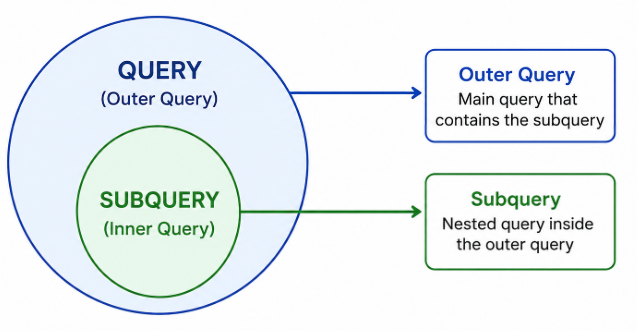
A Subquery Is A Query Written Inside Another SQL Query. It Can Be Used In SELECT, INSERT, UPDATE, DELETE, Or WHERE Clauses. Subqueries Help Retrieve Intermediate Results Needed For The Main Query. They Improve Query Flexibility And Solve Complex Database Problems. A Subquery Can Return A Single Value, Multiple Values, Or An Entire Table. SQL Supports Both Nested And Correlated Subqueries. This Topic Is Frequently Asked During Technical Interviews.
82. What Is A View In SQL?
Ans:
- A View Is A Virtual Table Created From The Result Of A SQL Query. It Does Not Store Data Physically But Displays Data From One Or More Tables.
- Views Improve Security By Restricting Access To Selected Columns And Rows. They Simplify Complex Queries By Saving Frequently Used SQL Statements. Views Make Database Management Easier And More Organized.
- They Help Present Data In A User-Friendly Format. Views Are Widely Used In Enterprise Database Applications.
83. What Is An Index In SQL?
Ans:
An Index Is A Database Object That Improves The Speed Of Data Retrieval Operations. It Works Like The Index Of A Book By Helping Locate Records Quickly. Indexes Reduce The Time Required To Execute SELECT Queries. They Can Be Created On One Or Multiple Columns. Although Indexes Improve Read Performance, They Can Slightly Slow INSERT, UPDATE, And DELETE Operations. Proper Indexing Enhances Overall Database Performance. Indexing Is An Important SQL Optimization Technique Asked In Interviews.
84. What Is Deadlock In An Operating System?
Ans:
A Deadlock Is A Situation Where Two Or More Processes Are Unable To Continue Execution Because Each Process Is Waiting For A Resource Held By Another Process. As A Result, None Of The Processes Can Proceed. Deadlocks Usually Occur Due To Improper Resource Allocation. Operating Systems Use Prevention, Avoidance, Detection, And Recovery Techniques To Handle Deadlocks. Understanding Deadlocks Is Important For Building Reliable And Efficient Software Systems. This Is A Frequently Asked Topic In TCS Digital Technical Interviews.
85. What Is Memory Management In An Operating System?
Ans:
Memory Management Is The Process Of Allocating, Tracking, And Releasing Memory Efficiently During Program Execution. It Ensures That Every Process Receives The Required Memory Without Interfering With Other Processes. The Operating System Uses Techniques Such As Paging, Segmentation, And Virtual Memory To Improve Performance. Proper Memory Management Prevents Memory Leaks And Maximizes Resource Utilization. It Also Enhances System Stability And Multitasking Capabilities. This Topic Is Commonly Asked In Technical Interviews.
86. What Is Regression Testing?
Ans:
Regression Testing Is A Software Testing Technique Used To Verify That Existing Features Continue To Work Correctly After Code Changes Or Bug Fixes. It Ensures That New Modifications Do Not Introduce Unexpected Errors Into Previously Working Functionality. Regression Testing Is Usually Performed After Enhancements, Updates, Or Maintenance Activities. Automated Testing Tools Are Often Used To Execute Regression Test Cases Efficiently. This Process Improves Software Quality And Reduces The Risk Of Defects. Regression Testing Is A Frequently Asked Software Testing Interview Topic.
87. Why Is Regression Testing Important?
Ans:
- Regression Testing Is Important Because It Confirms That New Changes Have Not Broken Existing Features Of The Application. It Helps Detect Defects Early Before Software Is Released To Users.
- Regular Regression Testing Improves Product Stability And Increases Customer Confidence. It Also Reduces Maintenance Costs By Identifying Issues During Development.
- Automated Regression Tests Save Time And Improve Testing Efficiency For Large Projects. This Is A Common Interview Question For Freshers.
88. What Is A Bug Life Cycle?
Ans:
A Bug Life Cycle Describes The Different Stages A Software Defect Passes Through From Discovery To Closure. A Bug Is First Identified And Reported By A Tester. It Is Then Assigned To A Developer For Analysis And Resolution. After The Fix Is Completed, The Tester Verifies The Solution Through Retesting. If The Bug Is Fixed Successfully, It Is Closed; Otherwise, It Is Reopened. Understanding The Bug Life Cycle Helps Teams Manage Defects Effectively. This Topic Is Frequently Asked In Software Testing Interviews.
89. What Are The Different Stages Of A Bug Life Cycle?
Ans:
The Common Stages Of A Bug Life Cycle Include New, Assigned, Open, Fixed, Retest, Verified, Closed, Reopened, And Deferred. Each Stage Represents The Current Status Of The Reported Defect. Testers And Developers Collaborate Throughout The Process To Ensure Proper Resolution. Tracking These Stages Helps Maintain Transparency And Improves Project Management. It Also Ensures That No Critical Defects Are Left Unresolved Before Release. This Is An Important Topic For TCS Digital Interviews.
90. How Does Memory Management Improve System Performance?
Ans:
Memory Management Improves System Performance By Allocating Memory Efficiently And Releasing Unused Memory Promptly. It Prevents Memory Conflicts Between Running Processes And Ensures Better Utilization Of Available Resources. Techniques Such As Virtual Memory, Paging, And Caching Help Execute Large Applications Smoothly. Efficient Memory Management Reduces System Crashes And Improves Multitasking Performance. It Also Enhances Overall Speed, Stability, And Reliability Of The Operating System. This Concept Is Commonly Asked In Operating System Interviews.
91. Describe A Leadership Experience.
Ans:
Leadership Experience Demonstrates The Ability To Guide A Team Toward A Common Goal While Maintaining Effective Communication And Coordination. A Good Leader Assigns Tasks Based On Individual Strengths, Monitors Progress, And Encourages Team Members To Perform Their Best. Strong Leadership Also Involves Taking Responsibility For Decisions And Resolving Challenges Efficiently. It Helps Improve Team Productivity And Ensures Timely Completion Of Projects. Employers Value Leadership Skills Because They Reflect Initiative, Accountability, And Problem-Solving Ability. This Is A Frequently Asked Behavioral Question In TCS Digital Interviews.
92. Give An Example Of Teamwork.
Ans:
Teamwork Involves Collaborating With Others To Achieve A Shared Objective By Combining Individual Skills And Knowledge. Successful Team Members Communicate Clearly, Respect Different Opinions, And Support One Another Throughout The Project. Effective Teamwork Leads To Better Decision-Making, Faster Problem Solving, And Higher Quality Results. It Also Helps Build Trust, Improves Learning, And Creates A Positive Working Environment. Organizations Value Candidates Who Can Work Efficiently In Diverse Teams And Contribute To Collective Success. This Is A Common Behavioral Interview Question For Freshers.
93. How Would You Handle Conflict In A Team?
Ans:
- Conflict In A Team Should Be Handled Calmly By Understanding Different Perspectives And Identifying The Root Cause Of The Issue. Open And Respectful Communication Helps Resolve Misunderstandings And Builds Mutual Trust Among Team Members.
- Focusing On Facts Instead Of Personal Differences Encourages Fair And Practical Solutions. Listening Carefully To Everyone’s Viewpoint Helps Reach A Decision That Benefits The Entire Team.
- Maintaining Professionalism And A Positive Attitude Prevents Conflicts From Affecting Project Progress. This Approach Demonstrates Strong Communication, Problem-Solving, And Collaboration Skills In TCS Digital Interviews.
94. Reverse A Number
Ans:
- #include
- int main() {
- int n = 1234, rev = 0;
- while(n != 0) {
- rev = rev * 10 + n % 10;
- n = n / 10;
- }
- printf(“%d”, rev);
- return 0;
- }
95.Find The Largest Of Three Numbers
Ans:
- #include
- int main() {
- int a = 25, b = 40, c = 18;
- if(a >= b && a >= c)
- printf(“%d”, a);
- else if(b >= a && b >= c)
- printf(“%d”, b);
- else
- printf(“%d”, c);
- return 0;
- }
96. Count The Number Of Digits
Ans:
- #include
- int main() {
- int n = 98765, count = 0;
- while(n != 0) {
- count++;
- n = n / 10;
- }
- printf(“%d”, count);
- return 0;
- }
97. Check Whether A Number Is Positive Or Negative
Ans:
- #include
- int main() {
- int n = -15;
- if(n >= 0)
- printf(“Positive”);
- else
- printf(“Negative”);
- return 0;
- }
98. Find The Sum Of Even Numbers From 1 To 10
Ans:
- #include
- int main() {
- int i, sum = 0;
- for(i = 2; i <= 10; i += 2)
- sum += i;
- printf(“%d”, sum);
- return 0;
- }
99. Find The ASCII Value Of A Character
Ans:
- #include
- int main() {
- char ch = ‘A’;
- printf(“%d”, ch);
- return 0;
- }
100. Swap Two Numbers Without Using A Third Variable
Ans:
- #include
- int main() {
- int a = 10, b = 20;
- a = a + b;
- b = a – b;
- a = a – b;
- printf(“%d %d”, a, b);
- return 0;
- }