LMS
LMS
Last updated on 09th May 2026| 6564

Accenture Java Advanced Topics Interview Questions And Answers help candidates prepare for technical interviews by covering important Java concepts used in real-time software development projects. These advanced interview questions focus on topics like multithreading, collections, JDBC, exception handling, Java 8 features, Spring Framework, Hibernate, microservices, synchronization, JVM architecture, and design patterns. Freshers and experienced professionals can improve their coding knowledge, problem-solving ability, and confidence through these questions and answers. Learning advanced Java concepts also helps candidates understand enterprise application development and backend programming techniques. Proper preparation with practical examples and detailed explanations increases the chances of success in Accenture technical and HR interview rounds
1. What is multithreading in Java?
Ans:
Multithreading In Java Allows Multiple Threads To Execute Simultaneously Within A Program. It Improves Application Performance And Resource Utilization. Threads Share The Same Memory Space But Perform Different Tasks Independently. Java Provides Built-In Support For Multithreading Through The Thread Class And Runnable Interface. It Is Commonly Used In Gaming, Web Servers, And Banking Applications. Proper Synchronization Is Important To Avoid Data Inconsistency. Multithreading Helps Build Faster And More Responsive Applications.
- class MyThread extends Thread {
- public void run() {
- System.out.println(“Thread Is Running”);
- }
- public static void main(String[] args) {
- MyThread t1 = new MyThread();
- t1.start();
- }
- }
2. What is the difference between process and thread?
Ans:
| DIFFERENCE FACTOR | PROCESS | THREAD |
|---|---|---|
| DEFINITION | A Process Is An Independent Program In Execution. | A Thread Is A Smallest Unit Of Execution Within A Process |
| MEMORY | Each Process Has Separate Memory Space. | Threads Share The Same Memory Space. |
| COMMUNICATION | Process Communication Is Slower And Complex. | Thread Communication Is Faster And Easier. |
| CREATION TIME | Process Creation Takes More Time. | Thread Creation Takes Less Time.. |
3. What are the ways to create a thread in Java?
Ans:
Threads in Java can be created in two main ways. One method is by extending the Thread class and overriding the run() method. Another method is by implementing the Runnable interface. Implementing Runnable is generally preferred because Java supports single inheritance. Developers can also use Callable and Executor frameworks for advanced thread management. Threads are started using the start() method. Understanding thread creation is important in concurrent programming.
4. What is thread lifecycle in Java?
Ans:
A thread lifecycle represents different states a thread goes through during execution. The main states are New, Runnable, Running, Waiting, Blocked, and Terminated. A thread starts in the New state when created. Calling start() moves it to Runnable state. The scheduler controls execution in Running state. Threads may enter Waiting or Blocked states during synchronization or sleep operations. Once execution completes, the thread enters the Terminated state. Understanding lifecycle management helps in efficient thread handling.
5. What is synchronization in Java?
Ans:
Synchronization is a mechanism used to control access to shared resources in multithreaded environments. It prevents multiple threads from modifying data simultaneously. Java provides synchronized methods and blocks for synchronization. Synchronization helps avoid race conditions and data inconsistency. Only one thread can access synchronized code at a time. Proper synchronization improves thread safety and application reliability. However, excessive synchronization may reduce performance due to thread waiting.
6. . What is a deadlock in Java?
Ans:
- Deadlock is a situation where two or more threads wait indefinitely for resources locked by each other. It causes applications to stop responding.
- Deadlocks usually occur due to improper synchronization. Conditions such as mutual exclusion and circular waiting contribute to deadlocks.
- Developers prevent deadlocks by maintaining proper lock order and minimizing resource dependencies. Java provides thread dump analysis for deadlock detection. Understanding deadlocks is important for building reliable multithreaded applications.
7. What is thread safety?
Ans:
Thread safety means ensuring that shared data remains consistent when accessed by multiple threads simultaneously. A thread-safe program avoids race conditions and unexpected behavior. Synchronization and immutable objects help achieve thread safety. Java collections like ConcurrentHashMap support thread-safe operations. Proper thread safety improves reliability in concurrent applications. Developers must carefully manage shared resources in multithreading. Thread-safe design is important for enterprise-level software systems.
8. What is volatile keyword in Java?
Ans:
The volatile keyword is used to indicate that a variable’s value may change unexpectedly due to multiple threads. It ensures visibility of updated values across threads. Volatile variables are stored in main memory instead of thread-local cache. This prevents inconsistent data access between threads. However, volatile does not guarantee atomicity for operations. Developers use it mainly for flags and status variables. Understanding volatile helps improve thread communication in concurrent programming.
9. What is the difference between synchronized and volatile?
Ans:
Synchronized provides both mutual exclusion and visibility between threads, while volatile only ensures visibility. Synchronized allows only one thread to access a block of code at a time. Volatile does not lock resources and is lighter in performance. Synchronized is suitable for critical sections involving multiple operations. Volatile works best for simple variable updates. Developers choose between them based on concurrency requirements. Understanding these differences helps optimize multithreaded applications.
10. What is Executor Framework in Java?
Ans:
Executor Framework is a high-level API for managing threads efficiently in Java. It simplifies thread creation and lifecycle management. Developers use ExecutorService to manage thread pools and task execution. The framework improves scalability and performance in concurrent applications. It supports asynchronous task execution and scheduling. Executor Framework reduces overhead compared to manual thread management. It is widely used in enterprise and server-side Java applications.
11.What is thread pool in Java?
Ans:
- A thread pool is a collection of reusable threads managed by the Executor Framework. Instead of creating new threads repeatedly, tasks are assigned to existing threads.
- Thread pools improve performance and reduce resource consumption. Java provides fixed, cached, and scheduled thread pools.
- They help manage concurrent tasks efficiently in applications. Thread pools are widely used in web servers and enterprise systems. Proper thread pool management improves scalability and responsiveness.
12. What is Callable interface in Java?
Ans:
Callable is an interface used for tasks that return results and may throw exceptions. Unlike Runnable, Callable supports return values through Future objects.Developers implement the call() method instead of run(). Callable is commonly used with ExecutorService for asynchronous task execution. It improves flexibility in concurrent programming. Future objects help retrieve task results later. Callable is important for advanced multithreading scenarios in Java.
13. What is Future interface in Java?
Ans:
Future is an interface used to represent the result of asynchronous computations. It allows developers to check task completion and retrieve results later. Future works together with Callable and ExecutorService. Methods like get() and cancel() help manage asynchronous tasks. Future improves control over concurrent task execution. It supports better performance in long-running operations. Understanding Future is important in asynchronous Java programming.
14. What is immutable class in Java?
Ans:
An immutable class is a class whose objects cannot be modified after creation. String is a common example of an immutable class in Java. Immutable classes improve thread safety and security. Developers achieve immutability using final fields and no setter methods. Immutable objects are easier to cache and share between threads. They reduce synchronization requirements in applications. Understanding immutability is important for robust software design.
15. What is serialization in Java?
Ans:
Serialization is the process of converting an object into a byte stream for storage or transmission. Java uses ObjectOutputStream for serialization. Serialized objects can be saved to files or sent across networks. Classes must implement the Serializable interface to support serialization. Serialization helps in distributed systems and persistence mechanisms. Deserialization converts byte streams back into objects. Understanding serialization is important in enterprise Java applications.
16. What is deserialization in Java?
Ans:
Deserialization is the process of converting a byte stream back into a Java object. It is the reverse of serialization. Java uses ObjectInputStream for deserialization operations. Deserialization helps restore objects from files or network streams. It is commonly used in distributed systems and object persistence. Developers must ensure compatibility between serialized and deserialized classes. Proper deserialization handling improves application reliability and security.
17. What is transient keyword in Java?
Ans:
The transient keyword prevents specific variables from being serialized. Variables marked as transient are ignored during serialization. Developers use transient for sensitive or temporary data such as passwords. This improves security and reduces unnecessary storage. Transient variables are initialized with default values after deserialization. Understanding transient helps control object persistence effectively. It is an important concept in Java serialization.
18. What is externalization in Java?
Ans:
- Externalization is an advanced form of serialization that gives developers full control over object serialization. Classes implement the Externalizable interface instead of Serializable.
- Developers override writeExternal() and readExternal() methods for custom serialization logic. Externalization improves performance by controlling stored data explicitly. It also reduces storage requirements.
- Proper implementation improves efficiency in distributed systems. Externalization is useful in complex enterprise applications.
19. What is reflection in Java?
Ans:
Reflection is a feature that allows Java programs to inspect and modify classes, methods, and fields at runtime. It provides dynamic access to application metadata. Reflection is commonly used in frameworks and dependency injection systems. Developers can create objects and invoke methods dynamically. Reflection improves flexibility and extensibility in applications. However, excessive use may reduce performance and security. Understanding reflection is important in advanced Java programming.
20. What is Java Memory Model?
Ans:
Java Memory Model defines how threads interact through memory in Java applications. It specifies rules for reading and writing shared variables. The model ensures visibility and ordering of operations between threads. Synchronization and volatile variables work according to the Java Memory Model. Proper understanding helps avoid concurrency issues like stale data. It improves consistency in multithreaded applications. Java Memory Model is fundamental in concurrent programming.
21. What is garbage collection in Java?
Ans:
Garbage collection is an automatic memory management process in Java. It removes unused objects from memory and frees resources for new objects. The Java Virtual Machine manages garbage collection automatically. This reduces memory leaks and improves application reliability. Java provides different garbage collectors such as Serial, Parallel, and G1 Garbage Collector. Developers can request garbage collection using System.gc(), but execution is not guaranteed. Understanding garbage collection helps optimize memory usage and application performance.
22. What is heap memory in Java?
Ans:
Heap memory is the runtime memory area where Java objects are stored. It is shared among all threads in an application. Heap memory is managed automatically by the garbage collector. The heap is divided into Young Generation and Old Generation areas. New objects are created in Young Generation memory. Long-lived objects move to Old Generation memory. Understanding heap memory helps developers improve memory management and application efficiency.
23. What is stack memory in Java?
Ans:
Stack memory is used for storing method calls, local variables, and references during program execution. Each thread has its own stack memory area. Stack memory follows Last In First Out behavior. Memory allocation and deallocation in the stack are faster compared to heap memory. Stack overflow errors occur when excessive recursive calls consume stack space. Stack memory improves execution efficiency in applications. Understanding stack memory is important for debugging and optimization.
24. What is OutOfMemoryError in Java?
Ans:
OutOfMemoryError occurs when the Java Virtual Machine cannot allocate enough memory for objects. It commonly happens due to memory leaks or insufficient heap size. Large object creation and poor memory management can also cause this error. Developers analyze heap dumps to identify memory issues. Increasing JVM heap size may help resolve the problem. Proper object cleanup and optimization reduce OutOfMemoryError risks. Understanding memory management is important in enterprise Java applications.
25. What is memory leak in Java?
Ans:
- A memory leak occurs when unused objects remain in memory and are not released by the garbage collector. This gradually reduces available memory and affects performance.
- Memory leaks often occur due to improper object references or unclosed resources. Developers use profiling tools to detect leaks.
- Proper resource management and coding practices help prevent memory leaks. Memory leaks can eventually cause application crashes. Understanding memory leaks is important for building stable Java applications.
26. What is JDBC?
Ans:
- JDBC stands for Java Database Connectivity and is an API used to connect Java applications with databases. It allows developers to execute SQL queries and manage database operations.
- JDBC supports different database systems through drivers. Key components include Connection, Statement, and ResultSet. JDBC improves data management in enterprise applications
- It is widely used in backend development. Understanding JDBC is essential for database-driven Java applications.
27. What are JDBC drivers?
Ans:
JDBC drivers are software components that enable Java applications to communicate with databases. They convert JDBC calls into database-specific commands. There are four types of JDBC drivers: Type 1, Type 2, Type 3, and Type 4. Type 4 drivers are most commonly used because they are platform independent. JDBC drivers improve database connectivity and performance. Examples includeMySQL Connector/J andOracle JDBC Driver. Understanding JDBC drivers is important for Java database integration.
28. What is Connection pooling in Java?
Ans:
Connection pooling is a technique used to reuse database connections instead of creating new ones repeatedly. It improves application performance and reduces database overhead. A pool maintains a set of active connections for reuse. Connection pooling is widely used in enterprise applications and web servers. Libraries likeHikariCP support efficient connection pooling. Proper pool management improves scalability and responsiveness. It is an important optimization technique in Java applications.
29. What is Hibernate?
Ans:
Hibernate is an Object Relational Mapping framework for Java applications. It simplifies database interaction by mapping Java objects to database tables. Hibernate reduces the need for writing complex SQL queries manually. It supports automatic table generation and transaction management. Hibernate improves productivity and maintainability in enterprise applications. Developers use HQL and Criteria API for database operations. Hibernate is widely used in Java backend development.
30. What is ORM?
Ans:
ORM stands for Object Relational Mapping and is a technique used to map objects to relational database tables. ORM frameworks simplify database operations using object-oriented concepts. Developers work with Java objects instead of writing SQL queries directly. ORM improves productivity and reduces boilerplate code. It also supports portability across database systems. Examples include Hibernate and JPA implementations. Understanding ORM is important in enterprise Java development.
31. What is JPA?
Ans:
JPA stands for Java Persistence API and is a specification for ORM in Java. It defines standards for managing relational data in Java applications. Hibernate is one of the popular implementations of JPA. JPA simplifies database interactions using entities and annotations. It improves portability and maintainability in applications. Developers use EntityManager for persistence operations. JPA is widely used in enterprise Java applications.
32. What is difference between Hibernate and JPA?
Ans:
| FEATURE | HIBERNATE | JPA |
|---|---|---|
| DEFINITION | Hibernate Is An ORM Framework For Java | JPA Is A Java Specification For ORM. |
| TYPE | It Is A Framework Implementation | It Is Only A Standard Specification. |
| USAGE | Hibernate Provides Direct ORM Features. | JPA Defines Rules For ORM Operations. |
| DEPENDENCY | Hibernate Can Work Independently. | JPA Requires An Implementation Like Hibernate |
33. What is lazy loading in Hibernate?
Ans:
Lazy loading is a technique where related data is loaded only when required. Hibernate delays fetching associated objects until they are accessed. This improves application performance and reduces unnecessary database queries. Lazy loading is commonly used in one-to-many relationships. However, accessing lazy-loaded data outside sessions may cause exceptions. Developers balance lazy and eager loading based on requirements. Understanding lazy loading helps optimize database interactions.
34. What is eager loading in Hibernate?
Ans:
Eager loading fetches related data immediately along with the main object. Hibernate loads all associated objects at once. This avoids LazyInitializationException issues. However, eager loading may reduce performance if unnecessary data is retrieved. Developers use eager loading carefully for required relationships. Proper fetch strategies improve application efficiency. Understanding eager loading helps manage ORM performance effectively.
35. What is HQL?
Ans:
HQL stands for Hibernate Query Language and is used to query database objects in Hibernate. It is similar to SQL but works with Java objects instead of tables. HQL simplifies object-oriented database operations. Developers can perform CRUD operations using HQL. It improves portability across different databases. HQL reduces dependency on database-specific SQL syntax. Understanding HQL is important for Hibernate development.
36. What is Criteria API in Hibernate?
Ans:
Criteria API is a feature in Hibernate used for creating dynamic queries programmatically. It allows developers to build queries without writing HQL or SQL directly. Criteria API improves type safety and readability. It is useful for complex search conditions and filtering. Developers can create flexible queries dynamically. Criteria API simplifies query generation in enterprise applications. It is commonly used in modern Java persistence frameworks.
37. What is Spring Framework?
Ans:
Spring Framework is a popular Java framework used for enterprise application development. It provides features such as dependency injection and aspect-oriented programming. Spring simplifies application configuration and development. It improves modularity and maintainability in large systems. Spring supports integration with databases, security, and web services. Developers widely use Spring for backend development. It is one of the most important frameworks in Java ecosystem.
38. What is dependency injection in Spring?
Ans:
Dependency Injection is a design pattern where objects receive dependencies from external sources instead of creating them internally. Spring Framework provides dependency injection automatically through IoC container. This improves loose coupling between components. Dependency injection enhances testability and maintainability. Developers configure dependencies using annotations or XML configuration. It simplifies object management in enterprise applications. Understanding dependency injection is important in Spring development.
39. What is IoC container in Spring?
Ans:
IoC stands for Inversion of Control and is a core concept in Spring Framework. The IoC container manages object creation and dependency injection automatically. It reduces tight coupling between application components. Spring provides BeanFactory and ApplicationContext as IoC containers. The container handles lifecycle management of beans. IoC improves modularity and flexibility in applications. Understanding IoC is fundamental for Spring Framework development.
40. What is Spring Boot?
Ans:
Spring Boot is a framework built on top of Spring Framework for rapid application development. It simplifies configuration using convention-over-configuration principles. Spring Boot provides embedded servers like Tomcat and Jetty. Developers can create standalone applications easily. It reduces boilerplate configuration and improves productivity. Spring Boot supports microservices and cloud-native applications. It is widely used in modern Java development.

Enroll in Java Certification Course and UPGRADE Your Skills
Weekday / Weekend BatchesSee Batch Details41. What is Spring MVC?
Ans:
Spring MVC is a web framework within Spring used for building web applications. It follows the Model View Controller design pattern. Controllers handle requests, models manage data, and views display responses. Spring MVC simplifies web application development. It supports REST APIs and form handling efficiently. Integration with Spring Boot improves productivity further. Understanding Spring MVC is important for Java web development.
42. What is RESTful web service?
Ans:
A RESTful web service follows REST architecture principles for communication between systems. It uses HTTP methods such as GET, POST, PUT, and DELETE. REST APIs are lightweight and scalable. Data is commonly exchanged in JSON format. RESTful services improve interoperability between applications. They are widely used in web and mobile development. Understanding REST APIs is essential in modern backend systems
43. What is microservices architecture?
Ans:
Microservices architecture is an approach where applications are divided into small independent services. Each service handles a specific business functionality. Microservices communicate through APIs or messaging systems. This architecture improves scalability and maintainability. Teams can develop and deploy services independently. However, managing distributed systems increases complexity. Microservices are widely used in cloud-native enterprise applications.
44. What is Docker?
Ans:
Docker is a containerization platform used for packaging and deploying applications. Containers include application code and dependencies together. Docker ensures consistency across different environments. It simplifies deployment and scalability. Developers use Docker images and containers for efficient resource utilization. Docker is widely used in DevOps and microservices environments. Understanding Docker improves modern software deployment skills.
45. What is Kubernetes?
Ans:
- Kubernetes is an open-source platform used for container orchestration. It automates deployment, scaling, and management of containerized applications.
- Kubernetes improves reliability and scalability in distributed systems. It supports load balancing and self-healing features.
- Organizations use Kubernetes extensively in cloud-native environments. It works well with Docker containers. Understanding Kubernetes is important in modern DevOps and cloud computing.
46. What is Maven in Java?
Ans:
Apache Maven is a build automation and dependency management tool for Java projects. Maven simplifies project compilation, testing, and packaging. Dependencies are managed using pom.xml configuration files. Maven improves project consistency and build management. It supports plugins for various development tasks. Developers widely use Maven in enterprise Java applications. Understanding Maven improves project management and automation skills.
47. What is Gradle?
Ans:
Gradle is a modern build automation tool used for Java and Android development. It combines flexibility with powerful dependency management. Gradle uses Groovy or Kotlin DSL for configuration. It improves build performance through incremental builds. Developers prefer Gradle for complex and scalable projects. Gradle integrates well with Spring Boot and modern frameworks. Understanding Gradle helps optimize project build processes.
48. What is logging in Java?
Ans:
Logging is the process of recording application events and messages during execution. It helps developers monitor and debug applications effectively. Java provides logging frameworks such as Log4j and SLF4J. Logging improves issue tracking and application maintenance. Developers log information, warnings, and errors systematically. Proper logging improves reliability and troubleshooting efficiency. Logging is essential in enterprise applications.
49.What Is Exception Handling In Java? Write A Program Example.
Ans:
Exception Handling In Java Is Used To Handle Runtime Errors Gracefully Without Crashing The Program. Java Uses try, catch, finally, throw, And throws Keywords For Exception Management. It Helps Maintain Normal Program Flow Even When Errors Occur. Developers Use Exception Handling To Improve Reliability And User Experience. Checked And Unchecked Exceptions Are The Two Main Types In Java. Proper Exception Handling Makes Applications More Robust And Maintainable. It Is A Very Important Concept In Enterprise Java Development.
- public class ExceptionExample {
- public static void main(String[] args) {
- try {
- int result = 10 / 0;
- System.out.println(result);
- } catch (ArithmeticException e) {
- System.out.println(“Cannot Divide By Zero”);
- } finally {
- System.out.println(“Execution Completed”);
- }
- }
- }
50. What is custom exception in Java?
Ans:
A custom exception is a user-defined exception created to represent application-specific errors. Developers create custom exceptions by extending Exception or RuntimeException classes. Custom exceptions improve readability and maintainability in applications. They help provide meaningful error messages for business logic failures. Proper use improves debugging and error handling. Custom exceptions are widely used in enterprise applications. Understanding custom exceptions enhances Java programming practice
51. What is fail-fast and fail-safe iterator in Java?
Ans:
Fail-fast iterators immediately throw ConcurrentModificationException if a collection is modified during iteration. Examples include ArrayList and HashMap iterators. Fail-safe iterators work on a cloned copy of the collection instead of the original collection. They do not throw exceptions during modification. Examples include ConcurrentHashMap iterators. Fail-fast iterators are faster but less flexible. Understanding both types helps developers manage concurrent collection operations effectively.
52. What is ConcurrentHashMap in Java?
Ans:
ConcurrentHashMap is a thread-safe implementation of the Map interface in Java. It allows multiple threads to read and write data concurrently without locking the entire map. ConcurrentHashMap improves performance compared to Hashtable. It divides the map into segments for efficient synchronization. This collection is widely used in multithreaded applications. It prevents data inconsistency during concurrent access. Understanding ConcurrentHashMap is important in concurrent Java programming.
53. What is CopyOnWriteArrayList?
Ans:
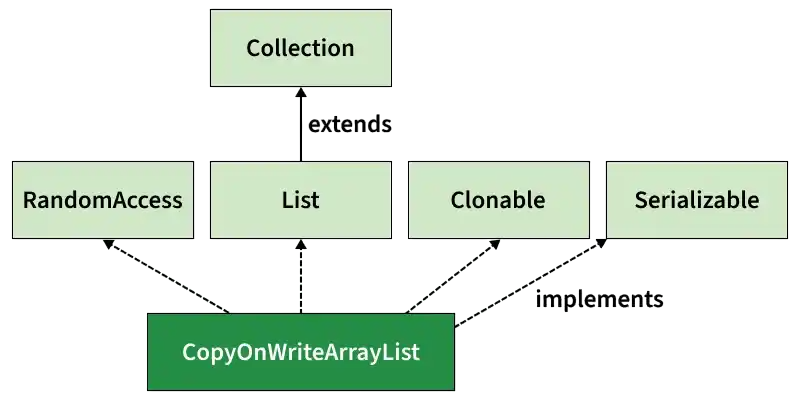
CopyOnWriteArrayList is a thread-safe variant of ArrayList used in concurrent programming. Whenever modifications occur, it creates a new copy of the underlying array. This approach improves thread safety for read-heavy applications. Iterators do not throw ConcurrentModificationException during updates. However, write operations are slower because of array copying. It is useful when reads are more frequent than writes. Understanding CopyOnWriteArrayList helps manage concurrent collections efficiently.
54. What is Comparable interface in Java?
Ans:
- Comparable is an interface used for defining natural ordering of objects in Java. Classes implement the compareTo() method for sorting purposes.
- Comparable allows objects to be sorted using Collections.sort(). It supports single sorting logic within a class. Developers commonly use Comparable for sorting custom objects.
- Sorting is performed based on object properties like name or age. Understanding Comparable improves object comparison and collection management.
55. What is Comparator interface in Java?
Ans:
- Comparator is an interface used for custom sorting in Java. Unlike Comparable, it allows multiple sorting logics for the same class.
- Developers implement the compare() method for comparison rules. Comparator works well with Collections.sort() and TreeSet. It improves flexibility in object sorting.
- Developers use it for sorting based on different fields dynamically. Understanding Comparator is important in advanced collection handling
56. What is lambda expression in Java?
Ans:
Lambda expressions are anonymous functions introduced in Java 8. They simplify functional programming and reduce boilerplate code. Lambda expressions are mainly used with functional interfaces. They improve readability and concise coding style. Developers use lambdas with streams and collections frequently. Lambda syntax consists of parameters, arrow operator, and expression body. Understanding lambda expressions is essential in modern Java programming
57. What is functional interface in Java?
Ans:
A functional interface is an interface containing only one abstract method. Java provides the @FunctionalInterface annotation for such interfaces. Functional interfaces support lambda expressions and method references. Examples include Runnable and Comparator. They simplify implementation of functional programming concepts. Functional interfaces improve code readability and flexibility. Understanding them is important in Java 8 and later versions.
58. What is Stream API in Java?
Ans:
Stream API is a feature introduced in Java 8 for processing collections efficiently. It supports functional-style operations such as filtering, mapping, and sorting. Streams improve code readability and parallel processing capabilities. Developers can process large datasets with fewer lines of code. Stream operations are divided into intermediate and terminal operations. Streams help optimize collection handling performance. Understanding Stream API is important in modern Java development.
59. What is difference between map() and flatMap()?
Ans:
The map() method transforms each element in a stream individually. It returns a stream of transformed elements. flatMap() is used when each element produces multiple elements, and it flattens them into a single stream. flatMap() helps avoid nested stream structures. Developers commonly use it for processing collections within collections. Both methods are important in Stream API operations. Understanding their differences improves functional programming skills.
60. What is Optional class in Java?
Ans:
Optional is a container class introduced in Java 8 to avoid NullPointerException. It represents values that may or may not be present. Developers use methods like isPresent(), ifPresent(), and orElse(). Optional improves null handling and code readability. It encourages safer programming practices. Optional is commonly used in APIs and service layers. Understanding Optional helps build robust Java applications.

Learn Java Training with Advanced Concepts By Industry Experts
- Instructor-led Sessions
- Real-life Case Studies
- Assignments
61 What is method reference in Java??
Ans:
Method references provide a shorthand syntax for referring to methods using lambda expressions. They improve readability and reduce boilerplate code. Method references use the :: operator. Developers can reference static methods, instance methods, and constructors. Method references work with functional interfaces. They simplify functional programming operations in Java. Understanding method references improves modern Java coding practice
62. What is default method in interface?
Ans:
Default methods are methods with implementation inside interfaces introduced in Java 8. They allow interfaces to evolve without breaking existing implementations. Developers define default methods using the default keyword. This feature supports backward compatibility in APIs. Classes implementing interfaces can override default methods if needed. Default methods improve flexibility in interface design. Understanding them is important in modern Java development.
63. What is static method in interface?
Ans:
Static methods in interfaces are methods defined with implementation using the static keyword. They belong to the interface itself instead of implementing classes. Developers call them directly using the interface name. Static methods improve utility method organization within interfaces. They help avoid separate utility classes. Static interface methods enhance modularity and maintainability. Understanding them is useful in Java 8 and later versions.
64. What is Nashorn in Java?
Ans:
Nashorn is a JavaScript engine introduced in Java 8. It allows execution of JavaScript code within Java applications. Nashorn improves interoperability between Java and JavaScript. Developers use it for scripting and lightweight application integration. It replaced the older Rhino engine. Nashorn supports modern JavaScript syntax and APIs. Understanding Nashorn helps integrate scripting capabilities into Java systems.
65. What is Java module system?
Ans:
- The Java Module System was introduced in Java 9 to improve application modularity. It allows developers to organize applications into independent modules.
- Modules define dependencies explicitly using module-info.java files. This improves security, maintainability, and scalability.
- The module system reduces unnecessary access between components. It also optimizes application startup and memory usage. Understanding modules is important in modern enterprise Java applications.
66. What is encapsulation in advanced Java applications?
Ans:
- Encapsulation in advanced Java applications involves hiding internal implementation details and exposing only necessary functionality.
- It improves security and maintainability in enterprise systems. Developers use private variables with getter and setter methods. Encapsulation reduces dependency between application components
- It supports modular and reusable software design. Proper encapsulation improves code organization and scalability. It is a core principle of object-oriented programming.
67. What is asynchronous programming in Java?
Ans:
Asynchronous programming allows tasks to execute independently without blocking the main thread. Java supports asynchronous programming using CompletableFuture and ExecutorService. It improves responsiveness and scalability in applications. Developers use asynchronous operations for APIs, databases, and long-running tasks. Async programming reduces waiting time in concurrent systems. Proper implementation improves user experience significantly. Understanding asynchronous programming is important in enterprise Java applications.
68. What is CompletableFuture in Java?
Ans:
CompletableFuture is a class introduced in Java 8 for asynchronous programming. It extends Future and provides advanced asynchronous task handling. Developers can chain multiple asynchronous operations together. CompletableFuture supports callbacks and non-blocking execution. It improves performance in concurrent applications. Methods like thenApply() and thenAccept() simplify async workflows. Understanding CompletableFuture is important in modern Java development.
69. What is Java NIO?
Ans:
Java NIO stands for New Input Output and is an advanced I/O API introduced for high-performance applications. It supports non-blocking I/O operations and channels. NIO improves scalability in network-based applications. Key components include Buffers, Channels, and Selectors. NIO is commonly used in server and networking applications. It performs better than traditional I/O in large systems. Understanding Java NIO improves backend development skills.
70. What is difference between IO and NIO?
Ans:
Traditional IO in Java is stream-oriented and blocking, while NIO is buffer-oriented and non-blocking. IO processes data sequentially, whereas NIO supports asynchronous operations. NIO improves scalability and performance in high-concurrency applications. IO is simpler and suitable for smaller applications. NIO supports channels and selectors for efficient communication. Developers choose based on application requirements. Understanding IO and NIO differences helps optimize Java applications.
71. What is socket programming in Java?
Ans:
Socket programming enables communication between systems over networks using sockets. Java provides Socket and ServerSocket classes for network communication. Sockets allow client-server interaction in distributed applications. Developers use socket programming for chat applications and real-time systems. Proper socket handling improves communication reliability. Network programming is important in enterprise systems and cloud applications. Understanding sockets is essential in Java networking.
72. What is RMI in Java?
Ans:
RMI stands for Remote Method Invocation and allows Java objects to communicate across networks. It enables methods to be invoked remotely as if they were local. RMI simplifies distributed application development. Java provides stubs and skeletons for remote communication. RMI uses serialization for transmitting objects. It improves interoperability in Java-based distributed systems. Understanding RMI is important in advanced enterprise applications.
73. What is servlet in Java?
Ans:
A servlet is a Java class used to handle HTTP requests and responses in web applications. Servlets run on web servers such asApache Tomcat. They process client requests dynamically. Servlets improve server-side application development. Lifecycle methods include init(), service(), and destroy(). Servlets form the foundation of Java web technologies. Understanding servlets is important for backend web development.
74. What is JSP?
Ans:
JSP stands for JavaServer Pages and is used for creating dynamic web pages in Java. JSP combines HTML with Java code for server-side processing. It simplifies web application development compared to servlets. JSP pages are compiled into servlets by the server. Developers use JSP with MVC architecture for clean design. JSP supports custom tags and expression language. Understanding JSP helps in Java web application development.
75. What is session management in Java?
Ans:
Session management is the process of maintaining user-specific data across multiple requests. HTTP is stateless, so sessions help preserve user information. Java supports sessions using HttpSession objects. Sessions are commonly used for login authentication and shopping carts. Cookies and URL rewriting also assist session tracking. Proper session management improves security and user experience. Understanding session handling is important in web applications.
76. What is a filter in a servlet?
Ans:
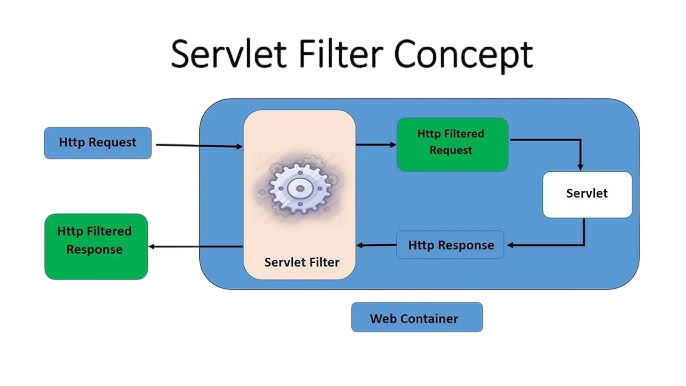
A filter is a component used to intercept requests and responses in Java web applications. Filters perform preprocessing and postprocessing tasks. Developers use filters for authentication, logging, and compression. Filters improve modularity and code reuse in web systems. They are configured using annotations or web.xml files. Multiple filters can be chained together. Understanding filters is important in servlet-based applications.
77. What is the distinction between ReentrantLock and synchronized in Java?
Ans:
Listeners are components that respond to specific events in Java web applications. Examples include session creation and context initialization events. Java provides interfaces such as ServletContextListener and HttpSessionListener. Listeners improve application monitoring and resource management. They help track user sessions and application states. Listeners are commonly used in enterprise web systems. Understanding listeners improves event-driven programming knowledge.
78. What is MVC architecture?
Ans:
- MVC stands for Model View Controller and is a software design pattern used in web applications. The Model manages data and business logic.
- The View handles user interface presentation. The Controller processes requests and coordinates interactions.
- MVC improves separation of concerns and maintainability. Frameworks like Spring MVC follow this architecture. Understanding MVC is important in enterprise Java development.
79. What is singleton bean in Spring?
Ans:
A singleton bean in Spring means only one instance of the bean exists within the IoC container. It is the default bean scope in Spring Framework. Singleton beans improve memory efficiency and resource sharing. The same object instance is reused throughout the application. Developers use singleton beans for services and configuration components. Proper management ensures thread safety when needed. Understanding bean scopes is important in Spring applications.
80. What is prototype bean in Spring?
Ans:
A prototype bean creates a new object instance every time it is requested from the Spring container. Unlike singleton scope, prototype beans are not shared. Developers use prototype beans when independent object instances are needed. This scope improves flexibility in object creation. Spring manages initialization but not complete lifecycle of prototype beans. Prototype scope is useful in stateful components. Understanding bean scopes improves Spring application design.
81. What is AOP in Spring?
Ans:
AOP stands for Aspect Oriented Programming and is used for separating cross-cutting concerns in applications. Examples include logging, security, and transaction management. Spring AOP improves modularity and reduces duplicate code. Aspects, advice, and join points are key AOP concepts. Developers define reusable logic separately from business code. AOP improves maintainability in enterprise systems. Understanding AOP is important in Spring Framework development.
82. What is transaction management in Spring?
Ans:
Transaction management ensures database operations execute reliably and consistently. Spring provides declarative transaction management using annotations like @Transactional. Transactions follow ACID properties for data integrity. Spring automatically handles commit and rollback operations. Proper transaction management prevents inconsistent database states. It improves reliability in enterprise applications. Understanding transactions is essential in backend development.
83. What is ACID property in databases?
Ans:
ACID stands for Atomicity, Consistency, Isolation, and Durability. These properties ensure reliable database transactions. Atomicity ensures all operations complete fully or fail entirely. Consistency maintains valid database states. Isolation prevents conflicts between concurrent transactions. Durability ensures committed changes persist permanently. Understanding ACID properties is important in database and enterprise application development.
84. What is caching in Java?
Ans:
- Caching is a technique used to store frequently accessed data temporarily for faster retrieval. It improves application performance and reduces database load.
- Java supports caching frameworks such as Ehcache and Redis integration. Caching reduces response times in high-traffic systems
- Developers use caching for APIs and database queries. Proper cache management improves scalability. Understanding caching is important in performance optimization
85. What is Redis?
Ans:
Redis is an in-memory data structure store used for caching and fast data access. It supports key-value storage and high-speed operations. Redis improves application performance and scalability. Developers use Redis for session management and real-time analytics. It supports persistence and pub-sub messaging features. Redis is widely used in distributed systems. Understanding Redis improves backend optimization skills.
86. What is message queue in Java?
Ans:
A message queue is a communication mechanism used for asynchronous data exchange between applications. Messages are stored temporarily until processed. Message queues improve scalability and reliability in distributed systems. Java applications use tools likeApache Kafka andRabbitMQ. Queues decouple producers and consumers effectively. They support event-driven architectures. Understanding message queues is important in modern enterprise systems.
87. What is Apache Kafka?
Ans:
Apache Kafka is a distributed event streaming platform used for handling real-time data feeds. Kafka supports high-throughput and fault-tolerant messaging. It is widely used in big data and microservices architectures. Producers publish messages to topics, while consumers read them. Kafka improves scalability and reliability in distributed systems. It supports stream processing and event-driven applications. Understanding Kafka is important in modern backend systems.
88. What is RabbitMQ?
Ans:
RabbitMQ is an open-source message broker used for asynchronous communication between systems. It supports reliable message delivery and queue management. RabbitMQ helps decouple distributed applications. It uses exchanges and queues for message routing. Developers use RabbitMQ in microservices architectures. Proper messaging improves scalability and fault tolerance. Understanding RabbitMQ is important in enterprise integration systems.
89. What is CI/CD pipeline?
Ans:
CI/CD stands for Continuous Integration and Continuous Deployment. It automates software build, testing, and deployment processes. CI/CD pipelines improve development speed and reliability. Tools likeJenkins automate workflows efficiently. Continuous integration detects issues early in development. Continuous deployment releases updates automatically after testing. Understanding CI/CD is important in DevOps and modern software delivery
90. What is Jenkins?
Ans:
Jenkins is an open-source automation server used for CI/CD pipelines. It automates software builds, testing, and deployments. Jenkins supports plugins for integration with various tools. Developers use Jenkins to improve productivity and reduce manual work. Automated pipelines improve software quality and release speed. Jenkins is widely used in DevOps environments. Understanding Jenkins is important in modern software engineering.
91. What is unit testing in advanced Java?
Ans:
Unit testing verifies individual components or methods in Java applications. Developers use frameworks likeJUnit for writing test cases. Unit testing improves code quality and detects bugs early. Automated tests reduce debugging efforts during development. Proper unit testing improves maintainability and reliability. Mocking frameworks help isolate dependencies in tests. Understanding unit testing is essential in professional software development.
92. What is Mockito?
Ans:
Mockito is a Java mocking framework used for unit testing. It allows developers to create mock objects for dependencies. Mockito improves isolation of components during testing. Developers use annotations like @Mock and @InjectMocks. It simplifies testing of service and repository layers. Mockito improves test readability and maintainability. Understanding Mockito is important in advanced Java testing.
93. What is integration testing in Java?
Ans:
- Integration testing verifies interaction between multiple modules in Java applications. It ensures components work together correctly.
- Developers perform integration testing after unit testing. Spring Boot supports integration testing using embedded databases and test frameworks. Integration tests improve reliability in enterprise applications.
- They help identify communication and dependency issues. Understanding integration testing is important in software quality assurance.
94. What is SonarQube?
Ans:
- SonarQube is a platform used for continuous code quality inspection. It detects bugs, vulnerabilities, and code smells in applications.
- SonarQube improves code maintainability and security. Developers integrate it with CI/CD pipelines for automated analysis.
- It supports multiple programming languages including Java. Proper static code analysis improves software quality. Understanding SonarQube is important in enterprise development environments.
95. What is secure coding in Java?
Ans:
Secure coding involves writing applications resistant to security vulnerabilities and attacks. Developers validate inputs and avoid exposing sensitive information. Java provides security features such as encryption and authentication APIs. Secure coding prevents threats like SQL injection and cross-site scripting. Proper exception handling and access control improve security. Secure applications build trust and reliability. Understanding secure coding is essential in enterprise systems.
96. What is SQL injection?
Ans:
SQL injection is a security vulnerability where attackers manipulate SQL queries through user input. It may allow unauthorized access to databases. Developers prevent SQL injection using prepared statements and parameterized queries. Input validation also improves protection. SQL injection can compromise sensitive data and application security. Proper database security practices reduce risks significantly. Understanding SQL injection is important in secure application development.
97. What is authentication and authorization in Java?
Ans:
Authentication verifies the identity of users, while authorization determines access permissions. Java applications implement authentication using login systems and tokens. Authorization controls access to resources based on user roles. Frameworks like Spring Security simplify implementation. Proper authentication and authorization improve application security. These concepts are critical in enterprise and web applications. Understanding them is important for secure backend development.
98. What is Spring Security?
Ans:
Spring Security is a framework used for securing Java applications. It provides authentication, authorization, and protection against common attacks. Spring Security integrates seamlessly with Spring Boot applications. Developers use it for login systems and role-based access control. It supports JWT, OAuth2, and session management. Proper security configuration improves application reliability. Understanding Spring Security is essential in enterprise Java development.
99. What are design principles in Java?
Ans:
Design principles are guidelines used for creating maintainable and scalable software systems. Examples include SOLID principles and DRY principle. Good design principles improve flexibility and code reuse. They reduce complexity and improve readability in applications. Developers use design principles for building clean architectures. Proper software design simplifies maintenance and testing. Understanding design principles is important in advanced Java programming.
100. Why is Java widely used in enterprise applications?
Ans:
Java is widely used in enterprise applications because of its platform independence, scalability, and security features. It supports object-oriented and multithreaded programming effectively. Frameworks like Spring and Hibernate simplify enterprise development. Java provides strong community support and extensive libraries. The JVM ensures portability across operating systems. Java applications are reliable, maintainable, and suitable for distributed systems. These advantages make Java one of the most popular enterprise programming languages.