LMS
LMS
Last updated on 09th May 2026| 6576

Accenture Associate Software Engineer Interview Questions For Freshers help candidates prepare for technical, coding, and HR interview rounds effectively. These questions usually cover programming languages, data structures, databases, aptitude, communication skills, and problem-solving abilities. Freshers are often asked about their academic projects, internships, teamwork experiences, and career goals. The interview process also tests confidence, logical thinking, and the ability to learn new technologies quickly. Candidates should focus on core computer science concepts, coding practice, and mock interviews to improve performance. Preparing common interview questions and understanding company expectations can increase confidence during interviews. Good communication skills, positive attitude, and technical knowledge play an important role in getting selected as an Associate Software Engineer at Accenture.
1. How does stay updated with technology?
Ans:
Stay updated by reading articles and blogs. Follow technology trends. Take online courses. Practice coding regularly. Participate in discussions. Explore new tools attend webinars. Learn from peers. Apply new knowledge practically. stay curious and motivated and follow industry experts and communities. Continuously upgrade technical skills.
2. What are weaknesses?
Ans:
Sometimes focus too much on details. This can affect speed. However,Improving by managing time better. Prioritize tasks effectively. Continuously work on self-improvement. Seek feedback to improve my performance. Learning to balance quality and efficiency. Actively working on overcoming this weakness.
3. What are strengths?
Ans:
Strengths include problem-solving and adaptability. Learn quickly and work well in teams. Dedicated and responsible. Maintain a positive attitude. Focus on achieving goals. Handle challenges with confidence. Have good time management skills. Always willing to learn and improve.
4. How Does Stay Productive?
Ans:
Productivity Requires Effective Planning And Prioritization Of Tasks. Clear Objectives Help Maintain Focus And Direction. Time Management Supports Efficient Completion Of Work. Minimizing Distractions Improves Concentration And Quality. Regular Progress Reviews Help Track Performance. Continuous Improvement Enhances Efficiency And Effectiveness. Productive Habits Contribute To Professional Success.
5. What are short-term goals?
Ans:
- Short-term goal is to start career in a reputed organization. Want to apply technical skills in real projects. To learn new technologies and improve knowledge.
- Want to gain practical experience. Focus on building a strong foundation. Plan to improve my communication skills. To perform well in my role.
- Want to contribute effectively to the team. Seek continuous learning opportunities. To grow professionally.
6. What are long-term goals?
Ans:
Long-term goal is to grow into a leadership role. To become an expert in my field. To contribute to organizational success. Plan to take on more responsibilities. Want to mentor others. Focus on continuous improvement. To achieve career stability. Want to work on innovative projects. Seek long-term growth in the company. To make a meaningful impact.
7. What is greatest achievement?
Ans:
- Greatest achievement is completing a challenging project successfully. worked hard to meet deadlines. Overcame obstacles effectively.
- Applied my skills practically. Gained valuable experience. It boosted confidence. It improved problem-solving skills.
- Learned teamwork and coordination. It was recognized by mentors. It motivated to achieve more.
8. Explain object-oriented programming.
Ans:
- Object-oriented programming is a programming paradigm based on objects and classes. It helps organize code into reusable and manageable structures. OOP concepts include encapsulation, inheritance, polymorphism, and abstraction
- Encapsulation protects data by restricting direct access. Inheritance allows one class to acquire properties from another class.
- Polymorphism enables methods to perform different tasks based on context. OOP improves code reusability, scalability, and maintainability in software development.
9. What is inheritance?
Ans:
- Inheritance is an important concept in object-oriented programming. It allows one class to acquire the properties and methods of another class.
- The class that inherits is called the child class, while the original class is called the parent class. Inheritance promotes code reusability and reduces duplication. It also helps create hierarchical relationships between classes.
- Developers use inheritance to extend existing functionality efficiently. This concept improves maintainability and scalability in software applications.
10. What is polymorphism?
Ans:
Polymorphism is the ability of an object or method to take multiple forms. It allows the same method name to perform different tasks based on context. There are two types of polymorphism: compile-time and runtime polymorphism. Method overloading is an example of compile-time polymorphism. Method overriding is an example of runtime polymorphism. Polymorphism improves flexibility and code reusability in software development. It is an essential concept in object-oriented programming languages like Java and C++..
11. What is encapsulation?
Ans:
Encapsulation is the process of wrapping data and methods together into a single unit called a class. It helps protect data from unauthorized access. Developers use access modifiers such as private, public, and protected to control visibility. Encapsulation improves security and data hiding in applications. It also makes code easier to maintain and manage. By restricting direct access, it prevents accidental modification of data. Encapsulation is one of the core principles of object-oriented programming.
12. What is abstraction?
Ans:
Abstraction is the process of hiding implementation details and showing only essential features to users. It simplifies complex systems by focusing on important functionalities. In Java, abstraction is achieved using abstract classes and interfaces. Abstraction improves code readability and maintainability. It helps developers work with high-level concepts instead of low-level details. This concept also enhances security by hiding unnecessary implementation information. Abstraction is widely used in real-world software applications.
13.What is a class and object?
Ans:
A class is a blueprint used to create objects in object-oriented programming. It defines properties and methods that objects can have. An object is an instance of a class containing actual values. Classes help organize code logically and efficiently. Objects interact with each other to perform tasks in applications. This approach improves modularity and code reuse. Classes and objects are fundamental concepts in programming languages like Java and Python.
14.What is the difference between C and Java?
Ans:
C is a procedural programming language, while Java is an object-oriented programming language. C focuses mainly on functions and procedures, whereas Java uses classes and objects. Java supports platform independence through the Java Virtual Machine. C requires manual memory management, while Java provides automatic garbage collection. Java also offers better security and exception handling. C is generally faster because it is closer to hardware. Both languages are widely used for different software development purposes..
15. What is JVM?
Ans:
JVM stands for Java Virtual Machine and is responsible for running Java programs. It converts Java bytecode into machine code that computers can understand. JVM enables Java’s platform independence feature, allowing programs to run on any operating system. It also manages memory and garbage collection automatically. JVM improves application security and performance. Developers rely on JVM for executing Java applications efficiently. It is an important component of the Java ecosystem.
16. What is JDK and JRE?
Ans:
JDK stands for Java Development Kit, while JRE stands for Java Runtime Environment. JDK contains tools required for developing Java applications. It includes the compiler, debugger, and JVM. JRE provides the environment needed to run Java applications. Developers use JDK for coding and development purposes. Users only need JRE to execute Java programs. Both JDK and JRE are essential parts of Java development and execution.
17. What is exception handling?
Ans:
- Exception handling is a mechanism used to manage runtime errors in programs. It prevents applications from crashing unexpectedly.
- Java uses try, catch, finally, throw, and throws keywords for exception handling. Developers use exceptions to identify and handle errors gracefully. Proper exception handling improves application reliability and stability.
- It also helps maintain smooth program execution during unexpected situations. Exception handling is important for developing robust software applications.
18. What is the difference between checked and unchecked exceptions?
Ans:
Checked exceptions are checked by the compiler during compilation, while unchecked exceptions occur during runtime. Developers must handle checked exceptions using try-catch or throws declarations. Examples include IOException and SQLException. Unchecked exceptions usually result from programming errors, such as NullPointerException. Checked exceptions improve application reliability by forcing error handling. Unchecked exceptions indicate logical or coding issues. Understanding both types helps developers create stable applications.
19.What is an array?
Ans:
An array is a data structure used to store multiple elements of the same type. Elements are stored in contiguous memory locations. Arrays allow fast access to elements using indexes. They are useful for storing and processing collections of data efficiently. Arrays can be one-dimensional or multidimensional. However, arrays have a fixed size after creation. Arrays are commonly used in programming for data management and algorithm implementation.
20. What is a linked list?
Ans:
A linked list is a linear data structure consisting of nodes connected through pointers. Each node contains data and a reference to the next node. Linked lists allow dynamic memory allocation and flexible size management. They are efficient for insertion and deletion operations. Unlike arrays, linked lists do not require contiguous memory locations. However, accessing elements is slower because traversal is needed. Linked lists are widely used in data structure and algorithm implementations.
21. What is a stack?
Ans:
- A stack is a linear data structure that follows the Last In First Out principle. The last element inserted into the stack is the first element removed.
- Common operations include push, pop, and peek. Stacks are widely used in function calls, expression evaluation, and recursion.
- They help manage memory efficiently during program execution. Overflow and underflow are common stack-related conditions. Stacks are important data structures in computer science and software development.
22. What is a queue?
Ans:
A queue is a linear data structure that follows the First In First Out principle. The first element inserted into the queue is the first one removed. Common operations include enqueue and dequeue. Queues are used in scheduling, printing tasks, and process management. They help maintain order in data processing systems. Queues can be implemented using arrays or linked lists. Understanding queues is important for solving real-world programming problems efficiently.
23. What is SQL?
Ans:
SQL stands for Structured Query Language and is used to manage relational databases. It allows users to store, retrieve, update, and delete data efficiently. SQL supports operations such as SELECT, INSERT, UPDATE, and DELETE. It is widely used in applications for database management. SQL improves data organization and accessibility. Database systems like and Oracle Database use SQL extensively. Understanding SQL is essential for software development and backend systems.
24. What is a primary key?
Ans:
A primary key is a column or set of columns used to uniquely identify each row in a database table. It ensures that duplicate values are not allowed. Primary keys improve data integrity and consistency. Each table should ideally have one primary key. Developers commonly use IDs as primary keys. Primary keys also help establish relationships between tables. They are essential in relational database design and management.
25. What is normalization?
Ans:
Normalization is the process of organizing data in a database to reduce redundancy and improve consistency. It divides large tables into smaller related tables. Normalization helps eliminate duplicate data and improves data integrity. Different normal forms such as 1NF, 2NF, and 3NF are used in database design. Proper normalization improves database efficiency and maintainability. It also simplifies data updates and management. Normalization is an important concept in relational database systems.
26. What is DBMS?
Ans:
DBMS stands for Database Management System and is software used to manage databases efficiently. It allows users to create, store, retrieve, and manipulate data. DBMS improves data security, consistency, and accessibility. Examples includeMySQL,Oracle Database, andMicrosoft SQL Server. It supports multi-user access and transaction management. DBMS reduces data redundancy and improves reliability. It is widely used in modern software applications and business systems.
27. What is the difference between DBMS and RDBMS?
Ans:
| FEATURE | DBMS | RDBMS |
|---|---|---|
| FULL FORM | Database Management System. | Relational Database Management System. |
| DATA STORAGE | Stores Data In Files | Stores Data In Tables |
| RELATIONSHIP | Does Not Support Relationships Easily | Supports Relationships Between Tables |
| NORMALIZATION | Limited Normalization | Supports Advanced Normalization |
28. What is a foreign key?
Ans:
A foreign key is a column used to establish relationships between two database tables. It refers to the primary key of another table. Foreign keys help maintain referential integrity in relational databases. They prevent invalid data entry and improve consistency. Foreign keys are widely used in database normalization. They enable efficient data connections between related tables. Understanding foreign keys is essential for database design and management.
29. What is a join in SQL?
Ans:
- A join is used in SQL to combine data from multiple tables based on related columns. Joins help retrieve meaningful information from relational databases.
- Common types include INNER JOIN, LEFT JOIN, RIGHT JOIN, and FULL JOIN. Joins improve data analysis and reporting.
- They reduce redundancy by allowing data separation across tables. Proper use of joins improves query efficiency and database performance. SQL joins are widely used in real-world database applications.
30. What is an operating system?
Ans:
- An operating system is system software that manages computer hardware and software resources. It acts as an interface between users and the computer.
- Operating systems handle memory management, process scheduling, and file management. Examples includeMicrosoft Windows andUbuntu Linux.
- Operating systems improve resource utilization and system performance. They also provide security and multitasking capabilities. Understanding operating systems is important for software engineers.
31. What is multitasking?
Ans:
Multitasking is the ability of an operating system to execute multiple tasks simultaneously. It improves system efficiency and user productivity. The CPU switches rapidly between tasks to create the illusion of parallel execution. Multitasking allows users to run applications like browsers and editors at the same time. Modern operating systems support multitasking extensively. It enhances overall computing performance and resource utilization. Multitasking is an important concept in operating systems.
32. What is a process?
Ans:
A process is a program in execution. It contains code, data, memory, and system resources required for execution. Operating systems manage processes through scheduling and resource allocation. Each process has its own process ID and execution state. Processes can communicate using inter-process communication methods. Efficient process management improves system performance and multitasking. Understanding processes is essential in operating systems and software engineering.
33. What is a thread?
Ans:
A thread is the smallest unit of execution within a process. Multiple threads can exist within a single process and share resources. Threads improve application performance through parallel execution. Multithreading helps applications perform multiple tasks simultaneously. Threads are commonly used in web servers and gaming applications. Proper synchronization is required to avoid conflicts between threads. Understanding threads is important for concurrent programming and system efficiency.
34. What is synchronization?
Ans:
Synchronization is the process of controlling access to shared resources in multithreaded environments. It prevents data inconsistency and race conditions. Synchronization ensures only one thread accesses critical sections at a time. Java provides synchronization using synchronized methods and blocks. Proper synchronization improves application reliability and thread safety. However, excessive synchronization may reduce performance. It is an important concept in concurrent programming.
35. What is deadlock?
Ans:
Deadlock is a situation where two or more processes wait indefinitely for resources held by each other. It prevents processes from executing further. Deadlocks occur due to improper resource allocation. Conditions for deadlock include mutual exclusion, hold and wait, no preemption, and circular wait. Deadlock detection and prevention techniques help manage such situations. Proper synchronization reduces deadlock risks. Understanding deadlocks is important in operating systems and concurrent programming
36. What is SDLC?
Ans:
SDLC stands for Software Development Life Cycle and is a process used for software development. It includes stages such as requirement analysis, design, development, testing, deployment, and maintenance. SDLC improves software quality and project management. Different SDLC models include Waterfall, Agile, and Spiral. Proper SDLC implementation ensures timely project completion. It helps reduce development risks and costs. SDLC is an essential concept in software engineering.
37. What is Agile methodology?
Ans:
Agile is a software development methodology focused on flexibility, collaboration, and iterative development. Agile divides projects into smaller iterations called sprints. Teams deliver working software incrementally and gather feedback regularly. Agile improves adaptability to changing requirements. It encourages teamwork, communication, and customer involvement. Popular Agile frameworks include Scrum and Kanban. Agile methodology is widely used in modern software development environments.
38. What is Scrum?
Ans:
Scrum is an Agile framework used for managing software development projects. It divides work into short iterations called sprints. Scrum involves roles such as Scrum Master, Product Owner, and Development Team. Daily stand-up meetings improve communication and progress tracking. Scrum promotes teamwork, transparency, and continuous improvement. It helps teams deliver software efficiently and quickly. Scrum is widely used in IT companies and software projects.
39. What is testing?
Ans:
- Testing is the process of evaluating software to identify defects and ensure quality. It verifies whether the application meets requirements and works correctly.
- Testing improves reliability, performance, and security. Different types include unit testing, integration testing, and system testing.
- Testing helps prevent bugs in production environments. It improves customer satisfaction and software quality. Software testing is an important phase in SDLC.
40. What is unit testing?
Ans:
Unit testing is the process of testing individual components or modules of software. Developers perform unit testing during the coding phase. It helps identify bugs at an early stage. Unit testing improves code quality and maintainability. Tools likeJUnit are commonly used for Java testing. Automated unit tests save debugging time in large projects. Unit testing is an essential practice in software development.

Enroll in Java Certification Course and UPGRADE Your Skills
Weekday / Weekend BatchesSee Batch Details41. What is integration testing?
Ans:
- Integration testing verifies the interaction between different software modules. It ensures combined components work together correctly.
- Developers perform integration testing after unit testing. This testing identifies interface and communication issues between modules.
- Proper integration testing improves system reliability. It helps ensure smooth data flow across applications. Integration testing is important in large and complex software systems.
42. What is system testing?
Ans:
System testing evaluates the complete software application as a whole. It verifies whether the system meets functional and non-functional requirements. System testing includes performance, security, and usability testing. It is usually performed after integration testing. This testing ensures the application works correctly in real-world scenarios. System testing improves software quality before deployment. It is an important stage in the software testing process.
43. What is debugging?
Ans:
Debugging is the process of identifying and fixing errors in software programs. Developers use debugging tools and logs to analyze issues. Debugging improves application reliability and performance. It helps detect logical, runtime, and syntax errors. Proper debugging reduces software failures in production. It is an important skill for software engineers. Efficient debugging improves development productivity and code quality.
44. What is version control?
Ans:
Version control is a system used to manage changes in source code over time. It allows multiple developers to collaborate efficiently on projects. Version control tracks modifications and maintains code history. Developers can revert to previous versions when needed. Tools likeGit are widely used for version control. It improves teamwork and project management. Version control is essential in modern software development.
45. What is Git?
Ans:
Git is a distributed version control system used for managing source code. It helps developers track changes and collaborate effectively. Git supports branching and merging for parallel development. It improves project management and code maintenance. Developers use Git commands such as commit, push, and pull frequently. Platforms likeGitHub use Git for repository management. Git is widely used in software development industries.
46. What is GitHub?
Ans:
GitHub is a cloud-based platform used for hosting and managing Git repositories. It allows developers to collaborate on projects efficiently. GitHub provides features like pull requests, issue tracking, and code reviews. It improves teamwork and version control management. Developers use GitHub to store and share code securely. It also supports open-source project contributions. GitHub is widely used in software development communities.
47. What is cloud computing?
Ans:
Cloud computing is the delivery of computing services over the internet. It includes storage, servers, databases, and software services. Cloud computing improves scalability, flexibility, and cost efficiency. Companies use cloud platforms such as Amazon Web Services and Microsoft Azure. It reduces infrastructure maintenance costs for organizations. Cloud computing supports remote access and collaboration. It is an important technology in modern IT industries.
48. What is artificial intelligence?
Ans:
Artificial intelligence is the simulation of human intelligence by computers and machines. AI enables systems to learn, reason, and make decisions. Applications include chatbots, recommendation systems, and automation tools. AI improves efficiency and accuracy in various industries. Technologies like machine learning and deep learning are part of AI. Companies use AI for innovation and business transformation. Artificial intelligence is a rapidly growing field in technology.
49. What is machine learning?
Ans:
- Machine learning is a branch of artificial intelligence that enables systems to learn from data automatically. It uses algorithms to identify patterns and make predictions.
- Machine learning improves performance without explicit programming. Applications include fraud detection, image recognition, and recommendation systems.
- ML models require training and testing using datasets. It is widely used in healthcare, finance, and IT industries. Machine learning is an important emerging technology.
50. What is cybersecurity?
Ans:
- Cybersecurity is the practice of protecting systems, networks, and data from cyber threats. It helps prevent unauthorized access, attacks, and data breaches.
- Cybersecurity includes techniques such as encryption, firewalls, and authentication. Organizations implement security measures to protect sensitive information.
- Cybersecurity improves trust and reliability in digital systems. It is essential in today’s internet-driven world. Understanding cybersecurity is important for software engineers.
51. Write A Program To Check Whether A Number Is Even Or Odd
Ans:
This Program Uses The Modulus Operator % To Check The Remainder. If The Remainder Is 0, The Number Is Even; Otherwise, It Is Odd.
- num = int(input(“Enter A Number: “))
- if num % 2 == 0:
- print(“Even Number”)
- else:
- print(“Odd Number”)
52. Write A Program To Find The Largest Number In A List
Ans:
This Program Uses The Built-In max() Function To Find The Largest Value Present In The List Quickly And Easily.
- numbers = [10, 25, 7, 89, 45]
- largest = max(numbers)
- print(“Largest Number Is:”, largest)
53. What is HTTP and HTTPS?
Ans:
HTTP stands for HyperText Transfer Protocol and is used for communication between web browsers and servers. HTTPS is the secure version of HTTP that uses encryption through SSL/TLS certificates. HTTPS protects sensitive information during transmission. Websites using HTTPS are more secure and trustworthy. HTTP is faster but less secure compared to HTTPS. Modern web applications prefer HTTPS for security reasons. Understanding these protocols is important in web development and networking.
54. What is DNS?
Ans:
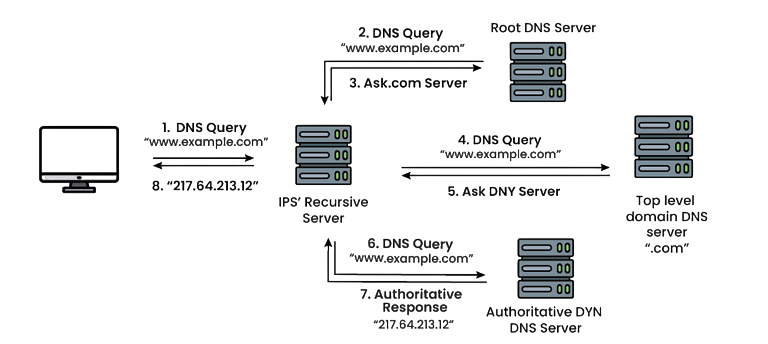
DNS stands for Domain Name System and is used to translate domain names into IP addresses. It allows users to access websites using readable names instead of numerical addresses. DNS improves usability and internet navigation. When users enter a website URL, DNS servers locate the corresponding IP address. DNS works like a phonebook for the internet. It improves communication efficiency between devices and servers. DNS is an important part of internet infrastructure.
55. What is a compiler?
Ans:
A compiler is a software program that converts high-level programming code into machine code. It translates the entire source code before execution. Compilers help computers understand programming languages like C and Java. They also detect syntax and semantic errors during compilation. Compiled programs usually execute faster than interpreted programs. Examples include GCC and Java Compiler. Understanding compilers is important in programming and software development.
56. What is an interpreter?
Ans:
An interpreter is a program that converts high-level language code into machine code line by line during execution. It executes code immediately without creating a separate executable file. Interpreters are commonly used in languages like Python and JavaScript. They simplify debugging because errors are shown line by line. Interpreted programs may run slower than compiled programs. Interpreters improve flexibility and ease of development. Understanding interpreters helps developers learn language execution processes.
57. What is recursion?
Ans:
Recursion is a programming technique where a function calls itself repeatedly until a condition is met. Recursive functions simplify complex problems by dividing them into smaller subproblems. Common examples include factorial calculation and tree traversal. Every recursive function must have a base condition to stop execution. Improper recursion may cause stack overflow errors. Recursion improves problem-solving efficiency in certain scenarios. It is an important concept in algorithms and data structures.
58. What is a constructor?
Ans:
A constructor is a special method used to initialize objects in object-oriented programming. It is automatically called when an object is created. Constructors help assign initial values to object properties. In Java, constructors have the same name as the class. Constructors can be default or parameterized. They improve object initialization and code organization. Understanding constructors is important in OOP concepts.
59. What is method overloading?
Ans:
Method overloading is a feature where multiple methods have the same name but different parameters. It is an example of compile-time polymorphism. Overloading improves code readability and flexibility. Methods can differ in number, type, or order of parameters. Java determines which method to execute based on arguments. Overloading helps reuse method names for related operations. It is commonly used in object-oriented programming.
60. What is method overriding??
Ans:
Method overriding occurs when a child class provides a specific implementation of a method already defined in the parent class. It is an example of runtime polymorphism. Overriding allows child classes to modify inherited behavior. The method signature must remain the same. It improves flexibility and extensibility in applications. Developers use overriding for dynamic method execution. It is an important concept in inheritance and polymorphism.

Learn Java Training with Advanced Concepts By Industry Experts
- Instructor-led Sessions
- Real-life Case Studies
- Assignments
61 What is an interface in Java?
Ans:
An interface in Java is a blueprint that contains abstract methods and constants. It defines what a class should do without specifying implementation details. Classes implement interfaces using the implements keyword. Interfaces support multiple inheritance in Java. They improve abstraction and loose coupling between components. Interfaces are widely used in large software applications. Understanding interfaces is important in object-oriented design.
62. What is an abstract class?
Ans:
An abstract class is a class that cannot be instantiated directly. It may contain both abstract and concrete methods. Abstract classes are used to provide common functionality to subclasses. Developers use them when partial implementation is needed. Child classes extend abstract classes and implement abstract methods. Abstract classes improve code reuse and maintainability. They are an important concept in object-oriented programming.
63. What is garbage collection in Java?
Ans:
Garbage collection is an automatic memory management process in Java. It removes unused objects from memory to free resources. The Java Virtual Machine handles garbage collection automatically. This improves application performance and prevents memory leaks. Developers do not need to manage memory manually. Garbage collection makes Java safer and more reliable. It is one of the key advantages of Java programming.
64. What is a package in Java?
Ans:
A package in Java is a collection of related classes and interfaces. Packages help organize code into logical groups. They improve code readability and maintainability. Packages also prevent naming conflicts between classes. Java provides built-in packages like java.util and java.io. Developers can create custom packages for applications. Packages are important for modular and organized programming.
65. What is the difference between == and equals() in Java?
Ans:
| FEATURE | == OPERATOR | equals() METHOD |
|---|---|---|
| PURPOSE | Compares Memory References | Compares Object Content |
| USAGE | Used With Primitive And Object Types | Used Mainly With Objects |
| COMPARISON TYPE | Checks Whether Two References Point To Same Object. | Checks Whether Values Or Data Are Equal |
| STRING COMPARISON | Compares Reference Address | Compares Actual String Content |
66.What is string immutability in Java?
Ans:
String immutability means String objects cannot be changed after creation. Any modification creates a new String object instead of altering the original one. Immutability improves security and thread safety in Java. It also allows efficient memory management through string pooling. Immutable objects are easier to cache and share. This feature improves reliability in applications. String immutability is an important concept in Java.
67. What is StringBuilder and StringBuffer?
Ans:
- StringBuilder and StringBuffer are classes used for mutable string operations in Java. They allow modifying strings without creating new objects repeatedly.
- StringBuffer is thread-safe and synchronized, while StringBuilder is faster but not synchronized. Developers use StringBuilder in single-threaded applications. StringBuffer is suitable for multithreaded environments.
- Both improve performance during frequent string manipulations. Understanding these classes helps optimize Java applications.
68. What is a constructor overloading?
Ans:
Constructor overloading means creating multiple constructors with different parameter lists in the same class. It allows objects to be initialized in different ways. Java identifies constructors based on arguments passed during object creation. Constructor overloading improves flexibility and usability. It reduces the need for multiple initialization methods. Developers commonly use it for different object configurations. It is an important concept in object-oriented programming
69. What is data hiding?
Ans:
Data hiding is the process of restricting direct access to sensitive data in a class. It is achieved using access modifiers like private and protected. Data hiding improves security and encapsulation in applications. Users interact with data only through methods. This prevents unauthorized modification of object data. It also improves maintainability and reliability. Data hiding is a core principle of object-oriented programming.
70. What is a static keyword in Java?
Ans:
The static keyword is used for variables, methods, and blocks that belong to the class rather than objects. Static members are shared among all objects of the class. Static methods can be called without creating objects. Developers use static variables for common data storage. Static blocks execute only once during class loading. The static keyword improves memory efficiency. It is widely used in Java programming.
71. What is final keyword in Java?
Ans:
The final keyword is used to restrict modification in Java. Final variables cannot be changed after initialization. Final methods cannot be overridden by subclasses. Final classes cannot be inherited. This keyword improves security and prevents unwanted modifications. Developers use final for constants and immutable behavior. Understanding final keyword usage is important in Java programming.
72. What is a singleton class?
Ans:
A singleton class is a class that allows only one object to be created. It provides a global access point to the object. Singleton design pattern is commonly used for database connections and logging systems. Developers make constructors private to prevent multiple object creation. Singleton improves resource management and consistency. It is a widely used design pattern in software engineering. Understanding singleton helps in designing efficient applications.
73. What is a design pattern?
Ans:
A design pattern is a reusable solution to common software design problems. Design patterns improve code structure and maintainability. They provide best practices for solving recurring issues. Common design patterns include Singleton, Factory, and Observer patterns. Design patterns improve scalability and flexibility in applications. Developers use them to create efficient software architectures. Understanding design patterns is important in professional software development.
74. What is a REST API?
Ans:
- REST API is an architectural style used for communication between systems over HTTP. REST stands for Representational State Transfer. APIs allow applications to exchange data efficiently.
- REST APIs use methods such as GET, POST, PUT, and DELETE. They are lightweight and widely used in web and mobile applications.
- JSON is commonly used for data exchange in REST APIs. Understanding REST APIs is important for modern software development.
75.What is JSON?
Ans:
JSON stands for JavaScript Object Notation and is a lightweight data exchange format. It is easy for humans to read and machines to parse. JSON stores data in key-value pairs. It is widely used in APIs and web applications. JSON improves communication between frontend and backend systems. Most programming languages support JSON processing. Understanding JSON is important for web development and API integration.
76. What is XML?
Ans:
XML stands for eXtensible Markup Language and is used for storing and transporting data. XML uses tags to define data structures. It is both human-readable and machine-readable. XML was widely used before JSON became popular. It supports data exchange between different systems and platforms. XML is still used in enterprise applications and configuration files. Understanding XML is useful in software integration projects.
77. What is data structure?
Ans:
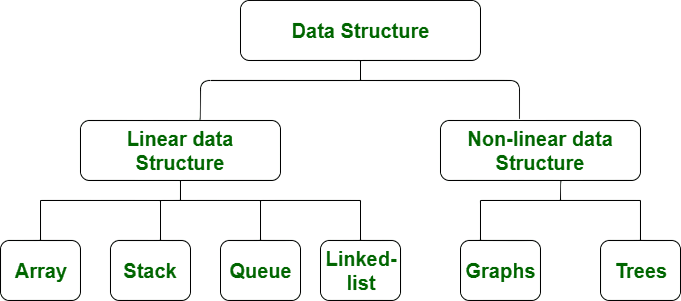
A data structure is a way of organizing and storing data efficiently. Data structures improve data access and processing performance. Common examples include arrays, linked lists, stacks, queues, trees, and graphs. Choosing the correct data structure improves algorithm efficiency. Data structures are fundamental in software development and problem-solving. They help manage large amounts of data effectively. Understanding data structures is essential for coding interviews.
78. What is an algorithm?
Ans:
An algorithm is a step-by-step procedure used to solve a problem or perform a task. Algorithms help process data efficiently and logically. They are used in searching, sorting, and optimization tasks. Good algorithms improve performance and reduce execution time. Developers analyze algorithms using time and space complexity. Algorithms are important in programming and software engineering. Understanding algorithms strengthens problem-solving abilities.
79. What is time complexity?
Ans:
Time complexity measures the amount of time an algorithm takes to execute. It helps analyze algorithm efficiency based on input size. Big O notation is commonly used to represent time complexity. Examples include O(1), O(n), and O(log n). Efficient algorithms reduce processing time and improve performance. Understanding time complexity helps developers choose better solutions. It is an important concept in data structures and algorithms.
80.What is space complexity?
Ans:
Space complexity measures the amount of memory used by an algorithm during execution. It includes variables, data structures, and auxiliary memory usage. Efficient memory management improves application performance. Developers analyze space complexity alongside time complexity. Optimized algorithms balance both execution speed and memory usage. Understanding space complexity helps build scalable applications. It is an important topic in programming and system design.
81. What is binary search?
Ans:
Binary search is an efficient searching algorithm used on sorted arrays. It repeatedly divides the search range into halves. Binary search has a time complexity of O(logn)O(\log n)O(logn), making it faster than linear search. The algorithm compares the target element with the middle element. Based on comparison, it searches either the left or right half. Binary search improves performance in large datasets. It is widely used in software applications and coding interviews.
82. What is linear search?
Ans:
Linear search is a simple searching algorithm that checks elements one by one. It starts from the beginning and continues until the target element is found. Linear search works on both sorted and unsorted data. Its time complexity is O(n)O(n)O(n). Although slower than binary search, it is easy to implement. Linear search is suitable for small datasets. Understanding searching algorithms is important in programming.
83. What is sorting?
Ans:
- Sorting is the process of arranging data in a specific order such as ascending or descending. Sorting improves data organization and searching efficiency. Common sorting algorithms include bubble sort, merge sort, and quick sort.
- Efficient sorting algorithms improve application performance. Sorting is widely used in databases and software systems.
- Developers choose sorting methods based on dataset size and requirements. Understanding sorting algorithms is essential in computer science.
84.What is bubble sort?
Ans:
Bubble sort is a simple sorting algorithm that repeatedly swaps adjacent elements if they are in the wrong order. The process continues until the array becomes sorted. Bubble sort is easy to understand and implement. However, it is inefficient for large datasets. Its average time complexity is O(n2)O(n^2)O(n2). Bubble sort is mainly used for educational purposes. Understanding it helps learn basic sorting concepts.
85. What is merge sort?
Ans:
Merge sort is a divide-and-conquer sorting algorithm. It divides the array into smaller halves and sorts them recursively. The sorted halves are then merged together. Merge sort provides efficient performance for large datasets. Its time complexity is O(nlogn)O(n\log n)O(nlogn). It is stable and suitable for linked lists and large data processing. Merge sort is widely used in software systems and applications.
86. What is quick sort?
Ans:
- Quick sort is an efficient sorting algorithm based on divide-and-conquer technique. It selects a pivot element and partitions the array around it. Elements smaller than the pivot move to one side, while larger elements move to the other side.
- Quick sort is fast for average-case scenarios. Its average time complexity is O(nlogn)O(n\log n)O(nlogn).
- It is commonly used in practical applications due to efficiency. Understanding quick sort is important for coding interviews.
87. What is a tree data structure?
Ans:
A tree is a hierarchical data structure consisting of nodes connected by edges. The top node is called the root node. Trees are used for representing hierarchical relationships such as file systems. Common types include binary trees and binary search trees. Trees improve searching and sorting efficiency. They are widely used in databases and compilers. Understanding tree structures is important in data structures and algorithms.
88. What is a binary tree?
Ans:
A binary tree is a tree data structure where each node has at most two children. The left child stores smaller values, while the right child stores larger values in binary search trees. Binary trees improve searching and traversal efficiency. Common traversal methods include inorder, preorder, and postorder. Binary trees are used in expression evaluation and database indexing. They are important in algorithms and system design. Understanding binary trees is essential for coding interviews.
89. What is a graph?
Ans:
A graph is a non-linear data structure consisting of vertices and edges. Graphs are used to represent networks and relationships between objects. Examples include social networks and map navigation systems. Graphs can be directed or undirected. Algorithms like BFS and DFS are used for graph traversal. Graphs are widely used in computer science applications. Understanding graphs improves problem-solving and algorithm knowledge.
90. What is BFS and DFS?
Ans:
BFS stands for Breadth First Search, while DFS stands for Depth First Search. Both are graph traversal algorithms. BFS explores nodes level by level using queues. DFS explores nodes deeply before backtracking and uses stacks or recursion. BFS is useful for shortest path problems. DFS is useful for pathfinding and topological sorting. Understanding BFS and DFS is important in algorithms and data structures.
91.What is software maintenance?
Ans:
Software maintenance is the process of updating and improving software after deployment. It includes fixing bugs, improving performance, and adding new features. Maintenance ensures software remains reliable and secure over time. Types of maintenance include corrective, adaptive, perfective, and preventive maintenance. Proper maintenance improves software lifespan and customer satisfaction. It is an important phase in SDLC. Software maintenance supports long-term business operations.
92. What is software quality assurance?
Ans:
Software Quality Assurance ensures software meets specified quality standards. SQA focuses on improving development processes and preventing defects. It includes activities such as testing, reviews, and audits. Quality assurance improves software reliability and customer satisfaction. SQA helps reduce project risks and maintenance costs. It ensures compliance with industry standards and requirements. Understanding SQA is important in professional software development.
93. What is software deployment?
Ans:
Software deployment is the process of releasing software applications for user access. It involves installation, configuration, and testing in production environments. Deployment ensures applications work correctly after release. Modern deployment methods include continuous integration and continuous deployment. Proper deployment minimizes downtime and system failures. Deployment is an important stage in software development life cycle. It ensures smooth software delivery to users.
94. What is DevOps?
Ans:
- DevOps is a methodology that combines software development and IT operations. It promotes collaboration between development and operations teams.
- DevOps improves software delivery speed and reliability. Automation tools help streamline testing, deployment, and monitoring processes.
- DevOps supports continuous integration and continuous deployment practices. It improves productivity and software quality. DevOps is widely used in modern IT organizations.
95. What is continuous integration?
Ans:
Continuous Integration is a development practice where developers frequently merge code changes into a shared repository. Automated testing verifies code quality after integration. CI helps identify bugs early in development. It improves collaboration and reduces integration issues. Tools like Jenkins support continuous integration workflows. CI enhances software quality and development efficiency. It is an important DevOps practice.
96. What is continuous deployment?
Ans:
Continuous Deployment is a DevOps practice where software changes are automatically released to production after testing. It improves delivery speed and reduces manual intervention. Automated pipelines ensure consistent deployments. Continuous deployment helps organizations release features quickly. Proper monitoring ensures application stability after release. It improves customer experience through faster updates. Continuous deployment is widely used in agile software development environments.
97. What is biggest failure?
Ans:
Biggest failure was not managing time effectively in a project. It affected performance.Learned the importance of planning. Improved a time management skills. Started prioritizing tasks better. Took feedback seriously. Worked on weaknesses. It helped to grow. Became more organized. It turned into a learning experience.
98.How does Handle New Responsibilities?
Ans:
New Responsibilities Should Be Approached With Enthusiasm And A Learning Mindset. Understanding Expectations Helps Ensure Effective Performance. Seeking Information Improves Knowledge And Confidence. Proper Planning Supports Successful Execution Of Tasks. Adaptability Helps Manage New Challenges Efficiently. Continuous Learning Encourages Professional Growth. Taking On Responsibilities Builds Experience And Capability.
99. How does handle conflicts in a team?
Ans:
Handle conflicts by staying calm and listening to others. Try to understand different perspectives. Focus on finding a solution. Communicate clearly. Avoid personal arguments. Maintain professionalism. Encourage teamwork. Work towards a common goal. Ensure mutual respect. Help resolve issues effectively.
100. What is leadership style?
Ans:
- Leadership style is collaborative. Believe in teamwork and communication. To support team members. Encourage ideas and innovation.
- Take responsibility. To Guide the team effectively.Focus on achieving goals. Motivate others. Maintain transparency. Ensure a positive work environment
- Promote trust and mutual respect among team members. Help the team grow and succeed together.
![Top Informatica Interview Questions & Answers – [UPDATED] Interview Question](https://www.acte.in/wp-content/uploads/2020/05/4-img-acte-1.jpeg.webp)