LMS
LMS
Last updated on 03rd Jul 2026| 7647

The TCS NQT Reasoning section evaluates logical thinking, analytical ability, problem-solving skills, and decision-making capabilities. It is an important part of the TCS National Qualifier Test and is designed to assess how effectively candidates can identify patterns, analyze information, and arrive at logical conclusions within a limited time. Strong reasoning skills help improve overall performance and increase the chances of qualifying for the next stages of the recruitment process.This collection of TCS NQT Reasoning Questions With Answers & MCQs covers the most frequently asked topics, including Number Series, Coding-Decoding, Blood Relations, Directions, Seating Arrangement, Syllogism, Analogy, Classification, Statement And Conclusion, Calendar, Clock, Data Sufficiency, Cube And Dice, Paper Folding, Mirror Images, Figure Analogy, and Logical Puzzles
1. Find The Next Number In The Series: 5, 10, 20, 40, 80, ?
Ans:
Each Number Is Multiplied By 2. The Next Number Is 80 × 2 = 160. Number Series Questions Test Pattern Recognition Skills. They Frequently Appear In TCS NQT And Other Aptitude Exams. They Improve Analytical Thinking. Next Number = 160. Identifying The Multiplication Pattern Makes Solving Series Faster. Regular Practice Improves Speed And Accuracy In Identifying Number Patterns..
2. Find The Next Number In The Series: 3, 6, 9, 12, 15, ??
Ans:
- Each Number Increases By 3. The Next Number Is 15 + 3 = 18. Number Series Questions Measure Observation Skills. They Frequently Appear In Placement Tests. They Improve Calculation Accuracy. Next Number = 18.
- Always Check The Difference Between Consecutive Numbers. These Questions Frequently Test Arithmetic Pattern Recognition Skills.
- Practicing Different Types Of Number Series Improves Logical Thinking Ability. Identifying The Common Difference Is The Key To Solving Arithmetic Series Quickly.
3. Find The Next Number In The Series: 2, 5, 8, 11, 14, ?
Ans:
Each Number Increases By 3. The Next Number Is 14 + 3 = 17. Number Series Questions Test Logical Thinking. They Are Common In Competitive Exams. They Enhance Pattern Recognition Skills. Next Number = 17. Finding The Common Difference Helps Solve Arithmetic Series Quickly. Number Series Questions Help Improve Analytical And Observation Skills. They Frequently Appear In TCS NQT And Other Aptitude Exams. Careful Analysis Of The Pattern Leads To The Correct Answer In Less Time.
4. Find The Next Number In The Series: 100, 90, 80, 70, 60, ?
Ans:
Each Number Decreases By 10. The Next Number Is 60 − 10 = 50. Number Series Questions Improve Numerical Reasoning Skills. They Frequently Appear In TCS NQT. Next Number = 50. Look For Increasing Or Decreasing Patterns First. Descending Series Questions Test The Ability To Recognize Negative Differences. Regular Practice Improves Accuracy In Solving Logical Sequences. Observing The Difference Between Consecutive Numbers Makes The Pattern Easy To Identify.
5. Find The Next Number In The Series: 1, 4, 9, 16, 25, ?
Ans:
These Are Perfect Squares: 1², 2², 3², 4², 5². The Next Number Is 6² = 36. Number Series Questions Test Mathematical Patterns. They Improve Problem-Solving Skills. Next Number = 36. Square Number Patterns Are Frequently Asked. Perfect Square Series Are Commonly Asked In Placement And Competitive Exams. Learning Standard Mathematical Patterns Helps Solve Questions Faster. Recognizing Square, Cube, And Prime Number Series Improves Overall Reasoning Performance.
6. Find The Next Letter In The Series: A, C, E, G, I, ?
Ans:
- The Letters Skip One Alphabet Each Time. After I Comes K. Letter Series Questions Test Alphabet Knowledge. They Frequently Appear In Reasoning Tests. They Improve Logical Observation.
- Next Letter = K. Always Check Alphabet Positions. Letter Series Questions Frequently Appear In TCS NQT And Other Placement Exams.
- Regular Practice Improves Alphabet Pattern Recognition And Logical Thinking. Identifying The Correct Alphabet Sequence Helps Solve Similar Questions Quickly.
7. Find The Next Letter In The Series: B, D, F, H, J, ?
Ans:
Each Letter Advances By Two Positions. After J Comes L. Letter Series Questions Improve Pattern Recognition Skills. They Are Common In Placement Exams. Next Letter = L. Alphabet Positioning Is Important. These Questions Test Observation Skills And Knowledge Of Alphabet Positions. Practicing Different Alphabet Patterns Improves Speed And Accuracy. Understanding The Sequence Correctly Helps Solve Letter Series Confidently.
8. Find The Next Letter In The Series: Z, X, V, T, R, ?
Ans:
The Letters Move Backward By Two Positions. After R Comes P. Letter Series Questions Test Reverse Alphabet Skills. They Improve Analytical Thinking. Next Letter = P. Reverse Sequences Are Frequently Asked. Reverse Alphabet Series Are Common In TCS NQT And Competitive Exams. Recognizing Backward Patterns Helps Solve Questions Faster. Careful Observation Of Letter Positions Ensures The Correct Answer.
9. Find The Next Letter In The Series: C, F, I, L, O, ?
Ans:
Each Letter Advances By Three Positions. After O Comes R. Letter Series Questions Measure Logical Ability. They Improve Observation Skills. Next Letter = R. Count Alphabet Positions Carefully. Letter Series Questions Develop Logical And Analytical Thinking Skills. They Frequently Appear In Campus Placement Tests. Finding The Correct Alphabet Gap Is The Key To Solving These Questions.
10. Find The Next Letter In The Series: M, N, O, P, Q, ?
Ans:
The Letters Are In Consecutive Order. After Q Comes R. Letter Series Questions Test Basic Alphabet Patterns. They Improve Speed And Accuracy. Next Letter = R. Consecutive Sequences Are Easy To Identify. Simple Alphabet Series Build A Strong Foundation For Advanced Reasoning Questions. Regular Practice Improves Confidence In Solving Letter Patterns. Understanding Consecutive Sequences Makes Reasoning Faster And Easier.
11. Find The Next Term: A1, B2, C3, D4, E5, ?
Ans:
- Both Letter And Number Increase By One. After E5 Comes F6. Alphanumeric Series Questions Test Dual Pattern Recognition. They Frequently Appear In TCS NQT. Next Term = F6.
- Observe Both Letters And Numbers. Alphanumeric Series Questions Test Both Alphabetical And Numerical Reasoning Skills.
- They Frequently Appear In Placement And Competitive Exams. Checking Both Patterns Separately Helps Identify The Correct Answer Quickly.
12. Find The Next Term: Z1, Y2, X3, W4, ?
Ans:
Letters Move Backward While Numbers Increase. After W4 Comes V5. Alphanumeric Series Questions Improve Logical Thinking. They Test Multiple Patterns Together. Next Term = V5. Analyze Both Sequences Separately. These Questions Improve Observation And Pattern Recognition Skills. Practicing Reverse Alphabet And Number Series Enhances Accuracy. Understanding Both Sequences Leads To Faster Problem Solving.
13. Find The Next Term: A2, C4, E6, G8, ?
Ans:
Letters Skip One Position While Numbers Increase By Two. After G8 Comes I10. Alphanumeric Series Questions Test Observation Skills. Next Term = I10. Check Letter And Number Patterns Independently. Mixed Series Questions Frequently Appear In TCS NQT Reasoning Sections. Solving Letter And Number Patterns Separately Reduces Mistakes. Regular Practice Improves Logical Thinking And Analytical Ability.
14. Find The Next Term: P5, Q6, R7, S8, ?
Ans:
Letters And Numbers Both Increase By One. After S8 Comes T9. Alphanumeric Series Questions Measure Logical Ability. They Frequently Appear In Placement Tests. Next Term = T9. Look For Consistent Changes. Alphanumeric Series Require Careful Observation Of Both Letters And Numbers. They Help Improve Logical Reasoning And Pattern Recognition Skills. Consistent Practice Increases Speed And Accuracy In Competitive Exams.
15. Find The Next Term: A10, B9, C8, D7, ?
Ans:
Letters Increase While Numbers Decrease. After D7 Comes E6. Alphanumeric Series Questions Test Mixed Pattern Recognition. Next Term = E6. Identify Increasing And Decreasing Sequences. These Questions Test The Ability To Analyze Opposite Patterns Simultaneously. They Frequently Appear In TCS NQT And Campus Placement Exams. Identifying Increasing And Decreasing Trends Correctly Ensures The Right Answer.
16. If CAT Is Written As DBU, How Is DOG Written?
Ans:
Each Letter Is Shifted Forward By One Position. D→E, O→P, G→H. Therefore DOG Becomes EPH. Coding-Decoding Questions Test Logical Reasoning Skills. They Frequently Appear In TCS NQT. Answer = EPH. Check Letter Shifts Carefully. Coding-Decoding Questions Improve Observation And Pattern Recognition Skills. They Frequently Appear In Campus Placement And Competitive Exams. Understanding The Coding Rule Correctly Helps Solve Similar Questions Quickly.
17. If PEN Is Written As QFO, How Is MAP Written?
Ans:
- Each Letter Moves Forward By One Position. M→N, A→B, P→Q. Therefore MAP Becomes NBQ. Coding-Decoding Questions Improve Analytical Thinking.
- Answer = NBQ. Observe The Coding Rule Before Solving. These Questions Test The Ability To Identify Letter Transformation Patterns.
- Regular Practice Improves Logical Thinking And Accuracy. Applying The Same Rule To Every Letter Produces The Correct Answer.
18. If BALL Is Written As CBMM, How Is BOOK Written?
Ans:
Each Letter Advances By One Position. B→C, O→P, O→P, K→L. Therefore BOOK Becomes CPPL. Coding-Decoding Questions Test Pattern Recognition. Answer = CPPL. Apply The Same Rule To Every Letter. Coding-Decoding Questions Frequently Appear In TCS NQT Reasoning Sections. Careful Observation Of Alphabet Positions Reduces Mistakes. Practicing Different Coding Patterns Improves Problem-Solving Speed.
19. If KING Is Written As LJOH, How Is QUEEN Written?
Ans:
Each Letter Is Shifted Forward By One Position. Q→R, U→V, E→F, E→F, N→O. Therefore QUEEN Becomes RVFFO. Coding-Decoding Questions Improve Logical Skills. Answer = RVFFO. Follow The Same Coding Pattern. These Questions Develop Analytical And Logical Reasoning Skills. They Are Frequently Asked In Placement And Competitive Exams. Identifying The Correct Coding Pattern Is Essential For Accurate Answers.
20. If CAR Is Written As DBS, How Is BUS Written?
Ans:
Each Letter Advances By One Position. B→C, U→V, S→T. Therefore BUS Becomes CVT. Coding-Decoding Questions Are Common In Placement Exams. Answer = CVT. Letter Position Knowledge Is Essential. Coding-Decoding Questions Strengthen Logical Thinking And Observation Skills. Regular Practice Helps Solve Similar Coding Patterns Quickly. Understanding Alphabet Positions Makes Coding Questions Easier To Solve.

21. Book : Read :: Food : ?
Ans:
A Book Is Read. Food Is Eaten. Analogies Test Relationship Recognition Skills. They Frequently Appear In Aptitude Tests. They Improve Logical Thinking. Answer = Eaten. Identify The Relationship Between The First Pair. Analogy Questions Test The Ability To Identify Relationships Between Words. They Frequently Appear In TCS NQT And Campus Placement Exams. Recognizing The Relationship Correctly Helps Solve Similar Questions Faster.
22. Bird : Fly :: Fish : ?
Ans:
A Bird Flies. A Fish Swims. Analogies Test Action-Based Relationships. They Improve Analytical Ability. Answer = Swim. Look For Similar Actions. Action-Based Analogies Improve Observation And Logical Thinking Skills. They Help Develop The Ability To Compare Similar Relationships. Understanding The Connection Between The First Pair Leads To The Correct Answer.
23. Doctor : Hospital :: Teacher : ?
Ans:
- A Doctor Works In A Hospital. A Teacher Works In A School. Analogies Measure Logical Associations. They Frequently Appear In TCS NQT.
- Answer = School. Identify Workplace Relationships. Workplace Analogies Frequently Appear In Placement And Competitive Exams.
- These Questions Improve Logical Association Skills. Identifying Similar Relationships Makes Solving Analogies Easier.
24. Pen : Write :: Knife : ?
Ans:
A Pen Is Used To Write. A Knife Is Used To Cut. Analogies Test Purpose Relationships. They Improve Reasoning Skills. Answer = Cut. Focus On The Function Of The Object. Purpose-Based Analogies Measure The Ability To Understand Object Functions. They Improve Analytical Thinking And Reasoning Skills. Recognizing The Functional Relationship Ensures The Correct Answer.
25. Wheel : Car :: Wing : ?
Ans:
A Wheel Is Part Of A Car. A Wing Is Part Of An Airplane. Analogies Test Part-To-Whole Relationships. They Improve Logical Thinking. Answer = Airplane. Recognize The Relationship Type. Part-To-Whole Analogies Frequently Appear In TCS NQT Reasoning Tests. They Improve Observation And Classification Skills. Understanding The Relationship Type Helps Solve Similar Questions Accurately.
26. Puppy : Dog :: Kitten : ?
Ans:
A Puppy Is A Young Dog. A Kitten Is A Young Cat. Analogies Test Age Relationships. They Frequently Appear In Aptitude Exams. Answer = Cat. Compare Similar Relationships. Age-Based Analogies Improve Knowledge Of Common Relationships. They Frequently Appear In Competitive And Placement Exams. Learning Similar Word Pairs Helps Answer Questions Quickly And Correctly.
27. Finger : Hand :: Toe : ?
Ans:
- A Finger Is Part Of A Hand. A Toe Is Part Of A Foot. Analogies Improve Observation Skills. They Test Part-To-Whole Relationships. Answer = Foot.
- Identify The Common Relationship. These Questions Test Logical Thinking And Relationship Recognition Skills.
- They Frequently Appear In TCS NQT And Other Aptitude Tests. Identifying The Common Relationship Is The Key To Solving Analogies Correctly.
28. Day : Night :: Hot : ?
Ans:
Day Is Opposite To Night. Hot Is Opposite To Cold. Analogies Test Opposite Relationships. They Improve Logical Thinking. Answer = Cold. Look For Opposite Meanings. Opposite-Meaning Analogies Improve Vocabulary And Logical Ability. They Frequently Appear In Placement And Competitive Exams. Recognizing Opposite Relationships Helps Solve Questions Faster.
29. Lion : Cub :: Goat : ?
Ans:
- A Cub Is The Young One Of A Lion. A Kid Is The Young One Of A Goat. Analogies Test Animal Relationships. They Frequently Appear In Reasoning Tests. Answer = Kid.
- Learn Common Animal Young Ones. Animal Relationship Questions Improve General Knowledge And Logical Thinking.
- They Frequently Appear In TCS NQT And Other Aptitude Exams. Remembering Common Animal Young Ones Helps Solve Similar Questions Easily.
30. Honey : Bee :: Milk : ?
Ans:
Honey Is Produced By A Bee. Milk Is Produced By A Cow. Analogies Test Source Relationships. They Improve Analytical Skills. Answer = Cow. Identify The Producer Or Source Correctly. Source-Based Analogies Test The Ability To Recognize Production Relationships. They Improve Observation And Reasoning Skills. Understanding The Source Or Producer Makes Solving Analogies Simple And Accurate.
31. What Day Of The Week Will It Be 10 Days After Monday?
Ans:
One Week Has 7 Days. Divide 10 By 7 To Get A Remainder Of 3. Count Three Days After Monday: Tuesday, Wednesday, Thursday. Therefore, The Required Day Is Thursday. Calendar Reasoning Questions Test Logical Calculation Skills. They Frequently Appear In TCS NQT And Other Placement Exams. Answer = Thursday. Regular Practice Improves Calendar Calculation Speed. Understanding Odd Days Makes Calendar Questions Easier To Solve.
32. If Today Is Friday, What Day Will It Be 20 Days Later?
A Week Has 7 Days. Divide 20 By 7 To Get A Remainder Of 6. Count Six Days After Friday: Saturday, Sunday, Monday, Tuesday, Wednesday, Thursday. Therefore, The Required Day Is Thursday. Calendar Questions Improve Logical Thinking And Observation Skills. Answer = Thursday. These Questions Frequently Appear In Aptitude Tests. Learning The Week Cycle Helps Solve Questions Quickly.
33. An Ordinary Year Has How Many Odd Days?
Ans:
An Ordinary Year Has 365 Days. Divide 365 By 7 To Get 52 Weeks And 1 Odd Day. Therefore, An Ordinary Year Contains One Odd Day. Calendar Reasoning Questions Test Basic Calendar Concepts. They Frequently Appear In Placement Exams. Answer = 1 Odd Day. Remember That A Normal Year Has 365 Days. Understanding Odd Days Simplifies Calendar Problems.
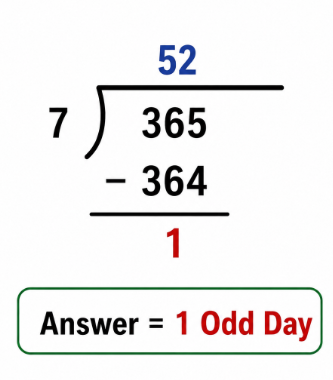
34. A Leap Year Has How Many Odd Days?
Ans:
A Leap Year Has 366 Days. Divide 366 By 7 To Get 52 Weeks And 2 Odd Days. Therefore, A Leap Year Contains Two Odd Days. Calendar Questions Measure Arithmetic And Logical Skills. They Frequently Appear In Competitive Exams. Answer = 2 Odd Days. Remember That February Has 29 Days In A Leap Year. Knowing Leap Year Rules Helps Solve Calendar Questions Faster.
35. If The Time Is 3:00, What Is The Angle Between The Hour Hand And The Minute Hand?
Ans:
- At 3:00, The Minute Hand Is At 12 And The Hour Hand Is At 3. The Angle Between Them Is Exactly 90 Degrees.
- Clock Reasoning Questions Test Time And Angle Concepts. They Frequently Appear In TCS NQT. Answer = 90°.
- Understanding Clock Angles Improves Problem-Solving Skills. Practice Different Clock Positions Regularly.
36. What Is The Angle Between The Hands Of A Clock At 6:00?
Ans:
At 6:00, The Minute Hand Points At 12 And The Hour Hand Points At 6. The Two Hands Are Opposite Each Other. Therefore, The Angle Between Them Is 180 Degrees. Clock Reasoning Questions Test Observation And Calculation Skills. Answer = 180°. Clock Problems Frequently Appear In Placement Exams. Remember The Basic Clock Positions.
37. How Many Times Do The Hands Of A Clock Coincide In A Day?
Ans:
The Hour Hand And Minute Hand Coincide 11 Times In 12 Hours. Therefore, In 24 Hours They Coincide 22 Times. Clock Reasoning Questions Test Logical And Mathematical Thinking. They Frequently Appear In Aptitude Tests. Answer = 22 Times. Remember This Standard Clock Aptitude Formula. It Saves Time During Exams.
38. A Person Finds A Wallet On The Road. What Is The Best Decision?
Ans:
The Best Decision Is To Return The Wallet To Its Owner Or Submit It To The Nearest Police Station. Decision-Making Questions Test Ethics And Practical Judgment. They Frequently Appear In TCS NQT. Answer = Return The Wallet. Ethical Decisions Reflect Honesty And Responsibility. Choose The Most Appropriate And Fair Action
39. A Team Project Is Delayed Because One Member Is Absent. What Should Be Done?
Ans:
The Best Decision Is To Redistribute The Pending Work Among Available Team Members And Inform The Manager. Decision-Making Questions Test Workplace Problem-Solving Skills. They Improve Analytical Thinking. Answer = Redistribute The Work And Inform The Manager. Teamwork And Communication Help Complete Tasks On Time. Responsible Decisions Improve Productivity.
40. A Customer Receives The Wrong Product. What Should Be Done First?
Ans:
The Correct Decision Is To Contact Customer Support And Request A Replacement Or Refund. Decision-Making Questions Evaluate Practical Thinking And Customer Service Skills. They Frequently Appear In Placement Exams. Answer = Contact Customer Support. Taking The Correct First Step Prevents Further Problems. Logical Decisions Lead To Better Outcomes.
41. Which Figure Comes Next In The Pattern: ○ △ ○ △ ○ ?
Ans:
- The Pattern Alternates Between A Circle And A Triangle. After The Last Circle, The Next Figure Is A Triangle.
- Pattern Recognition Questions Test Observation And Logical Thinking Skills. They Frequently Appear In TCS NQT And Other Placement Exams.
- Answer = △. Recognizing Repeating Patterns Helps Solve Questions Quickly. Regular Practice Improves Visual Reasoning Accuracy.
42. Which Figure Comes Next In The Pattern: □ ○ □ ○ □ ?
Ans:
The Figures Alternate Between A Square And A Circle. After The Last Square, The Next Figure Is A Circle. Pattern Recognition Questions Improve Observation Skills. They Frequently Appear In Reasoning Tests. Answer = ○. Identifying Repeating Sequences Makes Pattern Questions Easier. Practice Different Visual Patterns Regularly..
43. Find The Missing Shape: ▲ ▼ ▲ ▼ ?
Ans:
The Pattern Alternates Between An Upward Triangle And A Downward Triangle. Therefore, The Missing Shape Is An Upward Triangle. Pattern Recognition Questions Test Visual Analysis Skills. They Improve Logical Thinking. Answer = ▲. Observing Alternating Patterns Helps Solve Similar Questions Faster. Careful Analysis Leads To Accurate Answers.
44. Which Figure Completes The Pattern: ★ ☆ ★ ☆ ★ ?
Ans:
The Pattern Repeats A Filled Star Followed By An Empty Star. After The Last Filled Star, The Next Figure Is An Empty Star. Pattern Recognition Questions Measure Observation Skills. They Frequently Appear In Placement Exams. Answer = ☆. Recognizing Repeating Designs Improves Speed And Accuracy. Practice Visual Reasoning Questions Frequently.
45. Which Figure Comes Next: A, AA, AAA, AAAA, ?
Ans:
Each Step Adds One More Letter A. After AAAA Comes AAAAA. Pattern Recognition Questions Test Sequence Observation Skills. They Improve Analytical Thinking. Answer = AAAAA. Understanding Growth Patterns Helps Solve Similar Questions Quickly. Regular Practice Builds Confidence.
46. How Many Words Can Be Formed Using The Letters Of The Word “CAT”?
The Letters C, A, And T Can Form Six Different Words: CAT, CTA, ACT, ATC, TAC, And TCA. Word Formation Questions Test Vocabulary And Arrangement Skills. They Frequently Appear In Aptitude Tests. Answer = 6 Words. Counting All Possible Arrangements Is Important. Practice Improves Word Formation Skills.
47. How Many Meaningful Words Can Be Formed Using The Letters Of “STOP”?
Ans:
The Letters Can Form Words Such As STOP, POTS, POST, SPOT, TOPS, And OPTS. Word Formation Questions Test Vocabulary And Observation Skills. They Improve Logical Thinking. Answer = 6 Meaningful Words. Identifying Valid English Words Is Essential. Reading Regularly Improves Vocabulary.
48. Which Word Can Be Formed Using The Letters: E, A, R, T, H?
Ans:
Rearranging The Letters Forms The Word EARTH. Word Formation Questions Test Vocabulary And Letter Arrangement Skills. They Frequently Appear In TCS NQT. Answer = EARTH. Rearranging Letters Carefully Helps Find The Correct Word. Practice Similar Questions Regularly.
49. Which Meaningful Word Can Be Formed From The Letters: L, I, S, T, E, N?
Ans:
The Letters Rearrange To Form The Word LISTEN. Word Formation Questions Improve Observation And Vocabulary Skills. They Frequently Appear In Placement Exams. Answer = LISTEN. Carefully Analyze All The Given Letters. Regular Practice Improves Speed.
50. Which Word Can Be Formed Using The Letters: B, R, E, A, D?
Ans:
The Given Letters Rearrange To Form The Word BREAD. Word Formation Questions Test Logical Thinking And Vocabulary Knowledge. They Improve Pattern Recognition Skills. Answer = BREAD. Recognizing Familiar Words Helps Solve Questions Quickly. Practice Different Letter Combinations.
51. Arrange The Words In Logical Order: Seed, Tree, Plant, Fruit
Ans:
- A Seed Grows Into A Plant. The Plant Becomes A Tree. The Tree Produces Fruit. Word Arrangement Questions Test Sequential Thinking Skills.
- They Frequently Appear In Reasoning Tests. Answer = Seed → Plant → Tree → Fruit.
- Understanding Natural Sequences Makes These Questions Easier. Practice Logical Arrangements Regularly.
52. Arrange The Words In Logical Order: School, College, Primary School, Kindergarten
Ans:
The Correct Educational Sequence Begins With Kindergarten, Followed By Primary School, Then School, And Finally College. Word Arrangement Questions Test Logical Sequencing Skills. Answer = Kindergarten → Primary School → School → College. Identifying Real-Life Sequences Helps Solve Such Questions Faster. Practice Different Sequence-Based Questions
53. Arrange The Words In Logical Order: Infant, Child, Adult, Teenager
Ans:
The Growth Sequence Starts With Infant, Followed By Child, Then Teenager, And Finally Adult. Word Arrangement Questions Improve Logical Thinking And Observation Skills. They Frequently Appear In TCS NQT. Answer = Infant → Child → Teenager → Adult. Understanding Life Stages Helps Solve These Questions Correctly. Practice Similar Arrangements.e.
54. Arrange The Words In Logical Order: Foundation, Roof, Walls, Building Plan
Ans:
Construction Begins With A Building Plan, Then The Foundation, Followed By Walls, And Finally The Roof. Word Arrangement Questions Test Practical Reasoning Skills. They Improve Analytical Thinking. Answer = Building Plan → Foundation → Walls → Roof. Following Logical Steps Leads To The Correct Sequence. Practice Construction And Process-Based Questions.
55. Arrange The Words In Logical Order: Purchase, Select Product, Payment, Delivery
Ans:
The Correct Shopping Process Starts By Selecting A Product, Then Purchasing It Through Payment, Followed By Delivery. Word Arrangement Questions Test Everyday Logical Sequences. They Frequently Appear In Placement Exams. Answer = Select Product → Purchase → Payment → Delivery. Understanding Process Flow Helps Solve Such Questions Easily. Regular Practice Improves Reasoning Skills.
56. How Many Pieces Are Obtained If A Square Paper Is Folded Once And Cut At The Center?
Ans:
- When A Square Paper Is Folded Once, It Has Two Layers. A Single Cut At The Center Produces Two Identical Pieces After Unfolding.
- Paper Folding And Cutting Questions Test Spatial Visualization Skills. They Frequently Appear In TCS NQT And Placement Exams.
- Answer = 2 Pieces. Visualizing The Fold Before Cutting Helps Solve These Questions Quickly. Regular Practice Improves Spatial Reasoning Ability.
57. A Paper Is Folded Twice And One Hole Is Punched. How Many Holes Will Be Seen After Unfolding?
Ans:
Folding The Paper Twice Creates Four Layers. A Single Hole Passes Through All Four Layers. After Unfolding, Four Holes Are Visible. Paper Folding Questions Test Observation And Visualization Skills. Answer = 4 Holes. Count The Number Of Layers Before Predicting The Result. Understanding Folding Patterns Improves Accuracy.
58. A Circular Paper Is Folded Into Half And One Edge Is Cut. What Happens After Unfolding?
Ans:
The Cut Appears Symmetrically On Both Halves After Unfolding. Paper Folding Questions Test Spatial And Logical Thinking Skills. They Frequently Appear In Aptitude Tests. Answer = Two Symmetrical Cuts. Imagine The Fold Clearly Before Solving. Regular Practice Improves Visualization Skills.
59. A Paper Is Folded Three Times And One Hole Is Punched. How Many Holes Will Appear After Unfolding?
Ans:
Each Fold Doubles The Number Of Layers. Three Folds Create Eight Layers. One Punch Produces Eight Holes After Unfolding. Paper Cutting Questions Measure Spatial Reasoning Skills. Answer = 8 Holes. Count The Layers Formed By Folding Carefully. Visual Practice Helps Solve These Questions Faster.
60. What Is The Mirror Image Of The Word “BOOK”?
Ans:
A Mirror Image Reverses The Left And Right Sides Of The Word. The Letters Appear In Reverse Order When Viewed In A Mirror. Mirror Image Questions Test Visual Observation Skills. They Frequently Appear In TCS NQT. Answer = KOOB (Mirror Image). Remember That Mirror Images Reverse Horizontally. Practice Improves Visual Reasoning Accuracy.
61. What Is The Water Image Of The Letter “M”?
Ans:
A Water Image Reflects An Object Vertically. The Top And Bottom Are Reversed While The Left And Right Remain The Same. Water Image Questions Test Visualization Skills. Answer = Vertically Inverted M. Water Images Reflect Across A Horizontal Line. Understanding Reflection Concepts Helps Solve These Questions Easily.
62. Which Image Represents The Correct Mirror Image Of The Number 123?
Ans:
A Mirror Reverses The Number Horizontally. The Digits Appear In Reverse Orientation From Left To Right. Mirror Image Questions Test Logical Observation And Visualization. Answer = Mirror Reflection Of 123. Observe Horizontal Reversal Carefully. Regular Practice Improves Accuracy In Visual Reasoning.
63. Which Figure Completes The Given Incomplete Square Pattern?
Ans:
- The Missing Figure Should Match The Existing Lines And Shape To Complete The Square Symmetrically.
- Figure Completion Questions Test Observation And Pattern Recognition Skills. They Frequently Appear In Placement Exams.
- Answer = The Matching Missing Piece. Compare All Sides Carefully Before Choosing The Answer. Symmetry Is An Important Clue.
64. Which Figure Completes The Given Triangle Pattern?
Ans:
The Missing Part Must Continue The Existing Design Without Breaking The Pattern. Figure Completion Questions Improve Logical And Visual Thinking Skills. Answer = The Correct Matching Triangle Piece. Observe Every Line And Angle Carefully. Identifying Continuity Helps Solve Such Questions Faster..
65. Which Figure Is Similar To The Given Figure??
Ans:
The Correct Option Has The Same Shape, Proportion, And Orientation As The Original Figure. Figure Analogy Questions Test Visual Comparison Skills. They Frequently Appear In TCS NQT. Answer = The Similar Figure. Compare Shapes Instead Of Sizes. Careful Observation Leads To The Correct Choice.
66. Circle : Sphere :: Square : ?
Ans:
A Circle Is A Two-Dimensional Shape, While A Sphere Is Its Three-Dimensional Form. Similarly, The Three-Dimensional Form Of A Square Is A Cube. Figure Analogy Questions Test Shape Relationships. Answer = Cube. Understand The Relationship Between 2D And 3D Shapes. Practice Similar Analogies Regularly.
67. Triangle : Pyramid :: Square : ?
Ans:
A Pyramid Can Have A Triangular Base, While A Square Corresponds To A Cube In Basic Figure Analogies. Figure Analogy Questions Improve Logical Thinking And Shape Recognition. Answer = Cube. Identify The Relationship Between The Given Figures. Visual Understanding Improves Accuracy.
68. Find The Embedded Figure Hidden Inside The Given Design.
Ans:
The Smaller Figure Is Present Within The Larger Complex Figure Without Any Changes. Embedded Figure Questions Test Observation And Concentration Skills. They Frequently Appear In Aptitude Tests. Answer = The Hidden Figure. Look At Each Part Of The Figure Carefully. Practice Improves Visual Search Speed.
69. Which Simple Shape Is Hidden Inside The Complex Figure?
Ans:
The Complex Figure Contains A Smaller Geometric Shape That Can Be Identified By Careful Observation. Embedded Figure Questions Measure Pattern Recognition Skills. Answer = The Hidden Geometric Shape. Ignore Extra Lines While Searching. Careful Analysis Helps Identify The Correct Figure.
70. Identify The Embedded Triangle In The Given Figure.
Ans:
- A Triangle Is Hidden Within The Larger Diagram. Careful Observation Reveals The Exact Shape Without Alteration.
- Embedded Figure Questions Test Attention To Detail And Visual Reasoning Skills. They Frequently Appear In TCS NQT And Other Placement Exams.
- Answer = The Hidden Triangle. Focus On Individual Lines Instead Of The Entire Figure. Regular Practice Improves Visual Identification Skills.
71. Statement: All Engineers Are Graduates. Ravi Is An Engineer. Conclusion: Ravi Is A Graduate.
Ans:
Since All Engineers Are Graduates And Ravi Is An Engineer, It Logically Follows That Ravi Is A Graduate. Statement And Assumption Questions Test Logical Reasoning Skills. They Frequently Appear In TCS NQT And Other Placement Exams. Answer = Conclusion Follows. Read The Statement Carefully Before Drawing A Conclusion. Logical Reasoning Improves Accuracy In Such Questions. Practice Similar Questions Regularly.
72. Statement: All Roses Are Flowers. Some Flowers Are Red. Conclusion: Some Roses Are Red.
Ans:
The Statement Does Not Say That Roses Are Red. Therefore, The Conclusion Cannot Be Drawn. Statement And Assumption Questions Test Analytical Thinking. They Improve Logical Decision-Making Skills. Answer = Conclusion Does Not Follow. Avoid Making Assumptions Beyond The Given Statement. Base The Answer Only On The Information Provided..
73. Statement: Every Student Must Wear An Identity Card. Assumption: Students Will Follow The Rule.
Ans:
The Rule Can Be Effective Only If Students Wear Their Identity Cards. Therefore, The Assumption Is Implicit. Statement And Assumption Questions Measure Logical Thinking Skills. Answer = Assumption Is Implicit. Identify What Must Be True For The Statement To Be Valid. Practice Similar Questions To Improve Accuracy.
74. Statement: The Company Introduced Online Training For Employees. Assumption: Employees Have Internet Access.
Ans:
For Online Training To Be Successful, Employees Need Internet Access. Therefore, The Assumption Is Implicit. Statement And Assumption Questions Frequently Appear In Aptitude Tests. Answer = Assumption Is Implicit. Think About What Is Required For The Statement To Work. Logical Analysis Leads To The Correct Answer.
75. Statement: Smoking Is Injurious To Health. Assumption: People Care About Their Health.
Ans:
The Warning Is Given To Encourage People To Avoid Smoking. This Assumes That People Value Their Health. Statement And Assumption Questions Improve Critical Thinking Skills. Answer = Assumption Is Implicit. Understand The Hidden Meaning Behind The Statement. Practice Helps Solve Similar Questions Quickly.
76. Is The Given Information Sufficient To Find The Age Of Rahul? Statements: (1) Rahul Is 5 Years Older Than Amit. (2) Amit Is 20 Years Old.
Ans:
- Statement (1) Alone Is Not Enough Because Amit’s Age Is Unknown. Statement (2) Alone Is Also Not Enough Because Rahul’s Difference Is Unknown.
- Together, Rahul’s Age Is 25 Years. Data Sufficiency Questions Test Analytical Skills. Answer = Both Statements Together Are Sufficient.
- Combine The Information Before Making A Decision. Read Every Statement Carefully.
77. Is The Given Information Sufficient To Find A Rectangle’s Area? Statements: (1) Length = 10 cm. (2) Breadth = 5 cm.
Ans:
The Area Of A Rectangle Requires Both Length And Breadth. Statement (1) Alone Is Insufficient. Statement (2) Alone Is Also Insufficient. Together, The Area Is 50 cm². Data Sufficiency Questions Improve Logical Analysis. Answer = Both Statements Together Are Sufficient. Use All Relevant Information Before Concluding.
78. Can The Sum Of Two Numbers Be Determined? Statements: (1) One Number Is 15. (2) The Other Number Is 25.
Ans:
Each Statement Alone Is Insufficient. Together They Provide Both Numbers. Therefore, The Sum Is 40. Data Sufficiency Questions Test Decision-Making Skills. Answer = Both Statements Together Are Sufficient. Evaluate Each Statement Separately Before Combining Them. Practice Improves Accuracy.
79. Can The Value Of X Be Determined? Statements: (1) X + 5 = 15. (2) X Is Positive.
Ans:
Statement (1) Alone Gives X = 10. Statement (2) Is Not Required. Therefore, Statement (1) Alone Is Sufficient. Data Sufficiency Questions Measure Logical Thinking Skills. Answer = Statement (1) Alone Is Sufficient. Check Whether One Statement Is Enough Before Using Both. This Saves Time In Exams.
80. Can The Perimeter Of A Square Be Found? Statements: (1) Side = 8 cm. (2) Area = 64 cm²
Ans:
Knowing The Side Alone Is Enough To Find The Perimeter. The Perimeter Is 4 × 8 = 32 cm. Statement (2) Also Gives The Side, But Statement (1) Alone Is Sufficient. Data Sufficiency Questions Improve Analytical Skills. Answer = Statement (1) Alone Is Sufficient. Identify The Minimum Information Needed To Solve The Problem.
81. A Cube Is Painted On All Sides And Cut Into 27 Smaller Cubes. How Many Cubes Have Three Painted Faces?
Ans:
Only The Eight Corner Cubes Have Three Painted Faces. Cube Questions Test Spatial Visualization Skills. They Frequently Appear In TCS NQT. Answer = 8 Cubes. Remember That Corner Cubes Always Have Three Painted Faces. Practice Cube Concepts Regularly. Visualizing The Cube Step By Step Helps Solve Such Questions Faster.
82. A Cube Is Painted On All Sides And Cut Into 64 Smaller Cubes. How Many Cubes Have Two Painted Faces?
Ans:
The Edge Cubes, Excluding Corners, Have Two Painted Faces. There Are 24 Such Cubes. Cube Questions Improve Observation And Visualization Skills. Answer = 24 Cubes. Learn The Standard Cube Formulas To Solve Questions Quickly. Regular Practice Improves Accuracy. Understanding Edge, Corner, And Face Cubes Is Essential For Correct Answers.
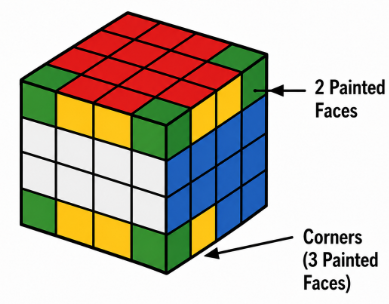
83. A Cube Is Painted On All Sides And Cut Into 125 Smaller Cubes. How Many Cubes Have One Painted Face?
Ans:
- The Cubes At The Center Of Each Face Have One Painted Face. For A 5×5×5 Cube, The Count Is 54.
- Cube Questions Test Logical And Spatial Thinking. Answer = 54 Cubes. Understanding Cube Painting Rules Makes These Questions Easier.
- Practice Different Cube Sizes. Learning Standard Cube Formulas Saves Time During Placement Exams.
84. A Cube Is Painted On All Sides And Cut Into 27 Smaller Cubes. How Many Cubes Have No Painted Faces?
Ans:
Only The Inner Cube Has No Painted Faces. In A 3×3×3 Cube, There Is One Such Cube. Cube Questions Frequently Appear In Placement Exams. Answer = 1 Cube. Inner Cubes Have No Painted Surfaces. Visualize The Cube Carefully Before Answering. Always Remember That Only Internal Cubes Remain Unpainted.
85. A Square Paper Is Folded Once And One Hole Is Punched. How Many Holes Will Appear After Unfolding?
Ans:
One Fold Creates Two Layers. One Hole Through Two Layers Produces Two Holes After Unfolding. Paper Folding Questions Test Spatial Reasoning Skills. Answer = 2 Holes. Count The Number Of Layers Formed By Folding. Careful Visualization Leads To The Correct Answer. Each Fold Doubles The Number Of Layers In The Paper..
86. A Paper Is Folded Twice And A Hole Is Punched. How Many Holes Are Seen After Unfolding?
Ans:
Two Folds Create Four Layers. One Punch Produces Four Holes. Paper Folding Questions Measure Visualization Skills. Answer = 4 Holes. Always Count The Layers Before Determining The Number Of Holes. Practice Improves Spatial Thinking. Counting The Layers Correctly Prevents Calculation Mistakes.
87. A Paper Is Folded Three Times And A Hole Is Punched. How Many Holes Will Be Visible?
Ans:
Three Folds Produce Eight Layers. One Hole Passes Through All Layers. After Unfolding, Eight Holes Are Visible. Paper Folding Questions Improve Logical Thinking. Answer = 8 Holes. Doubling The Layers After Every Fold Helps Solve Such Questions Easily. Practice Similar Problems Frequently. Visualizing Each Fold Makes Paper Folding Questions Easier To Solve.
88. A Square Paper Is Folded Vertically And Then Horizontally. One Corner Is Cut. What Happens After Unfolding?
Ans:
- The Cut Appears Symmetrically At Four Corresponding Corners. Paper Folding Questions Test Visualization And Symmetry Skills.
- They Frequently Appear In Aptitude Tests. Answer = Four Symmetrical Corner Cuts. Visualize Every Fold Before Predicting The Result.
- Symmetry Is The Key Concept. Understanding Symmetry Helps Solve Paper Folding Questions Quickly.
89. A Circular Paper Is Folded Into Four Equal Parts And One Hole Is Punched Near The Fold. How Many Holes Appear After Unfolding?
Ans:
- Four Layers Are Created By Folding Into Four Parts. One Punch Produces Four Holes After Unfolding. Paper Folding Questions Improve Observation Skills.
- Answer = 4 Holes. Count The Number Of Folded Layers Carefully. Regular Practice Improves Visualization Ability.
- Careful Layer Counting Is The Key To Solving Paper Folding Questions Correctly.
90. A Paper Is Folded Four Times And One Hole Is Punched. How Many Holes Will Appear After Unfolding?
Ans:
Each Fold Doubles The Number Of Layers. Four Folds Create Sixteen Layers. One Punch Produces Sixteen Holes. Paper Folding Questions Test Spatial And Analytical Thinking Skills. Answer = 16 Holes. Understanding Layer Formation Is Essential For Solving These Questions. Practice Different Folding Patterns To Improve Accuracy.
91. Write A C Program To Check Whether A Number Is Even Or Odd.
Ans:
- #include
- int main() {
- int n = 8;
- if (n % 2 == 0)
- printf(“Even”);
- else
- printf(“Odd”);
- return 0;
- }
92. Write A C Program To Find The Largest Of Two Numbers.
Ans:
- #include
- int main() {
- int a = 20, b = 35;
- if (a > b)
- printf(“%d”, a);
- else
- printf(“%d”, b);
- return 0;
- }
93. Write A C Program To Swap Two Numbers.
Ans:
- #include
- int main() {
- int a = 5, b = 10, temp;
- temp = a;
- a = b;
- b = temp;
- printf(“%d %d”, a, b);
- return 0;
- }
94. Write A C Program To Find The Sum Of Two Numbers.
Ans:
- #include
- int main() {
- int a = 15, b = 25;
- printf(“%d”, a + b);
- return 0;
- }
95. Write A C Program To Find The Factorial Of A Number.
Ans:
- #include
- int main() {
- int n = 5, i, fact = 1;
- for(i = 1; i <= n; i++)
- fact *= i;
- printf(“%d”, fact);
- return 0;
- }
96. Write A C Program To Check Whether A Number Is Prime
Ans:
- #include
- int main() {
- int n = 13, i, flag = 1;
- for(i = 2; i < n; i++) {
- if(n % i == 0) {
- flag = 0;
- break;
- }
- }
- if(flag)
- printf(“Prime”);
- else
- printf(“Not Prime”);
- return 0;
- }
97. Write A C Program To Reverse A Number.
Ans:
- #include
- int main() {
- int n = 1234, rev = 0;
- while(n > 0) {
- rev = rev * 10 + n % 10;
- n /= 10;
- }
- printf(“%d”, rev);
- return 0;
- }
98. Write A C Program To Find The Sum Of Digits.
Ans:
- #include
- int main() {
- int n = 1234, sum = 0;
- while(n > 0) {
- sum += n % 10;
- n /= 10;
- }
- printf(“%d”, sum);
- return 0;
- }
99. Write A C Program To Print The Fibonacci Series.
Ans:
- #include
- int main() {
- int a = 0, b = 1, c, i;
- printf(“%d %d “, a, b);
- for(i = 1; i <= 8; i++) {
- c = a + b;
- printf(“%d “, c);
- a = b;
- b = c;
- }
- return 0;
- }
100. Write A C Program To Check Whether A Number Is A Palindrome.
Ans:
- #include
- int main() {
- int n = 121, temp, rev = 0;
- temp = n;
- while(n > 0) {
- rev = rev * 10 + n % 10;
- n /= 10;
- }
- if(temp == rev)
- printf(“Palindrome”);
- else
- printf(“Not Palindrome”);
- return 0;
- }

![Top Informatica Interview Questions & Answers – [UPDATED] Interview Question](https://www.acte.in/wp-content/uploads/2020/05/4-img-acte-1.jpeg.webp)