LMS
LMS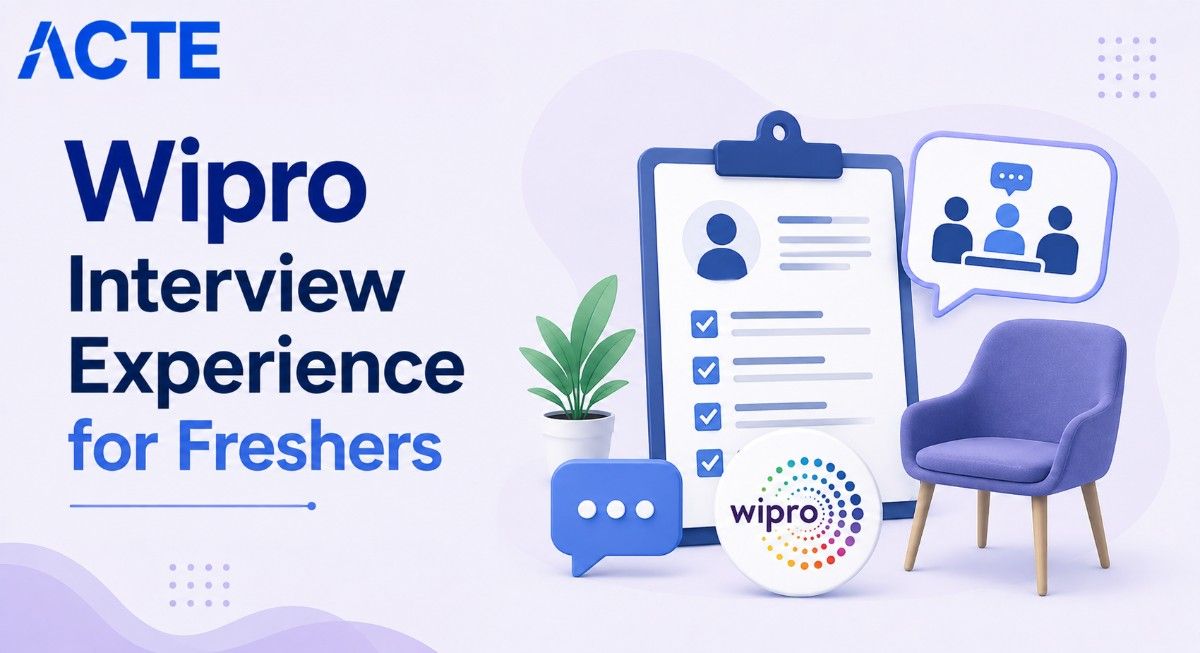
Last updated on 10th Aug 2026| 7585

Wipro Interview Experience For Freshers provides a practical overview of the recruitment process followed for entry-level technology roles. The interview process generally evaluates programming fundamentals, technical knowledge, problem-solving ability, communication skills, academic projects, and workplace readiness. Freshers may encounter aptitude or assessment rounds followed by technical and HR discussions, depending on the hiring process. Technical interviews can cover programming languages, data structures, databases, SQL, object-oriented programming, web technologies, and basic software-development concepts. Project-related questions are also important because they help interviewers understand practical knowledge and problem-solving approaches. This guide presents commonly asked technical and HR questions with simple answers to support structured interview preparation.
1. What Is Multithreading In Java?
Ans:
- Multithreading in Java allows multiple threads to execute tasks concurrently within a program. Threads share many resources of the same process while maintaining their own execution state.
- Java provides mechanisms such as the Thread class and Runnable interface for creating and managing threads. Synchronization mechanisms can help protect shared data from race conditions.
- Concurrent programming can improve responsiveness and resource utilization when tasks are suitable for parallel or concurrent execution. However, improper synchronization can cause problems such as deadlocks and inconsistent data.
2. What Is The Difference Between Stack And Queue?
Ans:
White-A stack is a linear data structure that follows the Last In, First Out principle, meaning the most recently inserted element is removed first. A queue generally follows the First In, First Out principle, meaning the earliest inserted element is removed first. Stack operations commonly include push, pop, and peek. Queue operations commonly include enqueue, dequeue, and front or peek. Stacks are useful for recursion, function calls, undo operations, and expression evaluation. Queues are commonly used in scheduling, buffering, breadth-first search, and task processing.
3. What Is A Binary Search?
Ans:
Binary search is an efficient searching algorithm used to find an element in a sorted collection. It compares the target value with the middle element of the collection. If the target is smaller, the search continues in the left half, while a larger target causes the search to continue in the right half. This process repeatedly divides the search space into smaller portions. Binary search has O(log n) time complexity when applied to suitable sorted data. It is generally much faster than linear search for large sorted collections.
4. What Is Linear Search?
Ans:
Linear search is a simple searching algorithm that checks elements sequentially until the required value is found or the collection ends. It can be applied to both sorted and unsorted collections. The algorithm begins with the first element and compares each element with the target value. If a match is found, the corresponding position can be returned. In the worst case, linear search requires O(n) comparisons. It is easy to implement and is suitable for small collections or situations where the data is not sorted.
5. What Is Sorting?
Ans:
- Sorting is the process of arranging data elements in a specific order, such as ascending or descending order. Common sorting algorithms include bubble sort, selection sort, insertion sort, merge sort, and quicksort.
- Different algorithms provide different time and space complexity characteristics. Simple algorithms such as bubble sort are easy to understand but can be inefficient for large datasets.
- More advanced algorithms such as merge sort can provide better performance for larger inputs. Choosing an appropriate sorting algorithm depends on factors such as input size, memory requirements, and performance expectations.
6. What Is Bubble Sort?
Ans:
Bubble sort is a simple comparison-based sorting algorithm that repeatedly compares adjacent elements. If two adjacent elements are in the wrong order, they are swapped. After each complete pass, one of the largest remaining elements moves toward its correct position in ascending-order sorting. The process continues until the collection becomes sorted. Basic bubble sort has O(n²) worst-case time complexity. Although it is inefficient for large datasets, bubble sort is useful for understanding sorting concepts and is commonly discussed in fresher coding interviews.
7. What Is SQL Injection?
Ans:
SQL injection is a security vulnerability that can occur when untrusted input is incorrectly incorporated into SQL statements. An attacker may manipulate input so that the resulting SQL query performs unintended operations. This can potentially expose, modify, or delete database information depending on the application’s privileges and implementation. Parameterized queries or prepared statements are commonly used to prevent SQL injection. Input validation and appropriate database permissions provide additional security layers. Understanding SQL injection is important for backend development, database security, and technical interview
8. What Is Binary Tree?
Ans:
A binary tree is a hierarchical data structure in which each node can have at most two children. These children are commonly referred to as the left child and right child. The first or topmost node is called the root of the tree. Nodes without children are generally called leaf nodes. Binary trees can be traversed using techniques such as preorder, inorder, and postorder traversal. Binary trees are widely used in searching, hierarchical data representation, expression processing, and other algorithmic applications.
9. What Is Binary Search Tree?
Ans:
- A Binary Search Tree, or BST, is a binary tree organized according to an ordering property. For a typical BST, values in the left subtree are smaller than the node value, while values in the right subtree are larger.
- This arrangement can make searching, insertion, and deletion efficient when the tree remains reasonably balanced. An inorder traversal of a valid BST produces values in sorted order.
- However, a highly unbalanced BST can have performance similar to a linear structure. BST concepts are frequently tested in data-structure and coding interviews.
10. What Is Tree Traversal?
Ans:
Tree traversal is the process of visiting the nodes of a tree according to a specific order. Common depth-first traversal methods include preorder, inorder, and postorder traversal. Preorder generally visits the root before its subtrees, inorder visits the left subtree before the root and then the right subtree, and postorder visits the subtrees before the root. Breadth-first traversal visits nodes level by level. Traversals can be implemented using recursion or appropriate data structures such as stacks and queues. Tree traversal is an important concept for solving tree-based programming problems.
11. What Is Object-Oriented Programming?
Ans:
- Object-Oriented Programming is a programming approach that organizes software around objects and classes. A class defines the properties and behaviors that can be used to create objects.
- The major concepts of OOP include encapsulation, inheritance, polymorphism, and abstraction. Encapsulation combines data and methods while controlling access to internal information. Inheritance allows a class to reuse properties and methods from another class.
- Polymorphism allows the same method or interface to behave differently in different situations. OOP improves code organization, reusability, flexibility, and maintainability.
12. What Is A Class?
Ans:
A class is a blueprint or template used to create objects in object-oriented programming. It can contain variables that represent the properties or data of an object. A class can also contain methods that define the behavior or operations of its objects. For example, a Student class can contain properties such as name, roll number, and marks. Objects can be created from the Student class with different values for these properties. Classes help organize related data and functions into a single structure. They are fundamental components of programming languages such as Java, C++, and Python.
13. What Is An Object??
Ans:
An object is an instance of a class that represents a specific entity in a program. It contains data represented by the properties defined within its class. An object can also perform operations through the methods provided by the class. For example, an object created from a Student class can represent one particular student with specific details. Multiple objects can be created from the same class with different property values. Objects help programs represent real-world entities in an organized and reusable manner. They are one of the fundamental building blocks of object-oriented programming.
4. What Is Inheritance?
Ans:
Inheritance is an object-oriented programming concept that allows one class to acquire properties and methods from another class. The existing class is commonly called the parent class or superclass. The new class that inherits these features is called the child class or subclass. Inheritance helps reduce duplicate code by allowing common functionality to be reused. A child class can also add new properties and methods or modify inherited behavior. Different programming languages provide different mechanisms and syntax for implementing inheritance. It is an important concept for developing reusable and maintainable object-oriented software.
15. What Is Polymorphism?
Ans:
Polymorphism is an object-oriented programming concept that means one interface or concept can have multiple forms. It allows the same method name or operation to behave differently depending on the situation. Compile-time polymorphism is commonly achieved through method overloading. Runtime polymorphism is commonly achieved through method overriding. Polymorphism improves flexibility because different objects can provide their own implementations of common operations. It also reduces dependency on specific implementations and supports reusable software design. Polymorphism is widely used in languages such as Java, C++, and Python.
16. What Is Encapsulation?
Ans:
AEncapsulation is an object-oriented programming concept that combines data and methods within a single unit, such as a class. It also involves restricting direct access to the internal data of an object. Access modifiers such as private, public, and protected can be used to control access to class members. Getter and setter methods are commonly used to safely access or modify private data. Encapsulation helps protect data from unwanted modification and improves program security. It also makes software easier to maintain by hiding internal implementation details. Encapsulation is one of the fundamental principles of object-oriented programming.
17. What Is Abstraction?
Ans:
Abstraction is the process of hiding unnecessary implementation details while exposing only the essential functionality. It allows users to understand what an operation does without needing to know how it is implemented internally. Abstract classes and interfaces are commonly used to achieve abstraction in object-oriented programming. For example, a payment interface can define payment operations without exposing the internal payment-processing logic. Abstraction reduces complexity and makes programs easier to understand and use. It also supports flexible and maintainable software architecture. Abstraction is an important concept in technical interviews involving object-oriented programming.
18. What Is Method Overloading?
Ans:
- Method overloading occurs when multiple methods have the same name but different parameter lists within a class. The difference can be based on the number, type, or order of parameters.
- It allows related operations to use the same meaningful method name while accepting different inputs. For example, an add method can be created to accept two integers or three integers. Method overloading is generally resolved during compile time.
- It improves code readability and provides flexibility when performing similar operations. Method overloading is commonly discussed in Java and C++ technical interviews.
19. What Is Method Overriding?
Ans:
Method overriding occurs when a child class provides its own implementation of a method inherited from a parent class. The overriding method generally has the same name and compatible parameters as the parent method. It allows a child class to customize or change inherited behavior according to its specific requirements. Method overriding is an important mechanism for achieving runtime polymorphism. The method that executes can depend on the actual object involved during runtime. It is useful when different classes need different implementations of a common operation. Method overriding is widely used in Java and other object-oriented programming languages.
20. Difference Between Wipro HR Interview Questions And Technical Interview Questions??
Ans:
| Aspect | Wipro HR Interview Questions | Wipro Technical Interview Questions |
|---|---|---|
| Purpose | Evaluate communication skills, attitude, confidence, and cultural fit. | Evaluate technical knowledge, coding skills, and problem-solving ability. |
| Focus Area | Personality, teamwork, leadership, adaptability, and career goals. | Programming, databases, operating systems, networking, and technical concepts. |
| Question Type | Behavioral, situational, and personal development questions. | Concept-based, coding, debugging, and technical problem-solving questions. |
| Components | Includes servers, databases, middleware | Specific processes on application servers |
21. What Is An Array?
Ans:
An array is a data structure used to store multiple values of the same data type. Elements are generally stored in contiguous memory locations in many programming languages, allowing efficient access using an index. The first element commonly has index zero in languages such as C, C++, Java, and Python. Arrays provide fast access when the position of an element is known. However, their fixed-size nature can be a limitation when dynamic storage is required. Arrays are widely used in programming, data structures, and coding interview problems.
22. What Is A Linked List??
Ans:
- A linked list is a linear data structure consisting of connected nodes. Each node generally contains data along with a reference or pointer to another node.
- Unlike arrays, linked-list elements do not necessarily occupy contiguous memory locations. Insertion and deletion can be efficient when the required node position is already known. Searching for an element generally requires sequential traversal through the nodes.
- Common types include singly linked lists, doubly linked lists, and circular linked lists. Linked lists are frequently tested in technical and coding interviews.
23. What Is A Stack?
Ans:
A stack is a linear data structure that follows the Last In, First Out principle. This means that the element inserted most recently is removed first. Common stack operations include push, pop, and peek. Stacks can be implemented using arrays or linked lists depending on the requirements. They are commonly used in function calls, recursion, expression evaluation, and undo operations. Stacks can also help solve problems involving balanced parentheses. Understanding stack operations is important for coding and data-structure interviews.
24. What Is A Queue?
Ans:
A queue is a linear data structure that generally follows the First In, First Out principle. This means that the element inserted first is normally removed first. Common queue operations include enqueue, dequeue, and front or peek. Queues can be implemented using arrays, linked lists, or specialized collections. They are useful in scheduling, buffering, and breadth-first search algorithms. A circular queue can improve the utilization of fixed-size queue storage. Queues are common topics in fresher technical interviews.
25. What Is A Database?
Ans:
A database is an organized collection of information that can be stored and managed electronically. Database management systems provide mechanisms for storing, retrieving, updating, and deleting data. Examples of databases include MySQL, PostgreSQL, Oracle Database, and SQL Server. Databases can support structured data and relationships between different entities. Indexes can improve the speed of frequently performed searches. Security and access controls help protect stored information. Database knowledge is important for many software development roles..
26. What Is SQL?
Ans:
SQL stands for Structured Query Language and is widely used for working with relational databases. It can be used to create, retrieve, update, and delete data. Common SQL commands include SELECT, INSERT, UPDATE, and DELETE. SQL also supports filtering, grouping, sorting, joins, and aggregation operations. Database structures can be created or modified using commands such as CREATE and ALTER. SQL is widely used in application development and data-related roles. Basic SQL knowledge is frequently tested during fresher interviews.
27. What Is A Primary Key?
Ans:
- A primary key is a column or combination of columns that uniquely identifies each record in a database table. Primary key values should be unique for the records they identify.
- A primary key generally cannot contain NULL values because each record must have a valid identifying value. It helps maintain entity integrity within a relational database.
- A table normally has one primary key constraint, although the key can consist of multiple columns. Primary keys are also commonly referenced by foreign keys in related tables. Understanding keys is essential for SQL and database interviews.
28. What Is A Foreign Key?
Ans:
A foreign key is a column or set of columns that establishes a relationship between tables in a relational database. It generally references a primary key or unique key in another table. Foreign keys help maintain referential integrity between related records. For example, an employee table can reference a department table using a department ID. They help prevent invalid references between related data. Foreign-key constraints can also control update and deletion behavior. Foreign keys are important when designing relational database structures.
29. What Is Normalization?
Ans:
Normalization is a database design technique used to reduce unnecessary data redundancy. It organizes data into related tables based on logical relationships. Normalization can help prevent insertion, update, and deletion anomalies. Common normal forms include First Normal Form, Second Normal Form, and Third Normal Form. Each normal form applies specific rules to improve database structure and organization. Proper normalization can improve data consistency and maintainability. Database design questions involving normalization are common in technical interviews.
30. What Is An SQL Join?
Ans:
An SQL join combines rows from two or more tables based on a related condition. An INNER JOIN returns matching records from the joined tables. A LEFT JOIN returns matching records along with unmatched rows from the left table. A RIGHT JOIN similarly preserves unmatched rows from the right table. A FULL OUTER JOIN returns matching and unmatched rows from both sides where supported by the database system. Joins are useful for retrieving related information stored in separate tables. Understanding joins is essential for practical SQL problem solving.
31. What Is An Operating System?
Ans:
An operating system is system software that manages computer hardware and software resources. It provides services required for applications to run effectively. Major responsibilities include process management, memory management, and file management. It also manages input-output devices and provides security mechanisms. Examples include Windows, Linux, macOS, and Android. The operating system acts as an interface between applications and computer hardware. Basic operating-system concepts are frequently asked in technical interviews.
32. What Is A Process?
Ans:
A process is a program that is currently being executed by a computer system. It has its own execution state and resources managed by the operating system. Processes can contain one or more threads depending on the application design. The operating system schedules processes so that they can share CPU resources effectively. Processes may communicate with each other through mechanisms such as inter-process communication. Process management includes activities such as creation, scheduling, synchronization, and termination. Understanding processes is important for operating-system interviews.
33. What Is A Thread?
Ans:
- A thread is a unit of execution within a process. Multiple threads can exist within the same process and share many process resources. Threads can improve application responsiveness and support concurrent execution of different tasks.
- They are commonly used for background activities and parallel operations. Thread synchronization may be required when multiple threads access shared data.
- Poor synchronization can lead to race conditions and inconsistent results. Thread concepts are commonly tested in Java, operating systems, and programming interviews.
34. What Is Multithreading?
Ans:
Multithreading is the execution of multiple threads within a process. It allows different tasks to make progress concurrently and can improve application responsiveness and resource utilization. For example, one thread can process user input while another performs background work. When threads share resources, proper synchronization is required to avoid inconsistent results. Deadlocks and race conditions are common challenges in multithreaded systems. Effective multithreading requires careful management of shared resources and execution. Understanding multithreading is useful for software development interviews.
35. What Is Deadlock?
Ans:
Deadlock occurs when two or more processes or threads wait indefinitely for resources held by each other. As a result, none of the involved processes or threads can continue execution. Deadlock generally involves conditions such as mutual exclusion and circular waiting. Resource-allocation strategies can be used to prevent or avoid deadlocks. Careful lock ordering can reduce the possibility of circular waiting. Operating systems provide different approaches for detecting, preventing, or handling deadlocks. Deadlock is therefore a common operating-system interview topic
36. What Is Cloud Computing?
Ans:
Cloud computing provides computing resources over a network, usually through internet-based services. These resources can include servers, storage, databases, networking, and software. Cloud services can reduce the need for organizations to maintain physical infrastructure. Common service models include Infrastructure as a Service, Platform as a Service, and Software as a Service. Cloud platforms also support scalability and flexible resource allocation according to business requirements. Examples include AWS, Microsoft Azure, and Google Cloud. Basic cloud knowledge is useful for modern technology job interviews.
37. What Is AWS?
Ans:
AWS stands for Amazon Web Services and is a cloud computing platform. It provides services for computing, storage, networking, databases, security, and analytics. Amazon EC2 provides virtual servers, while Amazon S3 provides object storage. Amazon RDS provides managed relational database services. Amazon VPC allows resources to operate within logically isolated virtual networks. Different AWS services can be combined to build scalable cloud applications. Basic AWS knowledge can be valuable for software and cloud-related fresher roles.
38. What Is Git?
Ans:
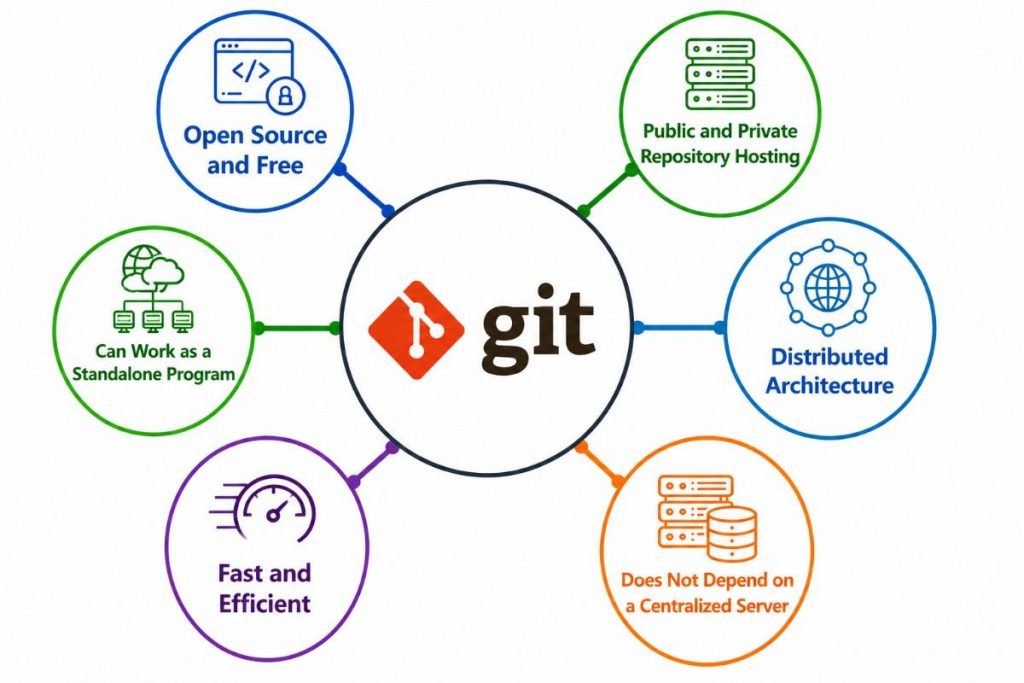
- Git is a distributed version control system used to manage source-code changes. It allows developers to track modifications made to files over time. Developers can create branches to work on different features independently.
- Changes can be committed to record meaningful points in development history. Merging allows changes from different branches to be combined into a common codebase.
- Git also supports collaboration through platforms such as GitHub and GitLab. Basic Git commands are frequently discussed in software interviews.
39. What Is GitHub?
Ans:
GitHub is a platform used to host and collaborate on Git repositories. It provides features for source-code management and team collaboration. Developers can store projects, create branches, and review code changes. Pull requests are commonly used to propose and discuss changes before they are merged. Issues can be used to track bugs, tasks, and feature requests. GitHub can also support continuous integration and deployment workflows. A well-maintained GitHub project can demonstrate practical technical skills.
40. What Is SDLC?
Ans:
SDLC stands for Software Development Life Cycle and describes a structured process used to develop and maintain software applications. Common phases include requirements analysis, design, development, testing, deployment, and maintenance. Each phase has specific objectives and deliverables that contribute to successful software development. Following an SDLC process helps teams organize development activities and manage project requirements systematically. Different development methodologies can implement these phases in different ways. Understanding SDLC helps candidates explain the overall software-development process. It is important for both technical and HR interview discussions.
41. What Is Agile?
Ans:
Agile is an approach to software development that emphasizes iterative and incremental delivery. Development work is commonly divided into smaller units called iterations or sprints. Frequent feedback helps teams respond effectively to changing requirements. Agile encourages collaboration among developers, testers, product teams, and stakeholders throughout the development process. Working software is delivered regularly instead of waiting until the entire project is completed. Agile practices can improve adaptability, collaboration, and transparency. Knowledge of Agile concepts is useful for software development interviews.

Learn Software Testing Training Course to Build Your Skills
Weekday / Weekend BatchesSee Batch Details42. What Is Scrum?
Ans:
Scrum is an Agile framework used to manage and organize software development work. The development process is divided into fixed periods commonly known as sprints. The Scrum framework includes roles such as Product Owner, Scrum Master, and Developers. Sprint planning is conducted to decide the work that should be completed during a sprint. Daily Scrum meetings help team members synchronize progress and identify problems. Sprint reviews and retrospectives provide opportunities for feedback and continuous improvement. Scrum knowledge is often useful during fresher software-development interviews.
43. What Is Testing?
Ans:
Software testing is the process of evaluating an application to identify defects and verify whether requirements are satisfied. Testing helps determine whether software behaves according to its expected functionality. Different testing levels include unit testing, integration testing, system testing, and acceptance testing. Functional testing checks whether required features work correctly according to specifications. Non-functional testing can evaluate areas such as performance, security, usability, and reliability. Effective testing improves software quality and reduces the risk of defects reaching production. Basic testing concepts are important even for development-focused fresher roles.
44. What Is Unit Testing?
Ans:
- Unit testing is the process of testing individual components or units of a software application. A unit can be a function, method, or small module depending on the application structure. The main objective is to verify that the isolated component behaves correctly under expected conditions.
- Developers commonly write unit tests during the software development process. Automated unit tests can be executed repeatedly whenever code changes are introduced.
- They help identify defects early and make troubleshooting easier. Unit testing supports the development of reliable and maintainable software.
45. What Is Debugging?
Ans:
Debugging is the process of identifying and correcting problems or defects in software. The process generally begins by reproducing the reported problem so that its behavior can be observed. Program execution, variable values, and logical conditions can then be examined to locate the underlying cause. Debuggers, logs, test cases, and error messages can assist during the investigation. The actual cause of the problem should be corrected instead of simply hiding the visible symptom. After making the correction, testing should be performed to confirm that the issue has been resolved. Good debugging skills are important for programmers and software engineers.
46. What Is An Exception?
Ans:
An exception is an event that disrupts the normal flow of program execution. Exceptions can occur because of invalid input, unavailable resources, or unexpected runtime conditions. Programming languages provide different mechanisms for detecting and handling exceptions. In Java, constructs such as try, catch, finally, throw, and throws are associated with exception handling. Proper exception handling can prevent applications from terminating unexpectedly when recoverable problems occur. Errors should be handled appropriately without hiding important diagnostic information. Exception handling is therefore a common topic in technical interviews.
47. What Is Exception Handling In Java?
Ans:
Exception handling in Java provides mechanisms for managing abnormal conditions that occur during program execution. The try block contains code that may produce an exception. The catch block is used to handle a matching exception when one occurs. The finally block can execute cleanup operations regardless of whether an exception occurs. The throw keyword can be used to explicitly generate an exception. The throws keyword declares exceptions that a method may pass to its caller. Proper exception handling improves application reliability, readability, and maintainability.
48. What Is Java?
Ans:
Java is a high-level, object-oriented programming language widely used for application development. Java source code is compiled into bytecode, which can run on a Java Virtual Machine. The JVM allows Java programs to run across different platforms that provide compatible runtime environments. Java supports important object-oriented concepts such as inheritance, polymorphism, abstraction, and encapsulation. It also provides automatic memory management through garbage collection. Java is widely used in enterprise applications, backend systems, and various other software applications. Java fundamentals are frequently tested in fresher technical interviews.
49. What Is Python?
Ans:
Python is a high-level programming language known for its readable syntax and extensive library support. It supports object-oriented, procedural, and functional programming styles. Python is widely used in web development, automation, data analysis, artificial intelligence, scripting, and other technical fields. Its built-in data structures include lists, tuples, sets, and dictionaries. Python uses dynamic typing and provides automatic memory management. A large ecosystem of third-party libraries extends Python’s functionality for different applications. Python is commonly included in coding assessments for freshers.
50. What Is C Programming?
Ans:
- C is a general-purpose programming language widely used for system and application development. It provides low-level memory manipulation capabilities through concepts such as pointers.
- C supports procedural programming using functions, variables, arrays, structures, and control statements. The language is known for efficiency and relatively close interaction with computer hardware.
- C is commonly used in operating systems, embedded systems, and performance-sensitive applications. Learning C helps build strong programming and problem-solving fundamentals. Topics such as pointers, arrays, strings, and memory management are frequently tested in technical interviews.
51. What Is A Pointer?
Ans:
A pointer is a variable that stores the memory address of another variable. Pointers are especially important in programming languages such as C and C++. They can be used for dynamic memory management and efficient manipulation of data. Pointers also support operations involving arrays, structures, and function arguments. Dereferencing a pointer allows access to the value stored at the referenced memory address. Incorrect pointer usage can result in memory corruption or invalid memory access. Pointer-related questions are therefore common in C and C++ technical interviews.
52. What Is Recursion?
Ans:
Recursion occurs when a function calls itself either directly or indirectly to solve a problem. A recursive solution normally requires a base condition that stops further recursive calls. Each recursive call generally works on a smaller or simpler version of the original problem. Recursion is commonly used for tree traversal, factorial calculation, searching, and divide-and-conquer algorithms. Without a proper base condition, recursive calls can continue until available stack resources are exhausted. Recursive solutions can sometimes be simpler and easier to understand than iterative solutions. Understanding recursion is important for coding assessments and technical interviews.
53. What Is An Algorithm?
Ans:
An algorithm is a finite sequence of well-defined steps used to solve a particular problem. A good algorithm should have clearly defined inputs, processing steps, and expected outputs. The efficiency of an algorithm is commonly evaluated using time and space complexity. Different algorithms can solve the same problem while having different performance characteristics. For example, multiple algorithms can be used to search or sort a collection of data. The appropriate algorithm should be selected according to the problem requirements and constraints. Algorithmic thinking is essential for technical coding interviews.
54. What Is Time Complexity?
Ans:
Time complexity describes how the running time of an algorithm grows as the size of its input increases. It is commonly represented using Big O notation to describe the growth rate of an algorithm. For example, linear search has O(n) time complexity in the worst case. Binary search can achieve O(log n) time complexity when the data is appropriately sorted. Time complexity helps compare algorithms without depending on the specific speed of computer hardware. Choosing an efficient algorithm can significantly improve program performance for large inputs. Understanding time complexity is important for coding and data-structure interviews.
55. What Is Space Complexity?
Ans:
Space complexity describes the amount of additional memory an algorithm requires as the input size increases. It can include temporary variables, auxiliary data structures, and memory used by the recursion stack. An algorithm requiring O(1) auxiliary space uses a constant amount of additional memory. An algorithm that creates an additional array of size n may require O(n) space. Efficient solutions often require a balance between execution time and memory usage. Space complexity becomes especially important when processing large datasets. It is commonly discussed together with time complexity during coding interviews.
56. Write A Program To Check Whether A Number Is Even Or Odd
Ans:
This program checks whether a number is even or odd. A number is even when it is divisible by 2 without any remainder. The modulus operator (%) is used to find the remainder.
- int n = 10;
- if(n % 2 == 0)
- System.out.println(“Even”);
- else
- System.out.println(“Odd”);
57. Write A Program To Find The Largest Of Three Numbers
Ans:
This program finds the largest value among three numbers. The Math.max() method compares two numbers and returns the greater value. By using nested comparisons, the largest number is identified.
- int a = 10, b = 20, c = 15;
- int max = Math.max(a, Math.max(b, c));
- System.out.println(max);
58. Write A Program To Reverse A String
Ans:
This program reverses a given string. The loop starts from the last character and moves toward the first character. Each character is added to a new string in reverse order
- String s = “Wipro”;
- String rev = “”;
- for(int i = s.length() – 1; i >= 0; i–)
- rev += s.charAt(i);
- System.out.println(rev);
59. Write A Program To Find The Factorial Of A Number
Ans:
This program calculates the factorial of a number. Factorial is the product of all positive integers from 1 to the given number. For example, 5! = 5 × 4 × 3 × 2 × 1 = 120.
- int n = 5, f = 1;
- for(int i = 1; i <= n; i++)
- f *= i;
- System.out.println(f);
60. What Is The Difference Between A Class And An Object?
Ans:
| Aspect | Class | Object |
|---|---|---|
| Definition | A blueprint that defines properties and behaviors. | An actual instance created from a class. |
| Memory | Generally does not represent a specific instance in memory. | Occupies memory when created. |
| Example | Car can be a class. | A specific BMW car can be an object |
61. What Is Academic Project?
Ans:
An academic project should be explained by clearly describing its objective, technologies, and responsibilities. The problem being solved should be introduced before explaining the implementation details. The programming language, database, framework, and important tools used in the project can be mentioned. The major modules and their functionality should be explained in a simple and structured manner

Get JOB Oriented Software TestingI Training for Beginners By MNC Experts
- Instructor-led Sessions
- Real-life Case Studies
- Assignments
62. What is Role In The Project?
Ans:
The answer should clearly explain the responsibilities handled during project development. Responsibilities may include coding, database design, testing, documentation, deployment, or other technical activities. Specific modules developed should be explained along with their purpose and functionality. Technical decisions can be supported by practical reasons related to the project requirements. In a team project, individual contributions should be clearly separated from the contributions made by other team members
63. What Challenge Face In the Project?
Ans:
Project challenges can include technical issues, changing requirements, integration problems, or unexpected errors during development. A good answer should first describe the specific problem encountered during the project. The investigation process should explain how the cause of the problem was identified. Documentation, testing, debugging, and discussions with team members can help in finding an appropriate solution. The final solution should clearly explain what was changed to resolve the problem.
64. How Does Test the Project?
Ans:
Project testing should begin by checking individual features against the expected requirements. Unit testing can be used to verify individual functions or modules independently. Integration testing can check whether different components communicate and work together correctly. Functional testing can verify whether the implemented features satisfy user requirements. Invalid inputs and boundary conditions should also be tested to identify unexpected behavior. Detected defects should be corrected and the affected functionality should be tested again. A structured testing process helps improve the reliability, quality, and stability of the project
65. What Is An Interface In Java?
Ans:
An interface in Java defines a contract that classes can implement. It can declare methods that implementing classes are expected to provide, along with certain other supported members such as constants and default or static methods. Interfaces help achieve abstraction and support a form of multiple inheritance of type. A class can implement multiple interfaces, allowing it to follow multiple contracts. Interfaces are useful for designing loosely coupled and flexible applications. They are widely used in enterprise applications and object-oriented programming.
66. How does Learn A New Technology?
Ans:
Learning a new technology usually begins with understanding its purpose, basic concepts, and important features. Official documentation can provide reliable information about the technology and its proper usage. Small practice programs can help convert theoretical knowledge into practical understanding. After gaining basic knowledge, projects can be used to understand how the technology is applied in real-world situations. Errors, limitations, and implementation challenges should be studied instead of avoided. Continuous practice helps strengthen knowledge and improves long-term understanding. This learning approach helps adapt when project requirements involve unfamiliar technologies.
67.What Is The Final Keyword In Java?
Ans:
The final keyword in Java is used to restrict modification or inheritance depending on where it is applied. A final variable generally cannot be reassigned after initialization. A final method cannot normally be overridden by a subclass. A final class cannot be extended by another class. The keyword therefore helps enforce certain design constraints in Java programs. Final values are often used when constants or immutable references are required. Understanding final variables, methods, and classes is common in Java technical interviews
68. How does Manage Multiple Tasks?
Ans:
Multiple tasks should first be organized according to their urgency, importance, and deadlines. Dependencies between tasks should also be identified before starting the work. Large tasks can be divided into smaller and manageable steps to make progress easier to track. A schedule or task-tracking system can be used to monitor completed and pending work. High-priority tasks should receive appropriate attention while lower-priority responsibilities are also monitored. Clear communication is important when priorities conflict or deadlines become difficult to achieve. This approach helps maintain productivity, organize workload, and reduce avoidable delays.
69. How does Handle Failure?
Ans:
- Failure should be treated as an opportunity to identify weaknesses and improve future performance. The cause of the failure should first be analyzed objectively rather than placing blame on others.
- Mistakes can be documented when they provide useful lessons for future work. Corrective actions should then be applied to similar situations to prevent the same problem from occurring again. Feedback from mentors, managers, or team members can help identify areas that require improvement.
- Repeated mistakes should be reduced by improving the underlying process and approach. A positive learning attitude demonstrates maturity, adaptability, and resilience.
70. How does Handle Criticism?
Ans:
Constructive criticism can provide useful information about areas that require improvement. The feedback should first be understood carefully without reacting defensively or emotionally. Valid points should be accepted and converted into specific actions for improvement. When the feedback is unclear, respectful questions can be asked to understand the expected improvement. Progress can then be reviewed to determine whether the suggested changes are producing better results. Professional feedback should be separated from personal emotions and should be treated as an opportunity for development. This approach supports continuous learning, professional growth, and effective teamwork.
71. How does Resolve Conflicts In A Team?
Ans:
Team conflicts should first be understood by considering the viewpoints of all members involved in the disagreement. The discussion should focus on the project issue rather than personal differences between team members. Requirements, facts, and technical evidence can help identify the most appropriate solution. Open and respectful communication can reduce misunderstandings and encourage cooperation. If the conflict cannot be resolved directly, a senior team member can help mediate the discussion. The final decision should prioritize project objectives, quality, and team productivity. A professional approach helps maintain positive working relationships and supports successful project delivery.
72. What Is Communication Skills?
Ans:
Communication skills involve expressing and understanding information clearly and effectively. Good communication is important when discussing requirements, technical issues, project progress, and responsibilities. Listening is equally important because misunderstandings can occur when information is incomplete or incorrectly interpreted. Written communication should be clear, concise, professional, and appropriately structured. Technical concepts should be explained according to the knowledge level of the person receiving the information. Professional communication also includes respectful behavior when discussing disagreements or different opinions. Strong communication skills support collaboration and successful software-project execution.
73. What Is Teamwork?
Ans:
Teamwork means working collaboratively with other people to achieve a shared objective. Software projects commonly require cooperation between developers, testers, designers, business teams, and other stakeholders. Each team member should understand individual responsibilities as well as dependencies on other members. Knowledge sharing can help the team solve technical problems more efficiently. Respecting different ideas can lead to better solutions and improved decision-making. Clear communication helps coordinate progress and manage project risks effectively. Effective teamwork contributes directly to successful project delivery and a positive working environment.
74. What Is Leadership?
Ans:
Leadership is the ability to guide and support people toward achieving a common objective. A good leader communicates goals, responsibilities, and expectations clearly to the team. Leadership also involves making appropriate decisions when problems or uncertainties occur. Listening to team members can help identify challenges and discover useful ideas or solutions. A leader should encourage collaboration rather than simply assigning tasks to others. Accountability is important when evaluating both successful outcomes and failures. Leadership skills can gradually develop through project participation, teamwork, and practical experience.
75. What Is The Difference Between This And Super In Java?
Ans:
- The this keyword in Java generally refers to the current object of a class. It can be used to distinguish instance variables from parameters having the same name.
- The super keyword refers to the immediate parent-class portion of an object. It can be used to access parent-class members or invoke a parent-class constructor.
- Both keywords are useful when working with inheritance and object initialization. Understanding their differences is important for Java object-oriented programming interviews.
76. What Is The Static Keyword In Java?
Ans:
The static keyword is used to associate a member with the class rather than with individual objects. A static variable is shared among instances of the class. A static method can generally be called using the class name without creating an object. Static members are commonly used when a value or operation belongs to the class as a whole. A static method has restrictions regarding direct access to non-static instance members. Understanding static members is important for Java fundamentals and interview questions.
77. What Is The Difference Between HashMap And Hashtable?
Ans:
HashMap and Hashtable are both key-value data structures associated particularly with Java. HashMap generally allows one null key and multiple null values, while Hashtable does not allow null keys or null values. Hashtable methods are synchronized, whereas HashMap is not synchronized by default. Because of these differences, HashMap is commonly preferred when built-in synchronization is not required. Thread-safe alternatives can be used when concurrent access needs to be controlled. Understanding these differences is useful for Java technical interviews.
78. What Is Constructor In Java?
Ans:
A constructor in Java is a special member used to initialize an object when the object is created. A constructor has the same name as its class and does not have a return type. Constructors can be defined with parameters to initialize objects using specific values. Multiple constructors can be created using constructor overloading. If no constructor is explicitly provided, Java can provide a default constructor under applicable conditions. Constructors are commonly used to establish the initial state of objects.
79. What Is Preferred Work Domain?
Ans:
The preferred work domain should be selected according to genuine technical interests and existing skills. Possible domains include software development, software testing, data analytics, cloud computing, and cybersecurity. The answer should explain why the selected domain is interesting and how existing knowledge supports the preference. Relevant academic projects, courses, or certifications can strengthen the explanation. Flexibility toward learning related technologies can also demonstrate adaptability. Freshers should avoid presenting preferences as rigid restrictions because project allocation may depend on business requirements. A learning-oriented attitude is valuable when entering the IT industry.
80. What Is Database Management System?
Ans:
- A Database Management System, commonly called DBMS, is software used to create, manage, store, and access databases. It provides mechanisms for storing, retrieving, updating, and deleting information efficiently.
- A DBMS can also provide features such as security, transaction management, backup, and recovery. Examples include MySQL, PostgreSQL, Oracle Database, and Microsoft SQL Server. Relational database management systems organize information using tables and relationships between them.
- Database systems help applications manage large amounts of structured information effectively. DBMS concepts are frequently tested during software development and technical interviews.
81. What Is The Difference Between DELETE, DROP, And TRUNCATE?
Ans:
DELETE is generally used to remove selected rows from a table based on a specified condition. TRUNCATE is generally used to remove all rows from a table efficiently without removing the table structure. DROP removes the database object itself, such as a table, along with its stored data. DELETE commonly supports a WHERE clause for selective row removal, while TRUNCATE normally removes all rows and does not use a WHERE clause. DROP permanently removes the table structure and its associated data from the database. The exact transactional behavior of these commands can vary depending on the database management system. Understanding these differences is important for SQL and database-related technical interviews..
82. What Is An Index In SQL?
Ans:
An index is a database structure designed to improve the speed of data retrieval operations. It can help the database locate required rows without scanning the entire table in suitable queries. Indexes are commonly created on columns that are frequently used for searching, filtering, sorting, or joining data. Although indexes can improve read performance, they require additional storage space. Insert, update, and delete operations may also require additional work because related indexes need to be maintained. Creating too many indexes can therefore negatively affect write performance and storage usage. Indexes should be designed according to the actual queries and workload requirements of the database.
83. What Is HTML?
Ans:
HTML stands for HyperText Markup Language and is used to structure content on web pages. It provides elements for creating headings, paragraphs, links, images, tables, forms, lists, and other webpage components. HTML provides the basic structural foundation of a website, while CSS is generally used for styling and presentation. JavaScript is commonly used to add dynamic behavior and interaction to HTML pages. Semantic HTML elements can improve accessibility, readability, and document organization. HTML works together with CSS and JavaScript to create modern web applications. Basic HTML knowledge is important for frontend and full-stack development roles.
84. What Is CSS?
Ans:
CSS stands for Cascading Style Sheets and is used to control the appearance and presentation of web pages. It can define properties such as colors, fonts, spacing, borders, backgrounds, and layouts. CSS selectors determine which HTML elements should receive particular styles. Modern layout techniques such as Flexbox and Grid are commonly used to create responsive and organized page designs. Media queries can help adapt web pages to different screen sizes and devices. Separating HTML structure from CSS presentation makes web applications easier to maintain. CSS fundamentals are frequently tested in frontend and web-development interviews.
85. What Is JavaScript?
Ans:
JavaScript is a programming language widely used to add dynamic and interactive behavior to web applications. It can manipulate webpage elements through the Document Object Model and respond to user events such as clicks and keyboard actions. JavaScript supports functions, objects, arrays, asynchronous programming, and event handling. Modern JavaScript also provides features such as promises, modules, and async-await for building structured applications. It can run inside web browsers and on server-side environments such as Node.js. JavaScript is widely used in frontend and full-stack development. Understanding JavaScript fundamentals is important for web-development technical interviews.
86. What Is API?
Ans:
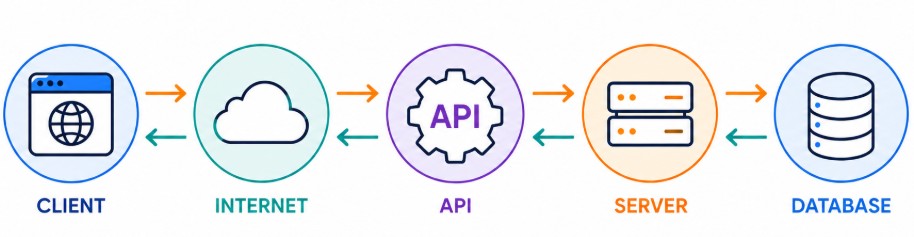
API stands for Application Programming Interface and defines a way for different software components or systems to communicate with each other. A web API can allow one application to request information from or send information to another service. REST APIs commonly use HTTP methods such as GET, POST, PUT, and DELETE for different operations. Data exchanged between systems is often represented using formats such as JSON. APIs enable communication between frontend applications, backend services, databases, and external systems.
87. What Is REST API?
Ans:
REST stands for Representational State Transfer and describes an architectural style commonly used for designing web services. RESTful APIs generally represent information as resources that can be accessed through URLs or endpoints. HTTP methods such as GET, POST, PUT, PATCH, and DELETE are commonly used to perform different operations on these resources. GET is generally used to retrieve information, while POST is commonly used to create resources. PUT or PATCH can be used to update resources, and DELETE is generally used to remove resources. REST APIs frequently exchange data using JSON format and are widely used in backend and full-stack applications..
88. What Is JSON?
Ans:
JSON stands for JavaScript Object Notation and is a lightweight format used for exchanging structured data between applications. It represents information using objects, arrays, strings, numbers, Boolean values, and null values. JSON is easy for humans to read and is also straightforward for software systems to process. It is widely used in web APIs for transferring information between frontend applications and backend services. Most modern programming languages provide libraries or built-in functionality for parsing and generating JSON data. JSON follows specific syntax rules, including the use of double quotes for property names and string values. Knowledge of JSON is useful for frontend, backend, API, and full-stack development.
89. What Is Machine Learning?
Ans:
Machine learning is a field of artificial intelligence in which computer systems learn patterns from data and use those patterns to make predictions or decisions. A machine-learning model can be trained using historical examples and then applied to new data. Supervised learning uses labeled data for tasks such as classification and regression, while unsupervised learning works with unlabeled data to identify patterns or groups. Model performance should be evaluated using suitable metrics and validation techniques. The quality, quantity, and relevance of training data can strongly influence model performance.
90. What Is Artificial Intelligence?
Ans:
- Artificial intelligence refers to technologies that enable computer systems to perform tasks that involve aspects of human intelligence. These tasks can include language understanding, image recognition, planning, prediction, and decision-making.
- Machine learning is one important approach used to develop many modern AI systems. AI applications can process large amounts of information and identify patterns that support automated decisions or actions.
- Artificial intelligence is used in areas such as healthcare, finance, customer service, manufacturing, and automation.