LMS
LMS
Last updated on 21st Apr 2026| 7840

Preparing For Infosys Virtual Interviews Requires Strong Technical Knowledge, Communication Skills, And Confidence. Candidates Are Commonly Asked Questions Related To Programming, OOPs Concepts, Databases, Data Structures, HR Topics, And Problem Solving. The Virtual Interview Process Usually Includes Technical, HR, And Communication Rounds To Evaluate Overall Skills. Proper Preparation Helps Candidates Answer Questions Clearly And Confidently During Interviews. Practicing Coding Problems, Mock Interviews, And Aptitude Questions Improves Performance Significantly. Infosys Interviews Also Focus On Teamwork, Adaptability, And Learning Ability In Candidates. These Questions And Answers Help Freshers Understand Common Interview Patterns And Prepare Effectively For IT Career Opportunities.
1. Check Even Or Odd Number
Ans:
This program checks whether a number is even or odd using modulus operator. If the remainder is zero after division by 2, the number is even. Otherwise, it is odd. It is one of the most basic coding interview questions. This problem helps beginners understand conditional statements and operators in Java. Even and odd checking is commonly used in mathematical applications. It also improves understanding of decision-making concepts in programming.
- int n = 10;
- if(n % 2 == 0)
- System.out.println(“Even”);
- else
- System.out.println(“Odd”);
2. What Is API?
Ans:
API Stands For Application Programming Interface. It Allows Different Software Systems To Communicate. APIs Enable Data Sharing Between Applications. REST API Is Commonly Used In Web Services. APIs Improve Integration And Functionality. They Simplify Software Development Processes. API Concepts Are Important In Modern IT Industry. APIs Help Developers Connect Third-Party Services Easily. API Security And Authentication Are Important For Safe Data Exchange.
3. What Is Thread?
Ans:
Thread Is The Smallest Unit Of Execution In A Process. Multiple Threads Can Exist Inside A Single Process. Threads Share Process Resources Efficiently. Multithreading Improves Application Performance. Java Provides Thread Class For Multithreading. Threads Help Perform Multiple Tasks Simultaneously. Threading Is Commonly Asked In Interviews. Threads Reduce Program Execution Time Efficiently. Proper Thread Synchronization Prevents Data Inconsistency Problems.
4. What Is Syntax Error?
Ans:
Syntax Error Occurs Due To Incorrect Programming Syntax. Missing Semicolon Or Brackets Cause Syntax Errors. Compiler Detects Syntax Errors During Compilation. Programs Cannot Execute Until Syntax Errors Are Fixed. Proper Coding Standards Reduce Syntax Mistakes. Syntax Errors Are Common For Beginners. Understanding Syntax Improves Programming Skills. Reading Error Messages Helps Identify Syntax Problems Quickly. Practicing Coding Regularly Reduces Syntax Error Frequency.
5. What Is Java?
Ans:
Java Is A Popular Object-Oriented Programming Language. It Is Used For Building Web, Mobile, And Enterprise Applications. Java Follows The Principle Of Write Once Run Anywhere. It Uses JVM To Execute Programs On Different Platforms. Java Supports Features Like Inheritance, Polymorphism, And Encapsulation. It Is Widely Used In IT Industry Due To Security And Performance. Java Is Commonly Asked In Infosys Virtual Interviews
6. What Is OOPs Concept
Ans:
OOPs Stands For Object-Oriented Programming Concepts. It Organizes Programs Using Objects And Classes. Main OOPs Features Include Encapsulation, Inheritance, Polymorphism, And Abstraction. These Concepts Improve Code Reusability And Maintenance. OOPs Helps Developers Build Large Applications Efficiently. Languages Like Java And C++ Use OOPs Principles. It Is One Of The Most Important Technical Interview Topics.
7. What Is Encapsulation?
Ans:
Encapsulation Is The Process Of Binding Data And Methods Together In A Single Unit. It Protects Data From Unauthorized Access. Private Variables Are Accessed Using Getter And Setter Methods. Encapsulation Improves Security And Code Maintainability. It Is One Of The Main Features Of OOPs. Java Uses Classes To Achieve Encapsulation. It Is Commonly Asked In Interviews. Encapsulation Helps Prevent Accidental Data Modification In Programs. It Also Improves Code Flexibility And Reusability Efficiently.
8. What Is Inheritance?
Ans:
Inheritance Allows One Class To Acquire Properties Of Another Class. The Existing Class Is Called Parent Class. The New Class Is Called Child Class. Inheritance Promotes Code Reusability In Applications. Java Uses The Extends Keyword For Inheritance. It Helps Reduce Duplicate Code. It Is A Core OOPs Concept. Inheritance Supports Hierarchical Classification In Programming. It Also Simplifies Maintenance Of Large Applications Efficiently.
9. What Is Polymorphism?
Ans:
Polymorphism Means One Method Can Perform Different Actions. It Allows Flexibility In Programming. Method Overloading And Method Overriding Are Types Of Polymorphism. Compile-Time Polymorphism Uses Method Overloading. Runtime Polymorphism Uses Method Overriding. Polymorphism Improves Program Scalability. It Is Frequently Asked In Infosys Interviews. Polymorphism Makes Code More Flexible And Reusable. It Also Helps Developers Write Cleaner And Manageable Programs.
10. What Is Abstraction?
Ans:
Abstraction Hides Internal Implementation Details From Users. It Shows Only Necessary Features Of An Object. Java Achieves Abstraction Using Abstract Classes And Interfaces. Abstraction Improves Program Security And Simplicity. It Helps Reduce Complexity In Applications. Real-World Examples Include ATM Machines And Cars. It Is An Important OOPs Interview Topic. Abstraction Allows Developers To Focus On Essential Features Only. It Also Improves Program Maintainability And Efficiency.
11. What Is SQL?
Ans:
SQL Stands For Structured Query Language. It Is Used To Store And Manage Database Information. SQL Performs Operations Like Insert, Update, Delete, And Select. Databases Like MySQL And Oracle Use SQL. SQL Helps Retrieve Data Efficiently. It Is Important For Backend Development And Data Management. SQL Questions Are Common In Infosys Interviews. SQL Supports Efficient Data Manipulation And Reporting Operations. It Also Helps Maintain Accuracy And Consistency In Databases.
12. What Is Primary Key?
Ans:
Primary Key Is A Column That Uniquely Identifies Each Record In A Table. Duplicate Values Are Not Allowed In Primary Keys. It Helps Maintain Data Integrity In Databases. Each Table Can Have Only One Primary Key. Primary Keys Improve Searching Efficiency. They Are Commonly Used In Relational Databases. It Is An Important SQL Concept. Primary Keys Help Establish Unique Relationships Between Tables. They Also Improve Database Organization And Performance.
13. What Is Foreign Key?
Ans:
Foreign Key Is A Column Used To Link Two Tables Together. It Creates Relationship Between Parent And Child Tables. Foreign Keys Maintain Referential Integrity In Databases. Duplicate Values Are Allowed In Foreign Keys. They Help Organize Database Structure Efficiently. Foreign Keys Are Important In Relational Database Design. They Are Frequently Asked In Interviews. Foreign Keys Ensure Consistency Between Related Database Tables. They Also Help Avoid Invalid Data Entries In Systems.
14. What Is Normalization?
Ans:
Normalization Is The Process Of Organizing Database Tables Efficiently. It Reduces Data Redundancy In Databases. Normalization Improves Data Consistency And Integrity. Different Normal Forms Include 1NF, 2NF, And 3NF. It Helps Avoid Duplicate Data Storage. Proper Normalization Improves Database Performance. It Is An Important DBMS Topic. Normalization Makes Databases Easier To Maintain And Update. It Also Reduces Data Anomalies During Database Operations.
15. What Is DBMS?
Ans:
DBMS Stands For Database Management System. It Is Software Used To Store And Manage Data. DBMS Provides Security And Backup Features. It Allows Multiple Users To Access Data Efficiently. Examples Include MySQL, Oracle, And SQL Server. DBMS Improves Data Organization And Retrieval. It Is A Common Technical Interview Topic. DBMS Supports Efficient Data Sharing Across Applications. It Also Helps Protect Sensitive Information From Unauthorized Access.
16. What Is Operating System?
Ans:
Operating System Is System Software That Manages Computer Hardware And Software Resources. It Provides Interface Between User And Computer. OS Handles Memory Management And Process Scheduling. Examples Include Windows, Linux, And MacOS. Operating Systems Improve System Efficiency. They Support Multitasking And Resource Allocation. OS Concepts Are Common In Interviews. Operating Systems Control Input And Output Device Operations Efficiently. They Also Ensure Smooth Execution Of Application Programs.
17. What Is Process?
Ans:
Process Is A Program That Is Currently Executing. Each Process Has Its Own Memory Space And Resources. Operating System Manages Multiple Processes Efficiently. Processes Can Run Independently Or Concurrently. Process Scheduling Improves CPU Utilization. Examples Include Browser And Media Player Applications. It Is An Important OS Concept. Processes Help Execute Multiple Applications Simultaneously In Systems. They Also Improve Overall System Productivity And Performance.
18.Reverse A String
Ans:
This program reverses a string by reading characters from the end. It uses loop and string character functions. Reverse string questions are frequently asked in technical interviews. This problem helps improve string handling and looping concepts in Java programming. String reversal is commonly used in text processing applications. It also improves understanding of character manipulation techniques in Java.
- String str = “Infosys”;
- String rev = “”;
- for(int i = str.length()-1; i >= 0; i–)
- rev += str.charAt(i);
- System.out.println(rev);
19.What Is Difference Between Process And Thread?
Ans:
A Process Is An Independent Executing Program While A Thread Is Part Of A Process. Processes Have Separate Memory Spaces. Threads Share Same Memory Within A Process. Process Creation Requires More Resources Compared To Threads. Threads Execute Faster Than Processes. Processes Are More Secure Than Threads. This Difference Is Frequently Asked In Technical Interviews. Threads Improve Performance Through Concurrent Execution Techniques. Processes Provide Better Isolation And Fault Protection Mechanisms.
20. Diffrentiate between stack and queue?
Ans:
| Feature | Stack | Queue |
|---|---|---|
| Working Principle | Follows LIFO (Last In First Out) | Follows FIFO (First In First Out) |
| Insertion And Deletion | Happens At Same End | Insertion At Rear And Deletion At Front |
| Main Operations | Push And Pop | Enqueue And Dequeue |
| Usage | Function Calls, Undo Operations | Scheduling, Buffering, Printing Tasks |
21. What Is Agile Methodology?
Ans:
Agile Is A Software Development Approach Based On Iterative Development. It Focuses On Flexibility And Customer Feedback. Agile Divides Projects Into Small Iterations Called Sprints. Teams Collaborate Frequently During Development. Agile Improves Product Quality And Delivery Speed. Scrum Is A Popular Agile Framework. Agile Questions Are Common In Infosys Interviews. Agile Encourages Continuous Improvement Throughout Development Process. It Also Helps Teams Adapt Quickly To Requirement Changes.
22. What Is Testing?
Ans:
Testing Is The Process Of Verifying Software Functionality. It Helps Identify Bugs And Errors In Applications. Testing Ensures Software Meets User Requirements. Different Types Include Manual And Automation Testing. Unit Testing And Integration Testing Are Common Methods. Proper Testing Improves Software Quality And Reliability. Testing Concepts Are Important For Interviews. Testing Helps Deliver Stable And Error-Free Applications Efficiently. It Also Improves User Satisfaction And Product Performance.
23. What Is Manual Testing?
Ans:
Manual Testing Is Performed Without Automation Tools. Testers Execute Test Cases Manually To Find Bugs. It Helps Verify User Interface And Functionality. Manual Testing Is Suitable For Small Applications. It Requires Human Observation And Analysis. Testers Prepare Reports Based On Results. It Is A Common Topic In IT Interviews. Manual Testing Helps Detect Usability And Design Issues Clearly. It Also Ensures Better User Experience In Applications.
24. What Is Automation Testing?
Ans:
Automation Testing Uses Tools To Execute Test Cases Automatically. It Saves Time And Improves Testing Efficiency. Selenium Is A Popular Automation Testing Tool. Automation Is Useful For Repetitive Test Cases. It Reduces Human Errors In Testing. Automated Scripts Improve Testing Speed Significantly. Automation Concepts Are Frequently Asked In Interviews. Automation Testing Supports Continuous Integration And Deployment Processes. It Also Improves Accuracy In Large Software Projects.
25. What Is Selenium?
Ans:
Selenium Is An Open-Source Automation Testing Tool. It Is Used To Test Web Applications. Selenium Supports Multiple Programming Languages Like Java And Python. It Can Run Tests Across Different Browsers. Selenium WebDriver Is Commonly Used For Automation Scripts. It Improves Testing Efficiency And Accuracy. Selenium Is Popular In IT Industry. Selenium Helps Reduce Manual Effort In Software Testing. It Also Supports Cross-Browser Compatibility Testing Efficiently.
26. What Is Cloud Computing?
Ans:
Cloud Computing Provides Computing Services Over Internet. It Includes Storage, Servers, And Databases. Cloud Platforms Improve Scalability And Flexibility. Examples Include AWS, Azure, And Google Cloud. Companies Use Cloud To Reduce Infrastructure Costs. Cloud Computing Supports Remote Access And Collaboration. It Is A Trending Technology Topic. Cloud Services Improve Business Continuity And Data Availability. They Also Enable Faster Deployment Of Applications Globally.
27. What Is Artificial Intelligence?
Ans:
Artificial Intelligence Enables Machines To Simulate Human Intelligence. AI Systems Can Learn And Make Decisions. Applications Include Chatbots, Recommendation Systems, And Robotics. Machine Learning Is A Subset Of AI. AI Improves Automation And Productivity In Industries. It Is Widely Used In Modern Technology Solutions. AI Concepts Are Frequently Discussed In Interviews. AI Helps Solve Complex Problems Using Smart Algorithms. It Also Improves Efficiency In Healthcare And Finance Industries.
28. What Is Machine Learning?
Ans:
Machine Learning Is A Branch Of Artificial Intelligence. It Allows Systems To Learn From Data Automatically. ML Algorithms Improve Performance Through Experience. Applications Include Prediction And Classification Systems. Supervised And Unsupervised Learning Are Common Types. ML Is Used In Healthcare And Finance Industries. It Is A Popular Technology Topic. Machine Learning Helps Automate Decision-Making Processes Efficiently. It Also Supports Advanced Data Analysis And Predictions.
29. What Is Communication Skill?
Ans:
Communication Skill Refers To Ability To Share Information Clearly. Good Communication Improves Team Collaboration And Productivity. It Includes Speaking, Listening, And Writing Skills. IT Professionals Need Strong Communication For Client Interaction. Effective Communication Helps Resolve Problems Quickly. It Also Improves Leadership And Teamwork Abilities. Infosys Values Candidates With Good Communication Skills. Strong Communication Builds Better Professional Relationships In Workplace. It Also Increases Confidence During Interviews And Presentations.
30. What Is Teamwork?
Ans:
Teamwork Means Working Together To Achieve Common Goals. It Improves Productivity And Problem Solving. Team Members Share Knowledge And Responsibilities. Good Teamwork Builds Positive Work Environment. Communication And Cooperation Are Important In Teams. IT Projects Often Require Strong Team Collaboration. Teamwork Questions Are Common In HR Interviews. Teamwork Encourages Learning And Skill Sharing Among Employees. It Also Helps Complete Projects Faster And More Efficiently.
31. Why does Want To Join Infosys?
Ans:
Infosys Is Known For Innovation, Learning Opportunities, And Career Growth. The Company Provides Excellent Training Programs For Freshers. Real-Time Projects Help Employees Gain Valuable Industry Experience. Infosys Encourages Teamwork And Continuous Skill Development. Strong Work Culture Makes It A Great Place To Build Career. The Company Supports Professional Growth And Technical Learning. Joining Infosys Will Help Build Strong Industry Knowledge.
32. Find Largest Number In Array
Ans:
This program finds the largest element in an array using loop comparison. The variable max stores the highest value found during traversal. Array problems are very common in Infosys interviews. This question improves understanding of arrays and iteration techniques. Finding maximum values is important in data analysis applications. It also helps improve comparison and traversal logic in programming.
- int arr[] = {10, 25, 8, 40};
- int max = arr[0];
- for(int i = 1; i < arr.length; i++)
- if(arr[i] > max)
- max = arr[i];
- System.out.println(max);
33. What is Time management?
Ans:
Time Management Is The Process Of Planning And Organizing Time Efficiently. It Helps Complete Tasks Within Given Deadlines. Good Time Management Improves Productivity And Reduces Stress. People Use Schedules And To-Do Lists For Better Time Planning. It Helps Balance Work, Studies, And Personal Activities Effectively. Time Management Improves Discipline And Decision-Making Skills. It Is An Important Skill For Students And Professionals. Proper Time Management Helps Achieve Goals Faster And More Efficiently. It Also Increases Focus And Improves Overall Performance In Daily Life. .
34. What Is C Programming?
Ans:
C Is A Powerful Procedural Programming Language. It Is Widely Used For System And Application Development. C Provides Fast Execution And Memory Efficiency. It Supports Functions, Loops, And Arrays. Many Modern Languages Are Influenced By C. It Is Commonly Used In Embedded Systems. C Programming Questions Are Important In Interviews. C Helps Build Operating Systems And Compilers Efficiently. It Also Improves Understanding Of Low-Level Programming Concepts.
35. What Is Python?
Ans:
Python Is A High-Level Programming Language Known For Simplicity. It Uses Easy-To-Understand Syntax. Python Is Used In Web Development, AI, And Automation. It Supports Object-Oriented And Functional Programming. Python Has Large Community Support And Libraries. It Is Popular Among Beginners And Professionals. Python Questions Are Common In Technical Interviews. Python Improves Productivity Through Simple And Readable Syntax. It Also Supports Rapid Application Development Efficiently.
36. What Is Difference Between Compiler And Interpreter?
Ans:
Compiler Converts Entire Program Into Machine Code At Once. Interpreter Executes Program Line By Line. Compiled Programs Run Faster Compared To Interpreted Programs. C Uses Compiler While Python Uses Interpreter. Compilers Detect Errors After Full Compilation. Interpreters Stop Execution When Error Occurs. This Difference Is Frequently Asked In Interviews. Compilers Generate Executable Files After Compilation Process. Interpreters Are Useful For Debugging And Testing Programs Quickly.
37. What Is Array?
Ans:
Array Is A Collection Of Elements Stored In Contiguous Memory Locations. It Stores Similar Data Types Together. Arrays Are Accessed Using Index Values. They Improve Data Organization And Processing Efficiency. Arrays Are Widely Used In Programming Problems. Sorting And Searching Often Use Arrays. Array Questions Are Common In Coding Interviews. Arrays Help Store Large Amounts Of Data Efficiently. They Also Simplify Data Access And Manipulation Operations.
38. What Is Linked List?
Ans:
Linked List Is A Dynamic Data Structure Consisting Of Nodes. Each Node Contains Data And Address Of Next Node. Linked Lists Support Efficient Insertion And Deletion Operations. They Do Not Require Contiguous Memory Allocation. Types Include Singly And Doubly Linked Lists. Linked Lists Are Important In Data Structures. They Are Frequently Asked In Interviews. Linked Lists Use Dynamic Memory Allocation Efficiently. They Also Reduce Memory Wastage Compared To Arrays.
39. What Is Stack?
Ans:
Stack Is A Linear Data Structure Following LIFO Principle. LIFO Means Last In First Out. Push Operation Adds Elements To Stack. Pop Operation Removes Elements From Stack. Stack Is Used In Function Calls And Expression Evaluation. Browser History Is A Real-Life Example Of Stack. Stack Questions Are Common In Interviews. Stacks Help Manage Recursive Function Calls Efficiently. They Also Support Undo Operations In Applications.
40. What Is Queue?
Ans:
Queue Is A Linear Data Structure Following FIFO Principle. FIFO Means First In First Out. Elements Are Inserted At Rear And Removed From Front. Queue Is Used In Scheduling And Resource Management. Printer Queue Is A Common Example. Queues Improve Orderly Processing Of Tasks. Queue Concepts Are Frequently Asked In Interviews. Queues Help Manage Processes In Operating Systems Efficiently. They Also Improve Task Scheduling And Resource Allocation.
41. What Is Recursion?
Ans:
Recursion Is A Programming Technique Where Function Calls Itself. It Solves Problems By Dividing Into Smaller Subproblems. Every Recursive Function Needs A Base Condition. Without Base Condition, Infinite Recursion Occurs. Factorial And Fibonacci Are Common Examples. Recursion Simplifies Complex Problems. It Is An Important Coding Topic. Recursion Is Widely Used In Tree And Graph Problems. It Also Helps Improve Logical And Analytical Thinking Skills.
42. What Is Exception Handling?
Ans:
Exception Handling Manages Runtime Errors In Programs. Java Uses Try, Catch, And Finally Blocks For Handling Exceptions. It Prevents Program Crashes During Execution. Exception Handling Improves Application Stability. Different Exceptions Represent Different Error Types. Proper Handling Improves User Experience. It Is A Frequently Asked Java Interview Topic. Exception Handling Helps Maintain Smooth Program Execution Efficiently. It Also Makes Applications More Reliable And User-Friendly.
43. What Is API?
Ans:
API Stands For Application Programming Interface. It Allows Different Software Systems To Communicate. APIs Enable Data Sharing Between Applications. REST API Is Commonly Used In Web Services. APIs Improve Integration And Functionality. They Simplify Software Development Processes. API Concepts Are Important In Modern IT Industry. APIs Help Connect Third-Party Services With Applications Easily. They Also Improve Software Scalability And Flexibility Efficiently.
44. What Is HTTP?
Ans:
HTTP Stands For HyperText Transfer Protocol. It Is Used For Communication Between Client And Server. HTTP Transfers Web Pages Over Internet. It Follows Request And Response Model. Browsers Use HTTP To Access Websites. HTTPS Provides Secure Communication Using Encryption. HTTP Is An Important Networking Topic. HTTP Supports Data Exchange Between Web Browsers And Servers. It Also Forms Foundation Of Modern Web Communication Systems
45. What Is HTML?
Ans:
HTML Stands For HyperText Markup Language. It Is Used To Create Structure Of Web Pages. HTML Uses Tags For Formatting Content. Elements Include Headings, Paragraphs, And Images. HTML Works Together With CSS And JavaScript. It Is Basic Technology For Web Development. HTML Questions Are Common In Interviews. HTML Helps Create Interactive And User-Friendly Web Pages. It Also Supports Multimedia Elements Like Audio And Video.
46. What Is CSS?
Ans:
CSS Stands For Cascading Style Sheets. It Is Used To Design And Style Web Pages. CSS Controls Colors, Fonts, And Layouts. It Improves User Interface And Appearance. CSS Helps Create Responsive Websites. It Works Together With HTML. CSS Concepts Are Important For Frontend Development. CSS Improves Visual Presentation Of Websites Efficiently. It Also Helps Maintain Consistent Design Across Pages.
47. What Is JavaScript?
Ans:
JavaScript Is A Scripting Language Used For Web Development. It Adds Interactivity To Websites. JavaScript Supports Events And Dynamic Content. It Runs In Browser Environment. JS Is Used In Frontend And Backend Development. Popular Frameworks Include React And NodeJS. JavaScript Questions Are Common In Interviews. JavaScript Helps Build Interactive And Responsive Web Applications. It Also Supports Real-Time Features In Modern Websites.
48. Print Fibonacci Series
Ans:
This program prints Fibonacci numbers where each number is the sum of previous two numbers. It uses loop and variable swapping technique for calculation. Fibonacci series questions are common in coding interviews. This problem improves logical thinking and understanding of loops. Fibonacci sequence is widely used in mathematics and computer science applications. It also helps programmers practice iterative problem-solving techniques effectively.
- int a = 0, b = 1;
- for(int i = 0; i < 5; i++){
- System.out.print(a + ” “);
- int c = a + b;
- a = b;
- b = c;
- }
49. What Is Git?
Ans:
Git Is A Version Control System Used By Developers. It Tracks Changes In Source Code Efficiently. Git Supports Team Collaboration In Projects. Developers Can Create Branches For Development. GitHub Uses Git For Repository Management. It Helps Maintain Code History Securely. Git Concepts Are Important In Interviews. Git Also Helps Developers Restore Previous Versions Of Code Easily.50. What Is Debugging?
Ans:
Debugging Is The Process Of Finding And Fixing Errors In Programs. Developers Use Debugging Tools To Analyze Code Execution. Debugging Improves Software Quality And Performance. Syntax And Logical Errors Are Common During Development. Effective Debugging Saves Time In Projects. It Helps Maintain Reliable Applications. Debugging Skills Are Important For Developers.
51. Find Largest Number In Array
Ans:
This program finds the largest element in an array using loop comparison. The variable max stores the highest value found during traversal. Array problems are very common in Infosys interviews. This question improves understanding of arrays and iteration techniques. Largest element searching is useful in statistical and analytical applications. It also strengthens problem-solving and array traversal skills in programming.
- int arr[] = {10, 25, 8, 40};
- int max = arr[0];
- for(int i = 1; i < arr.length; i++)
- if(arr[i] > max)
- max = arr[i];
- System.out.println(max);
52. What Is Runtime Error?
Ans:
Runtime Error Occurs During Program Execution. Division By Zero Is A Common Runtime Error Example. Runtime Errors May Crash The Program Unexpectedly. Exception Handling Helps Manage Runtime Errors. Proper Testing Reduces Runtime Issues. Runtime Errors Affect Program Stability. They Are Frequently Discussed In Interviews.
53. What Is Logical Error?
Ans:
Logical Error Occurs When Program Produces Incorrect Output. The Program Executes Without Crashing. Wrong Formula Or Condition Causes Logical Errors. Logical Errors Are Harder To Detect Compared To Syntax Errors. Proper Testing Helps Identify Them. Debugging Improves Program Accuracy. Logical Errors Affect Application Results.
54. What Is Data Structure?
Ans:
Data Structure Is A Method Of Organizing Data Efficiently. It Helps Perform Operations Like Searching And Sorting Faster. Arrays, Linked Lists, And Trees Are Common Data Structures. Efficient Data Structures Improve Application Performance. They Reduce Memory And Execution Time. Data Structures Are Important In Coding Interviews. Strong DSA Knowledge Helps Crack Technical Rounds. Data Structures Help Manage Large Amounts Of Data Systematically
55. What Is Algorithm?
Ans:
Algorithm Is A Step-By-Step Procedure To Solve A Problem. It Provides Logical Instructions For Execution. Efficient Algorithms Reduce Time And Memory Usage. Sorting And Searching Are Common Algorithm Examples. Algorithms Improve Program Performance Significantly. They Are Important In Competitive Coding And Interviews. Understanding Algorithms Enhances Problem-Solving Skills. Algorithms Help Developers Build Optimized And Efficient Applications.
56. What Is Binary Search?
Ans:
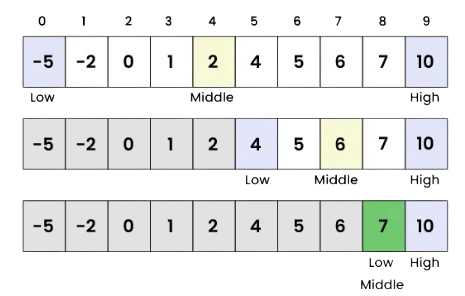
Binary Search Is A Searching Algorithm Used On Sorted Arrays. It Divides The Search Space Into Two Halves Repeatedly. The Middle Element Is Compared With The Target Value. Binary Search Reduces Searching Time Significantly. Its Time Complexity Is O(Log N). It Is Faster Than Linear Search For Large Data. Binary Search Is Frequently Asked In Coding Interviews. Binary Search Improves Efficiency In Large Dataset Searching Operations.
57. What Is Linear Search?
Ans:
Linear Search Checks Elements One By One In A Sequence. It Starts From The Beginning Of The Array. The Search Continues Until Target Element Is Found. Linear Search Works For Both Sorted And Unsorted Data. Its Time Complexity Is O(N). It Is Easy To Implement And Understand. It Is A Basic Searching Technique. Linear Search Is Suitable For Small Data Collections. It Also Requires No Additional Memory For Execution.
58. What Is Bubble Sort?
Ans:
Bubble Sort Is A Simple Sorting Algorithm. Adjacent Elements Are Compared And Swapped If Needed. Larger Elements Move Towards End After Each Pass. Bubble Sort Is Easy To Understand But Less Efficient. Its Average Time Complexity Is O(N²). It Is Mainly Used For Learning Purposes. Bubble Sort Questions Are Common In Interviews. Bubble Sort Helps Beginners Understand Sorting Concepts Clearly. It Also Demonstrates Basic Comparison And Swapping Techniques.
59. What Is Merge Sort?
Ans:
Merge Sort Is A Divide And Conquer Sorting Algorithm. It Divides Array Into Smaller Parts Recursively. The Smaller Arrays Are Sorted And Merged Together. Merge Sort Has O(N Log N) Time Complexity. It Works Efficiently For Large Datasets. Extra Memory Is Required During Merging Process. Merge Sort Is Frequently Asked In Coding Interviews. Merge Sort Provides Stable Sorting Performance Efficiently. It Also Handles Large Data Collections More Effectively.
60. What Is Quick Sort?
Ans:
Quick Sort Is An Efficient Sorting Algorithm. It Selects A Pivot Element And Partitions Data Around It. Smaller Values Move Left And Larger Values Move Right. Quick Sort Works Efficiently For Large Inputs. Average Time Complexity Is O(N Log N). It Uses Divide And Conquer Technique. Quick Sort Is A Popular Interview Topic. Quick Sort Requires Less Memory Compared To Merge Sort. It Also Provides Faster Performance In Practical Applications.
61. What Is Big O Notation?
Ans:
Big O Notation Represents Algorithm Efficiency. It Measures Time And Space Complexity Of Programs. Big O Helps Compare Different Algorithms. Common Complexities Include O(1), O(N), And O(Log N). Efficient Algorithms Have Lower Complexity Values. Big O Is Important In Performance Optimization. It Is Frequently Asked In Technical Interviews. Big O Helps Developers Design Faster And Scalable Applications. It Also Improves Understanding Of Algorithm Performance Analysis.
62. Difference between Compiler and Interpreter?
Ans:
| Feature | Compiler | Interpreter |
|---|---|---|
| Translation Method | Converts Entire Program At Once | Converts Program Line By Line |
| Execution Speed | Faster Execution After Compilation | Slower Execution Due To Linewise Translation |
| Error Detection | Shows Errors After Full Compilation | Shows Errors One By One During Execution |
| Output Generation | Generates Executable File | Does Not Generate Executable File |
63. What Is Space Complexity?
Ans:
Space Complexity Measures Memory Usage Of An Algorithm. It Includes Variables And Extra Storage Used During Execution. Efficient Programs Try To Reduce Memory Consumption. Recursive Programs Often Use Additional Stack Memory. Space Complexity Is Represented Using Big O Notation. It Is Important For Large Applications. Interviewers Frequently Ask Complexity Questions. Lower Space Complexity Helps Improve System Performance Efficiently. It Also Reduces Memory Wastage In Large-Scale Applications.
64. What Is Tree Data Structure?
Ans:
Tree Is A Hierarchical Data Structure Containing Nodes. The Topmost Node Is Called Root Node. Each Node Can Have Child Nodes Connected To It. Trees Are Used In Databases And File Systems. Binary Tree Is A Common Tree Type. Trees Improve Searching And Data Organization. Tree Concepts Are Important In Interviews. Trees Help Represent Hierarchical Relationships Efficiently. They Also Support Fast Searching And Sorting Operations.
65. What Is Binary Tree?
Ans:
Binary Tree Is A Tree Where Each Node Has At Most Two Children. The Children Are Called Left And Right Nodes. Binary Trees Are Used In Searching Applications. Traversal Methods Include Inorder And Preorder. Binary Trees Improve Data Management Efficiency. They Are Important In Data Structures. Binary Tree Questions Are Frequently Asked. Binary Trees Help Organize Data In Structured Form Efficiently. They Also Support Fast Data Access And Retrieval Operations.
66. What Is Binary Search Tree?
Ans:
Binary Search Tree Is A Special Binary Tree Structure. Left Child Contains Smaller Values Than Parent Node. Right Child Contains Larger Values Than Parent Node. BST Supports Fast Searching And Insertion Operations. Average Complexity Is O(Log N). It Is Widely Used In Databases. BST Is A Popular Interview Topic. BST Helps Maintain Sorted Data Efficiently In Memory. It Also Improves Searching Performance Compared To Linear Structures.
67. What Is Graph?
Ans:
Graph Is A Non-Linear Data Structure With Vertices And Edges. Vertices Represent Nodes While Edges Represent Connections. Graphs Are Used In Social Networks And Maps. Graphs Can Be Directed Or Undirected. BFS And DFS Are Common Traversal Methods. Graph Problems Improve Logical Thinking Skills. Graph Questions Are Important In Interviews. Graphs Help Model Real-World Network Relationships Efficiently. They Also Support Route Optimization And Connectivity Problems.
68. What Is BFS?
Ans:
BFS Stands For Breadth First Search. It Traverses Graph Level By Level. Queue Data Structure Is Used In BFS. BFS Is Useful For Finding Shortest Path In Unweighted Graphs. It Explores Neighbor Nodes Before Moving Deeper. BFS Is Widely Used In Networking Applications. It Is Frequently Asked In Coding Interviews. BFS Helps Traverse Graphs Systematically And Efficiently. It Also Prevents Missing Reachable Nodes During Traversal.
69. What Is DFS?
Ans:
DFS Stands For Depth First Search. It Explores One Branch Completely Before Backtracking. DFS Uses Stack Or Recursion For Traversal. It Is Useful For Pathfinding And Cycle Detection Problems. DFS Works Efficiently For Graph Traversal Applications. It Is Commonly Used In Maze Solving Problems. DFS Is An Important Interview Topic. DFS Helps Explore Deep Graph Structures Efficiently. It Also Supports Topological Sorting And Connectivity Analysis.
70. What Is Hashing?
Ans:
Hashing Is A Technique Used For Fast Data Retrieval. It Maps Data To Unique Indexes Using Hash Functions. Hash Tables Provide Fast Search Operations. Collisions Can Occur When Keys Share Same Index. Hashing Is Used In Databases And Caching Systems. It Improves Application Performance Significantly. Hashing Is Frequently Asked In Interviews. Hashing Helps Reduce Data Access Time Efficiently. It Also Supports Fast Insertion And Deletion Operations.
71. What Is Dynamic Programming?
Ans:
Dynamic Programming Solves Problems Using Smaller Subproblems. It Stores Previously Calculated Results For Reuse. DP Reduces Repeated Computations In Recursive Problems. Fibonacci Series Is A Common DP Example. It Improves Algorithm Efficiency Significantly. DP Is Important In Competitive Coding. Dynamic Programming Questions Are Common In Interviews. Dynamic Programming Helps Solve Complex Optimization Problems Efficiently. It Also Reduces Execution Time In Recursive Algorithms.
72. What Is Greedy Algorithm?
Ans:
Greedy Algorithm Makes Best Choice At Every Step. It Aims To Find Optimal Solution Quickly. Greedy Methods Work For Specific Optimization Problems. Activity Selection Problem Uses Greedy Approach. Greedy Algorithms Are Fast And Simple. They May Not Always Produce Correct Results For Every Problem. Greedy Concepts Are Important In Interviews. Greedy Algorithms Reduce Complexity In Certain Problem Types Efficiently. They Also Improve Execution Speed For Optimization Tasks.
73. What Is Heap?
Ans:
Heap Is A Special Tree-Based Data Structure. It Follows Heap Property Between Parent And Child Nodes. Max Heap Stores Largest Value At Root. Min Heap Stores Smallest Value At Root. Heap Is Used In Priority Queues And Heap Sort. It Improves Efficient Data Retrieval. Heap Questions Are Common In Interviews. Heaps Support Fast Access To Highest Or Lowest Values. They Also Improve Scheduling And Sorting Operations Efficiently.
74. What Is Priority Queue?
Ans:
Priority Queue Is A Data Structure Where Elements Have Priorities. Higher Priority Elements Are Processed First. Heap Is Commonly Used To Implement Priority Queue. It Is Useful In Scheduling And Graph Algorithms. Priority Queues Improve Processing Efficiency. They Are Widely Used In Operating Systems. Priority Queue Questions Are Frequently Asked. Priority Queues Help Manage Critical Tasks Efficiently In Systems. They Also Support Faster Execution Of Important Processes.
75. What Is Deadlock?
Ans:
Deadlock Occurs When Two Or More Processes Wait For Each Other Forever. Resources Become Locked And Execution Stops. Deadlock Mainly Occurs In Multitasking Systems. Proper Resource Allocation Prevents Deadlock Conditions. Deadlock Detection And Recovery Are Important OS Concepts. It Affects System Performance And Stability. Deadlock Questions Are Common In Interviews. Deadlocks Reduce System Efficiency And Cause Process Delays. Proper Synchronization Techniques Help Avoid Deadlock Situations.
76. Swap Two Numbers Without Third Variable
Ans:
This program swaps two numbers without using an extra variable. Arithmetic operations are used for exchanging values. Swap problems are basic but important interview questions. This coding example improves understanding of variables and mathematical operations. Swapping techniques are commonly used in sorting algorithms and data processing. It also helps beginners understand value manipulation and memory usage concepts.
- int a = 5, b = 10;
- a = a + b;
- b = a – b;
- a = a – b;
- System.out.println(a + ” ” + b);
77. What Is Synchronization?
Ans:
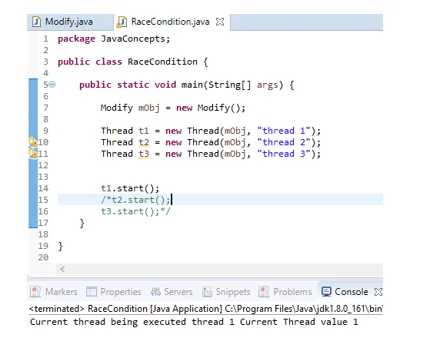
Synchronization Controls Access To Shared Resources In Multithreading. It Prevents Data Inconsistency Issues. Java Uses Synchronized Keyword For Synchronization. Only One Thread Can Access Critical Section At A Time. Synchronization Improves Thread Safety In Applications. It Is Important For Concurrent Programming. Synchronization Questions Are Frequently Asked. Synchronization Helps Prevent Race Conditions In Multithreaded Programs. It Also Improves Reliability Of Concurrent Applications Efficiently.
78. What Is Constructor?
Ans:
Constructor Is A Special Method Used To Initialize Objects. It Has Same Name As Class Name. Constructors Are Called Automatically During Object Creation. Java Supports Default And Parameterized Constructors. Constructors Simplify Object Initialization Process. They Improve Code Readability And Organization. Constructor Questions Are Common In Interviews. Constructors Help Assign Initial Values To Object Variables Efficiently. They Also Improve Program Structure And Maintainability.
79. What Is Method Overloading?
Ans:
Method Overloading Allows Multiple Methods With Same Name. The Methods Differ In Parameters Or Data Types. It Represents Compile-Time Polymorphism In Java. Overloading Improves Code Flexibility And Readability. Constructors Can Also Be Overloaded. Java Resolves Calls Based On Arguments Passed. It Is A Popular OOPs Interview Topic. Method Overloading Reduces Need For Different Method Names. It Also Simplifies Program Development And Maintenance.
80. What Is Method Overriding?
Ans:
Method Overriding Occurs When Child Class Redefines Parent Class Method. It Represents Runtime Polymorphism In Java. The Method Signature Must Remain Same. Overriding Improves Flexibility In Applications. Java Uses Inheritance To Achieve Overriding. It Helps Provide Specific Implementations. Overriding Questions Are Common In Interviews. Method Overriding Supports Dynamic Method Dispatch Efficiently. It Also Enhances Reusability And Extensibility In Programs.
81. What Is Interface?
Ans:
Interface Is A Blueprint Of A Class In Java. It Contains Abstract Methods Without Implementation. Classes Implement Interfaces Using Implements Keyword. Interfaces Support Multiple Inheritance In Java. They Improve Abstraction And Flexibility. Java 8 Allows Default Methods In Interfaces. Interface Questions Are Frequently Asked In Interviews. Interfaces Help Achieve Loose Coupling Between Components Efficiently. They Also Improve Scalability And Maintainability Of Applications.
82. What Is Abstract Class?
Ans:
Abstract Class Is A Class That Cannot Be Instantiated. It May Contain Abstract And Non-Abstract Methods. Child Classes Must Implement Abstract Methods. Abstract Classes Support Partial Abstraction. They Improve Code Reusability And Design. Java Uses Abstract Keyword For Declaration. It Is An Important OOPs Concept. Abstract Classes Help Define Common Functionality Efficiently. They Also Support Better Application Architecture And Design.
83. What Is JVM?
Ans:
JVM Stands For Java Virtual Machine. It Executes Java Bytecode On Different Platforms. JVM Makes Java Platform Independent. It Manages Memory And Garbage Collection. JVM Converts Bytecode Into Machine Language. It Improves Security And Performance In Java Applications. JVM Questions Are Common In Technical Interviews. JVM Helps Execute Java Programs Efficiently Across Systems. It Also Provides Runtime Environment For Java Applications.
84. What Is JDK?
Ans:
JDK Stands For Java Development Kit. It Provides Tools Required For Java Development. JDK Includes Compiler, JVM, And Libraries. Developers Use JDK To Write And Run Java Programs. It Supports Java Application Development Efficiently. JDK Is Essential For Java Programmers. JDK Concepts Are Frequently Asked In Interviews. JDK Helps Build, Debug, And Execute Java Applications Easily. It Also Includes Development Utilities For Programmers.
85. What Is JRE?
Ans:
JRE Stands For Java Runtime Environment. It Provides Environment Required To Run Java Programs. JRE Includes JVM And Supporting Libraries. It Does Not Contain Development Tools Like Compiler. Users Need JRE To Execute Java Applications. JRE Simplifies Program Execution Across Platforms. It Is An Important Java Interview Topic. JRE Ensures Smooth Execution Of Java Bytecode Efficiently. It Also Provides Required Runtime Dependencies For Applications.
86. What Is Garbage Collection?
Ans:
Garbage Collection Automatically Removes Unused Objects From Memory. It Helps Prevent Memory Leaks In Java Applications. JVM Performs Garbage Collection Automatically. It Improves Memory Management Efficiency. Developers Do Not Need Manual Memory Deallocation. Garbage Collection Enhances Application Stability. It Is Frequently Asked In Java Interviews. Garbage Collection Optimizes Memory Usage In Applications Efficiently. It Also Reduces Risk Of Application Crashes Due To Memory Issues.
87. What Is String?
Ans:
String Is A Sequence Of Characters In Programming. Java Provides String Class For Handling Text Data. Strings Are Immutable In Java. String Methods Support Searching And Manipulation Operations. Strings Are Widely Used In Applications. Interviewers Frequently Ask String-Based Coding Problems. String Concepts Are Important For Developers. Strings Help Store And Process Text Information Efficiently. They Also Support Various Text Formatting And Comparison Operations.
88. What Is StringBuilder?
Ans:
StringBuilder Is A Mutable Class Used For String Modification. It Allows Efficient String Operations Without Creating New Objects. StringBuilder Improves Performance Compared To String Concatenation. It Supports Methods Like Append And Insert. It Is Commonly Used In Loops And Large Text Processing. StringBuilder Is Faster Than StringBuffer In Single Threaded Applications. It Is A Common Java Interview Topic. StringBuilder Helps Reduce Memory Usage During String Operations. It Also Improves Performance In Repetitive Text Manipulations.
89. What Is StringBuffer?
Ans:
StringBuffer Is A Mutable Class Used For String Manipulation. It Is Similar To StringBuilder But Thread Safe. Synchronization Makes StringBuffer Slower Than StringBuilder. It Is Useful In Multithreaded Applications. StringBuffer Supports Efficient Text Operations. It Improves Performance Compared To Immutable Strings. StringBuffer Questions Are Common In Interviews. StringBuffer Ensures Safe String Operations In Concurrent Programs. It Also Reduces Overhead Compared To Normal String Concatenation.
90. What Is Collection Framework?
Ans:
Collection Framework Provides Classes And Interfaces For Data Storage. It Includes List, Set, And Map Interfaces. Collections Simplify Data Handling In Java Applications. ArrayList And HashMap Are Common Collection Classes. Framework Improves Code Reusability And Efficiency. It Supports Dynamic Data Management. Collection Framework Is Frequently Asked In Interviews. Collection Framework Helps Manage Large Data Efficiently In Programs. It Also Provides Ready-Made Data Structures For Developers.
91. What Is ArrayList?
Ans:
ArrayList Is A Dynamic Array Class In Java. It Can Grow Or Shrink Automatically. ArrayList Allows Duplicate Elements. Elements Are Accessed Using Index Values. It Provides Fast Retrieval Operations. ArrayList Is Widely Used In Java Applications. ArrayList Questions Are Common In Interviews. ArrayList Simplifies Dynamic Data Storage In Applications Efficiently. It Also Improves Flexibility Compared To Normal Arrays.
92. What Is LinkedList?
Ans:
LinkedList Is A Collection Class Based On Doubly Linked List. It Supports Efficient Insertion And Deletion Operations. LinkedList Uses Dynamic Memory Allocation. It Is Slower Than ArrayList For Random Access. LinkedList Allows Duplicate Elements. It Implements List And Deque Interfaces. LinkedList Is Frequently Asked In Interviews. LinkedList Helps Manage Dynamic Data Efficiently In Applications. It Also Supports Fast Modifications Compared To Arrays.
93. What Is HashMap?
Ans:
HashMap Stores Data In Key Value Pair Format. It Uses Hashing Technique For Fast Retrieval. HashMap Allows One Null Key And Multiple Null Values. It Does Not Maintain Insertion Order. HashMap Provides Average O(1) Complexity For Operations. It Is Widely Used In Java Applications. HashMap Questions Are Common In Interviews. HashMap Supports Fast Searching And Updating Of Data Efficiently. It Also Helps Store Large Amounts Of Data Effectively.
94. What Is Set Interface?
Ans:
Set Interface Stores Unique Elements In Java Collections. Duplicate Values Are Not Allowed In Sets. HashSet And TreeSet Are Common Set Implementations. Sets Improve Data Uniqueness In Applications. They Are Useful For Removing Duplicate Data. Set Operations Improve Performance Efficiently. Set Concepts Are Frequently Asked In Interviews. Sets Help Maintain Unique Data Collections Effectively. They Also Support Fast Membership Checking Operations.
95. What Is Exception?
Ans:
Exception Is An Event That Disrupts Program Execution. Exceptions Occur During Runtime Due To Errors. Java Provides Built-In Exception Classes. Developers Use Try And Catch Blocks For Handling Exceptions. Proper Exception Handling Improves Program Stability. Exceptions Prevent Unexpected Application Crashes. Exception Questions Are Common In Interviews. Exceptions Help Identify And Manage Runtime Problems Efficiently. They Also Improve Reliability And User Experience In Applications.
96. What Is Finally Block?
Ans:
Finally Block Executes Regardless Of Exception Occurrence. It Is Used For Cleanup Operations In Programs. Database Connections And File Resources Are Closed Inside Finally Block. Finally Improves Resource Management Efficiency. It Works Together With Try And Catch Blocks. Finally Is Important In Exception Handling. It Is Frequently Asked In Interviews. Finally Block Ensures Important Cleanup Code Always Executes. It Also Prevents Resource Leaks In Applications.
97. What Is JDBC?
Ans:
JDBC Stands For Java Database Connectivity. It Allows Java Applications To Connect With Databases. JDBC Uses Drivers For Database Communication. Developers Execute SQL Queries Through JDBC. It Supports CRUD Operations Efficiently. JDBC Is Important For Backend Development. JDBC Questions Are Common In Technical Interviews. JDBC Simplifies Interaction Between Java Programs And Databases. It Also Supports Secure And Efficient Data Management Operations.
98. What Is Software Testing Life Cycle?
Ans:
STLC Stands For Software Testing Life Cycle. It Defines Different Phases Of Software Testing Process. Main Phases Include Requirement Analysis, Test Planning, And Execution. STLC Ensures High Quality Software Delivery. Proper Testing Improves Reliability And User Satisfaction. STLC Helps Detect Bugs Efficiently. It Is An Important Testing Concept. STLC Improves Overall Software Development Quality And Performance. It Also Ensures Better Coordination Between Testing Activities.
99. What Is Resume?
Ans:
Resume Is A Document Showing Candidate Skills And Qualifications. It Includes Education, Technical Skills, And Projects. Resume Helps Employers Understand Candidate Background Quickly. A Good Resume Improves Interview Opportunities. Clear Formatting Makes Resume More Professional. Freshers Should Highlight Internships And Certifications. Resume Preparation Is Important For Placements. Strong Resumes Create Positive First Impression On Recruiters. They Also Increase Chances Of Getting Shortlisted For Interviews.
100. What is Complexity?
Ans:
Complexity Refers To The Measurement Of Resources Required By An Algorithm During Execution. It Mainly Includes Time Complexity And Space Complexity. Time Complexity Measures Execution Time Based On Input Size. Space Complexity Measures Memory Usage During Program Execution. Complexity Helps Compare Efficiency Of Different Algorithms. Big O Notation Is Commonly Used To Represent Complexity. Lower Complexity Indicates Better Program Performance And Optimization. Complexity Analysis Is Important In Data Structures And Algorithms. It Helps Developers Build Faster And More Efficient Application
![Top Informatica Interview Questions & Answers – [UPDATED] Interview Question](https://www.acte.in/wp-content/uploads/2020/05/4-img-acte-1-400x218.jpeg)