LMS
LMS
Last updated on 23rd May 2026| 7466

IBM Campus Placement Interview Questions for Freshers in Chennai are designed to assess candidates’ technical knowledge, problem-solving ability, communication skills, and overall aptitude. The recruitment process typically includes aptitude tests, coding assessments, technical interviews, and HR discussions. Freshers should focus on core subjects such as programming, data structures, databases, operating systems, and computer networks. Understanding fundamental concepts and practicing coding problems can significantly improve performance. Candidates should also be prepared to discuss academic projects, internships, and extracurricular achievements. Proper preparation, confidence, and clear communication are key factors in successfully securing a position at IBM through campus placement drives in Chennai.
1. What is IBM?
Ans:
IBM Is A Global Technology Company Known For Its Innovations In Software, Hardware, Cloud Computing, Artificial Intelligence, And Consulting Services. The Company Operates In Many Countries And Serves Businesses Across Various Industries. IBM Focuses On Delivering Advanced Technology Solutions To Improve Productivity And Efficiency. It Invests Heavily In Research And Development Activities. IBM Has Contributed Significantly To The Growth Of Modern Computing. Many Organizations Use IBM Products And Services Worldwide. It Is Considered One Of The Most Influential Technology Companies.
2. What is artificial intelligence?
Ans:
Artificial Intelligence, or AI, refers to the simulation of human intelligence by machines. AI systems can perform tasks such as learning, reasoning, and decision-making. Applications include virtual assistants, recommendation systems, and autonomous vehicles. AI improves efficiency and automation across industries. Machine learning is a major branch of AI. Organizations use AI to gain insights from data. AI continues to transform the technology landscape.
3. Write a Program to Check Whether a Number is Even or Odd
Ans:
This program checks whether a number is even or odd. It takes an integer input from the user and uses the modulus operator % to divide the number by 2.
- import java.util.Scanner;
- class EvenOdd{
- public static void main(String[] args){int n=new Scanner(System.in).nextInt();
- System.out.println(n%2==0?”Even Number”:”Odd Number”);}}
4. What Is Complexity?
Ans:
Complexity Refers To The Amount Of Time And Memory Required By An Algorithm Or Program To Complete A Task. It Helps Measure The Efficiency And Performance Of Code, Especially When The Input Size Increases. Complexity Is Important In Software Development Because Efficient Programs Run Faster And Use Fewer Resources. It Allows Developers To Compare Different Algorithms And Choose The Best One For A Specific Problem. Complexity Is Usually Expressed Using Big O Notation Such As O(1), O(n), O(log n), And O(n²). There Are Two Main Types: Time Complexity And Space Complexity. Understanding Complexity Helps In Writing Optimized And Scalable Applications.
5. What Does Success Mean ?
Ans:
Success Represents The Achievement Of Goals Through Dedication, Hard Work, And Continuous Improvement. It Involves Learning From Experiences And Overcoming Challenges Effectively. Professional Growth And Skill Development Are Important Elements Of Success. Meaningful Contributions To Organizational Objectives Also Reflect Success. Maintaining Integrity And Positive Relationships Is Equally Valuable. Success Is Not Limited To Results But Includes The Journey Of Learning. Continuous Progress Creates Long-Term Satisfaction And Achievement.
6. How Does Handle Criticism?
Ans:
Constructive Criticism Provides Valuable Opportunities For Learning And Improvement. Feedback Helps Identify Areas That Require Additional Attention And Development. A Positive Attitude Towards Suggestions Encourages Professional Growth. Careful Evaluation Of Feedback Supports Better Decision-Making. Continuous Improvement Leads To Enhanced Skills And Performance. Respect For Different Perspectives Strengthens Workplace Relationships. Constructive Feedback Is An Important Part Of Career Development.
7. What Is Professionalism?
Ans:
- Professionalism Involves Demonstrating Responsibility, Integrity, And Respect In The Workplace. It Includes Maintaining Ethical Standards During Daily Activities.
- Professional Individuals Communicate Clearly And Behave Respectfully. Accountability Helps Ensure Tasks Are Completed Effectively.
- Time Management Supports Productivity And Reliability. Continuous Learning Reflects Commitment To Growth And Improvement. Professionalism Enhances Reputation And Career Development.
8. Explain object-oriented programming.
Ans:
Object-oriented programming is a programming paradigm based on objects and classes. It helps organize code into reusable and manageable components. The main principles include encapsulation, inheritance, polymorphism, and abstraction. Encapsulation protects data by restricting direct access. Inheritance allows one class to acquire properties from another. Polymorphism enables the same method to behave differently in different situations. OOP improves code reusability, scalability, and maintainability.
9. What is a class and an object?
Ans:
- A class is a blueprint used to create objects in object-oriented programming. It defines the properties and behaviors that objects will have.
- An object is an instance of a class that occupies memory. Classes help organize code and represent real-world entities.
- Objects can interact with one another through methods and properties. Multiple objects can be created from a single class. This approach improves code structure and reusability.
10. What is inheritance?
Ans:
Inheritance is an object-oriented programming concept that allows one class to acquire properties and methods from another class. The class that provides features is called the parent or base class. The class that inherits features is called the child or derived class. Inheritance promotes code reuse and reduces redundancy. It helps create hierarchical relationships between classes. Developers can extend existing functionality without modifying original code. This improves maintainability and scalability.
11. What is polymorphism?
Ans:
Polymorphism allows objects to take multiple forms in object-oriented programming. It enables a single method or interface to perform different actions. There are two main types: compile-time and runtime polymorphism. Method overloading is an example of compile-time polymorphism. Method overriding demonstrates runtime polymorphism. Polymorphism improves flexibility and code reusability. It allows developers to write more generic and maintainable code.
12. What is encapsulation?
Ans:
- Encapsulation is the process of combining data and methods into a single unit called a class. It protects data from unauthorized access and modification.
- Access modifiers such as private, protected, and public help implement encapsulation. Users interact with data through controlled methods.
- This improves security and maintains data integrity. Encapsulation also simplifies code maintenance and debugging. It is one of the core principles of object-oriented programming.
13. What is abstraction?
Ans:
Abstraction is the process of hiding implementation details and showing only essential features to users. It helps reduce complexity in software development. Abstract classes and interfaces are commonly used to achieve abstraction. Users can interact with functionality without knowing internal implementation details. This improves code flexibility and maintainability. Abstraction allows developers to focus on what an object does rather than how it does it. It is a key principle of object-oriented programming.
14. What is the difference between C and Java?
Ans:
C is a procedural programming language, whereas Java is object-oriented. Java provides platform independence through the Java Virtual Machine. C requires manual memory management, while Java uses automatic garbage collection. Java offers built-in security features and exception handling. C is generally faster because it interacts more closely with hardware. Java is widely used for enterprise and web applications. Both languages are popular but serve different purposes.
15.Write a Program to Find the Factorial of a Number
Ans:
This program calculates the factorial of a given number. A factorial is the product of all positive integers from 1 to the specified number. The program uses a loop to multiply each value and stores the result in a variable.
- import java.util.Scanner;
- class Factorial{
- public static void main(String[] args){int n=new Scanner(System.in).nextInt(),f=1;
- for(int i=1;i<=n;i++)f*=i; System.out.println(f);}}
16. What is SQL?
Ans:
SQL stands for Structured Query Language and is used to manage relational databases. It allows users to create, retrieve, update, and delete data. SQL provides commands such as SELECT, INSERT, UPDATE, and DELETE. It helps maintain data integrity and consistency. SQL supports database design and administration tasks. Most relational database systems use SQL as their standard language. It is a fundamental skill for software developers.
17. What is a primary key?
Ans:
A primary key is a column or combination of columns that uniquely identifies each record in a table. It ensures that no duplicate values exist. Primary keys cannot contain NULL values. They help maintain data integrity within the database. Relationships between tables often depend on primary keys. Indexing primary keys improves query performance. Every relational database table should ideally have a primary key.
18. What is a foreign key?
Ans:
- A foreign key is a column used to establish a relationship between two database tables. It references the primary key of another table.
- Foreign keys help maintain referential integrity. They ensure that related records remain consistent across tables. Foreign keys prevent invalid data entries.
- They are essential for relational database design. Proper use of foreign keys improves database structure and reliability.
19. What is normalization?
Ans:
Normalization is the process of organizing data in a database to reduce redundancy. It divides large tables into smaller related tables. This improves data consistency and minimizes duplication. Normalization follows several normal forms such as 1NF, 2NF, and 3NF. It helps maintain data integrity and simplifies updates. Proper normalization improves database efficiency. It is an important concept in database design.
20. What is the difference between C and Java?
Ans:
| Feature | C | Java |
|---|---|---|
| Programming Paradigm | Procedural programming language | Object-oriented programming language |
| Platform Dependency | Platform-dependent | Platform-independent (Write Once, Run Anywhere) |
| Execution | Compiled directly into machine code | Compiled into bytecode and executed by JVM |
| Memory Management | Manual memory management using malloc() and free() | Automatic memory management using Garbage Collection |
21. What is a data structure?
Ans:
A data structure is a way of organizing and storing data so that it can be accessed and modified efficiently. Different data structures are used based on the requirements of an application. Common examples include arrays, linked lists, stacks, queues, trees, and graphs. Efficient data structures improve program performance and memory usage. They help developers manage large amounts of data effectively. Choosing the right data structure is important for solving complex problems. Data structures are fundamental concepts in computer science.
22. What is an array?
Ans:
An array is a collection of elements stored in contiguous memory locations. All elements in an array are usually of the same data type. Arrays allow quick access to elements using indexes. They are widely used because of their simplicity and efficiency. Arrays can be one-dimensional or multidimensional. The size of a static array is fixed at the time of creation. Arrays are commonly used in sorting and searching operations.
23. What is a linked list?
Ans:
- A linked list is a linear data structure where elements are connected using pointers. Each element is called a node and contains data and a reference to the next node.
- Linked lists can grow dynamically during program execution. They allow efficient insertion and deletion of elements. Unlike arrays, linked lists do not require contiguous memory allocation.
- Traversing a linked list requires moving through each node sequentially. They are useful when frequent modifications are needed.
24. What is a stack?
Ans:
A stack is a linear data structure that follows the Last In First Out (LIFO) principle. The last element inserted into the stack is the first one removed. Common operations include push, pop, and peek. Stacks are used in function calls, expression evaluation, and undo operations. They help manage memory during program execution. Stack operations are efficient and simple to implement. They are widely used in computer science applications.
25. What is a queue?
Ans:
A queue is a linear data structure that follows the First In First Out (FIFO) principle. The first element inserted into the queue is the first one removed. Common operations include enqueue and dequeue. Queues are used in scheduling, buffering, and task management systems. They help process data in the order it arrives. Queue implementation can be done using arrays or linked lists. They are important in operating systems and networking.
26. Write a Program to Reverse a String
Ans:
This program reverses a string entered by the user. It starts from the last character of the string and adds each character to a new string variable.
- import java.util.Scanner;
- class ReverseString{
- public static void main(String[] args){String s=new Scanner(System.in).nextLine(),r=””;
- for(int i=s.length()-1;i>=0;i–)r+=s.charAt(i); System.out.println(r);}}
27. What is a binary tree?
Ans:
- A binary tree is a hierarchical data structure in which each node has at most two children. The two child nodes are referred to as the left child and right child. Binary trees are widely used for searching and sorting operations.
- They provide efficient data organization and retrieval. Variants include binary search trees and balanced trees.
- Tree traversal methods include inorder, preorder, and postorder. Binary trees are important in many algorithms and applications.
28. What is a binary search?
Ans:
Binary search is an efficient searching algorithm used on sorted arrays or lists. It works by repeatedly dividing the search space into two halves. The algorithm compares the target value with the middle element. If the value matches, the search is complete. Otherwise, it continues in the appropriate half of the data. Binary search has a time complexity of O(log n). It is much faster than linear search for large datasets.
29. What is linear search?
Ans:
Linear search is a simple searching technique that checks each element one by one. It starts from the beginning and continues until the target is found. This method works on both sorted and unsorted data. Linear search is easy to implement and understand. However, it can be slow for large datasets. Its worst-case time complexity is O(n). It is suitable for small collections of data.
30. What is sorting?
Ans:
Sorting is the process of arranging data in a specific order, such as ascending or descending. It improves the efficiency of searching and data processing. Common sorting algorithms include Bubble Sort, Selection Sort, Merge Sort, and Quick Sort. Different algorithms have different performance characteristics. Sorting is widely used in databases and software applications. Efficient sorting improves overall system performance. It is a fundamental concept in computer science.
31. What is Bubble Sort?
Ans:
Bubble Sort is a simple sorting algorithm that repeatedly compares adjacent elements. If two elements are in the wrong order, they are swapped. This process continues until the list becomes sorted. Bubble Sort is easy to understand and implement. However, it is not efficient for large datasets. Its average and worst-case time complexity is O(n²). It is mainly used for educational purposes.
32. What is Merge Sort?
Ans:
Merge Sort is a divide-and-conquer sorting algorithm. It divides the array into smaller halves until each part contains a single element. The smaller parts are then merged in sorted order. Merge Sort provides consistent performance regardless of input data. Its time complexity is O(n log n). It is suitable for large datasets and external sorting. Merge Sort is widely used because of its efficiency and stability.
33. What is Quick Sort?
Ans:
- Quick Sort is a highly efficient sorting algorithm based on the divide-and-conquer approach. It selects a pivot element and partitions the array around it.
- Elements smaller than the pivot move to one side, while larger elements move to the other side. The process is repeated recursively.
- Quick Sort performs very well in practice. Its average time complexity is O(n log n). It is one of the most commonly used sorting algorithms.
34. What is a computer network?
Ans:
- A computer network is a collection of interconnected devices that communicate and share resources. Networks enable data transfer between computers and other devices.
- Examples include local area networks and wide area networks. Networking supports internet access, file sharing, and communication services.
- Protocols define the rules for data exchange. Networks improve collaboration and resource utilization. They are essential for modern computing environments.
35. What is the Internet?
Ans:
The Internet is a global network of interconnected computers and devices. It allows users to access information and communicate worldwide. The Internet operates using standardized communication protocols. It supports services such as websites, email, and cloud computing. Billions of devices connect to the Internet every day. It has transformed education, business, and entertainment. The Internet is one of the most important technological advancements.
36. What is an IP address?
Ans:
An IP address is a unique identifier assigned to devices connected to a network. It helps locate and communicate with devices over the Internet. IP addresses can be IPv4 or IPv6. IPv4 uses a 32-bit address format, while IPv6 uses 128 bits. Every network device requires an IP address for communication. It plays a key role in routing data packets. IP addressing is fundamental to networking.
37. What is HTTP?
Ans:
- HTTP stands for HyperText Transfer Protocol. It is used for communication between web browsers and web servers.
- HTTP follows a request-response model. Users send requests, and servers return responses containing web content.
- It forms the foundation of data communication on the World Wide Web. HTTP is stateless, meaning each request is independent. It is widely used for accessing websites.
38. What is HTTPS?
Ans:
HTTPS stands for HyperText Transfer Protocol Secure. It is the secure version of HTTP and uses encryption to protect data. HTTPS relies on SSL or TLS protocols for security. It prevents unauthorized access to sensitive information. Websites use HTTPS to ensure secure communication. It helps protect user privacy and online transactions. Modern websites generally use HTTPS by default.
39. What is DNS?
Ans:
DNS stands for Domain Name System. It translates human-readable domain names into IP addresses. DNS allows users to access websites without remembering numerical addresses. It acts like a phonebook for the Internet. DNS servers process requests and return the corresponding IP address. This system improves usability and accessibility. DNS is a critical component of internet infrastructure.
40. What is cloud computing?
Ans:
Cloud computing is the delivery of computing services over the Internet. These services include storage, servers, databases, networking, and software. Cloud computing eliminates the need for extensive local infrastructure. It provides scalability and flexibility for businesses. Users can access resources on demand and pay for what they use. Popular cloud providers include IBM, Amazon Web Services, and Microsoft Azure. Cloud computing has become a key part of modern IT systems.
41. What is virtualization?
Ans:
Virtualization is the technology that allows multiple virtual machines to run on a single physical machine. It improves resource utilization and reduces hardware costs. Each virtual machine operates independently with its own operating system. Virtualization enhances flexibility and scalability. It is widely used in cloud computing environments. Hypervisors manage and allocate system resources. This technology improves efficiency in data centers.
42. What is software testing?
Ans:
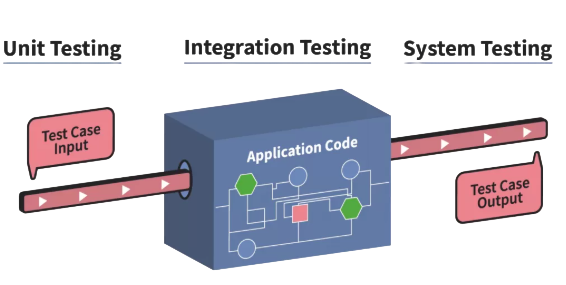
- Software testing is the process of evaluating software to identify defects and ensure quality. It verifies whether an application meets specified requirements.
- Testing helps improve reliability and user satisfaction. Different testing techniques are used throughout development. Effective testing reduces the risk of software failures.
- It ensures that applications function correctly under different conditions. Testing is an essential part of the software development lifecycle.
43. Write a Program to Check Whether a Number is Prime
Ans:
This program checks whether a number is prime or not. A prime number has only two factors: 1 and itself. The program counts the number of factors by checking divisibility.
- import java.util.Scanner;
- class Prime{
- public static void main(String[] args){int n=new Scanner(System.in).nextInt(),c=0;
- for(int i=1;i<=n;i++)if(n%i==0)c++; System.out.println(c==2?"Prime":"Not Prime");}}
44. What is white-box testing?
Ans:
White-box testing examines the internal structure and logic of software. Testers analyze code paths, conditions, and program flow. It helps identify hidden errors and improve code quality. White-box testing requires programming knowledge. Developers often perform this type of testing. It ensures comprehensive coverage of application logic. This method improves software reliability and performance.
45. What is Agile methodology?
Ans:
Agile is a software development methodology that emphasizes flexibility and collaboration. Development work is divided into small iterations called sprints. Teams deliver working software frequently and gather feedback. Agile encourages continuous improvement and adaptability. Communication between stakeholders and developers is highly important. Agile helps organizations respond quickly to changing requirements. It is widely used in modern software projects.
46. What is SDLC?
Ans:
SDLC stands for Software Development Life Cycle, which is a structured process used to develop software applications. It includes phases such as planning, analysis, design, development, testing, deployment, and maintenance. Each phase has specific objectives and deliverables. SDLC helps ensure software quality and project success. It provides a systematic approach to software development. Proper implementation reduces risks and improves efficiency. SDLC is widely used in software engineering projects.
47. What is an API?
Ans:
- An API, or Application Programming Interface, allows different software applications to communicate with each other. APIs define a set of rules and protocols for data exchange.
- They enable developers to access functionalities without knowing internal implementation details. APIs are commonly used in web and mobile applications.
- REST and SOAP are popular API architectures. APIs improve software integration and scalability. They play a crucial role in modern application development.
48. What is REST API?
Ans:
REST stands for Representational State Transfer and is an architectural style for building web services. REST APIs use standard HTTP methods such as GET, POST, PUT, and DELETE. They are lightweight and easy to implement. RESTful services exchange data using formats like JSON and XML. They support scalability and flexibility in application development. REST APIs are widely used in modern web applications. They simplify communication between clients and servers.
49. What is JSON?
Ans:
JSON stands for JavaScript Object Notation and is a lightweight data-interchange format. It is easy for humans to read and write. JSON is also easy for machines to parse and generate. It uses key-value pairs to represent data structures. JSON is commonly used in APIs and web applications. It supports efficient data exchange between systems. JSON has become a standard format in modern software development.
50. What is XML?
Ans:
XML stands for Extensible Markup Language and is used to store and transport data. It allows users to define custom tags for organizing information. XML is both human-readable and machine-readable. It is widely used in data exchange and configuration files. XML supports hierarchical data structures. Although JSON is more popular today, XML remains important in many enterprise systems. It provides flexibility and platform independence.
51. What is exception handling?
Ans:
Exception handling is a mechanism used to manage runtime errors in a program. It prevents abrupt termination of applications when errors occur. Languages such as Java use try, catch, finally, and throw keywords for exception handling. Proper exception handling improves application reliability. It helps developers identify and resolve issues effectively. Exceptions can be checked or unchecked. Managing exceptions ensures smooth program execution.
52. What is a thread?
Ans:
A thread is the smallest unit of execution within a process. Multiple threads can run concurrently within the same application. Threads share resources such as memory and files. Multithreading improves application responsiveness and performance. It is commonly used in gaming, web servers, and operating systems. Proper synchronization is required to avoid conflicts between threads. Threads help achieve efficient resource utilization.
53. What is multithreading?
Ans:
- Multithreading is the ability of a program to execute multiple threads simultaneously. It improves application performance by allowing parallel execution of tasks.
- Threads share the same memory space, making communication efficient. Multithreading is useful for handling background tasks and user interactions.
- It enhances responsiveness in software applications. Proper thread management is necessary to avoid deadlocks and race conditions. It is an important concept in modern programming.
54. What is a process?
Ans:
A process is an instance of a program that is currently executing. It contains code, data, memory, and system resources. Each process operates independently from other processes. Operating systems manage process creation, scheduling, and termination. Multiple processes can run simultaneously on a computer. Processes provide isolation and security between applications. They are fundamental components of operating systems.
55. What is the difference between a process and a thread?
Ans:
- A process is an independent program in execution, while a thread is a lightweight unit within a process. Processes have separate memory spaces, whereas threads share the same memory.
- Communication between threads is faster than between processes. Creating threads requires fewer resources than creating processes.
- Threads improve efficiency in multitasking applications. Processes provide better iolation and security. Both are essential for concurrent computing.
56. What is deadlock?
Ans:
Deadlock is a situation where two or more processes wait indefinitely for resources held by each other. As a result, none of the processes can proceed. Deadlocks typically occur in multitasking environments. Resource allocation and synchronization issues often cause them. Prevention techniques include resource ordering and avoiding circular waits. Detection and recovery mechanisms can also be implemented. Deadlock management is important for system stability.
57. What is cybersecurity?
Ans:
Cybersecurity is the practice of protecting systems, networks, and data from digital attacks. It aims to prevent unauthorized access and data breaches. Cybersecurity includes technologies, processes, and best practices. Common threats include malware, phishing, and ransomware attacks. Organizations implement security measures to protect sensitive information. Cybersecurity is essential for maintaining trust and business continuity. It is a rapidly growing field in the technology industry.
58. What is a firewall?
Ans:
A firewall is a security system that monitors and controls network traffic. It acts as a barrier between trusted and untrusted networks. Firewalls use predefined rules to allow or block data packets. They help prevent unauthorized access to systems. Firewalls can be hardware-based or software-based. They are a key component of network security. Proper firewall configuration enhances protection against cyber threats.
59. What is malware?
Ans:
- Malware is malicious software designed to harm computers or steal information. Examples include viruses, worms, trojans, spyware, and ransomware.
- Malware can spread through emails, downloads, or infected websites. It may damage files, disrupt operations, or compromise security.
- Antivirus software helps detect and remove malware. Safe browsing habits reduce the risk of infection. Malware remains one of the most common cybersecurity threats.
60. What is the difference between Black Box Testing and White Box Testing?
Ans:
| Feature | Black Box Testing | White Box Testing |
|---|---|---|
| Definition | Tests the functionality of an application without knowing the internal code. | Tests the internal code structure, logic, and implementation of an application. |
| Knowledge of Code | No knowledge of source code is required. | Requires knowledge of source code and programming concepts. |
| Focus Area | Focuses on inputs, outputs, and user requirements. | Focuses on code paths, conditions, loops, and logic. |
| Performed By | Usually performed by testers or QA engineers. | Usually performed by developers or testers with coding knowledge. |
61. What is machine learning?
Ans:
Machine learning is a subset of artificial intelligence that enables systems to learn from data. Instead of being explicitly programmed, algorithms improve through experience. Machine learning models identify patterns and make predictions. Common applications include image recognition and fraud detection. It uses techniques such as supervised and unsupervised learning. Machine learning helps automate complex tasks. It is widely used in modern technology solutions.
62. What is supervised learning?
Ans:
Supervised learning is a machine learning technique that uses labeled data for training. The algorithm learns the relationship between inputs and outputs. It can then predict outcomes for new data. Examples include classification and regression problems. Supervised learning is widely used in predictive analytics. High-quality training data improves model accuracy. It is one of the most common machine learning approaches.
63. Write a Program to Find the Largest Element in an Array
Ans:
This program finds the largest element in an array. The first element is initially considered the largest value. The program compares it with all remaining elements one by one.
- class Largest{
- public static void main(String[] args){int a[]={10,25,8,45,32},max=a[0];
- for(int i=1;i
- System.out.println(max);}}
64. What is data analytics?
Ans:
Data analytics involves examining data to extract meaningful insights and support decision-making. It uses statistical and computational techniques to analyze information. Organizations use data analytics to improve efficiency and performance. Data visualization helps communicate findings effectively. Analytics supports strategic planning and forecasting. Large datasets often require advanced analytical tools. Data analytics is a valuable skill in today’s digital world
65. What is Big Data?
Ans:
Big Data refers to extremely large and complex datasets that traditional systems cannot process efficiently. It is characterized by volume, velocity, and variety. Organizations generate vast amounts of data from multiple sources. Big Data technologies help store, process, and analyze this information. Insights gained from Big Data support business decisions. Industries use it for customer analysis and operational improvements. Big Data has become a major focus in modern computing.
66. What is Hadoop?
Ans:
- Hadoop is an open-source framework designed for distributed storage and processing of Big Data. It allows large datasets to be handled across multiple computers.
- Hadoop uses the Hadoop Distributed File System (HDFS) for storage. It also uses MapReduce for processing data. The framework provides scalability and fault tolerance.
- Organizations use Hadoop for data-intensive applications. It is a key technology in Big Data ecosystems.
67. What is communication skill?
Ans:
Communication skill is the ability to convey information effectively and clearly. It includes speaking, listening, writing, and presentation abilities. Good communication improves teamwork and collaboration. It helps avoid misunderstandings in professional environments. Strong communication skills are highly valued by employers. They contribute to leadership and career growth. Effective communication is essential in every workplace.
68. How Does Handle Disagreements In A Team?
Ans:
- Disagreements Should Be Addressed Through Respectful And Open Communication. Understanding Different Perspectives Helps Identify Common Ground.
- Focusing On Facts Rather Than Emotions Improves Discussions. Active Listening Encourages Better Collaboration And Understanding.
- Seeking Solutions That Benefit The Team Supports Progress. Professional Behavior Maintains Positive Relationships During Conflicts. Constructive Resolution Strengthens Team Effectiveness.
69.What Does Customer Satisfaction Mean?
Ans:
Customer Satisfaction Reflects The Ability To Meet Or Exceed Expectations Consistently. Understanding Customer Needs Helps Deliver Better Solutions. Quality Service Builds Trust And Long-Term Relationships. Prompt Responses Improve Customer Experiences And Confidence. Continuous Improvement Supports Higher Satisfaction Levels. Positive Customer Experiences Contribute To Organizational Success. Customer Satisfaction Is Essential For Sustainable Growth.
70. How Does Deal With Failure?
Ans:
Failure Provides Valuable Lessons That Contribute To Personal And Professional Growth. Analyzing Mistakes Helps Identify Opportunities For Improvement. A Positive Mindset Encourages Learning Rather Than Discouragement. Continuous Effort And Persistence Help Overcome Challenges Successfully. Experience Gained From Failure Improves Future Decision-Making. Adaptability And Resilience Support Recovery From Difficult Situations. Every Failure Can Become A Step Toward Future Success.
71. What is leadership?
Ans:
- Leadership is the ability to guide, motivate, and influence individuals toward achieving a common goal. A good leader inspires team members and encourages collaboration.
- Leadership involves effective communication and decision-making skills. Leaders take responsibility for outcomes and support their teams. They help resolve conflicts and maintain a positive work environment.
- Strong leadership contributes to organizational success and growth. It is an important quality in both professional and personal life.
72. What Is The Importance Of Integrity?
Ans:
Integrity Involves Honesty, Ethics, And Consistency In Actions. It Builds Trust Among Colleagues, Customers, And Organizations. Ethical Decisions Support Long-Term Professional Success. Integrity Encourages Accountability And Transparency. Respect For Rules And Standards Strengthens Workplace Culture. Honest Behavior Enhances Reputation And Credibility. Integrity Is A Fundamental Value In Every Profession.
73.How Does Learn New Things Quickly?
Ans:
Learning New Things Requires Curiosity, Dedication, And Consistent Practice. Research Helps Build Foundational Understanding Of New Topics. Active Participation Improves Knowledge Retention And Application. Seeking Guidance From Experienced Individuals Enhances Learning. Practical Experience Reinforces Concepts And Skills. Continuous Improvement Encourages Adaptability And Growth. Effective Learning Supports Career Advancement.
74. What is a database?
Ans:
A database is an organized collection of data stored electronically. It allows users to store, retrieve, update, and manage information efficiently. Databases support applications by providing structured data storage. Relational databases use tables to organize information. Popular databases include MySQL, Oracle, PostgreSQL, and SQL Server. Databases improve data consistency and security. They are essential for modern software applications.
75. What is black-box testing?
Ans:
Black-box testing focuses on testing software functionality without examining internal code. Testers provide inputs and verify outputs against expected results. It evaluates the system from the user’s perspective. Knowledge of the internal implementation is not required. Black-box testing helps identify functional defects. It is commonly used for system and acceptance testing. This approach ensures software meets business requirements.
76. What is recursion?
Ans:
Recursion is a programming technique where a function calls itself to solve a problem. It is commonly used for tasks that can be divided into smaller subproblems. Every recursive function must have a base condition to stop execution. Without a base condition, recursion may lead to infinite calls. Recursive solutions are often easier to understand for complex problems. Examples include factorial calculation and tree traversal. Proper use of recursion improves code readability.
77. What Inspires To Perform Better?
Ans:
- Personal Growth And Achievement Serve As Strong Sources Of Inspiration. Challenging Opportunities Encourage Skill Development And Learning.
- Recognition For Good Performance Increases Motivation. Positive Contributions To Team Success Create Satisfaction. Continuous Improvement Helps Maintain Enthusiasm And Focus.
- Learning From Successful Individuals Provides Valuable Insights. Inspiration Drives Consistent Effort And Professional Excellence
78. What is DevOps?
Ans:
DevOps is a set of practices that combines software development and IT operations. It aims to improve collaboration between development and operations teams. DevOps focuses on automation, continuous integration, and continuous delivery. It helps organizations release software faster and more reliably. Monitoring and feedback are important components of DevOps. The methodology improves efficiency and reduces deployment issues. DevOps is widely adopted in modern software development.
79. What is Continuous Integration?
Ans:
Continuous Integration, or CI, is a software development practice where code changes are merged frequently into a shared repository. Automated tests are executed whenever new code is integrated. CI helps identify issues early in the development process. It improves code quality and reduces integration problems. Developers receive quick feedback on their changes. Continuous Integration supports faster software delivery. It is an essential part of DevOps practices.
80. What is Continuous Delivery?
Ans:
Continuous Delivery is a software development approach that ensures code changes are ready for deployment at any time. Automated testing and validation are performed throughout the development cycle. This process improves software reliability and quality. Continuous Delivery reduces the risk of deployment failures. It enables organizations to release updates quickly and efficiently. Teams can respond faster to customer requirements. It is closely related to Continuous Integration.
81. What is database indexing?
Ans:
Database indexing is a technique used to improve the speed of data retrieval operations. An index acts like a reference guide that helps locate records quickly. It reduces the need to scan entire tables during queries. Indexes improve performance for frequently searched columns. However, excessive indexing can increase storage requirements. Proper indexing balances performance and resource usage. It is an important aspect of database optimization.
82. Write a Program to Check Whether a String is a Palindrome
Ans:
This program checks whether a string is a palindrome. A palindrome is a word that reads the same forward and backward, such as “madam” or “level”. The program first reverses the string and stores it in another variable.
- import java.util.Scanner;
- class Palindrome{
- public static void main(String[] args){String s=new Scanner(System.in).nextLine(),r=””;
- for(int i=s.length()-1;i>=0;i–)r+=s.charAt(i); System.out.println(s.equals(r)?”Palindrome”:”Not
- Palindrome”);}}
83. What are ACID properties?
Ans:
ACID stands for Atomicity, Consistency, Isolation, and Durability. These properties ensure reliable transaction processing in databases. Atomicity guarantees that transactions are completed fully or not at all. Consistency ensures data remains valid before and after transactions. Isolation prevents interference between concurrent transactions. Durability ensures committed data remains permanent even after failures. ACID properties are fundamental to database reliability.
84. What is software engineering?
Ans:
Software engineering is the systematic approach to designing, developing, testing, and maintaining software. It applies engineering principles to software development. The goal is to create reliable, scalable, and efficient applications. Software engineering involves planning, coding, testing, and maintenance activities. It improves software quality and project management. Engineers follow established methodologies and best practices. This discipline is essential for modern technology solutions.
85. What is version control?
Ans:
Version control is a system used to track changes in source code over time. It allows multiple developers to collaborate efficiently on projects. Version control systems maintain a history of modifications. Developers can revert to previous versions when necessary. It helps prevent code conflicts and data loss. Popular tools include Git and other repository management systems. Version control is essential for modern software development.
86. What is Git?
Ans:
.
- Git is a distributed version control system used to manage source code. It allows developers to track changes and collaborate effectively.
- Git supports branching and merging for parallel development. It helps maintain project history and code integrity.
- Developers can work independently and synchronize changes later. Git is widely used in software development projects. It improves productivity and collaboration among teams.
87. What is the difference between Git and GitHub?
Ans:
- Git is a version control tool used to track code changes locally and remotely. GitHub is a web-based platform that hosts Git repositories.
- Git manages source code history and collaboration workflows. GitHub provides additional features such as issue tracking and pull requests.
- Developers use Git to perform version control operations. GitHub helps teams collaborate through a centralized repository. Together, they simplify software development and project management.
88. What is debugging?
Ans:
Debugging is the process of identifying and fixing errors in software. Developers analyze code to determine the cause of problems. Debugging tools help inspect variables and program execution. Effective debugging improves software quality and reliability. It is an important part of the software development lifecycle. Developers use logical thinking and testing techniques during debugging. Proper debugging ensures applications function as intended.
89. What is code optimization?
Ans:
Code optimization is the process of improving software performance and efficiency. It involves reducing execution time and memory usage. Optimized code enhances application responsiveness and scalability. Developers analyze algorithms and data structures for improvements. Optimization should not compromise readability and maintainability. Performance testing helps evaluate optimization results. Efficient code contributes to better user experiences.
90. What are software design patterns?
Ans:
Software design patterns are reusable solutions to common software design problems. They provide proven approaches for building maintainable applications. Examples include Singleton, Factory, and Observer patterns. Design patterns improve code organization and flexibility. They help developers follow best practices in software architecture. Using patterns reduces development time and complexity. They are widely used in object-oriented programmin
91. What is unsupervised learning?
Ans:
Unsupervised learning is a machine learning technique that works with unlabeled data. The algorithm identifies hidden patterns and relationships within the dataset. Clustering and association are common unsupervised learning tasks. It helps discover insights without predefined outcomes. Businesses use it for customer segmentation and recommendation systems. Unsupervised learning is useful for exploratory data analysis. It plays an important role in data science.
92. What is a transaction in DBMS?
Ans:
A transaction is a sequence of database operations treated as a single unit of work. Transactions ensure data consistency and reliability. They either complete successfully or are rolled back entirely. Transactions are commonly used in banking and financial systems. Proper transaction management prevents data corruption. Database systems use transactions to maintain integrity. They are essential for reliable database operations.
93. What Is The Importance Of Initiative?
Ans:
Initiative Demonstrates Willingness To Take Action Without Constant Supervision. It Reflects Responsibility And Proactive Thinking. Employees With Initiative Often Identify Opportunities For Improvement. This Quality Supports Innovation And Productivity. Taking Initiative Helps Build Leadership Skills. Organizations Value Individuals Who Contribute Beyond Basic Responsibilities. Initiative Supports Career Growth And Organizational Success.
94. What is work ethics?
Ans:
Work ethics refers to moral principles at work. It includes honesty and integrity. It ensures responsibility. It promotes dedication. It builds trust among employees. It improves work quality. It encourages discipline. It supports teamwork. It ensures accountability. It maintains professionalism. It leads to long-term success. It strengthens organizational values.
95. What Makes Different From Other Candidates
Ans:
- A Combination Of Learning Ability, Adaptability, And Dedication Creates Unique Strengths. Strong Communication Supports Effective Collaboration And Understanding.
- A Positive Attitude Encourages Growth And Continuous Improvement. Willingness To Accept Challenges Helps Build Valuable Experience. Focus On Quality Ensures Reliable Performance And Results.
- Commitment To Professional Development Supports Long-Term Success. These Qualities Contribute To Organizational Value And Achievement. .
96. What Is The Importance Of A Positive Attitude?
Ans:
A Positive Attitude Helps Maintain Motivation And Productivity During Daily Activities. It Encourages Better Relationships With Colleagues And Customers. Positive Thinking Supports Effective Problem-Solving And Decision-Making. Challenges Can Be Managed More Efficiently With Optimism And Confidence. A Positive Approach Improves Team Morale And Collaboration. It Also Encourages Continuous Learning And Adaptability. This Quality Contributes Significantly To Workplace Success.
97. How does contribute to a company’s growth?
Ans:
An Employee Contributes To A Company’s Growth By Performing Assigned Responsibilities Efficiently And Consistently. High-Quality Work Helps Improve Productivity, Customer Satisfaction, And Overall Business Performance. Strong Communication And Teamwork Support Better Collaboration Across Departments. Continuous Learning And Skill Development Enable Adaptation To New Technologies And Business Requirements. .
98. Give a teamwork example.
Ans:
- Worked on a group project where shared responsibilities equally.Communicated effectively to ensure smooth coordination.
- Solved problems together and supported each other throughout the project.Handled challenges collaboratively and stayed focused on our goal.
- Managed time efficiently to complete tasks on schedule.Achieved our goal, improving teamwork skills and overall performance.
99. What Is The Importance Of Accountability?
Ans:
Accountability Means Taking Responsibility For Actions, Decisions, And Results. It Encourages Professionalism And Reliability In The Workplace. Accountable Individuals Complete Tasks Efficiently And On Time. This Quality Builds Trust Among Team Members And Management. Accountability Helps Improve Performance And Decision-Making. Learning From Mistakes Supports Continuous Development. It Is Essential For Individual And Organizational Success.
100. Why Is Continuous Learning Important?
Ans:
Continuous Learning Helps Maintain Relevance In A Changing Industry. It Supports Skill Development And Professional Advancement. New Knowledge Improves Problem-Solving And Decision-Making Abilities. Learning Encourages Innovation And Adaptability. Organizations Benefit From Employees Who Continuously Improve Their Capabilities. Professional Growth Creates New Career Opportunities. Continuous Learning Is Essential For Long-Term Success.