LMS
LMS
Last updated on 21st Aug 2026| 14164

- Introduction to Digital Marketing Careers at Deloitte
- Entry-Level Digital Marketing Job Roles for Freshers
- Educational Qualifications and Eligibility for Deloitte Marketing Jobs
- Digital Advertising and Performance Marketing Opportunities
- SEO, Content, Social Media, and Campaign Management Roles
- Marketing Analytics and Customer Insights Skills
- Digital Marketing Tools and Technical Skills to Learn
- Communication, Creativity, and Client Management Skills
- How Freshers Can Prepare for Deloitte Digital Marketing Interviews
- Career Growth and Future Opportunities in Deloitte Digital Marketing
Introduction to Digital Marketing Careers at Deloitte
Digital marketing careers at Deloitte can provide opportunities to work across marketing strategy, digital advertising, campaign management, customer experience, content, analytics, and technology-driven marketing initiatives. Freshers interested in this field should develop a combination of creative, analytical, and business skills to understand audiences and support effective marketing decisions. Depending on the role, professionals may contribute to campaign planning, performance analysis, customer research, content development, digital experience projects, and marketing technology solutions. Knowledge of SEO, paid advertising, social media, email marketing, analytics, and conversion optimization can help candidates develop a broad foundation. Freshers looking to build these practical skills can also consider Digital Marketing Training to strengthen their understanding of industry-relevant tools and strategies. Familiarity with tools such as Google Analytics, Google Ads, Excel, Power BI, or other marketing platforms can further strengthen their profiles. Communication, teamwork, presentation, problem-solving, and client interaction skills are also valuable in a consulting environment. Internships, certifications, personal projects, and practical campaign experience can help freshers demonstrate job readiness and prepare for suitable digital marketing opportunities.
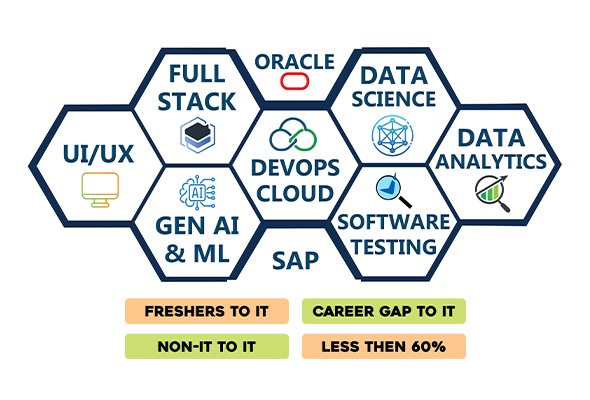
Entry-Level Digital Marketing Job Roles for Freshers
Freshers exploring digital marketing opportunities at Deloitte can look for suitable entry-level positions related to marketing, digital strategy, customer experience, analytics, campaign operations, and marketing technology. Depending on available openings, responsibilities may include supporting digital campaigns, conducting market research, preparing performance reports, analyzing customer data, creating content, coordinating marketing activities, and assisting senior team members with client projects.
Get Your Digital Marketing Certification by Learning from Industry-Leading Experts and Advancing Your Career with ACTE’s Digital Marketing Course.
Educational Qualifications and Eligibility for Deloitte Marketing Jobs
Eligibility requirements for Deloitte digital marketing positions depend on the specific job, location, business unit, and level of responsibility. Suitable educational backgrounds may include marketing, business administration, communications, commerce, economics, information technology, or related disciplines, depending on the role. Freshers can strengthen their profiles by gaining practical knowledge of SEO, SEM, social media marketing, content strategy, paid advertising, email marketing, web analytics, and campaign measurement. For analytics-oriented positions, knowledge of Excel, SQL, visualization tools, statistics, and data interpretation can provide additional value. Candidates who want to develop practical knowledge of these areas can consider Digital Marketing Training to build relevant marketing skills and improve their job readiness. Certifications in digital advertising, analytics, SEO, or related technologies can demonstrate continuous learning but should ideally be supported by practical experience. Internships, academic assignments, freelance projects, and personal campaigns can help candidates demonstrate how they apply marketing concepts. Since eligibility differs considerably between vacancies, applicants should always compare their qualifications and experience with the requirements of the specific Deloitte position before applying.

Learn Digital Marketing Training Course to Build Your Skills
Weekday / Weekend BatchesSee Batch DetailsDigital Advertising and Performance Marketing Opportunities
Digital advertising and performance marketing involve using measurable campaigns to attract audiences, generate leads, increase conversions, and support broader business objectives. Professionals working in this area may contribute to paid search, display advertising, social advertising, audience targeting, campaign optimization, budget management, and performance reporting. Candidates should understand important metrics such as impressions, clicks, click-through rate, conversion rate, cost per acquisition, and return on advertising spend. To strengthen their understanding of paid advertising strategies, candidates can also explore PPC in Digital Marketing and learn how pay-per-click campaigns contribute to digital marketing performance. Knowledge of platforms such as Google Ads and analytics tools can help professionals create, measure, and optimize digital campaigns. Performance marketers should also understand keyword research, bidding, audience segmentation, remarketing, conversion tracking, landing-page optimization, and A/B testing. Analytical thinking is particularly important because campaign data must be evaluated to identify performance issues and improvement opportunities. Freshers can prepare by completing practical advertising projects, analyzing campaign datasets, earning relevant certifications, and creating case studies that demonstrate their ability to connect marketing activities with measurable results.

Get JOB Oriented Digital Marketing Training for Beginners By MNC Experts
- Instructor-led Sessions
- Real-life Case Studies
- Assignments
SEO, Content, Social Media, and Campaign Management Roles
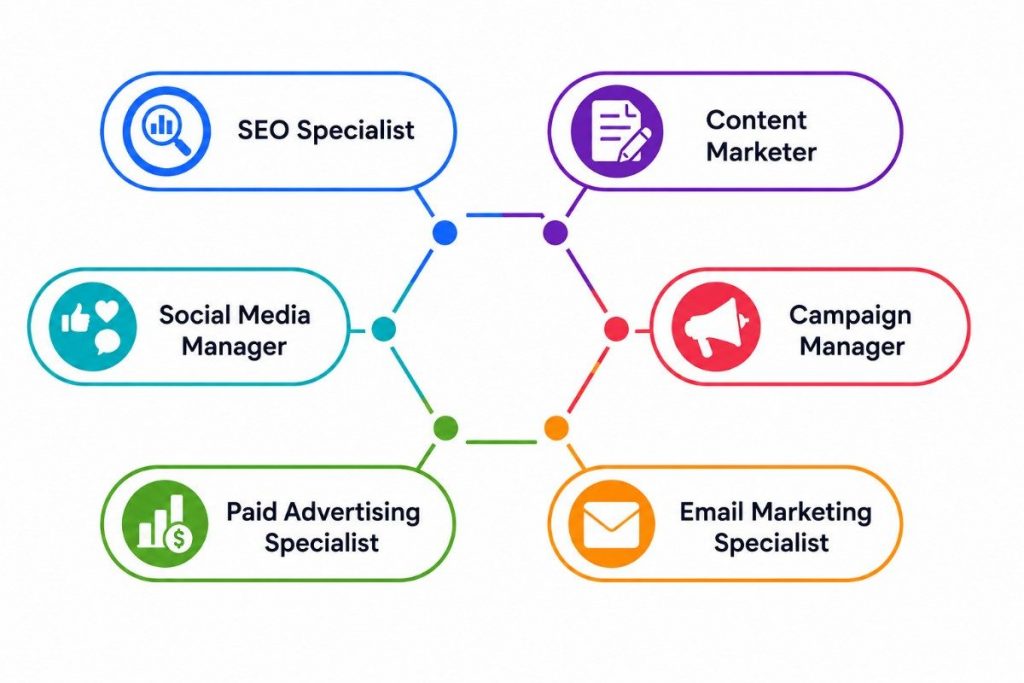
- SEO and Organic Search Optimization SEO professionals focus on improving website visibility in search results through keyword research, on-page optimization, technical SEO, content improvements, and performance monitoring. Understanding search intent and analytics is important for measuring organic growth.
- Content Marketing and Strategy Content marketers plan and develop useful digital content that supports audience engagement and business objectives. Responsibilities can include content research, editorial planning, optimization, performance measurement, and coordinating content across different channels.
- Social Media Marketing Social media professionals support brand communication and audience engagement across relevant platforms. They may assist with content calendars, campaign planning, community engagement, performance tracking, and analyzing audience responses to improve social strategies. Candidates can strengthen their practical understanding of these marketing activities through Digital Marketing Training, which can help develop skills across SEO, content, social media, and campaign management.
Want to Master Digital Marketing? Explore the Digital Marketing Master Program Offered at ACTE Today!
Marketing Analytics and Customer Insights Skills
| Skill | Description | Key Areas to Learn |
|---|---|---|
| Marketing Data Analysis | Analyze marketing data to identify trends, customer behavior, campaign performance, and opportunities that can support better marketing decisions. | Data analysis, KPIs, trends, reporting |
| Customer Segmentation | Divide customers into meaningful groups based on demographics, behavior, interests, engagement, or purchasing patterns to improve targeting. | Segmentation, personas, audience targeting |
| Web Analytics | Evaluate website traffic and user activity to understand acquisition sources, engagement, navigation patterns, and conversion performance. | GA4, traffic sources, events, conversions |
| Campaign Performance Analysis | Measure advertising and marketing campaigns using relevant metrics to determine effectiveness and identify areas requiring optimization. | CTR, CPC, CPA, conversions, ROAS |
| Customer Journey Analysis | Examine customer interactions across different touchpoints to understand how audiences move from awareness and consideration to conversion and retention. | Funnels, touchpoints, conversion paths |
| Data Visualization | Transform complex marketing information into clear dashboards, charts, and reports that make performance insights easier for stakeholders to understand. | Power BI, Tableau, dashboards, reporting |
| A/B Testing and Experimentation | Compare different marketing messages, landing pages, creatives, or campaign strategies to identify approaches that deliver stronger results. | A/B testing, experiments, optimization |
| Consumer Behavior Analysis | Study customer preferences, motivations, interactions, and purchasing behavior to develop more relevant marketing strategies and experiences. | Customer behavior, research, engagement |
| Marketing Attribution | Understand how different marketing channels and customer touchpoints contribute to conversions and other business outcomes. | Attribution models, channels, conversions |
| Insight Communication | Convert analytical findings into clear recommendations that marketing teams, clients, and stakeholders can use to improve strategies and campaigns. | Storytelling, presentations, recommendations |
Digital Marketing Tools and Technical Skills to Learn
- Google Analytics and Web Analytics Freshers should learn how to analyze website traffic, acquisition channels and conversions. Analytics knowledge helps marketers understand campaign effectiveness and identify opportunities to improve digital performance. Candidates can also explore Guide To Google Analytics to build a stronger understanding of analytics concepts and reporting.
- Google Ads and Paid Advertising Understanding search, display, video, keyword targeting, bidding, campaign structure, and conversion tracking can strengthen preparation for performance marketing roles. Candidates should also learn how advertising metrics influence optimization decisions.
- SEO and Keyword Research Tools Learn keyword research, competitor analysis, backlink analysis, technical SEO, and website auditing using commonly used SEO platforms. These skills help marketers identify opportunities to improve organic visibility and website performance.
- Excel and Marketing Data Analysis Excel skills are valuable for organizing campaign data, performing calculations, analyzing trends, and preparing reports. Freshers should practice formulas, PivotTables, lookup functions, charts, filtering, and basic data-cleaning techniques.
- CRM and Marketing Automation Tools Understanding CRM and marketing automation concepts can help candidates manage customer information, campaign workflows, lead nurturing, segmentation, personalization, and email marketing activities more efficiently.
Want to Learn About AI? Explore Our Digital Marketing Interview Questions and Answers Featuring the Most Frequently Asked Questions in Job Interviews.
Communication, Creativity, and Client Management Skills
- Professional Communication Skills Digital marketers should communicate strategies, campaign results, and recommendations clearly. Strong verbal and written communication helps professionals collaborate effectively with clients, managers, creative teams, analysts, and other stakeholders.
- Creative Thinking and Content Ideas Creativity helps marketers develop engaging campaign concepts, advertisements, messaging, and content strategies. Candidates should learn how to balance creative ideas with audience requirements, brand guidelines, and measurable business objectives.
- Presentation and Storytelling Skills Professionals should be able to transform campaign information and analytical findings into clear stories. Effective presentations help clients and stakeholders understand performance, challenges, opportunities, and recommended marketing actions.
- Client Relationship Management Client-facing professionals need to understand requirements, manage expectations, provide updates, respond to feedback, and maintain professional relationships. Active listening and clear communication are particularly important when handling client projects. Candidates can also explore Role Of Consultant in Digital Marketing to understand how communication and client management contribute to consulting-focused marketing roles.
- Teamwork and Cross-Functional Collaboration Marketing projects often involve designers, content writers, analysts, developers, consultants, and business teams. Strong collaboration helps professionals coordinate responsibilities, resolve challenges, and deliver campaigns effectively.
How Freshers Can Prepare for Deloitte Digital Marketing Interviews
- Strengthening Digital Marketing Fundamentals Freshers should revise SEO, SEM, social media, content marketing, paid advertising, email marketing, customer journeys, conversion optimization, and marketing analytics before attending interviews. Reviewing an SEO Guide can also help candidates strengthen their understanding of search engine optimization concepts that may be relevant to digital marketing roles.
- Preparing Marketing Projects and Case Studies Candidates should prepare examples demonstrating how they planned campaigns, selected audiences, created strategies, analyzed performance, and recommended improvements. Academic, internship, freelance, and personal projects can be useful.
- Practicing Marketing Analytics Questions Prepare to explain important metrics such as CTR, CPC, CPA, conversion rate, engagement, traffic, and ROAS. Candidates should demonstrate how they would interpret performance data and use insights to improve campaigns.
- Preparing Behavioral Interview Answers Practice questions involving teamwork, communication, deadlines, problem-solving, adaptability, achievements, and challenging situations. Use clear examples from internships, academic projects, or previous professional experiences.
- Researching the Role Before the Interview Candidates should carefully review the specific Deloitte job description and understand its responsibilities, required skills, and tools. Preparing examples that directly relate to those requirements can make interview answers more relevant.
Career Growth and Future Opportunities in Deloitte Digital Marketing
A career in digital marketing at Deloitte can provide opportunities to progress from entry-level marketing and analytics positions into specialized, strategic, consulting, and leadership roles. Freshers may begin by supporting SEO, paid advertising, content marketing, customer insights, or marketing analytics activities. With practical experience, professionals can specialize in areas such as performance marketing, marketing technology, customer experience, digital strategy, marketing analytics, or campaign optimization. As responsibilities increase, professionals may take ownership of larger campaigns, client engagements, budgets, reporting, and cross-functional initiatives. Developing expertise in data analytics, automation, artificial intelligence, personalization, CRM platforms, and emerging marketing technologies can further expand future career opportunities. Professionals who want to strengthen their practical marketing capabilities can explore Digital Marketing Training to build relevant skills and stay aligned with evolving industry requirements. Professionals who strengthen communication, client management, strategic thinking, and leadership skills can progress toward senior consultant, manager, or broader marketing leadership positions. Continuous learning is especially important because digital platforms, consumer behavior, search technologies, and AI-driven marketing practices continue to evolve. By combining creative marketing abilities with analytical expertise, technology knowledge, and practical client experience, professionals can build versatile career paths and pursue long-term growth within Deloitte’s digital marketing and consulting environment.