LMS
LMS
Last updated on 16th May 2026| 4843

1. What is software development, and why is it important?
Ans:
Software development is the process of designing, building, testing, and maintaining software applications. It helps businesses automate tasks, improve productivity, and provide better digital experiences to users. Modern industries such as healthcare, banking, education, and e-commerce rely heavily on software solutions for daily operations. Effective software development also ensures scalability, security, and long-term business growth.
2. Explain the difference between frontend and backend development.
Ans:
- Frontend development focuses on the visual and interactive parts of a website or application.It ensures users can easily navigate and interact with the system.
- Backend development handles server logic, databases, and APIs.It processes data and manages communication between different system components.
- Frontend technologies include HTML, CSS, and JavaScript.These technologies help create responsive and user-friendly interfaces.
3. What are the key responsibilities of a software developer at Zoho?
Ans:
A software developer at Zoho is responsible for designing and developing efficient software solutions based on business requirements. They work closely with testing and product teams to improve application performance and user experience. Developers also identify bugs, optimize code quality, and maintain software systems regularly. Continuous learning and adapting to new technologies are important aspects of the role.
4. What programming languages are commonly used in software development?
Ans:
- Java is widely used for enterprise and web applications.It provides platform independence and strong security features.
- Python is popular for AI, automation, and backend development.Its simple syntax makes development faster and easier.
- JavaScript is essential for frontend and full-stack development.It enables dynamic and interactive functionality in web applications.
5. Explain the concept of object-oriented programming (OOP).
Ans:
Object-oriented programming is a programming paradigm that organizes software design around objects and classes. It improves code reusability, maintainability, and scalability by allowing developers to structure programs efficiently. OOP helps reduce duplication by using concepts like inheritance and polymorphism. Languages such as Java, C++, and Python support object-oriented programming principles.
6. Check Whether A Number Is Armstrong Or Not
Ans:
This program checks whether a number is an Armstrong number or not. An Armstrong number is a number where the sum of the cubes of its digits is equal to the original number. The program extracts each digit using modulus and division operations. Each digit is multiplied three times and added to a sum variable. After processing all digits, the calculated sum is compared with the original number. If both values are equal, the number is an Armstrong number. Armstrong number programs are commonly asked in Zoho interviews because they test number manipulation, loops, and logical thinking skills.
- int n = 153, temp = n, sum = 0;
- while(n > 0){
- int rem = n % 10;
- sum = sum + (rem * rem * rem);
- n = n / 10;
- }
- System.out.println(temp == sum ? “Armstrong Number” : “Not Armstrong Number”);
7. What is the difference between a class and an object?
Ans:
A class is a blueprint or template used to define properties and behaviors of objects. An object is an actual instance created from a class during program execution. Classes do not occupy memory until objects are created from them. Objects interact with each other to perform operations in object-oriented programming. This concept helps organize code efficiently and promotes reusability in software development.
8. Explain inheritance with an example.
Ans:
- Encapsulation protects data by restricting direct access.It improves data security and maintains the integrity of an object.
- Inheritance allows one class to acquire properties from another class.It promotes code reusability and reduces duplication.
- Polymorphism enables methods to perform different behaviors.It increases flexibility by allowing the same interface to be used in multiple ways.
9. What is polymorphism in programming?
Ans:
Polymorphism allows the same method or function to behave differently depending on the object or parameters used. It improves flexibility and extensibility in software applications. Method overloading and method overriding are common types of polymorphism. This concept helps developers write cleaner and more maintainable code. It also enhances code reusability and simplifies the implementation of complex systems..
10.What is encapsulation, and why is it important?
Ans:
Encapsulation Means Wrapping Data And Methods Into Single Units Efficiently Worldwide. It Protects Sensitive Data From Unauthorized Access Successfully . Private Variables Are Accessed Through Getter And Setter Methods Efficiently Always. Encapsulation Improves Security And Software Maintainability Across Applications Successfully . It Reduces Dependency Between Different Program Modules . Encapsulation Is Widely Used In Modern Object-Oriented Programming Across Industries Frequently.
11. What is abstraction in object-oriented programming?
Ans:
Abstraction in object-oriented programming is the process of hiding complex implementation details and showing only the essential features of an object. It helps users interact with a system without needing to understand its internal workings. Abstraction is typically achieved using abstract classes and interfaces. This concept reduces complexity and improves code readability. It allows developers to focus on what an object does rather than how it does it. Abstraction also makes applications easier to maintain and modify.
12. Explain the difference between method overloading and method overriding.
Ans:
Method overloading occurs when multiple methods in the same class have the same name but different parameter lists. It is an example of compile-time polymorphism. Method overriding occurs when a subclass provides its own implementation of a method already defined in its parent class. It is an example of runtime polymorphism. Overloading increases flexibility by allowing different inputs for similar operations, while overriding enables specialized behavior in derived classes. Both concepts improve code reusability and maintainability in object-oriented programming.
13.What is a constructor in Java or C++?
Ans:
A constructor is a special method used to initialize objects when they are created. It has the same name as the class and does not return any value. Constructors help assign initial values to object variables automatically. They improve code efficiency by reducing repetitive initialization tasks. They are called automatically when an object is instantiated. Constructors also help ensure that objects are created in a valid and consistent state.
14.What is the difference between stack memory and heap memory?
Ans:
- Stack memory stores local variables and function calls.It is automatically managed by the system during program execution.
- Heap memory stores dynamically allocated objects and data.It allows data to persist beyond the scope of a single function.
- Stack memory is faster but limited in size.Memory allocation and deallocation occur automatically in a structured manner.
15.What are access modifiers in Java?
Ans:
Access modifiers define the visibility and accessibility of classes, methods, and variables in Java. They help implement encapsulation and improve security in applications. Java provides four main access modifiers: public, private, protected, and default. Choosing the correct modifier improves code maintainability and control. Access modifiers also help prevent unauthorized access to sensitive data and program components.
16. Explain the difference between an interface and an abstract class.
Ans:
Interfaces provide complete abstraction by declaring methods without implementation. Abstract classes can contain both abstract and concrete methods. A class can implement multiple interfaces, allowing it to inherit behavior from different sources. A class can inherit only one abstract class in Java due to single inheritance. Both interfaces and abstract classes are used to achieve abstraction and improve code reusability in object-oriented programming.
17. What is exception handling in programming?
Ans:
Exception handling is a mechanism used to manage runtime errors without stopping program execution. It helps improve application stability and user experience by handling unexpected situations properly. Languages like Java use try, catch, finally, throw, and throws keywords for exception handling. Proper exception management also simplifies debugging and maintenance.
18. What is the purpose of the try-catch block?
Ans:
The try block contains code that may generate exceptions during program execution. The catch block handles exceptions and prevents the application from crashing unexpectedly. It improves program stability and ensures proper error management. Finally blocks can be used for cleanup operations such as closing files, database connections, or releasing resources. The finally block executes regardless of whether an exception occurs or not. Exception handling helps create reliable and user-friendly applications by managing unexpected situations effectively.
19. What are checked and unchecked exceptions?
Ans:
Checked exceptions are verified during compilation and must be handled explicitly in the code. Examples include IOException and SQLException. Unchecked exceptions occur during runtime and are usually caused by logical programming errors, such as NullPointerException. Handling both types properly ensures reliable software performance. Checked exceptions help developers identify potential issues before execution. Proper exception handling improves application stability and reduces unexpected failures.
20. Difference Between Primary Key And Foreign Key?
Ans:
| FEATURE | PRIMARY KEY | FOREIGN KEY |
|---|---|---|
| Definition | A Primary Key Uniquely Identifies Each Record In A Table. | A Foreign Key Creates Relationship Between Two Database Tables |
| Uniqueness | Primary Key Values Must Always Be Unique. | Foreign Key Values Can Contain Duplicate Entries. |
| NULL Values | Primary Key Cannot Contain NULL Values. | Foreign Key Can Contain NULL Values. |
| Purpose | It Maintains Entity Integrity In Database Tables. | It Maintains Referential Integrity Between Related Tables. |
21. Explain synchronization in multithreading.
Ans:
Synchronization is used to control access to shared resources when multiple threads are running simultaneously. It prevents data inconsistency and avoids conflicts between threads accessing the same object. In Java, synchronization can be achieved using synchronized methods or blocks. Proper synchronization improves thread safety and application reliability. It ensures that only one thread accesses critical resources at a time. Synchronization is essential for maintaining accurate data in multithreaded environments.
22. What is the difference between process and thread?
Ans:
A process is an independent program in execution. A thread is a lightweight unit within a process. Processes require separate memory allocation. Threads share the same memory resources of the process. Creating and managing threads is generally faster than processes. Threads improve application efficiency by enabling concurrent execution of tasks.
23. What is a deadlock condition?
Ans:
A deadlock occurs when two or more threads wait indefinitely for resources locked by each other. It usually happens in multithreaded applications when resources are not managed properly. Deadlocks can reduce application performance and cause system failures. Proper resource allocation and thread management help prevent deadlocks. Detecting deadlocks can be challenging in large applications. Careful synchronization design helps avoid such situations.
24. Explain garbage collection in Java.
Ans:
Garbage collection automatically removes unused objects from memory. It helps optimize memory management in Java applications. The JVM performs garbage collection automatically. It reduces memory leaks and improves application efficiency. Developers do not need to manually free memory. This feature simplifies programming and enhances application performance.
25. What is the difference between Array and ArrayList?
Ans:
Arrays have a fixed size that cannot be changed after creation, while ArrayLists are dynamic and resizable. Arrays can store primitive data types directly, whereas ArrayLists store objects. ArrayLists provide built-in methods for easier data manipulation. Arrays are faster, but ArrayLists offer greater flexibility. ArrayLists are part of the Java Collections Framework. They are widely used when the number of elements is not known in advance.
26. What are collections in Java?
Ans:
Collections are frameworks used to store and manage groups of objects. Common collection classes include List, Set, and Map. They provide built-in methods for sorting and searching. Collections improve data handling efficiency in applications. They reduce the need for custom data structure implementations. Collections make data management more organized and convenient.
27. What is the difference between HashMap and HashTable?
Ans:
HashMap and HashTable are both used to store key-value pairs in Java. HashMap is not synchronized, making it faster but not thread-safe. HashTable is synchronized and suitable for multithreaded environments. HashMap allows one null key, whereas HashTable does not allow null keys or values. HashMap is generally preferred in single-threaded applications. Both are widely used for efficient data storage and retrieval.
28. Remove Repeated Values From An Array
Ans:
This program removes repeated values from an array and prints only unique elements. The program uses two loops to compare each element with previously checked elements in the array. If the current element already exists, it is treated as a duplicate and skipped. If it is not repeated, the element is printed. This approach helps identify unique values without using extra collections or built-in methods. Array duplicate removal questions are commonly asked in Zoho interviews because they test array traversal, nested loops, and logical problem-solving skills.
- int arr[] = {1, 2, 2, 3, 4, 4, 5};
- for(int i = 0; i < arr.length; i++){
- boolean isDuplicate = false
- for(int j = 0; j < i; j++){
- if(arr[i] == arr[j]){
- isDuplicate = true;
- break;
- }
- }
- if(!isDuplicate){
- System.out.print(arr[i] + ” “);
- }
- }
29. What is a stack data structure?
Ans:
A stack is a linear data structure that follows the Last In First Out (LIFO) principle. Elements are inserted using the push operation and removed using the pop operation. Stacks are commonly used in recursion, expression evaluation, and undo operations. They provide efficient memory and data management. Only the top element can be accessed directly. Stacks are simple and effective for managing sequential operations.
30. Explain queue and priority queue.
Ans:
A queue follows the First In First Out (FIFO) principle. Elements are inserted at the rear and removed from the front. A priority queue processes elements based on priority values. Queues are widely used in scheduling and buffering systems. Priority queues ensure that higher-priority elements are processed first. Both data structures are important for efficient task and resource management. They help organize and process data efficiently in various applications.
31. What is a binary search algorithm?
Ans:
Binary search is an efficient searching algorithm used to find elements in a sorted array. It works by repeatedly dividing the search space into halves until the target element is found. Binary search significantly reduces search time compared to linear search. Its average time complexity is O(log n). This makes binary search highly suitable for handling large datasets efficiently.
32. Explain linear search and binary search.
Ans:
Linear search checks elements one by one sequentially. Binary search works only on sorted data. Linear search has O(n) time complexity. Binary search is faster with O(log n) complexity. Linear search is simple to implement and works on both sorted and unsorted data. Binary search reduces the number of comparisons by repeatedly dividing the search space into halves. Both searching techniques are widely used depending on the data structure and application requirements.
33. What is time complexity in algorithms?
Ans:
Time complexity measures the amount of time an algorithm takes to execute based on input size. It helps developers evaluate the efficiency and performance of algorithms. Big O notation is commonly used to represent time complexity. Efficient algorithms improve application speed and scalability. Understanding time complexity helps in selecting the most suitable algorithm for a given problem.
34. Explain Big O notation with examples.
Ans:
- Big O Notation is a mathematical way to describe the time or space complexity of an algorithm as the input size grows. It helps compare the efficiency of different algorithms.
- O(1) – Constant Time The execution time remains the same regardless of input size. Example: Accessing an element in an array using its index, such as arr[5].
- O(n) – Linear TimeThe execution time increases proportionally with the input size. Example: Linear search, where each element is checked one by one until the target is found.
35. What are sorting algorithms?
Ans:
Sorting algorithms arrange data in a specific order, such as ascending or descending. They improve search efficiency and data organization in applications. Common sorting techniques include bubble sort, merge sort, quick sort, and insertion sort. The choice of algorithm depends on performance requirements and dataset size. Sorting plays a vital role in optimizing data processing and retrieval operations.
36. Explain bubble sort and quick sort.
Ans:
Bubble sort is a simple sorting algorithm that repeatedly compares adjacent elements in a list and swaps them if they are in the wrong order. This process continues until the entire list is sorted. After each pass, the largest unsorted element moves to its correct position, similar to a bubble rising to the surface. Bubble sort is easy to understand and implement but is not efficient for large datasets because its average and worst-case time complexity is O(n²).
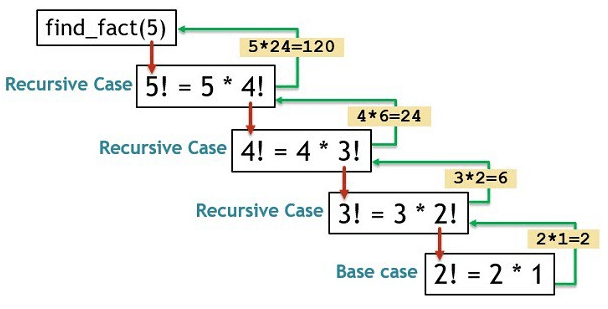
37. What is recursion in programming?
Ans:
Recursion is a programming technique where a function calls itself repeatedly until a base condition is met. It simplifies complex problems by breaking them into smaller subproblems. Recursive solutions are commonly used in tree traversal and mathematical calculations. Proper base conditions are necessary to avoid infinite recursion. Recursion helps create concise and elegant solutions for many computational problems.
38. Explain the difference between recursion and iteration.
Ans:
Recursion and iteration are two approaches used to perform repetitive tasks in programming. Recursion involves a function calling itself repeatedly until a base condition is reached, while iteration uses looping constructs such as for, while, or do-while loops to repeat a set of instructions. Recursion often provides a simpler and more readable solution for problems like tree traversal and factorial calculation, whereas iteration is generally more memory-efficient because it does not require additional function call stack space. Iteration is usually preferred for performance-critical applications, while recursion is useful when a problem can be naturally divided into smaller similar subproblems
39. What is dynamic programming?
Ans:
Dynamic programming is a problem-solving technique that stores results of previously solved subproblems to avoid repeated calculations. It improves performance and reduces execution time in complex algorithms. Dynamic programming is widely used in optimization problems like shortest path and Fibonacci series. Memoization and tabulation are common approaches.
40.What are trees and graphs in data structures?
Ans:
Trees are hierarchical data structures with parent-child relationships. Graphs consist of vertices connected through edges. Trees are commonly used in databases and file systems. Graphs are used in networking, maps, and social media applications. Trees have a single root node and do not contain cycles, making them suitable for representing hierarchical information. Graphs can have complex connections between nodes and are useful for modeling real-world relationships and networks.

41. Explain depth-first search (DFS).
Ans:
Depth-first search is a graph traversal algorithm that explores nodes deeply before backtracking. It uses stacks or recursion to visit connected nodes efficiently. DFS is commonly used in pathfinding, cycle detection, and maze-solving applications. The algorithm continues until all reachable nodes are visited. It is an effective technique for exploring and analyzing graph structures systematically.
42. Explain breadth-first search (BFS).
Ans:
BFS explores nodes level by level in a graph or tree. It uses a queue data structure for traversal. BFS is useful for finding the shortest path in unweighted graphs. It visits all neighboring nodes before moving deeper. The algorithm starts from a source node and systematically explores all connected nodes at the current level. BFS is widely used in network analysis, web crawling, and route-finding applications due to its efficient traversal approach.
43. What is a database management system (DBMS)?
Ans:
A Database Management System is software used to store, organize, retrieve, and manage data efficiently. It helps maintain data consistency, security, and integrity in applications. Popular DBMS examples include MySQL, Oracle, SQL Server, and PostgreSQL. DBMS reduces data redundancy and supports multiple users simultaneously. It provides efficient data access and simplifies database administration tasks.
44. Explain normalization in databases.
Ans:
Normalization Organizes Database Tables To Reduce Data Redundancy Efficiently Worldwide. It Improves Database Consistency And Storage Efficiency Across Applications Successfully Frequently. Large Tables Are Divided Into Smaller Related Tables Efficiently. Different Forms Include First, Second, And Third Normal Forms Successfully Frequently. Normalization Improves Database Performance And Maintenance Processes Efficiently. It Is Important For Designing Scalable Database Applications .
45. What is the difference between SQL and NoSQL databases?
Ans:
SQL databases are relational databases that store structured data in tables with predefined schemas. NoSQL databases store unstructured or semi-structured data and provide greater flexibility. SQL databases use structured query language for operations, while NoSQL databases support various data models like document and key-value storage. SQL is preferred for transactional systems, whereas NoSQL is suitable for large-scale distributed applications
46. Find Sum Of Digits Of A Number
Ans:
This program finds the sum of digits of a given number. The digits are extracted one by one using modulus and division operations. The modulus operator retrieves the last digit of the number, and that digit is added to a sum variable. After each step, the number is divided by 10 to remove the last digit. The process continues until the number becomes zero. Finally, the sum variable contains the total of all digits in the number. This program is commonly asked in Zoho interviews because it helps test loops, arithmetic operations, and number manipulation skills.
- int n = 1234;
- int sum = 0;
- while(n > 0){
- int rem = n % 10;
- sum = sum + rem;
- n = n / 10;
- }
- System.out.println(sum);
47.Explain joins in SQL.
Ans:
Joins are used to combine data from multiple tables based on related columns. They help retrieve meaningful information from relational databases efficiently. Common join types include INNER JOIN, LEFT JOIN, RIGHT JOIN, and FULL JOIN. Joins are essential for complex database queries and reporting. They enable users to analyze and retrieve connected data from different tables in a structured manner.
48. What is the difference between DELETE, DROP, and TRUNCATE?
Ans:
DELETE, DROP, and TRUNCATE are SQL commands used to remove data, but they work differently. DELETE removes specific rows or all rows from a table and can be used with a WHERE clause to filter records. It is a Data Manipulation Language (DML) command, and the deleted data can usually be rolled back before committing the transaction. TRUNCATE removes all rows from a table quickly without using a WHERE clause and resets storage allocation, making it faster than DELETE. It is a Data Definition Language (DDL) command and generally cannot be rolled back in many database systems. DROP completely removes the table structure along with all its data, indexes, and constraints from the database. Once a table is dropped, it no longer exists and must be recreated if needed.
49. What are indexes in databases?
Ans:
Indexes are special database structures that improve the speed of data retrieval operations. They help reduce query execution time by quickly locating records. Indexes are especially useful for large databases with frequent search operations. However, excessive indexing may increase storage usage and slow down updates. Proper indexing improves overall database performance and enhances query efficiency.
50. Explain ACID properties in DBMS.
Ans:
Atomicity ensures transactions are completed fully or not at all. Consistency maintains valid database states after transactions. Isolation prevents transaction conflicts in multi-user environments. Durability ensures committed data remains permanently stored. These four properties are collectively known as ACID properties and are essential for reliable database transaction management. ACID properties help maintain data accuracy, integrity, and reliability even in the event of system failures or concurrent user access.
51. What is a transaction in SQL?
Ans:
A transaction is a sequence of SQL operations executed as a single logical unit. Transactions ensure data consistency and reliability during database operations. They follow ACID properties to maintain integrity in case of failures. Commands like COMMIT and ROLLBACK are used to manage transactions. Transactions help ensure that database changes are processed accurately and securely.
52. What are stored procedures?
Ans:
- Stored procedures are precompiled SQL statements stored in the database.They improve performance by reducing query execution time.
- Stored procedures increase code reusability and security.They can accept parameters and return results.
- They help centralize business logic within the database.Stored procedures reduce network traffic by executing multiple SQL statements in a single call.
53. What is REST API and its importance?
Ans:
REST API is an architectural style used for communication between applications over HTTP. It allows systems to exchange data using methods like GET, POST, PUT, and DELETE. REST APIs are lightweight, scalable, and widely used in web and mobile applications. They support integration between different platforms and services efficiently. REST APIs enable seamless data sharing and interoperability across distributed systems.
54. What is the difference between GET and POST methods?
Ans:
GET retrieves data from the server and is mainly used for fetching information without making any changes to the data. POST sends data to the server for processing and is commonly used for creating or submitting new resources securely. In GET, data appears in the URL, which makes it less secure for sensitive information, whereas in POST, data is included in the request body and is hidden from the URL. POST is generally considered more secure than GET for handling sensitive data and also supports larger data transmission and complex operations.
55. What is JSON, and why is it used?
Ans:
JSON stands for JavaScript Object Notation and is a lightweight data exchange format. It is easy for humans to read and machines to parse. JSON is widely used in APIs and web applications for transferring structured data. It supports fast communication between servers and clients. It is based on key-value pairs, making data organization simple and efficient.
56. Explain client-server architecture.
Ans:
Clients send requests to servers for services or data. Servers process requests and return responses. This architecture improves resource management and scalability. Web applications commonly use client-server architecture. It enables efficient communication between multiple users and a central system. It also ensures better security, control, and centralized data management.
57. What is HTTP and HTTPS?
Ans:
HTTP is a communication protocol used for transferring data over the internet. HTTPS is the secure version of HTTP that uses SSL/TLS encryption for data protection. HTTPS ensures secure communication between browsers and servers. Modern websites use HTTPS to protect sensitive user information. It helps prevent data interception and enhances overall web security.
58. What are cookies and sessions?
Ans:
Cookies store small amounts of user data on the client side. Sessions store user information on the server side. Cookies help remember user preferences and login details. Sessions provide secure user authentication management. Cookies have an expiration time and persist even after the browser is closed depending on settings. Sessions are more secure because data is stored on the server and not exposed to the client. Both cookies and sessions are widely used to maintain user state in web applications.
59. Explain authentication and authorization.
Ans:
Authentication is the process of verifying the identity of a user or system. Authorization determines what resources or actions the authenticated user can access. Authentication usually involves usernames, passwords, or biometrics. Proper authorization improves application security and access control. It ensures that only permitted users can access specific functionalities and data.
60. Search An Element In An Array Using Linear Search
Ans:
This program searches for an element in an array using the Linear Search algorithm. The program checks each element one by one from the beginning of the array until the required element is found. If the element matches the search value, a flag variable is updated and the loop stops. If no match is found after checking all elements, the element is considered absent from the array. Linear Search is simple and works for both sorted and unsorted arrays. This question is commonly asked in Zoho interviews because it helps test array traversal, loops, and basic searching logic skills.
- int arr[] = {5, 10, 15, 20, 25};
- int key = 15;
- boolean found = false;
- for(int i = 0; i < arr.length; i++){
- if(arr[i] == key){
- found = true;
- break;
- }
- }
- System.out.println(found ? “Element Found” : “Element Not Found”);

Learn Java Training with Advanced Concepts By Industry Experts
- Instructor-led Sessions
- Real-life Case Studies
- Assignments
61. Explain Git and GitHub.
Ans:
Git is a distributed version control system used to track code changes and manage software projects. GitHub is a cloud-based platform that hosts Git repositories for collaboration and sharing. Git supports branching, merging, and version tracking efficiently. GitHub also provides features like pull requests, issue tracking, and code reviews.
62. What Is The Difference Between Manual Testing And Automation Testing?
Ans:
| FEATURE | MANUAL TESTING | AUTOMATION TESTING |
|---|---|---|
| Definition | Testing Is Performed Manually By Testers. | Testing Is Performed Using Automation Tools. |
| Speed | Execution Is Slower Compared To Automation. | Execution Is Faster And More Efficient. |
| Human Effort | Requires More Human Involvement | Requires Less Human Effort After Setup. |
| Accuracy | Human Errors May Occur During Testing. | Provides Higher Accuracy And Consistency. |
63. What is CI/CD?
Ans:
CI/CD stands for Continuous Integration and Continuous Deployment or Delivery. It automates code testing, integration, and deployment processes in software development. CI/CD pipelines improve software quality and reduce manual errors. They help deliver updates quickly and efficiently to users. It ensures faster feedback and smoother collaboration among development teams. CI/CD also supports continuous improvement of software through automated workflows. This process reduces release time and increases overall productivity.
64. What is CI/CD?
Ans:
Agile is an iterative software development approach. It focuses on flexibility, collaboration, and continuous improvement. Agile development is divided into small iterations called sprints. Teams receive regular feedback and adapt quickly to changes. It encourages customer involvement throughout the development process. Agile improves product quality through continuous testing and delivery. It helps teams respond quickly to changing requirements.
65. What is Scrum in software development?
Ans:
Scrum is an Agile framework used to manage and organize software projects efficiently. It divides work into short development cycles called sprints, usually lasting two to four weeks. Scrum teams include roles such as Product Owner, Scrum Master, and Developers. Daily stand-up meetings and sprint reviews improve communication and productivity. It helps teams deliver incremental value in each sprint. Scrum increases transparency and accountability in project management. It also ensures continuous improvement through regular feedback.
66. What are SDLC phases?
Ans:
Requirement gathering identifies project needs and objectives. Design phase creates system architecture and planning. Development and testing ensure software functionality and quality. Deployment and maintenance support long-term software performance. SDLC provides a structured approach to software development. It helps ensure project success by following a step-by-step process. Each phase contributes to building reliable and efficient software.
67. What is unit testing and integration testing?
Ans:
Unit testing checks individual components or functions of software independently. Integration testing verifies whether multiple modules work together correctly. Both testing methods help identify bugs early in development. Proper testing improves software reliability and overall quality. Unit testing ensures correctness at a small level, while integration testing checks system behavior. Together they help reduce defects in the final product. They are essential for building robust applications.
68. What is debugging in programming?
Ans:
Debugging identifies and fixes errors in software code. Developers use debugging tools to trace program execution. It helps improve software functionality and stability. Effective debugging reduces application crashes and issues. It involves analyzing code behavior to locate problems. Debugging improves performance and ensures correct output. It is a critical part of the software development lifecycle.
69. What are design patterns in software engineering?
Ans:
Design patterns are reusable solutions to common software design problems. They help developers create maintainable, scalable, and efficient applications. Common categories include creational, structural, and behavioral patterns. Design patterns improve code organization and development consistency. They provide best practices for solving recurring design issues. Using design patterns reduces development time and complexity. They enhance software flexibility and reusability.
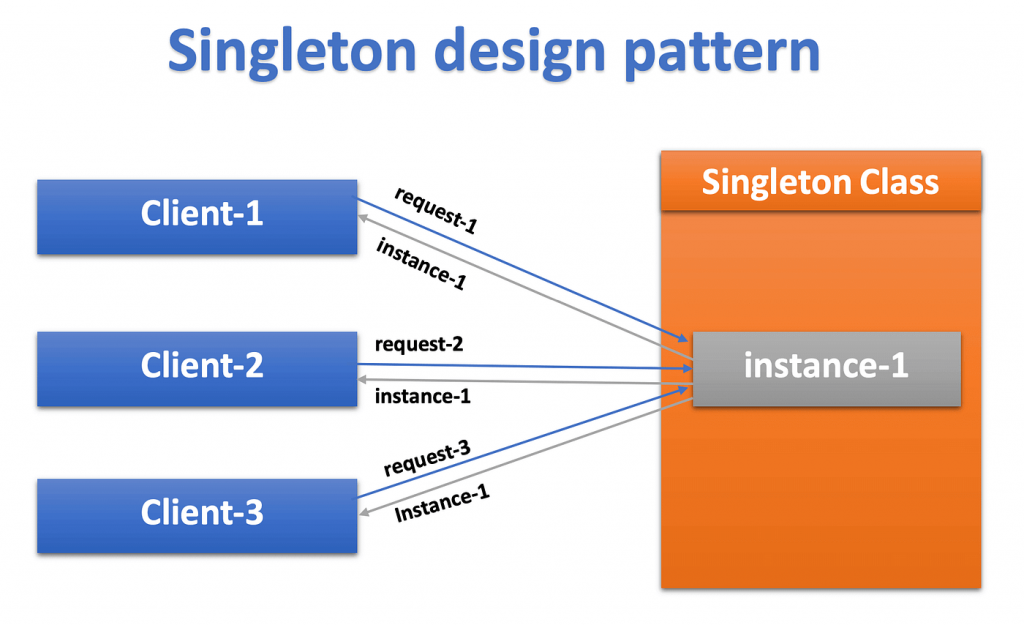
70. Explain the Singleton design pattern.
Ans:
Singleton ensures only one instance of a class exists. It provides a global access point to that instance. Singleton is commonly used in logging and database connections. It helps control resource usage in applications. It prevents multiple object creation for shared resources. Singleton improves performance and memory efficiency. It is widely used in system design for controlled access.
71. What is dependency injection?
Ans:
Dependency injection is a design pattern where required objects or dependencies are provided to a class externally instead of creating them inside the class. It improves code flexibility, modularity, and testability in software applications. Dependency injection reduces tight coupling between components and simplifies maintenance. Frameworks like Spring use dependency injection extensively in enterprise applications.
72. Write A Program To Check Whether A Number Is Even Or Odd
Ans:
This Program Checks Whether A Given Number Is Even Or Odd Using An If-Else Condition. The Number Is Divided By 2 Using The Modulus Operator. If The Remainder Is Zero, The Program Prints Even. Otherwise, It Prints Odd As The Output. This Is One Of The Basic Programs Asked In Coding Interviews.
- num = 8
- if num % 2 == 0:
- print(“Even”)
- else:
- print(“Odd”)
73. Explain virtualization in cloud environments.
Ans:
Virtualization is the process of creating virtual versions of servers, operating systems, or storage devices. It allows multiple virtual machines to run on a single physical system efficiently. Virtualization improves resource utilization and reduces hardware costs. It is widely used in cloud computing to support scalability and flexibility. It enhances system efficiency by isolating workloads on different virtual machines. It also enables better disaster recovery and resource management.
74. What are microservices?
Ans:
- Microservices divide applications into small independent services. These services can be developed, deployed, and scaled separately. This architecture improves flexibility in large systems.
- Each service performs a specific business function. It focuses on a single responsibility for better modularity. This makes development and debugging easier.
- They improve scalability and easier maintenance. Each service can be updated without affecting the entire system. This reduces downtime and increases system efficiency.Microservices divide applications into small independent services.
75. What is containerization?
Ans:
Containerization is a technology that packages applications along with their dependencies into lightweight containers. It ensures consistent performance across different environments and platforms. Containers are faster and more portable than traditional virtual machines. This approach simplifies deployment and improves scalability in modern software development.
76. Explain Docker and its uses.
Ans:
Docker is a platform used for containerization. It helps developers build and deploy applications consistently. Docker containers are lightweight and portable. It improves scalability, testing, and deployment speed. It ensures applications run the same across different environments. Docker also simplifies dependency management and reduces system conflicts.
77. What are APIs in software development?
Ans:
APIs, or Application Programming Interfaces, allow different software applications to communicate with each other. They define rules and protocols for data exchange between systems. APIs improve integration and functionality in modern applications. Web services, payment gateways, and social media integrations commonly use APIs. They enable faster development by reusing existing services. APIs also enhance system interoperability and scalability.
78. What is the difference between monolithic and microservices architecture?
Ans:
Monolithic architecture combines all components into one application. Microservices architecture separates features into independent services. Monolithic applications are simpler initially but harder to scale. Microservices provide better flexibility and scalability. Monolithic systems are tightly coupled, making updates difficult. Microservices allow independent deployment and faster development cycles.
79. Explain operating systems and their functions.
Ans:
An operating system is system software that manages hardware and software resources of a computer. It acts as an interface between users and computer hardware. Operating systems handle memory management, process scheduling, file systems, and device control. Examples include Windows, Linux, and macOS. It ensures efficient utilization of system resources. It also provides a secure environment for running applications.
80. What is memory management in operating systems?
Ans:
Memory management allocates and deallocates memory resources efficiently. It ensures smooth execution of multiple programs simultaneously. Operating systems use techniques like paging and segmentation. Proper memory management improves system performance and stability. It prevents memory leaks and optimizes CPU usage. It also ensures fair allocation of memory to processes.
81. What is a compiler and interpreter?
Ans:
A compiler converts the entire source code into machine code before execution, improving runtime performance. An interpreter translates and executes code line by line during runtime. Compiled programs generally run faster than interpreted programs. Languages like C use compilers, while Python commonly uses interpreters. Compilers detect errors before execution starts. Interpreters help in easier debugging and testing.
82. Explain pointers in C programming.
Ans:
Pointers store the memory address of variables. They allow direct memory access and manipulation. Pointers improve performance in dynamic memory allocation. They are widely used in arrays, functions, and data structures. They help in efficient memory management and reduce program complexity. Pointers enable advanced programming techniques like linked lists and dynamic structures
83. What is the difference between C and C++?
Ans:
C is a procedural programming language focused on functions and procedures. C++ is an extension of C that supports object-oriented programming concepts like classes and inheritance. C++ provides features such as polymorphism and encapsulation. C is mainly used for system programming, while C++ is widely used in application development. C++ supports both procedural and object-oriented programming. This makes C++ more versatile and powerful than C.
84. What are static and dynamic variables?
Ans:
Static variables retain their values throughout program execution. Dynamic variables are created and destroyed during runtime. Static memory allocation occurs at compile time. Dynamic memory allocation uses functions like malloc() and free(). Static variables have a fixed memory location. Dynamic variables provide flexibility in memory usage during execution.
85. Explain the concept of recursion with a factorial example.
Ans:
Recursion is a technique where a function calls itself to solve smaller instances of a problem. A factorial program is a common example of recursion. For example, factorial of 5 is calculated as 5 × 4 × 3 × 2 × 1. Recursive functions require a base condition to stop repeated function calls. It simplifies complex problems by breaking them into smaller subproblems. It is widely used in algorithms like tree traversal and searching.
86. What are the advantages of Java over other programming languages?
Ans:
Java is platform-independent because of the JVM. It provides strong memory management and security features. Java supports object-oriented programming principles. It has extensive libraries and a large developer community. It ensures high performance with features like multithreading. Java is widely used for enterprise and mobile application development.
87. Explain software testing methodologies.
Ans:
Software testing methodologies are approaches used to verify software quality and functionality. Black-box testing focuses on system behavior without checking internal code structure. White-box testing examines the internal logic and code paths of the application. Proper testing methodologies help identify defects and improve software reliability. They ensure early detection of bugs during development. These methodologies improve software quality and user satisfaction.
88. What are the common challenges faced during software development?
Ans:
Managing changing project requirements is challenging. Debugging and fixing software bugs can be time-consuming. Ensuring scalability and performance requires careful planning. Meeting deadlines while maintaining quality is often difficult. Limited resources and communication gaps also create challenges. Proper planning and collaboration help overcome these issues effectively.
89. Write A Program To Print Multiplication Table Of 2
Ans:
This Program Uses A Loop To Print The Multiplication Table Of Number 2. The Loop Runs Multiple Times To Generate Each Multiplication Result. During Every Iteration, The Program Multiplies 2 By The Current Value. The Output Displays The Table In A Simple Format. This Program Helps Beginners Understand Loop Execution Clearly.
- for i in range(1, 6):
- print(“2 x”, i, “=”, 2 * i)
90. Write Count Vowels in a String
Ans:
This program counts the number of vowels in a given string. It reads each character of the string one by one using a loop. Every character is checked to see whether it is a vowel such as a, e, i, o, or u in both uppercase and lowercase. If a vowel is found, a counter variable is increased. After completing the loop, the final count value gives the total number of vowels in the string. This logic is commonly asked in Zoho interviews because it tests string traversal, condition checking, and basic programming skills.
- String s = “Education”;
- int count = 0;
- for(int i = 0; i < s.length(); i++){
- char c = s.charAt(i);
- if(c == ‘a’ || c == ‘e’ || c == ‘i’ || c == ‘o’ || c == ‘u’ ||
- c == ‘A’ || c == ‘E’ || c == ‘I’ || c == ‘O’ || c == ‘U’){
- count++;
- }
- }
- System.out.println(count);