LMS
LMS
Last updated on 18th Apr 2026| 7434

Guide to Preparing for Apple Interviews as a Fresher is a comprehensive resource designed to help candidates succeed in the recruitment process at Apple. It covers key preparation areas such as coding skills, data structures, algorithms, system design basics, and behavioral interview techniques. This guide helps freshers understand the interview structure, strengthen their technical knowledge, and build the confidence required to perform well in both technical and HR interview rounds.
1. What is Apple interview process?
Ans:
The Apple interview process is a structured evaluation method designed to assess technical expertise, problem-solving ability, and cultural fit with the organization. It typically consists of multiple stages including online assessments, technical interviews, and behavioral discussions conducted by experienced professionals. The process focuses on real-world problem-solving, creativity, and the ability to think differently while maintaining strong fundamentals. Candidates are evaluated on communication skills, clarity of thought, and ability to explain solutions effectively. Understanding the interview process helps in preparing strategically and improving overall performance.
2. What are stages in Apple interview process?
Ans:
- Initial screening stage involves resume evaluation and basic discussions to assess fundamental knowledge, communication skills, and alignment with job requirements.
- Online assessment stage includes coding or technical tests that evaluate problem-solving ability, logical thinking, and programming skills under time constraints.
- Technical interview rounds focus on data structures, algorithms, and system design, requiring clear explanation of approaches and optimized solutions.
- Final rounds include behavioral and managerial interviews that assess cultural fit, creativity, teamwork ability, and alignment with Apple’s values.
3. What is importance of preparation for Apple interviews?
Ans:
Preparation for Apple interviews is essential for developing strong technical skills and understanding complex problem-solving approaches effectively. It helps in building confidence and improving the ability to handle challenging interview scenarios with clarity and precision. Proper preparation ensures coverage of important topics such as data structures, algorithms, and system design. It also enhances communication skills and the ability to explain solutions logically. Thorough preparation is crucial for achieving success in competitive interview processes.
4. How to prepare effectively for Apple interviews?
Ans:
- Creating a structured study plan that covers all important topics ensures systematic preparation and avoids missing key concepts required for interviews.
- Practicing coding problems regularly helps in improving speed, accuracy, and familiarity with different problem-solving techniques.
- Participating in mock interviews provides real-time experience and helps in improving communication and confidence during discussions.
- Reviewing mistakes and learning from them ensures continuous improvement and better performance in actual interviews.
5. What is importance of problem-solving skills?
Ans:
Problem-solving skills are crucial for analyzing complex questions and developing efficient solutions during technical interviews. They help in breaking down problems into smaller parts and understanding requirements clearly. Strong problem-solving ability improves coding efficiency and reduces errors. It also enhances logical thinking and decision-making capabilities. Developing problem-solving skills is essential for success in Apple interviews.
6. How to improve problem-solving skills?
Ans:
- Practicing diverse coding problems regularly helps in understanding patterns and improving ability to solve complex challenges effectively.
- Analyzing multiple approaches for solving problems improves decision-making and helps in selecting optimal solutions.
- Learning from mistakes and reviewing incorrect solutions strengthens understanding and enhances problem-solving ability.
- Participating in competitive programming and coding platforms improves speed and accuracy in solving problems.
7. What is importance of data structures?
Ans:
Data structures are fundamental concepts that help in organizing and managing data efficiently in programs. They play a crucial role in solving problems related to storage, retrieval, and processing of data. Understanding data structures improves algorithm efficiency and performance. It also helps in selecting appropriate structures for different problem scenarios. Strong knowledge of data structures is essential for technical interviews.
8. What is the difference between arrays and linked lists?
Ans:
| Criteria | Arrays | Linked Lists |
|---|---|---|
| Memory | Stored in contiguous memory locations. | Stored in separate connected nodes. |
| Access | Fast access using index values. | Sequential access through links. |
| Insertion | Insertion can be costly. | Insertion is easier with pointers. |
| Size | Usually fixed size. | Dynamic size. |
9. What is importance of algorithms?
Ans:
Algorithms define step-by-step procedures for solving problems efficiently and effectively in programming. They help in optimizing solutions and improving performance of applications. Understanding algorithms is essential for handling complex coding challenges. It also ensures selection of the best approach based on problem constraints. Strong algorithm knowledge is crucial for success in technical interviews.
10. What are important algorithms for interviews?
Ans:
- Sorting algorithms such as quick sort and merge sort are essential for organizing data efficiently and solving related problems.
- Searching algorithms like binary search help in reducing time complexity and improving efficiency in data retrieval.
- Dynamic programming is used to optimize problems with overlapping subproblems and improve performance significantly.
- Graph algorithms such as BFS and DFS are important for solving traversal and connectivity problems effectively.
11. What is importance of system design knowledge?
Ans:
System design knowledge helps in understanding how large-scale applications are structured and function efficiently. It involves designing scalable, reliable, and maintainable systems for real-world applications. Understanding system design improves problem-solving ability for complex scenarios. It also enhances understanding of architecture and component interaction. System design knowledge is essential for advanced interview rounds.
12. How to prepare for system design?
Ans:
- Studying real-world system architectures helps in understanding how applications are designed and scaled effectively.
- Practicing design problems improves ability to create efficient and scalable solutions for different scenarios.
- Learning about databases, caching, and load balancing enhances system design knowledge significantly.
- Analyzing trade-offs and discussing design decisions improves understanding and presentation skills.
13. What is importance of coding practice?
Ans:
Coding practice helps in improving problem-solving skills and developing familiarity with different programming concepts. It enhances speed and accuracy in writing code during interviews. Regular practice ensures better understanding of algorithms and data structures. It also improves debugging and optimization skills. Consistent coding practice is essential for interview success.
14. How to practice coding effectively?
Ans:
- Solving problems regularly on coding platforms helps in improving skills and understanding different problem types effectively.
- Practicing timed challenges improves speed and ability to perform under pressure.
- Reviewing solutions and learning alternative approaches enhances understanding and efficiency.
- Maintaining consistency in practice ensures steady improvement and better performance.
15. What is importance of communication skills?
Ans:
Communication skills are essential for explaining solutions clearly and interacting effectively with interviewers. They help in presenting ideas logically and improving understanding during discussions. Good communication enhances confidence and professionalism. It also ensures that problem-solving approaches are conveyed accurately. Strong communication skills are crucial for interview success.
16. How to improve communication skills?
Ans:
- Practicing explanation of solutions aloud helps in improving clarity and confidence in communication.
- Using simple and structured language ensures better understanding and avoids confusion.
- Participating in mock interviews improves articulation and presentation skills effectively.
- Seeking feedback and refining communication helps in continuous improvement.
17. What is importance of creativity in Apple interviews?
Ans:
Creativity is highly valued in Apple interviews as it reflects the ability to think differently and develop innovative solutions. It helps in approaching problems from unique perspectives and finding efficient solutions. Creative thinking improves problem-solving and decision-making capabilities. It also aligns with Apple’s focus on innovation and design excellence. Developing creativity is essential for standing out in interviews.
18. How to improve creativity?
Ans:
- Exploring different approaches to solve problems helps in developing innovative thinking and improving creativity.
- Practicing open-ended problems enhances ability to think beyond standard solutions effectively.
- Learning from diverse sources and real-world examples improves creative problem-solving ability.
- Engaging in brainstorming and idea generation exercises strengthens creativity skills.
19. What is importance of consistency in preparation?
Ans:
Consistency ensures steady progress and continuous improvement in preparation for interviews. It helps in building strong fundamentals and improving problem-solving ability over time. Regular practice reduces dependency on last-minute preparation. It also improves confidence and readiness for interviews. Maintaining consistency is essential for achieving success.
20. How to maintain consistency?
Ans:
- Creating a daily study schedule ensures regular practice and consistent progress in preparation.
- Setting achievable goals helps maintain motivation and discipline over time.
- Tracking progress and reviewing performance ensures continuous improvement.
- Avoiding distractions and maintaining focus supports consistent learning.
21. What is importance of mock interviews?
Ans:
Mock interviews simulate real interview scenarios and help in improving performance effectively. They provide valuable feedback on strengths and weaknesses. Mock interviews improve communication and confidence. They also help in managing time and handling pressure. Practicing mock interviews is essential for interview readiness.
22. How to benefit from mock interviews?
Ans:
- Participating regularly helps in gaining experience and improving performance in real interviews effectively.
- Analyzing feedback helps identify weaknesses and improve preparation strategies.
- Practicing under time constraints improves speed and decision-making ability.
- Continuous improvement through mock interviews ensures better readiness.
23. What is importance of time management?
Ans:
Time management ensures efficient use of available time during preparation and interviews. It helps in balancing different topics and avoiding last-minute stress. Proper time management improves productivity and performance. It also ensures completion of tasks within deadlines. Effective time management is essential for interview success.
24. What is the difference between scheduling and prioritization in time management?
Ans:
| Criteria | Scheduling | Prioritization |
|---|---|---|
| Meaning | Planning tasks according to time slots. | Ranking tasks based on importance. |
| Focus | Focuses on when work is done. | Focuses on what should be done first. |
| Benefit | Improves organization and deadlines. | Improves productivity and efficiency. |
| Use | Daily planners and calendars. | Task lists and urgent work decisions. |
25. What is importance of confidence in interviews?
Ans:
Confidence helps in presenting ideas clearly and handling questions effectively during interviews. It improves communication and interaction with interviewers. Confidence reduces anxiety and enhances performance under pressure. It also creates a positive impression and improves chances of success. Maintaining confidence is essential for performing well in interviews.
26. What is importance of logical thinking?
Ans:
Logical thinking refers to the ability to analyze problems step by step and arrive at solutions using clear reasoning and structured understanding. It plays a crucial role in solving coding problems efficiently and ensuring correctness in implementation during interviews. Strong logical thinking improves the ability to identify patterns, optimize solutions, and reduce unnecessary complexity. It also enhances decision-making skills by evaluating different approaches and selecting the most effective one. Developing logical thinking is essential for performing well in Apple technical interviews.
27. How to improve logical thinking?
Ans:
- Practicing a wide range of coding problems regularly helps in strengthening reasoning skills and improving the ability to approach problems logically.
- Solving puzzles and analytical questions enhances pattern recognition and builds strong logical foundations required for technical interviews.
- Reviewing multiple solutions for the same problem helps in understanding different perspectives and improves analytical thinking significantly.
- Breaking down complex problems into smaller steps ensures clarity in understanding and improves logical problem-solving ability.
28. What is importance of analytical skills?
Ans:
Analytical skills involve evaluating information, identifying patterns, and making logical decisions to solve problems effectively. These skills help in understanding complex coding questions and selecting appropriate approaches for solutions. Strong analytical ability improves efficiency and accuracy in problem-solving. It also enhances the ability to handle follow-up questions and optimize solutions during interviews. Developing analytical skills is essential for success in Apple interviews.
29. How to develop analytical skills?
Ans:
- Practicing data-driven problem-solving techniques helps in improving the ability to analyze and interpret information effectively.
- Comparing different approaches to a problem enhances decision-making and analytical thinking skills significantly.
- Studying algorithm behavior and performance improves understanding of efficiency and optimization.
- Continuous practice and evaluation of solutions strengthen analytical skills over time.
30. What is importance of coding efficiency?
Ans:
Coding efficiency refers to writing optimized solutions that minimize time and space complexity while maintaining correctness. Efficient coding ensures better performance and scalability in real-world applications. It helps in solving problems within constraints and improves execution speed during interviews. Understanding efficiency allows selection of the best approach among multiple solutions. Focusing on coding efficiency is essential for technical interview success.
31. How to improve coding efficiency?
Ans:
- Understanding time and space complexity helps in selecting optimal solutions and improving overall efficiency in coding problems.
- Practicing optimization techniques such as dynamic programming and greedy algorithms enhances coding performance.
- Reviewing solutions and identifying areas for improvement helps in writing more efficient code.
- Regular practice with challenging problems improves ability to implement efficient solutions quickly.
32. What is importance of debugging skills?
Ans:
Debugging skills involve identifying and fixing errors in code to ensure correct and efficient execution. Strong debugging ability reduces development time and improves code reliability. It helps in understanding mistakes and improving problem-solving skills. Debugging also enhances confidence in handling complex coding problems. Developing debugging skills is essential for successful coding interviews.
33. How to improve debugging skills?
Ans:
- Practicing step-by-step code execution helps in identifying logical errors and understanding program flow effectively.
- Using debugging tools and print statements allows tracking of variable values and detection of issues in execution.
- Testing code with multiple inputs ensures correctness and helps identify edge cases.
- Reviewing mistakes and analyzing errors improves debugging ability over time.
34. What is importance of clean code?
Ans:
Clean code refers to writing readable, organized, and maintainable code that is easy to understand and debug. It improves collaboration and reduces confusion during development and review processes. Clean code ensures better structure and clarity in problem-solving. It also helps in identifying errors quickly and improving efficiency. Writing clean code is essential for professional development and interview success.
35. What are principles of clean code?
Ans:
- Using meaningful variable names improves readability and helps in understanding the purpose of each component in the code clearly.
- Writing modular and structured code ensures better organization and easier maintenance.
- Avoiding unnecessary complexity and keeping code simple improves efficiency and clarity.
- Adding comments where necessary helps explain logic and enhances understanding for reviewers.
36. What is importance of time complexity?
Ans:
Time complexity measures how execution time of an algorithm increases with input size, helping evaluate efficiency. It allows comparison of different approaches and selection of the most optimal solution. Understanding time complexity ensures that solutions meet performance requirements. Efficient algorithms improve scalability and reduce processing time. Knowledge of time complexity is essential for writing optimized code in interviews.
37. How to analyze time complexity?
Ans:
- Identifying loops and nested iterations helps determine how execution time grows with input size effectively.
- Understanding common complexity classes such as O(n), O(log n), and O(n²) improves efficiency analysis.
- Analyzing recursive functions helps in determining their overall complexity accurately.
- Practicing complexity analysis regularly enhances ability to evaluate and optimize solutions.
38. What is importance of space complexity?
Ans:
Space complexity refers to the amount of memory required by an algorithm during execution. It helps in evaluating memory efficiency and optimizing resource usage. Balancing time and space complexity is important for achieving optimal performance. Efficient memory usage improves scalability and application performance. Understanding space complexity is essential for writing optimized solutions.

39. How to optimize space complexity?
Ans:
- Using in-place algorithms reduces additional memory usage and improves efficiency significantly.
- Avoiding unnecessary data structures helps minimize memory consumption during execution.
- Reusing variables and optimizing storage improves overall memory management.
- Analyzing trade-offs between time and space helps select the best approach.
40. What is importance of edge cases?
Ans:
Edge cases refer to extreme or unusual inputs that test the boundaries of a solution’s correctness. Handling edge cases ensures reliability and robustness of programs under all conditions. Ignoring edge cases can lead to incorrect results and runtime errors. Considering edge cases improves overall solution quality and accuracy. Proper handling of edge cases is essential for interview success.
41. How to identify edge cases?
Ans:
- Analyzing input constraints helps identify boundary conditions such as minimum and maximum values effectively.
- Considering empty inputs and special cases ensures completeness of solutions.
- Testing with large inputs helps evaluate performance and identify potential issues.
- Reviewing problem requirements carefully helps detect all possible edge scenarios.
42. What is importance of test cases?
Ans:
Test cases are used to verify correctness and performance of solutions under different input conditions. They help ensure that programs work as expected and handle all scenarios effectively. Testing improves reliability and reduces chances of errors. It also validates edge cases and complex inputs. Using proper test cases is essential for successful coding implementation.
43. How to create effective test cases?
Ans:
- Creating test cases based on problem constraints ensures coverage of all input scenarios effectively.
- Including edge cases helps validate correctness and robustness of solutions.
- Testing with both small and large inputs ensures performance and scalability.
- Verifying expected outputs ensures accuracy and correctness of implementation.
44. What is the difference between monolithic architecture and microservices architecture?
Ans:
| Criteria | Monolithic Architecture | Microservices Architecture |
|---|---|---|
| Structure | Single unified application. | Multiple independent services. |
| Deployment | Entire app deployed together. | Services deployed separately. |
| Scalability | Harder to scale parts individually. | Easy to scale required services. |
| Maintenance | Becomes complex as app grows. | Better maintainability for large systems. |
45. How to develop system thinking?
Ans:
- Studying real-world systems helps understand architecture and component interactions effectively.
- Practicing system design problems improves ability to create scalable solutions.
- Learning about databases, caching, and load balancing enhances system understanding.
- Analyzing trade-offs improves decision-making and design efficiency.
46. What is importance of scalability?
Ans:
Scalability refers to the ability of a system to handle increased workload without affecting performance. It ensures that applications can grow and support more users efficiently. Scalable systems improve reliability and user experience. It is a key concept in system design interviews. Understanding scalability is essential for building efficient applications.
47. What are types of scalability?
Ans:
- Vertical scalability involves increasing resources of a single system to handle higher load effectively.
- Horizontal scalability involves adding multiple systems to distribute workload and improve performance.
- Elastic scalability allows dynamic allocation of resources based on demand changes.
- Distributed systems help manage scalability by spreading tasks across multiple nodes efficiently.
48. What is importance of databases?
Ans:
Databases are essential for storing, managing, and retrieving data efficiently in applications. Understanding database concepts helps in designing scalable and reliable systems. Knowledge of SQL and NoSQL databases is important for technical interviews. Databases play a crucial role in system design discussions. Strong database knowledge improves overall problem-solving ability.
49. What are types of databases?
Ans:
- Relational databases store structured data using tables and support SQL queries for efficient data management.
- NoSQL databases handle unstructured data and provide flexibility and scalability for modern applications.
- Distributed databases ensure high availability and fault tolerance by spreading data across multiple nodes.
- In-memory databases provide faster data access by storing data in memory instead of disk.
50. What is importance of API knowledge?
Ans:
APIs enable communication between different systems and components in software applications. Understanding APIs is essential for building and integrating applications effectively. It helps in designing modular and scalable systems. API knowledge is important for system design interviews. Strong understanding of APIs improves overall technical skills.
51. What is importance of preparation strategy?
Ans:
Preparation strategy refers to a structured plan that organizes topics, practice sessions, and revision timelines for effective interview readiness. It ensures systematic coverage of coding, system design, and behavioral aspects without missing critical concepts. A well-defined strategy improves time management and reduces last-minute stress during preparation. It also enhances focus by setting clear daily and weekly goals for progress tracking. Having a strong preparation strategy is essential for achieving success in competitive interviews.
52. How to create an effective preparation plan?
Ans:
- Defining clear goals and dividing topics into manageable sections ensures systematic learning and avoids overwhelming the preparation process with excessive content.
- Allocating dedicated time for coding practice, revision, and mock interviews improves balance and consistency in preparation efforts.
- Tracking progress regularly and adjusting the plan based on strengths and weaknesses enhances efficiency and effectiveness.
- Maintaining discipline and following the plan consistently ensures continuous improvement and better interview readiness.
53. What is importance of revision cycles?
Ans:
Revision cycles involve revisiting learned concepts multiple times to reinforce understanding and improve memory retention effectively. They help in strengthening fundamentals and ensuring quick recall of important topics during interviews. Regular revision reduces chances of forgetting key concepts and improves confidence. It also helps identify weak areas that require additional focus and improvement. Maintaining proper revision cycles is essential for effective preparation and success.
54. What are benefits of revision?
Ans:
- Revision strengthens memory retention by repeatedly reinforcing concepts, making it easier to recall information during interviews.
- It improves clarity of understanding by reducing confusion in complex topics and strengthening conceptual knowledge.
- Regular revision helps identify weak areas and provides opportunities for improvement effectively.
- It boosts confidence and ensures readiness by keeping all important topics fresh and well-practiced.
55. What is importance of analytical thinking?
Ans:
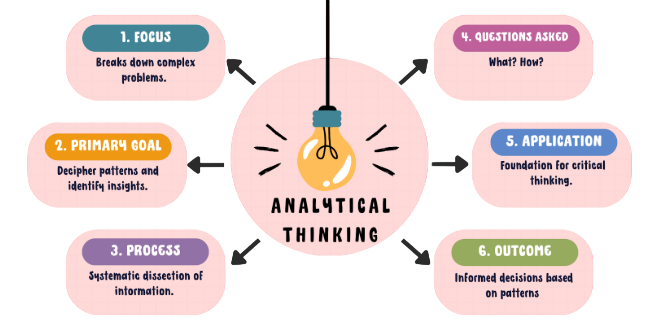
Analytical thinking involves breaking down complex problems into smaller parts to understand and solve them effectively. It helps in evaluating different approaches and selecting the most efficient solution. Strong analytical ability improves decision-making and problem-solving performance. It also enhances the ability to handle follow-up questions during interviews. Developing analytical thinking is essential for success in technical interviews.
56. How to improve analytical thinking?
Ans:
- Practicing logical reasoning and coding problems regularly helps in developing structured thinking and improving analytical abilities.
- Breaking down problems into smaller components improves understanding and simplifies solution development.
- Comparing multiple approaches enhances decision-making and improves efficiency in problem-solving.
- Learning from mistakes and reviewing solutions strengthens analytical thinking over time.
57. What is importance of logical reasoning?
Ans:
Logical reasoning involves using structured thinking to analyze problems and derive accurate solutions. It helps in understanding relationships between elements and identifying patterns effectively. Strong logical reasoning improves coding efficiency and reduces errors. It is essential for aptitude tests and technical interview rounds. Developing logical reasoning skills is crucial for interview success.
58. How to improve logical reasoning?
Ans:
- Practicing puzzles and logical problems regularly helps in strengthening reasoning ability effectively.
- Understanding patterns and relationships improves accuracy in problem-solving.
- Analyzing solutions and identifying alternative approaches enhances logical thinking.
- Continuous practice ensures consistency and improvement in reasoning skills.
59. What is importance of adaptability?
Ans:
Adaptability refers to the ability to adjust to new situations and challenges during preparation and interviews. It helps in handling unexpected questions and changing problem-solving approaches when needed. Adaptable candidates respond effectively to feedback and improve continuously. It enhances overall performance and flexibility during interviews. Developing adaptability is essential for handling dynamic interview scenarios.
60. How to improve adaptability?
Ans:
- Practicing diverse problem types helps in becoming comfortable with different scenarios and improves flexibility in thinking.
- Learning multiple approaches enhances adaptability and improves problem-solving efficiency.
- Staying calm and focused helps in adjusting quickly to changes during interviews.
- Continuous learning and exposure to new concepts strengthen adaptability.
61. What is importance of self-confidence?
Ans:
Self-confidence refers to the belief in one’s ability to solve problems and perform effectively during interviews. It helps in presenting ideas clearly and interacting confidently with interviewers. Confidence reduces anxiety and improves performance under pressure. It also creates a positive impression and enhances communication. Building self-confidence is essential for achieving interview success.
62. How to build confidence?
Ans:
- Regular practice and preparation strengthen knowledge and improve confidence in handling questions effectively.
- Participating in mock interviews helps simulate real scenarios and reduces anxiety.
- Reviewing past performance and learning from mistakes improves confidence gradually.
- Maintaining a positive mindset enhances self-belief and performance.
63. What is importance of clarity in answers?
Ans:
Clarity in answers ensures that ideas are communicated effectively and understood easily during interviews. It helps in presenting structured and logical explanations for solutions. Clear communication reduces misunderstandings and improves interaction. It also reflects strong understanding and confidence. Maintaining clarity is essential for effective interview performance.
64. How to improve clarity in answers?
Ans:
- Structuring responses logically improves clarity and effectiveness in communication.
- Practicing explanation of solutions aloud enhances articulation and confidence.
- Using simple and precise language ensures better understanding.
- Reviewing responses and refining explanations improves clarity over time.
65. What is importance of patience?
Ans:
Patience helps in staying calm and focused while solving complex problems during interviews. It allows proper understanding and analysis before answering questions. Patience reduces errors caused by rushing into solutions. It also improves decision-making and problem-solving effectiveness. Maintaining patience is essential for handling challenging interview scenarios.
66. How to develop patience?
Ans:
- Practicing complex problems regularly helps in building patience and improving focus.
- Taking time to analyze problems before coding reduces mistakes and improves accuracy.
- Maintaining a calm mindset helps handle pressure effectively.
- Continuous practice improves patience and overall performance.
67. What is importance of discipline?
Ans:
Discipline ensures consistent effort and focus during preparation. It helps in managing time effectively and completing tasks on schedule. Discipline improves productivity and reduces distractions. It also ensures steady progress and better performance. Maintaining discipline is essential for successful interview preparation.
68. How to maintain discipline?
Ans:
- Creating a daily schedule helps maintain consistency and structured preparation.
- Setting clear goals ensures accountability and motivation.
- Avoiding distractions improves focus and productivity.
- Maintaining a dedicated study environment supports disciplined learning.
69. What is importance of focus?
Ans:
Focus helps in maintaining concentration and improving efficiency during preparation. It reduces distractions and ensures better understanding of concepts. Focused preparation leads to improved productivity and performance. It also helps in completing tasks within deadlines. Maintaining focus is essential for achieving preparation goals.
70. How to improve focus?
Ans:
- Creating a distraction-free environment improves concentration and productivity.
- Setting specific goals for each session ensures clarity and better focus.
- Taking short breaks helps maintain mental clarity and avoid fatigue.
- Practicing time management techniques improves focus and consistency.
71. What is importance of mental preparation?
Ans:
Mental preparation refers to developing a calm, focused, and confident mindset before facing interview challenges and technical problem-solving scenarios. It helps in reducing anxiety and maintaining clarity of thought during discussions and decision-making processes. Strong mental preparation improves concentration, logical reasoning, and the ability to handle unexpected questions effectively. It also ensures emotional stability and better control over stress during high-pressure situations. Maintaining proper mental preparation is essential for consistent performance and interview success.
72. How to improve mental preparation?
Ans:
- Practicing mock interviews under timed conditions helps simulate real scenarios and builds mental resilience required for handling pressure effectively.
- Maintaining a balanced routine with proper rest and relaxation techniques improves mental clarity and reduces stress significantly.
- Developing a positive mindset and focusing on preparation progress helps in building confidence and reducing fear of failure.
- Reviewing performance and learning from mistakes strengthens mental readiness and improves overall interview performance.
73. What is importance of structured thinking?
Ans:
Structured thinking refers to organizing thoughts logically and presenting solutions in a clear and systematic manner during interviews. It helps in breaking down complex problems into smaller components for better understanding and analysis. This approach improves communication and ensures ideas are conveyed effectively. Structured thinking enhances problem-solving efficiency and reduces chances of errors. Developing structured thinking is essential for delivering clear and impactful responses.
74. What is the difference between structured thinking and creative thinking?
Ans:
| Criteria | Structured Thinking | Creative Thinking |
|---|---|---|
| Approach | Uses logical and stepwise process. | Uses innovative and unique ideas. |
| Focus | Focuses on clarity and order. | Focuses on originality and possibilities. |
| Use | Useful in coding and analysis. | Useful in design and innovation. |
| Result | Reliable and organized solutions. | Fresh and inventive solutions. |
75. What is importance of adaptability in preparation?
Ans:
Adaptability in preparation refers to adjusting strategies based on performance and changing requirements effectively. It helps in focusing on weak areas and improving them over time. Adaptable preparation ensures continuous learning and improvement. It also allows flexibility in handling different types of problems. Maintaining adaptability is essential for effective preparation.
76. How to improve adaptability?
Ans:
- Practicing diverse problem types improves flexibility and ability to handle unexpected scenarios effectively.
- Analyzing performance and adjusting preparation strategies ensures continuous improvement.
- Learning multiple approaches enhances adaptability and problem-solving efficiency.
- Staying open to feedback improves ability to adapt quickly to changes.
77. What is importance of continuous improvement?
Ans:
Continuous improvement refers to consistently enhancing skills and knowledge through regular practice and learning. It helps identify weaknesses and work on them systematically. Continuous improvement ensures steady progress and avoids stagnation. It enhances confidence and readiness for interviews. Maintaining continuous improvement is essential for long-term success.
78. How to achieve continuous improvement?
Ans:
- Reviewing performance regularly helps identify areas that require improvement effectively.
- Practicing consistently ensures gradual enhancement of skills and knowledge.
- Seeking feedback provides valuable insights for improving preparation strategies.
- Tracking progress ensures continuous development and better performance.
79. What is importance of confidence in final rounds?
Ans:
Confidence in final rounds helps in presenting solutions clearly and interacting effectively with interviewers. It ensures composure and ability to handle difficult questions logically. Confident candidates demonstrate strong understanding and communication skills. It creates a positive impression and increases chances of selection. Maintaining confidence is essential for success in final interview stages.
80. How to improve confidence for final rounds?
Ans:
- Practicing mock interviews helps build confidence and reduces anxiety before final rounds.
- Reviewing preparation improves familiarity with topics and increases confidence.
- Maintaining a positive mindset enhances self-belief and performance.
- Continuous practice ensures readiness and confidence during interviews.
81. What is importance of communication clarity?
Ans:
Communication clarity ensures ideas and solutions are conveyed effectively and understood easily by interviewers. It improves interaction and ensures structured explanations. Clear communication reduces misunderstandings and enhances understanding. It reflects confidence and strong conceptual knowledge. Maintaining clarity is essential for interview success.
82. How to improve communication clarity?
Ans:
- Practicing explanation of solutions improves articulation and clarity effectively.
- Using simple and structured language ensures better understanding.
- Organizing responses logically enhances communication effectiveness.
- Continuous feedback helps refine communication skills.
83. What is importance of problem understanding?
Ans:
Problem understanding involves analyzing and interpreting questions accurately before solving them. It helps in identifying constraints and selecting appropriate approaches. Proper understanding reduces errors and improves efficiency. It ensures correct implementation and optimized solutions. Strong problem understanding is essential for success in coding interviews.
84. How to improve problem understanding?
Ans:
- Reading problems carefully ensures clear understanding of requirements and constraints.
- Breaking problems into smaller parts simplifies analysis and solution development.
- Asking clarifying questions helps avoid misunderstandings.
- Practicing different problems improves understanding ability.
85. What is importance of final revision?
Ans:
Final revision ensures that all important concepts are refreshed before interviews. It improves recall and reduces chances of forgetting key information. Revision strengthens understanding and improves confidence. It helps identify last-minute gaps in preparation. Final revision is essential for interview readiness.
86. What are strategies for final revision?
Ans:
- Reviewing key concepts helps reinforce knowledge effectively before interviews.
- Practicing important problems improves familiarity and confidence.
- Focusing on weak areas enhances overall performance.
- Short revision sessions improve retention and reduce stress.
87. What is importance of preparation discipline?
Ans:
Preparation discipline ensures consistent effort and adherence to study plans. It helps maintain focus and avoid distractions. Discipline improves productivity and ensures timely completion of goals. It builds habits that contribute to long-term success. Maintaining discipline is essential for effective preparation.
88. How to maintain preparation discipline?
Ans:
- Following a structured schedule ensures consistency and discipline in preparation.
- Setting clear goals improves accountability and motivation.
- Avoiding distractions enhances focus and productivity.
- Maintaining a dedicated environment supports disciplined learning.
89. What is importance of performance tracking?
Ans:
Performance tracking involves monitoring progress and evaluating strengths and weaknesses. It helps identify areas for improvement and adjust strategies accordingly. Tracking ensures consistent progress and better planning. It improves motivation by highlighting achievements. Performance tracking is essential for effective preparation.
90. How to track performance?
Ans:
- Maintaining records of solved problems helps track progress effectively.
- Analyzing mock interview results provides insights into performance.
- Setting measurable goals helps evaluate improvement consistently.
- Regular self-assessment ensures continuous growth.
91. What is importance of interview readiness?
Ans:
Interview readiness refers to being fully prepared with knowledge and confidence. It ensures all topics are covered thoroughly. Readiness reduces anxiety and improves performance. It enhances communication and problem-solving ability. Achieving readiness is essential for interview success.
92. What are signs of interview readiness?
Ans:
- Strong understanding of concepts indicates readiness for technical interviews effectively.
- Confidence in explaining solutions reflects preparation level.
- Consistent mock performance shows readiness for real scenarios.
- Ability to handle pressure demonstrates preparedness.
93. What is importance of final mindset?
Ans:
Final mindset refers to maintaining positivity and confidence before interviews. It helps reduce stress and improve focus. A strong mindset enhances decision-making and communication. It ensures better performance under pressure. Maintaining a positive mindset is essential for success.
94. How to build final mindset?
Ans:
- Practicing relaxation techniques helps reduce stress before interviews.
- Focusing on strengths improves confidence effectively.
- Avoiding overthinking enhances clarity and performance.
- Proper revision ensures readiness and a strong mindset.
95. What is importance of perseverance?
Ans:
Perseverance refers to continuing efforts despite challenges during preparation. It helps maintain motivation and consistency. Perseverance improves resilience and problem-solving ability. It ensures steady progress over time. Maintaining perseverance is essential for success.
96. How to build perseverance?
Ans:
- Setting achievable goals helps maintain motivation consistently.
- Learning from failures improves resilience and determination.
- Maintaining discipline ensures steady progress despite challenges.
- Celebrating achievements sustains motivation over time.
97. What is importance of learning from mistakes?
Ans:
Learning from mistakes helps identify errors and improve performance effectively. It ensures mistakes are not repeated in future attempts. This approach strengthens understanding and builds confidence. It enhances problem-solving ability and resilience. Learning from mistakes is essential for continuous improvement.
98. What is the difference between perseverance and motivation?
Ans:
| Criteria | Perseverance | Motivation |
|---|---|---|
| Meaning | Continuous effort despite difficulties. | Inner drive to start or continue tasks. |
| Nature | Focused on persistence over time. | Focused on enthusiasm and energy. |
| During Challenges | Keeps going even when progress is slow. | May increase or decrease with mood. |
| Result | Builds long-term success and resilience. | Helps initiate action and maintain focus. |
99. What is importance of final preparation strategy?
Ans:
Final preparation strategy focuses on revising key concepts and practicing important problems. It helps consolidate knowledge and improve confidence. A strong strategy ensures efficient use of time. It enhances readiness and performance during interviews. Maintaining a final strategy is essential for success.
100. What are final tips for Apple interview success?
Ans:
- Consistent coding practice and strong fundamentals ensure readiness for technical rounds effectively.
- Preparing behavioral answers improves communication and overall performance significantly.
- Maintaining confidence and structured thinking helps deliver effective responses.
- Following discipline, revision, and positive mindset ensures interview success.
101. What is importance of real-world problem solving?
Ans:
Real-world problem solving refers to the ability to apply theoretical knowledge to practical scenarios that reflect actual industry challenges and system requirements. It helps in developing deeper understanding of concepts by connecting them with real applications such as scalability, performance, and user experience considerations. This approach improves analytical thinking and enables handling of open-ended interview questions that require creative and structured solutions. It also enhances the ability to design efficient systems and make informed technical decisions under constraints and real-world limitations. Focusing on real-world problem solving is essential for standing out in Apple interviews and demonstrating practical competence.
102. How to practice real-world problem solving?
Ans:
- Working on project-based problems and case studies helps in understanding how theoretical concepts are applied in real-world scenarios involving scalability, performance, and user interaction challenges.
- Analyzing existing systems such as social media platforms or e-commerce applications helps in understanding architecture, data flow, and design decisions in practical environments.
- Participating in hackathons or collaborative projects improves ability to solve real problems under constraints while enhancing teamwork and communication skills effectively.
- Practicing system design questions regularly helps in building the ability to think beyond coding and approach problems from a practical and scalable perspective.
103. What is importance of industry awareness?
Ans:
Industry awareness refers to understanding current trends, technologies, and practices used in modern software development and product design environments. It helps in aligning preparation with real-world expectations and understanding what companies like Apple value in candidates. Awareness of industry trends improves ability to answer situational and conceptual questions with relevant examples and insights. It also enhances understanding of tools, frameworks, and methodologies used in real projects. Maintaining industry awareness is essential for demonstrating relevance and adaptability in interviews.
104. How to stay updated with industry trends?
Ans:
- Following technology blogs, company announcements, and product updates helps in understanding latest developments and innovations in the industry effectively.
- Exploring documentation and case studies of modern technologies improves awareness of tools and frameworks used in real-world applications.
- Participating in online communities and technical discussions helps in gaining insights from professionals and staying updated with current practices.
- Learning new technologies through courses and practical implementation ensures continuous improvement and alignment with industry standards.
105. What is final preparation mindset for Apple interviews?
Ans:
Final preparation mindset refers to maintaining a calm, confident, and focused approach before entering the interview process. It involves trusting preparation, avoiding overthinking, and concentrating on delivering clear and structured responses. A strong mindset helps in handling pressure, adapting to unexpected questions, and maintaining consistency throughout the interview. It also improves communication, decision-making, and overall interaction with interviewers. Maintaining a positive and composed mindset is essential for achieving success in Apple interviews.