LMS
LMS
Last updated on 05th May 2026| 6359

- Introduction Data Science Projects for Beginners
- Fake News Detection
- Weather Pattern Forecasting
- Social Media Trend Analysis
- Plant Disease Detection
- Stock Price Trend Predictor
- Chatbot for Customer Queries
- Credit Card Fraud Detection
- Conclusion
Introduction Data Science Projects for Beginners
In this tech-world, data is everywhere from your social media activities to how much money you have spent and even how much food you’ve thrown into your compost bin! The great thing about data science projects for beginners is that it allows you to take all of that raw data, and turn it, literally, into usable and logical information that will help solve many issues we have today. If you are just getting started with Data Science at this point, just learning algorithms and tools will not be enough. The only way to truly understand Data Science is to use the tools and algorithms, on real-world problems. This Data Science Training provides you with the confidence you need to be an analytical thinker and the skills required to become an industry-ready professional. Below are some great examples of beginner-friendly and industry-relevant data analysis projects that you can complete, that also have real-world applications. Not only will these projects help you understand how data science can be used in different industries, for example media, finance, health care, agriculture and customer service; they will also give you the strong foundation that you will need in order to move from being a theoretical analyst to a pragmatic analyst solving real-world problems.
Fake News Detection
Detecting Fake News is a data science project that focuses on determining whether or not a news article is real or fake through machine learning methods. Fake news is a major problem in today’s digital age, where social media and online news platforms enable information to spread extremely rapidly. Much of this content is not factual, making fake news a serious and widespread issue. Fake News Detection aims to address this challenge by developing methods to automatically analyze news articles and predict their authenticity. By examining patterns and attributes within articles, such systems can help determine whether a piece of news is real or fake.With the integration of Data Science Training techniques, fake news detection systems can be enhanced using machine learning models, natural language processing, and large datasets. These approaches allow for continuous learning and improved accuracy in identifying misleading or false information. The Fake News Detection system uses Natural Language Processing (NLP) to analyze textual data and extract context, relationships and patterns associated with the words, phrasing and writing styles.
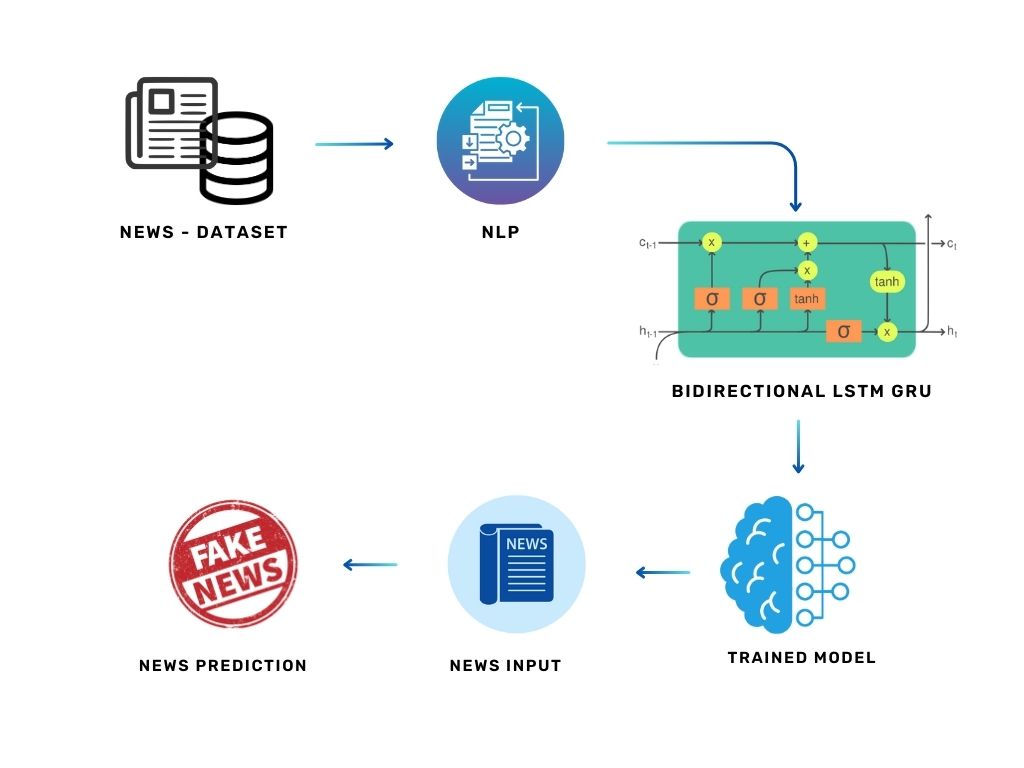
The model is initially trained on datasets containing both fake and real news examples so there will be a distinction between fake and real when the model is completed. The model uses TF-IDF (TF-IDF provides each word in the text with an associated value that is proportional to how frequently that word appears in the entire document ( Document Frequency) ) to convert text to numerical values along with a decision algorithm such as Naive Bayes or Logistic Regression. Once the model is trained, the system can classify incoming news as either trustworthy or non-trustworthy by using the learned pattern. Less Widespread Misinformation = More reliable Online Information. The project is also an excellent beginner-friendly project that provides exposure to Data Science Tools and Technologies Data Preparation, Text Mining Techniques, and Machine Learning Concepts. The emphasis on Critical Thinking about Online Information will also continue to increase through the years.
Ready to earn your Software Testing Professional Certification? Discover the Software Testing Course now available at ACTE!
Weather Pattern Forecasting
- Data Collection and Weather Sources: Weather Pattern Forecasting begins with collecting large amounts of historical weather data. This data is gathered from satellites, weather stations, and IoT sensors. It includes temperature, rainfall, humidity, and wind speed records. This raw data is the foundation for building accurate prediction models.
- Pattern Identification in Climate Data: After collecting data, the next step is finding patterns in weather behavior. Data scientists analyze seasonal changes like monsoon, summer heat, and winter cooling trends. These patterns help to improve Data Science Skills understand how weather conditions repeat over time. This makes future forecasting more reliable and structured.
- Machine Learning for Prediction: Machine learning models are used to predict future weather conditions based on past data. Algorithms like Linear Regression, Decision Trees, and LSTM are commonly applied. These models learn relationships between weather variables and time patterns. This helps generate more accurate and data-driven forecasts.
- Real-World Applications in Agriculture: Weather forecasting is very important in agriculture for planning crop cycles. Farmers use it to decide when to plant, irrigate, and harvest crops. Data Science It also helps reduce crop loss caused by unexpected weather changes. This improves productivity and supports better farming decisions.
- Importance in Safety and Disaster Management: Weather Pattern Forecasting plays a key role in predicting natural disasters like floods, storms, and heatwaves. Early warnings help governments and people take safety measures in advance. This reduces damage to life and property. It makes communities better prepared for extreme weather conditions.
- Data Collection from Social Platforms: Social media trend analysis starts with collecting data from different platforms. This includes posts, hashtags, comments, likes, and shares from users. APIs and web scraping tools are often used to gather this data. This raw data helps understand Data Science Scope what content is becoming popular.
- Hashtag and Keyword Analysis: Hashtags and keywords are important indicators of social media trends. Data science models analyze frequently used words and hashtags to find trending topics. This helps identify what users are talking about the most in real time. It also shows how topics grow in popularity.
- Sentiment Understanding of Content: Sentiment analysis is used to understand user opinions behind posts and comments. It helps classify content as positive, negative, or neutral. This gives insight into how people feel about a trend or topic. Businesses use this to measure public reaction.
- Trend Prediction and Pattern Detection: Machine learning models are used to predict future trends based on past social media data. These models detect patterns in how content spreads and gains attention. They help identify which topics may become popular in the future. This is useful for Data Science Career Path and planning marketing strategies.
- Importance in Marketing and Business Growth: Social media trend analysis is very important for businesses and marketers. It helps them understand customer interests and create better content. Companies use it to promote products at the right time. This increases engagement, reach, and brand visibility online.
- Instructor-led Sessions
- Real-life Case Studies
- Assignments
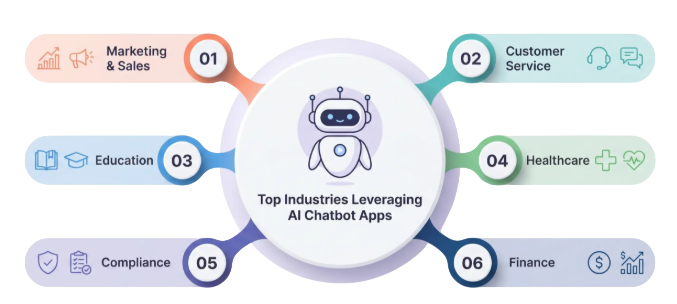
- Natural Language Processing for Understanding Queries: Chatbots use Natural Language Processing to understand human language in text form. This helps the system interpret customer questions correctly even if they are not perfectly written. NLP breaks sentences into meaningful parts and finds the user’s intent. This allows the chatbot to give accurate and useful responses.
- Automated Customer Support System: Chatbots provide automatic replies to common customer questions like order status, payment issues, or product details. Data Science Importance in Tech Industry This reduces the workload of human support teams. It also ensures customers get instant responses without waiting. Automation improves efficiency and saves time for both users and companies.
- Machine Learning for Better Responses: Machine learning helps chatbots improve their performance over time. The system learns from past conversations and user interactions. It becomes better at understanding different types of questions and providing correct answers. This makes the chatbot more intelligent and reliable.
- 24/7 Availability and Fast Response: One major advantage of chatbots is that they work all the time without breaks. Customers can ask questions anytime, and the chatbot responds instantly. This improves customer satisfaction and service quality. Fast response time is very important in modern digital services.
- Importance in Business and Customer Experience: Chatbots are widely used in e-commerce, banking, and Essential Staistics For Data Science. They help businesses handle large numbers of customer queries efficiently. This improves customer experience and reduces operational costs. Chatbots also help companies maintain consistent and professional communication.
Get Your Data Science Certification by Learning from Industry-Leading Experts and Advancing Your Career with ACTE’s Data Science Training.
Social Media Trend Analysis

Plant Disease Detection
Using data science and ML techniques, the plant disease detection tool is an ag-tech application that can quickly detect crop diseases at an early stage. The plant disease detection tool takes images of plant leaves and analyzes those images to find visual evidence of infection (e.g. spots, discoloration, or unusual patterns) so that farmers can quickly tell if a plant is healthy or sick. This helps farmers start taking preventative measures before the crop has died. The initial training of the plant disease detection tool includes thousands of images of healthy and diseased plants to allow the tool to learn the visual differences between healthy and diseased plants. The plant disease detection tool uses image-processing techniques and deep learning models (e.g. CNN) to detect disease accurately. CNNs learn distinguishing features of images, such as shape and texture, This Data Science Training develop an accurate understanding of a healthy plant vs. a diseased plant. The objective of this project is to help farmers avoid losing crops due to disease, which ultimately increases the total number of crops produced per acre of agricultural land. In addition to reducing the time that would normally be spent manually inspecting plants for disease, the plant disease detection tool allows for more rapid identification of diseased plants so that farmers can employ rapid solutions (e.g. fertilizers or pesticides.) This technology will play an essential role in the future of smart farming and the growth of modern agricultural systems, improved crop quality, and increased overall food production efficiency.

Get JOB Oriented Data Science for Beginners By MNC Experts
Finding Trends in Stock Prices
The Stock Price Trend Predictor is all about looking at stock prices in the past to help you figure out if a stock price might go up in the future or down. The prediction system collects stock data, such as when a stock opened, when it closed, the amount of stock that was traded, and the price of stock on the market. Build A Career in Data Science Next, this stock data is cleaned and analyzed to find stock prices that have acted the same way over time. After analyzing the stock data, we can use some machine learning algorithms (e.g. linear regression, ARIMA, LSTM) as well as time series algorithms to predict stock prices. The goal of this project is to make it easier for people to invest, as people will be less afraid to invest because they know what to expect; people can also use these stock price predictors to find out where they should buy and sell stock. We often use stock performance visualizations to see how the price of stock has changed over time; however, stock price predictions are never completely accurate because external factors can change how a stock behaves. But this project is beginner-friendly and gives you an introduction into how to analyze financial data and use statistical methods for predicting future trends.
Want to Master Data Science? Explore the Data Science Master Program Offered at ACTE Today!
Chatbot for Customer Queries
Set to Ace Your Data Science Job Interview? Check Out Our Blog on Data Science Interview Questions & Answer
Credit Card Fraud Detection
Credit Card Fraud Detection is a data science and machine learning application used to identify illegal or suspicious transactions in credit card usage. It helps banks and financial institutions protect customers from unauthorized money theft. The system works by analyzing transaction data such as amount, time, location, and spending patterns. Each transaction is checked to see whether it is normal or unusual compared to past behavior. Machine learning models are trained using historical transaction data that includes both genuine and fraudulent cases. Algorithms like Logistic Regression, Random Forest, and Neural Networks are commonly used for classification. These models learn patterns that separate safe transactions from risky ones. When a new transaction happens, the system quickly analyzes it and predicts whether it is fraud or not. If a transaction looks suspicious, it can be blocked or flagged for further verification. This process helps reduce financial loss and increases customer safety. This kilss Helps to get Data Science Jobs and Fraud detection systems also use anomaly detection techniques to find unusual behavior in real time. Large datasets are required to improve accuracy and reduce false alerts. Banks continuously update these models to handle new fraud techniques used by criminals. It is important because fraud patterns keep changing over time. Real-time monitoring makes the system more effective in preventing instant losses. This project is widely used in banking, online payments, and e-commerce platforms. It helps build trust between customers and financial services. Credit Card Fraud Detection is a powerful real-world data science project that combines security and artificial intelligence.
Conclusion
Data science projects for beginners learning detecting fake news, forecasting the weather, and detecting fraud show how useful it is to use data to solve real-life problems. They’re great for helping people understand how raw data is collected, processed, and turned into useful information. By doing these projects, data science beginners gain hands-on experience with machine learning, data analysis, and solving problems using those skills. Each project develops a different set of skills: some with text processing, others with prediction, some others with classification, and still others with pattern recognition – all of which are extremely valuable in today’s tech-driven workplaces. This Data Science Training Helps Working on real-world projects is also a great way for a beginner to build a good portfolio of work that they can use to apply for jobs in data science. Completing these projects bridges the gap between theory and practice. When a learner does multiple projects, they increase their confidence in and ability to use technology. Overall, project-based learning is probably the best way for someone just getting into data science to grow as a new learner.