LMS
Last updated on 03rd Sep 2026| 4871

- Introduction to Data Science Careers at Accenture
- Essential Data Science Skills and Qualifications for Accenture
- How to Create a Data Science Resume for Accenture
- How to Find and Apply for Data Science Jobs at Accenture
- Preparing for the Accenture Data Science Recruitment Process
- Data Science Technical Interview Preparation
- Building Data Science Projects to Strengthen Your Profile
- Aptitude, Coding, and Problem-Solving Tests for Accenture
- Tips and Best Practices to Crack the Accenture Data Science Interview
- Conclusion and Next Steps to Get a Data Science Job at Accenture
Introduction to Getting a Data Science Job at Accenture
Getting a Data Science Job at Accenture can be a rewarding career opportunity for graduates and professionals interested in data analytics, machine learning, artificial intelligence, and business intelligence. Accenture is a global professional services company that offers opportunities across technology, data, cloud, and AI-driven business solutions. To pursue a Data Science Career at Accenture, candidates should develop strong skills in Python, statistics, SQL, machine learning, data visualization, and problem-solving. Candidates looking to strengthen these core concepts can explore Data Science Training to gain structured exposure to data analysis, machine learning, and practical tools. The recruitment process may include resume screening, aptitude or assessment tests, technical interviews, and behavioral or HR discussions, depending on the role and hiring process. Building practical Data Science Projects, gaining hands-on experience with real-world datasets, and developing a strong portfolio can help candidates demonstrate their technical capabilities. Beginners can strengthen their knowledge through structured learning and practical training to gain exposure to analytics, machine learning, and industry-relevant tools. Understanding Accenture’s job requirements, preparing an effective resume, practicing technical questions, and improving communication skills can help candidates approach the recruitment process with greater confidence. With the right combination of technical knowledge, practical projects, and interview preparation, aspiring data scientists can build a strong foundation for pursuing Data Science Jobs at Accenture.
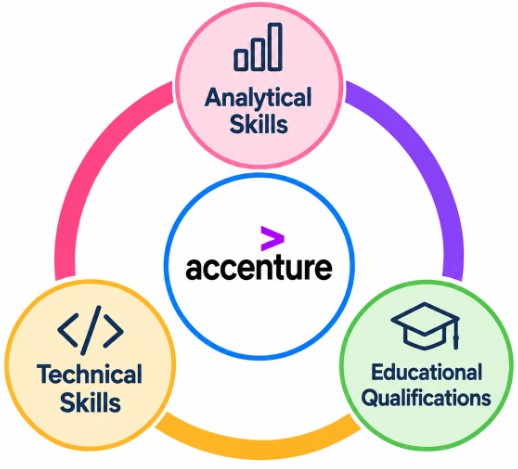
Essential Data Science Skills and Qualifications for Accenture
- Python Programming: Build strong Python skills for data analysis, automation, data manipulation, and machine learning tasks.
- Statistics and Mathematics: Understand probability, statistics, linear algebra, and other mathematical concepts required for data analysis and machine learning.
- SQL and Databases: Learn SQL queries, data extraction, joins, filtering, aggregation, and database concepts for working with structured data.
- Data Analysis: Develop the ability to clean, transform, explore, and interpret datasets to identify meaningful insights and business trends.
- Machine Learning: Understand supervised and unsupervised learning algorithms, evaluation techniques, and practical machine learning workflows. Strengthen your foundation with Machine Learning Basics to build practical knowledge for data science roles.
- Data Visualization: Learn how to present data-driven insights using charts, dashboards, and visualization techniques that make complex information easier to understand.
- Data Science Tools: Gain practical experience with commonly used libraries and tools for data processing, analysis, machine learning, and visualization.
- Problem-Solving Skills: Develop analytical thinking and the ability to approach complex business and technical problems using data-driven solutions.
- Communication and Teamwork: Improve communication, collaboration, presentation, and interpersonal skills needed to work effectively in professional data science teams.
- Practical Experience: Build real-world projects, complete internships, work with datasets, and create a portfolio that demonstrates practical data science capabilities.
- Role-Based Preparation: Review Accenture Data Science job descriptions and align your technical skills, qualifications, projects, and experience with the specific requirements of the role.
Get Your Data Science Certification by Learning from Industry-Leading Experts and Advancing Your Career with ACTE’s Data Science Course.
How to Create a Data Science Resume for Accenture
Creating an effective Data Science Resume is an important step when applying for data science opportunities at Accenture. A well-structured resume should clearly highlight your educational background, technical skills, projects, internships, certifications, and relevant professional experience. Candidates should include important data science skills such as Python, SQL, statistics, data analysis, and data visualization based on the requirements of the target role. Candidates can strengthen their understanding of these areas through Data Science Training, which can provide practical exposure to relevant tools and concepts. Practical projects should focus on real-world problems and explain the datasets, techniques, tools, and outcomes achieved. Freshers can highlight academic projects, internships, online learning, hackathons, and personal data science projects to demonstrate their practical knowledge. It is also important to customize the resume for each Accenture job description by emphasizing relevant skills and experience rather than using the same resume for every application. Use clear formatting, concise descriptions, measurable achievements, and relevant keywords to make the resume easy for recruiters and applicant tracking systems to evaluate. A strong Data Science Resume should demonstrate both technical capabilities and problem-solving skills while presenting your qualifications in a professional and organized manner. Taking time to review and improve your resume before applying can increase your chances of progressing to the next stage of the recruitment process.
How to Find and Apply for AWS Data Science Jobs
- Explore AWS Career Opportunities: Search for suitable roles related to data science, machine learning, artificial intelligence, data analytics, and cloud computing.
- Review Job Requirements: Carefully read each job description to understand the required qualifications, technical skills, experience, responsibilities, and preferred skills.
- Develop AWS Skills: Gain knowledge of AWS cloud services and data technologies that are relevant to data science, analytics, machine learning, and large-scale data processing.
- Tailor Your Resume: Customize your resume according to the specific AWS role and highlight relevant skills such as Python, SQL, statistics, machine learning, data analysis, and cloud technologies. A well-structured Data Science Resume Tutorial can help you understand how to present these skills effectively.
- Highlight Practical Projects: Include academic projects, personal projects, internships, or professional work that demonstrates your ability to solve real-world data and business problems.
- Build an AWS Portfolio: Showcase projects involving cloud-based data processing, machine learning, analytics, or AWS services to demonstrate practical cloud and data science knowledge.
- Earn Relevant Certifications: Consider AWS certifications and data-related credentials that can strengthen your technical profile and demonstrate knowledge of cloud technologies.
- Complete the Application Carefully: Provide accurate educational, professional, technical, and certification details when submitting your application.
- Prepare for the Recruitment Process: Practice coding, SQL, statistics, machine learning, system design, cloud concepts, and behavioral questions relevant to the position.
- Apply Strategically: Focus on AWS roles that closely match your skills, qualifications, experience, and career goals rather than submitting applications without reviewing the requirements.

Preparing for the Accenture Data Science Recruitment Process
Preparing for the Accenture Data Science recruitment process requires a combination of technical knowledge, problem-solving ability, communication skills, and an understanding of the role you are applying for. Candidates should begin by reviewing the job description and identifying the key skills and qualifications expected for the position. Preparation should cover important areas such as Python, SQL, statistics, probability, data analysis, machine learning and basic programming concepts. Candidates can strengthen their foundation by following Statistics and Probability for Data Science and practicing relevant concepts regularly. It is also important to practice aptitude, logical reasoning, and problem-solving questions if they are included in the recruitment process. Candidates should be prepared to explain their academic projects, internships, portfolio projects, and the techniques used to solve real-world data problems. Mock interviews can help improve confidence, technical communication, and the ability to explain complex concepts clearly. Researching Accenture’s business areas and understanding how data science can support business decision-making can also help candidates provide more relevant interview responses. A structured preparation plan, regular practice, and familiarity with common recruitment stages can help aspiring data scientists approach the Accenture selection process with greater confidence.
AWS Data Science Technical Interview Preparation
- Python Programming: Revise Python fundamentals, data structures, functions, object-oriented programming, and libraries commonly used for data science.
- SQL and Databases: Practice SQL queries involving joins, filtering, grouping, subqueries, aggregate functions, and data manipulation.
- Statistics and Probability: Understand probability, descriptive statistics, distributions, hypothesis testing, correlation, regression, and other concepts commonly used in data analysis. Candidates can reinforce these fundamentals through Probability Density Function in Statistics Tutorial.
- Data Preprocessing: Learn techniques for handling missing values, removing duplicates, encoding categorical variables, scaling data, and preparing datasets for machine learning.
- Exploratory Data Analysis: Practice analyzing datasets to identify patterns, trends, relationships, outliers, and meaningful business insights.
- Machine Learning: Revise supervised and unsupervised learning algorithms, model training, feature engineering, model selection, and evaluation techniques.
- AWS Cloud Services: Develop an understanding of AWS services relevant to data science and machine learning, including data storage, data processing, analytics, and machine learning workflows.
- Machine Learning on AWS: Understand how cloud-based machine learning workflows can be developed, trained, deployed, and monitored using AWS technologies.
- Coding Practice: Solve Python coding problems and data manipulation exercises to improve programming skills and technical problem-solving ability.
- Project Knowledge: Be prepared to explain the projects listed on your resume, including the business problem, dataset, tools, methodology, challenges, and results.
- Problem-Solving and Communication: Practice explaining technical solutions step by step and demonstrate analytical thinking when solving real-world data and cloud-based problems.

Get JOB Oriented Data Science Training for Beginners By MNC Experts
- Instructor-led Sessions
- Real-life Case Studies
- Assignments
Building Data Science Projects to Strengthen Your Profile
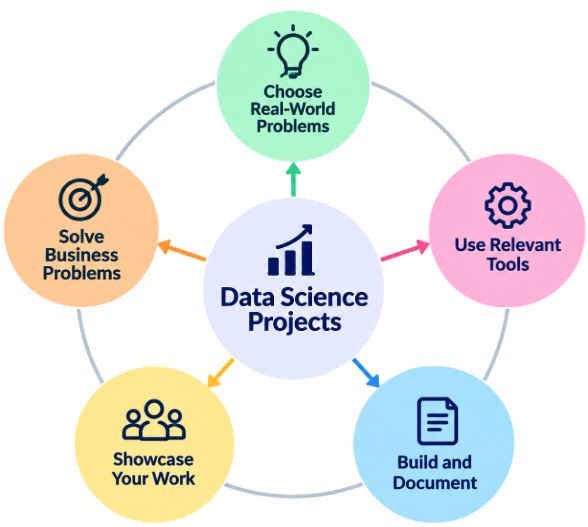
Building practical Data Science Projects is an effective way to strengthen your profile when preparing for a Data Science Job at Accenture. Projects allow candidates to demonstrate their ability to work with real-world datasets, apply analytical techniques, develop machine learning models, and communicate data-driven insights. Beginners can build these skills through Data Science Training, gaining practical exposure to relevant tools, techniques, and project workflows. Beginners can start with projects involving data cleaning, exploratory data analysis, customer segmentation, sales forecasting, fraud detection, sentiment analysis, or predictive modeling. Each project should clearly explain the business problem, dataset, methodology, tools used, model or analytical approach, and final results.
Want to Master Data Science? Explore the Data Science Master Program Offered at ACTE Today!
Aptitude, Coding, and Problem-Solving Tests for AWS
- Quantitative Aptitude: Practice percentages, ratios, averages, probability, data interpretation, numerical reasoning, and basic mathematical concepts.
- Logical Reasoning: Strengthen logical thinking through puzzles, sequences, pattern recognition, analytical reasoning, and decision-making problems.
- Python Programming: Revise Python fundamentals, variables, data types, loops, conditional statements, functions, lists, dictionaries, and object-oriented programming.
- Data Structures and Algorithms: Practice arrays, strings, stacks, queues, sorting, searching, recursion, and basic algorithmic problem-solving.
- SQL Practice: Work on queries involving filtering, sorting, joins, grouping, aggregate functions, subqueries, and data manipulation.
- AWS Fundamentals: Develop a basic understanding of AWS cloud concepts, including compute, storage, databases, networking, security, and data analytics services.
- Data Science Problem-Solving: Practice real-world problems involving data analysis, data preprocessing, statistics, machine learning, and interpretation of results. Reviewing Data Analytics Importance can help strengthen your understanding of data analysis approaches and their practical applications.
- Time Management: Practice solving aptitude, coding, and technical questions within a limited timeframe while maintaining accuracy.
- Mock Tests: Take practice assessments to identify weak areas, improve problem-solving speed, and build confidence before technical evaluations.
- Consistent Practice: Follow a regular preparation schedule combining aptitude questions, Python coding, SQL exercises, AWS concepts, and data science problems.
Want to Learn About Data Science? Explore Our Data Science Interview Questions and Answers Featuring the Most Frequently Asked Questions in Job Interviews.
Tips and Best Practices to Crack the Accenture Data Science Interview
Successfully preparing for a Data Science Interview at Accenture requires a combination of technical expertise, practical knowledge, communication skills, and confidence. Candidates should focus on understanding core data science concepts rather than relying only on memorized answers. Reviewing Python, SQL, statistics, probability, machine learning, data analysis, and model evaluation can help build a strong technical foundation. Candidates can also strengthen their overall preparation with Data Science Interview Preparation by practicing relevant technical and interview-focused concepts. Candidates should also thoroughly understand every project and experience mentioned on their resume and be prepared to explain the problem, approach, tools, challenges, and results clearly. Practicing mock interviews can improve communication, time management, and the ability to approach unfamiliar problems logically. During the interview, candidates should listen carefully, clarify questions when necessary, explain their reasoning step by step, and provide practical examples whenever possible. It is also useful to demonstrate an understanding of how data science can solve business problems and create measurable value. Maintaining a professional attitude, being honest about areas that need improvement, and showing a willingness to learn can further strengthen the overall interview performance. Following these best practices can help aspiring data scientists approach the Accenture interview process with greater preparation and confidence.
Conclusion and Next Steps to Get a Data Science Job at Accenture
Getting a Data Science Job at Accenture requires a combination of strong technical skills, practical experience, effective communication, and consistent interview preparation. Candidates should build a solid foundation in Python, SQL, statistics, data analysis, machine learning, and data visualization while developing practical projects that demonstrate their ability to solve real-world problems. Aspiring professionals can strengthen these skills through Data Science Training, which can provide structured learning and practical exposure to relevant concepts and tools. Creating a well-structured resume, applying for suitable roles, preparing for aptitude and coding assessments, and practicing technical and behavioral interview questions can help candidates navigate the recruitment process more effectively. Freshers can strengthen their profiles through internships, academic projects, certifications, portfolio development, and hands-on practice with real-world datasets. Candidates should also stay updated with current data science trends and continuously improve their technical and problem-solving abilities. A focused job search strategy combined with consistent learning and interview preparation can help aspiring professionals move closer to their goal of joining Accenture as a data science professional. With the right skills, preparation, and persistence, candidates can build a strong foundation for a successful Data Science Career at Accenture.