LMS
LMS
Last updated on 20th Jul 2026| 4837

- Introduction to Tableau
- Getting Started with Tableau Desktop
- Connecting and Preparing Data in Tableau
- Data Visualization Fundamentals
- Creating Interactive Charts and Reports
- Building Powerful Tableau Dashboards
- Advanced Tableau Features and Calculations
- Tableau Filters, Parameters, and Analytics
- Publishing, Sharing, and Tableau Server
- Conclusion and Next Steps in Tableau
Introduction to Tableau
Tableau Tutorial is the perfect starting point for anyone who wants to master modern data visualization and Business Intelligence. Tableau for Beginners provides a simple yet powerful way to transform raw data into meaningful insights through interactive dashboards and reports. Learn Tableau to connect, analyze, and visualize data from multiple sources such as Excel, SQL databases, cloud platforms, and enterprise applications. With its intuitive drag-and-drop interface, Tableau Desktop enables users to build professional reports without requiring advanced programming skills. Tableau supports real-time analysis, advanced reporting, and interactive visualizations that help organizations identify trends, monitor business performance, and make data-driven decisions. Professionals looking to build a strong foundation in analytics and visualization can also benefit from Data Science Training. As one of the leading Data Analytics platforms, Tableau is widely used across industries including finance, healthcare, retail, manufacturing, marketing, and IT. Completing Tableau Training also prepares learners for globally recognized Tableau Certification programs and rewarding careers in data visualization.
Getting Started with Tableau Desktop
Tableau Desktop is the primary application used to create interactive dashboards, reports, and visual analytics. In this Tableau Tutorial, users learn how to install Tableau, navigate the workspace, connect data sources, and build visualizations using an easy drag-and-drop interface. Tableau for Beginners introduces essential components such as the Data Pane, Analytics Pane, Shelves, Marks Card, Filters, and Visualization Workspace. Users can quickly create Tableau Charts, maps, graphs, and reports while exploring datasets through interactive analysis. To strengthen reporting and visualization skills, learners can also explore the Power BI Tutorial. Learn Tableau by understanding workbook structures, worksheets, dashboards, and stories that support effective reporting. Mastering Tableau Desktop builds a strong foundation for advanced dashboard development and prepares learners for professional Tableau Training and real-world business intelligence projects.
Get Your Data Science Certification by Learning from Industry-Leading Experts and Advancing Your Career with ACTE’s Data Science Course.
Connecting and Preparing Data in Tableau
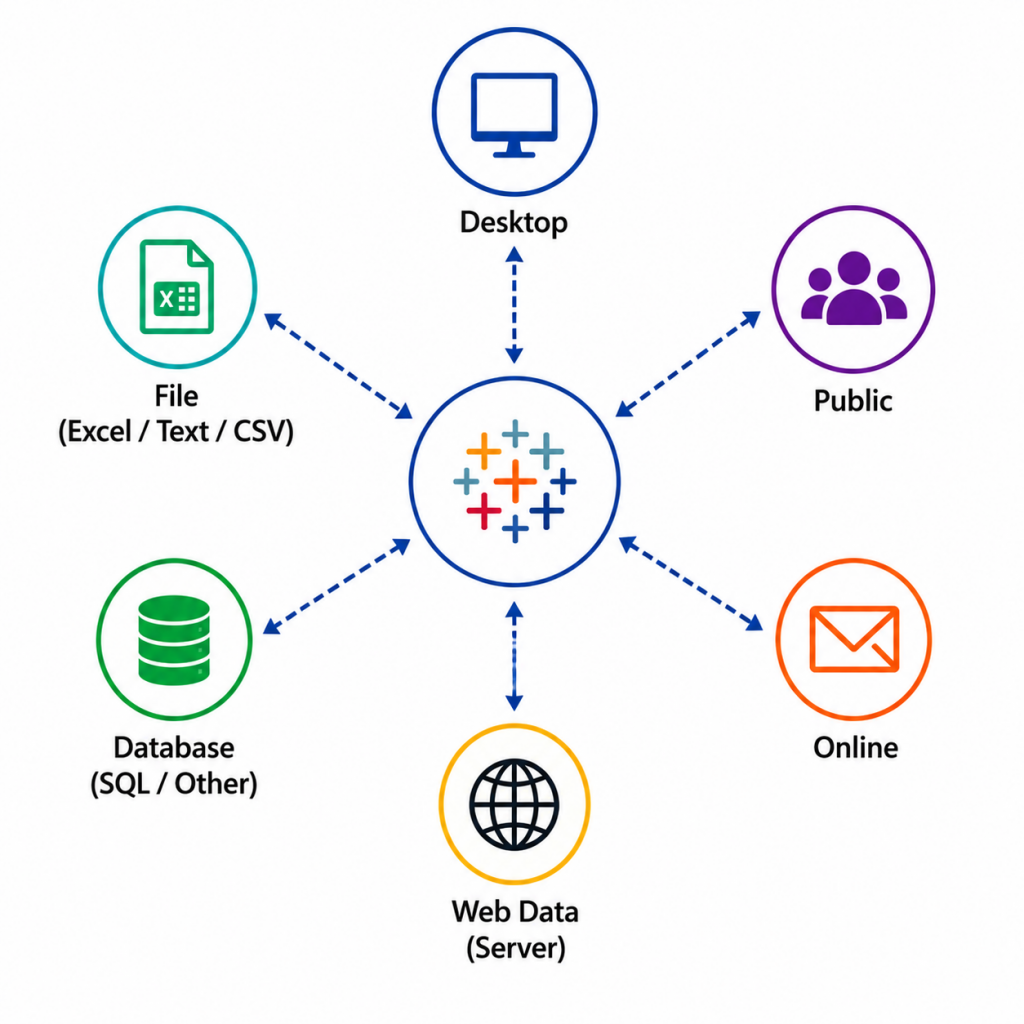
Connecting and preparing data is one of the most important skills in any Tableau Tutorial. Tableau supports connections to spreadsheets, relational databases, cloud applications, web services, and enterprise data warehouses. Users can import data into Tableau Desktop, establish live connections, or create extracts for better performance. Tableau also provides powerful preparation capabilities, while Tableau Prep enables users to clean, transform, join, union, and organize datasets before visualization. Users can rename fields, change data types, filter records, blend multiple sources, and create calculated fields for accurate analysis. Proper data preparation improves dashboard performance and ensures reliable business insights.
Data Visualization Fundamentals
Tableau Data Visualization helps users convert complex datasets into meaningful graphical representations that improve business understanding. In this Tableau Tutorial, learners discover how to create different Tableau Charts such as bar charts, line charts, pie charts, scatter plots, heat maps, treemaps, histograms, and geographic maps. Tableau for Beginners focuses on selecting appropriate visualization types, applying formatting, using color effectively, and presenting information clearly for different audiences. Learners looking to expand their analytics knowledge can also explore the Data Analytics Concepts and Importance. Tableau’s interactive capabilities help users identify trends, compare performance, discover patterns, and analyze business metrics with ease. Learning visualization best practices strengthens reporting skills and enables professionals to create compelling dashboards that support better Business Intelligence and Data Analytics.

Creating Interactive Charts and Reports
Creating interactive reports is a key objective of every Tableau Tutorial. Tableau allows users to develop engaging reports by combining multiple worksheets into dynamic Tableau Dashboard solutions. Interactive elements such as filters, parameters, actions, drill-downs, and tooltips allow users to explore information from multiple perspectives. Advanced features including calculated fields, hierarchies, forecasting, trend analysis, and analytics functions further enhance reporting capabilities. Users can customize Tableau Charts to meet business requirements and present insights in an intuitive format. Learners can also complement their visualization skills by exploring the Google Colab Tutorial. These practical skills are highly valuable for professionals pursuing Tableau Certification, Tableau Training, and careers in Business Intelligence and Data Analytics.

Get JOB Oriented Data Science Training for Beginners By MNC Experts
- Instructor-led Sessions
- Real-life Case Studies
- Assignments
Building Powerful Tableau Dashboards
- Understanding Tableau Dashboard Design: In this Tableau Tutorial, learners discover the fundamentals of creating an effective Tableau Dashboard by combining multiple worksheets into a single interactive interface. Tableau for Beginners introduces dashboard layouts, sizing options, containers, floating and tiled objects, navigation buttons, and design best practices. Learn Tableau dashboard development techniques that improve readability, enhance user experience, and present business insights professionally while supporting Business Intelligence and Data Analytics.
- Combining Multiple Visualizations: A professional Tableau Dashboard integrates multiple Tableau Charts, tables, maps, KPIs, and graphical elements into one comprehensive reporting solution. During Tableau Training, learners understand how to organize different visualizations to create meaningful business stories and simplify complex information. Tableau Desktop provides flexible dashboard components that maintain consistency in Tableau Data Visualization and improve executive reporting.
- Creating Interactive Dashboard Elements: Interactive dashboards enhance user engagement through filters, highlight actions, URL actions, dashboard actions, tooltips, and navigation buttons. In this Tableau Tutorial, Tableau for Beginners learns how these features allow users to explore reports dynamically and gain deeper business insights. To build stronger analytical skills alongside Tableau, learners can explore the Machine Learning Basics Tutorial for Data Science Interns. Learn Tableau by creating dashboards that improve reporting efficiency and support advanced Data Analytics.
- Designing Executive-Level Dashboards: Executive dashboards focus on presenting KPIs, operational performance, financial metrics, and strategic insights in an intuitive format. Tableau Desktop enables developers to build visually appealing Tableau Dashboard solutions for executives and stakeholders. During Tableau Training, learners apply professional Tableau Data Visualization techniques that strengthen Business Intelligence reporting and prepare for Tableau Certification.
- Optimizing Tableau Dashboard Performance: Performance optimization ensures dashboards remain responsive and scalable. Learn Tableau optimization techniques such as reducing unnecessary calculations, optimizing data sources, using extracts, minimizing filters, and improving workbook efficiency. Tableau Prep helps prepare optimized datasets before dashboard development, ensuring faster loading times and better user experiences across enterprise reporting environments.
Want to Master Data Science? Explore the Data Science Master Program Offered at ACTE Today!
Advanced Tableau Features and Calculations
- Understanding Tableau Filters: Filters allow users to display only relevant data within reports and dashboards. During Tableau Training, learners understand dimension filters, measure filters, date filters, context filters, extract filters, and data source filters. Tableau for Beginners learns how filtering improves dashboard performance while providing focused Data Analytics and accurate business insights.
- Working with Parameters in Tableau: Parameters enable dynamic user interaction within Tableau Desktop. In this Tableau Tutorial, learners create parameters that control calculations, switch measures, modify visualizations, and customize dashboard behavior. Learn Tableau parameter implementation to build flexible dashboards that adapt to different business reporting requirements.
- Applying Advanced Filtering Techniques: Advanced filtering improves dashboard interactivity and usability. Learners explore cascading filters, filter actions, user-based filtering, dynamic filtering, and parameter-driven filtering techniques. Those interested in expanding their analytical capabilities can also refer to the Tutorial on Statistics and Probability for Data Science. These advanced capabilities help create responsive Tableau Dashboard solutions that enhance Business Intelligence reporting while improving the end-user experience.
- Using Tableau Analytics Features: Tableau provides a powerful Analytics pane containing forecasting, trend analysis, clustering, reference bands, statistical summaries, and predictive functions. Tableau Desktop integrates these features directly into visualizations, enabling users to perform deeper business analysis. Mastering Tableau analytics strengthens professional Data Analytics capabilities and supports advanced reporting projects.
- Enhancing Reports with Interactive Analysis: Interactive reports combine filters, parameters, dashboard actions, and analytics to create engaging business reports. Tableau Tutorial learners understand how these features work together to allow users to explore information independently. Interactive dashboards improve decision-making, simplify Tableau Data Visualization, and provide meaningful insights for organizations across multiple industries.
Want to Learn About Data Science? Explore Our Data Science Interview Questions and Answers Featuring the Most Frequently Asked Questions in Job Interviews.
Tableau Filters, Parameters, and Analytics
- Publishing Tableau Workbooks: Publishing workbooks enables organizations to share dashboards across teams securely. In this Tableau Tutorial, learners understand how to publish dashboards, reports, and data sources from Tableau Desktop to Tableau Server or Tableau Cloud. Publishing ensures centralized access, collaboration, and enterprise-wide Business Intelligence reporting while supporting Tableau Certification learning objectives.
- Managing Tableau Server Projects and Permissions: Tableau Server organizes dashboards using projects, users, groups, and permission settings. Learn Tableau administration concepts that help secure organizational data while providing appropriate access to reports. Managing permissions effectively ensures safe collaboration and governance for enterprise Data Analytics environments.
- Sharing Dashboards with Users: Organizations can share dashboards through web browsers, embedded analytics, email subscriptions, mobile applications, and collaborative workspaces. Tableau Public also enables users to publish public dashboards for learning, portfolio development, and community sharing. Sharing capabilities improve collaboration and maximize the value of Tableau Dashboard solutions across organizations.
- Scheduling Data Refresh and Managing Sources: Maintaining accurate business reports requires up-to-date information. During Tableau Training, learners configure scheduled refreshes, manage published data sources, monitor extract updates, and optimize data synchronization. Tableau Prep supports efficient data preparation before publishing, ensuring reliable and consistent reporting across enterprise dashboards. Professionals who want to expand these business intelligence skills can also benefit from Data Science Training, which covers data analysis, visualization, and real-world analytics techniques.
- Tableau Server Administration and Security: Tableau Server administration focuses on user management, authentication, authorization, security configuration, governance, monitoring, and performance optimization. Learn Tableau administration best practices to manage enterprise deployments, protect sensitive information, and maintain high-performing reporting environments. These advanced skills are valuable for professionals working in Business Intelligence, Data Analytics, and those preparing for advanced Tableau Certification.
Publishing, Sharing, and Tableau Server
- Working with Calculated Fields: Calculated Fields allow users to create custom formulas and derive meaningful insights from raw data. In this Tableau Tutorial, learners understand how calculations perform mathematical operations, string manipulation, logical conditions, date functions, and aggregations within Tableau Desktop. Tableau for Beginners gains practical experience creating calculated measures that improve Data Analytics and business reporting accuracy.
- Using Table Calculations: Table calculations provide advanced analytical capabilities within visualizations. Learn Tableau techniques for creating running totals, moving averages, percentage differences, rankings, cumulative values, and window calculations. These features enhance Tableau Charts by enabling deeper analysis without modifying the underlying data source. Mastering table calculations is an important part of professional Tableau Training.
- Applying Level of Detail (LOD) Expressions: Level of Detail (LOD) expressions provide greater control over data aggregation. Learners explore FIXED, INCLUDE, and EXCLUDE expressions to solve complex analytical scenarios. Tableau Desktop uses LOD calculations to generate accurate summaries regardless of visualization granularity. To better understand the statistical concepts behind advanced analytics, learners can also explore the Probability Density Function in Statistics Tutorial. Understanding these advanced calculations strengthens Business Intelligence reporting and prepares learners for Tableau Certification examinations.
- Advanced Data Analysis Techniques: Advanced analytical capabilities extend beyond basic reporting. In this Tableau Tutorial, learners explore forecasting, trend lines, clustering, statistical models, reference lines, distributions, and predictive analysis. These techniques improve Data Analytics by identifying business trends, discovering hidden patterns, and supporting strategic planning. Learn Tableau advanced analytics to create intelligent reporting solutions for enterprise environments.
- Creating Advanced Visualizations: Advanced Tableau Data Visualization techniques help users communicate complex information more effectively. Learners create dual-axis charts, combination charts, bullet charts, waterfall charts, geographic maps, custom visualizations, and storytelling dashboards. Tableau Public can also be used to publish and showcase interactive visualizations online. Building advanced Tableau Charts enhances reporting quality and demonstrates professional dashboard development skills.
Conclusion and Next Steps in Tableau
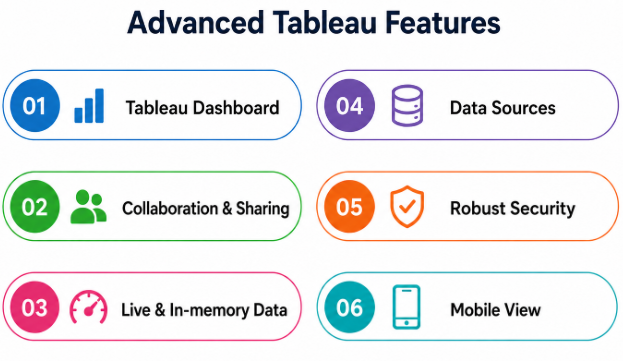
This Tableau Tutorial has provided a comprehensive introduction to one of the world’s leading Business Intelligence and Data Analytics platforms. Tableau for Beginners offers a structured learning path that helps users understand how to transform raw data into meaningful insights through interactive reports, dashboards, and visual analytics. Throughout this course, you have explored the fundamentals of Tableau Desktop, including connecting and preparing data, creating professional Tableau Charts, building interactive reports, designing a powerful Tableau Dashboard, applying calculations, filters, parameters, and analytics, as well as publishing and sharing reports through Tableau Server. These core concepts provide a strong foundation for creating effective Tableau Data Visualization solutions that support data-driven decision-making across industries such as finance, healthcare, retail, manufacturing, marketing, and information technology. To further strengthen your analytical and visualization skills, you can also enroll in Data Science Training, where you’ll gain practical experience in data analysis, machine learning, and business intelligence tools.