LMS
LMS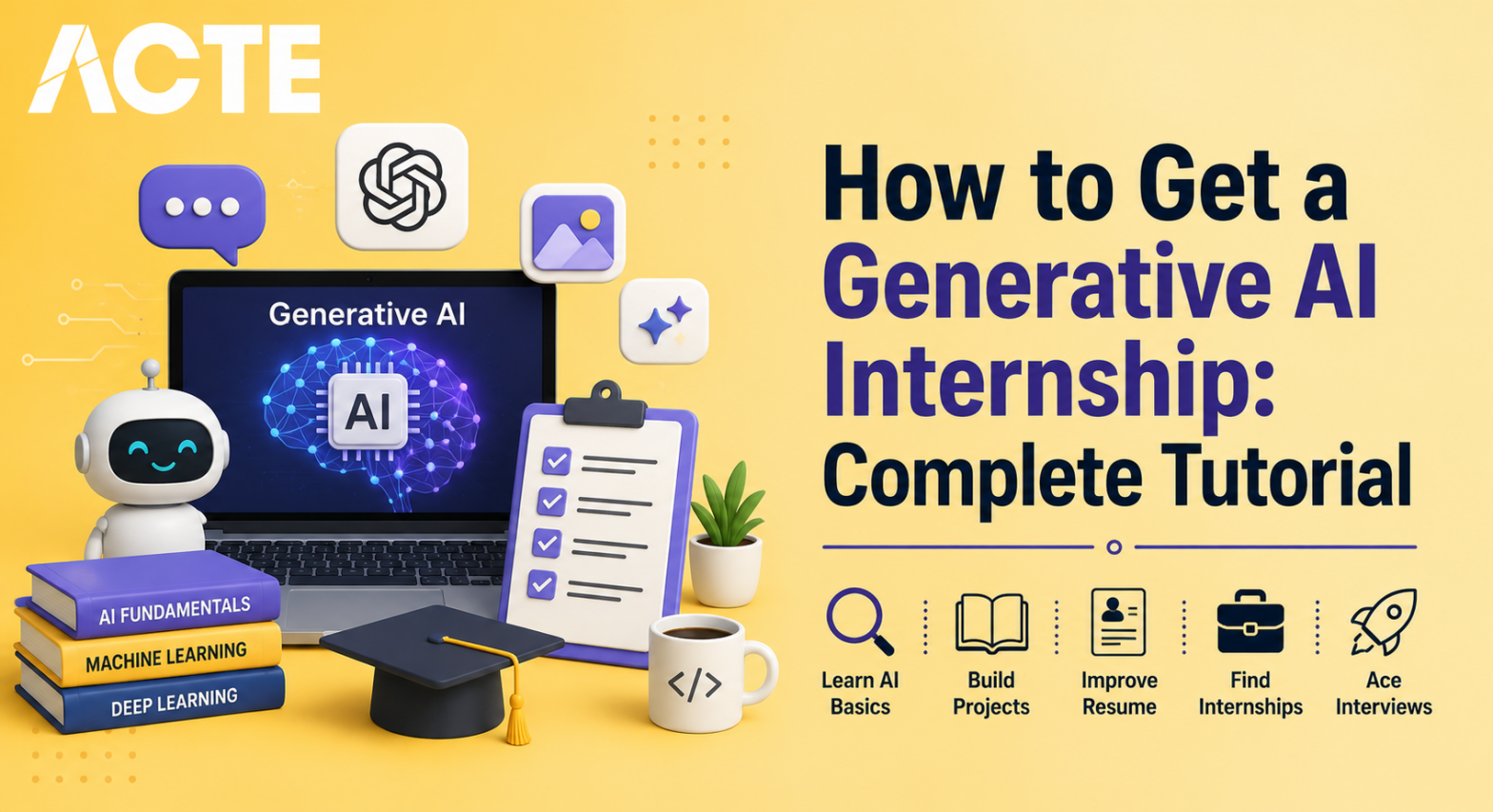
Last updated on 18th Jun 2026| 4614

- Introduction to Generative AI Internships
- Why Choose a Gen AI Career
- Required Skills and Tools
- Building a Strong Portfolio
- Creating an Impressive Resume
- Where to Find Internship Opportunities
- Application Process Step-by-Step
- Interview Preparation Tips
- Common Mistakes to Avoid
- Final Tips to Get Selected
Introduction to Generative AI Internships
Generative AI internships are becoming one of the most valuable stepping stones for students and professionals who want to build a career in artificial intelligence. These internships focus on developing systems that can generate human-like outputs such as text, images, videos, and even code. With the rise of technologies like Large Language Models (LLMs), Generative Adversarial Networks (GANs), and diffusion models, companies are actively investing in AI talent. Unlike traditional internships, Generative AI roles emphasize both technical expertise and creativity. Interns often get the chance to work on projects such as AI chatbots, automated content creation tools, and recommendation systems. This exposure helps them understand real-world applications of AI and prepares them for industry challenges. Additionally, these internships provide hands-on experience in handling large datasets, training models, and deploying AI solutions. To strengthen your fundamentals, explore the Generative AI Tutorial for Beginners. This combination of theoretical knowledge and practical experience makes Generative AI internships highly valuable for long-term career growth.
Key Highlights
- Hands-on experience with real-world AI applications: Interns get the opportunity to work on live industry projects, which helps them understand how AI models function in practical scenarios rather than just theory.
- Exposure to cutting-edge technologies: You will work with advanced tools and frameworks such as GPT models, GANs, and transformer architectures that are widely used in modern AI systems.
- Collaboration with industry experts: Working with experienced professionals helps you learn coding standards, debugging techniques, and efficient workflows.
- Better career opportunities: Completing an internship significantly improves your chances of getting placed in top companies with higher salary packages.
Why Choose a Gen AI Career
Generative AI is revolutionizing industries by enabling machines to create and automate complex tasks. Choosing a career in this field ensures long-term relevance, as AI continues to expand across domains like healthcare, finance, education, and entertainment. One of the main advantages of this career is the demand-supply gap. There are far more job openings than skilled professionals, which makes it easier to secure high-paying roles. Additionally, the field offers continuous learning opportunities, as new models and technologies are constantly being developed. To understand the skills, career path, and hiring process, read the Microsoft GenAI Career Tutorial. Another important aspect is innovation. Professionals in Generative AI are not limited to repetitive tasks; instead, they work on solving real-world problems and building intelligent systems. This makes the career both exciting and rewarding.
Reasons to Choose Gen AI
- High demand across industries: Organizations worldwide are adopting AI, creating a large number of job opportunities in this domain.
- Lucrative salary packages: Due to the shortage of skilled professionals, companies offer competitive salaries and benefits.
- Innovation-driven work: You will constantly work on new challenges, making your job dynamic and engaging.
- Multiple career options: You can explore roles like AI Engineer, Data Scientist, NLP Engineer, or Research Analyst.
Required Skills and Tools
To succeed in Generative AI, you need a strong foundation in programming, mathematics, and machine learning. Python is the most widely used programming language because of its simplicity, readability, and extensive collection of AI libraries such as NumPy, Pandas, Scikit-learn, TensorFlow, and PyTorch. A solid understanding of machine learning concepts, including supervised learning, unsupervised learning, reinforcement learning, feature engineering, and model evaluation, is essential for building intelligent systems. Deep learning is equally important because modern generative models rely on neural networks, transformers, and attention mechanisms to generate text, images, audio, and videos. Knowledge of Natural Language Processing (NLP), Large Language Models (LLMs), data preprocessing, and prompt engineering further strengthens your skills. Enrolling in a Gen AI Course can help you gain practical experience with these concepts and industry-standard tools. In addition to technical expertise, familiarity with tools like Hugging Face, Git, Docker, and cloud platforms such as AWS, Azure, or Google Cloud enables you to develop, deploy, and scale AI applications efficiently. Strong problem-solving, analytical thinking, and continuous learning are also important, as Generative AI is a rapidly evolving field with new models, frameworks, and techniques being introduced regularly.
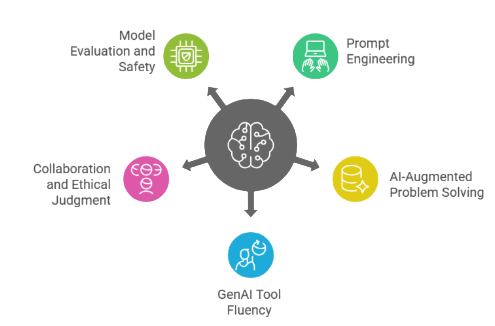
Important Skills
- Programming Knowledge (Python, SQL): Python is the primary programming language for Generative AI because of its simple syntax and powerful libraries like NumPy, Pandas, TensorFlow, and PyTorch. SQL is equally important for storing, retrieving, and managing structured data used to train and evaluate AI models effectively.
- Machine Learning Fundamentals: Understanding machine learning concepts such as regression, classification, clustering, feature engineering, and model evaluation provides the foundation for building intelligent AI systems. These techniques help models learn from data, identify patterns, and make accurate predictions.
- Deep Learning Expertise: Deep learning is the backbone of Generative AI. Knowledge of neural networks, Convolutional Neural Networks (CNNs), Recurrent Neural Networks (RNNs), transformers, and attention mechanisms enables developers to create advanced models capable of generating text, images, audio, and video.
- NLP and Large Language Models (LLMs): Natural Language Processing helps computers understand and generate human language. Learning tokenization, embeddings, prompt engineering, fine-tuning, and transformer-based Large Language Models allows you to build chatbots, virtual assistants, translators, and content generation tools.
- Tools and Frameworks: Familiarity with TensorFlow, PyTorch, Hugging Face Tutorial For Freshers, Git, Docker, and Jupyter Notebook helps developers build, train, test, and deploy AI models efficiently. These tools simplify model development, experiment tracking, collaboration, and production deployment in real-world applications.
Building a Strong Portfolio
A strong portfolio is one of the most valuable assets for anyone pursuing a career in Generative AI. It serves as practical evidence of your technical knowledge, creativity, and problem-solving abilities, allowing recruiters to evaluate your skills beyond a resume. Start by creating beginner-friendly projects such as text classifiers, chatbots, image caption generators, or AI-powered recommendation systems. For project ideas and implementation guidance, explore the Beginner Gen AI Projects Tutorial. As your expertise grows, work on advanced projects like Retrieval-Augmented Generation (RAG) applications, AI assistants, image generation models, document summarizers, code generation tools, or multimodal AI applications. Document each project with a clear problem statement, dataset details, model architecture, implementation steps, evaluation metrics, challenges faced, and future improvements. Host your source code on GitHub with a well-written README, add project demonstrations through videos or live deployments, and showcase your work on LinkedIn or a personal portfolio website. Participating in hackathons, Kaggle competitions, and open-source contributions further strengthens your portfolio and demonstrates your ability to collaborate on real-world AI projects. A well-maintained portfolio not only highlights your technical expertise but also reflects your continuous learning mindset, making you a stronger candidate for internships, freelance opportunities, and full-time Generative AI roles.

Creating an Impressive Resume
Your resume is the first point of contact between you and a recruiter, making it one of the most critical elements in your job application process. Since recruiters often spend only a few seconds scanning each resume, it is essential to make yours clear, concise, and impactful. A well-structured resume should effectively highlight your technical skills, relevant projects, certifications, and achievements in a way that immediately captures attention. To make your profile more competitive, follow the Generative AI Resume Tutorial. In the field of Generative AI, your resume should reflect both your theoretical knowledge and practical experience. Focus on showcasing projects where you have applied AI concepts to solve real-world problems. Avoid adding unnecessary or irrelevant details that may dilute the importance of your key strengths. Instead, present your information in a structured format using bullet points, headings, and consistent formatting. Additionally, optimizing your resume for Applicant Tracking Systems (ATS) is crucial. Many companies use ATS software to filter resumes before they reach a recruiter. Including relevant keywords from the job description, such as “machine learning,” “deep learning,” “NLP,” or “Python,” can significantly improve your chances of passing this initial screening.

Get JOB Oriented Gen AI Training for Beginners By MNC Experts
- Instructor-led Sessions
- Real-life Case Studies
- Assignments
Where to Find Internship Opportunities
Finding the right Generative AI internship requires consistent effort, continuous learning, and a strategic approach. While many internship opportunities are advertised on online job portals, networking and building a strong professional presence can significantly increase your chances of getting selected. Create an impressive resume, maintain an active GitHub profile, and regularly share your AI projects and learning journey on LinkedIn to attract recruiters. Building your expertise through a Gen AI Course can also strengthen your practical skills and improve your internship prospects. Explore internship opportunities on platforms such as LinkedIn, Indeed, Internshala, Wellfound, and company career pages. Participate in hackathons, coding competitions, webinars, AI conferences, and workshops to connect with professionals and hiring managers. You can also contribute to open-source AI projects, participate in Kaggle competitions, and join AI communities on Discord or Reddit to gain practical experience and expand your professional network. Consistently applying for internships, improving your technical skills, and showcasing real-world projects will greatly improve your chances of securing a valuable Generative AI internship.
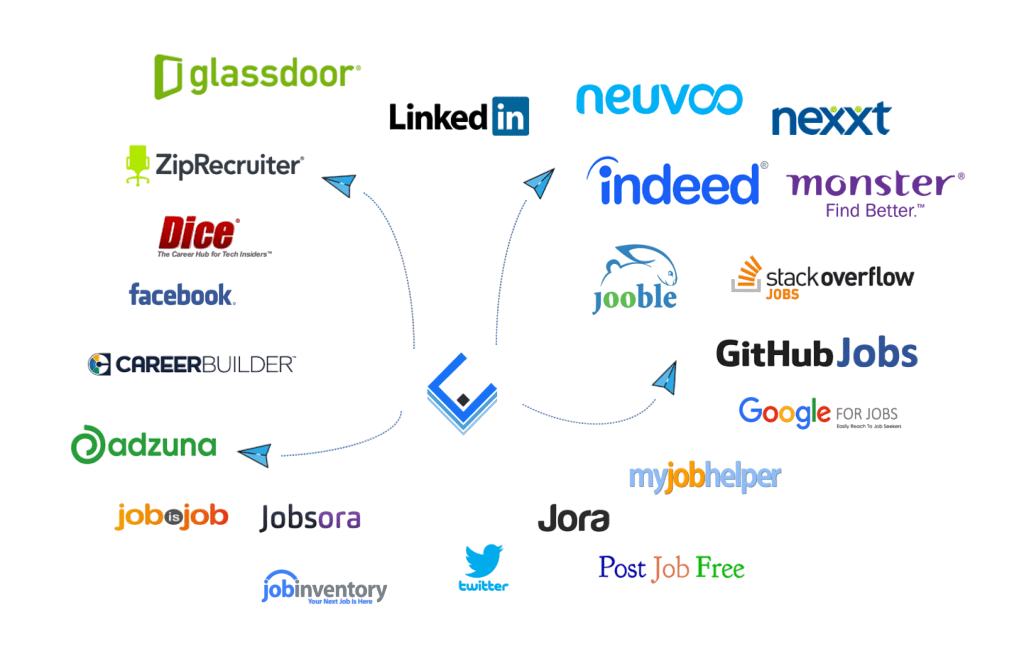
Best Platforms
- LinkedIn: LinkedIn is one of the best platforms for finding Generative AI internships. Connect with recruiters, follow AI companies, engage with industry posts, showcase your projects, and apply directly through job listings. Building an active professional profile increases your visibility to hiring managers.
- Company Websites: Many startups and leading technology companies publish internship opportunities exclusively on their official career pages. Regularly check the careers section of organizations you’re interested in and set up job alerts to stay informed about new openings.
- Job Portals: Websites like Indeed, Internshala, Wellfound, Naukri, and Glassdoor regularly list AI and machine learning internships. Use relevant keywords such as “Generative AI,” “Machine Learning,” or “Data Science” to find opportunities that match your skills.
- AI Communities: Join AI communities on GitHub, Kaggle, Discord, Reddit, and developer forums to learn from experienced professionals, discover internship openings, participate in discussions, and stay updated with the latest tools, research, and industry trends.
- Hackathons and Competitions: Participating in AI hackathons, coding contests, and innovation challenges allows you to demonstrate your skills, collaborate with talented developers, gain practical experience, and often receive internship or job offers from sponsoring companies.
Want to Master Gen AI? Explore the Gen AI Master Program Offered at ACTE Today!
Application Process Step-by-Step
Applying for a Generative AI internship requires more than simply submitting your resume to multiple companies. Recruiters receive hundreds of applications for every opening, so it is important to present yourself as a strong and well-prepared candidate. Begin by identifying organizations whose work aligns with your interests and technical skills. Carefully read the job description to understand the required programming languages, AI frameworks, and project experience. For additional guidance on preparing for leading tech companies, explore the Gen AI Job at Amazon Complete Tutorial. Customize your resume, portfolio, and cover letter for every application instead of using the same documents everywhere. Showcase relevant AI projects, GitHub repositories, certifications, and measurable achievements that demonstrate your capabilities. Stay active on professional platforms like LinkedIn, participate in hackathons and AI communities, and continuously improve your technical skills while applying. A systematic approach, consistent follow-ups, and strong preparation significantly improve your chances of securing interviews and landing a valuable Generative AI internship.
Steps to Apply
- Research Companies: Before applying, thoroughly research each company, its products, AI initiatives, recent achievements, and workplace culture. Read the job description carefully to identify the required skills and responsibilities. Understanding the company’s goals helps you tailor your application and prepare confidently for technical and HR interviews.
- Tailor Your Application: Customize your resume and cover letter for every internship instead of sending the same version everywhere. Highlight the programming languages, AI frameworks, certifications, and projects that closely match the job requirements. Building these skills through a Gen AI Course can strengthen your profile and improve your chances of getting shortlisted.
- Apply Through Multiple Channels: Don’t depend on a single job portal. Apply through LinkedIn, company career pages, Indeed, Internshala, Wellfound, employee referrals, and university placement portals. Using multiple channels increases your visibility and gives you more opportunities to reach recruiters and hiring managers.
- Network Actively: Build professional connections with recruiters, AI engineers, mentors, and industry experts through LinkedIn, webinars, hackathons, conferences, and developer communities. Meaningful networking helps you discover hidden opportunities, gain career guidance, and secure valuable employee referrals.
- Track Your Applications: Maintain a spreadsheet or use a job-tracking tool to record company names, job roles, application dates, interview schedules, follow-up dates, and current status. Staying organized helps you avoid duplicate applications, send timely follow-ups, and evaluate which strategies produce the best results.
Want to Learn About DevOps? Explore Our DevOps Interview Questions and Answers Featuring the Most Frequently Asked Questions in Job Interviews.
Interview Preparation Tips
Preparing for a Generative AI internship interview requires a combination of technical expertise, problem-solving ability, and effective communication skills. Companies evaluate not only your knowledge of machine learning and deep learning but also your ability to apply these concepts in real-world projects. Begin by revising programming fundamentals, data structures, algorithms, machine learning concepts, neural networks, transformers, and Natural Language Processing (NLP). To strengthen your understanding of transformer-based models, refer to the Large Language Model Tutorial For Freshers. Practice coding problems regularly and review the AI projects in your portfolio so you can confidently explain your implementation process, challenges, and results. Research the company, understand its products and AI initiatives, and prepare thoughtful questions to ask the interviewer. Participate in mock interviews, improve your communication skills, and practice answering both technical and behavioral questions. Confidence, consistency, and thorough preparation will help you perform well and significantly increase your chances of securing a Generative AI internship.
Preparation Tips
- Revise Technical Concepts: Build a strong understanding of programming, data structures, algorithms, machine learning, deep learning, neural networks, transformers, NLP, and Generative AI concepts. Review both theoretical knowledge and practical applications so you can confidently answer conceptual as well as implementation-based interview questions.
- Practice Coding: Solve coding problems regularly on platforms such as LeetCode, HackerRank, and Codeforces. Focus on arrays, strings, linked lists, trees, graphs, dynamic programming, and SQL queries. Consistent practice improves logical thinking, coding speed, and your ability to write optimized solutions during interviews.
- Explain Your Projects: Be prepared to discuss every project listed on your resume. Clearly explain the problem statement, dataset, tools, model architecture, implementation process, challenges faced, evaluation metrics, and final outcome. Demonstrating practical knowledge leaves a strong impression on interviewers.
- Improve Communication Skills: Practice explaining technical concepts in simple, structured language. Listen carefully to interview questions, organize your thoughts before answering, and communicate confidently. Strong communication skills help interviewers understand your reasoning and demonstrate your ability to collaborate with a team.
- Attend Mock Interviews: Participate in mock interviews with mentors, friends, or online interview platforms to simulate real interview experiences. Review your performance after every session, identify areas for improvement, and refine your technical as well as behavioral responses to build confidence.
Common Mistakes to Avoid
Many candidates miss out on Generative AI internship opportunities not because they lack potential, but because they make avoidable mistakes during their preparation and application process. Relying only on theoretical knowledge, submitting generic resumes, neglecting hands-on projects, or failing to prepare for interviews can significantly reduce your chances of getting shortlisted. Recruiters look for candidates who demonstrate technical skills through practical experience, maintain a strong portfolio, and communicate their ideas effectively. To avoid common application mistakes, follow the Resume Writing Tutorial for Gen AI Jobs and Internships. Avoid rushing through applications, research every company before applying, and continuously improve your programming, machine learning, and Generative AI knowledge. Paying attention to these common mistakes will help you present yourself as a well-prepared candidate and improve your chances of securing internships and launching a successful career in Artificial Intelligence.
Final Tips to Get Selected
Securing a Generative AI internship is a journey that requires dedication, patience, and continuous improvement. The field of Artificial Intelligence evolves rapidly, with new models, frameworks, and tools emerging every year. To stay competitive, focus on building strong programming skills, mastering machine learning and deep learning concepts, and gaining hands-on experience through practical projects. Keep your portfolio updated, contribute to open-source projects, participate in hackathons, and engage with the AI community to expand your knowledge and professional network. Strengthening your expertise through a Gen AI Course can further enhance your practical skills and industry readiness. Remember that recruiters value candidates who demonstrate curiosity, problem-solving abilities, and a willingness to learn. Stay consistent in your preparation, customize every application, and continuously refine your technical and communication skills. Even if you face rejections, treat them as opportunities to learn and improve. With persistence, the right strategy, and continuous learning, you can successfully secure a Generative AI internship and build a rewarding career in the rapidly growing field of Artificial Intelligence.