LMS
Last updated on 01st Oct 2026| 4690

- Introduction to Generative AI and Its Fundamentals
- Essential Skills and Prerequisites for Learning Generative AI
- Learning Python, Machine Learning, and AI Basics
- Understanding Large Language Models and Generative AI Tools
- Learning Prompt Engineering and AI Application Development
- Building Generative AI Projects and Practical Skills
- Working with APIs, RAG, and AI Application Workflows
- Practicing Generative AI Through Real-World Use Cases
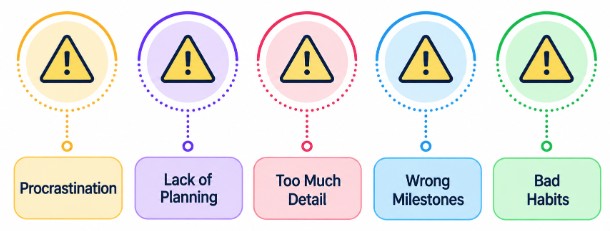
- Common Challenges and Mistakes Beginners Should Avoid
- Final Roadmap for Learning Generative AI from Scratch
Introduction to Generative AI and Its Fundamentals
Generative AI is a branch of artificial intelligence that can create new content such as text, images, audio, video, code, and other digital outputs based on user instructions and learned patterns. Beginners should first understand the basic concepts of artificial intelligence, machine learning, deep learning, and natural language processing before moving into advanced Generative AI topics. It is also important to understand how generative models learn from large datasets and produce outputs based on patterns identified during training. Large language models, transformer architectures, foundation models, embeddings, and tokens are common concepts used in modern Generative AI applications. Beginners who want to build a strong practical understanding of these concepts can explore Gen AI Training to learn about modern generative models and their applications. Beginners can explore popular use cases such as AI chatbots, content generation, code assistance, document summarization, image generation, and question-answering systems. Understanding these fundamentals provides a strong foundation for learning more advanced concepts such as prompt engineering, model APIs, Retrieval-Augmented Generation (RAG), fine-tuning, and AI application development.
Essential Skills and Prerequisites for Learning Generative AI
Learning Generative AI from scratch requires a combination of programming knowledge, mathematics, machine learning fundamentals, and practical problem-solving skills. Beginners should start with basic Python programming because it is widely used for working with AI libraries, model APIs, data processing, and Generative AI applications. A basic understanding of statistics, probability, linear algebra, and machine learning concepts can help learners understand how AI models process and generate information. It is also useful to learn fundamental concepts such as neural networks, deep learning, natural language processing, tokens, embeddings, transformers, and large language models. Beginners do not need to master every advanced concept before starting; they can gradually build knowledge through practical exercises and small projects. Agentic AI Tutorial for Beginners can also help learners understand how AI agents extend Generative AI capabilities through reasoning, tool usage, and task automation. Familiarity with tools such as Jupyter Notebook, Google Colab, Git, APIs, and common Python libraries can support hands-on learning. Strong analytical thinking, curiosity, problem-solving ability, and willingness to experiment are also valuable when learning Generative AI. Building these foundational skills step by step helps learners understand advanced topics such as prompt engineering, RAG, fine-tuning, AI agents, and Generative AI application development.
Get Your Gen AI Certification by Learning from Industry-Leading Experts and Advancing Your Career with ACTE’s Gen AI Course.
Learning Python, Machine Learning, and AI Basics
- Learn Python Fundamentals: Start with variables, data types, conditional statements, loops, functions, lists, dictionaries, modules, file handling, and object-oriented programming to build a strong programming foundation.
- Explore Python Libraries: Learn NumPy, Pandas, Matplotlib, and Scikit-learn for data processing, visualization, analysis, and basic machine learning experiments.
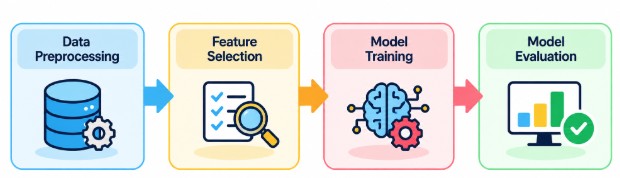
- Understand Machine Learning: Study supervised and unsupervised learning, training and testing data, features, labels, model evaluation, classification, regression, and clustering.
- Build Beginner Projects: Create simple projects such as text classification, prediction models, data analysis applications, or basic chatbots. Learners can also explore a Gen AI Projects Tutorial to understand how these foundational skills can be applied to practical Generative AI solutions.
- Study AI and Deep Learning: Understand neural networks, model training, loss functions, optimization, deep learning concepts, and natural language processing before exploring advanced Generative AI.
- Practice with AI Tools: Use Jupyter Notebook or Google Colab to perform practical exercises, experiment with Python libraries, train basic models, and analyze results.
- Prepare for Generative AI: Use the foundation gained from Python, machine learning, and AI to progress toward large language models, prompt engineering, embeddings, RAG, and other Generative AI technologies.
Understanding Large Language Models and Generative AI Tools
Large Language Models (LLMs) are an important part of modern Generative AI and are designed to understand and generate human-like text based on patterns learned from large datasets. Beginners should first understand basic concepts such as tokens, embeddings, transformers, attention mechanisms, context windows, model parameters, training, and inference. It is also useful to learn how foundation models can support applications such as chatbots, question answering, code generation, and document analysis. Beginners can experiment with popular Generative AI tools and model platforms to understand how different models respond to prompts and handle various tasks. Learners looking for hands-on experience can also explore Gen AI Training to gain practical knowledge of AI models, prompt engineering, and real-world applications. Learning how to use model APIs provides practical experience in connecting AI models with websites, applications, and automation workflows. Tools for text generation, image creation, coding assistance, and document processing can also help learners explore different Generative AI capabilities. While experimenting, users should compare outputs, identify inaccurate responses, understand model limitations, and apply appropriate validation. This practical understanding creates a foundation for learning prompt engineering, RAG, fine-tuning, AI agents, and Generative AI application development.

Learning Prompt Engineering and AI Application Development
Prompt engineering is an important skill for working effectively with Generative AI because well-structured instructions can help models produce more relevant and consistent outputs. Beginners should learn how to create clear prompts by defining the task and describing the expected output format. Start with simple prompts and gradually explore techniques such as role-based instructions, few-shot prompting, structured prompts, and prompt templates. Learners can strengthen their understanding through a Generative AI Tutorial while exploring practical approaches to prompting and AI model interaction. Learners should also understand how temperature, token limits, model selection, and context can influence generated responses. After learning prompt engineering, beginners can move toward AI application development by working with model APIs and Python libraries. Small applications such as chatbots, content assistants, document summarizers, question-answering systems, and coding assistants can provide practical experience. Developers should learn how to handle API requests, process responses, manage errors, protect API keys, and validate generated content. Building projects with real use cases helps learners understand how Generative AI can be integrated into applications while maintaining accuracy, security, and responsible usage.

Get JOB Oriented Gen AI Training for Beginners By MNC Experts
- Instructor-led Sessions
- Real-life Case Studies
- Assignments
Building Generative AI Projects and Practical Skills
Building practical Generative AI projects is an important step for beginners because projects help convert theoretical knowledge into real-world development skills. Start with simple applications such as AI chatbots, text summarizers, content generators, question-answering tools, or document assistants using Python and available model APIs. As your understanding improves, work on more advanced projects that combine prompts, embeddings, vector databases, APIs, and external data sources. A document-based question-answering application can help learners understand how Generative AI systems retrieve relevant information before generating responses. Beginners can also explore Gen AI Training to develop practical knowledge through projects and real-world Generative AI applications. Beginners can also explore projects involving RAG, AI agents, code generation, text classification, and workflow automation. Each project should include a clear objective, technology stack, implementation steps, testing process, and expected output. Learners should maintain their project code using Git and document the development process so that others can understand the application. Testing AI applications is also important because generated responses may contain inaccurate or irrelevant information. Validate outputs using suitable datasets, expected responses, and real-world scenarios. Building several progressively complex projects helps learners develop programming, API integration, prompt engineering, debugging, and problem-solving skills while creating a practical portfolio for Generative AI opportunities.
Want to Master Gen AI? Explore the Gen AI Master Program Offered at ACTE Today!
Working with APIs, RAG, and AI Application Workflows
After learning the fundamentals of Generative AI, beginners can expand their practical knowledge by working with model APIs, Retrieval-Augmented Generation (RAG), and complete AI application workflows. APIs allow applications to communicate with Generative AI models and send prompts, instructions, or other inputs to receive generated responses. Learners should understand API authentication, request and response formats, parameters, error handling, rate limits, and secure API key management. Generative AI Basics to Advanced Tutorial can help learners strengthen their understanding as they progress from core concepts toward practical implementation. RAG is another important concept that combines language models with external knowledge sources. A typical RAG workflow involves collecting documents, splitting them into smaller sections, creating embeddings, storing them in a vector database, retrieving relevant information, and providing that context to the model before generating a response. Beginners can build projects such as document question-answering systems, knowledge assistants, and customer-support chatbots to understand this process. They should also learn how to evaluate retrieved information and generated responses for relevance and accuracy. Connecting APIs, databases, retrieval systems, prompts, and user interfaces helps learners understand how real-world Generative AI applications are designed and developed.
Practicing Generative AI Through Real-World Use Cases
Practical experience is essential for developing confidence with Generative AI, so beginners should regularly practice by applying AI concepts to real-world use cases. Start with simple tasks such as content summarization, email drafting, text classification, question answering, code assistance, and information extraction. As skills improve, learners can explore practical applications such as customer-support chatbots, document analysis, marketing assistants, knowledge bases, and automated reporting systems. Each use case should begin with a clearly defined problem, suitable data, expected output, and measurable objective. Experiment with different prompts and models to understand how changes in instructions, context, and input data affect the results. Learners can also follow the Gen AI Engineer Internship Tutorial to understand how practical projects and industry-oriented tasks can strengthen their hands-on experience. Learners should compare AI-generated outputs, identify inaccurate responses, and validate important information before using it in real applications. Projects can also combine APIs, RAG, embeddings, databases, and automation workflows to create more advanced solutions. Maintaining project documentation and recording lessons learned can help track progress and identify areas for improvement. Regular practice with different scenarios helps beginners strengthen prompt engineering, programming, debugging, evaluation, and problem-solving skills while developing practical Generative AI experience.
Want to Learn About AI? Explore Our Artificial Intalligence Interview Questions and Answers Featuring the Most Frequently Asked Questions in Job Interviews.
Common Challenges and Mistakes Beginners Should Avoid
- Learning Advanced Topics Too Early: Avoid starting with complex topics such as fine-tuning, AI agents, or advanced RAG systems before developing a basic understanding of Python, machine learning, and Generative AI fundamentals.
- Relying Completely on AI Outputs: Do not assume that every AI-generated response is accurate. Review important outputs for correctness, relevance, context, and potential errors before using them.
- Writing Unclear Prompts: Avoid vague instructions when working with Generative AI tools. Provide clear context, objectives, requirements, constraints, and expected output formats to improve response quality.
- Ignoring API Security: Never expose API keys or credentials in public repositories, applications, or shared files. Use appropriate security practices when connecting applications to AI services.
- Using Sensitive Data Carelessly: Avoid entering confidential business information, personal data, proprietary code, or other sensitive content into AI tools without understanding applicable privacy and security requirements.
- Depending on One AI Tool: Experiment with different models, platforms, and approaches to understand their capabilities, limitations, response quality, and suitability for different Generative AI use cases. Exploring resources such as an AI Image Generation Tutorial can also help beginners gain experience with different practical Generative AI applications.
- Skipping Project Documentation: Maintain clear documentation covering the project objective, tools, prompts, data sources, implementation steps, testing process, and results to make AI projects easier to understand and maintain.
- Not Testing AI Applications: Test AI applications with different inputs and real-world scenarios to identify inaccurate responses, unexpected behavior, errors, and other limitations before deployment.
- Ignoring Continuous Learning: Generative AI technologies change rapidly, so learners should regularly practice, explore new tools, study updated techniques, and build projects to strengthen their skills.
Final Roadmap for Learning Generative AI from Scratch
Learning Generative AI from scratch is a gradual process that combines programming, artificial intelligence fundamentals, machine learning, practical experimentation, and application development. Beginners should first build a foundation in Python, statistics, machine learning, deep learning, and natural language processing before exploring advanced Generative AI concepts. The next step is to understand large language models, transformers, tokens, embeddings, prompt engineering, and commonly used Generative AI tools. Learners who want structured guidance while developing these skills can explore Gen AI Training to strengthen their understanding through practical learning. Learners can then practice with model APIs and build simple applications such as chatbots, summarizers, content assistants, and question-answering systems. After gaining basic experience, explore advanced concepts such as Retrieval-Augmented Generation, vector databases, fine-tuning, AI agents, and automated AI workflows. Building projects at different difficulty levels is important for developing practical skills and creating a strong portfolio. Learners should also practice evaluating AI outputs, handling errors, protecting sensitive information, and testing applications before deployment. Regularly following new AI developments and experimenting with updated tools can help maintain relevant skills. By following this structured roadmap and combining theory with hands-on projects, beginners can progressively develop the technical and practical knowledge required to work with Generative AI applications.