LMS
LMS
Last updated on 18th Jun 2026| 4609

- Overview of Generative AI Skills
- Programming Languages (Python, etc.)
- Machine Learning & Deep Learning Basics
- Tools & Frameworks (TensorFlow, PyTorch)
- Working with APIs and LLMs
- Data Handling and Preprocessing
- Soft Skills for Internships
- Building Practical Projects
- Skill Development Roadmap
- Conclusion
Overview of Generative AI Skills
Generative AI is one of the most rapidly evolving fields in technology, transforming industries such as healthcare, finance, marketing, entertainment, and software development. It involves creating intelligent systems capable of generating text, images, code, audio, and even videos. To build a successful career in Generative AI, it is essential to develop a strong foundation in both technical and non-technical skills through structured learning, such as a Gen AI Course. This guide provides a comprehensive overview of the key skills required, along with explanations and practical insights to help learners and aspiring professionals understand what it takes to excel in this domain.
Programming Languages (Python, etc.)
Programming is the backbone of Generative AI development. Among all programming languages, Python stands out as the most widely used due to its simplicity, readability, and vast ecosystem of libraries. It enables developers to build machine learning models, handle large datasets, and integrate AI solutions efficiently. Python provides access to powerful libraries such as NumPy for numerical computations, Pandas for data manipulation, and Matplotlib for data visualization. These tools are essential when working with data, which is a core part of AI development. Additionally, Python supports frameworks like TensorFlow and PyTorch, making it easier to build and train deep learning models. Apart from Python, having a basic understanding of other programming languages like JavaScript or Java can be beneficial, especially when deploying AI applications in web environments. However, Python remains the primary language for most Generative AI tasks. To master programming for AI, learners should focus on writing clean and efficient code, understanding data structures, and practicing problem-solving regularly. Building small projects, such as chatbots or simple text generators, can help reinforce programming skills. Beginners can also follow a Generative AI Step-by-Step Tutorial for Beginners to strengthen their programming foundation and practical AI knowledge.
Get Your Gen AI Certification by Learning from Industry-Leading Experts and Advancing Your Career with ACTE’s Gen AI Course.
Machine Learning & Deep Learning Basics
- Machine Learning (ML) and Deep Learning (DL) form the core foundation of Generative AI. Machine Learning involves training algorithms to learn patterns from data, while Deep Learning focuses on neural networks that mimic the human brain’s structure and functioning.
- Understanding basic ML concepts such as supervised learning, unsupervised learning, and reinforcement learning is essential. These concepts help in identifying how models learn from data and make predictions. For instance, supervised learning is used when labeled data is available, while unsupervised learning is useful for clustering and pattern detection.
- Deep Learning introduces neural networks, including architectures like Convolutional Neural Networks (CNNs) and Recurrent Neural Networks (RNNs). In Generative AI, advanced models such as Generative Adversarial Networks (GANs) and Transformers play a significant role. These models are capable of generating realistic images, human-like text, and complex data outputs. To understand how these transformer-based models work, explore the Large Language Model Tutorial For Freshers.
- A strong understanding of mathematical concepts such as linear algebra, probability, and statistics also supports learning ML and DL. While not all learners need deep mathematical expertise, having a basic grasp helps in understanding how models work internally.
Tools & Frameworks (TensorFlow, PyTorch)
- To implement Generative AI models efficiently, it is important to be familiar with industry-standard tools and frameworks. TensorFlow and PyTorch are the most widely used deep learning frameworks.
- TensorFlow, developed by Google, is known for its scalability and production-ready capabilities. It is commonly used in large-scale AI applications and enterprise-level deployments. PyTorch, developed by Meta, is popular for its flexibility and ease of use, especially among researchers and beginners.
- These frameworks provide pre-built functions and modules that simplify the process of building and training neural networks. They also support GPU acceleration, which significantly reduces training time for complex models.
- Apart from these, tools like Keras, Hugging Face Tutorial For Freshers, and OpenCV are also widely used in AI development. Learning these tools helps developers work more efficiently and build advanced AI solutions with less effort.
- Hands-on practice is key to mastering these frameworks. Building projects such as text generators, recommendation systems, or image classifiers can help learners gain practical experience.

Working with APIs and LLMs
Large Language Models (LLMs) are at the heart of modern Generative AI. These models are trained on vast amounts of data and can generate high-quality text, answer questions, and perform various language-related tasks. Working with APIs allows developers to integrate these models into applications without building them from scratch. For example, developers can use APIs to create chatbots, content generators, or AI-powered tools. Understanding how to send requests, handle responses, and optimize API usage is crucial. Developers can strengthen these practical skills through a Gen AI Course. Developers should also learn about prompt engineering, which involves crafting effective inputs to get the desired output from AI models. Additionally, knowledge of fine-tuning models and customizing them for specific use cases can provide a competitive advantage. This skill is especially useful in building domain-specific AI applications.

Get JOB Oriented Gen AI Training for Beginners By MNC Experts
- Instructor-led Sessions
- Real-life Case Studies
- Assignments
Data Handling and Preprocessing
- Data is the foundation of any AI system. Without high-quality data, even the most advanced models cannot perform effectively. Therefore, data handling and preprocessing are critical skills in Generative AI.
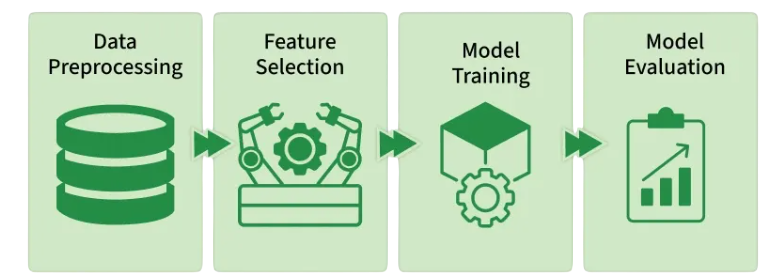
- This involves collecting, cleaning, and organizing data before feeding it into models. Common tasks include removing duplicates, handling missing values, normalizing data, and transforming it into a suitable format.
- Data preprocessing also includes feature engineering, which involves selecting and creating relevant features that improve model performance.
- Working with large datasets requires familiarity with tools like Pandas, NumPy, and data visualization libraries. Understanding how to manage structured and unstructured data is also important before using OpenAI Tools Tutorial for Beginners for real-world AI applications.
- Good data practices ensure that models produce accurate and reliable outputs, making this skill essential for every AI professional.
Want to Master Gen AI? Explore the Gen AI Master Program Offered at ACTE Today!
Soft Skills for Internships
While technical skills are crucial, soft skills play an equally important role in securing and succeeding in internships. Communication, teamwork, and problem-solving are key attributes that employers look for in candidates. Effective communication helps in explaining complex ideas clearly, whether it is during interviews, presentations, or team discussions. Teamwork is important as most AI projects are collaborative efforts involving multiple stakeholders. Time management and adaptability are also essential, especially when working on tight deadlines or learning new technologies. Complementing these abilities with technical expertise gained through a Gen AI Course can further improve career prospects. Developing a positive attitude and maintaining professionalism in all interactions can leave a lasting impression on recruiters and colleagues.
Want to Learn About AI? Explore Our Artificial Intalligence Interview Questions and Answers Featuring the Most Frequently Asked Questions in Job Interviews.
Building Practical Projects
- Practical experience is one of the most important aspects of learning Generative AI. Building projects helps in applying theoretical knowledge to real-world scenarios and strengthens understanding.
- Projects can range from simple applications like chatbots and text generators to more advanced systems like AI-powered recommendation engines or image generation tools. Beginners can gain hands-on experience by following the Beginner Gen AI Projects Tutorial and implementing real-world AI applications.
- Working on projects also helps in creating a strong portfolio, which is essential for showcasing skills to potential employers. Including project descriptions, code repositories, and results can make a resume more impactful.
- Collaborating on open-source projects or participating in hackathons can provide additional exposure and learning opportunities. These experiences demonstrate initiative and practical expertise, which are highly valued in the industry.
Skill Development Roadmap
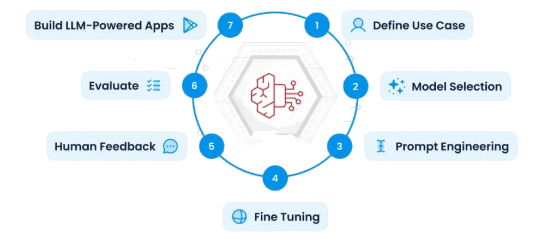
A structured roadmap can help learners stay focused and achieve their goals efficiently. The journey to mastering Generative AI can be divided into stages. In the initial stage, focus on learning programming (Python) and basic mathematics. This builds the foundation required for advanced topics. Next, move on to Machine Learning and Deep Learning concepts. Practice implementing algorithms and understanding model behavior. In the intermediate stage, learn NLP and Computer Vision, along with tools like TensorFlow and PyTorch. Start building small projects to apply your knowledge. At the advanced stage, focus on Generative AI models, LLMs, and API integration. Work on complex projects and explore real-world applications. Learners planning to begin their careers can also refer to the Gen AI Engineer Internship Tutorial For Freshers to understand the skills and project expectations for entry-level roles. Finally, prepare for job opportunities by building a strong resume, practicing interview questions, and networking with professionals in the field. Consistency and continuous learning are key to success. Staying updated with the latest trends and technologies ensures long-term growth in this rapidly evolving domain.
Conclusion
Generative AI offers exciting career opportunities for individuals who are willing to learn and adapt. By mastering programming, understanding machine learning concepts, and gaining hands-on experience with tools and frameworks, learners can build a strong foundation in this field. Enrolling in a Gen AI Course can further strengthen practical knowledge and industry-ready skills. In addition to technical skills, developing soft skills and working on practical projects plays a crucial role in career success. A well-structured learning roadmap can guide individuals through their journey and help them achieve their goals efficiently. With dedication, practice, and the right approach, anyone can build a successful career in Generative AI and contribute to shaping the future of technology.