LMS
LMS
Last updated on 03rd Sep 2026| 4687

- Introduction to Becoming a Generative AI Engineer at Google
- Educational Background and Academic Requirements
- Building Strong AI and Machine Learning Foundations
- Programming Skills Required for Generative AI Engineering
- Developing Deep Learning and Neural Network Expertise
- Understanding Modern Generative AI Models
- Mastering Transformers and Large Language Models
- Learning Google AI Technologies and Platforms
- Building Practical Generative AI Projects
- Google Interview Preparation, Skills, and Career Growth
Introduction to Becoming a Generative AI Engineer at Google
Becoming a Generative AI Engineer at Google requires a strong combination of programming knowledge, machine learning expertise, deep learning skills, and practical experience with modern AI technologies. The role involves developing intelligent systems capable of generating text, images, code, and other forms of content while solving complex real-world problems. Aspiring candidates should build a solid foundation in Python, mathematics, data structures, algorithms, machine learning, and neural networks before progressing into advanced generative AI concepts. Familiarity with transformer architectures, large language models, prompt engineering, model optimization, and AI application development can further strengthen their technical profile. Candidates can also consider Gen AI Training to build practical knowledge of current generative AI tools and techniques. Hands-on projects, research experience, open-source contributions, internships, and relevant certifications can demonstrate practical capabilities. Candidates should also understand responsible AI principles, model evaluation, scalability, and efficient deployment. Preparing for Google’s technical interviews by practicing coding, machine learning concepts, system design, and problem-solving can help candidates work toward a Generative AI engineering career at Google.
Educational Background and Academic Requirements
- Relevant Degree: A degree in Computer Science, Information Technology, Artificial Intelligence, Data Science, Mathematics, or a related technical field can provide a strong foundation for a Generative AI engineering career.
- Computer Science Fundamentals: Develop a clear understanding of data structures, algorithms, operating systems, databases, computer networks, and software engineering principles.
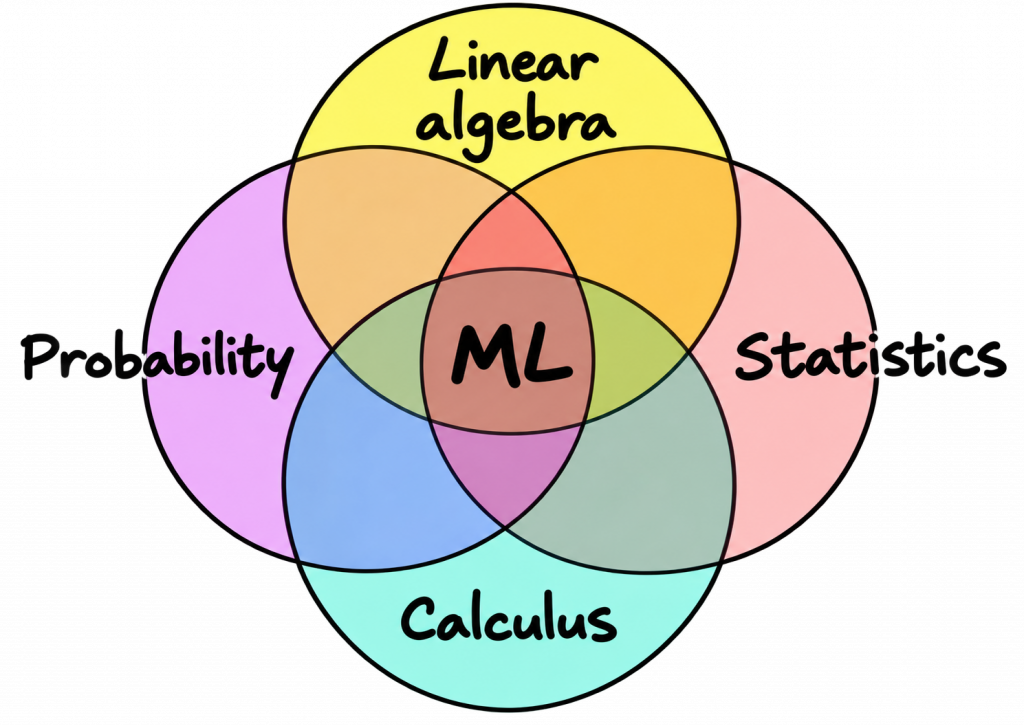
- Mathematical Knowledge: Study linear algebra, probability, statistics, calculus, and optimization concepts that support machine learning and deep learning development.
- Practical Experience: Internships, personal projects, open-source contributions, and real-world AI implementations can strengthen a candidate’s profile. Working through a Gen AI Projects Tutorial can also help learners develop practical experience with Generative AI applications.
- Programming Expertise: Build strong programming abilities in Python along with experience in writing efficient, maintainable, and scalable code for AI applications.
- Machine Learning Education: Gain structured knowledge of supervised learning, unsupervised learning, model training, evaluation techniques, feature engineering, and optimization.
- Advanced AI Learning: Progress into deep learning, natural language processing, computer vision, transformers, large language models, and generative AI architectures.
- Research Exposure: Academic research, technical papers, AI experiments, and participation in machine learning projects can help demonstrate deeper technical understanding.
Get Your Gen AI Certification by Learning from Industry-Leading Experts and Advancing Your Career with ACTE’s Gen AI Course.
Building Strong AI and Machine Learning Foundations
Developing a strong foundation in Artificial Intelligence and Machine Learning is essential for aspiring Generative AI Engineers at Google. Candidates should understand supervised, unsupervised, and reinforcement learning along with essential concepts such as model training, prediction, feature preparation, and algorithm selection. A solid understanding of deep learning is also important, including neural network architectures, activation functions, loss functions, backpropagation, and optimization techniques.

Programming Skills Required for Generative AI Engineering
- Python Proficiency: Develop strong Python programming skills for implementing machine learning workflows, processing datasets, building AI applications, and experimenting with generative models.
- Data Structures and Algorithms: Understand arrays, trees, graphs, hashing, sorting, searching, and algorithmic problem-solving to write efficient solutions and prepare for technical evaluations.
- Object-Oriented Programming: Learn classes, inheritance, encapsulation, abstraction, and reusable software design techniques for developing maintainable AI systems.
- Cloud and Scalable Development: Understand cloud computing, distributed systems, containers, and deployment concepts to develop and operate Generative AI solutions at scale. Structured Gen AI Training can also help learners strengthen these programming and development skills through practical learning.
- Data Processing: Gain experience with Python libraries and techniques for handling large datasets, transforming information, performing analysis, and preparing training data.
- API Development: Learn how to work with APIs, integrate AI models into applications, manage requests, and connect generative AI capabilities with other software systems.
- Version Control: Use Git-based workflows to manage source code, collaborate with development teams, track changes, and maintain organized AI projects.
- Software Engineering: Build knowledge of testing, debugging, documentation, code optimization, and development practices required to create reliable AI-powered applications.
Developing Deep Learning and Neural Network Expertise
Deep learning and neural network expertise are important for aspiring Generative AI Engineers who want to work on advanced AI systems at Google. Candidates should understand how neural networks are designed, including layers, neurons, activation functions, and the connections used to process complex information. Knowledge of forward propagation, backpropagation, gradient descent, loss functions, and optimization techniques is essential for training and improving deep learning models. Learning Convolutional Neural Networks can help with image and spatial data processing, while sequence modeling provides valuable background for understanding language-based architectures. Attention mechanisms are particularly important for understanding how modern AI models identify relationships between different parts of an input. Candidates can strengthen their understanding of these concepts through a Generative AI Tutorial that covers key AI architectures and techniques. Candidates should also explore regularization, learning-rate tuning, parameter optimization, and distributed training techniques for improving model performance and handling large workloads. Building and experimenting with deep learning models using suitable frameworks can provide practical experience in evaluating results, identifying limitations, and refining AI solutions.

Get JOB Oriented Gen AI Training for Beginners By MNC Experts
- Instructor-led Sessions
- Real-life Case Studies
- Assignments
Understanding Modern Generative AI Models
- Generative AI Fundamentals: Understand how generative models learn patterns from large datasets and produce new content based on learned representations.
- Large Language Models: Learn how LLMs process and generate human-like text for applications such as conversational assistants, summarization, translation, and code generation.
- Diffusion Models: Explore diffusion-based approaches that progressively transform noisy data into meaningful outputs and are widely used for image generation. The AI Image Generation For Freshers can provide additional guidance on image generation concepts and applications.
- Generative Adversarial Networks: Study the interaction between generator and discriminator networks and how this approach can produce realistic synthetic data.
- Variational Autoencoders: Understand latent-space representations and how VAEs can generate new data by learning meaningful distributions from training examples.
- Multimodal Models: Learn how modern AI systems combine text, images, audio, video, and other data types to support more versatile generative applications.
- Model Fine-Tuning: Explore techniques for adapting pretrained models to specific tasks, domains, or application requirements using additional training data.
- Model Evaluation: Learn how to assess generated outputs for quality, accuracy, relevance, consistency, safety, and overall usefulness across different AI applications.
Want to Master Gen AI? Explore the Gen AI Master Program Offered at ACTE Today!
Mastering Transformers and Large Language Models
Mastering transformers and large language models is essential for aspiring Generative AI Engineers because these technologies form the foundation of many modern AI applications. Candidates should understand transformer architecture and how its components enable efficient processing of language and complex data. Learning self-attention helps explain how models identify relationships between different parts of an input and capture contextual meaning. Tokenization is another important concept, as it converts text into smaller units that can be represented numerically for model processing. Understanding positional information helps engineers recognize how transformers preserve the order of tokens within sequences. Candidates should also learn how pretrained language models are developed and adapted for specialized applications through techniques such as fine-tuning. In addition, knowledge of inference optimization can help improve response speed, memory efficiency, computational performance, and scalability. Practical Gen AI Training can help learners develop hands-on familiarity with these concepts and strengthen their understanding of LLM-based technologies. Practical experience developing LLM-based applications for conversational AI, content generation, information retrieval, and code assistance can further strengthen Generative AI engineering skills.
Learning Google AI Technologies and Platforms
Learning Google’s AI technologies and cloud platforms can help aspiring Generative AI Engineers develop practical skills for building and deploying modern intelligent applications. Candidates should become familiar with Google Cloud AI services and understand how cloud-based tools support AI development, testing, deployment, and model management. Knowledge of Vertex AI is particularly valuable for working across different stages of the machine learning lifecycle, including experimentation, training, evaluation, and deployment. Understanding Gemini models can provide insight into multimodal AI capabilities involving text, code, images, and other forms of information. Aspiring engineers should also learn how to integrate AI functionality into applications using APIs and work with cloud computing, storage, networking, and accelerator resources required for demanding AI workloads. Candidates exploring these technologies as part of their career preparation can also refer to Generative AI Engineer at Google for additional career-focused guidance. Deployment knowledge is important for creating scalable, reliable, and efficient AI applications in production environments. Along with technical capabilities, candidates should understand responsible AI practices related to safety, fairness, privacy, reliability, and appropriate use when developing production-ready Generative AI solutions.
Want to Learn About AI? Explore Our Artificial Intalligence Interview Questions and Answers Featuring the Most Frequently Asked Questions in Job Interviews.
Building Practical Generative AI Projects
- AI Portfolio Projects: Create practical Generative AI applications that demonstrate your ability to design, develop, test, and improve intelligent solutions for real-world use cases.
- Text Generation Applications: Build applications for content creation, summarization, question answering, document analysis, or conversational interactions using language models.
- AI-Powered Chatbots: Develop intelligent assistants that can understand user queries, maintain contextual conversations, retrieve information, and generate relevant responses.
- Retrieval-Augmented Generation: Implement RAG-based solutions that combine language models with external knowledge sources to produce responses grounded in relevant information.
- Multimodal Applications: Experiment with solutions that process combinations of text, images, audio, or other data formats to demonstrate practical multimodal AI capabilities.
- AI Application Deployment: Deploy completed projects using suitable cloud infrastructure and application frameworks while considering performance, scalability, reliability, and security. Practical project development can also support preparation for a Gen AI Engineer Internship Tutorial.
- Model Customization: Work with prompting, fine-tuning, embeddings, and other techniques to adapt generative models for specific application requirements.
- Project Documentation: Maintain clear documentation covering the problem statement, architecture, technologies, implementation approach, evaluation results, and improvements made throughout the project.
Google Interview Preparation, Skills, and Career Growth
Preparing for a Generative AI Engineer career at Google requires a combination of strong coding abilities, machine learning knowledge, Generative AI expertise, system design skills, and effective communication. Candidates should practice data structures, algorithms, complexity analysis, and coding problems to strengthen their technical problem-solving abilities. A solid understanding of machine learning algorithms, model optimization, evaluation techniques, transformers, large language models, embeddings, Retrieval-Augmented Generation, fine-tuning, and prompt engineering is also valuable. System design preparation should focus on building scalable AI solutions by considering architecture, data pipelines, model serving, infrastructure, reliability, latency, and resource usage. Candidates can strengthen their practical knowledge through structured Gen AI Training focused on modern AI concepts and applications. Candidates should be ready to explain their academic, research, or professional projects, including technical decisions, challenges, outcomes, and improvements. Staying updated with AI research, experimenting with emerging technologies, and contributing to open-source projects can demonstrate innovation and technical curiosity. Strong communication skills can help candidates explain complex concepts clearly and collaborate effectively with different teams. With continuous skill development and practical experience, Generative AI Engineers can progress toward advanced engineering, research, architecture, and technical leadership opportunities.