LMS
Last updated on 03rd Sep 2026| 4700

- Introduction to Building an AI Chatbot Using an LLM
- Understanding the Foundations of Large Language Models
- AI Chatbot Architecture and Core Components
- How to Integrate an LLM into an AI Chatbot
- Prompt Engineering for AI Chatbot Development
- Conversation Memory and Context Management
- Steps to Build and Test an AI Chatbot
- Best Tools, Frameworks, and Platforms for LLM Chatbots
- AI Chatbot Best Practices, Security, and Performance
- Conclusion and Next Steps for Building LLM Chatbots
Introduction to Building an AI Chatbot Using an LLM
Building an AI chatbot using a Large Language Model (LLM) involves integrating natural language processing, prompt engineering, APIs, conversation management, and application development techniques to create an intelligent system capable of understanding user queries and generating meaningful responses. Unlike traditional rule-based chatbots, LLM-powered chatbots can interpret context, handle complex questions, maintain natural conversations, and provide personalized answers based on user input. Learners interested in developing AI-powered applications can strengthen their foundational knowledge through Artificial Intelligence Training. This tutorial introduces the essential concepts, development steps, tools, testing methods, deployment strategies, and best practices required to build a reliable and scalable AI chatbot using an LLM. These chatbots are widely used in customer support, education, healthcare, e-commerce, content creation, virtual assistance, and business automation. Developers can connect LLMs with databases, external APIs, and business applications to improve functionality and provide accurate information.
Understanding the Foundations of Large Language Models
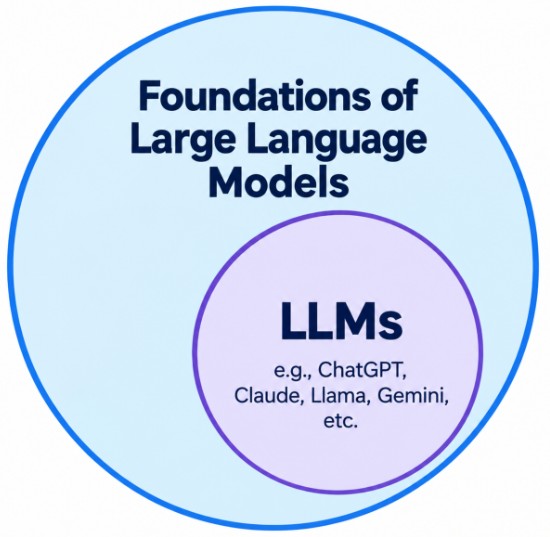
A Large Language Model (LLM) is an artificial intelligence system trained on large volumes of text data to understand language, interpret user queries, and generate human-like responses. For a broader understanding of AI concepts and how intelligent systems work, explore this Artificial Intelligence Tutorial LLMs use Natural Language Processing techniques to recognize words, sentences, intent, context, and relationships within conversations. During training, these models learn language patterns and use them to predict suitable words and produce meaningful responses based on prompts.
Get Your Artificial Intelligence Certification by Learning from Industry-Leading Experts and Advancing Your Career with ACTE’s Artificial Intelligence Course.
AI Chatbot Architecture and Core Components
AI chatbot architecture consists of several core components that work together to deliver intelligent and reliable conversations. The user interface allows users to submit questions and receive responses through websites, mobile applications, messaging platforms, or other digital channels. The backend application processes user requests, manages chatbot logic, communicates with the LLM API, and sends generated responses back to the interface. The Large Language Model acts as the intelligence layer by interpreting messages, understanding context, and generating natural-language answers. A prompt layer provides system instructions that control the chatbot’s behavior, tone, response format, and tasks. Conversation memory stores relevant previous messages to maintain context, while a knowledge base provides access to business documents and application-specific information. Developers can explore practical implementation approaches through this AI Project Development Tutorial. APIs connect the chatbot with external services, and databases store user preferences, conversation records, and application data. Response management adds validation, error handling, security controls, and performance monitoring to ensure consistent and reliable chatbot interactions.
How to Integrate an LLM into an AI Chatbot
Integrating an LLM into an AI chatbot involves connecting the chatbot application with a Large Language Model through an API, SDK, or compatible AI framework. The process starts by selecting an LLM based on application requirements, response quality, scalability, cost, and supported features. Developers then create API credentials, configure the development environment, and establish secure communication between the chatbot interface and the model. When a user submits a message, the application sends the input to the LLM together with system instructions, prompts, and relevant conversation history. Learners can strengthen their AI fundamentals through Artificial Intelligence Training before working on practical LLM-based chatbot applications. The model analyzes the context and generates a suitable response that is displayed through the chatbot interface. Developers can enhance performance by managing conversation memory, optimizing prompts, validating responses, handling API errors, setting usage limits, monitoring performance, and implementing security measures. Proper LLM integration helps create scalable, responsive, and context-aware AI chatbots.

Learn Artificial Intelligence Training Course to Build Your Skills
Weekday / Weekend BatchesSee Batch DetailsPrompt Engineering for AI Chatbot Development
- Clear Instructions: Write specific prompts that clearly explain the chatbot’s task, expected behavior, response style, and required output to help the LLM generate relevant answers.
- System Prompts: Define the chatbot’s role, rules, limitations, and communication style through system instructions that guide how the LLM responds to different user requests.
- Context Provision: Include relevant conversation history, user information, or application data in prompts so the LLM can understand the situation and provide context-aware responses.
- Few-Shot Examples: Providing sample questions and expected answers can demonstrate the desired response pattern and help the chatbot produce more consistent outputs.
- Prompt Templates: Reusable templates help developers structure prompts consistently while dynamically inserting user queries and other application-specific details. These techniques are also useful when learning how instructions guide advanced AI systems through an Agentic AI Tutorial for Beginners.
- Response Formatting: Prompts can specify formats such as concise text, bullet points, JSON, or structured answers, making chatbot responses easier to process and display.
- Testing and Refinement: Developers should test prompts with different user inputs, identify inaccurate or irrelevant responses, and continuously refine instructions for better chatbot performance.
- Safety Instructions: Prompt rules can help restrict inappropriate responses, prevent unwanted behavior, and guide the chatbot to handle sensitive or unsupported requests responsibly.

Get JOB Oriented Artificial Intelligence Training for Beginners By MNC Experts
- Instructor-led Sessions
- Real-life Case Studies
- Assignments
Conversation Memory and Context Management
- Conversation History: Storing relevant previous messages helps the chatbot understand ongoing conversations and provide responses that remain consistent with earlier interactions.
- Context Tracking: The chatbot can track important details from recent messages and include them in LLM prompts to maintain meaningful context throughout a conversation.
- Short-Term Memory: Recent conversation turns can be temporarily stored to help the chatbot understand follow-up questions without requiring users to repeat information.
- Context Optimization: Developers should provide only relevant information to the LLM, reducing unnecessary data and helping improve response accuracy and overall chatbot performance. Understanding how AI systems process and combine different types of information can be explored further through this Multimodal AI Tutorial.
- Long-Term Memory: Selected user preferences or useful information can be stored securely and retrieved when needed to provide more personalized chatbot experiences.
- Context Window Management: Developers can limit or summarize conversation history when it becomes too large, helping control token usage while preserving important information.
- Memory Storage: Databases or specialized storage systems can maintain conversation data, user preferences, and application information for later retrieval when appropriate.
- Privacy and Security: Chatbot memory should be managed with appropriate access controls, data protection, retention policies, and privacy practices to safeguard user information.
Want to Master Artificial Intelligence? Explore the Artificial Intelligence Master Program Offered at ACTE Today!
Steps to Build and Test an AI Chatbot
Building and testing an AI chatbot begins by defining its purpose, target users, expected interactions, primary objectives, and business requirements. Developers should then select a suitable Large Language Model based on response quality, context length, API availability, performance, cost, and application needs. The next step is to configure the programming environment, required libraries, frameworks, API credentials, and development tools. A simple and user-friendly chat interface should be designed so users can easily submit messages and view AI-generated responses. The selected LLM can then be connected through an API, with prompts, user inputs, conversation history, and response handling properly configured. Conversation memory should also be implemented to maintain context across interactions. Developers must test different questions, scenarios, edge cases, and unexpected inputs to identify issues and improve accuracy. Learners can build a stronger foundation in AI concepts through Artificial Intelligence Training while developing practical chatbot skills. Finally, the chatbot can be deployed to the required platform and continuously monitored for response quality, performance, API usage, security, errors, and user feedback.
Best Tools, Frameworks, and Platforms for LLM Chatbots
- LLM APIs: LLM APIs allow developers to connect chatbot applications with language models and generate intelligent responses based on user prompts and conversation context.
- Python: Python is widely used for chatbot development because it provides libraries and frameworks for API integration, prompt handling, data processing, testing, and AI application development.
- LangChain: LangChain provides components for connecting LLMs with prompts, memory, external data sources, tools, and workflows to build more capable AI chatbot applications.
- LlamaIndex: LlamaIndex helps developers connect LLM applications with structured and unstructured data, making it useful for building chatbots that answer questions from custom knowledge sources.
- Vector Databases: Vector databases store numerical representations of information and support similarity search, helping chatbots retrieve relevant documents and context for generating responses.
- Cloud AI Platforms: Cloud platforms provide access to AI models, APIs, computing resources, storage, and deployment services required to develop and scale LLM-powered chatbot applications.
- Web Development Frameworks: Frameworks such as Flask, FastAPI, and similar technologies can connect chatbot interfaces with backend services, LLM APIs, databases, and application logic. Beginners can build a stronger foundation in these concepts through this AI Tutorial for Beginners.
- Testing and Monitoring Tools: Evaluation and monitoring tools help developers measure response quality, detect errors, track performance, monitor usage, and continuously improve chatbot reliability.
Want to Learn About AI? Explore Our Artificial Intelligence Interview Questions and Answers Featuring the Most Frequently Asked Questions in Job Interviews.
AI Chatbot Best Practices, Security, and Performance
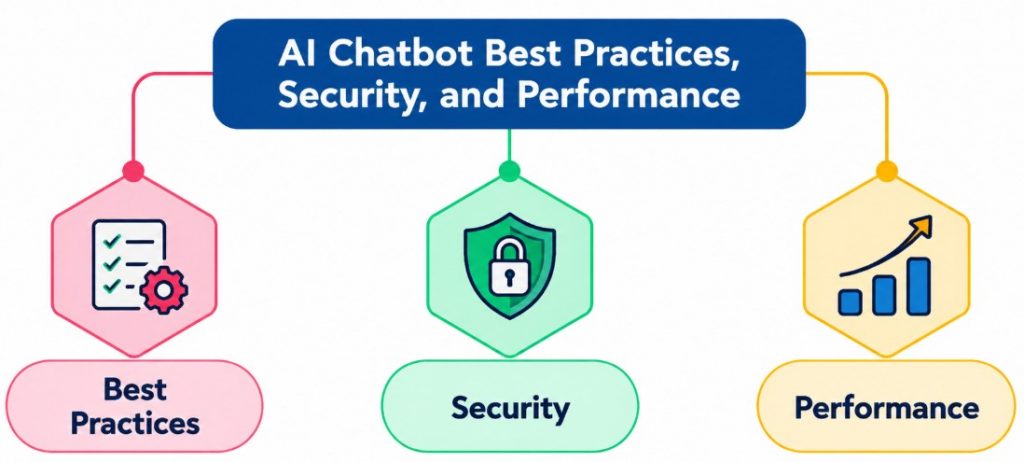
- Use Clear Prompts: Create well-structured prompts with clear instructions, relevant context, and defined response requirements to improve the accuracy and consistency of chatbot outputs.
- Protect API Credentials: Store API keys and authentication credentials securely using environment variables or secret-management systems instead of exposing them directly in application code.
- Validate User Input: Apply input validation and filtering to handle unexpected, harmful, or irrelevant requests and reduce potential security risks within the chatbot application.
- Manage Sensitive Data: Avoid unnecessarily sending confidential information to the LLM and apply suitable privacy, access-control, encryption, and data-retention practices.
- Control Hallucinations: Provide reliable context, use trusted knowledge sources, apply suitable prompts, and include validation methods to reduce inaccurate or misleading AI-generated responses.
- Human Oversight: Include human review or escalation mechanisms for sensitive, complex, or high-impact requests where automated chatbot responses may require additional verification. Staying informed about emerging developments can also be supported through this Future Technology of AI.
- Optimize Performance: Manage context length, token usage, API calls, response latency, and model selection to improve chatbot speed while keeping development and operating costs under control.
- Monitor Chatbot Quality: Track response accuracy, failures, user feedback, latency, and usage patterns to identify issues and continuously improve the chatbot experience.
Conclusion and Next Steps for Building LLM Chatbots
Building an AI chatbot using an LLM requires a strong understanding of language models, chatbot architecture, prompt engineering, conversation memory, API integration, testing, security, and deployment practices. By selecting a suitable LLM, creating clear prompts, maintaining conversation context, handling user inputs, and monitoring model responses, developers can build reliable and engaging chatbot applications. Beginners can improve their practical knowledge by developing projects such as customer support bots, educational assistants, document question-answering systems, e-commerce assistants, and personal AI assistants. Learners can strengthen their AI fundamentals through Artificial Intelligence Training while gaining practical knowledge of LLM-based applications. Testing these projects with real-world scenarios can strengthen problem-solving and development skills. As LLM technology continues to advance, developers should explore new models, AI frameworks, APIs, retrieval techniques, and deployment platforms to create faster, smarter, secure, and scalable chatbot solutions for different industries.