LMS
LMS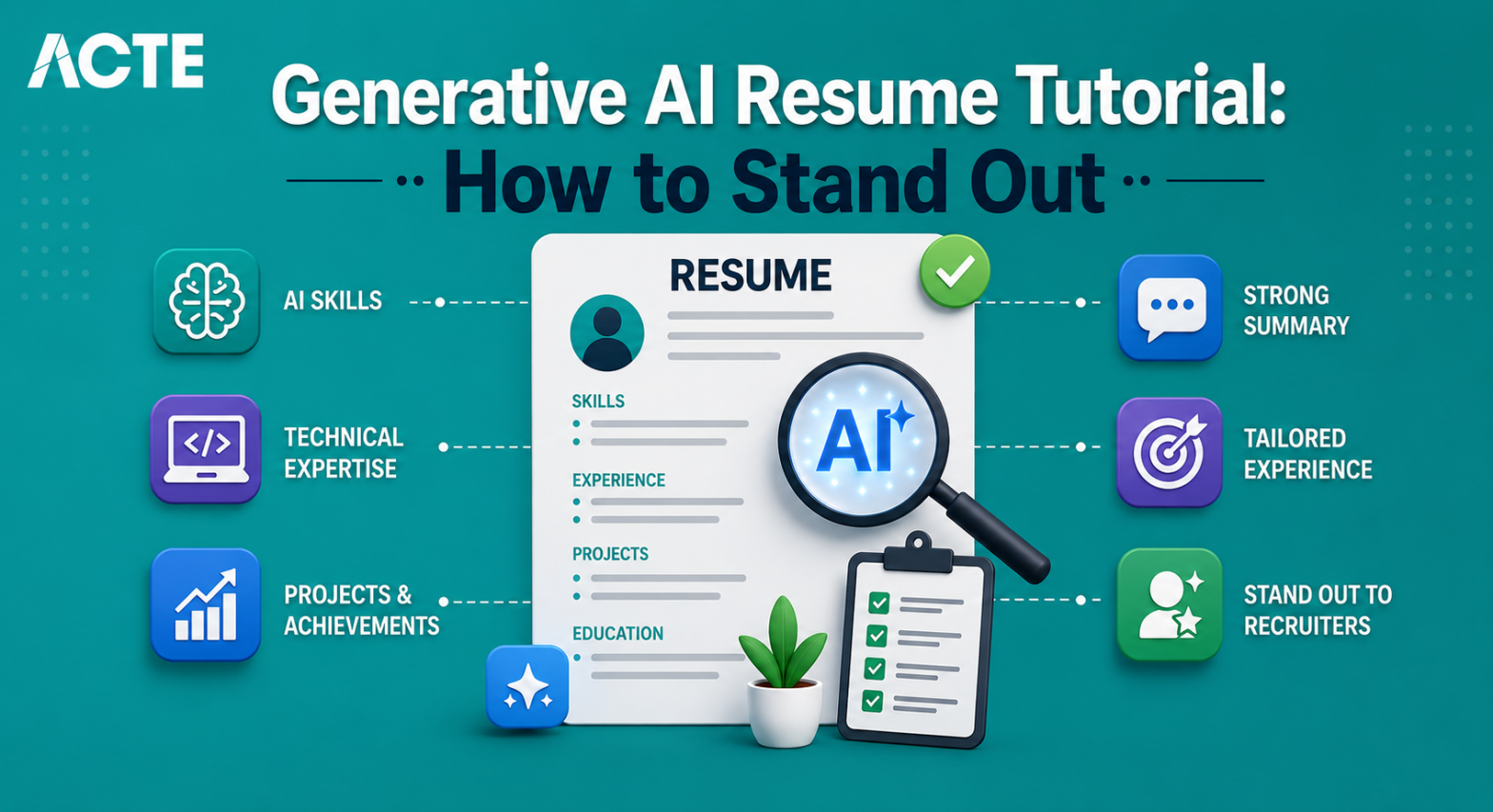
Last updated on 18th Jun 2026| 4607

- Overview of Generative AI
- Importance of Resume in AI Careers
- Key Sections to Include
- Highlighting Technical Skills
- Showcasing Projects Effectively
- Writing Strong Experience Points
- Using Keywords for ATS
- Common Resume Mistakes
- Sample Resume Format
- Customizing Resume for Roles
- Final Resume Checklist
Overview of Generative AI
In the modern technology-driven world, Generative AI has rapidly become one of the most transformative and in-demand domains. From chatbots and content generation tools to AI copilots and automation systems, organizations across industries are actively adopting AI to enhance productivity and innovation. As a result, the demand for skilled professionals in Generative AI is increasing significantly. To build the necessary technical knowledge and practical expertise in this emerging field, enrolling in a structured Gen AI Course can help learners understand advanced AI concepts and industry-relevant tools. However, possessing the right skills alone is not enough you must also present those skills effectively through a well-structured and impactful resume. A Generative AI resume is not just a summary of your education and experience; it is a powerful marketing document that communicates your value to potential employers. It should clearly demonstrate your ability to work with AI technologies, solve real-world problems, and contribute to business outcomes. Recruiters typically spend only a few seconds scanning a resume, which makes it essential to present information in a clear, concise, and compelling manner. This tutorial provides a comprehensive guide to creating a strong Generative AI resume. It covers everything from structuring key sections to optimizing your resume for Applicant Tracking Systems (ATS). Whether you are a fresher looking to enter the AI field or an experienced professional aiming to transition into Generative AI, this guide will help you craft a resume that stands out in a competitive job market.
Importance of Resume in AI Careers
- A resume plays a crucial role in shaping your career in the field of artificial intelligence. It serves as your first interaction with recruiters and hiring managers, making it one of the most important tools in your job search process. In highly competitive fields like Generative AI, a well-crafted resume can be the deciding factor between getting shortlisted or being overlooked. Following a proper Resume Writing Tutorial for Gen AI Jobs can help candidates understand how to structure their resumes and effectively highlight their AI skills.
- A strong resume helps you showcase your technical expertise, problem-solving abilities, and hands-on experience with AI tools and frameworks. It provides recruiters with a quick overview of your capabilities, enabling them to assess your suitability for a role within a short period. Since many companies receive thousands of applications for a single position, your resume must effectively capture attention and communicate your strengths.
- Another important aspect is ATS (Applicant Tracking Systems). Most companies use ATS to filter resumes based on keywords and relevance. If your resume is not optimized for ATS, it may never reach a human recruiter. Including the right keywords and structuring your resume properly significantly increases your chances of passing this initial screening.
- Furthermore, a well-designed resume reflects your professionalism, attention to detail, and commitment to your career. It highlights your achievements, certifications, and contributions, helping you build credibility and trust with potential employers. Ultimately, your resume acts as a bridge between your skills and your career opportunities.
Get Your Gen AI Certification by Learning from Industry-Leading Experts and Advancing Your Career with ACTE’s Gen AI Course.
Key Sections to Include
A well-structured Generative AI resume should include essential sections that provide a comprehensive overview of your profile. Each section should be carefully crafted to highlight your strengths and align with the job role you are applying for. The header section should include your full name, phone number, email address, and professional links such as LinkedIn or GitHub. This information should be clearly visible and easy to access. The professional summary or objective is a brief introduction that highlights your expertise, career goals, and key achievements. This section should be tailored to the role and should immediately capture the recruiter’s attention. The technical skills section is one of the most important parts of your resume. It should list your proficiency in programming languages, AI frameworks, tools, and platforms. Organizing skills into categories improves readability. Gaining practical knowledge through a structured Gen AI Course can also help learners develop industry-relevant skills that can be effectively showcased in this section. The projects section showcases your practical experience and ability to apply AI concepts. Each project should include details about the problem, approach, tools used, and results achieved. Work experience should highlight your roles, responsibilities, and achievements in previous positions. Focus on measurable outcomes and impact rather than just listing tasks. The education section provides details about your academic background, while certifications demonstrate your commitment to learning and professional development. Additional sections such as achievements, publications, or extracurricular activities can further strengthen your profile and make your resume more compelling.
Highlighting Technical Skills
- Technical skills are one of the most important sections of a Generative AI resume because they allow recruiters to quickly evaluate your qualifications. Instead of listing random technologies, include only the skills you have learned and applied in projects, internships, research, or coursework. A well-structured skills section increases readability and improves your chances of passing Applicant Tracking Systems (ATS).
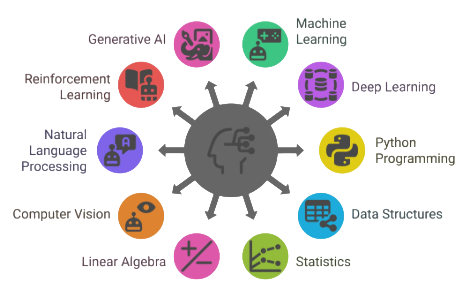
- Organize your skills into logical categories such as Programming Languages, Machine Learning Libraries, Deep Learning Frameworks, Databases, Cloud Platforms, Developer Tools, and Version Control. For example, list Python, Java, and SQL under programming languages, while TensorFlow, PyTorch, and Scikit-learn can be grouped under AI frameworks for better organization.
- For Generative AI roles, highlight expertise in Large Language Models (LLMs), Prompt Engineering, Retrieval-Augmented Generation (RAG), Natural Language Processing (NLP), Transformers, Fine-Tuning, Embeddings, Vector Databases, and AI development frameworks such as Hugging Face and LangChain. Learning frameworks like LangChain Tutorial For Freshers can help candidates understand how to build advanced AI-powered applications using LLM-based technologies.
- Include supporting technologies that demonstrate your ability to develop complete AI solutions. Mention Git and GitHub for version control, Docker for containerization, REST APIs, Jupyter Notebook, Google Colab, and cloud platforms such as Microsoft Azure, AWS, or Google Cloud Platform for deployment and model management.
- If you have experience with databases, include SQL, PostgreSQL, MySQL, MongoDB, or vector databases like Pinecone, ChromaDB, or FAISS. Knowledge of data preprocessing, feature engineering, visualization tools, and API integration further demonstrates your ability to work with production-ready AI applications.
- Support every technical skill with practical experience whenever possible. Ensure the technologies listed on your resume are reflected in your projects, internships, certifications, research work, or open-source contributions. Recruiters often ask project-based questions to verify your expertise, so accuracy and honesty are essential.
- Keep your technical skills section updated as you learn new technologies and remove outdated or irrelevant tools. Prioritize the skills most relevant to the internship or job description, ensuring your resume aligns closely with the employer’s requirements and current industry trends.

Showcasing Projects Effectively
Projects are one of the most important sections of a Generative AI resume, especially for freshers or candidates with limited work experience. They provide tangible evidence of your skills and demonstrate your ability to apply theoretical knowledge in practical scenarios. When presenting projects, follow a structured approach. Start with a clear project title and provide a brief description of the problem you aimed to solve. Explain the approach you used, including the models, algorithms, and tools involved. Highlight your contributions and the results achieved. For example, mention improvements in accuracy, efficiency, or user engagement. Candidates can explore ideas from a Beginner Gen AI Projects Tutorial to understand how to build practical AI applications and present them effectively in their resumes. Quantifying results adds credibility and makes your projects more impactful. Including links to your GitHub repository or live demos can further enhance your profile. This allows recruiters to explore your work in detail and assess your coding skills. Well-presented projects not only showcase your technical expertise but also demonstrate your ability to think critically, innovate, and solve real-world problems.

Get JOB Oriented Gen AI Training for Beginners By MNC Experts
- Instructor-led Sessions
- Real-life Case Studies
- Assignments
Writing Strong Experience Points
- The experience section of your resume should focus on showcasing your achievements and contributions rather than simply listing responsibilities. Strong experience points can significantly enhance the impact of your resume. Understanding the Generative AI Internships Tutorial Guide can help candidates highlight the right technical abilities and practical experiences in their resume.
- Begin each point with an action verb such as “developed,” “implemented,” or “optimized.” This creates a dynamic and engaging tone. Focus on describing what you accomplished and how it benefited the organization.
- Quantifying your achievements is highly effective. For example, instead of saying “improved system performance,” you can say “improved system performance by 25% through model optimization.” This provides a clear measure of your impact.
- Mention the tools and technologies used in each task to highlight your technical expertise. Keep your points concise and avoid unnecessary details.
- Align your experience with the job role you are applying for. Tailoring your experience points ensures relevance and increases your chances of getting shortlisted.
Want to Master Gen AI? Explore the Gen AI Master Program Offered at ACTE Today!
Using Keywords for ATS
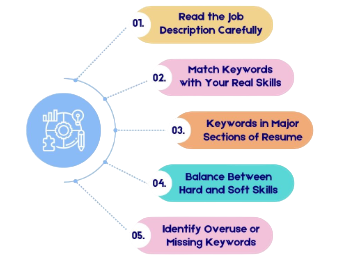
Applicant Tracking Systems (ATS) are widely used by companies to automatically screen and rank resumes before they reach recruiters. These systems analyze resumes by identifying keywords, technical skills, job titles, certifications, and experience that match the requirements mentioned in the job description. For Generative AI and Machine Learning roles, ATS often looks for keywords such as Python, SQL, Machine Learning, Deep Learning, Natural Language Processing (NLP), Large Language Models (LLMs), Prompt Engineering, Retrieval-Augmented Generation (RAG), TensorFlow, PyTorch, Hugging Face, LangChain, Git, Docker, REST APIs, and cloud platforms like Microsoft Azure, AWS, or Google Cloud. Building expertise in these technologies through a practical Gen AI Course can help candidates gain the relevant skills and improve their chances of creating an ATS-friendly resume for Generative AI job opportunities.
Want to Learn About AI? Explore Our Artificial Intalligence Interview Questions and Answers Featuring the Most Frequently Asked Questions in Job Interviews.
Common Resume Mistakes
- Many candidates make common mistakes that can negatively impact their chances of getting shortlisted. Avoiding these mistakes is essential for creating a strong resume, especially when applying for competitive opportunities such as those explained in the Microsoft GenAI Internships.
- One of the most common errors is using a generic resume for all job applications. Each role has unique requirements, so your resume should be tailored accordingly.
- Including irrelevant information can make your resume cluttered and difficult to read. Focus only on details that add value to your profile.
- Poor formatting, inconsistent fonts, and lack of structure can create a negative impression. Ensure that your resume is clean and professional.
- Failing to quantify achievements or using vague statements can reduce the impact of your resume. Always provide measurable results whenever possible.
- Ignoring ATS optimization is another critical mistake. Without proper keywords, your resume may not pass initial screening.
- Finally, not proofreading your resume can lead to grammatical errors and typos, which can affect your credibility.
Sample Resume Format
A well-structured resume format is essential for presenting your information effectively. It should be clean, organized, and easy to read. Start with a header that includes your contact details, followed by a professional summary. The technical skills section should come next, highlighting your expertise in a structured manner. The projects section should showcase your practical experience, followed by work experience if applicable. Education and certifications should be included towards the end. Use consistent formatting, clear headings, and bullet points to improve readability. Avoid complex designs that may not be compatible with ATS systems. A clean and professional format enhances your resume’s visual appeal and makes it easier for recruiters to evaluate your profile.
Customizing Resume for Roles
- Customizing your resume for each job application is one of the most effective ways to increase your chances of success. A tailored resume shows that you understand the role and have aligned your skills accordingly. Candidates preparing for AI careers can refer to the Microsoft GenAI Career Tutorial to understand how recruiters evaluate role-specific skills and experiences.
- Start by analyzing the job description and identifying key requirements. Highlight the skills and experiences that match these requirements.
- Modify your technical skills and project descriptions to emphasize relevance. Update your professional summary to reflect the specific role you are applying for.
- Remove any irrelevant information that does not add value. Ensure that your resume speaks directly to the needs of the employer.
- Customization increases your chances of passing ATS screening and getting shortlisted for interviews.
Final Resume Checklist
Before submitting your resume, it is important to review it thoroughly to ensure quality and accuracy. A final checklist helps identify errors and improve overall presentation. Check for spelling and grammatical errors, as these can create a negative impression. Ensure that your formatting is consistent and easy to read. Verify that all information is accurate and up to date. Confirm that your contact details are correct and that all links are working properly. Ensure that your resume is tailored to the job role and includes relevant keywords for ATS optimization. Finally, review your resume from a recruiter’s perspective to ensure clarity and impact. Taking the time to perform a final check can significantly improve your chances of success.
Conclusion
Creating a strong Generative AI resume requires a combination of technical expertise, strategic presentation, and attention to detail. By following the guidelines outlined in this tutorial, you can build a resume that effectively showcases your skills, projects, and achievements. A well-crafted resume not only increases your chances of getting shortlisted but also sets the foundation for a successful career in artificial intelligence. Building advanced skills through a practical Gen AI Course can further help candidates strengthen their technical knowledge and improve their career opportunities in this competitive field. With the growing demand for AI professionals, having a compelling resume can give you a significant competitive advantage. By continuously updating your resume, learning new skills, and gaining practical experience, you can position yourself as a strong candidate in the ever-evolving world of Generative AI.