LMS
Last updated on 11th Sep 2026| 4900

- Introduction to Getting a Full Stack Developer Job at Zoho
- Essential Skills and Qualifications for Zoho Full Stack Developers
- Learning Front-End Development and Web Technologies
- Understanding Back-End Development and Databases
- Building Full Stack Applications and Development Skills
- Git, Version Control, and Software Development Practices
- Building Full Stack Projects and a Strong Developer Portfolio
- Preparing for Zoho Full Stack Developer Interviews
- Resume, Application, and Career Preparation Tips for Zoho
- Conclusion and Next Steps to Get a Full Stack Developer Job at Zoho
Introduction to Getting a Full Stack Developer Job at Zoho
Getting a Full Stack Developer Job at Zoho can be an excellent career opportunity for aspiring software developers interested in building modern web applications and solving real-world technology problems. Full stack development involves working across both the front-end and back-end of applications, including user interfaces, server-side logic, databases, APIs, and application deployment. Candidates interested in Zoho should develop a strong foundation in programming, web development, databases, data structures, algorithms, and software development practices. Enrolling in a Full Stack Developer Course can help learners build practical knowledge across these areas. Front-end skills such as HTML, CSS, JavaScript, and modern frameworks help developers create responsive and interactive user interfaces, while back-end knowledge enables them to build application logic, APIs, and database-driven systems. Zoho also values problem-solving, logical thinking, coding ability, and practical development skills when evaluating technical candidates. Building real-world projects, practicing coding problems, understanding software development concepts, and creating a strong developer portfolio can help candidates demonstrate their capabilities. Freshers can strengthen their profiles through internships, academic projects, coding practice, and hands-on full stack development. Understanding the recruitment process and preparing for technical assessments and interviews can further improve readiness. With consistent learning, practical experience, and strong programming fundamentals, aspiring developers can take meaningful steps toward securing a Full Stack Developer Job at Zoho.
Essential Skills and Qualifications for Zoho Full Stack Developers
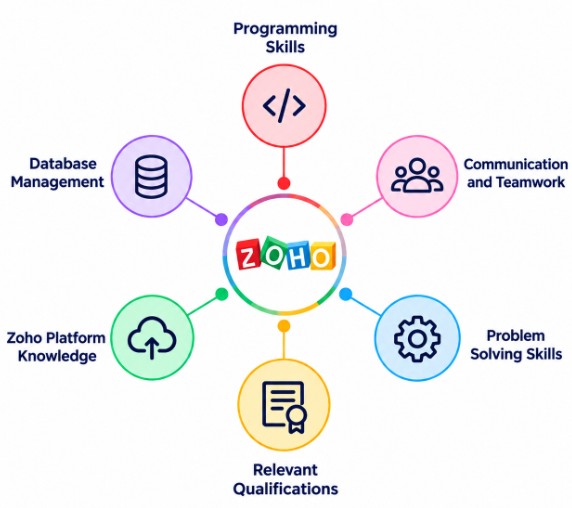
Developing the right technical and professional skills is essential for candidates aiming to secure a Full Stack Developer Job at Zoho. Candidates should build strong programming fundamentals, including variables, data types, loops, functions, conditional statements, object-oriented programming, and exception handling. Front-end development skills should cover HTML, CSS, JavaScript, responsive design, DOM manipulation, and modern techniques for creating interactive interfaces. Back-end knowledge should include server-side programming, application logic, authentication, APIs, and frameworks for developing scalable applications. Candidates should also understand relational databases, SQL, database design, normalization, joins, indexing, and optimization.
Get Your Full Stack Certification by Learning from Industry-Leading Experts and Advancing Your Career with ACTE’s Full Stack Course.
Learning Front-End Development and Web Technologies
- HTML: Learn semantic HTML elements, forms, tables, links, images, media, lists, attributes, and document structures to create organized, accessible, and search-friendly web pages.
- CSS: Understand selectors, properties, positioning, Flexbox, Grid, responsive layouts, transitions, animations, and styling techniques to create attractive and adaptable web interfaces.
- JavaScript: Develop knowledge of variables, functions, arrays, objects, events, DOM manipulation, promises, asynchronous programming, and modern JavaScript features for interactive applications.
- Responsive Design: Learn media queries, flexible layouts, responsive images, breakpoints, and mobile-first techniques to create websites that perform effectively across different screen sizes.
- UI Components: Understand how to design reusable forms, navigation menus, buttons, cards, modals, tables, alerts, and other interface components commonly used in modern web applications.
- Front-End Frameworks: Explore modern JavaScript frameworks and libraries while learning components, routing, state management, data handling, and structured approaches to application development.
- Practical Projects: Build responsive websites and interactive applications using front-end technologies and explore Full Stack Web Development For Beginners to strengthen coding, debugging, design, and problem-solving skills for your portfolio.
- API Integration: Learn how front-end applications communicate with backend services through REST APIs, HTTP methods, JSON data, authentication, requests, responses, and asynchronous operations.
- Browser Developer Tools: Use browser tools to inspect HTML and CSS, debug JavaScript errors, monitor network requests, test responsive layouts, and identify application performance issues.
- Accessibility: Learn accessibility practices involving semantic HTML, keyboard navigation, labels, alternative text, readable content, and inclusive design to make websites usable for diverse audiences.

Understanding Back-End Development and Databases
Back-end development is an essential part of becoming a successful full stack developer at Zoho because it focuses on the server-side logic that powers web applications, manages data, and connects front-end interfaces with databases. Candidates should develop knowledge of server-side programming using technologies such as Java, Python, or Node.js and understand relational databases such as MySQL and PostgreSQL along with basic NoSQL concepts. Strong SQL skills are important for creating queries, filtering records and performing database operations. Developers looking to strengthen these practical skills can explore a Full Stack Developer Course to gain broader exposure to back-end development, databases, APIs, and application building. Developers should also understand REST APIs, HTTP communication, CRUD operations, authentication, authorization, sessions, and basic application security. Database design concepts such as tables, relationships, keys, normalization, indexing, and efficient data organization are equally important. Learning error handling, debugging, caching, query optimization, and performance improvement techniques can help developers create reliable and scalable applications. Building practical back-end projects that integrate databases and APIs can further strengthen technical skills and demonstrate development capabilities.
Building Full Stack Applications and Development Skills
Building real-world full stack applications is an effective way to strengthen development skills and prepare for a Full Stack Developer job at Zoho. Candidates should understand application architecture and how front-end interfaces, back-end services, REST APIs, and databases communicate to create complete web applications. Front-end integration involves connecting interactive user interfaces with server-side functionality, while back-end development focuses on processing requests, validating data, implementing business logic, and managing application workflows. Developers should learn to create and consume APIs, connect applications with databases, and efficiently store, retrieve, update, and delete information. Authentication, authorization, access control, input validation, and basic security practices are important for protecting application data and users. Strong debugging and testing skills help identify errors, improve reliability, and maintain application performance. Responsive development ensures applications function properly across desktops, tablets, and mobile devices. Building practical projects such as task managers, e-commerce platforms, dashboards, and employee management systems can demonstrate coding, problem-solving, integration, and complete full stack development capabilities.

Get JOB Oriented Full Stack Training for Beginners By MNC Experts
- Instructor-led Sessions
- Real-life Case Studies
- Assignments
Git, Version Control, and Software Development Practices
- Git Fundamentals: Learn essential Git concepts such as repositories, commits, branches, merges, tags, staging, cloning, pushing, and pulling to manage source code effectively.
- Version Control: Use version control systems to track code modifications, maintain development history, restore previous versions, and safely manage application changes over time.
- Branch Management: Create separate feature, development, and bug-fix branches to organize code changes, test new functionality, and merge updates without affecting stable application code.
- Code Collaboration: Learn how development teams share repositories, review code, provide feedback, coordinate updates, and contribute changes while maintaining consistent coding standards.
- Professional Workflow: Follow structured development workflows involving planning, coding, testing, reviews, version control, documentation, and deployment. Beginners can also explore Full Stack for Beginners to strengthen their understanding of practical development workflows and foundational concepts.
- Pull Requests: Practice creating pull requests to submit code changes for review, explain modifications, receive developer feedback, make improvements, and safely merge approved updates.
- Conflict Resolution: Understand how merge conflicts occur and learn to compare conflicting changes, select suitable code, test modifications, and resolve issues without breaking functionality.
- Clean Code: Follow meaningful naming conventions, modular programming, consistent formatting, reusable functions, and organized coding patterns to create readable and maintainable applications.
- Testing Practices: Write and execute suitable tests to identify bugs, validate application functionality, prevent unexpected errors, and improve software quality, stability, and reliability.
- Documentation: Maintain clear project documentation covering installation, setup instructions, application features, APIs, dependencies, configurations, and important development requirements.
Want to Master Full Stack? Explore the Full Stack Master Program Offered at ACTE Today!
Building Full Stack Projects and a Strong Developer Portfolio
Building practical full stack projects can significantly strengthen your profile when applying for a Full Stack Developer job at Zoho. Candidates should create real-world applications such as e-commerce websites, task management systems, learning platforms, dashboards, or employee management tools that demonstrate complete development capabilities. Projects should showcase front-end skills in HTML, CSS, JavaScript, responsive design, and relevant frameworks while also demonstrating back-end development through server-side logic, REST APIs, authentication, validation, and application workflows. Connecting projects with databases can demonstrate efficient data storage, retrieval, updating, and management skills. Developers should use Git to maintain source code and follow structured version-control practices throughout development. Applications should provide responsive, accessible, and user-friendly interfaces while solving meaningful real-world problems. Clear documentation should explain project features, technologies, installation steps, development decisions, challenges, solutions, and individual contributions. Maintaining an organized professional portfolio containing your strongest projects, technical skills, Git repositories, and relevant achievements can help recruiters understand your practical development abilities.
Want to Learn About Full Stack? Explore Our Full Stack Interview Questions and Answers Featuring the Most Frequently Asked Questions in Job Interviews.
Preparing for Zoho Full Stack Developer Interviews
Preparing for a Zoho Full Stack Developer interview requires strong programming knowledge, problem-solving ability, web development expertise, and communication skills. Candidates should revise programming fundamentals such as variables, functions, loops, object-oriented programming, and exception handling while regularly practicing data structures and algorithms involving arrays, strings, linked lists, stacks, queues, trees, sorting, and searching. Front-end preparation should cover HTML, CSS, JavaScript, responsive design, DOM manipulation, and relevant frameworks, while back-end preparation should include server-side programming, application logic, authentication, APIs, and request-response handling. Candidates can strengthen their overall development knowledge through a Full Stack Developer Course that covers key front-end, back-end, database, and application development concepts. Candidates should also practice SQL queries, joins, indexing, normalization, database relationships, and optimization techniques. Knowledge of REST APIs, HTTP methods, status codes, JSON, and API integration is equally important. Applicants should thoroughly understand their projects and be prepared to explain technical decisions, challenges, solutions, and individual contributions. Regular coding exercises can improve logical thinking, debugging, and implementation speed. Reviewing basic operating systems, networking, software development, and application architecture concepts while practicing clear communication can further improve overall interview readiness.
Resume, Application, and Career Preparation Tips for Zoho
- Build a Targeted Resume: Highlight programming languages, front-end and back-end technologies, databases, APIs, frameworks, development tools, and skills relevant to full stack roles.
- Showcase Projects: Include practical full stack projects that demonstrate your ability to design interfaces, build back-end services, integrate databases, and develop complete web applications.
- Highlight Achievements: Mention coding competitions, internships, certifications, academic projects, technical events, hackathons, awards, and other achievements that strengthen your profile.
- Use Clear Formatting: Keep your resume concise, professional, readable, and well-organized with clear sections for skills, education, experience, projects, certifications, and achievements.
- Optimize Your Profile: Maintain updated professional profiles and developer repositories that clearly showcase your technical skills, coding projects, contributions, and development experience.
- Prepare for Applications: Carefully review each job description, identify required technical skills, understand eligibility criteria, and customize your resume before submitting an application.
- Strengthen Coding Skills: Regularly practice programming, data structures, algorithms, debugging, logical thinking, and coding challenges to improve accuracy, efficiency, and problem-solving speed.
- Research the Role: Understand the responsibilities, technologies, development processes, required skills, team environment, and expectations associated with the full stack developer position.
- Prepare for Interviews: Practice coding exercises, technical questions, project discussions, problem-solving scenarios, and behavioral questions. Candidates can also review Full Stack Developer Job at Zoho for additional guidance on preparing for the role.
- Keep Learning: Stay updated with modern front-end and back-end technologies, frameworks, databases, cloud tools, APIs, and development practices to continuously improve your full stack skills.
Conclusion and Next Steps to Get a Full Stack Developer Job at Zoho
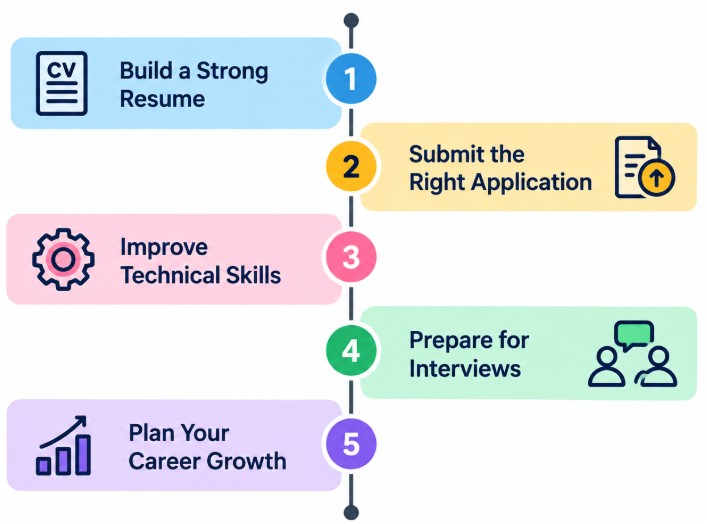
Getting a Full Stack Developer job at Zoho requires strong programming fundamentals, web development knowledge, practical experience, problem-solving abilities, and consistent interview preparation. Candidates should strengthen their knowledge of programming, data structures, back-end development, databases, REST APIs, Git, testing, debugging, and software development practices. Building complete full stack applications can demonstrate the ability to connect user interfaces, server-side functionality, APIs, and databases while solving practical problems. Candidates can also build their technical foundation through a Full Stack Developer Course that provides exposure to practical development concepts and project-based learning. Candidates should maintain a professional portfolio showcasing their strongest projects, technologies, technical achievements, and development experience. Regular coding and logical reasoning practice can improve problem-solving speed and accuracy, while technical, project-based, and behavioral interview preparation can build confidence. A concise resume should highlight relevant skills, internships, projects, certifications, and achievements. Candidates should carefully review job requirements, customize applications, identify skill gaps, and follow a consistent learning plan. Staying updated with modern frameworks, databases, cloud technologies, and development tools can further support long-term career growth at Zoho.