LMS
LMS
Last updated on 18th Jun 2026| 4609

- Understanding Job Requirements
- Structuring Your Resume
- Writing a Strong Summary
- Adding Technical Skills
- Project Descriptions
- Certifications and Achievements
- Tailoring Resume for Companies
- ATS Optimization Tips
- Do’s and Don’ts
- Resume Review Tips
Understanding Job Requirements
Understanding job requirements is not just about reading a job description, it is about decoding what the company truly expects from a candidate in a Generative AI role. These roles are highly dynamic and vary significantly across organizations. Some companies may expect expertise in building Large Language Models (LLMs), while others may focus on prompt engineering, AI integration, or deploying scalable AI systems in cloud environments. When you carefully analyze the job description, you begin to identify patterns such as required tools, preferred frameworks, and the type of problems the organization is trying to solve. This helps you align your resume in a way that directly addresses their needs. Instead of presenting yourself as a general AI professional, you position yourself as a candidate who specifically fits that role. Building strong knowledge through a structured Gen AI Course can help you understand industry expectations, emerging tools, and practical skills required for Generative AI roles. This targeted approach not only improves your chances of passing Applicant Tracking Systems (ATS) but also makes your resume more appealing to recruiters who are looking for precise skill matches.
Structuring Your Resume
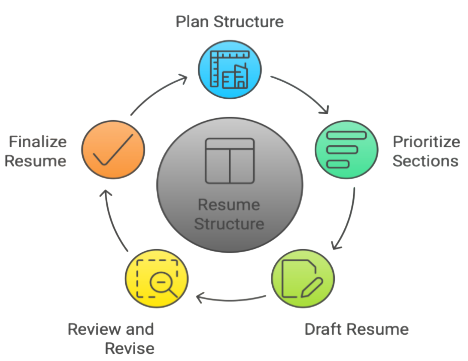
- Design a clear and professional header: Your header should include your full name, a professional phone number, email ID, LinkedIn profile, and GitHub or portfolio link. This section acts as your identity and should look clean and credible.
- Craft a compelling professional summary: This is a short section where you summarize your expertise, experience, and specialization in Generative AI. It should immediately communicate your value to the recruiter. Building a strong foundation through a Generative AI Tutorial for Beginners can help you showcase relevant knowledge, technical skills, and practical experience in your professional summary.
- Organize technical skills into categories: Group your skills into logical sections such as programming languages, AI frameworks, tools, and cloud platforms. This improves readability and helps recruiters quickly identify your strengths.
Get Your Gen AI Certification by Learning from Industry-Leading Experts and Advancing Your Career with ACTE’s Gen AI Course.
Writing a Strong Summary
The professional summary is one of the most powerful sections of your resume because it creates the first impression and sets the tone for the rest of the document. In the context of Generative AI jobs, your summary should clearly communicate your specialization, technical expertise, and the impact you can bring to an organization. Instead of writing generic statements, focus on specific skills such as working with transformer models, developing AI-driven applications, or optimizing prompts for better outputs. A strong summary also includes measurable achievements, such as improving system efficiency or reducing manual effort through automation. This section should be concise yet impactful, giving recruiters a clear reason to continue reading your resume. A well-written summary can significantly increase your chances of getting shortlisted. These concepts work together to create flexible and intelligent applications. For beginners, gaining practical knowledge through a structured Gen AI Course can help build the technical foundation required to create advanced AI solutions. Mastering chains and prompts is the first step, while memory and agents add complexity but also realism to applications. Tools connect LangChain systems to external data sources, enhancing utility. Understanding these concepts ensures freshers can design scalable and interactive AI solutions.
Adding Technical Skills
- Categorize skills for better clarity: Divide your skills into sections like programming languages, AI/ML frameworks, Generative AI tools, and cloud platforms to make your resume structured and easy to read.
- Highlight core programming expertise: Languages like Python are essential for AI development, so they should be prominently displayed.
- Include widely used AI frameworks: Mention tools such as TensorFlow and PyTorch that are commonly used for building deep learning models.
- Add Generative AI-specific tools: Tools like OpenAI API, Hugging Face, and LangChain are highly relevant and should be included to show domain expertise. Learning about these technologies through a Generative AI Tools Tutorial helps candidates understand their practical applications and highlight relevant expertise.
- Mention data processing tools: Libraries like Pandas and NumPy demonstrate your ability to handle and manipulate data effectively.
- Include cloud and deployment platforms: Knowledge of AWS, Azure, or Google Cloud shows that you can deploy scalable AI solutions.
- Avoid unnecessary or outdated skills: Including irrelevant tools can dilute your profile and confuse recruiters.
- Ensure authenticity: Only list skills that you can confidently explain and demonstrate in interviews.

Project Descriptions
Project descriptions are the backbone of a Generative AI resume because they provide concrete evidence of your skills and capabilities. Unlike theoretical knowledge, projects show how you apply concepts to solve real-world problems. A strong project description should clearly outline the problem statement, the tools and technologies used, your approach to solving the problem, and the results achieved. It is important to focus on your individual contribution and the impact of the project. For example, if you developed an AI chatbot, explain how it improved user interaction or reduced response time. Including measurable outcomes such as percentage improvements adds credibility and makes your profile stand out. Exploring practical examples through a Beginner Gen AI Projects Tutorial can help you understand how to structure project details and showcase your Generative AI skills effectively. Well-structured project descriptions demonstrate not only technical expertise but also problem-solving ability and innovation.

Get JOB Oriented Gen AI Training for Beginners By MNC Experts
- Instructor-led Sessions
- Real-life Case Studies
- Assignments
Certifications and Achievements
- Include industry-recognized AI certifications: Adding certifications in areas like Machine Learning, Deep Learning, or Generative AI helps validate your technical expertise. These certifications act as proof that you understand core AI concepts such as model building, training, and evaluation. Recruiters often look for recognized credentials because they ensure a standard level of knowledge and practical capability in AI-related roles.
- Add cloud-related certifications: Cloud certifications from platforms like AWS, Azure, or Google Cloud highlight your ability to deploy, manage, and scale AI applications in real-world environments. Since most AI solutions today run on cloud infrastructure, having these certifications shows that you can work with tools like cloud storage, APIs, and AI services, making you more industry-ready.
- Demonstrate continuous learning: AI is a rapidly evolving field, so showing that you regularly update your skills is very important. Mentioning online courses, bootcamps, or training programs proves that you stay current with new technologies, frameworks, and trends. This reflects your commitment to growth and adaptability in a competitive job market. Following a structured Generative AI Internships Tutorial Guide can help you identify essential skills and improve your technical profile.
- Highlight hackathon participation: Participating in hackathons demonstrates your ability to apply knowledge under pressure and solve real-world problems within limited timeframes. It also shows teamwork, creativity, and innovation. Even if you haven’t won, active participation adds strong value to your profile.
- Include research and publications: If you have worked on research papers, whitepapers, or technical blogs, include them to showcase your in-depth understanding of AI concepts. This is especially beneficial for advanced roles, as it reflects your analytical thinking and contribution to the field’s knowledge base.
- Mention open-source contributions: Contributing to platforms like GitHub shows that you have practical experience and can collaborate with other developers. It also demonstrates your coding skills, problem-solving ability, and willingness to contribute to the tech community, which is highly valued by employers.
- Focus on relevance: Avoid listing certifications or achievements that are not related to Generative AI or your target role. Irrelevant information can dilute your profile and distract recruiters. Always prioritize quality and relevance over quantity.
- Showcase achievements with impact: Instead of just listing achievements, highlight the impact. For example, mention awards, recognitions, rankings, or measurable outcomes like improved model accuracy or project success. This helps employers understand your real contribution and effectiveness.
Want to Master Gen AI? Explore the Gen AI Master Program Offered at ACTE Today!
Tailoring Resume for Companies
Tailoring your resume for each company is one of the most effective strategies to stand out in a competitive job market. A generic resume often fails to capture the attention of recruiters because it does not address specific job requirements. By customizing your resume, you can align your skills, projects, and experience with the needs of the organization. This involves modifying your professional summary, prioritizing relevant skills, and highlighting projects that match the job role. For example, if a company focuses on NLP applications, your resume should emphasize your experience with text processing, language models, and chatbot development. Gaining industry-relevant expertise through a structured Gen AI Course can also help you develop the practical skills needed to showcase relevant projects and technical abilities. Tailoring your resume not only improves your chances of passing ATS filters but also shows recruiters that you are genuinely interested in the role and have taken the effort to understand their requirements.
Want to Learn About AI? Explore Our Artificial Intalligence Interview Questions and Answers Featuring the Most Frequently Asked Questions in Job Interviews.
ATS Optimization Tips
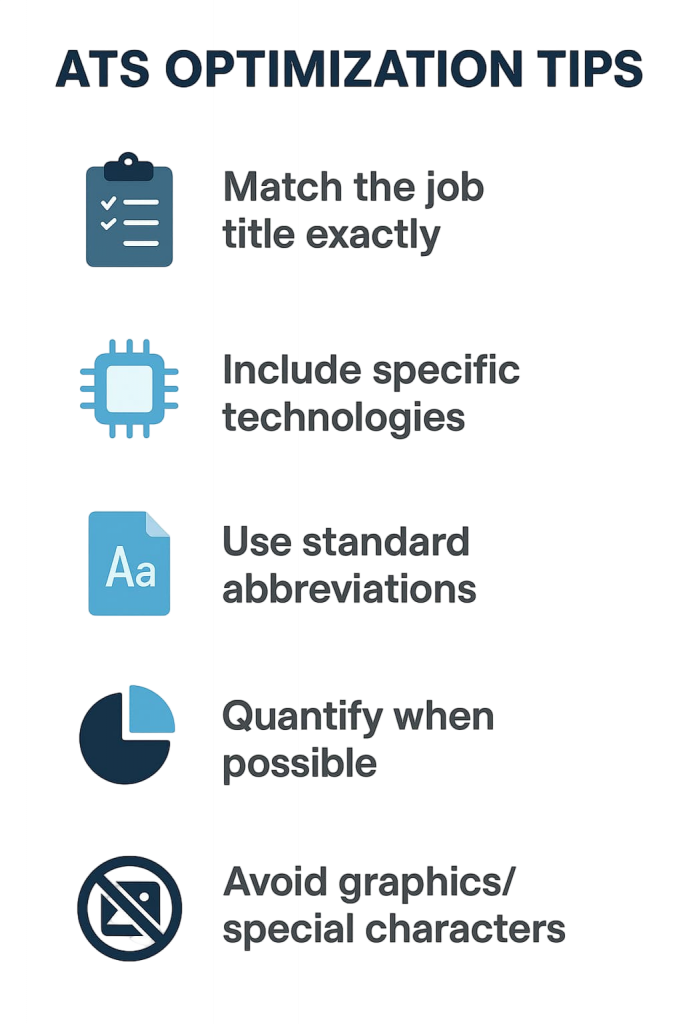
- Use Standard Section Headings Using common headings like Skills, Experience, Education, and Projects helps Applicant Tracking Systems (ATS) easily understand and categorize your resume content. ATS software scans resumes based on predefined structures, so using creative or unusual headings (like “My Journey” instead of “Experience”) may confuse the system. Standard headings ensure your information is correctly parsed and increases your chances of passing the initial screening.
- Include Job-Specific Keywords ATS systems scan resumes for keywords that match the job description. Including relevant terms such as Generative AI, LLMs, NLP, and Prompt Engineering improves your chances of ranking higher. Carefully read the job posting and incorporate those keywords naturally into your resume. This shows alignment with the role and helps recruiters quickly identify your suitability.
- Avoid Complex Formatting Using graphics, tables, text boxes, or unusual fonts can make your resume difficult for ATS to read. Many systems cannot interpret such elements correctly, which may result in missing or misinterpreted information. Stick to a simple layout with plain text, standard fonts (like Arial or Calibri), and clear formatting to ensure your resume is fully readable by the system.
- Use Bullet Points for Clarity Bullet points make your resume easy to scan for both ATS and recruiters. Instead of long paragraphs, present your responsibilities and achievements in short, concise bullet points. This improves readability and allows hiring managers to quickly understand your key contributions and skills.
- Maintain Simple and Consistent Formatting Consistency in font size, spacing, alignment, and style gives your resume a professional look. ATS systems prefer structured and uniform resumes because they are easier to process. Avoid mixing different fonts or inconsistent spacing, as it can reduce readability and create confusion during parsing. Following a proper Generative AI Resume Tutorial can help you create an ATS-friendly resume that effectively highlights your technical skills.
- Choose the Right File Format Most ATS systems accept PDF and Word (DOC/DOCX) formats. However, some older systems may have difficulty reading PDFs, so it’s safer to check the job requirements. Using the correct format ensures that your resume content is properly scanned without errors or formatting issues.
- Ensure Machine Readability ATS cannot read text embedded in images, charts, or graphics. Always ensure that important details like skills, experience, and contact information are written as plain, selectable text. This ensures that all your information is captured and evaluated by the system.
- Use Keywords Naturally While keywords are important, overloading your resume with them (keyword stuffing) can make it look unnatural and unprofessional. Instead, integrate keywords smoothly into your sentences and descriptions. This maintains readability while still optimizing your resume for ATS.
Do’s and Don’ts of Resume Building
Creating a strong and effective resume requires following proven best practices while consciously avoiding common mistakes that can weaken your profile. A well-crafted resume should always be clear, concise, and structured, making it easy for recruiters to quickly understand your qualifications. Instead of simply listing job responsibilities, it is important to focus on achievements and results, as this demonstrates the real impact of your work. Using action-oriented language such as “developed,” “implemented,” “optimized,” or “designed” helps present your experience in a more powerful and professional way. At the same time, avoid over-exaggerating your skills or experience, as this can lead to credibility issues during interviews. Including irrelevant or outdated information should also be avoided, as it can distract from your core strengths and reduce the overall effectiveness of your resume. Maintaining the right balance between detailed content and readability is essential. A resume that is too lengthy may lose the recruiter’s attention, while one that is too short may not showcase your full potential. Proper formatting, logical structure, and consistent styling contribute to a professional appearance, reflecting your seriousness, discipline, and attention to detail qualities that are especially important in Generative AI and technical roles. Developing the right technical knowledge through a practical Gen AI Course can further help candidates highlight relevant skills, projects, and expertise while building an industry-ready resume.
Resume Review Tips
- Proofread ThoroughlyAlways review your resume multiple times to eliminate spelling mistakes, grammatical errors, and typos. Even small errors can create a negative impression and suggest a lack of attention to detail. Using tools like grammar checkers or reading the content aloud can help identify hidden mistakes.
- Ensure Consistency in Formatting Consistency is key to maintaining a professional look. Use the same font style, font size, bullet format, and spacing throughout the document. Inconsistent formatting can make your resume look unorganized and difficult to read.
- Align with Job Requirements Customize your resume for each job application. Carefully read the job description and ensure your resume reflects the required skills, tools, and experience. This increases your chances of passing both recruiter screening and ATS (Applicant Tracking Systems). Following a Generative AI Internship Complete Tutorial can also help you understand what recruiters expect and how to prepare an application-ready resume.
- Highlight Measurable Achievements Whenever possible, include numbers, percentages, or specific outcomes to demonstrate your contributions. For example, instead of saying “improved performance,” say “improved system performance by 30%.” This makes your achievements more credible and impactful.
- Keep it Concise and Focused A resume should ideally be 1–2 pages long, covering only relevant and important information. Avoid unnecessary details, lengthy paragraphs, or repeated points. Focus on quality over quantity.
- Seek External Feedback Getting your resume reviewed by mentors, trainers, or industry professionals can provide valuable insights. They can help identify gaps, suggest improvements, and ensure your resume meets current industry standards.
- Use ATS Analysis Tools Many companies use ATS to filter resumes before they reach recruiters. Use online ATS tools to check whether your resume includes the right keywords and structure, ensuring it passes automated screening successfully.
- Update Regularly Your resume should be a living document. Continuously update it with new skills, certifications, projects, and achievements. This ensures you are always prepared for new opportunities and keeps your profile competitive in the job market.