LMS
LMS
Last updated on 27th Jun 2026| 4689

- Introduction to Industry-Standard Data Science Tools
- Choosing the Right Programming Tools for Data Science
- Working with Databases and Data Storage Technologies
- Data Processing and Feature Engineering Tools
- Exploratory Data Analysis and Visualization Software
- Machine Learning and Predictive Analytics Platforms
- Deep Learning, NLP, and Computer Vision Frameworks
- Cloud Platforms and Data Science Deployment Tools
- Building End-to-End Data Science Projects with Modern Technologies
- Conclusion: Becoming Industry-Ready with Data Science Tools
Introduction to Industry-Standard Data Science Tools
Industry-standard data science tools play a crucial role in helping professionals collect, process, analyze, visualize, and deploy data-driven solutions efficiently. Modern organizations rely on a combination of programming languages, databases, machine learning frameworks, cloud platforms, and business intelligence tools to solve complex business problems and support informed decision-making. Python remains the most popular programming language due to its extensive ecosystem of libraries for data analysis, visualization, and artificial intelligence. SQL is essential for managing and querying structured databases, while tools like Jupyter Notebook provide an interactive environment for coding and experimentation. Visualization platforms such as Power BI and Tableau enable professionals to communicate insights through interactive dashboards. Machine learning frameworks including Scikit-learn, TensorFlow, and PyTorch simplify model development, while cloud platforms such as AWS, Microsoft Azure, and Google Cloud support scalable data processing and deployment. Version control tools like Git and GitHub facilitate collaboration and project management. Professionals who want to build expertise in these technologies can strengthen their practical knowledge through Data Science Training programs that focus on real-world projects and industry practices. Mastering these industry-standard technologies equips aspiring data scientists with practical skills required by employers and prepares them to build end-to-end data science solutions across industries including healthcare, finance, retail, manufacturing, and information technology.
Choosing the Right Programming Tools for Data Science
- Python for Data Science: Python is the most popular programming language for data science because of its simplicity and powerful libraries such as Pandas, NumPy, Scikit-learn, and TensorFlow. It supports data analysis, machine learning, automation, and artificial intelligence applications.
- R for Statistical Computing: R is widely used for statistical analysis, data visualization, and research-based analytics. It provides extensive packages for hypothesis testing, predictive modeling, and graphical representation, making it valuable for academic and business research. Beginners can strengthen their practical knowledge through the R Programming and Learn R Software tutorial.
- SQL for Database Management: SQL enables data scientists to retrieve, organize, update, and analyze structured data stored in relational databases. Strong SQL skills are essential for handling enterprise data and supporting data-driven business decisions.
- Jupyter Notebook: Jupyter Notebook provides an interactive environment for writing code, visualizing data, and documenting experiments. It allows data scientists to combine code, charts, and explanations within a single workspace.
- Visual Studio Code: Visual Studio Code is a lightweight development environment supporting Python, SQL, and Git integration. Its debugging tools, extensions, and productivity features make it popular among data science professionals.
- Anaconda Distribution: Anaconda simplifies Python installation by including essential data science libraries and development tools. It helps beginners quickly set up a complete environment for analytics and machine learning projects.
Get Your Data Science Certification by Learning from Industry-Leading Experts and Advancing Your Career with ACTE’s Data Science Course.
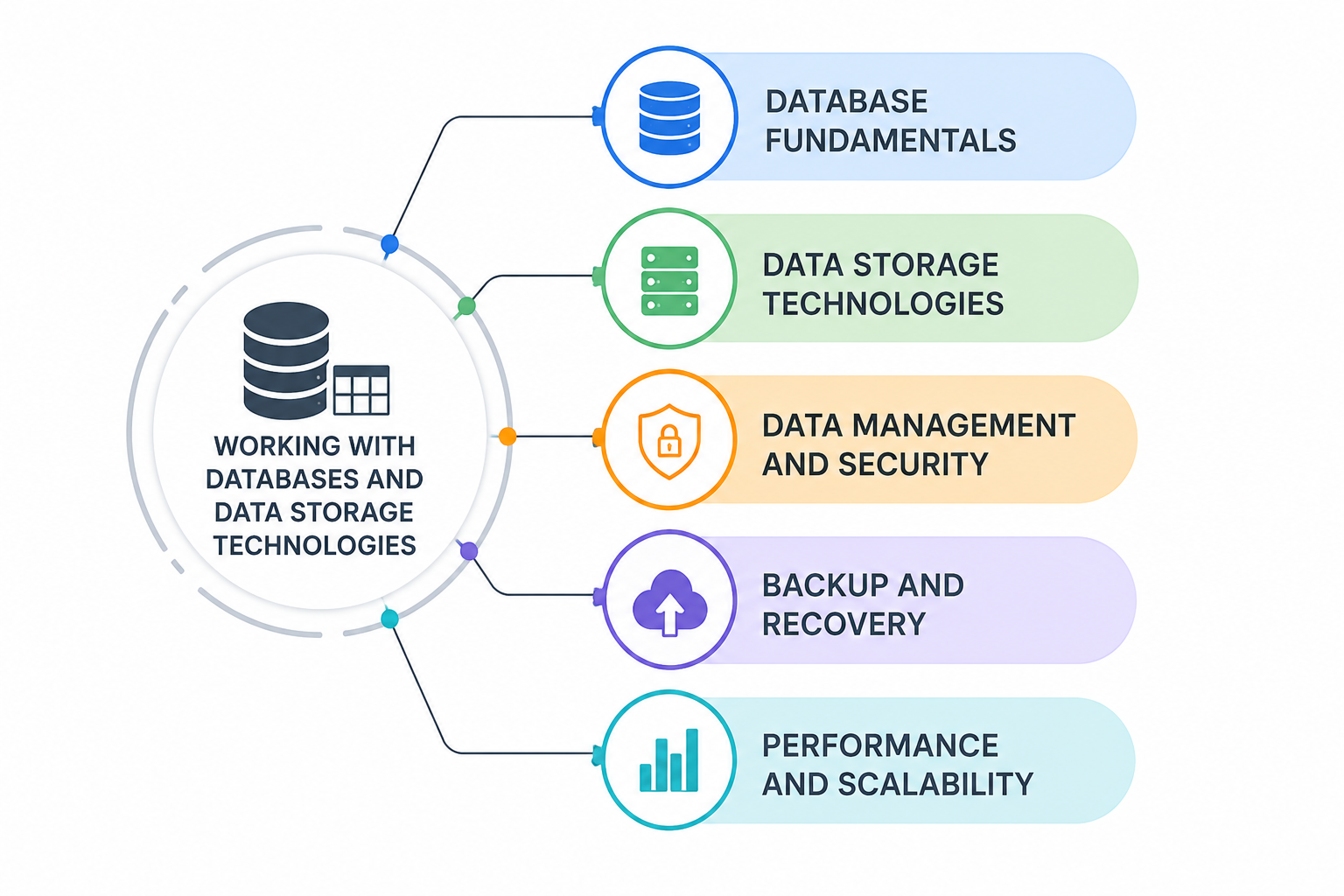
Working with Databases and Data Storage Technologies
- MySQL: MySQL is a widely used relational database system that stores structured data efficiently. Data scientists use it to manage business data, execute SQL queries, and support analytical applications.
- PostgreSQL: PostgreSQL is an advanced open-source database known for reliability and scalability. It supports complex queries, large datasets, and advanced data processing required for enterprise-level analytics.
- MongoDB: MongoDB is a NoSQL database that stores unstructured and semi-structured data using flexible document formats. It is commonly used in big data applications and modern web development.
- SQLite: SQLite is a lightweight database suitable for learning SQL, testing applications, and developing small-scale data science projects without requiring a dedicated database server.
- Data Warehousing Tools: Platforms such as Snowflake, Amazon Redshift, and Google BigQuery store large volumes of business data, enabling faster analytics, reporting, and machine learning workflows. Learning advanced SQL concepts through the Spark SQL Tutorial can help professionals efficiently process and analyze large-scale datasets.
- Database Management Tools: Applications like MySQL Workbench and pgAdmin provide graphical interfaces for creating databases, managing tables, executing SQL queries, and monitoring database performance.
- Pandas: Pandas simplifies data cleaning, transformation, filtering, merging, and analysis through powerful DataFrame structures, making it one of the most important libraries in data science. Building a strong understanding through Data Analytics Concepts and Importance helps learners understand how processed data supports meaningful business insights.
- NumPy: NumPy provides fast numerical computing with multidimensional arrays and mathematical operations. It improves computational performance for machine learning and scientific computing applications.
- OpenRefine: OpenRefine helps clean inconsistent datasets, remove duplicates, standardize values, and transform raw data into structured formats suitable for analysis.
- Feature Engineering Libraries: Libraries such as Feature-engine and Scikit-learn preprocessing tools help create, transform, and optimize features that improve machine learning model performance.
- Apache Spark: Apache Spark processes massive datasets quickly using distributed computing. It is widely used for big data analytics, machine learning, and real-time data processing.
- Apache Hadoop: Hadoop provides distributed storage and processing for large datasets across multiple servers, making it suitable for enterprise-scale big data applications.
- Matplotlib: Matplotlib creates line charts, bar graphs, histograms, scatter plots, and other visualizations that help data scientists explore trends and understand datasets effectively. These visualization techniques are commonly taught in Data Science Training programs.
- Seaborn: Seaborn builds attractive statistical visualizations with minimal code. It simplifies correlation analysis, distribution plots, heatmaps, and categorical comparisons.
- Power BI: Power BI transforms raw data into interactive dashboards and business reports. It supports informed decision-making through dynamic visualizations and real-time analytics.
- Tableau: Tableau enables users to create professional dashboards using drag-and-drop functionality. It is widely used for business intelligence and executive reporting.
- Plotly: Plotly creates interactive visualizations that allow users to zoom, filter, and explore data dynamically, making presentations more engaging and informative.
- Excel: Microsoft Excel remains a valuable tool for basic data analysis, pivot tables, chart creation, and quick reporting, especially during the early stages of analytics projects.
- Instructor-led Sessions
- Real-life Case Studies
- Assignments
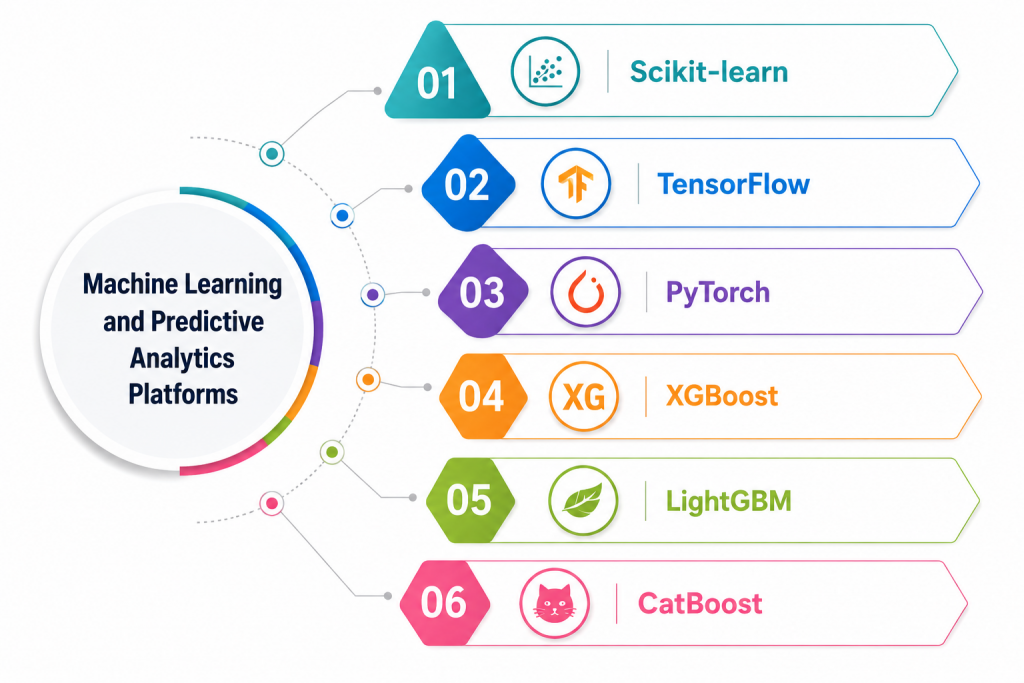
- Scikit-learn: Scikit-learn provides simple and efficient machine learning algorithms for classification, regression, clustering, and model evaluation, making it ideal for beginners and professionals.
- TensorFlow: TensorFlow is Google’s open-source framework for building deep learning models, neural networks, and AI applications across research and production environments. Professionals can enhance their understanding of modern AI concepts through the Artificial Intelligence and Future Technology of AI tutorial, which provides valuable insights into AI technologies and their real-world applications.
- PyTorch: PyTorch offers flexible deep learning development with dynamic computation graphs. It is widely used in AI research, natural language processing, and computer vision.
- XGBoost: XGBoost is a high-performance machine learning library designed for predictive modeling. It delivers excellent accuracy in classification and regression tasks.
- LightGBM: LightGBM is an optimized gradient boosting framework that trains models quickly while handling large datasets efficiently, making it suitable for production environments.
- CatBoost: CatBoost handles categorical features effectively with minimal preprocessing and produces highly accurate predictive models for business and analytical applications.
Data Processing and Feature Engineering Tools

Exploratory Data Analysis and Visualization Software

Get JOB Oriented Data Science Training for Beginners By MNC Experts
Machine Learning and Predictive Analytics Platforms
Want to Master Data Science? Explore the Data Science Master Program Offered at ACTE Today!
Deep Learning, NLP, and Computer Vision Frameworks
- TensorFlow Keras: Keras simplifies deep learning by providing user-friendly APIs for building, training, and deploying neural network models efficiently.
- PyTorch Lightning: PyTorch Lightning reduces repetitive coding while improving model organization, scalability, and experimentation for advanced deep learning projects.
- Hugging Face Transformers: This framework provides pre-trained transformer models for natural language processing tasks such as text classification, translation, summarization, and conversational AI.
- OpenCV: OpenCV is a popular computer vision library used for image processing, object detection, facial recognition, and video analysis applications. Developing projects with these frameworks can strengthen your portfolio, and the Data Science Internship Portfolio tutorial provides useful guidance for showcasing practical skills.
- spaCy: spaCy offers industrial-strength natural language processing capabilities, including tokenization, named entity recognition, text classification, and linguistic analysis.
- NLTK: Natural Language Toolkit (NLTK) supports text preprocessing, sentiment analysis, language modeling, and educational NLP projects using extensive language resources.
Want to Learn About DevOps? Explore Our Data Science Interview Questions and Answers Featuring the Most Frequently Asked Questions in Job Interviews.
Cloud Platforms and Data Science Deployment Tools
- Amazon Web Services (AWS): AWS provides cloud services for data storage, machine learning, model deployment, and scalable computing, supporting enterprise-level data science applications.
- Microsoft Azure: Azure offers AI services, cloud databases, analytics platforms, and machine learning tools that help organizations deploy intelligent business solutions.
- Google Cloud Platform (GCP): Google Cloud provides scalable infrastructure, BigQuery, Vertex AI, and data engineering services for building advanced analytics and AI applications. Learning cloud-based AI technologies can improve career opportunities, and the Data Science Internship Complete Tutorial explains the skills employers expect from aspiring data science professionals.
- Docker: Docker packages applications with all required dependencies into portable containers, ensuring consistent deployment across different computing environments.
- Kubernetes: Kubernetes automates the deployment, scaling, and management of containerized applications, improving reliability for production machine learning systems.
- MLflow: MLflow manages machine learning experiments, tracks model versions, and simplifies deployment, making it easier to monitor and reproduce data science workflows.
Building End-to-End Data Science Projects with Modern Technologies
Building end-to-end data science projects is one of the most effective ways to develop practical skills and become job-ready. A complete data science project begins with collecting data from databases, APIs, or external sources using SQL and data integration tools. The collected data is then cleaned, transformed, and prepared using Python libraries such as Pandas and NumPy. Exploratory Data Analysis (EDA) is performed using visualization tools like Matplotlib, Seaborn, or Plotly to identify trends and patterns. Machine learning models are developed and evaluated using Scikit-learn, TensorFlow, or PyTorch based on project requirements. After model validation, results are visualized through interactive dashboards created with Power BI or Tableau. Finally, the solution is deployed using cloud platforms such as AWS, Microsoft Azure, or Google Cloud with technologies like Docker and MLflow for scalability and maintenance. Learning these practical skills through Data Science Training helps learners build real-world projects with confidence. Completing multiple end-to-end projects demonstrates technical expertise, problem-solving ability, and practical experience, helping candidates build an impressive portfolio that significantly improves internship and job opportunities in the competitive data science industry.
Conclusion: Becoming Industry-Ready with Data Science Tools
Becoming industry-ready in data science requires more than learning individual technologies—it involves understanding how different tools work together to solve real-world business problems. Mastering programming languages such as Python and SQL, database management systems, data processing libraries, machine learning frameworks, visualization platforms, cloud computing services, and deployment technologies creates a comprehensive technical skill set. Gaining these in-demand skills through Data Science Training along with regular practice through hands-on projects, internships, hackathons, and open-source contributions helps strengthen practical knowledge and industry exposure. Building a strong portfolio on platforms like GitHub, earning professional certifications, and staying updated with emerging technologies further improve career prospects. Employers seek candidates who can manage the complete data science lifecycle, from data collection and preprocessing to model development, visualization, and deployment. By continuously improving technical expertise, communication skills, and business understanding, aspiring professionals can confidently prepare for data science roles and build successful careers in artificial intelligence, analytics, machine learning, and business intelligence across diverse industries.