LMS
LMS
Last updated on 20th Aug 2026| 13056

- Introduction to UI/UX Designer Careers at TCS
- Understanding UI/UX Designer Roles and Responsibilities at TCS
- Eligibility Criteria for TCS UI/UX Designer Jobs
- Essential UI Design and Visual Design Skills
- UX Research and User-Centered Design Requirements
- Figma, Wireframing, Prototyping, and Design System Skills
- TCS UI/UX Designer Salary and Compensation Factors
- Portfolio, Interview, and Selection Process Preparation
- Career Growth and Opportunities in TCS Design Teams
- Conclusion: Building a Successful UI/UX Career at TCS
Introduction to UI/UX Designer Careers at TCS
UI/UX design careers at TCS provide opportunities for professionals interested in creating intuitive, accessible, and user-centered digital experiences. Designers may contribute to websites, enterprise applications, mobile interfaces, and digital transformation projects across different industries. UI/UX professionals typically collaborate with developers, business analysts, product teams, researchers, and stakeholders to understand requirements and translate them into effective designs. Candidates interested in these roles should develop knowledge of user research, wireframing, prototyping, interaction design, visual design, usability testing, responsive design, and accessibility. Practical experience with modern design tools and a strong portfolio can help demonstrate job readiness. Aspiring designers can also strengthen these foundational skills through UI/UX Design Training, which can provide structured exposure to important design concepts and practical techniques. Since individual TCS openings can have different responsibilities and experience requirements, candidates should review the specific job description before applying. Developing both creative and analytical skills can help aspiring designers prepare for opportunities in large-scale technology and consulting environments.
Understanding UI/UX Designer Roles and Responsibilities at TCS
UI/UX designers at TCS may be responsible for understanding user requirements, developing user flows, creating wireframes, designing interfaces, building interactive prototypes, and evaluating designs through usability testing. UI-focused responsibilities can include typography, layouts, visual hierarchy, colors, components, responsive screens, and interface consistency. UX responsibilities may involve user research, personas, journey mapping, information architecture, interaction design, and usability analysis. Designers often collaborate with developers and business teams to ensure proposed experiences satisfy user needs, technical requirements, and business objectives. Depending on the project, professionals may also participate in design workshops, stakeholder discussions, design reviews, and documentation activities. Candidates can also explore Top Essential UI/UX Designer Skills They should be capable of presenting design decisions clearly and adapting solutions based on feedback and testing. Understanding the complete design lifecycle helps candidates prepare for professional environments where usability, accessibility, consistency, and effective collaboration are essential to understand the skills that support these responsibilities.
Get Your UI/UX Design Certification by Learning from Industry-Leading Experts and Advancing Your Career with ACTE’s UI/UX Design Course.
Eligibility Criteria for TCS UI/UX Designer Jobs
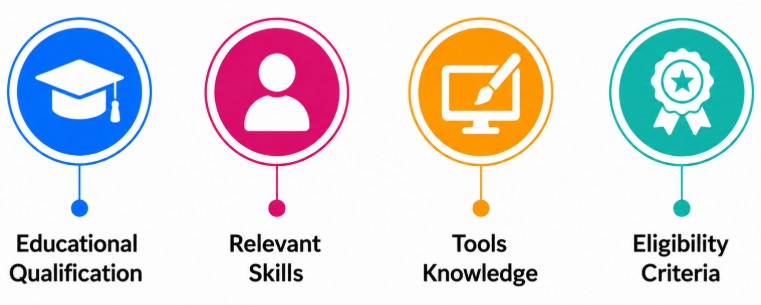
Eligibility criteria for TCS UI/UX designer positions vary according to the individual vacancy, location, experience level, and project requirements. Candidates may come from educational backgrounds such as UI/UX Design, Graphic Design, Visual Communication, Interaction Design, Human-Computer Interaction, Computer Science, or related disciplines. Employers may evaluate practical design ability alongside educational qualifications, making a strong portfolio particularly valuable for aspiring designers.
Essential UI Design and Visual Design Skills
- Visual Design Fundamentals UI designers should understand typography, color theory, spacing, layouts, grids, imagery, and visual hierarchy. These fundamentals help professionals create interfaces that communicate information clearly while maintaining usability, consistency, accessibility, and an engaging visual experience.
- Typography and Color Theory Typography and color influence readability, accessibility, branding, and user perception. Designers should understand font hierarchy, contrast, color combinations, and consistent styling to create professional interfaces that communicate information effectively across different digital products.
- Accessibility and Inclusive Design Accessibility helps ensure digital products can be used by people with different abilities and needs. UI designers should consider readable typography, appropriate contrast, clear labels, logical navigation, keyboard accessibility, and inclusive interaction patterns when creating interfaces. Candidates can also explore UI/UX Design Principles to strengthen their understanding of effective and user-centered interface design.
- Responsive UI Design Responsive design ensures interfaces work effectively across desktops, tablets, smartphones, and different screen sizes. Designers should understand flexible layouts, grids, breakpoints, scalable elements, and mobile-first principles to deliver consistent and usable digital experiences.
- UI Components and Consistency Designers should understand reusable interface components such as buttons, forms, navigation menus, cards, icons, and input fields. Maintaining consistent components, spacing, typography, and interaction patterns improves usability and supports efficient product development.
UX Research and User-Centered Design Requirements
- User Research Methods User research helps designers understand user behaviors, motivations, expectations, and challenges. Interviews, surveys, observations, and contextual research provide valuable insights that enable professionals to identify genuine problems and develop evidence-based design solutions.
- User Personas User personas represent important audience groups based on research findings, behaviors, needs, and goals. Designers use personas to maintain focus on target users when making decisions about features, navigation, content organization, functionality, and overall experiences.
- User-Centered Design Process User-Centered Design places user requirements at the center of product development. It involves research, problem definition, ideation, prototyping, testing, and continuous improvement, enabling designers to create solutions that balance user expectations with business and technical requirements. Candidates can further explore Building an Impactful UI/UX Designer Portfolio to understand how research and design skills can be presented through practical projects.
- User Journey Mapping Journey maps visualize how users interact with products or services across different stages. They highlight user actions, expectations, emotions, challenges, and opportunities, helping designers identify areas where experiences can be simplified, improved, and made more meaningful.
- Usability Testing Usability testing evaluates how easily users can complete tasks with a digital product. Designers observe user interactions, identify difficulties, collect feedback, and refine solutions based on findings to improve navigation, accessibility, efficiency, and overall product usability.

Get JOB Oriented UI/UX Design Course for Beginners By MNC Experts
- Instructor-led Sessions
- Real-life Case Studies
- Assignments
Figma, Wireframing, Prototyping, and Design System Skills
- Figma Design Knowledge Figma enables designers to create wireframes, interfaces, components, prototypes, and collaborative design files. Candidates should understand frames, Auto Layout, components, variants, styles, libraries, and collaboration features to create organized and scalable digital product designs.
- Wireframing Skills Wireframing helps designers establish page structure, content placement, navigation, and functionality before detailed visual design begins. Effective wireframes allow teams to validate concepts, communicate ideas clearly, and identify potential usability problems early in the design process.
- Design Handoff and Collaboration UI/UX designers collaborate with developers by providing specifications, assets, components, prototypes, and design documentation. Clear communication and organized design files help development teams understand layouts, interactions, responsive behavior, and implementation requirements. Candidates can strengthen these practical skills through UI/UX Design Training, which can provide structured learning across essential design and prototyping concepts.
- Interactive Prototyping Prototypes simulate how users interact with a proposed digital product through clickable elements, navigation, transitions, and user flows. They support usability testing, stakeholder reviews, and design validation before significant development resources are committed.
- Design System Knowledge Design systems provide reusable components, patterns, styles, and guidelines that maintain consistency across digital products. Understanding typography, spacing, components, accessibility standards, and interaction patterns helps designers create scalable and unified user experiences.
Want to Master UI/UX Design? Explore the UI/UX Design Master Program Offered at ACTE Today!
TCS UI/UX Designer Salary and Compensation Factors
- Experience Level Experience is an important factor influencing UI/UX designer compensation. Entry-level designers generally begin at lower salary levels, while professionals with several years of practical experience, advanced design knowledge, and responsibility for complex projects may qualify for higher compensation.
- UI/UX Skills and Specialization Candidates with strong capabilities in user research, interaction design, visual design, prototyping, accessibility, and design systems may strengthen their professional value. Specialized expertise and the ability to solve complex user experience problems can influence career and compensation opportunities.
- Job Role and Responsibilities Compensation can vary depending on whether a professional works as a UI Designer, UX Designer, Product Designer, UX Researcher, or another design specialist. Roles involving greater project ownership, stakeholder management, strategic decision-making, or leadership may carry different compensation levels.
- Portfolio and Professional Experience A strong portfolio demonstrating research, problem-solving, design iterations, prototypes, and measurable outcomes can strengthen a candidate’s profile. Relevant internships, professional projects, certifications, and industry experience may also contribute to career progression and compensation discussions. Candidates can also review UI/UX Designer Salary Overview for broader information about compensation across different experience levels.
- Location and Project Requirements Salary packages may differ according to job location, business unit, client requirements, project complexity, and demand for specific skills. Candidates should review individual TCS vacancies and compensation details rather than assuming that every UI/UX position offers the same salary package.
Preparing for UI/UX Design Job Interviews? Have a Look at Our Blog on UI/UX Design Interview Questions and Answers To Ace Your Interview!
Portfolio, Interview, and Selection Process Preparation
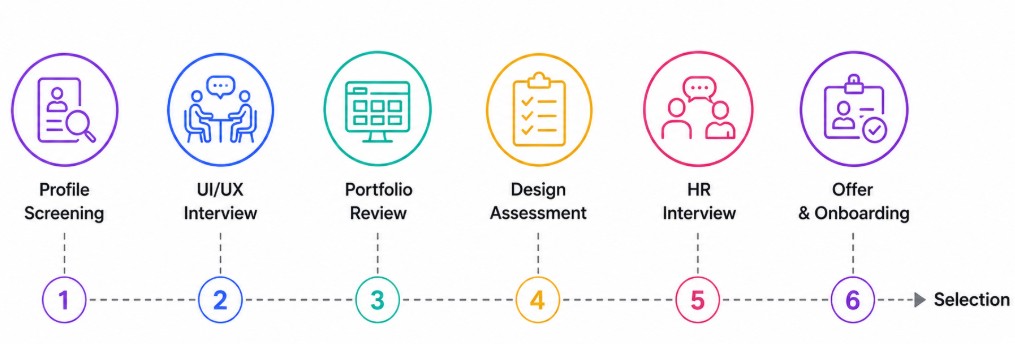
Preparing for a TCS UI/UX opportunity requires candidates to combine a strong portfolio with design knowledge, communication abilities, and structured problem-solving skills. A portfolio should include detailed case studies that explain the design problem, target users, research methods, user flows, wireframes, prototypes, usability testing, design iterations, and final outcomes. Candidates should be prepared to explain why they made specific design decisions rather than simply presenting finished screens. Interview preparation can include reviewing user-centered design principles, visual hierarchy, responsive design, accessibility, information architecture, interaction design, and design systems. Interview preparation can include reviewing user-centered design principles, visual hierarchy, responsive design, accessibility, information architecture, interaction design, and design systems.
Career Growth and Opportunities in TCS Design Teams
A UI/UX career at TCS can provide opportunities to develop experience across interface design, user experience design, product design, UX research, interaction design, and other digital experience areas. Entry-level professionals can strengthen their skills by working on practical projects, collaborating with multidisciplinary teams, conducting user research, creating prototypes, and contributing to design systems. As professionals gain experience, they may take responsibility for more complex design challenges, stakeholder communication, design strategy, project coordination, and mentoring activities. Career progression can vary based on individual performance, expertise, business requirements, and available roles. Designers who develop specialized knowledge in areas such as accessibility, enterprise UX, design systems, AI-driven experiences, research, or product strategy may expand their career possibilities. Continuous learning is particularly important because design technologies, user expectations, and digital products evolve rapidly. Those planning to enter the field can also explore Is UI/UX Design a Good Career Choice in Today’s Market? to understand the broader career potential of the profession. Professionals who combine strong design skills with business understanding, communication, leadership, and problem-solving capabilities can prepare themselves for broader responsibilities and long-term career development.
Conclusion: Building a Successful UI/UX Career at TCS
Building a successful UI/UX career at TCS requires a combination of creative thinking, user research, visual design, technical knowledge, collaboration, and continuous skill development. Candidates should establish strong foundations in wireframing, prototyping, interaction design, usability testing, responsive design, accessibility, and design systems while gaining practical experience through projects and internships. A professional portfolio is essential for demonstrating how candidates identify user problems, conduct research, develop solutions, test ideas, and improve designs through iteration. Freshers should also strengthen their communication and presentation abilities because UI/UX professionals regularly collaborate with developers, product teams, business stakeholders, and clients. Learning modern design tools such as Figma and staying updated with developments in AI, accessibility, enterprise design, and emerging digital experiences can improve long-term career readiness. Candidates who want to strengthen their practical foundation can explore UI/UX Design Training to develop relevant design skills through structured learning. Since job requirements and compensation vary between TCS openings, candidates should evaluate individual vacancies carefully. By combining practical experience, a strong portfolio, continuous learning, and effective interview preparation, aspiring designers can strengthen their prospects for UI/UX opportunities and build sustainable careers in digital experience design.