LMS
LMS
Last updated on 05th Nov 2025| 13697

- Career Opportunities in EV Industry
- Market Growth and Trends
- R&D Roles in EV
- Electrical and Electronics Engineering Roles
- Mechanical and Design Engineering
- Battery Technology Experts
- Software and Firmware Developers
- Charging Infrastructure Jobs
- Sales and Marketing Careers
- Conclusion
Career Opportunities in EV Industry
The electric vehicle (EV) industry encompasses the design, engineering, manufacturing, sales, and servicing of vehicles powered partially or entirely by electricity rather than internal combustion engines. This sector includes battery-electric vehicles (BEVs), plug-in hybrids (PHEVs), and hybrid electric vehicles (HEVs). EVs are transforming mobility by reducing greenhouse gas emissions, improving urban air quality, and enabling energy independence supported by regulatory incentives and shifting consumer preferences. To understand how intelligent systems accelerate these transformations through predictive analytics, smart energy management, and adaptive mobility solutions, explore Artificial Intelligence Training a hands-on course that covers machine learning, embedded AI, and sustainable technology applications for the future of transportation. According to the IEA’s Global EV Outlook 2025, over 4 million electric cars were sold globally in Q1 2025, a 35% increase from Q1 2024. Projections estimate total EV sales to top 20 million units in 2025, capturing about 25% of the global new car market. With this rapid growth, Career Opportunities in EV are expanding across multiple domains, including battery technology, charging infrastructure, software engineering, design, and sustainable manufacturing, offering immense potential for skilled professionals worldwide. As innovation continues to drive the industry forward, Career Opportunities in EV will only grow stronger, creating a demand for experts who can shape the future of electric mobility through technology, research, and development.
Market Growth and Trends
Electric vehicles (EVs) are reshaping the landscape of mobility, offering a cleaner, more efficient, and smarter alternative to traditional transportation methods. Their innovative architecture, which incorporates batteries, electric motors, and intelligent control systems, enables advancements in driving dynamics, enhances sustainability, and facilitates seamless integration with the power grid. A variety of real-world examples illustrate the versatility and appeal of electric vehicles. For instance, the Tesla Model 3 is celebrated for its impressive range, strong performance, and convenient over-the-air updates. To explore how such innovations are shaping mobility trends and redefining transportation in India and beyond, explore Future of Electric Vehicles a comprehensive guide that highlights market growth, technological advancements, policy impacts, and the evolving consumer landscape. The Nissan Leaf, known for its affordability, has gained widespread adoption globally, while the Hyundai Kona Electric stands out as a practical compact SUV with a commendable range. In markets like India and Europe, the MG ZS EV has become a popular choice, and the Tata Nexon EV has emerged as the best-selling electric vehicle in India. As battery technology continues to advance, charging infrastructure expands, and consumer acceptance grows, electric vehicles are poised to dominate the future of transportation.
Ready to Get Certified in Artificial Intelligence ? Explore the Program Now Artificial Intelligence Online Training Offered By ACTE Right Now!
R&D Roles in EV
Research & Development drives innovation in propulsion, safety, user experience, autonomy, and energy systems. Roles include engineers, designers, data scientists, and specialists working to enhance EV performance and sustainability. To explore how these roles contribute to the evolution of electric mobility and the underlying principles of EV operation, explore Electric Cars Work Explained a comprehensive guide that highlights working principles, R&D contributions, and the future of electric vehicle technology.
- EV Battery Engineer: Develops advanced battery cells and modules, focusing on energy density, efficiency, safety, and lifecycle.
- Electric Powertrain Engineer: Designs electric motors, inverters, and transmission systems.
- Vehicle Architect / Systems Engineer: Defines hardware and software specifications, sustainability targets, and regulatory standards.
- Control Systems Engineer: Designs performance, stability, safety (e.g., ABS, ESC), integrating hardware with software systems.
R&D roles often require strong backgrounds in electrical, mechanical, chemical, or materials engineering, along with skills in simulations and data analysis.
To Explore Artificial Intelligence in Depth, Check Out Our Comprehensive Artificial Intelligence Online Training To Gain Insights From Our Experts!
Electrical and Electronics Engineering Roles
As EVs become mobile smart devices, electrical systems take center stage. To explore how different categories of EVs leverage these systems for performance, connectivity, and sustainability, explore Types of Electric Vehicles a comprehensive guide that highlights battery electric vehicles (BEVs), hybrid electric vehicles (HEVs), plug-in hybrids (PHEVs), and fuel cell EVs, along with their unique advantages and applications.
- Power Electronics Engineer: Develops inverters, converters, and onboard chargers.
- Battery Management System (BMS) Engineer: Designs systems to manage cell-level operations SOC, safety, balancing.
- Embedded Systems / Firmware Developer: Builds ECU software for real-time control in motors, braking, charging, infotainment.
- Sensor & Communication Engineer: Integrates sensors for vehicle dynamics, driver assistance, and connectivity (CAN, LIN, Ethernet).
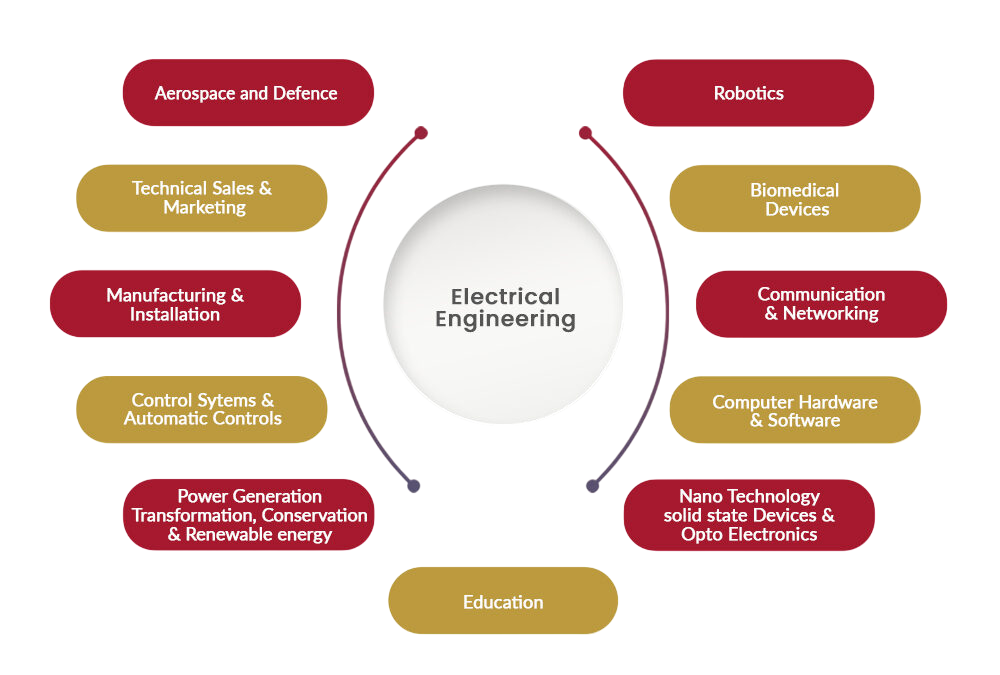
These roles typically require expertise in circuit design, signal processing, embedded C/C++, and model-based design tools.
Mechanical and Design Engineering
Mechanical engineers and designers play an important role in developing vehicles. They focus on both form and function to improve performance and safety. The chassis and structural engineer creates strong and lightweight vehicle frames. This role emphasizes crash safety while also aiming to reduce weight. The thermal and HVAC engineer designs thermal systems that manage battery temperatures and ensure passenger comfort in electric vehicles. To explore how intelligent systems enhance thermal management, optimize energy efficiency, and improve passenger safety, explore Artificial Intelligence Training a hands-on course that covers embedded AI, predictive modeling, and smart control strategies for advanced automotive engineering. Meanwhile, the CAD and industrial designer shapes the vehicle’s interiors and exteriors. They carefully consider ergonomics, aerodynamics, and the overall user experience to create a cohesive and attractive design. The integration engineer ensures the effective placement of battery packs, motors, electronics, and other systems within the vehicle structure, optimizing space and functionality. To succeed in these roles, knowledge of computer-aided design (CAD) tools like CATIA and Siemens NX is essential. Familiarity with finite element analysis (FEA), computational fluid dynamics (CFD), and material science is also important. Together, these engineers and designers drive innovation in the automotive industry, creating vehicles that are safe, efficient, and visually appealing.

Develop Your Skills with Artificial Intelligence Training
Weekday / Weekend BatchesSee Batch DetailsBattery Technology Experts
As the reliance on electric vehicles (EVs) continues to grow, battery experts play a crucial role in ensuring the efficiency and sustainability of storage systems. Cell and Pack Design Engineers design and prototype various battery cell formats and modules. They lay the groundwork for effective and reliable battery systems. Chemists and Materials Scientists work on innovating battery chemistries. They use materials like nickel manganese cobalt (NMC) and lithium iron phosphate (LFP). They also explore the potential of solid-state technologies to improve battery performance. To understand how these advanced chemistries integrate with hybrid systems and enhance efficiency, explore Plug-In Hybrid Electric Vehicle a comprehensive guide that explains battery materials, hybrid architecture, performance benefits, and the evolving role of PHEVs in sustainable mobility. Additionally, Battery Validation Engineers establish testing protocols to assess important factors like cycle life, thermal stability, safety, and abuse resilience. They ensure the batteries meet strict standards before reaching consumers. Specialists in Battery Recycling and Second-Life applications develop solutions for the end-of-life phase of batteries. They focus on recovery and repurposing to reduce waste. This network of expertise is supported by global supply chain roles that encompass everything from sourcing raw materials to managing recycling centers. These roles adapt to emerging standards that encourage the use of Second-Life EV batteries. Together, these professionals form a framework that tackles the challenges and advancements in electric vehicle battery technology.
Looking to Master Machine Learning? Discover the Artificial Intelligence Expert Masters Program Training Course Available at ACTE Now!
Software and Firmware Developers
EVs are increasingly software-defined, with advanced systems managing propulsion, connectivity, safety, and user experience. To explore how this transformation is reshaping mobility and redefining the automotive industry, explore Electric Vehicles a comprehensive guide that highlights their working principles, benefits, challenges, and the future of software-driven innovation in sustainable transportation.
- ADAS & Autonomous Software Engineer: Works on LiDAR, radar, camera systems; develops path planning and perception algorithms.
- Infotainment & Connectivity Engineer: Builds vehicle cabin systems UI, mobile integration, OTA updates.
- Navigation & Telematics Developer: Designs GPS, vehicle-to-cloud systems, fleet tracking tools.
- Cybersecurity Engineer: Ensures security of vehicle networks and data systems.
Skills in C/C++, Python, ROS, neural networks, and cybersecurity are typical prerequisites.
Charging Infrastructure Jobs
The massive growth of EVs demands robust infrastructure to support charging, energy distribution, and long-term sustainability. To explore how these developments create both opportunities and challenges for consumers, industries, and policymakers, explore Advantages and Disadvantages of EV a comprehensive guide that highlights the benefits, limitations, and future outlook of electric vehicles in modern transportation.
- Charging Station Technician: Installs and services chargers home, commercial, depot.
- Electrical Systems Engineer (Infrastructure): Designs charging network hardware integrated with grid systems.
- Power Grid / Smart Grid Engineer: Manages load balancing, V2G (vehicle‑to‑grid), and energy storage integrations.
- Project Manager / Field Service Coordinator: Oversees charging roll-outs and operational efficiency.
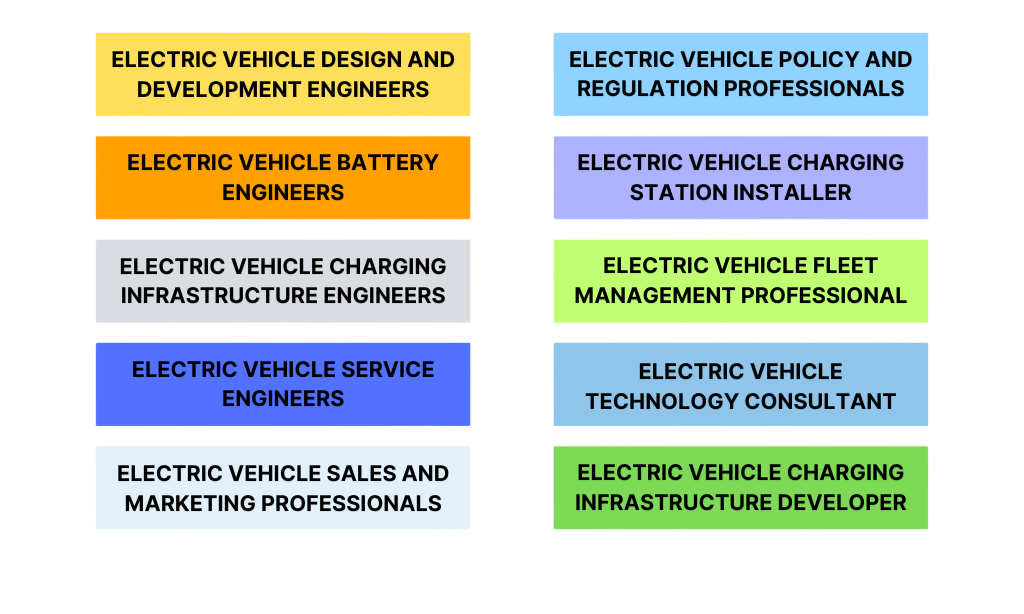
The global EV charging infrastructure market is expected to reach $147.6B by 2030.
Preparing for Artificial Intelligence Job Interviews? Have a Look at Our Blog on Artificial Intelligence Interview Questions and Answers To Ace Your Interview!
Sales and Marketing Careers
As EV adoption increases, so too does the need for market-facing professionals who understand both the technical and commercial aspects of power electronics. To explore how these semiconductor devices differ in efficiency, switching speed, and application within electric vehicles, explore Difference Between IGBT and MOSFET a detailed guide that highlights their characteristics, advantages, limitations, and role in shaping EV performance.
- EV Sales Manager: Promotes EVs to individual, fleet, and corporate customers; manages dealership strategy.
- Marketing Strategist / Product Manager: Defines EV packages, brand campaigns, incentive pricing.
- Fleet Account Executive: Works with logistics, municipal, and transportation companies for fleet electrification solutions.
- Public Policy & Incentive Specialist: Aligns company interests with regional subsidies, carbon credits, and regulations.
Experience in automotive sales, energy markets, or sustainability is highly valued in these roles.
Conclusion
The electric vehicle (EV) industry is changing global transportation and creating a variety of job opportunities across different fields. Key areas of growth include research and development, where professionals focus on mechanical, electrical, battery, and systems design. The software and data sector is also important, emphasizing embedded systems, advanced driver-assistance systems (ADAS), telematics, and cybersecurity. To explore how intelligent systems strengthen these domains through real-time analytics, predictive modeling, and secure data integration, explore Artificial Intelligence Training a hands-on course that covers embedded AI, ADAS algorithms, telematics intelligence, and cybersecurity frameworks for next-generation mobility solutions. Infrastructure development is essential as well, covering charging systems, grid integration, and various project management roles that ensure the effective rollout of EV technologies. Furthermore, the sales and maintenance sector offers jobs in dealerships and customer service, meeting the rising demand for electric vehicles. With this evolution, Career Opportunities in EV are expanding rapidly, offering roles for engineers, designers, analysts, and project managers who drive innovation and sustainability. As the industry continues to grow and diversify, Career Opportunities in EV will play a key role in shaping the future of clean transportation and smart mobility worldwide.