LMS
LMS
Last updated on 28th Apr 2026| 7329

Cracking a Wipro interview from a rural Tamil Nadu background is absolutely achievable with the right preparation and mindset. Start by strengthening your basics in subjects like aptitude, programming, and communication skills. Even if English is not your first language, practice speaking daily to build confidence and clarity. Make use of free online resources, mock tests, and coding platforms to improve your technical skills. Focus on understanding concepts rather than memorizing answers. Prepare well for HR questions by practicing honest and simple responses about your background and goals. Stay updated with commonly asked interview questions and company expectations. Most importantly, believe in your potential and stay consistent in your efforts. With dedication and the right approach, your background can become your strength rather than a limitation.
1.What Is The Role Of Trust In The Workplace?
Ans:
Trust Is Essential For Building Strong Professional Relationships And Teamwork. It Encourages Open Communication And Transparency Among Team Members. Trust Helps Improve Collaboration And Workplace Efficiency. Reliable Behavior Strengthens Confidence Between Colleagues And Management. A Trustworthy Environment Supports Innovation And Knowledge Sharing. Employees Feel More Comfortable Contributing Ideas And Feedback. Trust Creates A Positive And Productive Workplace Culture.
2. What Is The Importance Of Communication In The Workplace?
Ans:
Communication Is Essential For Sharing Information Clearly And Accurately. Effective Communication Reduces Misunderstandings And Improves Collaboration. Strong Communication Skills Help Build Professional Relationships. Timely Information Exchange Supports Better Decision-Making Processes. Active Listening Encourages Understanding And Mutual Respect. Clear Communication Enhances Productivity And Team Performance. It Plays A Significant Role In Organizational Success.
3. What Makes A Good Team Player?
Ans:
A Good Team Player Demonstrates Cooperation, Respect, And Effective Communication. Sharing Knowledge And Supporting Colleagues Helps Achieve Common Objectives. Reliability And Accountability Build Trust Within The Team. Active Listening Encourages Better Understanding And Collaboration. Flexibility Helps Adapt To Different Working Styles And Situations. Positive Attitudes Contribute To A Healthy Work Environment. Strong Teamwork Often Leads To Improved Productivity And Success.
4. How does stay updated with technology?
Ans:
Stay updated by reading articles and blogs. Follow technology trends. Take online courses. Practice coding regularly. Participate in discussions. Explore new tools attend webinars. Learn from peers. Apply new knowledge practically. stay curious and motivated and follow industry experts and communities. Continuously upgrade technical skills.
5.What is programming?
Ans:
Programming is the process of writing instructions for a computer. It helps in solving real-world problems. It uses languages like C, Java, and Python. Programs are written step by step. It helps in automation of tasks. It is the base of software development.Programming improves logical thinking skills. It is used to build applications and websites. It is essential in the IT industry today.
6. What is OOPs?
Ans:
OOPs stands for Object-Oriented Programming System. It is based on objects and classes. It has features like inheritance and polymorphism. It improves code reusability. It makes programming easier and structured. It is widely used in Java and C++. It also includes concepts like encapsulation and abstraction. It helps in real-world problem modeling. It makes software development more efficient and organized.
7. What is DBMS?
Ans:
- DBMS stands for Database Management System. It is used to store and manage data. It helps in easy data retrieval.
- It ensures data security. It reduces data redundancy. Examples include MySQL and Oracle. It allows users to perform operations like insert, update, delete, and retrieve data easily.
- It provides better data consistency and integrity. It supports multiple users accessing data at the same time. It is widely used in real-world applications like banking and shopping systems.
8. What is an operating system?
Ans:
- An operating system is system software. It manages hardware and software resources. It acts as an interface between user and computer.
- It manages memory and processes. Examples include Windows and Linux. It helps in smooth system functioning. It controls input and output devices of the computer.
- It manages files and system security. It enables multitasking where multiple programs run at the same time. It is essential for proper functioning of any computer system.
9. What is a computer network?
Ans:
- A computer network is connection of multiple computers. It allows data sharing. It uses cables or wireless systems. It enables communication between devices.
- Internet is a global network. It improves resource sharing. It allows users to share files and hardware like printers. It improves communication through email and messaging.
- It can be classified into LAN, MAN, and WAN. It is widely used in offices, schools, and organizations.
10. What is a data structure?
Ans:
A data structure is a way of storing and organizing data so it can be used efficiently. It helps in managing data, improving performance, and optimizing memory usage. Examples include arrays, stacks, and queues. It plays a key role in faster searching, sorting, and solving complex programming problems, and it forms the foundation of efficient algorithm design..
11.What is an array?
Ans:
An array is a collection of similar elements stored in continuous memory locations and accessed using index values starting from zero. It has a fixed size and allows easy and fast access to elements. Arrays are widely used in programming for storing multiple values under one name, making data handling, looping, and processing tasks easier.
12. What is a stack?
Ans:
A stack is a linear data structure that follows the LIFO (Last In First Out) principle, where the last inserted element is removed first. It uses operations like push and pop and is commonly used in recursion, function calls, memory management, and expression evaluation. It works like a stack of plates where elements are added and removed from the top.
13.What is a queue?
A queue is a linear data structure that follows the FIFO (First In First Out) principle, where the first inserted element is removed first. It uses enqueue and dequeue operations and is commonly used in scheduling tasks, real-time systems, and buffering. It works like a line of people waiting for service and ensures fair processing of tasks.
14. What is a compiler?
Ans:
A compiler is a program that converts high-level programming code into machine code before execution. It checks for syntax and semantic errors and translates the entire program at once, improving execution speed. It plays an important role in programming by increasing efficiency and preparing code for execution, with examples like GCC.
15. What is an algorithm?
Ans:
An algorithm is a step-by-step procedure used to solve a specific problem. It must be clear, finite, and efficient, and it forms the logical foundation before writing code. Algorithms can be represented using flowcharts and are essential in programming for designing efficient solutions
16. What is SQL?
Ans:
SQL (Structured Query Language) is used to manage and manipulate databases. It allows operations like inserting, updating, deleting, and retrieving data. SQL supports commands such as SELECT, UPDATE, and DELETE and is widely used in database applications to maintain structure and handle data efficiently.
17. What is Java?
Ans:
Java is a high-level, object-oriented programming language that is platform-independent and follows the principle of “Write Once, Run Anywhere.” It uses the Java Virtual Machine (JVM) and supports features like multithreading and exception handling. It is widely used in web, mobile, and enterprise applications due to its security and robustness.
18. What is software?
Ans:
Software is a collection of programs that instruct a computer to perform specific tasks. It is divided into system software, which manages hardware, and application software, which helps users perform tasks. Software is essential for making hardware functional and enabling all computer operations.
19. What is debugging?
Ans:
Debugging is the process of identifying and fixing errors in a program. It helps improve code quality, performance, and correctness by detecting logical and syntax errors. Debugging tools allow step-by-step execution, ensuring the program runs as expected and enhancing overall reliability.
20. What is leadership style?
Ans:
- Leadership style is collaborative. Believe in teamwork and communication. To support team members. Encourage ideas and innovation.
- Take responsibility. To Guide the team effectively.Focus on achieving goals. Motivate others. Maintain transparency. Ensure a positive work environment
- Promote trust and mutual respect among team members. Help the team grow and succeed together.
21. What is an array vs linked list?
Ans:
- An array stores elements in continuous memory locations, while a linked list stores elements in non-continuous memory using pointers.
- Arrays have a fixed size and allow direct access to elements through indexing, making them faster for retrieval. In contrast, linked lists are dynamic in size and require traversal to access elements, making them more flexible but slightly complex.
- Arrays are simple and memory-efficient for fixed data, whereas linked lists provide better flexibility for dynamic data management.
22. What is polymorphism?
Ans:
- Polymorphism means “one thing having many forms,” and in programming, it allows a method or function to behave differently based on the context.
- It is mainly of two types: compile-time (method overloading) and runtime (method overriding). Polymorphism improves code flexibility, reusability, and scalability while reducing complexity in design.
- It allows the same interface to perform different actions depending on the situation.
23. What is inheritance?
Ans:
- Inheritance is an object-oriented programming concept where one class (child class) acquires the properties and behaviors of another class (parent class).
- It helps in code reusability, reduces duplication, and supports hierarchical classification. Inheritance improves code maintainabilit.
- And allows developers to extend existing functionality. It also represents real-world relationships effectively in programming.
24. What is encapsulation?
Ans:
Encapsulation is the process of combining data and methods into a single unit and restricting direct access to the data. It is achieved using private variables and public methods, which ensures data hiding and security. Encapsulation protects data from unauthorized access, improves modularity, and provides better control over code. It also makes software easier to maintain and manage.
25. What is abstraction?
Ans:
Abstraction is the concept of hiding internal implementation details and showing only the essential features of an object. It reduces complexity and allows developers to focus on what an object does rather than how it works. It is achieved using abstract classes and interfaces and is widely used in software design. Abstraction simplifies complex systems, improves usability, and enhances maintainability and efficiency.
26. What is a primary key in DBMS?
Ans:
A primary key is a unique identifier for each record in a database table. It does not allow duplicate or null values and ensures data integrity. Each table can have only one primary key, which helps in uniquely identifying records and enables fast data retrieval. It enforces uniqueness and plays a crucial role in maintaining relationships between tables in relational databases.
27. What is a foreign key?
Ans:
A foreign key is a field in one table that refers to the primary key in another table, creating a relationship between the two tables. It ensures referential integrity, prevents invalid data entry, and helps in linking data logically across tables. Foreign keys maintain consistency in database records and are essential for designing relational database structures.
28. What is normalization?
Ans:
Normalization is the process of organizing data in a database to reduce redundancy and improve data integrity. It involves dividing large tables into smaller ones and following rules called normal forms such as 1NF, 2NF, and 3NF. Normalization avoids data duplication, improves database performance, and ensures better consistency and efficiency in data storage
29. What is a software development life cycle (SDLC)?
Ans:
SDLC is a structured process used to develop software step by step, including stages like planning, design, coding, testing, and maintenance. It ensures high-quality software development, reduces risks, and improves project management. SDLC provides a clear development approach, helps track project progress, and ensures timely delivery of software in IT organizations.
30. What is testing in software?
Ans:
Software testing is the process of evaluating a software application to identify errors and ensure it functions correctly. It includes both manual and automated testing methods and is an important phase of SDLC. Testing improves software quality, ensures reliability, enhances user satisfaction, and reduces future maintenance costs by detecting bugs before deployment.
31. What is black box testing?
Ans:
Black box testing is a testing technique where the internal code structure is not examined, and only the input and output behavior of the system is tested. It focuses on functionality and ensures that the software meets requirements and specifications. Testers do not need programming knowledge, and it is commonly used in system and acceptance testing to check expected behavior and identify missing features.
32. What is white box testing?
Ans:
- White box testing is a testing technique that focuses on examining the internal structure and logic of the code.
- It is usually performed by developers and requires programming knowledge to test conditions, loops, and code paths. It helps in identifying hidden errors, improving code quality, and enhancing security.
- This type of testing ensures that all paths in the code are properly executed and is also known as structural testing.
33. What is a constructor?
Ans:
A constructor is a special method used to initialize objects in object-oriented programming. It has the same name as the class and is automatically called when an object is created. It does not return any value and is used to assign initial or default values to objects. Constructors can be overloaded with different parameters, making code more flexible, readable, and easier to manage
34. What is a destructor?
Ans:
A destructor is a special method used to destroy objects and release the memory they occupy. It is automatically called when an object is deleted and is mainly used in languages like C++. It helps in memory management by freeing system resources such as memory and files, preventing memory leaks, and improving system performance and stability. It is considered the opposite of a constructor.
35. What is exception handling?
Ans:
Exception handling is a mechanism used to manage runtime errors in a program and prevent it from crashing. It uses constructs like try, catch, and finally blocks to handle unexpected situations. It separates error-handling code from normal program flow, improves reliability, and ensures smooth execution. It also enhances user experience by avoiding abrupt termination and helps in debugging applications.
36. What is a function?
Ans:
A function is a reusable block of code that performs a specific task. It improves modularity, reduces code duplication, and helps organize programs into smaller, manageable parts. Functions can take input and return output, making programs easier to understand, maintain, and reuse across different parts of an application.

Learn Microsoft Dynamics 365 Certification Training Course to Build Your Skills
Weekday / Weekend BatchesSee Batch Details37. What is recursion?
Ans:
Recursion is a programming technique where a function calls itself to solve a problem. It breaks complex problems into smaller sub-problems and requires a base condition to stop execution. It is commonly used in algorithms like factorial and Fibonacci and is especially useful in tree and graph problems. Recursion uses stack memory for function calls and should be used carefully to avoid excessive resource usage.
38. What is a pointer?
Ans:
A pointer is a variable that stores the memory address of another variable and is commonly used in languages like C and C++. It enables dynamic memory allocation, efficient data handling, and direct access to memory. Pointers are useful for working with arrays, strings, and passing arguments efficiently, and they support low-level memory operations.
39. What is memory management?
Ans:
Memory management is the process of allocating and deallocating memory for programs to ensure efficient use of system resources. It is handled by the operating system and helps prevent memory leaks, track memory usage, and free unused memory. Proper memory management improves system performance, speed, and overall stability.
40. What is cloud computing
Ans:
- Cloud computing is the delivery of computing services such as storage, servers, and databases over the internet instead of using physical hardware.
- It is scalable, cost-effective, and widely used in the IT industry. Cloud computing allows access to data from anywhere, reduces infrastructure cost.
- Provides high security and backup options, and supports on-demand services through platforms like Amazon Web Services and Microsoft Azure.
41 . What is AI?
Ans:
- Artificial Intelligence (AI) is the ability of machines to simulate human intelligence, including learning, reasoning, and problem-solving.
- It is widely used in automation and applications like chatbots and self-driving cars to improve efficiency. AI enables machines to perform human-like tasks and enhances decision-making systems.
- It is also used in voice assistants such as Siri and Alexa, making it a rapidly growing technology in the IT industry.
42. What is machine learning?
Ans:
- Machine learning is a subset of AI that allows systems to learn from data and improve performance without explicit programming.
- It uses algorithms and models to identify patterns in large datasets and is widely used for predictions and data analysis.
- Machine learning improves accuracy over time and is commonly applied in recommendation systems and various industries, making it a key future technology
43. What is big data?
Ans:
Big data refers to extremely large and complex datasets that cannot be processed using traditional data processing methods. It involves high volume, velocity, and variety of data and requires specialized tools for analysis. Big data is widely used in fields like healthcare, finance, and marketing to support decision-making and help organizations make data-driven strategies.
44. What is an API?
Ans:
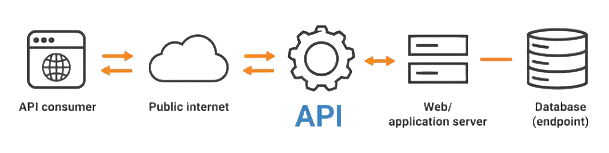
An API (Application Programming Interface) is a set of rules that allows different software systems to communicate and exchange data with each other. It acts as a bridge between applications, enabling integration and improving functionality. APIs simplify software development by allowing reuse of services and are widely used in web and application development.
45. What is REST API?
Ans:
A REST API is a type of web service architecture that uses HTTP methods such as GET, POST, PUT, and DELETE for communication. It is lightweight, scalable, and stateless, meaning each request is independent. REST APIs follow standard principles, use formats like JSON or XML for data exchange, and are easy to integrate and maintain in modern web applications.
46. What is a debugging tool?
Ans:
A debugging tool is software used by developers to identify, analyze, and fix errors in code. It allows step-by-step execution of programs, helping in understanding program flow and detecting logical and runtime errors. Debugging tools improve code quality, make troubleshooting easier, and enhance overall development efficiency in software projects.
47. What is code optimization?
Ans:
Code optimization is the process of improving a program’s performance by reducing execution time and memory usage. It enhances efficiency, removes unnecessary code, and ensures better utilization of system resources. Optimized code runs faster, handles large data effectively, and improves overall user experience, making it an important practice in software development.
48. What is a process in OS?
Ans:
A process is a program that is currently in execution, consisting of instructions, data, and resources. It is managed by the operating system and plays a key role in multitasking. Each process has its own memory space and goes through different states such as ready, running, and waiting. Processes are controlled by a process scheduler to ensure efficient system performance.
49. What is multitasking?
Ans:
Multitasking is the ability of an operating system to run multiple programs simultaneously by sharing CPU time among them. It improves productivity, enhances system performance, and allows users to perform multiple tasks at once. Multitasking ensures efficient utilization of system resources and provides a smooth and responsive user experience.
50. How does handle conflicts in a team?
Ans:
Handle conflicts by staying calm and listening to others. Try to understand different perspectives. Focus on finding a solution. Communicate clearly. Avoid personal arguments. Maintain professionalism. Encourage teamwork. Work towards a common goal. Ensure mutual respect. Help resolve issues effectively.
51. What is a class in OOP?
Ans:
A class is a blueprint or template used to create objects in object-oriented programming. It defines properties (variables) and behaviors (methods) and helps organize code in a structured way. Classes improve code reusability, modularity, and scalability, and they are fundamental for building large and complex applications.
52. What is an object?
Ans:
An object is an instance of a class that represents a real-world entity and contains both data and methods. It has its own identity, occupies memory when created, and interacts with other objects in a program. Objects are the basic building blocks of object-oriented programming and are used to access class members.
53. What is data encapsulation used for?
Ans:
- Data encapsulation is used to protect and control access to data by combining variables and methods into a single unit.
- It restricts direct access to variables using access modifiers like private and provides controlled access through methods.
- Encapsulation improves data security, prevents unauthorized changes, and enhances code maintainability and reliability.
54. What is a static keyword?
Ans:
The static keyword is used in programming for memory management and indicates that a variable or method belongs to the class rather than to individual objects. Static members are shared among all objects and can be accessed without creating an instance of the class. They are loaded once during class loading, save memory, and are commonly used for utility functions and shared values.
55. What is method overloading?
Ans:
- Method overloading is a feature in object-oriented programming where multiple methods have the same name but different parameters.
- It is an example of compile-time (static) polymorphism and improves code readability and flexibility.
- It allows the same function name to perform different tasks based on input, reducing complexity in naming methods and enhancing code clarity and structure.
56. What is method overriding?
Ans:
Method overriding is the process of redefining a method in a child class that is already defined in its parent class. It is an example of runtime (dynamic) polymorphism and provides a specific implementation of a method. It supports inheritance, allows dynamic method dispatch, and improves flexibility, customization, and overall object-oriented design.
57. What is an exception?
Ans:
- An exception is an error that occurs during program execution and interrupts the normal flow of a program.It usually happens due to invalid input or logical issues and occurs at runtime.
- Exceptions can be handled within the code to prevent abnormal termination, improve program stability, and enhance reliability.
- They can be classified as checked or unchecked and are useful for debugging applications.
58. What is a try-catch block?
Ans:
A try-catch block is used in programming to handle exceptions and prevent program crashes. The try block contains code that may cause an error, while the catch block handles the exception. It separates normal code from error-handling logic, allows graceful recovery, supports handling multiple exceptions, and ensures smooth execution of programs.59. What is a finally block?
Ans:
A finally block is used in exception handling and always executes after the try and catch blocks, regardless of whether an exception occurs. It is mainly used for cleanup tasks such as closing files or releasing resources. It ensures proper resource management, improves program stability, and can execute even after a return statement, making it very useful though optional.
60. What is an interface in Java?
Ans:
- An interface in Java is a blueprint of a class that contains abstract methods and defines rules for other classes to implement.
- It supports abstraction and enables multiple inheritance, allowing a class to implement multiple interfaces.
- Interfaces help achieve loose coupling, improve system design, and allow multiple implementations.
61. What is recursion base condition?
Ans:
Base condition stops recursion. Without it recursion becomes infinite. It controls function calls and ensures proper termination of the program. It is very important in recursive programs because it avoids stack overflow and system crash. It defines when recursion should stop and prevents unnecessary function calls. It also helps in controlling program flow and makes recursion safe and efficient.
62. What is sorting
Ans:
- Sorting is the process of arranging data in a specific order, either ascending or descending. It improves searching speed and makes data easier to analyze.
- Sorting algorithms like bubble sort and quick sort are commonly used in programming. It organizes data in a meaningful way and improves overall efficiency of algorithms.
- It is widely used in real-world applications such as databases and reporting systems
63. What is searching?
Ans:
Searching is the process of finding an element in a collection of data. It checks whether a particular value exists in the dataset. Common methods include linear search and binary search. It improves data retrieval and is widely used in applications like databases and software systems. It helps locate required information quickly and improves user experience in applications.
64. What is linear search?
Ans:
Linear search is a simple searching technique where each element is checked one by one. It works on unsorted data and is easy to implement. However, it is slower for large datasets because it compares elements sequentially. It does not require sorting of data and is mainly used for small datasets. It has a time complexity of O(n) and is easy to understand.
65. What is binary search?
Ans:
Binary search is an efficient searching technique that works only on sorted data. It divides the data into halves and eliminates one half in each step. It is faster than linear search and uses the divide and conquer method. It significantly reduces search time and improves performance. It has a time complexity of O(log n) and requires data to be sorted before searching.
66. What is time complexity?
Ans:
Time complexity measures the amount of time taken by an algorithm to run based on input size. It helps compare different algorithms and choose the most efficient one. It is commonly represented using Big-O notation. It shows how efficiently code performs as input size increases. It is an important concept in data structures and algorithms (DSA) and helps in performance analysis.
67. What is space complexity?
Ans:
Space complexity measures the amount of memory used by an algorithm during execution. It depends on input size and helps in optimizing memory usage. It includes both input space and auxiliary space required by the program. It is important for improving program efficiency and system performance. It helps developers design memory-efficient applications, especially for large-scale systems.
68. What is Big-O notation?
Ans:
Big-O notation is used to describe the performance of an algorithm in terms of time or space complexity. It shows the worst-case scenario of an algorithm. It includes common complexities like O(1), O(n), and O(log n). It helps in comparing different algorithms and selecting the best one. It is widely used in interviews and data structure analysis.
69. What is an ArrayList?
Ans:
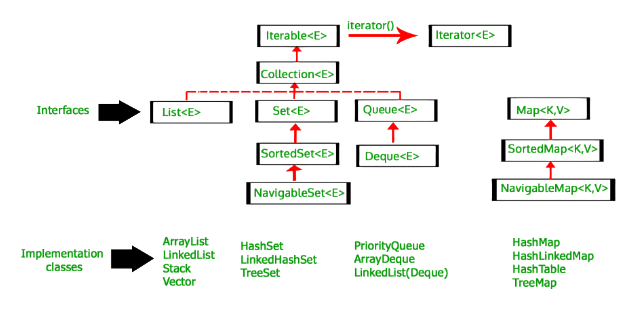
ArrayList is a dynamic array in Java that can grow and shrink automatically. It is part of the Java Collections Framework and is used to store objects. It provides flexible size compared to traditional arrays. It allows duplicate elements and provides fast random access. It is widely used in Java programming because of its flexibility and ease of use.
70. What is LinkedHashMap?
Ans:
LinkedHashMap is a data structure in Java that stores key-value pairs. It maintains insertion order of elements, unlike HashMap. It is part of the Java Collections Framework and allows fast retrieval of data. It is commonly used in caching applications like LRU cache. It combines features of HashMap and linked list, making it efficient and organized.
71. What is a HashMap?
Ans:
- A HashMap is a data structure in Java that stores data in key-value pairs. It does not maintain insertion order and provides fast retrieval of values using keys.
- It allows one null key and multiple null values. It uses hashing technique for storing data, which improves performance.
- It provides constant time complexity for basic operations in most cases. It is widely used in caching and lookup operations and is part of the Java Collections Framewor
72. What is a Tree in data structures?
Ans:
A tree is a hierarchical data structure used to store data in a parent-child relationship. It consists of nodes connected by edges, and the top node is called the root. It is commonly used in databases and file systems to represent structured data. It helps in organizing data efficiently. It does not contain cycles, making it different from graphs. It is widely used for fast searching and sorting operations.
73. What is a binary tree?
Ans:
A binary tree is a type of tree data structure where each node has at most two children, known as the left and right child. It is used in searching and sorting algorithms. It helps in efficient data storage and processing. It forms the base for more advanced structures like binary search trees. It is widely used in expression evaluation and hierarchical data representation. It also supports recursive operations easily.
74. What is a binary search tree?
Ans:
- A binary search tree is a special type of binary tree where the left child contains smaller values and the right child contains larger values than the root.
- It supports fast searching, insertion, and deletion operations. It maintains data in sorted order, making retrieval efficient. It is widely used in databases and indexing systems.
- It improves performance compared to linear data structures. It is an important concept in data structures.
75. What is DFS (Depth First Search)?
Ans:
DFS is a graph and tree traversal algorithm that explores as deep as possible before backtracking. It uses stack or recursion for implementation. It is commonly used in solving maze problems and pathfinding. It helps in exploring all nodes in a graph efficiently. It is useful in cycle detection and connectivity problems. It is an important algorithm in graph theory.
76. What is BFS (Breadth First Search)?
Ans:
BFS is a traversal algorithm used in graphs and trees that explores nodes level by level. It uses a queue data structure for implementation. It is widely used for finding the shortest path in unweighted graphs. It first explores all neighboring nodes before moving deeper. It is commonly used in networking and social media applications. It ensures complete level-wise traversal of data.
77. What is a graph?
Ans:
A graph is a data structure that consists of nodes (vertices) and edges connecting them. It is used to represent relationships between different entities. Graphs can be directed or undirected depending on edge direction. They are widely used in real-world applications like maps and social networks. They can contain cycles or be acyclic. It is a fundamental concept in computer science.
78. What is an SQL join?
Ans:
An SQL join is used to combine data from two or more tables based on a related column. It helps in retrieving meaningful data from relational databases. Common types include inner join, left join, right join, and full join. It is widely used in database queries to simplify complex data retrieval. It improves efficiency by connecting related information. It is an essential concept in SQL.
79. What is an inner join?
Ans:
An inner join is a type of SQL join that returns only matching records from both tables. It filters out non-matching rows and shows only common data. It is commonly used in SQL queries for accurate results. It improves data consistency and relevance. It is faster than outer joins in many cases. It is the most frequently used join type in databases.
80. What is normalization in DBMS?
Ans:
Normalization is the process of organizing data in a database to reduce redundancy and improve integrity. It divides large tables into smaller, related tables. It helps eliminate data duplication and update anomalies. It follows rules called normal forms like 1NF, 2NF, and 3NF. It improves database efficiency and structure. It is an important concept in DBMS design.
81. What is denormalization?
Ans:
- Denormalization is the process of combining tables in a database to improve read performance. It increases redundancy but reduces the number of joins required in queries.
- It is commonly used in data warehousing and analytics systems. It improves query speed and performance. It is the opposite of normalization.
- It is used when performance is more important than storage efficiency.
82. What is Agile methodology?
Ans:
Agile is a software development methodology that focuses on iterative and incremental development. It delivers software in small parts with continuous feedback from customers. It improves flexibility and allows changes during development. It is widely used in IT companies for faster delivery. It promotes teamwork and collaboration. It ensures continuous improvement of the product.
83. What is Scrum?
Ans:
Scrum is a framework used in Agile methodology for managing software development. It divides work into small cycles called sprints. Each sprint delivers a working product increment. It involves roles like Scrum Master, Product Owner, and Development Team. It improves communication and productivity. It is widely used in modern software development.
84. What is SDLC?
Ans:
SDLC stands for Software Development Life Cycle, which defines the process of developing software step by step. It includes phases like planning, designing, coding, testing, and maintenance. It ensures systematic development and reduces risks. It improves software quality and project management. It is followed in all IT companies. It provides a structured approach to software development.
85. What is a test case?
Ans:
A test case is a set of conditions used to test a specific functionality of software. It includes input, execution steps, and expected output. It helps in identifying defects and ensuring correct functionality. It improves software quality and reliability. It is an important part of software testing. It ensures that all requirements are properly tested.
86. What is regression testing?
Ans:
Regression testing is performed to ensure that new changes or updates do not affect existing functionality. It is done after bug fixes or enhancements. It helps maintain system stability and reliability. It can be performed manually or using automation tools. It ensures that old features continue to work correctly. It is widely used in agile development environments.
87. What is unit testing?
Ans:
Unit testing is the process of testing individual components or modules of a program. It is usually performed by developers during coding. It ensures that each unit of code works correctly. It helps in identifying bugs early in development. It improves code quality and reliability. It is the first level of software testing.
88. What is integration testing?
Ans:
Integration testing checks whether different modules of a software application work together properly. It is performed after unit testing. It helps in identifying interface defects between modules. It ensures smooth data flow between components. It improves system reliability and performance. It is an important phase in software testing.
89. What is system testing?
Ans:
System testing is the process of testing the complete integrated system as a whole. It ensures that the software meets all specified requirements. It is performed after integration testing. It simulates real-world scenarios to check system behavior. It verifies end-to-end functionality. It is the final stage before acceptance testing.
90. What is acceptance testing?
Ans:
Acceptance testing is the final testing phase before software release. It is performed to check whether the system meets business requirements. It is usually done by end users or clients. It ensures that the software is ready for production use. It validates real-world usability and performance. It is also called User Acceptance Testing (UAT).
91. How does Handle New Responsibilities?
Ans:
New Responsibilities Should Be Approached With Enthusiasm And A Learning Mindset. Understanding Expectations Helps Ensure Effective Performance. Seeking Information Improves Knowledge And Confidence. Proper Planning Supports Successful Execution Of Tasks. Adaptability Helps Manage New Challenges Efficiently. Continuous Learning Encourages Professional Growth. Taking On Responsibilities Builds Experience And Capability.
92. What is biggest failure?
Ans:
Biggest failure was not managing time effectively in a project. It affected performance.Learned the importance of planning. Improved a time management skills. Started prioritizing tasks better. Took feedback seriously. Worked on weaknesses. It helped to grow. Became more organized. It turned into a learning experience.
93. What is greatest achievement?
Ans:
- Greatest achievement is completing a challenging project successfully. worked hard to meet deadlines. Overcame obstacles effectively.
- Applied my skills practically. Gained valuable experience. It boosted confidence. It improved problem-solving skills.
- Learned teamwork and coordination. It was recognized by mentors. It motivated to achieve more.
94. What are long-term goals?
Ans:
Long-term goal is to grow into a leadership role. To become an expert in my field. To contribute to organizational success. Plan to take on more responsibilities. Want to mentor others. Focus on continuous improvement. I aim to achieve career stability.Want to work on innovative projects.Seek long-term growth in the company. To make a meaningful impact.
95. What are short-term goals?
Ans:
- Short-term goal is to start career in a reputed organization. Want to apply technical skills in real projects. To learn new technologies and improve knowledge.
- Want to gain practical experience. Focus on building a strong foundation. Plan to improve my communication skills. To perform well in my role.
- Want to contribute effectively to the team. Seek continuous learning opportunities. To grow professionally.
96. Why Is Team Collaboration Important?
Ans:
Team Collaboration Combines Diverse Skills And Perspectives To Achieve Common Goals. Effective Collaboration Improves Productivity And Problem-Solving. Sharing Knowledge Supports Learning And Innovation. Communication Helps Ensure Alignment And Coordination. Team Members Can Support Each Other During Challenges. Collaboration Builds Strong Professional Relationships. Successful Teams Contribute Significantly To Organizational Growth..
97. How does handle pressure?
Ans:
Stay calm under pressure. Prioritize tasks effectively. Focus on solutions. Manage time well. Maintain a positive mindset. Break problems into smaller parts. Stay organized. Ensure timely completion. Seek support when needed to improve efficiency. Learn from challenging situations to perform better.
98. How Does Stay Productive?
Ans:
Productivity Requires Effective Planning And Prioritization Of Tasks. Clear Objectives Help Maintain Focus And Direction. Time Management Supports Efficient Completion Of Work. Minimizing Distractions Improves Concentration And Quality. Regular Progress Reviews Help Track Performance. Continuous Improvement Enhances Efficiency And Effectiveness. Productive Habits Contribute To Professional Success.
99. What are strengths?
Ans:
Strengths include problem-solving and adaptability. Learn quickly and work well in teams. Dedicated and responsible. Maintain a positive attitude. Focus on achieving goals. Handle challenges with confidence. Have good time management skills. Always willing to learn and improve.
100. Why does want to join Wipro?
Ans:
Wipro is a reputed IT company known for innovation. It provides great learning opportunities. It supports employee growth. It has global exposure. want to build my career in such an environment. Impressed by its strong values and work culture. Believe it offers a platform to enhance my skills. To contribute to the company’s success and growth.