LMS
LMS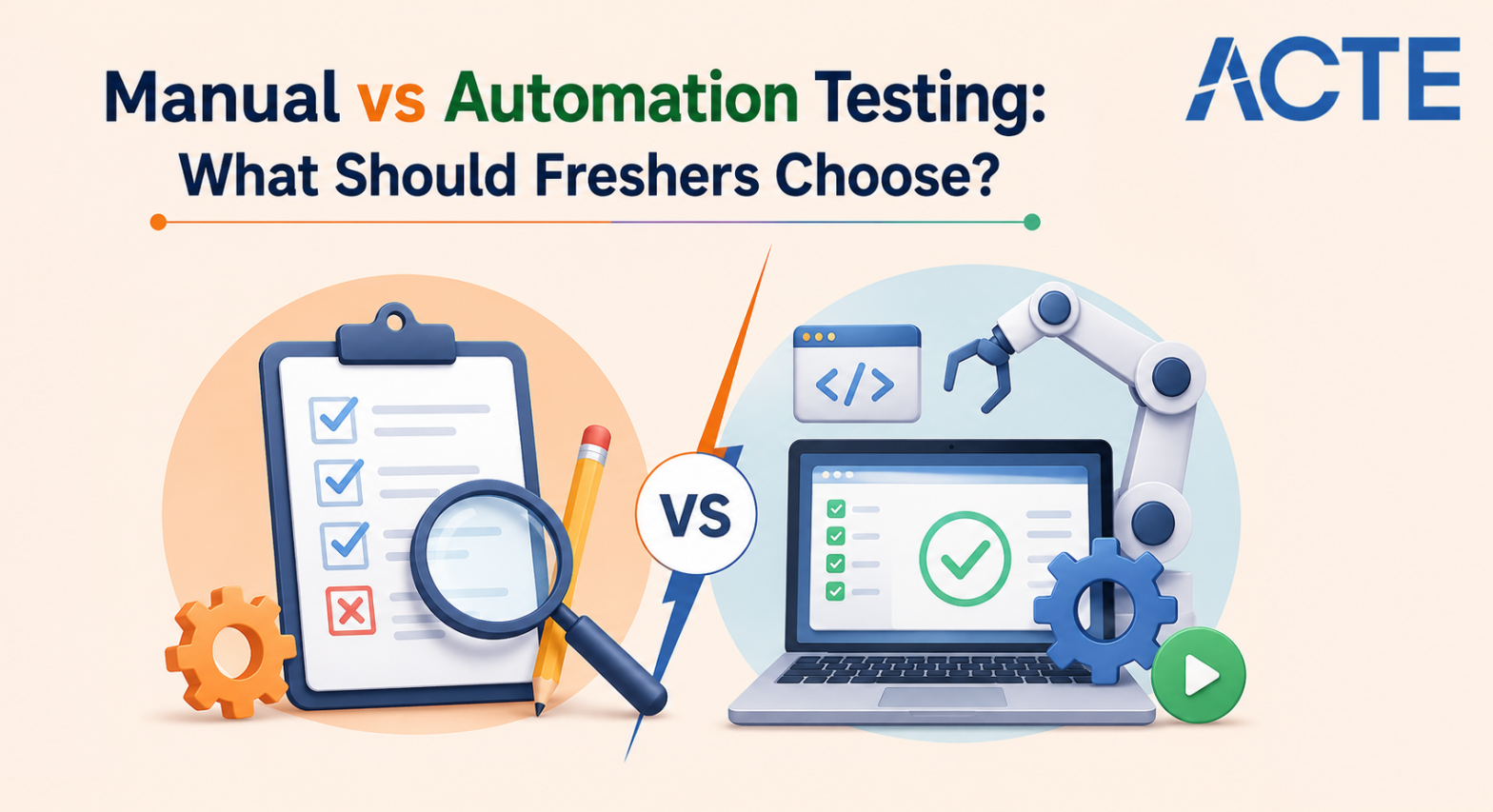
Last updated on 14th Jul 2026| 11380

- Introduction to Manual and Automation Testing
- Understanding Manual Testing
- Understanding Automation Testing
- Comparison Between Manual Testing and Automation Testing
- Advantages and Limitations of Manual Testing
- Advantages and Limitations of Automation Testing
- Skills Required for Manual and Automation Testing Careers
- Career Opportunities and Future Scope
- Choosing Between Manual Testing and Automation Testing
- Learning Roadmap for Freshers
- Conclusion: Best Choice for Freshers – Manual Testing or Automation Testing
Introduction to Manual and Automation Testing
Software testing plays a vital role in the software development life cycle (SDLC). Every application, whether it is a banking app, e-commerce website, healthcare system, or mobile application, must be tested before reaching users. The main purpose of software testing is to identify defects, verify functionality, improve quality, and ensure that the software meets customer requirements. Without proper testing, software may contain bugs that can lead to financial loss, security issues, poor user experience, and customer dissatisfaction. Professionals who want to build a strong foundation in testing can enhance their skills through Software Testing Training, which covers essential testing concepts and industry practices. Among the various testing approaches, Manual Testing and Automation Testing are the two most popular methods. Both aim to improve software quality but differ in how testing activities are performed. Manual testing relies on human testers who execute test cases manually, while automation testing uses specialized tools and scripts to perform testing automatically. For fresh graduates entering the IT industry, one of the most common questions is “Should I learn Manual Testing or Automation Testing first?” The answer depends on several factors, including technical background, career goals, programming knowledge, and industry requirements. Many companies still hire freshers for manual testing roles because it helps them understand testing fundamentals before moving to automation. Automation testing, on the other hand, is becoming increasingly popular due to Agile development, DevOps practices, and Continuous Integration/Continuous Deployment (CI/CD). Organizations prefer automated testing to reduce repetitive work, increase testing speed, and improve software quality. Instead of viewing manual and automation testing as competitors, they should be seen as complementary approaches. Manual testing helps identify usability issues and understand application behavior, while automation testing speeds up repetitive testing tasks and improves efficiency.
Understanding Manual Testing
Manual testing is the process of testing a software application without using any automation tools or scripts. In this approach, testers execute test cases manually, interact with the application as real users, and verify whether the software behaves according to the specified requirements. The main objective of manual testing is to identify defects, ensure that every feature functions correctly, and provide a smooth and user-friendly experience. Since the testing is performed by humans, it allows testers to observe the application’s behavior closely and identify issues that automated tools may not detect, such as usability problems or unexpected user interactions. Manual testing plays a significant role during the early stages of software development when application requirements change frequently. As no scripts need to be created or maintained, testers can quickly adapt to new features and modifications. This flexibility makes manual testing highly effective for small projects, newly developed applications, and features that require human judgment. It also helps testers understand the application’s workflow, making it easier to identify defects from an end-user perspective. The manual testing process generally begins with understanding the project requirements and preparing test scenarios based on functional specifications. Testers then design detailed test cases, execute each test case manually, compare the actual results with the expected results, and report any defects found during testing. Once developers fix the reported issues, testers perform retesting and regression testing to ensure that the changes have not affected other parts of the application. One of the biggest advantages of manual testing is that it does not require programming knowledge, making it an excellent starting point for freshers entering the software testing field. It develops analytical thinking, attention to detail, and problem-solving skills while providing a strong understanding of software testing concepts. Freshers who want to build a successful career in quality assurance should also focus on developing the Skills Required to Become a QA Engineer to improve their job readiness and career opportunities. Although manual testing can be time-consuming for repetitive tasks, it remains an essential part of quality assurance because human observation and decision-making cannot be completely replaced by automation. Even in organizations that extensively use automation testing, manual testing is still performed for exploratory testing, usability evaluation, and validating newly developed features before they are automated.
Understanding Automation Testing
Automation testing is the process of testing software applications using specialized tools and scripts to execute test cases automatically instead of performing them manually. Testers create automation scripts using programming languages like Java, Python, or JavaScript and execute them with tools such as Selenium, Cypress, Playwright, or Appium to improve testing speed, accuracy, and efficiency. It is mainly used for repetitive tasks, regression testing, and large-scale applications where frequent testing is required. Automation testing supports Agile and DevOps practices by enabling Continuous Integration and Continuous Deployment (CI/CD), allowing teams to identify defects early and deliver software faster. One of the major benefits of automation testing is that scripts can be reused for multiple software releases, reducing time and manual effort.
Get Your Software Testing Certification by Learning from Industry-Leading Experts and Advancing Your Career with ACTE’s Software Testing Course.
Comparison Between Manual Testing and Automation Testing
Both manual and automation testing contribute to software quality, but they differ significantly in execution, cost, speed, maintenance, and technical requirements.
| Feature | Manual Testing | Automation Testing |
|---|---|---|
| Execution | Performed manually | Performed using scripts |
| Human Involvement | High. | Minimal |
| Programming Required | No | Yes |
| Speed | Slow. | Very Fast |
| Accuracy | Depends on tester | Highly accurate |
| Initial Cost | Low | High |
| Maintenance | Low | Requires script maintenance |
| Best For | Exploratory and usability testing | Regression and repetitive testing |
| Reusability | Low | High |
| Test Coverage | Limited | Extensive |
| Time Consumption | High | Low |
| Suitable for Agile | Limited | Highly suitable |
| CI/CD Support | No | Yes |
| Error Rate | Higher due to human mistakes | Very low |
| Scalability | Limited | Excellent |

Learn Software Testing Training Course to Build Your Skills
Weekday / Weekend BatchesSee Batch DetailsAdvantages and Limitations of Manual Testing
Manual testing offers several benefits that make it an ideal starting point for beginners in software testing. It helps testers understand application behavior and adapt quickly to changing project requirements. Despite the growth of automation, manual testing remains an essential part of quality assurance because it provides valuable insights that automated tools cannot always detect. It also enables testers to evaluate usability and application functionality from a real user’s perspective, making it a valuable practice throughout the software development life cycle.
Advantages of Manual Testing
- Easy to Learn for Beginners: Manual testing is simple to understand and is suitable for freshers without prior programming knowledge. It helps beginners build a strong foundation in software testing concepts and understand the complete software testing life cycle before learning advanced automation techniques.
- Identifies Usability Issues Effectively: Human testers can evaluate the application from an end-user perspective and identify user experience problems that automated tools may miss. They can analyze design, navigation, and overall user interaction to ensure the application provides a better user experience.
- Flexible for Changing Requirements: Manual testing allows testers to quickly adapt test cases when project requirements change frequently without modifying scripts. Learning through Software Testing Training helps professionals understand practical testing approaches and apply them effectively. This flexibility makes it useful during early development stages where features and functionalities are continuously updated.
- Suitable for Exploratory Testing: It is highly effective for exploratory, ad-hoc, and user acceptance testing where human observation and decision-making are important. Testers can explore different application areas and discover unexpected defects based on their experience and understanding.
- Requires Lower Initial Investment: Manual testing does not require expensive automation tools or programming skills, making it cost-effective for small projects. Organizations can start testing activities with minimal resources while focusing on improving application quality.
- Provides Real User Perspective: Testers can understand application behavior like actual users and identify issues related to functionality, design, and usability. This helps ensure that the application meets user expectations and provides a smooth overall experience.
Limitations of Manual Testing
- Time-Consuming Process: Manual execution of test cases requires more time, especially when testing large applications with repeated test scenarios. Testers need to perform each step individually, which increases testing duration and delays software delivery.
- Possibility of Human Errors: Since testing is performed manually, mistakes may occur due to fatigue, lack of attention, or incorrect test execution. These errors can affect test results and may cause some defects to remain unidentified during the testing process.
- Not Suitable for Large-Scale Regression Testing: Running the same test cases repeatedly for every software update becomes difficult and inefficient through manual testing. Large regression test suites require significant time and effort, making automation a better choice for repetitive testing tasks. Selecting the appropriate testing approach for different project requirements helps teams improve efficiency while focusing on more complex testing activities.
- Slower Execution for Growing Applications: As application size increases, manual testing requires more time and additional resources to complete testing activities. Testing multiple features and platforms manually can reduce efficiency and increase the overall testing workload.
- Requires More Manual Effort: Repeated testing activities demand continuous involvement of testers, increasing workload and reducing efficiency. Test teams need to spend more time executing routine test cases instead of focusing on complex testing scenarios.
- Limited Test Coverage: Testing all possible scenarios within a short time is challenging, which may result in some defects remaining undetected. Due to time constraints and manual limitations, achieving complete test coverage can be difficult for complex applications. Learning about Different Types of Software Testing helps testers choose the appropriate testing techniques to improve overall software quality.

Get JOB Oriented Software TestingI Training for Beginners By MNC Experts
- Instructor-led Sessions
- Real-life Case Studies
- Assignments
Advantages and Limitations of Automation Testing
Automation testing offers significant benefits by improving testing speed, accuracy, and efficiency. It is widely used in modern software development to automate repetitive tasks, support continuous testing, and reduce manual effort. However, it also has certain limitations, including programming requirements, maintenance effort, and higher initial setup costs, making it most effective when combined with manual testing.
Advantages of Automation Testing
- Faster Test Execution: Automation testing executes test cases much faster than manual testing, making it suitable for large applications and repeated testing processes. It can run multiple test cases simultaneously and complete regression testing within a shorter time, helping teams deliver software faster.
- Provides Accurate and Consistent Results: Automated scripts reduce human errors and ensure consistent test execution with reliable results every time. Since the same steps are performed repeatedly without variation, automation helps improve accuracy and increases confidence in the testing process.
- Reusable Test Scripts: Automation scripts can be reused for multiple software releases, reducing the effort required for repeated testing activities. Testers can modify existing scripts based on new requirements instead of creating new test cases from the beginning, saving time and resources.
- Reduces Testing Effort and Time: Automation minimizes manual work by handling repetitive test cases, allowing testers to focus on more complex testing tasks. As automation continues to evolve, technologies such as AI are making testing even more efficient. Learn more about AI-Powered Software Testing to understand the future of intelligent software testing.
- Supports Multiple Platforms: Automation testing allows applications to be tested across different browsers, devices, and operating systems efficiently. It helps identify compatibility issues and ensures that software provides a consistent experience across various platforms and environments.
- Integrates with Agile and DevOps Practices: Automation tools can be integrated with Agile, DevOps, and CI/CD pipelines to enable continuous testing and faster software delivery. This integration allows teams to detect defects early in the development cycle and improve collaboration between developers and testers.
- Improves Test Coverage and Quality: Automation helps execute a large number of test cases, increasing test coverage and improving overall software quality. It allows testing of different scenarios, data combinations, and functionalities that may be difficult to perform manually.
Limitations of Automation Testing
- Requires Programming Knowledge: Automation testing requires skills in programming languages, testing frameworks, and scripting, which can be challenging for beginners. Testers need to understand coding concepts and automation tools to create, execute, and maintain effective test scripts.
- High Initial Investment: Setting up automation tools, frameworks, and developing test scripts requires significant time and financial investment. Organizations need to invest in automation infrastructure, tool licenses, and skilled professionals before achieving long-term benefits.
- Requires Regular Maintenance: Automation scripts need frequent updates whenever application features. Continuous maintenance is necessary to ensure scripts remain reliable and provide accurate test results. Professionals aiming for QA roles in leading IT companies can also explore QA Careers at Capgemini Eligibility and Selection Process to understand the skills.
- Not Suitable for Exploratory Testing: Automation cannot effectively evaluate user experience, usability issues, or unexpected application behavior like human testers. Manual testing is still required for creative exploration, visual validation, and identifying issues that are difficult to predict.
- Not Cost-Effective for Small Projects: Projects with limited test cases may not gain enough benefits from automation due to setup and maintenance efforts. For small applications, manual testing may be more practical and economical compared to developing automation frameworks.
- Framework Development Takes Time: Building and maintaining a reliable automation framework requires technical expertise and continuous effort. A well-designed framework requires proper planning, configuration, and regular improvements to support efficient testing operations.
Want to Master Software Testing? Explore the Software Testing Master Program Offered at ACTE Today!
Skills Required for Manual Testing
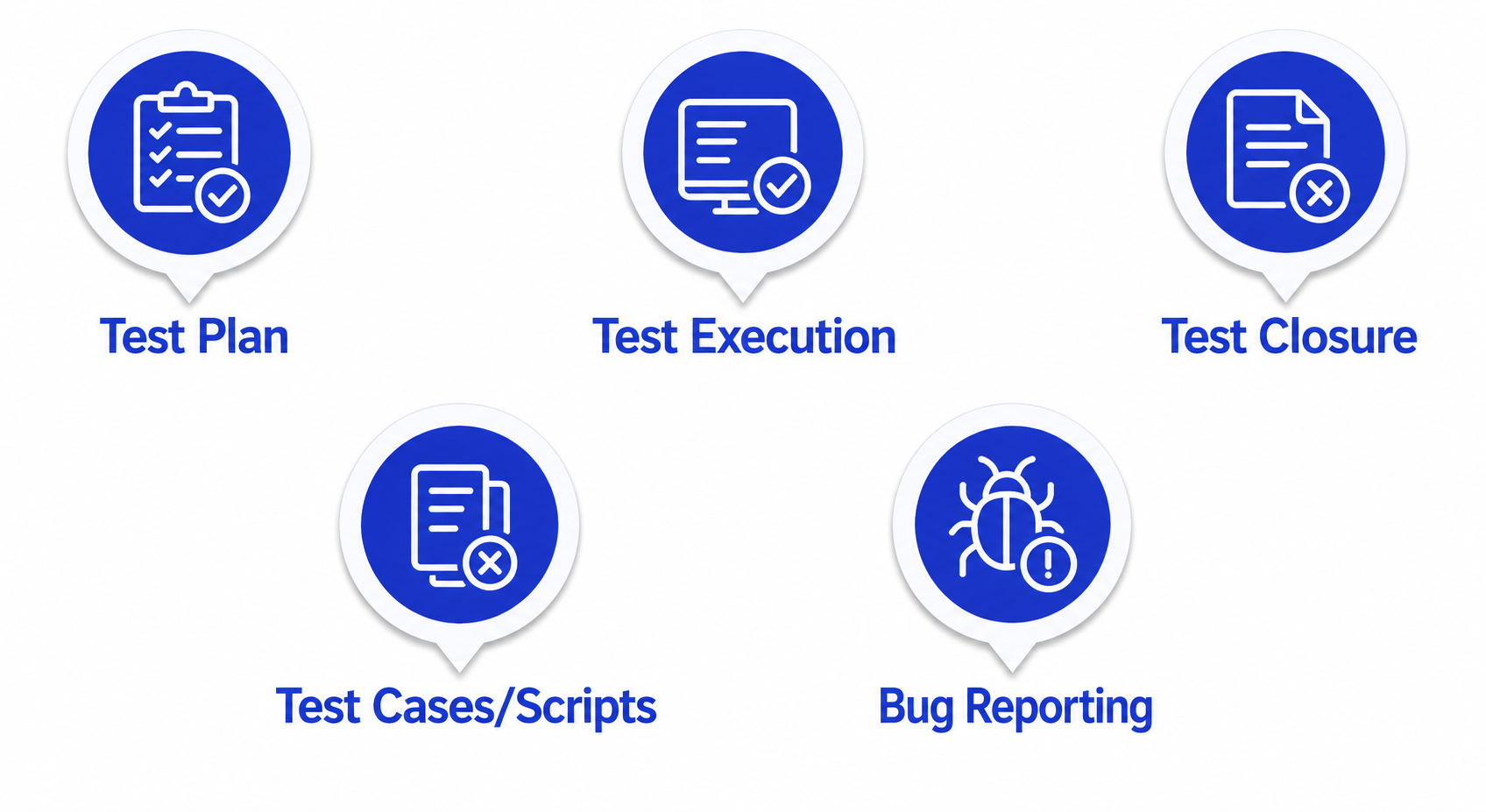
- Software Testing Fundamentals: Understand basic testing concepts, different testing types, and the role of a tester in the software development life cycle. A strong understanding of these fundamentals helps testers identify defects effectively and ensure software quality throughout the testing process.
- Test Case Writing and Execution: Learn how to design clear and effective test cases based on project requirements. Proper test execution helps verify software functionality, identify unexpected behavior, and ensure that every feature works as intended.
- Defect Reporting: Develop and track software defects throughout the bug life cycle. Writing detailed bug reports helps developers understand issues quickly and resolve them more efficiently. Candidates preparing for software testing interviews can also refer to How to Get Hired as a Software Tester at TCS to understand the skills and hiring process followed by leading IT companies.
- SDLC and STLC Knowledge: Understand the Software Development Life Cycle (SDLC) and Software Testing Life Cycle (STLC) to perform testing activities at the right stages. This knowledge helps testers collaborate effectively with developers and project teams.
- Documentation Skills: Maintain well-organized records of test cases, execution results, and defect reports. Good documentation improves communication, supports future testing activities, and helps maintain project quality.
- Basic SQL Knowledge: Learn SQL queries and database concepts to validate stored data and perform database testing. Basic SQL skills allow testers to verify backend information and ensure data accuracy within applications.
Skills Required for Automation Testing
- Programming Knowledge: Learn programming languages such as Java, Python, or JavaScript to create, understand, and maintain automation scripts. Strong programming skills improve problem-solving abilities and make automation testing more effective.
- Automation Tools: Gain practical experience with automation tools like Selenium, Playwright, and Cypress for executing automated test cases. Understanding these tools helps improve testing speed, efficiency, and overall software quality.
- API Testing: Learn to test application programming interfaces (APIs) using tools such as Postman. API testing ensures smooth communication between different software components and helps identify backend issues early.
- Git and GitHub: Understand version control systems like Git and GitHub to manage automation scripts and collaborate with development teams. Version control helps track code changes and supports efficient teamwork.
- CI/CD Tools: Learn Continuous Integration and Continuous Deployment tools such as Jenkins to automate testing during software development. CI/CD knowledge enables faster releases while maintaining application quality.
- Framework Knowledge: Understand automation frameworks and their architecture to create organized, reusable, and maintainable test scripts. A well-designed framework reduces maintenance effort and improves test execution efficiency.
Common Skills
- Analytical Thinking: Analyze software requirements carefully and identify possible risks or defects before they affect users. Strong analytical skills help testers create effective test scenarios and improve software quality.
- Problem-Solving Skills: Investigate software defects, determine their root causes, and suggest practical solutions. Good problem-solving abilities help testers work efficiently with developers to resolve issues quickly.
- Communication Skills: Communicate testing progress, bug reports, and project updates clearly with developers, managers, and team members. Effective communication reduces misunderstandings and improves collaboration.
- Attention to Detail: Observe software behavior carefully to identify even minor defects that could affect functionality or user experience. Developing these skills through Software Testing Training helps testers perform more effectively. Paying close attention to details helps deliver high-quality software products.
- Agile Methodology Knowledge: Understand Agile principles, Scrum meetings, sprint planning, and continuous testing practices used in modern software development. Agile knowledge enables testers to adapt quickly to changing project requirements and work efficiently within cross-functional teams.
Want to Learn About Software Testing? Explore Our Software Testing Interview Questions and Answers Featuring the Most Frequently Asked Questions in Job Interviews.
Career Opportunities and Future Scope
Software testing has become one of the fastest-growing career fields in the IT industry due to the increasing demand for reliable, secure, and high-quality software applications. Every organization that develops software, websites, or mobile applications requires skilled testing professionals to ensure that their products are free from defects before reaching users. Industries such as banking, healthcare, e-commerce, education, telecommunications, gaming, and finance depend on software testing experts to deliver efficient and user-friendly solutions. This growing demand creates excellent career opportunities for both freshers and experienced professionals in the software testing domain. Freshers can also explore Software Testing Internship Stipends and Salary Expectations before starting their careers. Freshers usually start their careers in entry-level roles such as Manual Tester, QA Tester, or Software Test Engineer, where they learn testing processes, execute test cases, identify defects, and collaborate with developers to improve software quality. With experience and continuous skill development, testers can advance into roles such as Automation Test Engineer, API Test Engineer, Performance Test Engineer, QA Analyst, Test Lead, QA Manager, and Automation Architect. Learning automation tools, programming languages, performance testing techniques, and modern quality assurance practices can significantly improve career growth and create opportunities for higher-level positions in the IT industry.
Future Scope
The future scope of software testing is very promising as modern software development continues to evolve with Agile methodologies, DevOps, Artificial Intelligence (AI), Machine Learning (ML), cloud computing, and Continuous Integration/Continuous Deployment (CI/CD). Companies are looking for testers who can combine strong manual testing knowledge with automation skills to improve software quality while reducing testing time. Automation testing, API testing, and AI-assisted testing are expected to play an even bigger role in the coming years, creating new opportunities for skilled professionals. For freshers, building a strong foundation in manual testing and gradually learning automation tools, programming languages, SQL, and API testing is the best approach for long-term career success. Continuous learning, hands-on project experience, and industry-recognized certifications further improve employability and help professionals stay updated with changing technologies. With the rapid growth of the IT industry and the increasing importance of software quality, software testing remains a stable and rewarding career choice that offers excellent opportunities for professional development and long-term career growth.
Choosing Between Manual Testing and Automation Testing
For freshers entering software testing, choosing between manual and automation testing depends on their skills and technical background. Manual testing is usually the best starting point for beginners as it helps them understand testing fundamentals such as test case design, SDLC, STLC, and application behavior from a user perspective. Freshers can also refer to Manual Tester Resume Guide: Samples, Skills, and Best Practices before applying for testing roles. Automation testing is suitable for those interested in programming and advanced technical skills, as it focuses on creating scripts, improving efficiency, and supporting Agile and DevOps practices. However, learning automation becomes easier with a strong foundation in manual testing concepts. Instead of choosing only one approach, freshers should gradually learn both, starting with manual testing and then moving towards automation tools, programming, API testing, and version control. This balanced approach improves technical skills, employability, and prepares them for long-term growth in the software testing industry.
The following table provides a simple guide to help freshers choose the right learning path.
| If You… | Recommended Choice |
|---|---|
| Are completely new to software testing | Start with Manual Testing |
| Have no programming knowledge | Learn Manual Testing first |
| Want to understand testing concepts thoroughly | Choose Manual Testing |
| Already know Java, Python, or JavaScript | Start learning Automation Testing after basics |
| Enjoy coding and scripting | Focus on Automation Testing |
| Want long-term career growth | Learn both Manual and Automation Testing |
Rather than choosing only one approach, freshers should aim to learn both manual and automation testing step by step. A practical learning path is to first master manual testing concepts and gain confidence in software testing fundamentals. Once these concepts are clear, they can begin learning programming, automation tools such as Selenium or Playwright, API testing, and version control systems like Git. This gradual approach helps build both conceptual and technical expertise. In today’s competitive IT industry, companies prefer professionals who have knowledge of both manual and automation testing. Manual testing skills help testers understand application behavior and identify real-world issues, while automation skills improve efficiency and enable faster software delivery. Therefore, the best choice for freshers is not to choose one over the other, but to begin with manual testing and gradually advance to automation testing. This balanced approach provides a strong foundation, improves employability, and prepares candidates for long-term success in the software testing industry.
Learning Roadmap for Freshers
Starting a career in software testing becomes easier for freshers when they follow a structured learning roadmap. The first step is to understand testing fundamentals such as SDLC, STLC, testing types, test case design, and defect life cycle, followed by practicing manual testing and bug reporting. After building a strong foundation, freshers should learn SQL, basic programming languages like Java, Python, or JavaScript, and move towards automation testing tools such as Selenium, Playwright, or Cypress. They should also gain knowledge of API testing, Git, GitHub, Maven, and CI/CD tools like Jenkins to understand modern testing practices. Working on real-time projects and preparing for interviews helps improve practical skills, confidence, and career opportunities in the software testing field.
A simple learning roadmap for freshers is given below:
- Software Testing Fundamentals: Learn SDLC, STLC, different testing types, and the bug life cycle to understand the basics of software testing. These concepts help freshers understand how testing activities are planned, executed, and managed throughout the software development process.
- Manual Testing Practice: Develop skills in test case writing, test execution, defect identification, and reporting. Practicing manual testing helps beginners understand application behavior, identify issues effectively, and gain confidence before moving into automation testing.
- SQL and Database Basics: Learn SQL queries and database concepts to perform data validation and database testing. Understanding databases helps testers verify whether the application stores, retrieves, and processes data correctly without errors.
- Programming Language Knowledge: Learn Java, Python, or JavaScript to build logical thinking and support automation testing. Programming knowledge helps testers create automation scripts, handle test data, and understand the technical aspects of applications.
- Automation Testing Tools: Understand automation frameworks and practice tools like Selenium, Playwright, or Cypress for automated testing. Freshers can also explore Software Testing Resume Guide before applying for QA roles.
- API Testing Skills: Learn API testing using Postman to verify communication between software components. API testing helps testers validate data exchange, request-response handling, and the functionality of backend services.
- Version Control Knowledge: Understand Git and GitHub to manage code, track changes, and collaborate with teams. Version control skills help testers maintain automation scripts, work efficiently with developers, and manage project files properly.
- CI/CD Tools: Learn tools like Jenkins and Maven to understand continuous integration and automated testing processes. These tools help integrate testing into development pipelines and enable faster identification of defects during software releases.
- Hands-on Testing Projects: Work on real projects to apply testing concepts and gain practical experience. Real-time projects help freshers improve problem-solving skills, understand industry workflows, and build a strong testing portfolio.
- Interview Preparation and Continuous Learning: Prepare for technical interviews and keep updating skills with new testing technologies. Regular learning helps testers stay updated with industry trends, improve career growth, and adapt to changing software testing practices.
Conclusion: Best Choice for Freshers – Manual Testing or Automation Testing
Manual testing and automation testing are both essential parts of software quality assurance, and each has a unique role in ensuring software reliability. Manual testing helps testers identify usability issues, validate user experience, and test new features through human observation, while automation testing improves efficiency by executing repetitive test cases quickly and accurately using tools and scripts. Since both approaches have their own advantages, organizations often combine them to achieve better software quality. For freshers, starting with manual testing is recommended because it builds a strong foundation in concepts such as SDLC, STLC, test case design, and defect reporting. Enrolling in Software Testing Training can help learners strengthen these fundamentals before gradually learning automation tools, programming languages, and advanced testing practices. A balanced knowledge of both manual and automation testing increases career opportunities and makes testers more adaptable to different project requirements. Manual testing improves analytical thinking and helps understand application behavior, while automation skills enhance technical expertise and productivity. Freshers should focus on gaining practical experience through projects and continuously updating their skills with new testing tools and technologies. By developing both conceptual knowledge and technical abilities, they can build a successful and long-term career in the software testing industry.