LMS
LMS
Last updated on 23rd Jun 2026| 4615

- Introduction to Data Science Portfolio
- Setting Up Tools (Python, Jupyter, Git, GitHub)
- Choosing Beginner-Friendly Projects
- Data Collection and Cleaning
- Exploratory Data Analysis (EDA)
- Data Visualization Techniques
- Machine Learning Project Basics
- Project Documentation (README)
- Uploading Projects to GitHub
- Adding Portfolio to Resume and LinkedIn
- Conclusion
Introduction to Data Science Portfolio
A Data Science Portfolio is a curated collection of projects, analyses, and technical skills that demonstrates your ability to solve real-world problems using data. It serves as a professional showcase for recruiters, employers, and collaborators by highlighting your expertise in data collection, cleaning, analysis, visualization, machine learning, and communication. A strong portfolio typically includes project descriptions, datasets used, methodologies applied, visualizations created, and insights derived from the data in our Data Science Training. Beginners can start with simple projects such as sales analysis, customer segmentation, or exploratory data analysis and gradually progress to predictive modeling and advanced machine learning applications. Building a portfolio helps reinforce learning by applying theoretical concepts to practical scenarios. It also improves problem-solving skills, critical thinking, and technical proficiency. Platforms like GitHub allow you to share your work publicly, while tools such as Jupyter Notebooks enable you to present code, explanations, and visualizations in a clear format. Ultimately, a data science portfolio acts as evidence of your capabilities and demonstrates your readiness to tackle data-driven challenges in academic, professional, or research environments.
Setting Up Tools (Python, Jupyter, Git, GitHub)
Before beginning any data science project, it is essential to establish a reliable development environment. Python is the most widely used programming language in data science due to its simplicity and extensive ecosystem of libraries such as Pandas, NumPy, Matplotlib, and Scikit-learn. Jupyter Notebook provides an interactive workspace where users can write code, visualize data, document findings, and execute analyses step by step. Git is a version control system that tracks changes in code, allowing developers to manage project history, collaborate efficiently, and revert to previous versions when necessary in our Data Science Training. GitHub complements Git by providing a cloud-based platform for hosting repositories, sharing projects, and collaborating with others. Setting up these tools involves installing Python, configuring Jupyter Notebook, creating a Git repository, and linking it to a GitHub account. Understanding these tools early in the learning journey promotes organized workflows, reproducible analyses, and professional project management. Together, Python, Jupyter, Git, and GitHub form the foundation of modern data science development, enabling learners to build, document, and showcase their work effectively while following industry-standard practices.
Get Your Data Science Certification by Learning from Industry-Leading Experts and Advancing Your Career with ACTE’s Gen AI Course.
Choosing Beginner-Friendly Projects
Selecting the right projects is one of the most important steps for aspiring data scientists. Beginner-friendly projects should focus on solving simple, meaningful problems while allowing learners to practice fundamental concepts such as data cleaning, analysis, visualization, and basic machine learning. Examples include analyzing student performance, examining sales trends, predicting house prices, exploring weather patterns, or studying customer behavior. The ideal project uses publicly available datasets and has clear objectives that can be achieved with foundational skills and Spark SQL Tutorial . Starting with manageable projects helps build confidence, reinforces theoretical knowledge, and provides practical experience working with real-world data. It is beneficial to choose topics that align with personal interests, as this increases motivation and engagement throughout the learning process. Projects should include a clear problem statement, data exploration, methodology, results, and conclusions. As skills improve, learners can gradually tackle more complex tasks involving predictive analytics, natural language processing, or deep learning. Beginner projects serve as valuable additions to a portfolio and demonstrate the ability to apply data science techniques to answer questions and generate actionable insights.
Data Collection and Cleaning
Data collection and cleaning are critical stages in the data science workflow because the quality of analysis depends heavily on the quality of data. Data collection involves gathering information from various sources such as databases, APIs, websites, surveys, spreadsheets, and publicly available datasets. Once data is collected, it often contains inconsistencies, missing values, duplicate records, incorrect formats, and other issues that can affect analytical results. Data cleaning is the process of identifying and correcting these problems to ensure accuracy, consistency, and reliability. Common cleaning tasks include handling missing values, removing duplicates, standardizing formats, correcting errors, and transforming data into a usable structure and Data Extraction in R Tutorial . Tools such as Pandas in Python make these tasks efficient and manageable.
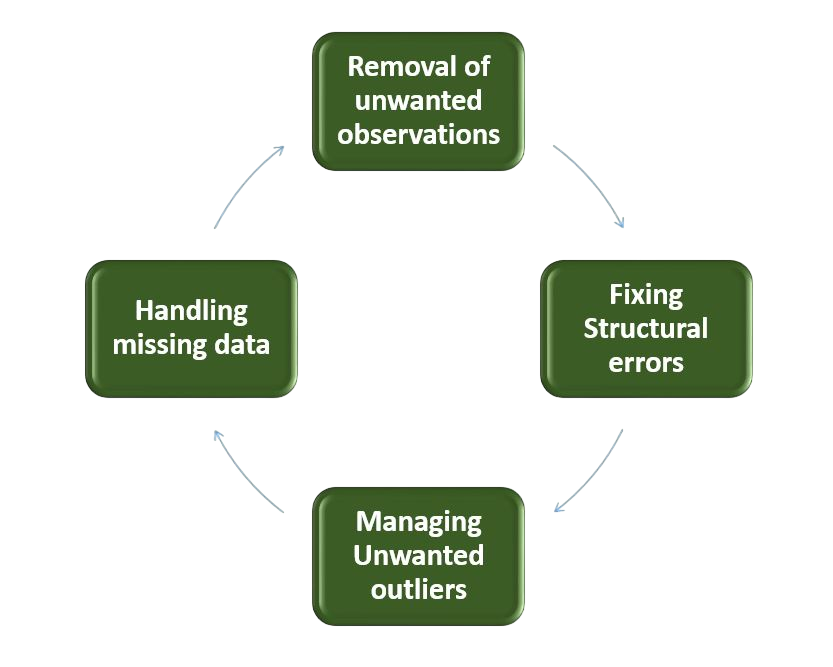
Effective data cleaning improves the reliability of statistical analysis, machine learning models, and business insights. Since data scientists spend a significant portion of their time preparing data, mastering these skills is essential for success. A well-cleaned dataset enables more accurate predictions, clearer visualizations, and better decision-making. Understanding data collection and cleaning establishes a strong foundation for all subsequent stages of the data science lifecycle, including analysis, modeling, and reporting.

Exploratory Data Analysis (EDA)
Exploratory Data Analysis (EDA) is a fundamental step in the data science process that involves examining, summarizing, and visualizing datasets to understand their structure, patterns, relationships, and potential issues before applying advanced analytical or machine learning techniques. The primary goal of EDA is to gain insights into the data and identify trends, anomalies, outliers, missing values, and distributions that may influence subsequent analysis. By using descriptive statistics and visualization tools such as histograms, box plots, scatter plots, bar charts, and correlation matrices, data scientists can uncover meaningful information hidden within the dataset and Tutorial on Statistics and Probability for Data Science. EDA helps answer important questions about the data, including how variables are distributed, whether relationships exist between features, and whether the dataset requires additional cleaning or transformation. Python libraries such as Pandas, Matplotlib, Seaborn, and Plotly are commonly used to perform EDA efficiently. This process not only improves data quality but also guides decision-making regarding feature selection, model choice, and analytical strategies. Effective EDA reduces the risk of incorrect assumptions and enhances the accuracy of predictive models by ensuring a deeper understanding of the dataset. As a result, Exploratory Data Analysis serves as a bridge between data preparation and advanced analytics, enabling data scientists to make informed decisions and extract valuable insights that support business objectives, research goals, and data-driven problem-solving initiatives.

Get JOB Oriented Data Science Training for Beginners By MNC Experts
- Instructor-led Sessions
- Real-life Case Studies
- Assignments
Data Visualization Techniques
- Understanding Data Visualization: Data visualization is the process of presenting data through charts, graphs, and dashboards to make complex information easier to understand. It helps identify trends, patterns, and relationships that may not be visible in raw data.
- Choosing the Right Chart Type: Different chart types serve different purposes. Bar charts compare categories, line charts show trends over time, pie charts display proportions, and scatter plots reveal relationships between variables and Best Clojure Tutorial . Selecting the right chart improves clarity.
- Creating Visualizations with Python: Python libraries such as Matplotlib, Seaborn, and Plotly enable data scientists to create professional visualizations. These tools offer customizable charts that help communicate insights effectively.
- Identifying Patterns and Outliers: Visualizations help detect unusual values, seasonal trends, clusters, and correlations within datasets and Probability Density Function in Statistics Tutorial . Recognizing these patterns is essential for making informed decisions and improving model performance.
- Building Interactive Dashboards: Interactive dashboards allow users to explore data dynamically through filters and visual components. Tools like Tableau, Power BI, and Plotly Dash provide real-time insights and enhance data storytelling.
Want to Master Gen AI? Explore the Data Science Master Program Offered at ACTE Today!
Machine Learning Project Basics
- Defining the Problem Statement: Every machine learning project begins with a clear objective and How to Build a Data Science Internship Portfolio . Understanding the business problem and defining measurable goals ensures the project remains focused and delivers meaningful results.
- Preparing the Dataset: Data preparation involves cleaning, transforming, and organizing data before training models. Quality data improves model accuracy and reduces errors caused by missing or inconsistent information.
- Selecting a Machine Learning Algorithm: Choosing the appropriate algorithm depends on the problem type. Classification, regression, clustering, and recommendation tasks require different approaches and evaluation techniques.
- Training and Evaluating Models: Model training involves teaching algorithms using historical data. Performance is evaluated using metrics such as accuracy, precision, recall, RMSE, or F1-score to measure effectiveness and Learn more in How to Make a Professional Data Science Resume Tutorial.
- Interpreting Results and Improvements: After evaluation, results are analyzed to identify strengths and weaknesses. Feature engineering, hyperparameter tuning, and model optimization can improve predictive performance and reliability.
Want to Learn About DevOps? Explore Our Data Science Interview Questions and Answers Featuring the Most Frequently Asked Questions in Job Interviews.
Project Documentation (README)
- Project Overview: The README should begin with a concise project description explaining the objective, dataset, and expected outcomes. This helps visitors quickly understand the project’s purpose and value.
- Installation Instructions: Clear setup instructions guide users through installing dependencies, creating environments, and running the project. Well-written installation steps improve usability and accessibility.
- Dataset Information: This section describes the dataset source, structure, features, and any preprocessing steps performed. It helps readers understand the context and quality of the data used.
- Methodology and Workflow: Documenting the workflow explains how data was collected, cleaned, analyzed, and modeled. A structured methodology improves transparency and reproducibility of results and learn more in How to Get a Data Science Internship Complete Tutorial .
- Results and Future Improvements: Summarize key findings, visualizations, and model performance. Include suggestions for future enhancements to demonstrate critical thinking and project scalability.
Uploading Projects to GitHub
- Creating a GitHub Repository: A repository serves as the central location for project files and version history. Creating a well-named repository makes projects easier to discover and manage.
- Initializing Git and Tracking Files: Git tracks changes made to project files over time. Initializing a repository and committing updates ensures proper version control throughout development.
- Pushing Code to GitHub: After local commits are created, files are uploaded to GitHub using push commands and Introduction to Data Analytics: Concepts and Importance. This process makes projects accessible online and enables collaboration.
- Organizing Repository Structure: A clean folder structure improves readability and navigation. Separating datasets, notebooks, scripts, and documentation helps users understand the project efficiently.
- Maintaining and Updating Projects: Regular updates, bug fixes, and improvements keep repositories relevant. Maintaining projects demonstrates professionalism and commitment to continuous learning.
Adding Portfolio to Resume and LinkedIn
- Selecting the Best Projects: Choose projects that showcase diverse skills such as data cleaning, visualization, machine learning, and problem-solving. Quality projects create a stronger professional impression.
- Highlighting Key Achievements: Include measurable outcomes, technologies used, and business impact. Quantifiable achievements help recruiters understand the value of your work and contributions.
- Adding GitHub Links to Your Resume: Provide direct links to repositories so employers can review your code, documentation, and project workflow. Accessible portfolios increase credibility and transparency.
- Showcasing Projects on LinkedIn: Feature projects in the LinkedIn “Featured” and “Projects” sections in our Data Science Training. Include descriptions, technologies, and outcomes to attract recruiters and industry professionals.
- Building a Professional Personal Brand: A well-presented portfolio demonstrates expertise, consistency, and enthusiasm for data science. Regularly sharing projects and insights strengthens your online professional presence.
Conclusion
Building a strong data science portfolio is an essential step for anyone aspiring to enter the field of data science. By learning how to set up industry-standard tools, work on beginner-friendly projects, collect and clean data, perform exploratory data analysis, create meaningful visualizations, and develop basic machine learning models, learners gain practical experience that complements theoretical knowledge. Proper project documentation and sharing work through GitHub demonstrate professionalism and technical competence, while showcasing projects on resumes and LinkedIn increases visibility to recruiters and potential employers in our Data Science Training. A well-structured portfolio not only highlights technical skills but also reflects problem-solving abilities, creativity, and a commitment to continuous learning. As you continue building and improving your projects, your portfolio becomes a powerful representation of your growth and readiness for real-world data science opportunities.