LMS
Last updated on 19th Oct 2026| 4746

- Introduction to AI Search and Generative Search Optimization
- Understanding How AI Search Engines and Generative Search Work
- Traditional SEO vs AI Search Optimization and GEO
- Keyword Research and Search Intent for AI-Generated Answers
- Creating Helpful, Clear, and AI-Friendly Content
- Optimizing Content for Google AI Overviews and ChatGPT Search
- Essential AI Search Optimization Tools and Techniques
- Measuring AI Search Visibility, Brand Mentions, and Content Performance
- Best Practices for Improving AI Search and Generative Search Visibility
Introduction to AI Search and Generative Search Optimization
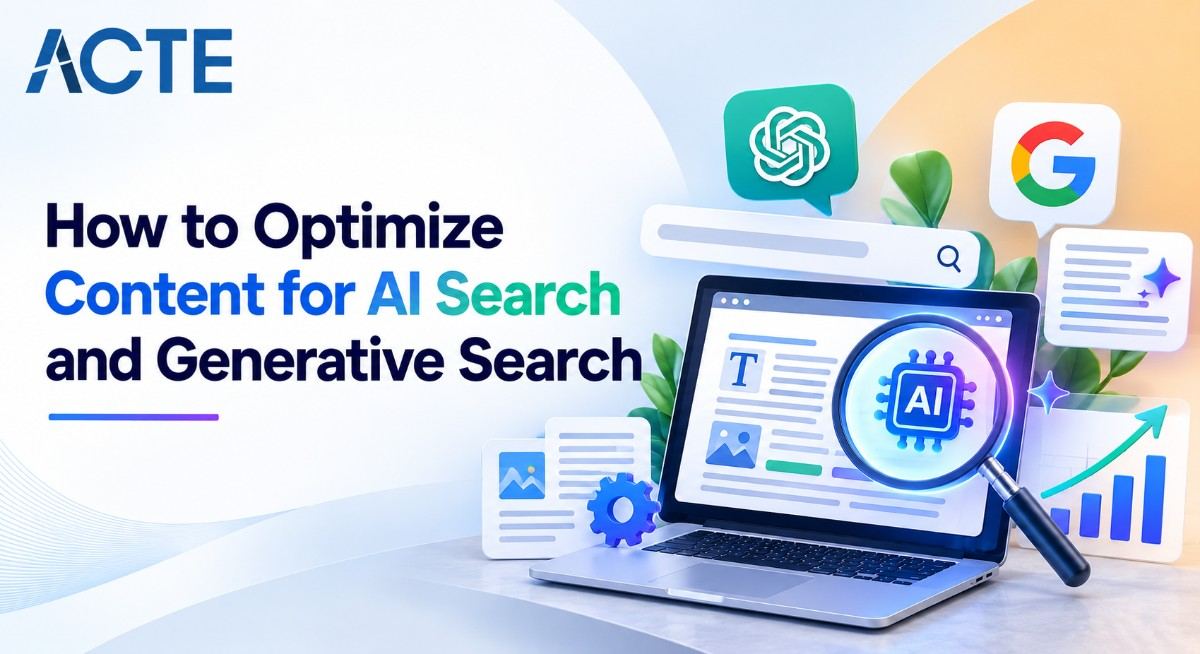
AI search and generative search are changing how people discover information online by providing summarized answers, contextual explanations, and recommendations instead of relying only on traditional search results. Platforms such as Google AI Overviews and ChatGPT Search can analyze information from multiple sources to help users find relevant answers more efficiently. For businesses, marketers, and content creators, this shift makes it important to optimize content for both traditional search engines and AI-powered discovery systems. AI search optimization involves creating accurate, helpful, well-structured content that clearly answers users’ questions and demonstrates expertise. Generative Engine Optimization (GEO) focuses on improving the likelihood that useful content will be referenced, cited, or surfaced in generative AI responses, although inclusion cannot be guaranteed. Beginners can start by understanding search intent, creating informative headings, providing direct answers, supporting claims with trustworthy sources, and keeping content accurate and up to date. Structured data, relevant internal links, and a clear website structure can also help search engines understand content. By combining established SEO practices with content strategies designed for AI-driven search experiences, businesses can improve their opportunities for online visibility and reach audiences who increasingly rely on conversational and generative search tools.
Understanding How AI Search Engines and Generative Search Work
- AI Search Engines: AI search engines use artificial intelligence to interpret user queries, identify relevant information, and provide contextual answers. Understanding how these systems retrieve and present information helps content creators develop pages that address users’ needs clearly.
- Query Understanding and Search Intent: AI-powered search systems analyze the meaning behind questions rather than relying only on exact-match keywords. Content should address informational, commercial, navigational, and transactional search intent with relevant answers.
- Content Retrieval and Source Selection: Generative search platforms may retrieve information from multiple sources to prepare answers. Publishing relevant, accurate, accessible content with clear headings and descriptive explanations can help search systems understand individual pages.
- Generative AI Responses: Generative search tools combine language models with available information to create summaries, explanations, and conversational responses. Content that provides direct answers, useful context, and trustworthy supporting evidence can be valuable to these experiences.
- Content Relevance and Trust: Search visibility depends on several factors, including relevance, usefulness, source quality, and platform-specific systems. Marketers should focus on original insights, factual accuracy, demonstrated expertise, and regular content updates rather than trying to guarantee inclusion in AI-generated answers.
Get Your Artificial Intelligence Certification by Learning from Industry-Leading Experts and Advancing Your Career with ACTE’s Artificial Intelligence Course.
Traditional SEO vs AI Search Optimization and GEO
- Traditional SEO: Traditional Search Engine Optimization focuses on improving website visibility in search engine results through keyword research, technical SEO, quality content, backlinks, and user experience. These practices remain important for helping search engines discover and understand web pages.
- AI Search Optimization: AI search optimization focuses on making content useful and understandable for AI-powered search experiences. Clear explanations, relevant headings, direct answers, accurate information, and well-organized page structures can help systems interpret content.
- Generative Engine Optimization (GEO): GEO involves improving content so it has a better opportunity to be referenced, cited, or surfaced in responses generated by AI platforms. Original research, expert insights, credible sources, and specific answers can strengthen content quality.
- Keyword Strategy and User Intent: Traditional SEO often targets specific keywords, while AI search optimization also considers conversational questions, related concepts, and the broader intent behind a query. Combining relevant keywords with natural, helpful explanations can support both approaches.
- Performance Measurement: Traditional SEO commonly measures rankings, organic traffic, impressions, and click-through rates. AI search optimization can additionally track referral traffic from AI platforms, brand mentions, citations, and visibility in relevant AI-generated responses where measurement is available.
Keyword Research and Search Intent for AI-Generated Answers
Keyword research and search intent are important parts of optimizing content for AI search and generative search platforms. Instead of focusing only on individual keywords, content creators should identify the questions users ask, the problems they want to solve, and the information they expect to find. Start by researching relevant keywords, long-tail phrases, conversational queries, and frequently asked questions using SEO tools, search suggestions, customer feedback, and discussions related to the topic. Next, classify search intent into informational, navigational, commercial, and transactional categories to understand what users need at each stage of their journey. For AI-generated answers, organize content around specific questions and provide concise, accurate explanations supported by useful details and trustworthy sources. Use descriptive headings, related terminology, examples, comparisons, and step-by-step instructions where appropriate. Avoid keyword stuffing and repetitive content, as these practices can reduce readability and usefulness. Analyze competing pages to identify unanswered questions and opportunities to provide original insights. Review content performance using search impressions, organic clicks, engagement metrics, and available AI referral or citation data. By combining keyword research with clear search-intent alignment, content creators can build helpful pages that serve readers and improve their chances of being discovered through traditional and AI-powered search experiences.

Learn Artificial Intelligence Training Course to Build Your Skills
Weekday / Weekend BatchesSee Batch DetailsCreating Helpful, Clear, and AI-Friendly Content
- Answer User Questions Directly: Create content that addresses the main question clearly and provides useful information without unnecessary introductions. Direct answers supported by relevant explanations can help readers and AI-powered search systems understand the page’s purpose.
- Use Clear Headings and Structure: Organize content with descriptive H2 and H3 headings, short paragraphs, bullet points, and numbered steps. A logical structure makes information easier to read, navigate, and interpret.
- Include Accurate Facts and Trusted Sources: Support important claims with reliable references, current information, original research, and relevant examples. Verify statistics and update outdated details to maintain content accuracy and credibility.
- Demonstrate Expertise and Originality: Add practical experience, expert insights, case studies, comparisons, and unique perspectives rather than simply repeating information available on other websites. Original and useful content can offer greater value to readers.
- Optimize for Natural Language and Context: Use conversational questions, relevant terminology, related concepts, and natural keyword variations where appropriate. Avoid keyword stuffing and focus on explaining the topic comprehensively so the content meets the user’s search intent.

Get JOB Oriented Artificial Intelligence Training for Beginners By MNC Experts
- Instructor-led Sessions
- Real-life Case Studies
- Assignments
Optimizing Content for Google AI Overviews and ChatGPT Search
Optimizing content for Google AI Overviews and ChatGPT Search involves creating accurate, relevant, and well-structured information that addresses users’ questions and provides meaningful context. Start by identifying the search intent behind your target keywords and organizing the content around the questions your audience wants answered. Use descriptive headings, concise introductory answers, informative paragraphs, and relevant examples to make important information easy to understand. Support factual claims with trustworthy sources, include original insights, and keep details updated to strengthen content quality and credibility. For Google AI Overviews, follow established Google Search best practices, including making pages accessible to crawling and indexing systems and providing helpful, people-first content. For ChatGPT Search, ensure important content is publicly accessible where appropriate and review OpenAI’s published guidance on search crawling and website access. Structured data can help search engines interpret eligible page information when implemented correctly, but it does not guarantee inclusion in AI-generated responses. Avoid publishing repetitive, misleading, or keyword-stuffed content solely to influence AI systems. Monitor organic impressions, clicks, referral traffic, and available AI search visibility indicators to understand how your content performs. By combining strong SEO fundamentals with clear answers, reliable evidence, and useful original information, website owners can improve their opportunities to appear in AI-powered search experiences, although no specific ranking, citation, or inclusion can be guaranteed.
Want to Master Artificial Intelligence? Explore the Artificial Intelligence Master Program Offered at ACTE Today!
Essential AI Search Optimization Tools and Techniques
- Google Search Console: Google Search Console helps website owners monitor search impressions, clicks, indexing status, and organic search performance. These insights can help identify content opportunities and technical issues that may affect search visibility.
- SEO and Keyword Research Tools: Tools such as Ahrefs, Semrush, and Google Keyword Planner help marketers research keywords, analyze competitors, identify search intent, and discover questions users are searching for.
- AI Content Research Tools: Generative AI assistants can help brainstorm topic ideas, organize content outlines, identify related questions, and improve readability. Always verify generated facts and add original expertise instead of publishing unreviewed AI output.
- Structured Data and Technical SEO Tools: Google Rich Results Test, Schema.org documentation, and website crawling tools can help validate eligible structured data, inspect page elements, and identify technical problems that affect search engine understanding.
- AI Search Visibility Monitoring: Website analytics platforms and available AI visibility tools can help track referral visits, brand mentions, citations, and changes in search performance. Review these indicators alongside traditional SEO metrics because AI search measurement varies by platform and tool.
Want to Learn About AI? Explore Our Artificial Intelligence Interview Questions and Answers Featuring the Most Frequently Asked Questions in Job Interviews.
Measuring AI Search Visibility, Brand Mentions, and Content Performance
Measuring AI search visibility and content performance helps businesses understand how effectively their content reaches audiences through traditional search engines and generative AI platforms. Start by monitoring organic impressions, clicks, click-through rates, and indexing information through Google Search Console to evaluate performance in conventional search results. Website analytics tools can help identify referral traffic from AI platforms, visitor engagement, conversions, and the pages attracting relevant audiences. Marketers can also monitor brand mentions, citations, and references in AI-generated answers by testing relevant questions across supported AI search platforms and using available AI visibility monitoring tools. Since AI responses may vary depending on the query, location, context, and platform, repeated observations can provide a more useful picture than a single search. Track important queries related to your products, services, and expertise, and record whether your website or brand appears in relevant responses. Review competing sources to identify opportunities to improve factual accuracy, content depth, originality, and topic coverage. Compare performance over time rather than relying on one metric, because AI citations and brand mentions do not always translate into website visits. Use the findings to update outdated information, improve page structure, answer unanswered questions, and strengthen relevant internal links. By combining traditional SEO analytics with AI search monitoring, businesses can evaluate content effectiveness, identify areas for improvement, and refine their strategy as generative search experiences continue to develop.
Best Practices for Improving AI Search and Generative Search Visibility
Improving AI search and generative search visibility requires a consistent focus on helpful content, technical accessibility, factual accuracy, and user intent. Begin by creating people-first content that answers relevant questions clearly, provides practical insights, and demonstrates genuine knowledge of the subject. Organize information with descriptive headings, concise explanations, relevant examples, and trustworthy references so readers can understand the topic easily. Maintain strong SEO fundamentals by ensuring that important pages are crawlable, indexable, mobile-friendly, and supported by a clear website structure. Use relevant internal links and implement appropriate structured data accurately, without assuming that these techniques guarantee AI citations. Regularly update outdated content, correct inaccurate information, and add original research or expert perspectives where possible. Avoid keyword stuffing, misleading claims, and mass-producing low-value pages solely to attract search traffic. Monitor traditional search performance alongside available AI referral traffic, brand mentions, citations, and relevant visibility indicators to identify opportunities for improvement. Test important queries across AI search platforms periodically, recognizing that results can change and measurement methods are not always consistent. By combining useful content, reliable information, technical SEO, and ongoing performance analysis, businesses can strengthen their online presence and improve their opportunities to be discovered through AI-powered search experiences. Although no strategy guarantees inclusion in AI-generated answers, maintaining high content standards and prioritizing user needs provides a sustainable foundation for long-term search visibility.