LMS
LMS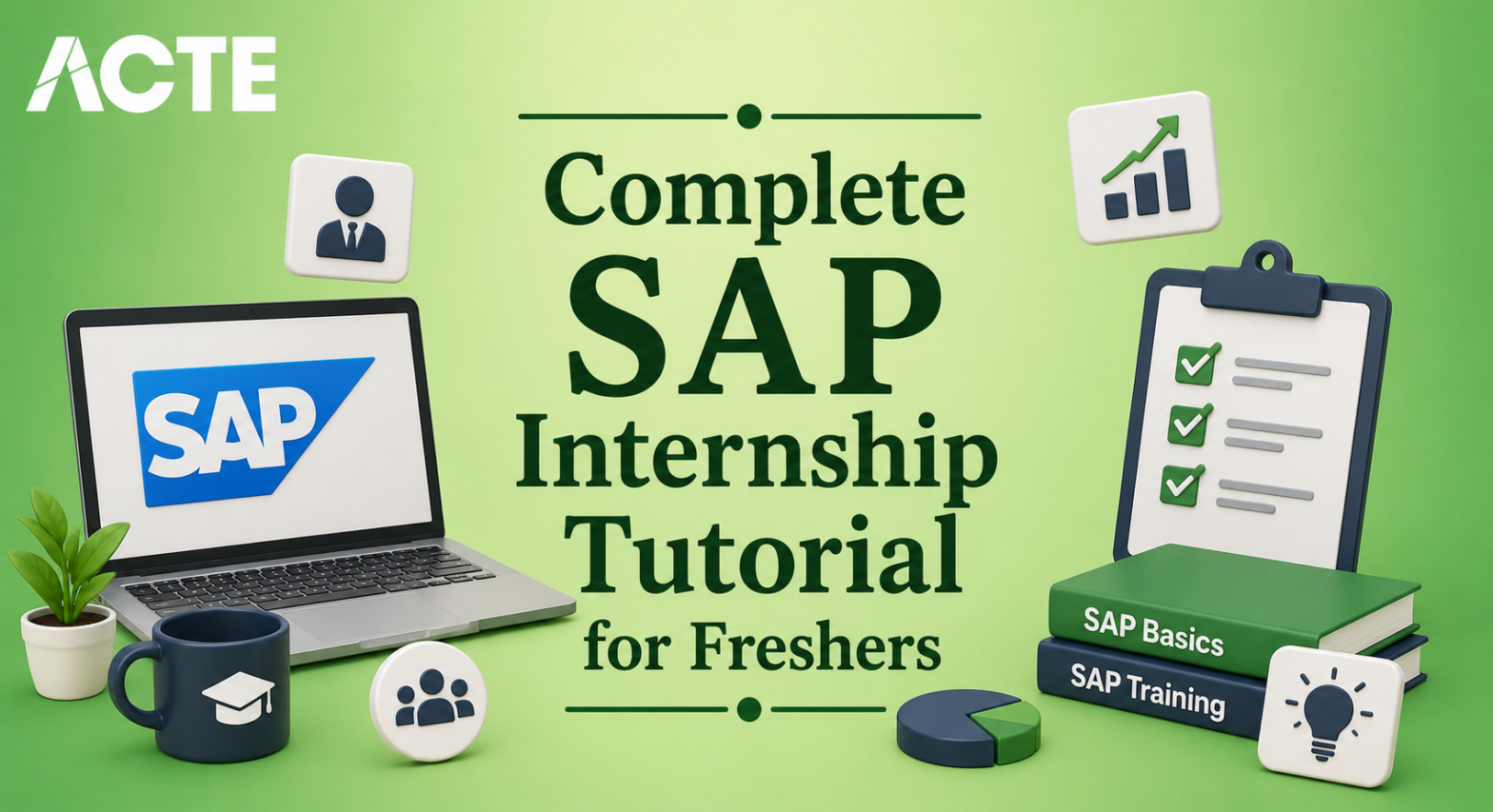
Last updated on 05th Jun 2026| 11241

- Introduction to SAP and ERP Systems
- SAP Architecture and Navigation Basics
- Overview of SAP Modules for Freshers
- SAP Master Data Fundamentals
- SAP Transactions and Reporting Basics
- Real-Time Business Processes in SAP
- Hands-On SAP Internship Activities
- SAP Implementation Lifecycle Overview
- SAP Career Paths and Industry Practices
Introduction to SAP and ERP Systems
SAP is one of the world’s leading Enterprise Resource Planning (ERP) software solutions used by organizations to manage business operations efficiently. ERP systems integrate multiple business functions such as finance, procurement, sales, human resources, manufacturing, and supply chain management into a single centralized platform. Before ERP solutions, companies often used separate systems for different departments, which resulted in data duplication, communication gaps, and operational inefficiencies in SAP MM Training. SAP eliminates these challenges by providing real-time access to accurate business information across the organization. This module introduces freshers to the fundamentals of SAP and explains how ERP systems help businesses streamline workflows, improve productivity, and support decision-making. Learners will understand the evolution of ERP systems, the significance of business process integration, and the role SAP plays in digital transformation initiatives. The chapter also explores the benefits of SAP implementation, including improved operational efficiency, better reporting, enhanced customer satisfaction, and greater organizational transparency. By the end of this section, learners will have a strong foundation in SAP concepts and understand why SAP skills are highly valued across industries worldwide.
SAP Architecture and Navigation Basics
SAP Architecture and Navigation Basics provides a foundational understanding of how SAP systems are structured and how users interact with them. This topic covers the core components of SAP architecture, including presentation, application, and database layers, and explains how these layers work together to process business transactions efficiently in our SAP MM Training. Learners are introduced to key SAP concepts such as clients, servers, instances, and system landscapes. The navigation section focuses on using the SAP interface effectively, including logging in, understanding the SAP Easy Access screen, working with menus, transaction codes, favorites, search functions, and customizing the user environment. It also covers common navigation techniques, shortcuts, and best practices for improving productivity within SAP. By understanding SAP architecture and mastering navigation basics, users can confidently access business processes, locate required functions, and perform daily tasks more efficiently. This knowledge serves as the foundation for learning advanced SAP modules and business applications.
Ready to earn your SAP HANA Professional Certification? Discover the SAP MM Training now available at ACTE!
Overview of SAP Modules for Freshers
SAP offers a wide range of modules designed to support different business functions and operational requirements. This module provides an introductory overview of the most widely used SAP modules, helping freshers understand how each module contributes to overall business processes. Learners will explore SAP End-User Tutorial for Freshers and SAP FICO for financial management and accounting, SAP MM for procurement and inventory management, SAP SD for sales and distribution activities, SAP PP for production planning, SAP HCM for human resource management, and SAP ABAP for technical development and customization.
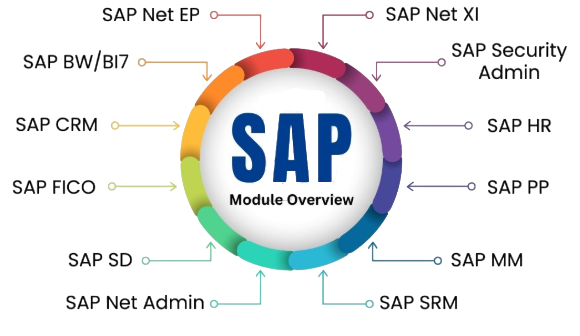
The chapter explains the purpose of each module, key business processes involved, and how modules interact with one another to create a fully integrated ERP environment. Students will gain insights into common job roles associated with each module, career opportunities available in the SAP domain, and the skills required to specialize in specific SAP areas and learners will expoler in SAP ABAP Programming Basics Tutorial for Freshers. This foundational knowledge helps freshers identify their interests and choose the most suitable SAP career path. By the end of this section, learners will have a clear understanding of the SAP ecosystem and the various opportunities available within the SAP landscape.
Get Your SAP HANA Certification by Learning from Industry-Leading Experts and Advancing Your Career with ACTE’s SAP MM Training.
SAP Master Data Fundamentals
- Customer Master Data: Customer master data stores important information about customers, including contact details, payment terms, sales information, and delivery preferences and SAP ERP Tutorial for Beginners. It helps organizations maintain accurate customer records and ensures smooth sales, billing, and customer service processes across departments.
- Vendor Master Data: Vendor master data contains details about suppliers, purchasing information, payment methods, and procurement-related records. Maintaining accurate vendor data helps organizations streamline purchasing activities, improve supplier relationships, and ensure efficient procurement operations.
- Material Master Data: Material master data serves as the central repository for product and inventory information. It includes details such as material descriptions, units of measure, storage information, and valuation data, enabling efficient inventory management and business operations and learn more in SAP EWM Step by Step Tutorial For Beginners.
- Data Management Best Practices: Effective master data management ensures consistency, accuracy, and reliability across business processes. Organizations use standardized procedures, validation rules, and governance policies to maintain high-quality data and support informed decision-making.

SAP Transactions and Reporting Basics
- Understanding Transaction Codes (T-Codes): Transaction codes provide quick access to SAP functions and processes. Users can execute specific business activities, view reports, and perform system operations efficiently by entering predefined transaction codes within the SAP interface.
- Executing Business Transactions: SAP transactions enable users to create, modify, display, and manage business data and SAP Ariba Tutorial for Freshers. These transactions support daily activities such as sales order processing, procurement management, inventory updates, and financial accounting operations.
- Standard SAP Reports: SAP provides a wide range of predefined reports that help organizations monitor business performance. These reports offer insights into sales, inventory, finance, procurement, and operational activities for better decision-making.
- Data Analysis and Reporting: Reporting tools in SAP allow users to retrieve, filter, and analyze business information. Organizations use these reports to track key performance indicators, identify trends, and generate actionable insights for operational improvement.

Get JOB Oriented SAP MM Training for Beginners By MNC Experts
- Instructor-led Sessions
- Real-life Case Studies
- Assignments
Real-Time Business Processes in SAP
- Procure-to-Pay (P2P) Process: The Procure-to-Pay process covers the complete procurement cycle from purchase requisition and purchase order creation to goods receipt and vendor payment. It helps organizations manage purchasing activities efficiently while maintaining supplier relationships.
- Order-to-Cash (O2C) Process: Order-to-Cash manages the entire sales lifecycle, including customer order creation, product delivery, billing, and payment collection and SAP Analytics Cloud Tutorial For Beginners. This process ensures smooth sales operations and enhances customer satisfaction through efficient order fulfillment.
- Record-to-Report (R2R) Process: The Record-to-Report process handles financial transactions, accounting activities, and financial reporting. It enables organizations to maintain accurate financial records, comply with regulations, and generate reliable business reports.
- Hire-to-Retire (H2R) Process: Hire-to-Retire manages employee-related activities from recruitment and onboarding to payroll, performance management, and retirement. This process supports efficient workforce management and improves employee lifecycle administration.
Want to Master SAP MM? Explore the SAP MM Master Program Offered at ACTE Today!
Hands-On SAP Internship Activities
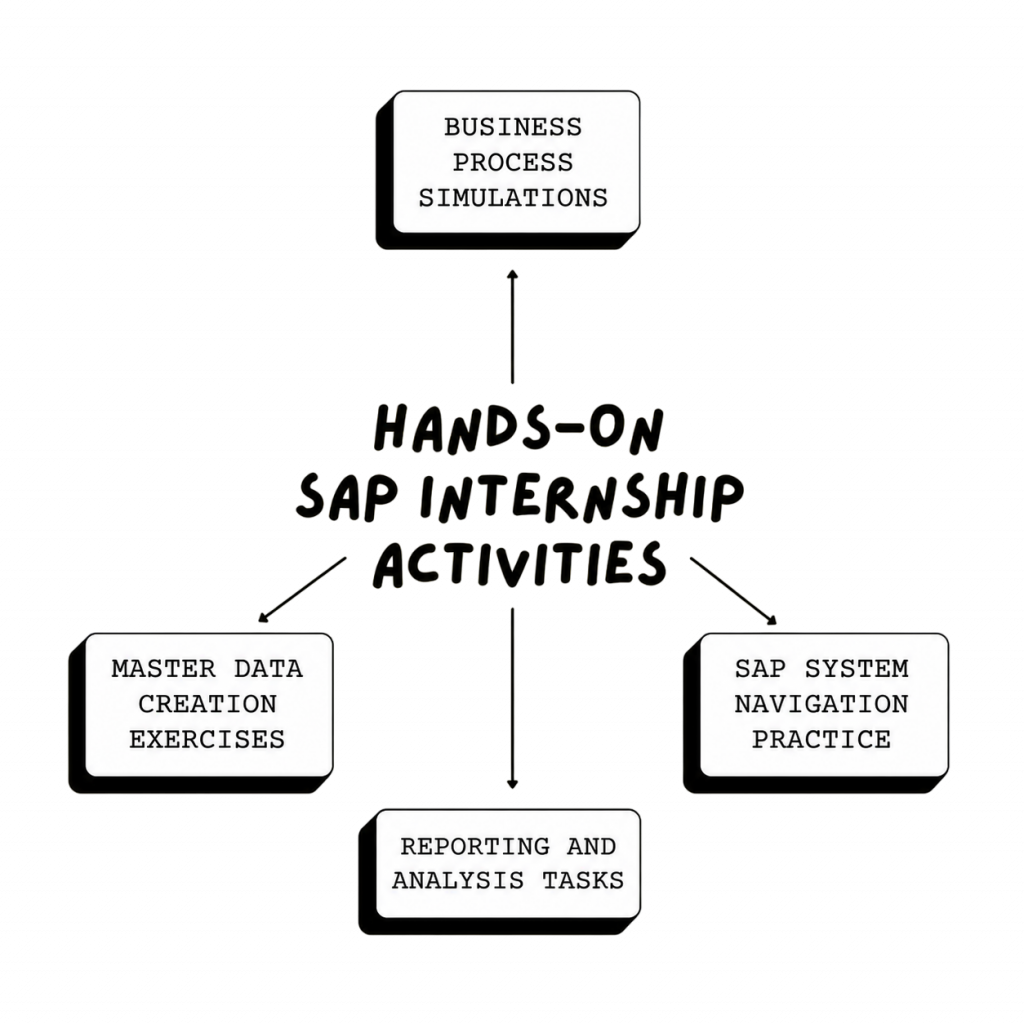
- SAP System Navigation Practice: Interns learn to navigate SAP environments, access modules, use transaction codes, and perform routine system operations. This foundational activity helps learners become comfortable working within enterprise SAP systems.
- Master Data Creation Exercises: Students gain practical experience by creating customer, vendor, and material master records. These exercises help them understand the importance of accurate data management and its impact on business processes.
- Business Process Simulations: Interns participate in simulated business scenarios involving procurement, sales, inventory, and finance operations and SAP SuccessFactors Tutorial for HR Freshers . These activities provide real-world exposure to integrated SAP business processes and workflows.
- Reporting and Analysis Tasks: Learners work with SAP reports to extract business information, analyze data, and generate insights. This hands-on experience develops reporting skills and helps interns understand how organizations use SAP for decision-making.
Set to Ace Your SAP MM Job Interview? Check Out Our Blog on SAP HCM Interview Questions & Answer
SAP Implementation Lifecycle Overview
The SAP Implementation Lifecycle is a structured approach used by organizations to deploy SAP solutions successfully. It begins with project preparation, where business goals, project scope, and implementation strategies are defined. The next phase involves business blueprinting, where existing business processes are analyzed and future SAP requirements are documented. During the realization phase, SAP consultants configure the system, develop customizations, and perform testing to ensure the solution meets business needs in our SAP MM Training. This is followed by user acceptance testing (UAT), data migration, and end-user training. The final stage is the go-live and support phase, where the SAP system becomes operational and ongoing support is provided to resolve issues and optimize performance. Understanding the SAP implementation lifecycle helps freshers learn how SAP projects are executed in real-world environments and prepares them for functional, technical, and support roles within SAP teams.
SAP Career Paths and Industry Practices
SAP offers diverse career opportunities for professionals with different educational backgrounds and interests. Freshers can choose functional career paths such as SAP FICO, SAP MM, SAP SD, SAP HCM, or SAP PP, where they focus on business processes and system configuration. Those interested in technical development can specialize in SAP ABAP, SAP Basis, SAP Fiori, SAP BTP, or SAP integration technologies. Industry practices in SAP emphasize process-driven implementation, documentation standards, data management, testing methodologies, and collaboration across departments in SAP MM Training . Professionals are expected to understand business requirements, provide solutions, and support continuous improvement initiatives. With SAP being widely used across industries such as manufacturing, retail, healthcare, banking, logistics, and IT services, certified SAP professionals enjoy strong career growth, competitive salaries, and global employment opportunities. Understanding industry practices helps freshers align their skills with market expectations and build a successful SAP career.