LMS
LMS
Last updated on 30th May 2026| 11284

- Introduction to SAP S/4HANA
- SAP S/4HANA Architecture Overview
- Key Features and Benefits of SAP S/4HANA
- SAP Fiori User Interface Basics
- SAP S/4HANA Navigation and System Overview
- Core Business Modules in SAP S/4HANA (FI, CO, MM, SD, PP)
- Business Partner Concept in SAP S/4HANA
- Simplified Data Model and Universal Journal (ACDOCA)
- Real-Time Reporting and Embedded Analytics
- SAP S/4HANA Deployment Options and Career Path
Introduction to SAP S/4HANA
SAP S/4HANA is SAP’s next-generation ERP (Enterprise Resource Planning) system designed to support modern, intelligent business operations. It is built on the SAP HANA in-memory database, which enables real-time processing of large volumes of data with high speed and accuracy. Unlike traditional ERP systems, SAP S/4HANA simplifies the data model by removing redundant tables and structures, making the system more efficient and easier to use. It integrates all major business functions such as finance, procurement, sales, production, and supply chain into a single unified platform in SAP S4 HANA Training. This integration helps organizations maintain consistency of data across departments and reduces duplication of effort. SAP S/4HANA supports real-time analytics, allowing businesses to make faster and more informed decisions. It also enables digital transformation by supporting automation, artificial intelligence, and predictive analytics. Companies using SAP S/4HANA can streamline their business processes, improve operational efficiency, and enhance overall productivity. It is designed to handle both transactional and analytical workloads within the same system, eliminating the need for separate reporting tools. SAP S/4HANA is available in cloud, on-premise, and hybrid deployment models, making it flexible for different business needs. It plays a key role in helping organizations become intelligent enterprises by improving visibility, agility, and responsiveness. Overall, SAP S/4HANA represents a major evolution in ERP technology focused on speed, simplicity, and innovation.
SAP S/4HANA Architecture Overview
SAP S/4HANA architecture is built on a modern three-tier structure consisting of the database layer, application layer, and presentation layer. The database layer is powered by SAP HANA, which stores data in-memory instead of traditional disk storage, enabling extremely fast data access and processing. The application layer contains the core business logic, including transaction processing, workflows, validations, and business rules in SAP S4 HANA Training. This layer ensures that all business operations are executed accurately and efficiently. The presentation layer is managed through SAP Fiori, which provides a modern, user-friendly interface accessible via web browsers and mobile devices. These three layers work together in real time, ensuring seamless communication between users and the system. The architecture supports high scalability, allowing organizations to handle increasing data volumes without performance issues. It also ensures high availability and reliability through distributed computing and load balancing techniques. SAP S/4HANA architecture reduces system complexity by eliminating unnecessary data replication and aggregates. It also supports both cloud and on-premise deployment, giving businesses flexibility in infrastructure choice. Security is integrated at every layer, ensuring data protection and controlled access. The system is designed to support real-time analytics directly on transactional data without requiring separate reporting systems. This architecture significantly improves performance, reduces latency, and enhances overall system efficiency. It forms the foundation for intelligent enterprise operations by enabling fast, reliable, and integrated business processing.
Ready to earn your SAP HANA Professional Certification? Discover the SAP HANA Training now available at ACTE!
Key Features and Benefits of SAP S/4HANA
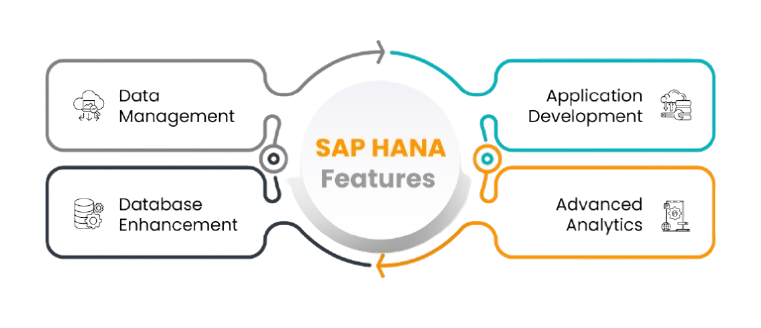
SAP S/4HANA offers a wide range of advanced features that transform traditional business operations into intelligent, real-time processes. One of its most important features is real-time data processing, which allows businesses to analyze and act on data instantly. It uses a simplified data model that eliminates redundancy and improves data consistency across all modules in SAP FICO Tutorial Step by Step For Freshers. Another key feature is embedded analytics, which enables users to generate reports directly within the system without needing separate BI tools. SAP S/4HANA also provides a modern user experience through SAP Fiori, offering role-based dashboards and simplified navigation. Automation capabilities help reduce manual work and improve process efficiency across finance, supply chain, and sales operations. The system also supports predictive analytics and machine learning, helping organizations forecast trends and make proactive decisions. One major benefit is improved operational efficiency, as processes are streamlined and integrated across departments. It also reduces IT complexity by consolidating multiple systems into a single platform.
Businesses benefit from faster decision-making due to real-time insights and accurate reporting. Cost savings are achieved through reduced data storage requirements and simplified system maintenance. SAP S/4HANA also improves compliance and governance by ensuring consistent and transparent data management and SAP MM Tutorial from Scratch For Freshers. It enhances scalability, allowing organizations to grow without performance limitations. Overall, SAP S/4HANA helps companies become more agile, efficient, and competitive in the digital economy.
Get Your SAP MM Certification by Learning from Industry-Leading Experts and Advancing Your Career with ACTE’s SAP HANA Training.
SAP Fiori User Interface Basics
SAP Fiori is the modern user interface design for SAP S/4HANA that replaces the traditional SAP GUI with a more intuitive and user-friendly experience. It is designed with a focus on simplicity, responsiveness, and role-based access, ensuring that users only see the applications relevant to their job functions. The main entry point of SAP Fiori is the Fiori Launchpad, which contains tiles representing different business applications. Each tile provides direct access to specific tasks such as creating sales orders, viewing reports, or managing procurement activities. SAP Fiori supports real-time data processing, allowing users to interact with live business data instantly. It is built using web technologies, making it accessible from desktops, tablets, and smartphones without additional installations in SAP SD Tutorial for Freshers. The interface is highly responsive, adjusting automatically to different screen sizes and devices. SAP Fiori improves productivity by reducing the number of steps required to complete tasks. It also minimizes training time because of its simple and consistent design. Users benefit from personalized dashboards that display relevant KPIs and business insights. The system enhances decision-making by providing real-time analytics directly within applications. SAP Fiori also improves collaboration by integrating multiple business functions into a single interface. Security and authorization are embedded, ensuring users access only permitted data and functions. Overall, SAP Fiori significantly enhances the user experience by making SAP systems easier, faster, and more efficient to use.

Core Business Modules in SAP S/4HANA (FI, CO, MM, SD, PP)
- Financial Accounting (FI): FI module manages external financial accounting processes such as general ledger, accounts payable, and accounts receivable. It ensures accurate financial reporting, compliance with accounting standards, and real-time recording of all financial transactions across the organization.
- Controlling (CO): CO module focuses on internal cost management and profitability analysis. It helps organizations monitor expenses, control budgets, and evaluate performance using cost centers, profit centers, and internal orders. It supports better decision-making through detailed cost analysis and reporting.
- Materials Management (MM): MM module handles procurement and inventory management processes. It includes purchase requisitions, purchase orders, goods receipts, and stock management and leran more in SAP FICO Tutorial. It ensures smooth material flow from vendors to storage locations while maintaining optimal inventory levels and cost efficiency.
- Sales and Distribution (SD): SD module manages customer sales processes including order creation, delivery, shipping, and billing. It ensures accurate pricing, timely order fulfillment, and efficient revenue tracking. It also improves customer satisfaction by streamlining the entire order-to-cash process.
- Production Planning (PP): PP module supports manufacturing operations by planning production schedules, managing materials, and controlling resources. It ensures timely production execution and integrates with MM and SD modules to maintain smooth supply chain and manufacturing efficiency.

Get JOB Oriented SAP HANA Training for Beginners By MNC Experts
- Instructor-led Sessions
- Real-life Case Studies
- Assignments
Business Partner Concept in SAP S/4HANA
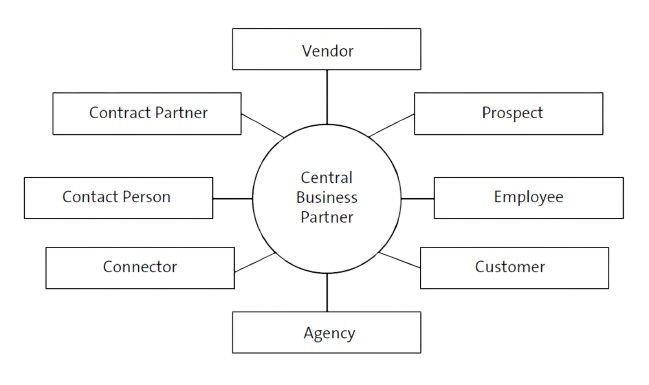
- Single Master Data Model: Business Partner (BP) replaces separate customer and vendor master records in SAP S/4HANA. It provides a unified master data model that stores all business relationship information in one place, reducing duplication and ensuring consistency across modules.
- Role-Based Structure: Each Business Partner can be assigned multiple roles such as customer, vendor, or employee. These roles determine how the BP is used in different business processes and leran more in SAP EWM Tutorial. This structure improves flexibility and reduces the need for maintaining separate master records.
- Centralized Data Management: Business Partner centralizes all data such as address, communication, and financial details in one record. This ensures data consistency across departments, reduces maintenance effort, and improves accuracy in business transactions and reporting processes.
- Integration Across Modules: Business Partner data is shared across FI, SD, and SAP MM Tutorial modules in SAP S/4HANA. This ensures seamless integration of business processes like procurement, sales, and finance, improving data flow and reducing inconsistencies between different functional areas.
- Improved Data Governance: The BP concept improves governance by standardizing data creation, validation, and maintenance processes. It ensures better control over master data changes, enhances data quality, and supports compliance with organizational and regulatory requirements.
Want to Master SAP MM? Explore the SAP HANA Master Program Offered at ACTE Today!
Simplified Data Model and Universal Journal (ACDOCA)
- Simplified Data Structure: SAP S/4HANA simplifies data models by removing redundant tables and aggregations used in older ERP systems and leran more in SAP Simple Finance . This reduces data complexity, improves system performance, and enables faster processing of large datasets for both transactional and analytical operations.
- Universal Journal (ACDOCA): ACDOCA is a single table that combines financial accounting (FI) and controlling (CO) data. It provides a unified source of truth for financial information, enabling real-time reporting and eliminating the need for data reconciliation between modules.
- Real-Time Reporting: With the simplified data model, financial and operational data is updated in real time. This allows organizations to generate instant reports and dashboards without batch processing, improving decision-making speed and business responsiveness.
- Elimination of Reconciliation: Since FI and CO data are stored in a single universal journal, manual reconciliation between accounting modules is no longer required and leran more in SAP HANA Tutorial Complete Guide For Freshers. This reduces errors, saves time, and ensures consistency between financial and controlling data.
- Enhanced Data Transparency: The simplified structure provides full visibility into financial transactions at a detailed level. It improves auditability, supports compliance requirements, and enables better analysis of business performance through accurate and transparent data access.
Set to Ace Your SAP MM Job Interview? Check Out Our Blog on SAP HANA Interview Questions & Answer
Real-Time Reporting and Embedded Analytics
Real-Time Reporting and Embedded Analytics in SAP S/4HANA enable organizations to analyze business data instantly as transactions occur within the system. Unlike traditional ERP systems that depend on batch processing, SAP S/4HANA provides live data access, ensuring that reports are always up to date. This allows managers and users to make faster and more accurate decisions based on current business conditions in SAP S4 HANA Training. Embedded analytics integrates reporting capabilities directly into business applications, eliminating the need for separate BI tools and reducing system complexity. Users can view dashboards, KPIs, charts, and interactive reports within the same interface where transactions are performed. Core Data Services (CDS) views are used to create virtual data models that support flexible and high-performance reporting. These models combine data from multiple tables into a single analytical structure. SAP S/4HANA also provides KPI monitoring tools that help track financial performance, sales trends, inventory levels, and operational efficiency in real time. This improves visibility across all business processes and supports proactive decision-making. The system ensures a single source of truth by synchronizing transactional and analytical data within one platform. Businesses benefit from improved transparency, reduced reporting delays, and increased operational agility. Overall, real-time reporting and embedded analytics transform SAP S/4HANA into a powerful decision-making platform that enhances business performance and responsiveness.
SAP S/4HANA Deployment Options and Career Path
SAP S/4HANA offers multiple deployment options to meet different organizational needs, including on-premise, cloud, and hybrid models. In the on-premise model, the system is installed within the company’s own infrastructure, providing full control over customization, security, and system management. This option is preferred by large enterprises with complex business processes. The cloud deployment model hosts SAP S/4HANA on SAP-managed servers, offering flexibility, lower infrastructure cost, automatic updates, and faster implementation. It is ideal for organizations seeking scalability and reduced IT maintenance. The hybrid model combines both on-premise and cloud systems, allowing businesses to balance control and flexibility in SAP S4 HANA Training . Each deployment option supports digital transformation and ensures real-time business processing capabilities. From a career perspective, SAP S/4HANA offers strong opportunities in both functional and technical domains. Functional roles include SAP FI, MM, SD, and PP consultants who configure business processes and support end users. Technical roles include ABAP developers, SAP HANA developers, and system administrators who manage system performance and development. Additionally, roles in SAP Fiori, analytics, and SAP basis administration are in high demand. Professionals can grow from junior consultant to senior consultant, solution architect, or SAP project manager based on experience and expertise. SAP certification further enhances career prospects and global job opportunities. Overall, SAP S/4HANA provides a strong and future-ready career path in enterprise technology.