LMS
Last updated on 31st Oct 2026| 8075

- Introduction to the Top AI Tools Every Developer Should Know
- AI Coding Assistants for Faster Software Development
- AI Tools for Machine Learning and Model Development
- Generative AI Tools for Application and Content Creation
- AI Tools for Debugging, Testing, and Code Optimization
- Comparing Popular AI Tools and Their Developer Use Cases
- Responsible AI Tool Usage, Security, and Data Privacy
- Future Trends in AI Tools for Software Developers
- Conclusion
Introduction to the Top AI Tools Every Developer Should Know
Artificial Intelligence is transforming software development by helping developers write code, solve technical problems, automate repetitive tasks, and build applications more efficiently. AI-powered tools are becoming an important part of modern development workflows, supporting activities such as code generation, debugging, testing, documentation, and application design. From beginners learning programming to experienced engineers managing complex projects, developers can use these tools to improve productivity and simplify everyday coding tasks. Several AI tools now support different stages of the software development lifecycle, including GitHub Copilot, ChatGPT, Cursor, Claude, Amazon Q Developer, Google Gemini, and Tabnine. Other platforms provide capabilities for machine learning development, application testing, and AI integration. Understanding the features, strengths, and practical uses of these tools helps developers choose suitable solutions for their projects. Exploring the top AI tools and learning how to use them effectively can also help developers adapt to changing industry requirements and build more intelligent software applications.
AI Coding Assistants for Faster Software Development
AI coding assistants help developers write, complete, explain, and improve code with less manual effort. These tools use machine learning and large language models to understand programming instructions, suggest relevant code snippets, identify potential errors, and support multiple programming languages. Developers can integrate them into code editors and development environments to simplify routine coding activities, reduce repetitive work, and improve development efficiency. They are useful for beginners who need coding guidance as well as experienced professionals working on complex applications. Popular AI coding assistants include GitHub Copilot, Cursor, Amazon Q Developer, and Tabnine. GitHub Copilot provides code suggestions and supports development workflows, while Cursor offers AI-assisted coding and codebase understanding within its editor. Amazon Q Developer helps with code generation, explanations, and AWS-related development tasks. Tabnine provides AI-powered code completion with options for organizational control. Although these tools can accelerate development, developers should review generated code, test its functionality, and check for security issues before using it in production applications.
Ready to Pursue Your Data Analytics Certificate? View The Data Science Course Training Offered By ACTE Right Now!
AI Tools for Machine Learning and Model Development
AI-powered machine learning tools help developers build, train, evaluate, and deploy models without managing every development task manually. These platforms provide capabilities for data preparation, algorithm selection, model optimization, experimentation, and performance monitoring. They are useful for developers working on predictive analytics, classification, recommendation systems, natural language processing, and other intelligent applications. Beginners can use guided interfaces and automated workflows to understand machine learning concepts, while experienced developers can customize models for specific project requirements. Popular tools include Google Vertex AI, Amazon SageMaker, Microsoft Azure Machine Learning, TensorFlow, and PyTorch. Vertex AI supports model development and deployment within the Google Cloud ecosystem, while Amazon SageMaker provides services for building and managing machine learning workflows. Azure Machine Learning offers tools for training, tracking, and deploying models. TensorFlow and PyTorch provide flexible frameworks for developing machine learning and deep learning applications. Choosing the right platform depends on project complexity, programming requirements, available infrastructure, and deployment needs.

Develop Your Skills with Data Data Science Course Training
Weekday / Weekend BatchesSee Batch DetailsGenerative AI Tools for Application and Content Creation
Generative AI tools are helping developers create application components, generate code, design interfaces, prepare documentation, and develop interactive software experiences. These tools use large language models and other generative technologies to understand user instructions and produce text, code, images, and structured outputs. Developers can use them to explore programming solutions, create prototypes, explain complex concepts, generate API documentation, and integrate intelligent features into applications. They can also support faster experimentation during different stages of software development. Popular generative AI tools include ChatGPT, Claude, Google Gemini, and Microsoft Copilot. ChatGPT can assist with code generation, technical explanations, and application planning, while Claude supports coding tasks, document analysis, and problem-solving. Google Gemini offers AI capabilities for programming assistance and multimodal applications. Microsoft Copilot integrates AI assistance into supported Microsoft development and productivity environments. Developers can also explore APIs from these platforms to add conversational interfaces, automated responses, and other generative features to their applications. Reviewing generated outputs for accuracy, reliability, and security remains essential.
The model is initially trained on datasets containing both labeled and unlabeled examples so there will be a distinction between noise and signals when the model is completed. The model uses backpropagation to convert raw inputs to abstract features along with a decision algorithm such as gradient descent. Once trained, the system can classify data as either meaningful or useless by using the learned pattern. Less Manual Feature Engineering More Accurate AI Models. The project provides exposure to Neural Networks and Deep Learning Concepts.
Excited to Obtaining Your Data Analytics Certificate? View The Data Science Course Training Offered By ACTE Right Now!
Real-Time Data Processing and AI Integration
- Data Collection and Streaming Sources: Real-time data processing begins with collecting continuous data from IoT devices, social media platforms, web applications, server logs, and financial transactions. These live data streams provide the foundation for AI-powered analytics and instant decision-making.
- Pattern Identification in Live Data: Data scientists analyze streaming data to identify trends, anomalies, and user behavior in real time. Understanding the Role of Machine Learning in Data Science helps professionals build intelligent systems that continuously learn from live data and improve prediction accuracy.
- Machine Learning for Instant Prediction: AI models use streaming machine learning algorithms to generate real-time predictions for applications such as demand forecasting, recommendation systems, and predictive maintenance. These models continuously adapt to changing data patterns for better business outcomes.
- Real-World Applications in Fraud Detection: Real-time AI is widely used in banking, e-commerce, and cybersecurity to detect fraudulent activities, monitor suspicious transactions, and automate security responses, helping organizations minimize financial risks.
- Importance in System Safety and Monitoring: AI-powered monitoring systems detect server failures, network anomalies, and application performance issues before they become critical. To build a stronger foundation, explore What Is Data Science and understand how real-time analytics supports modern business operations.
Are You Considering Pursuing a Data Analytics Master’s Degree? Enroll For Data Science Expert Masters Program Training Course Today!
The Shift in Data Science Roles and Skills
The field of data science is evolving rapidly as artificial intelligence and automation reshape traditional job roles and required skill sets. While repetitive tasks such as data preparation and basic analysis are increasingly automated, professionals are now expected to focus on critical thinking, business strategy, AI implementation, and data-driven decision-making. Staying updated with emerging technologies and understanding the Key Roles of a Skilled Data Scientist in Business helps professionals build the expertise needed for modern careers. Today’s data scientists combine technical knowledge with communication, problem-solving, and domain expertise to deliver business value. Continuous learning in areas such as machine learning, cloud platforms, generative AI, and data visualization enables professionals to remain competitive, adapt to changing industry demands, and succeed in future-ready data science roles.
Set to Ace Your AWS Job Interview? Check Out Our Blog on Data Science Interview Questions & Answer
Ethical AI and Responsible Data Science
- Data Collection and Bias Sources: Ethical AI begins with collecting large amounts of historical training data. This data is gathered from human interactions and online behaviors. It includes demographic records and historical biases. This raw data is the foundation for building fair prediction models.
- Pattern Identification in Biased Data: After collecting data, the next step is finding patterns in algorithmic bias. Data scientists analyze unfair outcomes like discriminatory loan approvals and Data Scientist Salaries. These patterns help understand how human biases repeat over time. This makes future AI forecasting more reliable and structured.
- Machine Learning for Fair Prediction: Fairness algorithms are used to predict future outcomes based on unbiased data. Techniques like bias mitigation and adversarial debiasing are commonly applied. These models learn relationships between variables without discrimination.
- Real-World Applications in Business Fairness: Ethical data science is very important in business for planning inclusive strategies. Companies use it to decide when to audit algorithms for fairness. It also helps reduce harm caused by unexpected biased decisions. This improves productivity and supports better ethical decisions.
- Importance in Safety and Social Trust: Ethical AI plays a key role in predicting societal risks like privacy violations or unfair treatment. Early ethical auditing helps organizations take safety measures in advance. This reduces damage to public trust. It makes communities better prepared for extreme AI conditions.
The Future of Predictive Modeling
The Future of Predictive Modeling is all about looking at data patterns in the past to help you figure out if an AI prediction might go up in the future or down. The prediction system collects AI data, such as when a model succeeded, when it failed, and the accuracy of the prediction. Next, this AI data is cleaned and analyzed to find model behaviors that have acted the same way over time. After analyzing the AI data, we can use some advanced machine learning algorithms (e.g. transformers, generative AI, reinforcement learning) as well as time series algorithms to predict future trends in Data Science Training . The goal of this project is to make it easier for people to forecast, as people will be less afraid to trust AI because they know what to expect;
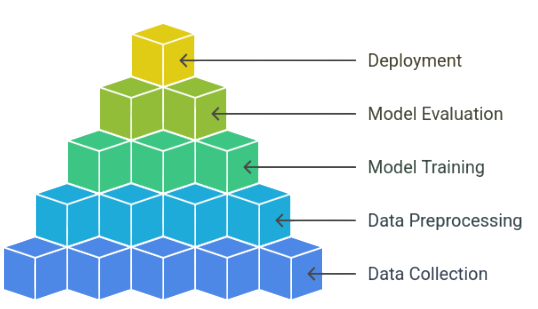
people can also use these future predictors to find out where they should deploy resources. We often use AI performance visualizations to see how the accuracy of predictions has changed over time; however, future predictions are never completely accurate because external factors can change how an AI behaves. But this project is beginner-friendly and gives you an introduction into how to analyze AI data and use advanced methods for predicting future trends.
Conclusion
Data science advancements for beginners learning automated machine learning, real-time processing, and ethical AI show how useful it is to use data to solve real-life problems. They’re great for helping people understand how raw data is collected, processed, and turned into useful information. By learning these advancements, beginners gain hands-on experience with machine learning and data analysis. Each advancement develops a different set of capabilities: some with automation, others with deep learning, some with fairness, and still others with predictive modeling all of which are extremely valuable in today’s tech-driven workplaces in Data Science Training. Working on real-world advancements is a great way for a beginner to build a strong foundation that they can use to apply for jobs. Understanding these evolutions bridges the gap between theory and practice. When a learner explores multiple AI advancements, they increase their confidence. Overall, evolution-based learning is probably the best way for someone just getting into data science to grow.