LMS
LMS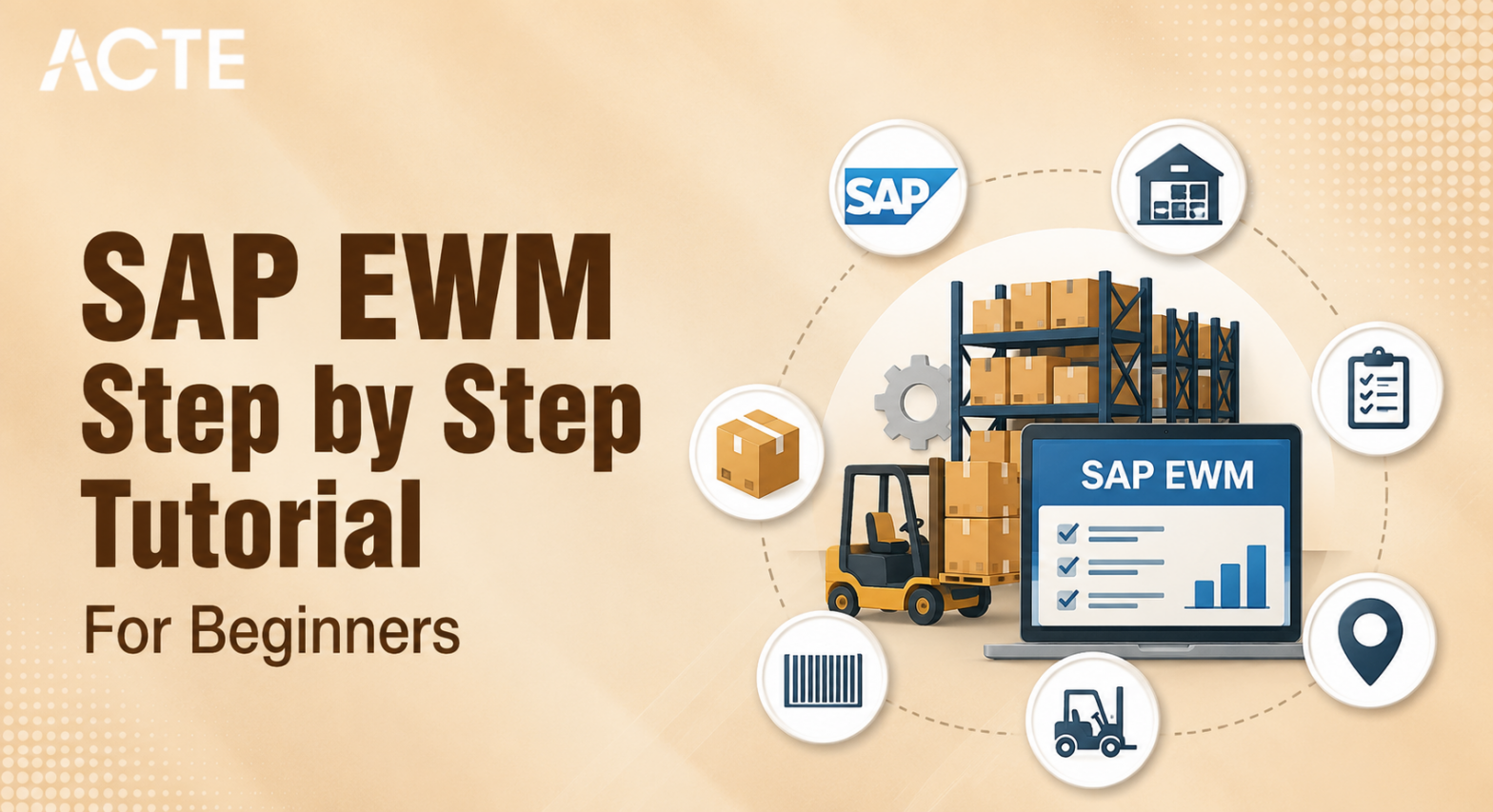
Last updated on 10th Jun 2026| 11288

- Introduction to SAP EWM Step by Step Tutorial
- SAP EWM Architecture Overview
- Warehouse Structure and Master Data
- Inbound Process in SAP EWM
- Outbound Process in SAP EWM
- Storage Control and Handling Units
- Labor Management in SAP EWM
- Cross-Docking and Value-Added Services
- SAP EWM Integration with SAP ERP
- Conclusion and Career Path in SAP EWM
Introduction to SAP EWM
SAP Extended Warehouse Management (EWM) is a powerful application designed to manage complex warehouse operations efficiently. It provides advanced functionality beyond traditional inventory management, enabling organizations to optimize inbound, outbound, and internal warehouse processes. For beginners, SAP EWM offers a structured way to understand how goods are received, stored, and shipped in real-world scenarios. This section introduces the importance of EWM in modern supply chains, highlighting its role in reducing costs and improving accuracy in our SAP WM EWM Training. Freshers learn how EWM integrates with SAP ERP to ensure seamless data flow across procurement, sales, and production. The tutorial explains how EWM supports features like labor management, cross-docking, and value-added services. Beginners are guided through the SAP EWM interface, learning navigation basics and transaction codes. The section emphasizes how EWM improves visibility by tracking goods at every stage. Examples of inbound and outbound processes are provided to show its practical impact. Security and user management concepts are introduced to explain controlled access. Finally, learners are motivated with career opportunities, as SAP EWM skills are highly valued in logistics and supply chain industries. By the end of this section, beginners understand the scope of EWM and SAP EWM Architecture importance in mastering warehouse management.

SAP EWM Architecture Overview
- Decentralized Deployment: EWM can run independently from ERP. Beginners learn how this supports large warehouses, with examples showing standalone EWM systems that highlight flexibility.
- Embedded Deployment: EWM can be embedded in SAP S/4HANA. Beginners learn integration benefits, with practical insights available in the SAP CRM Tutorial, which explains reduced complexity and demonstrates ERP and EWM working together in one system.
- Warehouse Management Monitor: Provides real-time visibility. Beginners learn how to track tasks, with dashboards and examples showing monitoring of inbound deliveries.
- Integration Layer: Connects EWM with ERP modules. Beginners learn data synchronization, supported by middleware examples such as purchase order updates.
- Process-Oriented Storage Control: Manages complex storage flows. Beginners learn routing logic, with automation examples showing goods moving through checkpoints.
- Resource Management: Optimizes labor and equipment. Beginners learn task assignment, with efficiency gains demonstrated through forklift usage tracking.
- Scalability: EWM supports small to large warehouses. Beginners learn system adaptability, with real-world implementation guidance available in the SAP Projects Tutorial: Real-World Implementation Guide, which explains configuration options and showcases global distribution centers.
Ready to earn your SAP HANA Professional Certification? Discover the SAP WM EWM Training now available at ACTE!
Warehouse Structure and Master Data
SAP EWM Step by Step Tutorial relies on a well-defined warehouse structure and master data to manage operations effectively. Beginners learn how warehouses are divided into storage types, storage sections, and bins, each representing physical or logical areas in our SAP WM EWM Training. This section explains how master data such as products, packaging specifications, and handling units form the foundation of warehouse processes. Freshers are guided through the creation of warehouse numbers and their assignment to ERP plants and . The tutorial highlights how storage bins are mapped to physical locations, enabling precise tracking of goods. Beginners also learn how activity areas group bins for efficient picking and putaway.
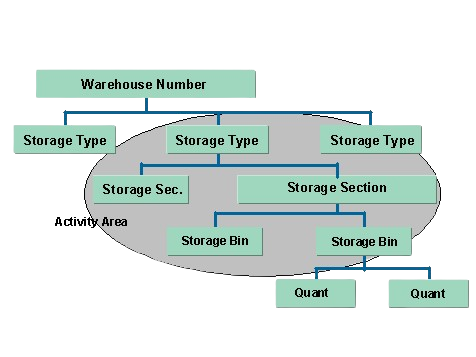
The section emphasizes the importance of accurate master data, as errors can disrupt inbound and outbound processes. Examples include defining product dimensions for storage control or setting up packaging specifications for shipments. The tutorial explains how master data integrates with transactional data, ensuring consistency. Beginners practice creating and maintaining warehouse master records. By mastering warehouse structure and master data, learners gain confidence in handling SAP EWM’s core setup, preparing them for inbound and outbound operations.
Get Your SAP HANA Certification by Learning from Industry-Leading Experts and Advancing Your Career with ACTE’s SAP WM EWM Training.
Inbound Process in SAP EWM
- Purchase Order Integration: Inbound starts with ERP purchase orders. Beginners learn how EWM receives data, with synchronization examples showing vendor deliveries.
- Inbound Delivery Creation: ERP generates inbound deliveries that transfer to EWM. Learners explore document flow, with examples showing delivery notes.
- Goods Receipt Posting: EWM posts goods receipt. Beginners learn how stock updates occur, with practical guidance available in the SAP Internship Tutorial for Freshers, which explains integration with ERP FI and demonstrates material postings.
- Putaway Process: Goods are moved to bins. Beginners learn storage type determination, with routing logic examples showing pallet placement.
- Handling Units: Goods are packed into handling units. Beginners learn HU creation, with tracking examples showing carton management.
- Quality Inspection: Goods may undergo checks. Beginners learn inspection processes, with deeper insights provided in the SAP S/4HANA Tutorial for Beginners, which explains integration with QM and demonstrates rejected stock handling.
- Completion: The inbound process closes after putaway. Beginners learn status updates, with monitoring examples showing delivery completion in the system monitor.

Outbound Process in SAP EWM
Outbound processes in SAP EWM manage the flow of goods leaving the warehouse. Beginners learn how sales orders in ERP trigger outbound deliveries, which are replicated in EWM. This section explains how picking strategies determine which bins are selected for goods retrieval. Freshers are guided through the creation of warehouse tasks for picking, packing, and staging, with deeper insights available in the SAP HANA Tutorial Complete Guide For Freshers, which illustrates integration scenarios and best practices. SAP EWM highlights how handling units are prepared for shipment, ensuring compliance with packaging specifications. Beginners also learn how loading and transportation planning are integrated into outbound processes. The section emphasizes the importance of accuracy, as incorrect picking or packing can lead to customer dissatisfaction. Examples include shipping customer orders or transferring goods to another plant. SAP EWM Architecture explains how outbound processes integrate with ERP SD and FI modules, ensuring financial postings and delivery updates. Beginners practice executing outbound deliveries step by step, and by mastering outbound processes, learners gain practical skills in managing shipments, preparing them for real-world logistics operations.
Storage Control and Handling Units
- Process-Oriented Storage Control: Defines routing of goods. Beginners learn how checkpoints are set, with automation examples showing goods moving through inspection.
- Layout-Oriented Storage Control: Focuses on physical layout. Beginners learn routing based on bins, with flexibility demonstrated through pallet movement examples.
- Handling Units: Represent packed goods. Beginners learn HU creation, with tracking examples showing carton IDs.
- Packaging Specifications: Define packing rules. Beginners learn mandatory fields, with practical guidance available in the SAP ABAP Tutorial For Beginners, which explains integration with outbound processes and demonstrates shipment packing.
- Deconsolidation: Splits goods into smaller units. Beginners learn process steps, with bin assignment examples showing pallet splitting.
- Repacking: Goods can be repacked. Beginners learn HU changes, with monitoring examples showing carton replacement.
- Best Practices: Accurate storage control ensures efficiency. Beginners learn the importance of validation, with error handling examples showing how misrouting can be avoided.
Cross-Docking and Value-Added Services
Cross-docking and value-added services are essential components of modern warehouse and supply chain management that help organizations improve efficiency, reduce costs, and enhance customer satisfaction. Cross-docking is a logistics practice where incoming goods are received at a warehouse or distribution center and quickly transferred to outbound transportation with little or no storage time. This process minimizes inventory holding costs, reduces warehouse space requirements, and speeds up product delivery to customers. By streamlining the movement of goods, businesses can improve supply chain responsiveness and reduce operational delays and SAP PP Tutorial .Value-added services (VAS) complement cross-docking operations by providing additional activities that increase the value of products before they reach customers. These services may include labeling, packaging, repackaging, kitting, quality inspections, product assembly, customization, and returns processing. Organizations use value-added services to meet specific customer requirements, improve product presentation, and enhance overall customer experience. Together, cross-docking and value-added services enable businesses to optimize warehouse operations, improve inventory accuracy, increase order fulfillment speed, and maintain a competitive advantage in today’s fast-paced logistics and distribution environment.

Get JOB Oriented SAP WM EWM Training for Beginners By MNC Experts
- Instructor-led Sessions
- Real-life Case Studies
- Assignments
Labor Management in SAP EWM
Labor Management in SAP EWM helps organizations improve workforce productivity by monitoring and analyzing employee performance in warehouse operations. Beginners are introduced to how labor standards are set for tasks such as picking, packing, and putaway. The system compares planned times with actual execution times, allowing managers to evaluate efficiency. Freshers also learn how to configure labor structures, including activity areas and resource assignments. The tutorial explains how labor management supports incentive programs by rewarding employees based on performance, while also guiding learners through related topics like SAP MM Tutorial from Scratch For Freshers. Another important aspect is workload balancing, which ensures tasks are distributed fairly among workers. Finally, the section highlights the need for accurate data capture, since errors can directly affect performance evaluation.
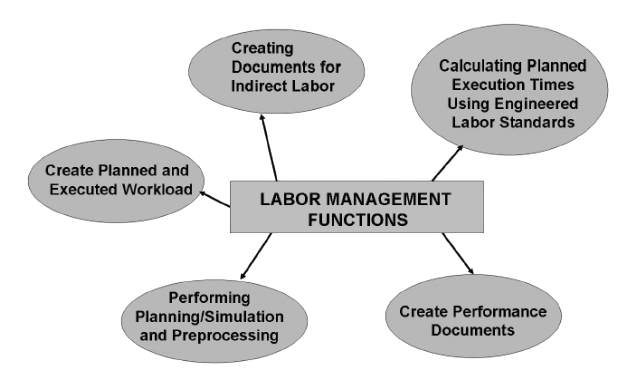
Examples include tracking forklift operators’ productivity or measuring packing speed. The tutorial explains how labor management integrates with reporting tools, providing managers with dashboards to monitor KPIs. Beginners practice configuring labor standards and analyzing reports. By mastering labor management, learners gain insights into workforce optimization, preparing them to support efficient warehouse operations and improve overall organizational performance.
Set to Ace Your AWS Job Interview? Check Out Our Blog on SAP EWM Interview Questions & Answer
SAP EWM Integration with SAP ERP
SAP EWM integrates seamlessly with SAP ERP to ensure smooth data flow across procurement, sales, and production. Beginners learn how inbound deliveries created in ERP are replicated in EWM for goods receipt processing. This section explains how outbound deliveries from ERP SD flow into EWM for picking, packing, and shipping. Freshers are guided through integration points such as purchase orders, sales orders, and financial postings. The tutorial highlights how EWM updates ERP with stock movements, ensuring consistency in inventory and accounting in our SAP WM EWM Training . Beginners also learn how middleware supports communication between systems. The section emphasizes the importance of integration testing to avoid errors. Examples include synchronizing vendor deliveries or updating customer shipments and SAP FICO Tutorial Step by Step For Freshers . SAP EWM Integration explains how integration enhances visibility, allowing managers to track processes across ERP and EWM. By mastering integration, learners gain confidence in handling end-to-end supply chain processes, preparing them for real-world scenarios where ERP and EWM work together to optimize operations.
Conclusion and Career Path in SAP EWM
Learning SAP EWM Step by Step Tutorial equips beginners with the essential skills to manage modern warehouse operations efficiently. By mastering warehouse structures, inbound and outbound processes, storage control, labor management, and integration with ERP, learners gain practical knowledge that is directly applicable in logistics and supply chain environments. This tutorial emphasizes accuracy, efficiency, and compliance, which are critical for successful warehouse management. Career opportunities for SAP EWM professionals are vast, ranging from warehouse analysts and logistics coordinators to advanced roles such as EWM consultants and solution architects in our SAP WM EWM Training . With experience, learners can specialize in areas like automation, cross-docking, or integration projects, expanding their career horizons. Continuous learning is vital, as SAP evolves with new technologies like S/4HANA and cloud-based solutions. The global demand for SAP EWM expertise ensures long-term career growth and relevance. Ultimately, this tutorial provides a strong foundation for building a rewarding career in SAP EWM, where dedication and practice lead to professional excellence and expanded opportunities in the logistics and supply chain industry.