LMS
LMS
Last updated on 20th Apr 2026| 7667

Infosys DSA in Java Questions and Answers in India is a focused guide designed to help candidates prepare for coding and technical rounds at Infosys. It includes commonly asked questions on data structures and algorithms using Java, such as arrays, linked lists, stacks, queues, trees, sorting, and searching techniques, along with clear explanations and sample solutions. This resource helps candidates strengthen their problem-solving skills, improve coding efficiency, and gain the confidence needed to perform well in technical interviews.
1. What is DSA and why is it important for Infosys interviews?
Ans:
DSA stands for Data Structures and Algorithms, which form the core foundation of technical problem-solving interviews. Recruiters use DSA questions to evaluate logical thinking, coding efficiency, and optimization capability of candidates. Strong DSA knowledge helps solve real programming challenges involving data storage and processing effectively. Companies like Infosys prefer candidates who can write clean and efficient solutions consistently. DSA preparation significantly improves chances of clearing coding rounds successfully.
2. How to prepare DSA in Java for Infosys hiring rounds?
Ans:
- Build strong fundamentals in arrays, strings, linked lists, stacks, queues, trees, and hashing. These topics appear frequently in coding assessments and interviews. Strong basics improve speed.
- Practice coding problems regularly in Java with clean syntax and logic. Daily problem solving increases confidence and accuracy significantly. Consistency matters greatly.
- Understand time and space complexity for every solution. Efficient code is highly valued during interviews and tests. Optimization improves scores.
- Solve mock tests and revise common coding patterns. Practice under pressure improves performance naturally. Revision strengthens memory.
3. What is importance of Java for DSA preparation?
Ans:
Java is widely preferred because it offers strong object-oriented structure and rich standard libraries. Collections framework in Java provides useful classes like ArrayList, HashMap, Stack, and Queue for problem solving. Automatic memory management through garbage collection helps candidates focus more on logic implementation. Java syntax is widely accepted in interviews and coding platforms across India. Learning DSA through Java creates strong placement readiness significantly.
4. How to improve Java coding speed for interviews?
Ans:
- Practice daily coding questions using loops, arrays, methods, and classes. Repetition improves typing speed and logic clarity clearly. Practice builds confidence.
- Memorize common input-output patterns using Scanner or BufferedReader. Faster input handling saves time in coding rounds significantly. Time management matters.
- Use built-in collections efficiently to save time. Java libraries reduce manual coding effort effectively. Smart usage increases speed.
- Repeat solved questions under timer conditions. Timed practice improves exam readiness naturally. Speed grows with discipline.
5. What is an array in Java?
Ans:
An array is a fixed-size data structure used to store multiple elements of the same type together. Elements are stored in contiguous memory locations and accessed using index positions starting from zero. Arrays are commonly used in searching, sorting, traversal, and dynamic programming problems frequently. Java arrays provide fast random access with simple syntax and efficient performance. Arrays are one of the most important DSA topics for interviews.
6. How to prepare array questions for Infosys interviews?
Ans:
- Practice traversal, insertion, deletion, and rotation problems. These operations build strong array fundamentals clearly. Basics are essential.
- Solve searching and sorting based array questions. Many tests combine arrays with algorithms significantly. Common patterns repeat often.
- Learn prefix sum, two-pointer, and sliding window techniques. These methods solve many optimization problems effectively. Pattern knowledge saves time.
- Revise edge cases like duplicates and empty arrays. Edge cases often cause wrong answers naturally. Careful thinking improves results.
7. What is a string in Java DSA problems?
Ans:
A string is a sequence of characters widely used in coding problems involving text manipulation and validation. Java provides the String class with many built-in methods for searching, replacing, and comparison tasks. StringBuilder is also useful when repeated modifications are required efficiently. Interview questions often involve palindrome checking, anagrams, substring logic, and frequency counting. Strong string preparation is essential for coding rounds.
8. How to prepare string problems effectively?
Ans:
- Solve palindrome, reverse string, substring, and duplicate character questions. These are common interview patterns clearly. Practice improves speed.
- Learn HashMap-based frequency counting methods. Frequency logic is useful in many coding problems significantly. Maps are powerful tools.
- Practice StringBuilder usage for optimization. Efficient modification reduces time and memory effectively. Good coding style matters.
- Understand ASCII and character array logic. Character handling improves string problem solving naturally. Fundamentals are important.
9. What is a linked list in Java?
Ans:
A linked list is a linear data structure where elements are connected using nodes and references. Each node generally contains data and pointer links to next or previous nodes. Linked lists allow dynamic memory usage and easier insertion or deletion than arrays. Java interviews commonly include traversal, reversal, and cycle detection questions. Linked lists are an important DSA topic for freshers.
10. Write a program for Linked List node creation in Java.
Ans:
This example creates a simple linked list node.
- class Node {
- int data;
- Node next;
- Node(int d){ data=d; }
- }
Here each node stores data and next node reference.
11. What is a stack in Java?
Ans:
A stack is a linear data structure that follows Last In First Out order of operations. Elements are inserted using push and removed using pop methods systematically. Stacks are useful in expression evaluation, parentheses balancing, and recursion-based logic problems. Java supports stack implementation using Stack class or Deque structures. Stack questions are common in coding interviews.
12. How to prepare stack problems in Java?
Ans:
- Practice push, pop, peek, and traversal operations. These are core stack functions clearly. Basics are necessary.
- Solve balanced parentheses and next greater element questions. These are frequently asked interview problems significantly. Practice improves confidence.
- Learn stack usage in recursion simulation. Many recursive flows use stack concepts effectively. Understanding helps debugging.
- Use Deque for modern Java stack implementation. It is efficient and recommended naturally. Good practice matters.
13. What is a queue in Java?
Ans:
A queue is a linear structure that follows First In First Out processing order. Elements are inserted from rear and removed from front during operations. Queues are widely used in scheduling, buffering, breadth-first search, and task processing systems. Java provides Queue interface implementations such as LinkedList and PriorityQueue. Queue concepts are valuable for interview coding rounds.
14. How to prepare queue questions effectively?
Ans:
- Practice enqueue, dequeue, peek, and circular queue logic. These operations build queue fundamentals clearly. Strong basics matter.
- Solve BFS traversal problems using queues. Trees and graph problems often use this significantly. Practice helps speed.
- Understand PriorityQueue for heap problems. It is useful for ranking and scheduling effectively. Important for advanced rounds.
- Compare stack and queue behavior regularly. Comparisons improve conceptual clarity naturally. Strong understanding helps interviews.
15. What is recursion in Java DSA?
Ans:
Recursion is a technique where a method calls itself to solve smaller subproblems repeatedly. It is commonly used in factorial, Fibonacci, tree traversal, and backtracking questions. Every recursive solution must include a valid base condition to stop infinite calls. Understanding call stack behavior is important while debugging recursive programs. Recursion is frequently asked in coding interviews.
16. How to prepare recursion questions?
Ans:
- Start with factorial and Fibonacci programs. Basic examples build recursive thinking clearly. Good starting point.
- Understand base case and recursive relation clearly. Missing base conditions cause errors significantly. Logic must be correct.
- Trace stack calls manually. Step tracing improves debugging skills effectively. Visualization helps learning.
- Practice subset generation and backtracking problems. Advanced recursion builds confidence naturally. Repetition improves mastery.
17. What is binary search in Java?
Ans:
Binary search is an efficient searching algorithm used on sorted arrays or lists. It repeatedly divides the search space into halves until the target is found. This method performs much faster than linear search for large datasets. Time complexity of binary search is logarithmic in nature. Binary search is one of the most important interview algorithms.
18. What is the difference between Linear Search and Binary Search?
Ans:
| Criteria | Linear Search | Binary Search |
|---|---|---|
| Requirement | Works on unsorted data. | Needs sorted data. |
| Method | Checks one by one. | Divides search space in half. |
| Speed | Slower for large data. | Faster for large data. |
| Complexity | O(n) | O(log n) |
19. What is sorting in DSA?
Ans:
Sorting means arranging elements in ascending or descending order based on required conditions. Common algorithms include bubble sort, selection sort, insertion sort, merge sort, and quick sort. Sorting is often used before searching, grouping, or optimization operations in problems. Interviewers may ask both logic and complexity comparison of algorithms. Sorting preparation is highly important for coding rounds.
20. How to prepare sorting algorithms in Java?
Ans:
- Understand bubble, selection, and insertion sort clearly. These build sorting fundamentals strongly. Basics are important.
- Learn merge sort and quick sort concepts. Advanced algorithms improve technical depth significantly. Common interview topics.
- Compare time complexity and use cases. Choosing right algorithm matters effectively. Optimization is valuable.
- Practice Java Arrays.sort usage. Built-in methods save time naturally. Practical coding knowledge helps.
21. What is time complexity in DSA?
Ans:
Time complexity measures how execution time grows as input size increases gradually. Big O notation is commonly used to express upper-bound performance behavior. Interviewers expect candidates to analyze loops, nested loops, and recursive logic carefully. Efficient algorithms with lower complexity are preferred in real applications strongly. Time complexity knowledge is essential for placements.
22. How to improve complexity analysis skills?
Ans:
- Practice loop counting and nested loop questions regularly. Counting iterations helps estimate running time clearly. This builds strong analysis skills.
- Compare brute force and optimized solutions. Comparing approaches shows why better algorithms matter significantly. Optimization thinking improves coding ability.
- Revise O(1), O(log n), O(n), and O(n²). Knowing common complexities helps answer interview questions quickly. Frequent revision improves memory.
- Explain complexity during coding practice. Speaking analysis aloud builds confidence naturally. It also improves interview communication.
23. What is space complexity in algorithms?
Ans:
Space complexity measures extra memory used by an algorithm during execution. It includes temporary arrays, recursion stack usage, and additional data structures created. Interviewers often ask candidates to optimize both time and memory together. Low memory usage becomes important for large-scale systems and embedded constraints. Understanding space complexity improves algorithm quality significantly.
24. How to reduce space usage in solutions?
Ans:
- Reuse existing arrays or variables where possible. Reusing memory avoids unnecessary allocations clearly. Efficient coding saves resources.
- Choose iterative solutions over deep recursion. Iteration may reduce stack memory usage significantly. This is useful for large inputs.
- Use in-place algorithms when suitable. In-place methods minimize extra storage effectively. Memory optimization is valuable.
- Review data structure necessity before coding. Unneeded structures increase memory naturally. Smart choices improve solutions.
25. What are final tips for Infosys DSA Java preparation?
Ans:
Success in Infosys DSA rounds depends on consistent coding practice and strong Java fundamentals. Candidates should master arrays, strings, linked lists, recursion, sorting, and complexity analysis thoroughly. Mock tests, debugging practice, and clean coding style improve overall performance significantly. Confidence, calmness, and structured explanations help during interview discussions strongly. Disciplined preparation offers the best path toward selection success.
26. What is a tree in DSA?
Ans:
A tree is a hierarchical non-linear data structure made of nodes connected through parent-child relationships. The topmost node is called root, while nodes without children are called leaf nodes. Trees are widely used in file systems, databases, compilers, and hierarchical storage models. Interview questions often involve traversal, height calculation, insertion, and search operations. Tree concepts are extremely important for coding interviews.
27. How to prepare tree questions in Java?
Ans:
- Learn node creation and child references. Understanding structure is the first step clearly. Basics improve coding confidence.
- Practice preorder, inorder, and postorder traversals. Traversals are asked frequently in interviews significantly. They build recursion skills.
- Solve height and balanced tree problems. These questions test logic and recursion effectively. Practice improves speed.
- Draw diagrams while solving recursive logic. Visual trees make understanding easier naturally. Diagrams reduce mistakes.
28. What is a binary tree?
Ans:
A binary tree is a tree structure where each node can have at most two children. These children are commonly referred to as left child and right child nodes. Binary trees are used in expression trees, search systems, and hierarchical algorithms. Many interview questions focus on traversal, depth, symmetry, and path calculations. Binary tree preparation is highly valuable for placements.
29. How to solve binary tree problems effectively?
Ans:
- Understand recursive subtree thinking. Most tree problems depend on recursive logic clearly. This improves solution design.
- Practice traversal-based problems regularly. Traversals help solve many interview questions significantly. Repetition builds speed.
- Solve path sum and mirror tree questions. These are common coding patterns effectively. Practice increases confidence.
- Use helper methods for clean Java code. Structured code is easier to debug naturally. Good style impresses interviewers.
30. What is a binary search tree?
Ans:
A binary search tree is a special binary tree with ordered node placement rules. Values smaller than a node are stored in the left subtree consistently. Values greater than a node are stored in the right subtree systematically. This property enables faster search, insertion, and deletion operations efficiently. BST is a frequently asked interview topic.
31. How to prepare BST questions in Java?
Ans:
- Practice insertion, search, and deletion. These are core BST operations clearly. Interviewers ask them often.
- Use inorder traversal to understand sorted output. Inorder traversal gives ascending values significantly. This confirms BST logic.
- Solve predecessor and successor questions. These improve understanding of node relationships effectively. Good practice topic.
- Draw node movement during deletion. Visual steps reduce confusion naturally. Deletion becomes easier to learn.
32. What is a graph in DSA?
Ans:
A graph is a non-linear structure made of vertices connected through edges. Graphs can be directed or undirected depending on edge direction rules. They are used in maps, networks, recommendations, and dependency systems frequently. Interview questions often involve traversal, shortest path, and connectivity logic. Graph preparation is very important for advanced coding rounds.
33. How to prepare graph problems effectively?
Ans:
- Learn adjacency list and matrix representation. These are standard graph storage methods clearly. Representation knowledge is essential.
- Practice DFS and BFS traversal questions. Traversals solve many graph problems significantly. They are common in interviews.
- Study cycle detection and components. These topics test deeper graph understanding effectively. Practice helps confidence.
- Solve grid-based graph problems. Many online tests include such questions naturally. Grid logic improves skills.
34. What is DFS in graph traversal?
Ans:
DFS stands for Depth First Search, a traversal method exploring one path deeply before backtracking. It is commonly implemented using recursion or an explicit stack structure. DFS is useful for cycle detection, components, maze solving, and topological patterns. Many interview problems can be simplified using DFS recursion clearly. DFS is an essential algorithm for coding preparation.
35. How to master DFS in Java?
Ans:
- Practice recursive DFS on graphs and trees. Recursion is the common DFS approach clearly. Practice builds confidence.
- Use visited arrays properly. Visited tracking avoids repeated processing significantly. It prevents infinite loops.
- Solve island counting problems. These are classic DFS interview questions effectively. Good pattern practice.
- Trace recursion stack manually. Manual tracing improves understanding naturally. It helps debugging.
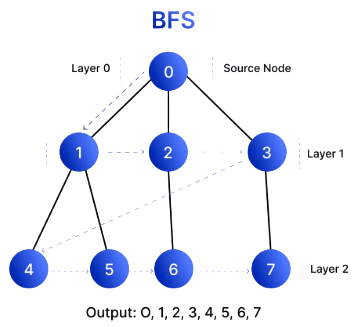
36. What is BFS in graph traversal?
Ans:
BFS stands for Breadth First Search, which explores nodes level by level systematically. It usually uses a queue for managing traversal order efficiently. BFS is useful for shortest path in unweighted graphs and level processing tasks. Many matrix and graph interview problems depend on BFS patterns. BFS is highly valuable for coding rounds.
37. How to prepare BFS questions in Java?
Ans:
- Understand queue operations and visited tracking. Queue usage is central to BFS clearly. Basics are important.
- Practice level order tree traversal. This is a common BFS application significantly. Interviewers ask it often.
- Solve shortest path in grids and graphs. BFS is ideal for such problems effectively. Practice improves speed.
- Use Java Queue interface for clean code. Standard interfaces improve readability naturally. Good coding style matters.
38. What is hashing in DSA?
Ans:
Hashing is a technique used to store and retrieve data quickly using keys. Java commonly uses HashMap, HashSet, and Hashtable for hash-based operations. Hashing provides near constant-time access in average scenarios efficiently. Interview problems often use hashing for frequency counting and lookup optimization. Hashing is one of the most important coding concepts.
39. How to prepare hashing questions effectively?
Ans:
- Practice HashMap insertion and retrieval. These operations are common in coding rounds clearly. Practice improves speed.
- Solve frequency count problems. Hashing is ideal for counting tasks significantly. Very common interview topic.
- Use HashSet for uniqueness checks. Sets quickly detect duplicates effectively. This saves coding time.
- Understand collision handling basics. Basic internals improve conceptual knowledge naturally. Strong fundamentals help interviews.
40. What is heap in DSA?
Ans:
A heap is a complete binary tree used for priority-based processing tasks. Max heap stores highest value at root, while min heap stores lowest value. Heaps are widely used in scheduling, top K elements, and priority systems. Java provides PriorityQueue for efficient heap implementation directly. Heap questions are common in coding interviews.

Enroll in Java Certification Course and UPGRADE Your Skills
Weekday / Weekend BatchesSee Batch Details41. How to prepare heap problems in Java?
Ans:
- Learn min heap and max heap concepts clearly. Understanding ordering rules helps solve many priority-based problems easily. Strong basics improve coding confidence.
- Practice kth largest and top K frequent problems. These are common interview questions using heaps regularly. Repeated practice improves speed.
- Use Java PriorityQueue with comparators. Comparator knowledge helps create custom min or max heap behavior effectively. This is important in Java interviews.
- Understand insert, delete, and heapify operations. Core heap operations explain performance and implementation logic naturally. Operational clarity is essential.
42. What is dynamic programming in DSA?
Ans:
Dynamic programming is an optimization technique used when subproblems repeat frequently. It stores previous results to avoid redundant recalculation during execution. DP problems commonly involve Fibonacci, knapsack, climbing stairs, and path counting. Interviewers evaluate pattern recognition and state transition understanding carefully. Dynamic programming is an advanced but highly valuable topic.
43. How to prepare dynamic programming questions?
Ans:
- Start with recursion based problems first. Recursion helps understand how problems break into smaller parts clearly. It forms the DP foundation.
- Convert recursion into memoization solutions. Saving repeated results improves efficiency significantly. This teaches optimization thinking.
- Practice tabulation approach regularly. Bottom-up solutions are common in interviews and production code effectively. Practice builds speed.
- Learn common DP patterns step by step. Recognizing patterns makes solving new questions easier naturally. Pattern knowledge is powerful.
44. What is greedy algorithm approach?
Ans:
Greedy algorithms make the best immediate choice at each step of execution. They aim to achieve global optimization through locally optimal decisions repeatedly. Common examples include activity selection, coin problems, and interval scheduling. Not every problem supports greedy correctness, so proof matters strongly. Greedy methods are useful interview topics.
45. How to prepare greedy problems effectively?
Ans:
- Learn common greedy patterns and sorting logic. Many greedy solutions begin after sorting inputs clearly. Pattern awareness saves time.
- Practice interval scheduling problems. These questions are classic greedy interview examples significantly. Practice improves recognition.
- Compare greedy with dynamic programming. Knowing when greedy fails improves deeper understanding effectively. Comparison builds judgment.
- Understand proof of correctness basics. Interviewers value logic behind greedy choices naturally. Reasoning is important.
46. What is backtracking in algorithms?
Ans:
Backtracking is a recursive technique that explores choices and reverses wrong paths systematically. It is useful for permutations, combinations, Sudoku, N-Queens, and subset generation. The method builds partial solutions and abandons invalid paths efficiently. Interviewers value clarity in recursion and pruning strategies strongly. Backtracking is important for advanced problem solving.
47. How to prepare backtracking questions in Java?
Ans:
- Understand choose-explore-unchoose pattern. This core flow explains how backtracking searches possibilities clearly. It is essential knowledge.
- Practice subsets and permutations problems. These are beginner-friendly backtracking questions used often significantly. They build confidence.
- Use lists carefully in recursion. Proper add and remove handling avoids bugs effectively. Java collection handling matters.
- Visualize recursion tree while debugging. Tree tracing helps understand calls and pruning naturally. Debugging becomes easier.
48. What is sliding window technique?
Ans:
Sliding window is an optimization technique used mainly for arrays and strings. It maintains a moving range of elements instead of recalculating repeatedly. This method is useful for longest substring, max sum, and fixed-size range problems. Sliding window often reduces time complexity from quadratic to linear significantly. It is a highly useful interview technique.
49. How to prepare sliding window problems?
Ans:
- Start with fixed-size window sum problems. These are easiest for understanding movement logic clearly. They build fundamentals.
- Practice variable-size substring questions. Flexible windows are common in coding interviews significantly. Practice improves adaptability.
- Use frequency maps for string problems. Maps help track characters efficiently during movement effectively. This is widely used.
- Trace left and right pointers carefully. Pointer movement understanding prevents logic mistakes naturally. Dry runs help greatly.
50. What are final tips for mid-level DSA Java preparation?
Ans:
Strong progress in DSA requires moving from basics into trees, graphs, heaps, and optimization methods. Candidates should practice Java collections usage along with algorithm implementation regularly. Understanding complexity and writing clean code improves interview performance significantly. Mock coding rounds help build speed and confidence under pressure strongly. Consistent disciplined practice creates the best results.
51. What is two pointer technique in DSA?
Ans:
The two pointer technique uses two indices moving through a data structure to solve problems efficiently. It is commonly applied on sorted arrays, strings, linked lists, and partition-based logic questions. This method often reduces unnecessary nested loops and improves time complexity significantly. Common examples include pair sum, palindrome checks, and duplicate removal operations. Two pointer technique is highly important for coding interviews.
52. How to prepare two pointer problems effectively?
Ans:
- Practice pair sum and triplet sum problems. These questions commonly use sorted arrays and pointers clearly. They are interview favorites.
- Solve palindrome and reverse string questions. Two pointers simplify string processing significantly. These are great starter problems.
- Learn slow-fast pointer in linked lists. This pattern helps detect cycles effectively. It is a classic concept.
- Trace pointer movement on paper. Visual practice improves accuracy naturally. Dry runs reduce mistakes.
53. What is merge sort in algorithms?
Ans:
Merge sort is a divide and conquer sorting algorithm that splits arrays recursively into smaller parts. Sorted halves are then merged together in correct order using comparison logic systematically. It guarantees stable performance with time complexity of O(n log n) consistently. Merge sort is useful when predictable sorting efficiency is required for large datasets. This algorithm is frequently asked in interviews.
54. How to prepare merge sort in Java?
Ans:
- Understand divide and merge steps clearly. Knowing both phases is essential for correct implementation. Concept clarity matters.
- Practice merging two sorted arrays. Merge logic is the heart of this algorithm significantly. Strong merge skills help greatly.
- Use temporary arrays correctly in Java. Proper memory handling avoids bugs effectively. Array practice is useful.
- Trace recursion tree during dry runs. Visualization improves understanding naturally. Recursion becomes easier to debug.
55. What is quick sort in algorithms?
Ans:
Quick sort is a divide and conquer algorithm that selects a pivot and partitions data accordingly. Elements smaller than pivot move left, while larger elements move right systematically. After partitioning, recursive sorting continues on remaining subarrays efficiently. Average time complexity is O(n log n), though worst case can degrade further. Quick sort is a classic interview topic.
56. How to prepare quick sort questions?
Ans:
- Learn pivot selection and partition logic. Partitioning determines overall correctness clearly. This is the key concept.
- Practice Lomuto and Hoare methods. Both approaches are common in interviews significantly. Comparison improves depth.
- Solve kth element quick select problems. These extend partition ideas effectively. They are useful advanced questions.
- Dry-run swaps on sample arrays. Step tracing improves debugging naturally. Practice builds confidence.
57. What is deque in Java collections?
Ans:
Deque stands for double-ended queue where insertion and deletion can occur from both ends. Java provides ArrayDeque as an efficient implementation for stack and queue operations. Deque is useful in sliding window maximum and monotonic queue problems frequently. It offers faster alternatives compared to older Stack class in many cases. Deque knowledge is valuable for coding interviews.
58. Write a program using deque in Java.
Ans:
This example shows basic deque operations.
- import java.util.*;
- class Main {
- public static void main(String[] args){
- Deque<Integer> dq = new ArrayDeque<>();
- dq.addFirst(10);
- dq.addLast(20);
- System.out.println(dq.pollFirst());
- }
- }
This program inserts and removes elements from both ends.
59. What is hashmap in Java DSA?
Ans:
HashMap is a key-value data structure used for fast insertion, retrieval, and update operations. It is widely used in frequency counting, caching, grouping, and lookup-based interview problems. Average access time is near constant under good hashing conditions efficiently. Java HashMap allows null keys and multiple null values with specific rules. HashMap mastery is essential for coding rounds.
60. How to prepare hashmap problems effectively?
Ans:
- Solve frequency count problems regularly. Counting logic is common in many coding rounds clearly. Practice improves speed.
- Practice pair sum and anagram grouping. These are classic HashMap interview questions significantly. Strong repetition helps.
- Learn put, get, and containsKey methods. Basic API knowledge is required in Java effectively. Method fluency matters.
- Understand collisions and resizing basics. Internal concepts improve deeper understanding naturally. This adds interview value.

Learn Java Training with Advanced Concepts By Industry Experts
- Instructor-led Sessions
- Real-life Case Studies
- Assignments
61. What is hashset in Java collections?
Ans:
HashSet is a collection used to store unique elements without maintaining insertion order. It is internally based on hashing principles for efficient average-time operations. HashSet is commonly used for duplicate removal and membership checking problems. Many coding questions become simpler using uniqueness checks through sets. HashSet is an important Java DSA tool.
62. How to prepare hashset questions?
Ans:
- Practice duplicate detection and unique count problems. These questions build confidence with set usage clearly. They are common in interviews.
- Solve longest consecutive sequence questions. Such problems show efficient HashSet searching significantly. They improve logical thinking.
- Learn add, remove, contains, and iteration methods. Core operations are required for coding rounds effectively. Basics must be strong.
- Compare HashSet with TreeSet. Understanding differences improves collection selection naturally. Comparison questions are frequent.
63. What is priority queue in Java?
Ans:
PriorityQueue in Java is a heap-based structure where highest or lowest priority elements are processed first. By default, Java PriorityQueue behaves as a min heap structure efficiently. It is widely used in scheduling, top K elements, and shortest path algorithms. Custom comparators allow flexible ordering based on problem requirements clearly. PriorityQueue is highly valuable in coding interviews.
64. How to prepare priority queue problems?
Ans:
- Solve kth largest and top frequent element problems. These are common heap applications in interviews clearly. Practice improves speed.
- Learn custom comparator syntax in Java. Custom ordering is important for advanced questions significantly. It increases flexibility.
- Practice merge lists and scheduling tasks. Real heap usage becomes easier through such problems effectively. Concepts become practical.
- Understand poll and peek operations. These methods are basic queue tools naturally. Strong fundamentals help coding rounds.
65. What is memoization in dynamic programming?
Ans:
Memoization is a top-down dynamic programming technique storing recursive results for reuse later. It avoids repeated computation of identical subproblems during execution significantly. This method improves exponential recursive solutions into efficient polynomial-time approaches often. Memoization is useful in Fibonacci, climbing stairs, and knapsack style problems. It is an important interview optimization concept.
66. How to prepare memoization problems in Java?
Ans:
- Start with recursive baseline solutions first. Understanding original recursion helps optimization clearly. Basics should come first.
- Use arrays or HashMap as cache. Stored results reduce repeated work significantly. Caching is the core idea.
- Practice Fibonacci and path-counting problems. These are classic memoization examples effectively. They build strong intuition.
- Compare time before and after memoization. Complexity comparison shows improvement naturally. This strengthens understanding.
67. What is tabulation in dynamic programming?
Ans:
Tabulation is a bottom-up dynamic programming method using iterative table filling. It starts from base states and builds final answers step by step systematically. Tabulation often avoids recursion stack overhead and improves implementation stability. Many classic DP problems can be solved elegantly through table methods. Tabulation is important for coding interviews.
68. How to prepare tabulation questions effectively?
Ans:
- Convert memoized solutions into iterative tables. This helps connect both DP approaches clearly. Conversion builds mastery.
- Practice coin change and knapsack problems. These are standard tabulation questions significantly. Repetition improves speed.
- Learn space optimization techniques. Reducing memory usage is useful in interviews effectively. Optimized solutions stand out.
- Draw DP tables manually. Visual tables improve understanding naturally. They help during revisions.
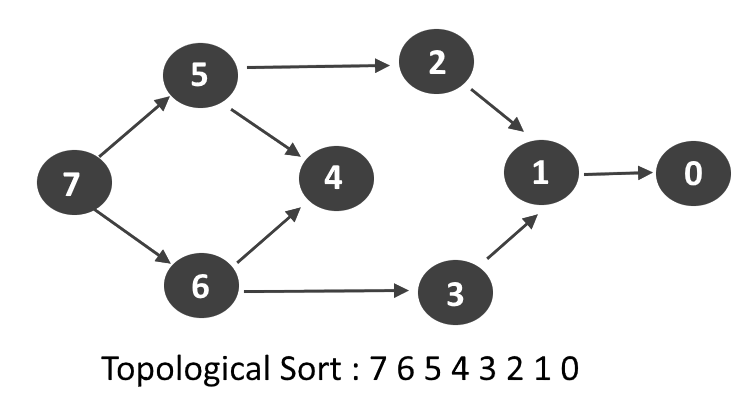
69. What is topological sort in graphs?
Ans:
Topological sort arranges nodes of a directed acyclic graph in dependency order. It is useful in course scheduling, task planning, and build systems frequently. The order ensures prerequisites appear before dependent nodes consistently. It can be solved using BFS indegree method or DFS approach. Topological sort is an advanced interview topic.
70. How to prepare topological sort problems?
Ans:
- Learn indegree calculation and queue processing. These are core BFS concepts for this algorithm clearly. They are essential.
- Practice prerequisite scheduling questions. Such problems commonly appear in interviews significantly. Practice improves confidence.
- Understand cycle detection relation. Cycles prevent valid ordering effectively. This concept is very important.
- Draw dependency graphs. Visual diagrams simplify graph logic naturally. They help faster solving.
71. What is union find data structure?
Ans:
Union Find, also called Disjoint Set Union, manages grouped elements efficiently. It supports union operations to merge sets and find operations to identify parents. This structure is widely used in connectivity, cycle detection, and Kruskal algorithm problems. Path compression and union by rank improve performance significantly. Union Find is useful for advanced coding rounds.
72. Write a program for Union Find in Java.
Ans:
This example shows basic parent initialization.
- int[] parent = new int[5];
- for(int i=0;i<5;i++)
- parent[i]=i;
- System.out.println(parent[2]);
Each element initially becomes its own parent.
73. What is trie data structure?
Ans:
A trie is a tree-like structure used for storing strings by character paths efficiently. It is widely used in autocomplete, dictionary search, and prefix matching systems. Each node represents character transitions with word-ending markers often included. Trie operations can be faster than repeated string comparisons in many cases. Trie is a valuable advanced interview topic.
74. How to prepare trie questions in Java?
Ans:
- Learn node structure with child references. Strong basics make trie coding easier clearly. Structure understanding is essential.
- Practice insert, search, and prefix check methods. These are common trie operations significantly. Repetition improves coding speed.
- Solve autocomplete and dictionary problems. Real applications make concepts practical effectively. Examples improve memory.
- Use arrays or maps for children. Different storage methods give flexibility naturally. Comparison builds depth.
75. What are final tips for advanced DSA progress in Java?
Ans:
Advanced DSA growth requires moving beyond basics into graphs, heaps, DP, and specialized structures. Candidates should practice implementing solutions cleanly using Java collections and classes regularly. Understanding optimization and complexity creates stronger interview performance significantly. Mock coding rounds help improve speed and calmness under time pressure strongly. Consistent structured practice delivers the best placement results.
76. What is segment tree in DSA?
Ans:
A segment tree is an advanced tree structure used for efficient range query processing on arrays. It supports operations like range sum, minimum, maximum, and updates very quickly. Instead of recalculating entire ranges repeatedly, stored segment values improve performance significantly. Segment trees are useful when many queries and updates happen together frequently. This topic appears in advanced coding interviews.
77. How to prepare segment tree questions effectively?
Ans:
- Learn left and right segment division. Understanding intervals is the base clearly. Strong basics matter.
- Practice build, query, and update operations. These are the main segment tree tasks significantly. Practice improves coding skill.
- Solve range sum and minimum queries. Common interview questions use these operations effectively. Repetition builds confidence.
- Draw recursion intervals manually. Visual tracing improves understanding naturally. It helps during debugging.
78. What is the difference between Segment Tree and Fenwick Tree?
Ans:
| Criteria | Segment Tree | Fenwick Tree |
|---|---|---|
| Use | Range query with updates. | Prefix sum query with updates. |
| Memory | Uses more memory. | Uses less memory. |
| Implementation | More complex. | Simpler. |
| Speed | Efficient for many operations. | Efficient for sums. |
79. How to prepare Fenwick tree problems?
Ans:
- Understand least significant bit movement. This is the key Fenwick logic clearly. Bit concepts are important.
- Practice prefix sum and update queries. These are standard Fenwick uses significantly. Practice builds speed.
- Compare with segment tree. Knowing differences improves tool selection effectively. Comparison questions are common.
- Trace index changes on paper. Manual tracing improves clarity naturally. It helps in coding rounds.
80. What is monotonic stack technique?
Ans:
A monotonic stack maintains elements in increasing or decreasing order during traversal. It helps solve nearest greater or smaller element problems very efficiently. Many array interview questions become linear-time solutions using this approach. The stack automatically removes unnecessary values while processing new elements smartly. This technique is highly useful for placements.
81. How to prepare monotonic stack questions effectively?
Ans:
- Practice next greater element and stock span problems regularly. These problems build core understanding of stack patterns clearly. Repetition improves speed and confidence.
- Learn increasing and decreasing stack patterns clearly. Knowing both patterns helps solve many interview variations efficiently. Pattern recognition saves time.
- Solve histogram and daily temperature problems. These are classic applications of monotonic stacks in coding rounds frequently. They improve practical skill.
- Visualize push and pop operations through dry runs. Step-by-step tracing makes stack logic easier to understand naturally. Dry runs reduce mistakes.
82. What is monotonic queue technique?
Ans:
A monotonic queue keeps elements ordered while allowing efficient front access operations. It is mainly used in sliding window maximum or minimum problems frequently. Unnecessary elements are removed from rear when better candidates arrive. This helps process moving ranges quickly without repeated scanning. Monotonic queue is an advanced optimization topic.
83. How to prepare monotonic queue problems?
Ans:
- Practice sliding window maximum problems first. This is the most common use case of monotonic queues clearly. It builds strong basics.
- Learn storing indexes instead of values. Indexes help track expired window elements efficiently. This is an important technique.
- Understand deque push and pop operations. Proper front and rear handling is essential for correct solutions significantly. Deque mastery improves coding confidence.
- Repeat dry runs on sample inputs. Manual simulation helps understand movement of window ranges naturally. Practice reduces confusion.
84. What is bit manipulation in DSA?
Ans:
Bit manipulation uses binary operations to solve problems efficiently at low level. Common operators include AND, OR, XOR, left shift, and right shift methods. It is useful for parity checks, masks, swapping values, and subset generation. Many coding problems become faster using bitwise logic smartly. Bit manipulation is important for advanced rounds.
85. How to prepare bit manipulation questions?
Ans:
- Learn binary representation and bitwise operators. Strong basics make advanced bit problems easier to solve clearly. Fundamentals are essential.
- Practice odd-even and power of two problems. These are common beginner interview questions asked frequently. They build confidence.
- Solve unique element using XOR logic. XOR is widely used in optimized coding problems significantly. It is a must-know concept.
- Use truth tables for better understanding. Visual patterns help remember operator behavior naturally. This improves speed in interviews.
86. Write a program for Kadane algorithm.
Ans:
This program finds maximum sum subarray using Kadane algorithm.
- int arr[] = {-2,1,-3,4,-1,2,1,-5,4};
- int max = arr[0], sum = arr[0];
- for(int i=1;i<arr.length;i++){
- sum = Math.max(arr[i], sum + arr[i]);
- max = Math.max(max, sum);
- }
- System.out.println(max);
Here output gives maximum contiguous subarray sum.
87. How to prepare Kadane algorithm problems?
Ans:
- Understand current sum and best sum logic. These two values are the heart of Kadane algorithm clearly. Once understood, coding becomes simple.
- Practice maximum subarray variations. Different versions appear often in interviews significantly. Practice builds adaptability.
- Solve circular subarray problems. This is a popular advanced extension of Kadane logic frequently. It improves depth of knowledge.
- Dry run negative and mixed arrays. Edge cases help avoid wrong assumptions naturally. Testing improves accuracy.
88. What is prefix sum technique?
Ans:
Prefix sum stores cumulative totals so range sums can be answered quickly. Each position contains sum of all previous elements including current value. This reduces repeated summation work in multiple query problems significantly. Prefix sums are used in arrays, matrices, and hashing combinations frequently. It is a very useful interview technique.
89. How to prepare prefix sum problems effectively?
Ans:
- Practice range sum query problems. These are the simplest and most common prefix sum applications clearly. They build fundamentals.
- Solve subarray sum equals target using hashing. Prefix sums combined with maps are powerful significantly. This pattern is popular in interviews.
- Learn two-dimensional prefix sums. Matrix-based questions often use this technique efficiently. It expands problem-solving ability.
- Repeat formula transitions regularly. Remembering formulas improves coding speed naturally. Practice creates confidence.
90. What is suffix array concept in basics?
Ans:
A suffix concept generally involves values calculated from the end toward the beginning. Suffix sums or suffix maximum arrays are common interview applications. They help solve right-side dependent questions efficiently. Though advanced suffix arrays are separate topics, basic suffix logic is common. Understanding suffix processing improves array problem solving.
91. How to prepare suffix based questions?
Ans:
- Practice suffix sum and suffix maximum problems. These build right-to-left processing confidence clearly. They are useful basics.
- Combine prefix and suffix arrays. Many optimized problems use both techniques together significantly. Combination patterns are valuable.
- Solve product except self questions. This is a classic interview problem using prefix and suffix logic frequently. It improves understanding.
- Track indexes carefully. Correct positions are important for accurate answers naturally. Attention to detail matters.
92. What is the difference between memoization and tabulation?
Ans:
| Criteria | Memoization | Tabulation |
|---|---|---|
| Approach | Top-down recursive method. | Bottom-up iterative method. |
| Storage | Stores solved recursive states. | Uses table filled sequentially. |
| Speed | May have recursion overhead. | Usually faster iterative execution. |
| Use | Natural for recursive thinking. | Good for optimized DP solutions. |
93. How to revise DSA before Infosys interviews?
Ans:
- Revise arrays, strings, trees, graphs, and hashing. These are the most common interview topics clearly. Strong revision improves readiness.
- Re-solve previously completed problems. Familiar problems rebuild confidence and speed significantly. Revision strengthens memory.
- Review time complexity and Java syntax. Good coding with analysis creates stronger interview impact effectively. Basics matter greatly.
- Take timed mock tests. Time pressure practice improves speed and calmness naturally. Mocks simulate real rounds.
94. What are common mistakes in Java DSA interviews?
Ans:
Common mistakes include ignoring edge cases and rushing into coding without planning. Many candidates forget null checks, bounds handling, or duplicate scenarios. Poor variable naming and messy structure can reduce clarity significantly. Ignoring time complexity discussion also weakens interview impression. Avoiding these mistakes improves success chances strongly.
95. What are ultimate tips for Infosys DSA in Java success?
Ans:
Success requires disciplined preparation across fundamentals, patterns, and advanced algorithm topics consistently. Candidates should code daily in Java and review mistakes carefully after practice sessions. Clear explanations, optimized logic, and calm problem-solving improve interview performance significantly. Mock rounds help build speed, confidence, and time management strongly. Persistent structured effort creates the best path toward selection.
![Top Informatica Interview Questions & Answers – [UPDATED] Interview Question](https://www.acte.in/wp-content/uploads/2020/05/4-img-acte-1-400x218.jpeg)