LMS
Last updated on 03rd Sep 2026| 4690

- Introduction to Multimodal AI Tutorial: Text, Image, Audio, and Video AI
- Understanding the Basics of Multimodal AI
- Why Multimodal AI Is Important for Modern AI Applications
- Multimodal AI Architecture and How It Works
- Text AI and Natural Language Processing in Multimodal Systems
- Image AI and Computer Vision in Multimodal Applications
- Audio and Video AI Processing and Applications
- Best Multimodal AI Tools, Models, and Platforms
- Multimodal AI Applications, Benefits, and Best Practices
- Conclusion and Next Steps for Learning Multimodal AI
Introduction to Multimodal AI Tutorial: Text, Image, Audio, and Video AI
Multimodal AI is an advanced field of artificial intelligence that enables systems to understand, process, combine, and generate information across multiple data types, including text, images, audio, and video. Unlike traditional AI models that generally focus on a single type of input, multimodal systems connect information from different formats to develop a broader understanding of context and produce more relevant results. For example, a multimodal AI system may analyze an image, understand a spoken question, interpret written instructions, and generate an appropriate response. These capabilities are supported by technologies such as machine learning, deep learning, natural language processing, computer vision, speech recognition, and generative AI. Learners who want to build a strong foundation in these technologies can explore Artificial Intelligence Training to understand the core concepts and practical applications of AI. Multimodal AI is increasingly applied in virtual assistants, content creation, healthcare, education, accessibility, media analysis, customer service, and automation. This tutorial explains the core concepts, working methods, models, tools, applications, and practical uses of text, image, audio, and video AI.
Understanding the Basics of Multimodal AI
Multimodal AI works with multiple forms of data, including text, images, audio, and video, enabling intelligent systems to understand information from different sources within a single workflow. Text processing uses Natural Language Processing to interpret written language, answer questions, summarize information, and generate responses. Image understanding relies on computer vision to recognize objects, analyze scenes, and interpret visual relationships. Audio AI processes speech and sounds through speech recognition, transcription, voice analysis, and text-to-speech technologies. Video AI combines visual frames, audio, movement, and contextual information to understand events and activities over time. Multimodal models use data fusion techniques to connect information from these different modalities and develop a more complete understanding of context. By processing multiple input formats together, these systems can provide more accurate and meaningful outputs while supporting natural interactions through text, voice, images, audio, and video.
Why Multimodal AI Is Important for Modern AI Applications
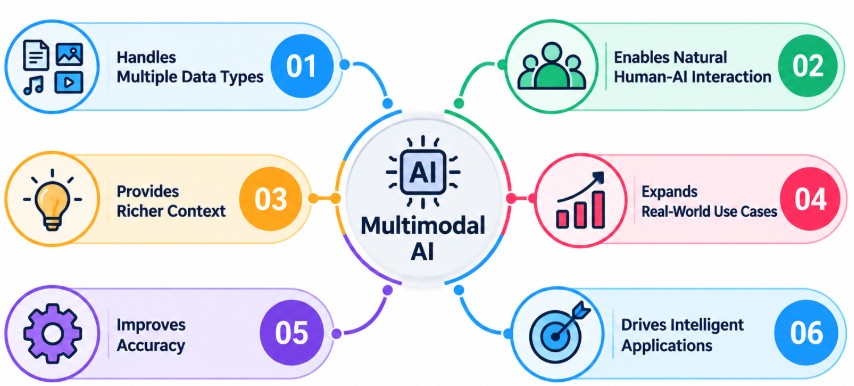
- Natural User Interaction: Users can communicate with AI through text, voice, images, or video, creating more flexible and natural interactions across different applications.
- Improved Accuracy: Combining multiple data types allows AI systems to compare information from different sources, reducing ambiguity and improving the quality of analysis and results.
- Better Context Understanding: Multimodal AI combines text, images, audio, and video to understand information more completely and provide responses based on broader context. Beginners can build their foundation with an AI Tutorial for Beginners to understand essential AI concepts.
- Enhanced Accessibility: Multimodal systems can support speech, visual, and text-based interactions, making AI applications more accessible to users with different communication needs.
Get Your Artificial Intelligence Certification by Learning from Industry-Leading Experts and Advancing Your Career with ACTE’s Artificial Intelligence Course.
Multimodal AI Architecture and How It Works
- Input Layer: The system receives information from different modalities such as text, images, audio, and video, preparing each input type for further AI processing.
- Modality Encoders: Specialized encoders convert text, visual, audio, and video data into machine-readable representations that capture important features from each modality.
- Feature Extraction: The system identifies meaningful patterns, objects, words, sounds, and visual elements from different inputs to create useful representations for AI processing. Understanding these fundamentals through an Artificial Intelligence Tutorial can help learners understand how AI processes different types of information.
- Multimodal Fusion: Information from different modalities is combined to understand relationships between text, images, audio, and video and create a unified representation.
- AI Reasoning: The multimodal model analyzes the combined information, understands context, identifies relationships, and generates an appropriate interpretation or response.
- Output Generation: Based on the processed inputs, the system can generate different outputs such as text responses, images, audio, summaries, or other AI-generated content.
- Cross-Modal Learning: Multimodal models learn connections between different data types, helping them associate words with images, speech with text, and visual events with related information.
- Application Integration: The architecture can be integrated with software, APIs, databases, and cloud platforms to support real-world applications across business, education, healthcare, and automation.

Learn Artificial Intelligence Training Course to Build Your Skills
Weekday / Weekend BatchesSee Batch DetailsText AI and Natural Language Processing in Multimodal Systems
Text AI and Natural Language Processing play an important role in multimodal systems by helping AI understand words, sentences, questions, instructions, intent, and conversational context. Multimodal models can use text to generate descriptions, summaries, answers, reports, and other content based on information collected from different data formats. By connecting text with images, AI can identify objects, describe visual scenes, and answer image-related questions. Speech recognition converts audio into text, allowing systems to understand voice instructions and combine them with other inputs. Text prompts can also guide video analysis to identify events, summarize scenes, and answer questions about activities. NLP techniques improve semantic understanding by identifying meaning, relationships, keywords, and context. Learners who want to strengthen their understanding of AI and its practical applications can explore Artificial Intelligence Training to build a stronger foundation in these concepts. These capabilities support conversational assistants, document analysis, customer service, content creation, knowledge management, reporting, and business automation while allowing users to interact naturally using text alongside images, audio, and video.

Get JOB Oriented Artificial Intelligence Training for Beginners By MNC Experts
- Instructor-led Sessions
- Real-life Case Studies
- Assignments
Image AI and Computer Vision in Multimodal Applications
- Image Recognition: Computer vision enables AI systems to identify objects, people, scenes, patterns, and visual features within images for analysis and decision-making.
- Image Classification: AI models can categorize images into relevant classes by analyzing visual patterns, shapes, colors, and other learned features from image data.
- Object Detection: Multimodal systems can locate and identify multiple objects within an image, supporting applications such as security, retail, manufacturing, and automation.
- Image Captioning: AI can analyze visual content and generate descriptive text that explains the objects, activities, and context represented in an image.
- Visual Question Answering: Multimodal AI allows users to ask questions about images and receive answers by combining visual understanding with natural language processing.
- Image Generation: Generative AI models can create new images from text prompts, reference images, or combined inputs for creative, design, and content applications. Learners can explore an AI Project Development Tutorial to understand how these capabilities can be applied in practical AI projects.
- Image and Text Analysis: AI can combine written information with visual data to understand documents, charts, diagrams, screenshots, and other content containing multiple information types.
- Computer Vision Applications: Image AI supports healthcare analysis, quality inspection, autonomous systems, retail analytics, security monitoring, and intelligent automation across industries.
Want to Master Artificial Intelligence? Explore the Artificial Intelligence Master Program Offered at ACTE Today!
Audio and Video AI Processing and Applications
Audio and video AI enables intelligent systems to understand, process, analyze, and generate information from speech, sounds, visual frames, movements, and multimedia content. Speech recognition converts spoken language into text, allowing AI systems to process voice commands, conversations, interviews, and meetings. Audio understanding helps identify speech patterns, sounds, acoustic events, and other useful information, while text-to-speech technology converts written content into natural-sounding audio for assistants, education, and accessibility applications. Video AI analyzes frames, objects, scenes, movements, and events over time to understand activities and extract valuable insights. Learners looking to strengthen their understanding of AI technologies and their practical applications can explore Artificial Intelligence Training to build a strong foundation in these concepts. Multimodal systems can also summarize long videos by identifying important scenes, speech, actions, and events. By combining audio, video, and text, AI can create subtitles, captions, scripts, and voiceovers while supporting applications in customer service, media analysis, online learning, accessibility, content moderation, virtual assistants, and business automation.
Best Multimodal AI Tools, Models, and Platforms
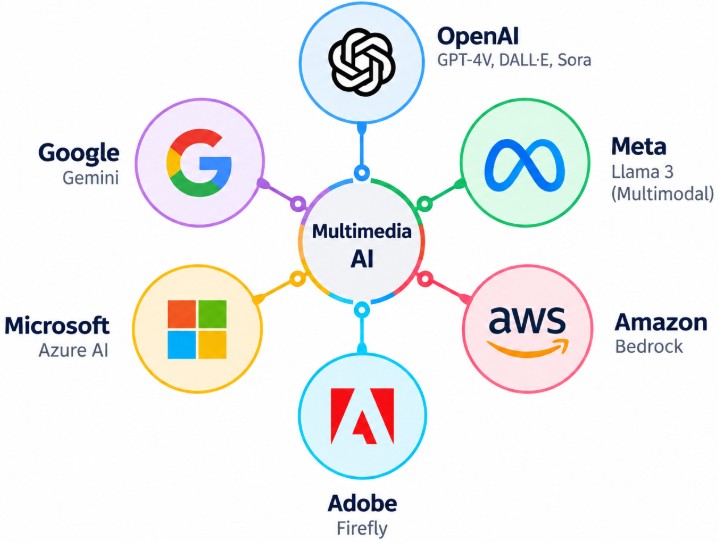
- GPT Models: Multimodal GPT models can process text and visual inputs while supporting reasoning, content generation, image understanding, and interactive AI applications.
- Google Gemini: Gemini supports multiple modalities and can work with text, images, audio, video, and other inputs for reasoning, analysis, content generation, and AI applications.
- Claude: Claude provides strong language and visual understanding capabilities that can support document analysis, image interpretation, content creation, and business workflows.
- Hugging Face: Hugging Face provides models, datasets, and development resources that help professionals experiment with multimodal AI for research and application development. Learners exploring advanced AI tools can also refer to an Agentic AI Tutorial for Beginners to understand how AI systems can perform tasks using intelligent workflows.
Want to Learn About AI? Explore Our Artificial Intelligence Interview Questions and Answers Featuring the Most Frequently Asked Questions in Job Interviews.
Multimodal AI Applications, Benefits, and Best Practices
Multimodal AI provides valuable applications across healthcare, education, marketing, customer service, content creation, and business automation by combining text, images, audio, and video. In healthcare, it can support clinical analysis, documentation, medical image interpretation, and patient communication. Educational platforms can use multimodal AI to create interactive learning materials, explain concepts, support tutoring, and personalize learning experiences. Marketing teams can generate and analyze text, images, audio, and videos for advertising, campaigns, and social media. Customer service systems can process written questions, voice interactions, screenshots, and documents to provide more relevant assistance. Content creators can generate scripts, images, captions, voiceovers, and videos, while businesses can automate multimedia workflows. Effective implementation requires reliable data, suitable models, clear prompts, human review, privacy controls, security measures, regular testing, and continuous evaluation of accuracy, quality, efficiency, and user feedback.
Conclusion and Next Steps for Learning Multimodal AI
Multimodal AI brings together text, images, audio, and video to create intelligent systems capable of understanding and responding to information across multiple formats. Beginners can build a strong foundation by learning Natural Language Processing, computer vision, speech recognition, video analysis, deep learning, generative AI, and multimodal model architectures. Knowledge of Python, APIs, prompt engineering, data processing, AI frameworks, and model evaluation can further strengthen practical development skills. Learners can strengthen their understanding of core AI concepts through Artificial Intelligence Training while developing practical skills for multimodal applications. Learners should apply these concepts through hands-on projects such as visual question-answering systems, voice assistants, document analysis tools, video summarizers, and multimedia content generators. Practical experimentation helps explain how different modalities interact to solve real-world problems. As multimodal AI continues to advance, exploring new models, development tools, responsible AI practices, and industry applications can prepare learners for opportunities in AI development, automation, content creation, research, and intelligent application design.