LMS
LMS
Last updated on 09th May 2026| 6603

Learning Python interview concepts is important for beginners who want to start a successful career in software development. Python is widely used in web development, automation, data science, artificial intelligence, and testing, making it one of the most popular programming languages in the IT industry. Preparing for Python interview questions helps freshers understand basic programming concepts such as variables, loops, functions, object-oriented programming, lists, dictionaries, and exception handling. Interview questions and answers also improve problem-solving skills and coding confidence during technical discussions. Companies like Accenture often ask beginner-friendly Python questions to test logical thinking, coding knowledge, and communication abilities. By practicing common Python interview questions regularly, candidates can improve their technical skills, perform better in coding rounds, and increase their chances of getting selected in top IT companies.
1. What is Python?
Ans:
Python is a high-level programming language. It is easy to learn and use. Python supports object-oriented programming. It is widely used in web development, data science, and automation. Python has simple syntax compared to other languages. It improves code readability and productivity. Accenture uses Python for software development and data-related projects. Python also supports multiple libraries and frameworks. It is platform-independent and open source. Beginners prefer Python because of its simplicity and flexibility.
2. What is an interpreted language?
Ans:
An interpreted language executes code line by line. Python uses an interpreter to run programs. It does not require compilation before execution. This makes debugging easier for developers. Errors can be identified quickly during execution. Interpreted languages improve development speed. Python’s interpreter converts source code into machine-readable instructions. It provides flexibility during coding. Beginners can easily test small code snippets. This makes Python suitable for learning and rapid development.
3. How Do You Reverse A String In Python?
Ans:
Reversing A String Is A Common Python Interview Question Used To Test Basic Programming Knowledge. Python Provides Multiple Ways To Reverse A String, But Slicing Is The Simplest And Most Efficient Method. The [::-1] Syntax Traverses The String In Reverse Order. It Is Easy To Understand And Requires Less Code. This Method Is Frequently Used In Coding Interviews. It Demonstrates Understanding Of String Manipulation Techniques In Python Programming.
- text = “Python”
- reversed_text = text[::-1]
- print(“Reversed String:”, reversed_text)
4. What is PEP 8 in Python?
Ans:
PEP 8 is the coding style guide for Python. It provides rules for writing clean and readable code. It recommends proper indentation and naming conventions. PEP 8 improves code consistency among developers. It helps teams maintain projects easily. Python developers follow PEP 8 standards in professional environments. Accenture values clean and maintainable code practices. Following PEP 8 improves collaboration. It also makes debugging easier. Good coding standards improve software quality.
5. What are variables in Python?
Ans:
- Variables are used to store data values. Python does not require explicit variable declaration. A variable is created when a value is assigned.
- Variables can store numbers, strings, and objects. Python supports dynamic typing. Variable names should follow naming rules. Meaningful variable names improve readability. Variables help manage data efficiently in programs.
- They are essential for performing operations and calculations. Python variables make coding simple and flexible.
6. What are data types in Python?
Ans:
Data types define the type of value stored in a variable. Python supports integer, float, string, and boolean types. It also supports list, tuple, set, and dictionary. Data types help perform specific operations correctly. Python automatically identifies data types during execution. Proper data type usage improves program efficiency. Developers use data types to organize and process data. Understanding data types is important for coding accuracy. Python provides flexibility with dynamic typing. This makes programming easier for beginners.
7. What is a string in Python?
Ans:
- A string is a sequence of characters. Strings are enclosed within single or double quotes. Python strings are immutable in nature.
- Strings are used to store text data. Python provides many string functions for manipulation. Operations like concatenation and slicing can be performed on strings. Strings are widely used in applications and user inputs.
- Developers use strings for displaying messages and processing text. Python makes string handling simple and efficient. Strings are an important part of programming.
8. What is a list in Python?.
Ans:
- A list is a collection data type in Python. It can store multiple values in a single variable. Lists are ordered and mutable. Different data types can be stored inside a list.
- Lists support indexing and slicing operations. Python provides methods like append and remove for lists. Lists are widely used for storing dynamic data.
- They are useful in loops and data processing. Lists improve data management in applications. Python lists are flexible and easy to use.
9. What is a tuple in Python?
Ans:
A tuple is an ordered collection in Python. Tuples are immutable, meaning values cannot be changed. They are created using parentheses. Tuples can store multiple data types. They are faster compared to lists. Tuples are used when data should remain constant. Python supports indexing and slicing on tuples. Tuples improve data security in programs. They consume less memory than lists. Developers use tuples for fixed collections of data.
10. What is a dictionary in Python?
Ans:
A dictionary stores data in key-value pairs. Dictionaries are mutable and unordered collections. Keys must be unique in a dictionary. Dictionaries provide fast data retrieval. Python uses curly braces to define dictionaries. They are widely used in real-time applications. Developers use dictionaries for storing structured information. Dictionary methods help add and remove data efficiently. Python dictionaries improve performance in searching operations. They are important for handling large datasets.
11. What is a set in Python?
Ans:
A set is an unordered collection of unique elements. Sets are defined using curly braces. Duplicate values are not allowed in sets. Sets are useful for mathematical operations. Python supports union and intersection operations on sets. Sets improve efficiency in membership testing. They are mutable but do not support indexing. Developers use sets for removing duplicate values. Sets help perform fast operations on collections. Python sets are simple and efficient for data handling.
12. What are operators in Python?
Ans:
Operators are symbols used to perform operations on variables. Python supports arithmetic and comparison operators. Logical operators are used for conditional statements. Assignment operators help assign values to variables. Bitwise operators work on binary values. Operators simplify calculations and data processing. They improve code readability and functionality. Developers use operators in decision-making and loops. Python provides many operators for different purposes. Understanding operators is essential for programming.
13. What is type casting in Python?
Ans:
- Type casting converts one data type into another. Python supports implicit and explicit type conversion. Functions like int(), float(), and str() are used for casting.
- Type conversion helps perform compatible operations. It improves flexibility in programs. Developers use type casting while processing user inputs
- Incorrect type usage may cause errors. Python makes type conversion simple and efficient. Type casting ensures smooth execution of programs. It is commonly used in real-world applications.
14. What is input() in Python?
Ans:
The input() function is used to accept user input. It reads data entered from the keyboard. By default, input values are treated as strings. Developers use type casting for numerical inputs. Input functions make programs interactive. Python applications often require user interaction. The input() function improves program usability. It is simple and easy to implement. Beginners use input() in basic coding exercises. It is widely used in Python applications.
15. What is output in Python?
Ans:
Output refers to displaying information to the user. Python uses the print() function for output. It helps show results and messages on the screen. Developers use output for debugging and interaction. Output improves communication between user and program. Python supports formatted output techniques. Print statements are easy to use and understand. Outputs help verify program functionality. They are important for application development. Python provides flexible output formatting options.
16. What are conditional statements in Python?
Ans:
Conditional statements control program flow based on conditions. Python uses if, elif, and else statements. They help make decisions in programs. Conditions are evaluated as true or false. Conditional statements improve program intelligence. Developers use them for validation and logic building. Python syntax makes conditions easy to implement. Nested conditions are also supported. Conditional statements are important in real-world applications. They help create dynamic and interactive programs.
17. What is a loop in Python?
Ans:
A loop repeatedly executes a block of code. Python supports for and while loops. Loops reduce code repetition and improve efficiency. Developers use loops for iterating through data. Loops help automate repetitive tasks. Python provides loop control statements like break and continue. Nested loops are also supported. Loops are important for data processing and automation. They simplify complex programming tasks. Python loops are easy to understand and implement.
18. What is a for loop in Python?
Ans:
- A for loop is used for iteration in Python. It executes code for each item in a sequence. Lists, tuples, and strings can be iterated using for loops.
- The range() function is commonly used with for loops. For loops improve code simplicity and readability. Developers use them for repetitive operations.
- They are widely used in data handling tasks. Python for loops reduce manual coding effort. They help automate processes efficiently. Beginners learn for loops early in Python programming.
19. What is a while loop in Python?
Ans:
A while loop executes code as long as a condition is true. It is useful when the number of iterations is unknown. Developers must ensure the condition eventually becomes false. Otherwise, infinite loops may occur. While loops are used in automation and validation tasks. Python supports loop control statements within while loops. They improve program flexibility. While loops are easy to implement in Python. They are important for repetitive processing tasks. Proper condition handling ensures efficient execution.
20. What is a function in Python?
Ans:
A function is a reusable block of code. Functions help reduce code duplication. Python uses the def keyword to define functions. Functions improve modularity and readability. They can accept parameters and return values. Developers use functions to organize large programs. Functions make debugging and maintenance easier. Python supports built-in and user-defined functions. Reusable functions improve productivity. Functions are essential in software development.
21. What is a return statement in Python?
Ans:
A return statement is used inside a function to send back a value. It ends the execution of the function. Developers use return statements to get results from functions. A function can return numbers, strings, or objects. Python allows multiple return values as tuples. Return statements improve code reusability and flexibility. They help separate logic from output display. Functions without return statements return None by default. Proper use of return improves program structure. It is an important concept in Python programming.
22. How Do You Find The Largest Number In A List?
Ans:
Finding The Largest Number In A List Tests Knowledge Of Loops And Comparison Operations. Python Provides The Built-In max() Function To Simplify This Task. It Quickly Returns The Highest Value From A List. Developers Often Use This Method For Better Readability And Efficiency. This Question Is Common In Beginner-Level Interviews. It Helps Interviewers Evaluate Basic Understanding Of Data Structures And Python Functions.
- numbers = [10, 25, 7, 99, 45]
- largest = max(numbers)
- print(“Largest Number:”, largest)
23.What is recursion in Python?
Ans:
Recursion is a process where a function calls itself. It is used to solve problems in smaller steps. Recursive functions must have a base condition. Without a base condition, infinite recursion occurs. Recursion is useful in mathematical and tree-related problems. Python supports recursive programming effectively. It simplifies complex logic in some cases. Developers use recursion for factorial and Fibonacci calculations. Recursive solutions improve code readability for specific tasks. Understanding recursion is important for problem-solving skills.
24. What is a module in Python?
Ans:
A module is a file containing Python code. It may include functions, classes, and variables. Modules improve code organization and reusability. Python provides many built-in modules like math and random. Developers can also create custom modules. Modules reduce code duplication in large applications. They help separate functionality into different files. Importing modules improves maintainability. Python modules support efficient software development. They are widely used in real-world applications.
25. What is a package in Python?
Ans:
A package is a collection of related modules. Packages help organize large Python projects. They contain an init.py file. Packages improve code management and modularity. Developers use packages to group similar functionalities. Python supports nested packages as well. Packages simplify application maintenance and scalability. They allow reuse of modules across projects. Python’s package system improves project structure. Large applications commonly use packages for better organization.
26. What is the difference between list and tuple?
Ans:
- Lists are mutable while tuples are immutable. Lists use square brackets and tuples use parentheses. Developers modify lists after creation.
- Tuples cannot be changed once created. Lists consume more memory compared to tuples. Tuples are faster in execution than lists.
- Lists are suitable for dynamic data storage. Tuples are preferred for fixed data collections. Both support indexing and slicing operations. Choosing between them depends on application requirements.
27. What is indentation in Python?
Ans:
Indentation refers to spaces at the beginning of code lines. Python uses indentation to define code blocks. Unlike other languages, braces are not required. Proper indentation improves code readability. Incorrect indentation causes syntax errors. Developers usually use four spaces for indentation. Indentation is important in loops and conditional statements. It makes Python code clean and structured. Consistent indentation improves maintainability. Python strictly enforces indentation rules.
28. What is a comment in Python?
Ans:
Comments are non-executable lines in Python code. They help explain the purpose of code. Single-line comments use the # symbol. Multi-line comments use triple quotes. Comments improve code readability and understanding. Developers use comments for documentation purposes. They help teams collaborate effectively. Comments do not affect program execution. Good commenting practices improve software maintenance. Python supports simple and flexible commenting methods.
29. What is exception handling in Python?
Ans:
Exception handling manages runtime errors in programs. Python uses try, except, and finally blocks. It prevents abrupt program termination. Developers use exception handling for safe execution. Errors can be handled gracefully using exceptions. Python supports multiple exception types. The finally block executes regardless of exceptions. Exception handling improves program reliability. It helps debug applications effectively. Robust applications require proper exception handling mechanisms.
30. What is the try block in Python?
Ans:
The try block contains code that may generate exceptions. Python checks the try block for errors during execution. If an error occurs, control moves to the except block. Try blocks help prevent application crashes. Developers use them in risky operations like file handling. Proper try block usage improves program stability. Multiple except blocks can be used with try. The try statement improves error management. It is an important feature in Python programming. Reliable applications depend on effective exception handling.
31. What is the except block in Python?
Ans:
The except block handles exceptions raised in the try block. It executes when an error occurs. Developers use except blocks to display error messages. Specific exceptions can also be handled separately. Except blocks prevent sudden program termination. They improve application stability and user experience. Python allows multiple except blocks for different errors. Proper exception handling makes programs more reliable. Except blocks simplify debugging and maintenance. They are essential for robust software development.
32. What is the finally block in Python?
Ans:
The finally block always executes after try and except blocks. It runs whether an exception occurs or not. Developers use finally blocks for cleanup activities. Common uses include closing files and database connections. Finally ensures important tasks are completed. It improves resource management in programs. Python executes finally before program termination. Proper use of finally enhances application reliability. It is widely used in real-world applications. Finally blocks support safe and efficient programming.
33. What is object-oriented programming in Python?
Ans:
Object-oriented programming organizes code using objects and classes. Python fully supports OOP concepts. OOP improves code reusability and modularity. Developers use objects to represent real-world entities. Classes define the structure and behavior of objects. OOP simplifies maintenance of large applications. Concepts include inheritance and polymorphism. Python makes OOP implementation easy and flexible. OOP improves scalability and efficiency. Most enterprise applications use object-oriented programming.
34. What is a class in Python?
Ans:
- A class is a blueprint for creating objects. It defines attributes and methods for objects. Python uses the class keyword to create classes.
- Classes improve code organization and reusability. Developers use classes to model real-world entities. Objects created from classes share common properties. Classes support encapsulation and inheritance.
- Python classes simplify application development. They improve modularity in software design. Classes are important in object-oriented programming.
35. What is an object in Python?
Ans:
- An object is an instance of a class. Objects contain data and methods. Developers create objects using class names. Objects represent real-world entities in programs.
- Each object has unique values for attributes. Objects interact through methods and functions. Python objects support dynamic behavior.
- They improve flexibility in application development. Object creation is essential in OOP concepts. Python makes object handling simple and efficient.
36. What is inheritance in Python?
Ans:
Inheritance allows one class to acquire properties of another class. It improves code reusability and hierarchy creation. The parent class shares features with child classes. Developers use inheritance to avoid duplicate code. Python supports single and multiple inheritance. Inheritance simplifies software maintenance. Child classes can also add new features. It improves scalability in large applications. Python inheritance supports efficient object-oriented design. It is widely used in enterprise software development.
37. What is polymorphism in Python?
Ans:
Polymorphism allows methods to perform different tasks. The same function name behaves differently for objects. Python supports polymorphism through method overriding. It improves flexibility and extensibility in applications. Developers use polymorphism for dynamic behavior. It simplifies code maintenance and scalability. Polymorphism supports object-oriented programming principles. Python provides easy implementation of polymorphism. It improves software design efficiency. Enterprise applications widely use polymorphism.
38. What is encapsulation in Python?
Ans:
Encapsulation hides internal data from outside access. It protects sensitive information within classes. Developers use private variables for encapsulation. Getter and setter methods control data access. Encapsulation improves data security and integrity. It simplifies maintenance of applications. Python supports encapsulation through naming conventions. Encapsulation is an important OOP principle. It promotes modular and secure programming. Well-encapsulated code improves software reliability.
39. What is abstraction in Python?
Ans:
Abstraction hides implementation details from users. It shows only essential features of objects. Developers use abstraction to simplify complex systems. Python supports abstraction using abstract classes. Abstraction improves code maintainability and security. It allows focus on functionality rather than implementation. Python provides the abc module for abstraction. Abstraction supports modular software design. It is a key concept in object-oriented programming. Large applications benefit from abstraction techniques.
40. What is a constructor in Python?
Ans:
A constructor initializes object properties when objects are created. Python uses the init() method as a constructor. Constructors automate object initialization. Developers use constructors to assign default values. Constructors improve code efficiency and readability. They are automatically called during object creation. Python supports parameterized constructors as well. Constructors simplify class usage in applications. Proper constructor usage improves object management. Constructors are important in OOP programming.

Enroll in Paython Certification Course and UPGRADE Your Skills
Weekday / Weekend BatchesSee Batch Details41. What is the self keyword in Python?
Ans:
The self keyword represents the current object in a class. It is used to access instance variables and methods. Self helps differentiate class variables from local variables. Python automatically passes self to instance methods. Developers use self for object-specific operations. It improves readability and object handling. Self is mandatory in instance method definitions. Python uses self to manage object references. Understanding self is essential for OOP concepts. It simplifies class-based programming.
42. What is file handling in Python?
Ans:
File handling allows reading and writing files in Python. Developers use the open() function for file operations. Python supports text and binary files. File handling helps store data permanently. Modes like read and write control file access. Proper file handling prevents data loss. Developers use files for logs and reports. Python provides simple syntax for file management. File handling is important in real-world applications. It improves data storage and retrieval processes.
43. How Do You Check Whether A Number Is Prime In Python?
Ans:
A Prime Number Is Divisible Only By 1 And Itself. This Question Tests Logical Thinking And Loop Concepts. The Program Checks Divisibility Using A for Loop. If The Number Is Divisible By Any Value Other Than 1 And Itself, It Is Not Prime. Prime Number Programs Are Frequently Asked In Coding Interviews. They Help Evaluate Problem-Solving And Conditional Statement Knowledge In Python.
- num = 13
- is_prime = True
- for i in range(2, num):
- if num % i == 0:
- is_prime = False
- break
- if is_prime:
- print(“Prime Number”)
- else:
- print(“Not A Prime Number”)
44. What is the difference between append and write mode?
Ans:
| FEATURE | APPEND MODE (a) | WRITE MODE (w) |
|---|---|---|
| PURPOSE | Adds New Data At The End Of File | Creates New File Or Overwrites Existing File |
| EXISTING CONTENT | Keeps Existing Content Safe | Deletes Existing Content Before Writing |
| FILE CREATION | Creates File If It Does Not Exist | Creates File If It Does Not Exist |
| DATA POSITION | Writes Data At End Of File | Writes Data From Beginning Of File |
45. What is lambda function in Python?
Ans:
A lambda function is an anonymous function in Python. It is created using the lambda keyword. Lambda functions are small and concise. They are commonly used for short operations. Developers use them with functions like map and filter. Lambda functions improve code compactness. They can accept multiple arguments. Lambda functions return expressions automatically. Python supports functional programming using lambda functions. They simplify small programming tasks efficiently
46. What is the use of break statement?
Ans:
The break statement terminates a loop immediately. It stops loop execution when a condition is met. Developers use break for controlling program flow. Break works in both for and while loops. It improves efficiency by avoiding unnecessary iterations. Python exits the nearest loop after break execution. Break statements are useful in search operations. Proper usage improves program performance. Break helps simplify loop logic. It is commonly used in conditional processing.
47. What is the continue statement?
Ans:
The continue statement skips the current iteration of a loop. It moves control to the next iteration. Continue helps ignore specific conditions in loops. Developers use it for filtering operations. Continue improves loop flexibility and readability. It works in both for and while loops. Python executes remaining loop iterations normally. Continue simplifies repetitive processing logic. Proper use enhances program efficiency. It is widely used in looping structures.
48. What is the pass statement in Python?
Ans:
The pass statement is a null operation in Python. It is used as a placeholder in code blocks. Pass prevents syntax errors in empty blocks. Developers use it during code development. It can be used in loops, functions, and classes. Pass does not affect program execution. It improves code planning and structure. Python requires at least one statement in blocks. Pass satisfies this requirement temporarily. It is useful in incomplete implementations.
49. What is slicing in Python?
Ans:
Slicing extracts parts of sequences like strings and lists. Python uses colon notation for slicing. Developers use slicing to access subsets of data. Start and end indexes define slicing range. Slicing improves flexibility in data handling. Negative indexing is also supported. Python slicing creates new objects from sequences. It simplifies operations on collections. Slicing is widely used in string manipulation. It improves efficiency in data processing tasks.
50. What is indexing in Python?
Ans:
Indexing accesses elements in sequences using positions. Python indexing starts from zero. Negative indexing accesses elements from the end. Lists, tuples, and strings support indexing. Developers use indexing for data retrieval. Indexing improves speed and accuracy in operations. Invalid indexes produce errors. Python supports multidimensional indexing in nested collections. Indexing is essential for sequence manipulation. It is widely used in programming tasks.
51. What is the difference between == and = in Python?
Ans:
| FEATURE | = | == |
|---|---|---|
| FULL FORM | Assignment Operator | Equality Operator |
| PURPOSE | Assigns A Value To A Variable | Compares Two Values |
| USAGE | Used For Variable Assignment | Used In Conditions And Comparisons |
| RETURN VALUE | Does Not Return True Or False | Returns True Or False |
52. What is the difference between local and global variables?
Ans:
Local variables are declared inside functions. They can only be accessed within that function. Global variables are declared outside functions. They can be accessed throughout the program. Local variables improve memory management and security. Global variables are useful for shared data. Developers should avoid excessive global variable usage. Python allows modifying global variables using the global keyword. Proper variable scope improves program structure. Understanding scope is important in application development.
53. What is Python IDE?
Ans:
A Python IDE is software used for writing and executing Python code. IDE stands for Integrated Development Environment. Popular Python IDEs include PyCharm and VS Code. IDEs provide syntax highlighting and debugging features. They improve coding productivity and efficiency. Developers use IDEs for project management and testing. Python IDEs support auto-completion and error detection. They simplify software development for beginners and professionals. IDEs improve code readability and maintenance. Choosing a good IDE enhances programming experience.
54. What is debugging in Python?
Ans:
Debugging is the process of finding and fixing errors in code. Python provides debugging tools in IDEs. Developers use debugging to identify logical and syntax errors. Debugging improves program quality and performance. Breakpoints help analyze code execution step by step. Python error messages also assist in debugging. Proper debugging reduces software failures. It improves application reliability and user experience. Debugging is an essential skill for programmers. Efficient debugging saves development time and effort.
55. What is a syntax error in Python?
Ans:
A syntax error occurs when Python rules are violated. Incorrect indentation or missing symbols may cause syntax errors. Python stops execution when syntax errors occur. Developers must correct syntax before running programs. Syntax errors are easy to identify through error messages. Proper coding practices reduce syntax issues. IDEs help detect syntax errors automatically. Python’s strict syntax improves code consistency. Beginners commonly face syntax errors during learning. Understanding syntax rules improves programming skills.
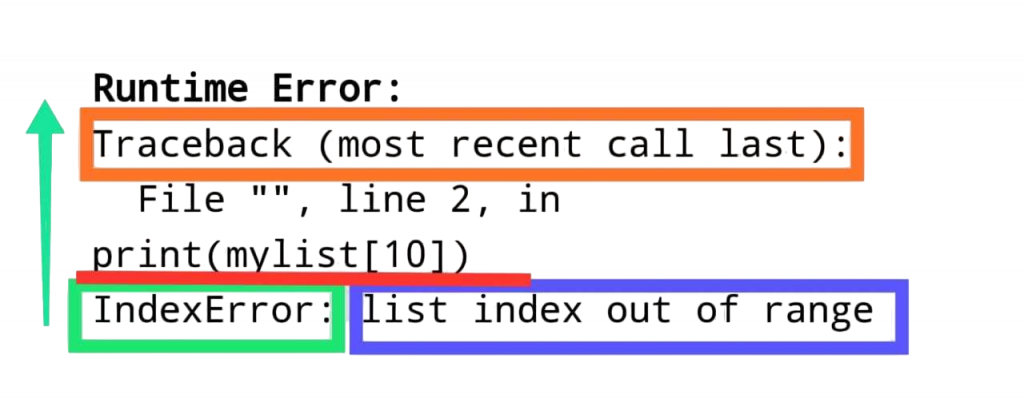
56. What is a runtime error in Python?
Ans:
A runtime error occurs during program execution. These errors happen even if syntax is correct. Common runtime errors include division by zero and invalid input. Runtime errors may terminate program execution unexpectedly. Exception handling helps manage runtime errors effectively. Developers use try and except blocks for handling them. Runtime errors affect application reliability and performance. Proper testing reduces runtime failures. Python provides detailed error messages for debugging. Understanding runtime errors improves software quality.
57. What is a logical error in Python?
Ans:
A logical error occurs when a program runs incorrectly without crashing. The syntax and execution remain valid. Logical errors produce wrong outputs. Developers must analyze program logic carefully. These errors are difficult to identify compared to syntax errors. Testing and debugging help detect logical mistakes. Logical errors affect application functionality and accuracy. Proper planning reduces logical issues in programs. Python applications require correct logic for reliable results. Strong problem-solving skills help avoid logical errors.
58. What is the use of range() function?
Ans:
The range() function generates sequences of numbers. It is commonly used with loops in Python. Developers use range() for iteration control. Range can define start, stop, and step values. It improves efficiency in repetitive tasks. Python generates numbers dynamically using range(). The function saves memory compared to lists. Range simplifies loop implementation in programs. It is widely used in automation and data processing. Understanding range() is important for loop handling.
59. What is the difference between remove() and pop() in list?
Ans:
- The remove() method deletes a specific value from a list. The pop() method removes an element using its index.
- Remove deletes the first matching value only. Pop returns the removed element as output. Developers use pop for stack-like operations. Remove is useful when element values are known. Both methods modify the original list.
- Proper usage improves list management efficiency. Python lists support flexible data manipulation methods. Understanding these methods improves coding skills.
60. What is the len() function in Python?
Ans:
The len() function returns the length of an object. It counts the number of elements in sequences. Lists, tuples, strings, and dictionaries support len(). Developers use len() for validation and iteration. The function improves data handling efficiency. Python calculates length quickly and accurately. Len() is commonly used in loops and conditions. It simplifies collection management in programs. Understanding len() is important for sequence operations. Python provides easy access to object sizes using len().

Learn Python Training with Advanced Concepts By Industry Experts
- Instructor-led Sessions
- Real-life Case Studies
- Assignments
61 What is the difference between deep copy and shallow copy?
Ans:
A shallow copy creates a new object but references nested objects. Changes in nested objects affect both copies. A deep copy creates completely independent copies. Developers use deep copy for complex data structures. Python provides the copy module for copying operations. Shallow copies consume less memory and time. Deep copies improve data isolation and safety. Choosing the correct copy type depends on application needs. Understanding copying concepts prevents unexpected behavior. These concepts are important in data handling.
62. What is the use of import keyword?
Ans:
The import keyword is used to include modules in Python programs. It allows access to functions and classes from modules. Developers use import for code reuse and modularity. Python supports importing built-in and custom modules. Importing reduces duplicate code in applications. Specific functions can also be imported individually. Proper module usage improves project organization. Imports simplify large-scale application development. Python’s module system enhances flexibility and productivity. Import statements are widely used in programming.
63. What is pip in Python?
Ans:
Pip is Python’s package management tool. It is used to install external libraries and packages. Developers use pip for dependency management. Pip simplifies adding new functionalities to applications. Commands are executed through the terminal or command prompt. Python packages are downloaded from the Python Package Index. Pip improves development speed and productivity. It helps maintain project requirements effectively. Pip is essential for modern Python development. Most Python frameworks are installed using pip.
64. What is NumPy in Python?
Ans:
NumPy is a popular Python library for numerical computing. It provides support for arrays and matrices. NumPy improves mathematical and scientific calculations. Developers use NumPy in data science and machine learning. It offers fast and optimized operations. NumPy supports broadcasting and vectorization features. It reduces the need for manual loops in calculations. Python applications use NumPy for high-performance computations. It integrates well with other libraries. NumPy is widely used in analytics projects..
65. What is Pandas in Python?
Ans:
- Pandas is a Python library for data analysis. It provides data structures like DataFrame and Series. Developers use Pandas for handling structured data.
- It simplifies data cleaning and transformation tasks. Pandas supports CSV and Excel file operations. It integrates well with NumPy and visualization tools.
- Data filtering and grouping are easy with Pandas. Python applications use Pandas in analytics and reporting. It improves productivity in data-related projects. Pandas is important in data science applications.
66. What is a DataFrame in Pandas?
Ans:
A DataFrame is a two-dimensional data structure in Pandas. It stores data in rows and columns. Developers use DataFrames for structured data analysis. DataFrames support indexing and filtering operations. They can handle large datasets efficiently. Python applications use DataFrames for reporting and analytics. DataFrames support importing data from files and databases. They simplify data manipulation tasks. Pandas provides many functions for DataFrame operations. DataFrames are essential in data science projects.
67. What is Python used for?
Ans:
Python is used in web development and automation. It is popular in data science and machine learning. Developers use Python for scripting and software development. Python supports artificial intelligence applications. It is also used in cybersecurity and testing. Python simplifies backend development using frameworks. Companies use Python for analytics and cloud computing. Its simple syntax improves development speed. Python has applications in almost every IT domain. This versatility makes Python highly popular worldwide.
68. What is Django in Python?
Ans:
Django is a high-level Python web framework. It helps developers build web applications quickly. Django follows the Model-View-Template architecture. It provides built-in security features. Developers use Django for scalable and secure applications. Django reduces development time with reusable components. It supports database integration efficiently. Python developers prefer Django for backend development. Large companies use Django for enterprise applications. It is one of the most popular Python frameworks.
69. What is Flask in Python?.
Ans:
Flask is a lightweight Python web framework. It is simple and flexible for web development. Flask provides essential tools for building applications. Developers use Flask for small and medium projects. It allows customization based on project requirements. Flask supports extensions for additional functionality. Python developers prefer Flask for API development. It is easy to learn compared to larger frameworks. Flask improves rapid web application development. It is widely used in modern backend systems.
70. What is API in Python?
Ans:
API stands for Application Programming Interface. APIs allow communication between software applications. Python developers use APIs for data exchange. APIs are widely used in web and cloud applications. Python provides libraries for API integration. REST APIs are common in backend development. APIs improve system connectivity and automation. Developers use APIs for accessing external services. Proper API usage improves software functionality. Python makes API handling simple and efficient.
71. What is JSON in Python?
Ans:
JSON stands for JavaScript Object Notation. It is used for data exchange between applications. Python provides the json module for handling JSON data. JSON is lightweight and easy to read. Developers use JSON in APIs and web services. Python can convert dictionaries into JSON format. JSON improves communication between systems. It supports structured data representation. Modern applications widely use JSON for integration. Python simplifies JSON processing effectively.
72. What is web scraping in Python?
Ans:
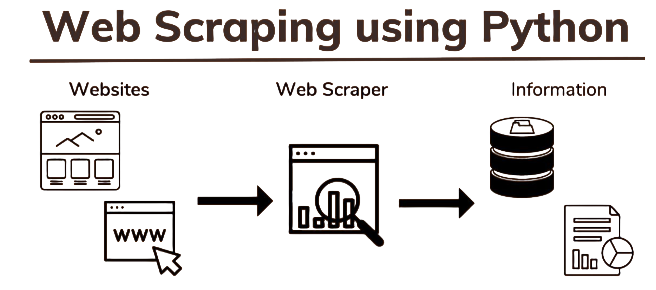
Web scraping extracts data from websites automatically. Python provides libraries like BeautifulSoup for scraping. Developers use web scraping for data collection and analysis. It helps gather information efficiently from web pages. Web scraping supports automation of repetitive tasks. Python simplifies HTML parsing and extraction. Ethical scraping practices should always be followed. Scraping is useful in research and analytics projects. Proper scraping improves productivity and data accessibility. Python is highly popular for web scraping tasks.
73. What is automation in Python?
Ans:
Automation uses Python scripts to perform repetitive tasks automatically. Developers automate file handling and testing tasks. Python simplifies automation with built-in libraries. Automation reduces manual effort and errors. It improves productivity and operational efficiency. Python is widely used in DevOps and scripting. Automated systems save time in business operations. Developers use automation in data processing workflows. Python’s simplicity makes automation easy to implement. Automation is a major advantage of Python programming.
74. What is machine learning in Python?
Ans:
- Machine learning enables systems to learn from data automatically. Python provides libraries like Scikit-learn and TensorFlow. Developers use machine learning for prediction and analysis. Machine learning improves intelligent decision-making systems
- Python simplifies model building and training. Applications include recommendation systems and image recognition. Companies use machine learning for business analytics. Python’s ecosystem supports advanced AI development.
- Machine learning is a growing field in technology. Python is one of the leading languages for AI projects.
75. How Do You Count The Number Of Vowels In A String?
Ans:
Counting Vowels In A String Is A Popular Beginner Coding Question. It Tests Knowledge Of Loops, Conditions, And String Handling. The Program Iterates Through Each Character And Checks Whether It Is A Vowel. If A Match Is Found, The Counter Increases. This Type Of Problem Improves Logical Thinking Skills. It Is Commonly Asked In Technical Interviews For Freshers. Python Makes String Processing Simple And Efficient.
- text = “Accenture”
- count = 0
- vowels = “aeiouAEIOU”
- for char in text:
- if char in vowels:
- count += 1
- print(“Number Of Vowels:”, count)
76. What is Git in Python projects?
Ans:
Git is a version control system used in software development. It helps developers track code changes efficiently. Python developers use Git for collaboration and project management. Git supports branching and merging features. It allows teams to work on the same project simultaneously. Developers can restore previous versions of code easily. Git improves software reliability and teamwork. Platforms like GitHub use Git repositories. Python projects commonly use Git for source code management. Understanding Git is important for professional developers.
77. What is GitHub?
Ans:
GitHub is a cloud-based platform for hosting Git repositories. It allows developers to store and share code online. Python developers use GitHub for collaboration and open-source projects. GitHub provides features like pull requests and issue tracking. It improves teamwork and project visibility. Developers can manage versions and backups efficiently. GitHub supports continuous integration and deployment workflows. Many companies use GitHub for software development. It helps developers showcase their coding skills. GitHub is widely used in the IT industry.
78. What is Python interpreter?
Ans:
The Python interpreter executes Python code line by line. It converts source code into machine-readable instructions. Developers use the interpreter for running Python programs. It helps identify errors during execution. Python interpreters improve debugging and testing processes. They allow interactive coding through the Python shell. Different Python versions provide different interpreters. The interpreter simplifies program execution for beginners. Python’s interpreted nature improves flexibility and development speed. Understanding interpreters is important in programming.
79. What is Python shell?
Ans:
The Python shell is an interactive environment for executing Python commands. Developers use it for quick testing and experimentation. It executes code immediately after input. The shell is useful for learning Python basics. It helps debug small code snippets quickly. Python shell improves productivity during development. Developers can test functions and calculations interactively. The shell is included with Python installation. It supports rapid prototyping and exploration. Python shell is beginner-friendly and easy to use.
80. What is the difference between Python 2 and Python 3?
Ans:
- Python 3 is the latest and recommended version of Python. Python 2 is older and no longer officially supported. Python 3 provides improved syntax and features.
- Print statements differ between both versions. Unicode support is better in Python 3. Python 3 improves performance and security.
- Most modern libraries support only Python 3. Developers prefer Python 3 for new projects. Migrating from Python 2 improves compatibility. Python 3 is widely used in the software industry.
81. What are Python libraries?
Ans:
Python libraries are collections of prewritten code modules. They help developers perform tasks efficiently. Libraries reduce development time and effort. Python provides libraries for data science and web development. Developers import libraries based on project requirements. Popular libraries include NumPy and Pandas. Libraries improve productivity and functionality. Python’s large ecosystem is one of its strengths. Libraries support automation and machine learning applications. They make Python powerful and versatile.
82. What is the difference between compiler and interpreter?
Ans:
A compiler translates the entire program before execution. An interpreter executes code line by line. Python uses an interpreter instead of a compiler. Compilers produce executable files while interpreters do not. Interpreters simplify debugging by identifying errors immediately. Compiled programs usually run faster after compilation. Python’s interpreter improves flexibility and rapid development. Both tools convert high-level code into machine instructions. Understanding the difference is important in programming concepts. Each approach has its own advantages and limitations.
83. What is memory management in Python?
Ans:
Memory management controls allocation and release of memory. Python automatically manages memory using garbage collection. Developers do not need to free memory manually. Python improves memory efficiency during execution. Garbage collection removes unused objects automatically. Proper memory management improves application performance. Memory leaks can reduce software efficiency. Python simplifies development with automatic memory handling. Developers still need to write optimized code. Efficient memory usage improves scalability and reliability.
84.What is garbage collection in Python?
Ans:
Garbage collection removes unused objects from memory automatically. Python uses reference counting for memory management. It improves application performance and efficiency. Developers do not manually free memory in Python. Garbage collection reduces memory leaks in programs. Python periodically checks for unused objects. Efficient garbage collection improves resource utilization. It simplifies software development for programmers. Understanding garbage collection helps optimize applications. Python’s automatic memory handling is beginner-friendly.
85. What is multithreading in Python?
Ans:
Multithreading allows multiple threads to run concurrently. Python developers use multithreading for parallel tasks. It improves responsiveness in applications. Threads share the same memory space. Multithreading is useful in file handling and networking. Python provides the threading module for implementation. It helps perform tasks simultaneously. Proper thread management avoids conflicts and errors. Multithreading improves application efficiency and performance. It is widely used in modern software systems.
86. What is multiprocessing in Python?
Ans:
- Multiprocessing allows execution of multiple processes simultaneously. Each process has its own memory space. Python provides the multiprocessing module for this purpose. Multiprocessing improves CPU-intensive task performance
- Developers use it in data processing applications. It supports true parallel execution. Multiprocessing improves scalability and speed
- It is different from multithreading in memory handling. Python applications use multiprocessing for heavy computations. Understanding multiprocessing is important for performance optimization.
87. What is a Python framework?
Ans:
A Python framework is a collection of tools and libraries. It helps developers build applications efficiently. Frameworks provide predefined structures for development. Django and Flask are popular Python frameworks. Frameworks reduce coding effort and improve productivity. They support scalability and maintainability in projects. Developers use frameworks for web and enterprise applications. Frameworks provide security and database integration features. Python frameworks simplify software development processes. They are widely used in modern application development.
88. What is Selenium in Python?
Ans:
Selenium is a tool for automating web browsers. Python developers use Selenium for testing web applications. It supports multiple browsers and operating systems. Selenium automates repetitive testing tasks efficiently. Developers use it for functional and regression testing. Python integrates easily with Selenium libraries. Selenium improves software testing accuracy and speed. It supports interaction with web page elements. Automation testing reduces manual effort significantly. Selenium is popular in QA and testing projects.
89. What is unit testing in Python?
Ans:
Unit testing checks individual components of a program. Python provides the unittest framework for testing. Developers use unit testing to ensure code quality. It helps identify bugs early in development. Unit tests improve software reliability and maintainability. Automated testing saves time and effort. Each function or module is tested independently. Python testing frameworks simplify test execution. Good unit testing practices improve application stability. Testing is essential in professional software development.
90. What is Agile methodology?
Ans:
Agile is a software development methodology focused on flexibility. It divides projects into smaller iterations called sprints. Agile encourages continuous feedback and improvement. Developers collaborate closely with teams and clients. Agile improves project adaptability and delivery speed. Python projects commonly follow Agile practices. Daily meetings help track progress and issues. Agile supports faster development cycles and quality assurance. It improves teamwork and customer satisfaction. Many IT companies use Agile methodologies
91. Why do you want to learn Python?
Ans:
Python is easy to learn and widely used in industry. It supports multiple technologies like AI and web development. Python improves problem-solving and coding skills. Developers can build automation and data-driven applications. The language has strong community support and libraries. Learning Python opens many career opportunities. Companies like Accenture use Python in projects. Python’s simplicity helps beginners start programming easily. It is useful in both academic and professional environments. Python knowledge increases employability in the IT field.
92. Why is Python popular among beginners?
Ans:
Python has simple and readable syntax. Beginners can understand Python quickly compared to other languages. It reduces complexity in coding concepts. Python provides interactive execution for easy learning. Developers can build applications with fewer lines of code. Python supports many learning resources and communities. Error messages are easier to understand. The language is versatile and used in multiple domains. Beginners gain confidence through Python programming. Its simplicity makes it highly popular worldwide.
93. What are Python keywords?
Ans:
Python keywords are reserved words with predefined meanings. They are used to define program structure and logic. Examples include if, else, while, and class. Keywords cannot be used as variable names. Python provides different keywords for loops and functions. Developers use keywords to write valid syntax. Keywords improve consistency and readability in programs. Understanding keywords is essential for coding correctly. Python keywords are case-sensitive in nature. Proper keyword usage ensures smooth program execution.
94. What is the difference between is and == in Python?
Ans:
- The == operator compares values between objects. The is operator compares memory locations of objects. Developers use == for checking equality of data.
- The is operator checks object identity. Two objects may have equal values but different identities. Python uses is mainly for None comparisons.
- Understanding the difference prevents logical mistakes. Both operators are important in conditional statements. Proper usage improves code accuracy and reliability. Python developers use them frequently in applications.
95. What is list comprehension in Python?
Ans:
List comprehension provides a short way to create lists. It combines loops and conditions into a single line. Developers use list comprehension for cleaner code. It improves readability and reduces code length. Python executes list comprehensions efficiently. They are commonly used in data processing tasks. Conditions can also be included within comprehensions. List comprehensions simplify repetitive operations. They improve programming productivity and flexibility. Python developers widely use this feature.
96. What is the difference between append() and extend()?
Ans:
The append() method adds a single element to a list. The extend() method adds multiple elements from another iterable. Append increases list length by one element. Extend merges collections into the existing list. Developers use append for individual items. Extend is useful for combining lists efficiently. Both methods modify the original list directly. Understanding their difference improves list operations. Python provides flexible methods for data manipulation. These methods are commonly used in applications.
97. What is the purpose of name in Python?
Ans:
The name variable stores the name of a module. When a file runs directly, name becomes “main“. Developers use it to control program execution. It helps separate reusable code from executable code. Python modules often use if name == “main“. This improves modularity and testing. It prevents unwanted execution during imports. Understanding name improves code organization. It is widely used in Python projects. Proper usage supports clean application design.
98. What is a Python docstring?
Ans:
A docstring is documentation written inside functions or classes. It explains the purpose of code components. Python uses triple quotes for docstrings. Developers use docstrings for readability and maintenance. Tools can automatically generate documentation from docstrings. Good documentation improves collaboration in teams. Docstrings help beginners understand code functionality. They support professional coding standards. Python encourages proper documentation practices. Well-written docstrings improve software quality significantly.
99. What are the advantages of Python?
Ans:
Python is simple and easy to learn. It supports multiple programming paradigms. Python has a large library ecosystem. Developers use Python for web development and AI. It improves productivity with concise syntax. Python supports cross-platform compatibility. The language has strong community support worldwide. Python simplifies automation and data analysis tasks. Companies prefer Python for rapid application development. Its flexibility and versatility are major advantages.
100. Why should Accenture hire as a Python developer?
Ans:
- Have strong interest in Python programming and problem-solving. Eager to learn new technologies and improve my skills. Can work effectively both individually and in teams
- Python knowledge helps me contribute to automation and development projects. A positive attitude and good communication skills. Committed to delivering quality work on time. Accenture provides a great environment for career growth.
- Adaptable and ready to take responsibilities. Dedication and learning ability will help me contribute successfully. Confident in adding value to Accenture’s projects and goals.
![50+ [REAL-TIME] C and C++ Interview Questions and Answers Interview Questions](https://www.acte.in/wp-content/uploads/2020/06/3-img-acte.jpeg.webp)