LMS
LMS
Last updated on 16th Jun 2026| 7495

Python Is One Of The Most Popular Programming Languages Used By Companies Like Microsoft For Software Development, Automation, Data Analysis, Artificial Intelligence, And Cloud-Based Applications. During Microsoft Python Interviews, Freshers Are Evaluated On Core Python Concepts, Problem-Solving Skills, Data Structures, Object-Oriented Programming, And Coding Logic. Interviewers Often Ask Questions Related To Variables, Loops, Functions, Lists, Dictionaries, Exception Handling, And Basic Algorithms. Candidates May Also Face Coding Challenges That Test Their Ability To Write Clean, Efficient, And Error-Free Code. Understanding Python Fundamentals Along With Practical Programming Experience Can Significantly Improve Interview Performance. Preparing Common Python Interview Questions And Practicing Coding Problems Regularly Helps Freshers Build Confidence And Increase Their Chances Of Success In Microsoft Technical Interviews.
1. What Is Python?
Ans:
Python Is A High-Level, Interpreted Programming Language Known For Its Simple Syntax And Readability. It Supports Multiple Programming Paradigms Including Object-Oriented And Functional Programming. Python Is Widely Used In Web Development, Data Science, Automation, And Artificial Intelligence. It Has A Large Standard Library And Strong Community Support. Python Code Is Easy To Learn And Maintain. It Runs On Multiple Platforms. This Makes Python Popular Among Beginners And Professionals.
2. What Are The Key Features Of Python?
Ans:
- Python Offers Easy-To-Read Syntax, Dynamic Typing, And Automatic Memory Management. It Supports Object-Oriented Programming And Extensive Libraries.
- Python Is Open Source And Cross-Platform Compatible. Developers Use It For Rapid Application Development.
- It Provides High Productivity Due To Simple Coding Structures. Python Supports Integration With Other Languages. These Features Make It A Preferred Programming Language.
3. What Is A Variable In Python?
Ans:
A Variable Is A Named Location Used To Store Data In Memory. Python Does Not Require Explicit Variable Declarations. Values Can Be Assigned Using The Assignment Operator. Variables Can Store Numbers, Strings, Lists, And Other Objects. Python Determines The Data Type Automatically. Variables Improve Code Reusability And Readability. They Are Fundamental To Programming.
4. What Are Data Types In Python?
Ans:
Data Types Define The Type Of Data Stored In A Variable. Common Types Include Integer, Float, String, List, Tuple, Dictionary, And Boolean. Python Supports Dynamic Typing. Data Types Help Perform Appropriate Operations On Data. Each Type Has Unique Characteristics And Methods. Understanding Data Types Is Essential For Coding. They Form The Foundation Of Python Programming.
5. What Is The Difference Between Deep Copy And Shallow Copy?
Ans:
- A Shallow Copy Creates A New Object But References Nested Objects. A Deep Copy Creates Independent Copies Of All Nested Objects. Changes In Nested Data Affect Shallow Copies.
- Deep Copies Prevent Such Side Effects. Python Provides The Copy Module For Both Operations.
- Choosing The Right Copy Method Is Important. It Helps Avoid Unexpected Bugs. Understanding Copying Improves Data Management Skill
6. What Is A String In Python?
Ans:
A String Is A Sequence Of Characters Enclosed In Single, Double, Or Triple Quotes. Strings Are Immutable In Python. They Support Various Operations Such As Concatenation And Slicing. Python Provides Many Built-In String Methods. Strings Are Commonly Used For Text Processing. They Can Store Letters, Numbers, And Symbols. String Handling Is Important In Most Applications.
7. What Is A List In Python?
Ans:
A List Is An Ordered Collection Of Elements That Can Store Different Data Types. Lists Are Mutable And Allow Modifications. Elements Are Accessed Using Index Values. Lists Support Methods Like Append, Remove, And Sort. They Are Widely Used For Managing Collections Of Data. Lists Can Contain Duplicate Values. They Are One Of Python’s Most Flexible Data Structures.
8. What Is A Dictionary In Python?
Ans:
A Dictionary Stores Data In Key-Value Pairs. Keys Must Be Unique While Values Can Be Duplicated. Dictionaries Are Mutable And Unordered In Earlier Versions. They Allow Fast Data Retrieval Using Keys. Curly Braces Are Used To Define Dictionaries. Dictionaries Are Commonly Used For Structured Data Storage. They Improve Efficiency In Data Access Operations.
9. What Is A Set In Python?
Ans:
A Set Is An Unordered Collection Of Unique Elements. Duplicate Values Are Automatically Removed. Sets Support Mathematical Operations Like Union And Intersection. They Are Defined Using Curly Braces Or The Set Function. Sets Are Useful For Membership Testing. They Improve Performance In Certain Data Processing Tasks. Sets Are Mutable But Their Elements Must Be Immutable.
10. What Is A Boolean Data Type?
Ans:
A Boolean Represents One Of Two Values: True Or False. It Is Commonly Used In Conditional Statements And Comparisons. Boolean Values Help Control Program Flow. Many Expressions Return Boolean Results. Python Uses True And False Keywords. Boolean Logic Is Important In Decision-Making Processes. It Forms The Basis Of Conditional Programming.
11. Write A Python Program To Check Whether A Number Is Even Or Odd.
Ans:
This Program Checks Whether A Number Is Even Or Odd Using The Modulus Operator. If The Remainder After Division By 2 Is Zero, The Number Is Even. Otherwise, The Number Is Odd.
- num = 10
- if num % 2 == 0:
- print(“Even”)
- else: print(“Odd”)
12. What Is An Operator In Python?
Ans:
- Operators Are Symbols Used To Perform Operations On Variables And Values. Examples Include Arithmetic, Comparison, Logical, Assignment, And Bitwise Operators.
- Operators Simplify Calculations And Decision Making. Python Provides Many Built-In Operators. They Improve Code Efficiency And Readability.
- Understanding Operators Is Essential For Programming. They Are Used In Almost Every Python Program.
13. What Is An If Statement?
Ans:
- An If Statement Is Used For Decision Making In Python. It Executes A Block Of Code When A Condition Is True. Additional Conditions Can Be Added Using Elif And Else.
- If Statements Help Control Program Flow. They Make Programs Dynamic And Responsive. Conditions Usually Return Boolean Values.
- This Feature Is Fundamental To Programming Logic. It Helps Programs Take Different Actions Based On Different Situations.
14. What Is A Loop In Python?
Ans:
A Loop Repeats A Block Of Code Multiple Times. Python Supports For Loops And While Loops. Loops Help Automate Repetitive Tasks. They Improve Code Efficiency And Reduce Redundancy. Conditions Control Loop Execution. Loops Are Widely Used In Data Processing. Understanding Loops Is Important For Writing Efficient Programs. Loops Save Time By Eliminating The Need To Write Repetitive Code.
15. What Is A For Loop?
Ans:
- A For Loop Iterates Over A Sequence Such As A List, Tuple, Or String. It Executes Code For Each Element In The Sequence. For Loops Are Easy To Use And Read.
- They Reduce The Need For Manual Iteration. Python Provides The Range Function For Numeric Iteration.
- For Loops Improve Code Simplicity. They Are Commonly Used In Python Programs. For Loops Are Ideal When The Number Of Iterations Is Known In Advance.
16. What Is A While Loop?
Ans:
A While Loop Repeats A Block Of Code As Long As A Condition Remains True. It Is Useful When The Number Of Iterations Is Unknown. The Condition Is Checked Before Each Iteration. While Loops Help Handle Dynamic Scenarios. Care Must Be Taken To Avoid Infinite Loops. They Are Common In User Input Processing. While Loops Provide Flexible Program Control. It Is Frequently Used In Menu-Driven Applications.
17. What Is A Function In Python?
Ans:
A Function Is A Reusable Block Of Code Designed To Perform A Specific Task. Functions Improve Code Organization And Readability. They Reduce Repetition By Allowing Code Reuse. Python Uses The Def Keyword To Define Functions. Functions Can Accept Parameters And Return Values. They Make Programs Easier To Maintain. Functions Are Essential In Modular Programming. They Help Break Large Programs Into Smaller Manageable Units.
18. What Is The Difference Between Parameters And Arguments?
Ans:
| Feature | Parameters | Arguments |
|---|---|---|
| Definition | Parameters Are Variables Defined In A Function Declaration | Arguments Are Actual Values Passed To A Function When It Is Called. |
| Purpose | They Act As Placeholders For Input Values | They Provide The Real Data To The Function |
| Location | Specified In The Function Definition. | Specified In The Function Call. |
| Creation Time | Created When The Function Is Defined. | Supplied When The Function Is Executed. |
19. What Is A Return Statement?
Ans:
A Return Statement Sends A Result Back From A Function To The Caller. It Terminates Function Execution Immediately. Returned Values Can Be Stored In Variables. Functions Without Return Statements Return None By Default. Return Statements Improve Function Usability. They Allow Data To Be Processed And Shared. This Feature Supports Modular Programming. It Makes Functions More Useful And Reusable.
20. What Is Recursion?
Ans:
Recursion Is A Technique Where A Function Calls Itself. It Is Useful For Solving Complex Problems In Smaller Steps. Recursive Functions Require A Base Condition To Stop Execution. Without A Base Case, Infinite Recursion Occurs. Recursion Is Common In Tree And Graph Problems. It Simplifies Certain Algorithms. Proper Design Is Important For Efficiency. It Is Widely Used In Mathematical Computations.
21.What Is A Module In Python?
Ans:
A Module Is A File Containing Python Code Such As Functions And Variables. Modules Help Organize Large Programs. They Promote Code Reusability Across Projects. Python Provides Many Built-In Modules. Developers Can Also Create Custom Modules. Modules Improve Maintainability And Structure. They Simplify Software Development. Modules Reduce The Need To Rewrite Existing Code.
22. What Is A Package In Python?
Ans:
- A Package Is A Collection Of Related Modules Organized In Directories. Packages Help Manage Large Applications Efficiently.
- They Provide A Hierarchical Structure For Code. Python Uses Special Files To Identify Packages. Packages Improve Code Organization And Reusability.
- They Simplify Import Management. Packages Are Common In Professional Projects. They Help Maintain Large Software Systems Effectively.
23. What Is PIP?
Ans:
PIP Is Python’s Package Manager Used To Install And Manage Libraries. It Simplifies Adding External Functionality To Projects. PIP Downloads Packages From Online Repositories. Developers Use Commands To Install And Update Packages. It Supports Dependency Management. PIP Saves Development Time. It Is An Essential Python Tool. PIP Makes Third-Party Library Management Easy.
24. Write A Python Program To Find The Largest Of Two Numbers.
Ans:
This Program Compares Two Numbers Using An If-Else Statement. The Greater Number Is Displayed As Output. It Demonstrates Conditional Logic In Python.
- a, b = 15, 20
- if a > b:
- print(a)
- else: print(b)
25. What Is A Class In Python?
Ans:
A Class Is A Blueprint For Creating Objects. It Defines Attributes And Methods Shared By Objects. Classes Support Object-Oriented Programming Principles. They Improve Code Reusability And Structure. Objects Created From Classes Inherit Their Features. Classes Help Model Real-World Concepts. They Are Core Components Of OOP. Classes Simplify The Development Of Complex Applications.
26.What Is Constructor In Python?
Ans:
A Constructor Is A Special Method Used To Initialize Objects. It Is Automatically Called When An Object Is Created. Python Uses The init Method As A Constructor. Constructors Assign Initial Values To Attributes. They Simplify Object Setup. Constructors Improve Code Organization. They Are Widely Used In Class Design. Constructors Ensure Objects Start With Proper Data.
27. What Is Inheritance?
Ans:
Inheritance Allows A Class To Acquire Properties And Methods From Another Class. It Promotes Code Reusability. The Existing Class Is Called The Parent Class. The New Class Is Called The Child Class. Inheritance Supports Hierarchical Relationships. It Reduces Redundant Code. It Is A Key OOP Concept. Inheritance Helps Build Scalable Applications Efficiently.
28. What Is Polymorphism?
Ans:
- Polymorphism Allows The Same Method Name To Behave Differently In Different Classes. It Improves Flexibility In Programming.
- Polymorphism Supports Method Overriding. It Simplifies Code Maintenance. Different Objects Can Respond Uniquely To The Same Method Call.
- This Enhances Reusability. Polymorphism Is An Important OOP Feature. It Enables Dynamic And Flexible Program Behavior.
29. What Is Encapsulation?
Ans:
Encapsulation Refers To Bundling Data And Methods Together In A Class. It Restricts Direct Access To Sensitive Data. Encapsulation Improves Security And Data Integrity. It Uses Access Modifiers And Naming Conventions. This Concept Enhances Maintainability. Encapsulation Supports Modular Design. It Is A Core Principle Of OOP. It Helps Protect Data From Unauthorized Changes.
30. What Is Abstraction?
Ans:
Abstraction Hides Complex Implementation Details And Shows Only Essential Features. It Simplifies Program Usage. Users Interact With Interfaces Rather Than Internal Logic. Abstraction Improves Code Maintainability. It Reduces Complexity In Large Applications. Python Supports Abstraction Through Abstract Classes. This Concept Enhances Software Design. Abstraction Makes Applications Easier To Understand.
31. What Is Method Overriding?
Ans:
Method Overriding Occurs When A Child Class Provides A Different Implementation Of A Parent Method. It Enables Specialized Behavior. Overriding Supports Polymorphism. The Method Signature Usually Remains The Same. It Enhances Flexibility In OOP. Developers Use It To Customize Functionality. It Improves Code Reusability. It Allows Child Classes To Define Specific Behavior.
32. What Is Exception Handling?
Ans:
Exception Handling Manages Runtime Errors Gracefully. Python Uses Try, Except, Else, And Finally Blocks. It Prevents Program Crashes Due To Unexpected Issues. Exception Handling Improves Reliability. Errors Can Be Logged And Managed Effectively. It Enhances User Experience. This Feature Is Essential For Robust Applications. It Helps Maintain Smooth Program Execution.
33. What Is A Try Block?
Ans:
A Try Block Contains Code That May Generate Exceptions. Python Monitors The Code For Errors During Execution. If An Error Occurs, Control Moves To The Except Block. Try Blocks Improve Error Management. They Prevent Unexpected Program Termination. Developers Use Them Frequently. They Form The Basis Of Exception Handling. Try Blocks Help Detect Errors Efficiently.
34. Write A Python Program To Reverse A String.
Ans:
This Program Reverses A String Using Python Slicing. The Slice [::-1] Reads Characters From End To Beginning. It Is A Simple And Efficient Method
- text = “Python”
- rev = text[::-1]
- print(rev)
35. What Is The Finally Block?
Ans:
The Finally Block Executes Regardless Of Whether An Exception Occurs. It Is Commonly Used For Cleanup Activities. Resources Such As Files And Connections Can Be Closed Here. Finally Ensures Consistent Execution. It Improves Resource Management. Developers Use It In Error-Prone Operations. It Enhances Program Reliability. Finally Blocks Ensure Proper Resource Cleanup.
36. What Is File Handling?
Ans:
File Handling Refers To Reading From And Writing To Files. Python Provides Built-In Functions For File Operations. Files Help Store Data Permanently. Developers Use Different Modes Such As Read And Write. File Handling Supports Data Persistence. Proper Closing Of Files Is Important. It Is Widely Used In Applications. It Enables Efficient Data Storage And Retrieval.
37. What Is The Open() Function?
Ans:
The Open() Function Opens A File For Reading Or Writing. It Returns A File Object For Further Operations. Different Modes Determine Access Type. Common Modes Include Read, Write, And Append. Open() Is Essential For File Handling. It Enables Interaction With External Data. Proper Usage Prevents Errors. It Is The Starting Point For Most File Operations.
38. What Is A Lambda Function?
Ans:
- A Lambda Function Is A Small Anonymous Function Defined Using The Lambda Keyword. It Can Have Multiple Inputs But One Expression.
- ‘Lambda Functions Simplify Short Operations. They Are Commonly Used With Map And Filter. They Reduce The Need For Full Function Definitions.
- Lambda Functions Improve Conciseness. They Are Useful In Functional Programming. Lambda Functions Make Code Shorter And Cleaner.
39. What Is An Iterator?
Ans:
An Iterator Is An Object That Allows Sequential Traversal Of Elements. It Implements Special Methods For Iteration. Iterators Improve Memory Efficiency. They Process Data One Element At A Time. Python Uses Iterators In Loops. Many Built-In Objects Are Iterable. Iterators Are Important In Data Processing. They Support Efficient Handling Of Large Collections.
40. What Is A Generator?
Ans:
A Generator Produces Values Lazily Using The Yield Keyword. It Generates Data On Demand Instead Of Storing Everything In Memory. Generators Improve Performance. They Are Useful For Large Datasets. Generator Functions Pause And Resume Execution. This Saves Resources. Generators Are Widely Used In Python. They Are Ideal For Memory-Efficient Data Processing.

41. What Is A Decorator In Python?
Ans:
- A Decorator Is A Special Function That Modifies The Behavior Of Another Function Without Changing Its Original Code. Decorators Use The @ Symbol Before Function Definitions.
- They Help Add Extra Functionality Such As Logging, Authentication, Or Timing. Decorators Promote Code Reusability And Cleaner Design. They Are Commonly Used In Frameworks Like Django And Flask.
- Decorators Simplify Repetitive Tasks Across Multiple Functions. They Improve Program Maintainability. Decorators Are An Advanced Yet Powerful Python Feature.
42. What Is Multithreading In Python?
Ans:
Multithreading Allows Multiple Threads To Run Within A Single Process. It Helps Perform Multiple Tasks Concurrently. Threads Share The Same Memory Space. Multithreading Is Useful For I/O-Bound Operations Such As File Handling And Network Requests. Python Provides The Threading Module For Thread Management. It Improves Application Responsiveness. Proper Synchronization Is Important To Avoid Conflicts. Multithreading Enhances Program Efficiency.
43. What Is NumPy?
Ans:
NumPy Is A Popular Python Library Used For Numerical Computing. It Provides Powerful Multidimensional Array Objects. NumPy Supports Mathematical And Statistical Operations Efficiently. It Is Faster Than Traditional Python Lists For Numerical Tasks. Scientists And Data Analysts Widely Use NumPy. It Forms The Foundation For Many Data Science Libraries. NumPy Improves Computational Performance. It Is Essential For Scientific Programming.
44. What Is Pandas?
Ans:
Pandas Is A Python Library Used For Data Analysis And Manipulation. It Provides Data Structures Such As Series And DataFrames. Pandas Makes Handling Structured Data Easy. It Supports Data Cleaning, Filtering, And Aggregation. Analysts Use Pandas Extensively In Data Science Projects. It Integrates Well With NumPy And Visualization Libraries. Pandas Simplifies Complex Data Operations. It Is One Of The Most Popular Python Libraries.
45. What Is A DataFrame In Pandas?
Ans:
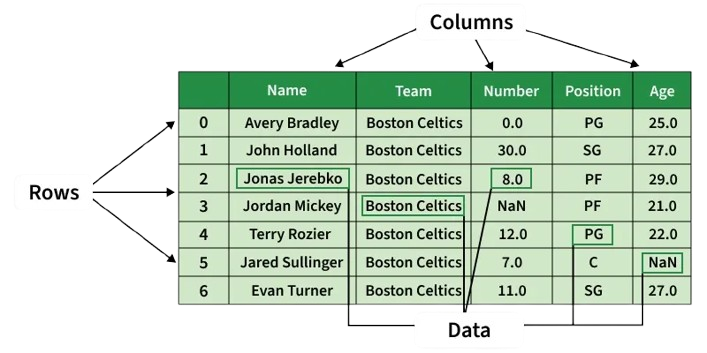
A DataFrame Is A Two-Dimensional Data Structure In Pandas. It Organizes Data Into Rows And Columns Similar To A Table. DataFrames Support Various Data Types In Different Columns. They Allow Efficient Data Analysis And Transformation. DataFrames Include Powerful Functions For Filtering And Grouping Data. They Are Widely Used In Data Science. DataFrames Improve Data Management Efficiency. They Simplify Working With Large Datasets.
46. What Is An API?
Ans:
- An API Stands For Application Programming Interface. It Allows Different Software Applications To Communicate With Each Other. APIs Define Rules For Data Exchange.
- Developers Use APIs To Access External Services And Resources. APIs Simplify Integration Between Systems. They Are Commonly Used In Web And Mobile Applications.
- APIs Improve Development Speed And Flexibility. They Are Essential In Modern Software Development.
47. Write A Python Program To Find The Sum Of Numbers From 1 To 10.
Ans:
This Program Uses The Built-In Sum Function To Add Numbers From 1 To 10. The Range Function Generates Numbers Sequentially. It Produces The Result Efficiently With Minimal Code. It Demonstrates Knowledge Of Python Built-In Functions.
- total = sum(range(1, 11))
- print(total)
48. What Is JSON?
Ans:
JSON Stands For JavaScript Object Notation. It Is A Lightweight Format For Storing And Exchanging Data. JSON Is Easy For Humans To Read And Write. It Uses Key-Value Pairs To Represent Information. APIs Commonly Use JSON For Communication. Python Provides Built-In Support For JSON Processing. JSON Is Platform Independent. It Is A Standard Format In Modern Applications.
49. What Is Django?
Ans:
Django Is A High-Level Python Web Framework. It Helps Developers Build Secure And Scalable Web Applications Quickly. Django Follows The Model-View-Template Architecture. It Includes Built-In Features Such As Authentication And Database Management. Django Encourages Rapid Development. It Reduces The Need For Repetitive Coding. Large Organizations Use Django For Web Projects. It Is One Of The Most Popular Python Frameworks.
50. What Is Flask?
Ans:
Flask Is A Lightweight Python Web Framework. It Provides Basic Tools For Building Web Applications. Flask Offers Greater Flexibility Compared To Django. Developers Can Add Extensions Based On Project Needs. Flask Is Easy To Learn And Use. It Is Suitable For Small And Medium Applications. Flask Supports REST API Development. It Is Popular Among Beginners And Professionals.
51. What Is SQL Connectivity In Python?
Ans:
- SQL Connectivity Allows Python Applications To Interact With Databases. Python Provides Libraries Such As SQLite3 And PyMySQL. These Libraries Enable Data Retrieval And Modification.
- SQL Queries Can Be Executed Directly From Python Programs. Database Connectivity Supports Dynamic Applications.
- It Helps Manage Large Amounts Of Data Efficiently. SQL Integration Is Common In Enterprise Applications. It Is Essential For Data-Driven Systems.
52. What Is SQLite?
Ans:
SQLite Is A Lightweight Relational Database Management System. It Is Embedded Directly Into Applications. SQLite Does Not Require A Separate Server Process. It Stores Data In A Single File. Python Includes Built-In Support For SQLite. It Is Ideal For Small Applications And Testing. SQLite Is Easy To Use And Manage. It Is Widely Used In Mobile And Desktop Applications.
53. What Is MySQL?
Ans:
MySQL Is An Open-Source Relational Database Management System. It Uses SQL To Manage Data Efficiently. MySQL Supports Multi-User Access And Large Databases. It Is Commonly Used In Web Applications. Python Can Connect To MySQL Using Specialized Libraries. MySQL Provides High Performance And Reliability. It Supports Data Security Features. It Is One Of The Most Popular Databases Worldwide.
54. What Is A List Comprehension?
Ans:
List Comprehension Is A Concise Way To Create Lists In Python. It Combines Looping And Conditional Logic Into A Single Expression. List Comprehensions Improve Readability And Performance. They Reduce The Need For Traditional Loops. Python Developers Frequently Use Them For Data Processing. They Make Code More Compact And Elegant. List Comprehensions Are Easy To Learn. They Are A Powerful Python Feature.
55. What Is Slicing In Python?
Ans:
Slicing Is A Technique Used To Access Parts Of Sequences Such As Strings And Lists. It Uses Start, Stop, And Step Values. Slicing Simplifies Data Extraction Operations. Python Supports Positive And Negative Indexing. Slicing Does Not Modify The Original Sequence. It Improves Code Readability And Efficiency. Developers Use Slicing Frequently. It Is A Fundamental Python Concept.
56. What Is A Stack?
Ans:
A Stack Is A Linear Data Structure That Follows The Last In First Out Principle. Elements Are Added And Removed From The Same End. Operations Include Push And Pop. Stacks Are Useful In Function Calls And Expression Evaluation. Python Lists Can Be Used As Stacks. Stacks Simplify Certain Algorithm Implementations. They Are Widely Used In Programming. Understanding Stacks Is Important For Interviews.
57. What Is A Queue?
Ans:
A Queue Is A Linear Data Structure That Follows The First In First Out Principle. Elements Are Added At The Rear And Removed From The Front. Queues Are Commonly Used In Scheduling Systems. Python Provides Queue Implementations Through Libraries. Queues Improve Task Management Efficiency. They Are Essential In Many Real-Time Applications. Queue Operations Are Simple And Effective. Queues Are Important In Data Structures.
58. What Is A Linked List?
Ans:
- A Linked List Is A Dynamic Data Structure Consisting Of Nodes Connected Through Pointers. Each Node Contains Data And A Reference To The Next Node.
- Linked Lists Allow Efficient Insertions And Deletions. They Do Not Require Contiguous Memory Allocation. Linked Lists Are Flexible Compared To Arrays.
- They Are Used In Various Algorithms. Understanding Linked Lists Is Important For Coding Interviews. They Form The Basis Of Advanced Data Structures.
59. What Is A Dictionary Comprehension?
Ans:
Dictionary Comprehension Provides A Short Syntax For Creating Dictionaries. It Combines Iteration And Key-Value Generation In One Expression. Dictionary Comprehensions Improve Readability. They Reduce The Need For Traditional Loops. Developers Use Them To Build Dictionaries Efficiently. They Support Conditional Logic As Well. This Feature Makes Code More Concise. Dictionary Comprehensions Are Widely Used In Python.
60. What Is The Difference Between List And Tuple?
Ans:
| Feature | List | Tuple |
|---|---|---|
| Definition | A List Is A Mutable Collection Of Elements | A Tuple Is An Immutable Collection Of Elements. |
| Syntax | Defined Using Square Brackets []. | Defined Using Parentheses () |
| Mutability | Elements Can Be Added, Removed, Or Modified. | Elements Cannot Be Changed After Creation. |
| Performance | Slightly Slower Due To Mutability. | Faster Because It Is Immutable. |

Learn Python Training with Advanced Concepts By Industry Experts
- Instructor-led Sessions
- Real-life Case Studies
- Assignments
61. What Is An Algorithm?
Ans:
An Algorithm Is A Step-By-Step Procedure Used To Solve A Problem Or Perform A Task. Algorithms Define The Logic Behind Programs. They Help Produce Correct And Efficient Solutions. Good Algorithms Reduce Execution Time And Resource Usage. Algorithms Can Be Represented Using Flowcharts Or Pseudocode. They Form The Foundation Of Computer Programming. Understanding Algorithms Is Essential For Problem Solving. Efficient Algorithms Improve Overall Software Performance.
62. What Is Time Complexity?
Ans:
Time Complexity Measures The Amount Of Time An Algorithm Takes To Execute. It Helps Evaluate Algorithm Efficiency. Time Complexity Is Usually Expressed Using Big O Notation. Lower Complexity Indicates Better Performance. Developers Use It To Compare Different Solutions. Understanding Complexity Helps Optimize Programs. It Is Important In Technical Interviews. Time Complexity Affects Application Scalability.
63. What Is Space Complexity?
Ans:
- Space Complexity Measures The Amount Of Memory Required By An Algorithm. It Includes Variables, Data Structures, And Auxiliary Memory. Space Complexity Helps Evaluate Resource Usage.
- Efficient Memory Management Improves Performance. It Is Often Analyzed Along With Time Complexity. Developers Aim To Balance Time And Space Usage.
- Understanding Space Complexity Is Important For Optimization. It Helps Build Scalable Applications.
64. What Is Big O Notation?
Ans:
Big O Notation Describes The Worst-Case Performance Of An Algorithm. It Expresses How Execution Time Or Memory Grows With Input Size. Common Examples Include O(1), O(n), And O(n²). Big O Helps Compare Algorithms Objectively. It Is Widely Used In Software Engineering. Understanding Big O Improves Problem-Solving Skills. It Plays A Key Role In Technical Interviews. Efficient Algorithms Usually Have Lower Big O Values.s.
65. What Is Linear Search?
Ans:
Linear Search Is A Simple Searching Algorithm That Checks Elements One By One. It Continues Until The Target Value Is Found Or The List Ends. Linear Search Works On Both Sorted And Unsorted Data. It Is Easy To Implement. The Worst-Case Time Complexity Is O(n). It Is Suitable For Small Datasets. Linear Search Requires No Special Data Arrangement. It Is One Of The Basic Searching Techniques.
66. What Is Binary Search?
Ans:
Binary Search Is An Efficient Searching Algorithm For Sorted Data. It Repeatedly Divides The Search Space Into Two Halves. Binary Search Eliminates Half The Elements In Each Step. Its Time Complexity Is O(log n). It Is Faster Than Linear Search For Large Datasets. Sorted Data Is Required For Binary Search. It Is Widely Used In Software Applications. Binary Search Improves Search Efficiency Significantly.
67. What Is Sorting?
Ans:
Sorting Is The Process Of Arranging Data In A Specific Order. Data Can Be Sorted In Ascending Or Descending Order. Sorting Improves Data Organization And Retrieval. Common Sorting Algorithms Include Bubble Sort And Quick Sort. Efficient Sorting Enhances Application Performance. Sorting Is Frequently Used In Data Processing. It Simplifies Searching Operations. Sorting Is A Fundamental Programming Concept.
68. What Is Bubble Sort?
Ans:
Bubble Sort Is A Simple Sorting Algorithm That Repeatedly Swaps Adjacent Elements. It Moves Larger Values Toward The End Of The List. The Process Continues Until The Data Is Sorted. Bubble Sort Is Easy To Understand And Implement. Its Time Complexity Is O(n²). It Is Not Efficient For Large Datasets. Bubble Sort Is Commonly Used For Learning Purposes. It Demonstrates Basic Sorting Concepts.
69. What Is Selection Sort?
Ans:
- Selection Sort Works By Repeatedly Finding The Smallest Element And Placing It In The Correct Position. It Divides The List Into Sorted And Unsorted Parts.
- The Algorithm Is Easy To Understand. Selection Sort Performs Fewer Swaps Than Bubble Sort. Its Time Complexity Is O(n²).
- It Is Suitable For Small Datasets. Selection Sort Is Common In Educational Examples. It Helps Understand Sorting Fundamentals.
70. What Is Insertion Sort?
Ans:
Insertion Sort Builds A Sorted List One Element At A Time. Each New Element Is Inserted Into Its Correct Position. It Is Efficient For Small Or Nearly Sorted Data. Insertion Sort Is Easy To Implement. The Average Time Complexity Is O(n²). It Requires Minimal Additional Memory. It Is Commonly Used In Educational Settings. Insertion Sort Demonstrates Incremental Sorting Techniques.
71. What Is Exception?
Ans:
An Exception Is An Error That Occurs During Program Execution. Exceptions Disrupt The Normal Flow Of A Program. Python Provides Mechanisms To Handle Exceptions Gracefully. Common Exceptions Include ZeroDivisionError And ValueError. Proper Exception Handling Improves Reliability. Exceptions Help Identify Runtime Problems. They Prevent Unexpected Program Termination. Exception Management Is Essential In Professional Development.
72. Write A Python Program To Count Vowels In A String.
Ans:
This Program Counts The Number Of Vowels Present In A String. It Converts The Text To Lowercase For Accurate Checking. The Program Uses A Generator Expression For Concise Coding. It Tests String Handling And Loop Concepts.
- s = “Microsoft”
- count = sum(1 for c in s.lower() if c in “aeiou”)
- print(count)
73. What Is Unit Testing?
Ans:
Unit Testing Involves Testing Individual Components Of A Program. Each Function Or Module Is Tested Separately. Unit Testing Helps Detect Bugs Early. Python Provides The Unittest Framework For Testing. Automated Tests Improve Code Reliability. Unit Testing Simplifies Maintenance And Refactoring. It Supports Better Software Quality. Unit Testing Is A Key Part Of Modern Development.
74. What Is The Unittest Module?
Ans:
The Unittest Module Is Python’s Built-In Testing Framework. It Helps Create And Execute Test Cases. Developers Use It To Verify Program Correctness. Unittest Supports Automated Testing. It Provides Assertions For Result Validation. The Framework Improves Software Reliability. It Is Widely Used In Python Projects. Unittest Simplifies Test Management.
75. What Is Pytest?
Ans:
Pytest Is A Popular Third-Party Testing Framework For Python. It Provides A Simple And Flexible Testing Environment. Pytest Supports Advanced Features Such As Fixtures. It Simplifies Writing And Managing Tests. Many Developers Prefer Pytest Due To Its Ease Of Use. It Integrates Well With Development Tools. Pytest Enhances Test Automation. It Is Widely Used In Industry Projects.
76. What Is a Virtual Environment?
Ans:
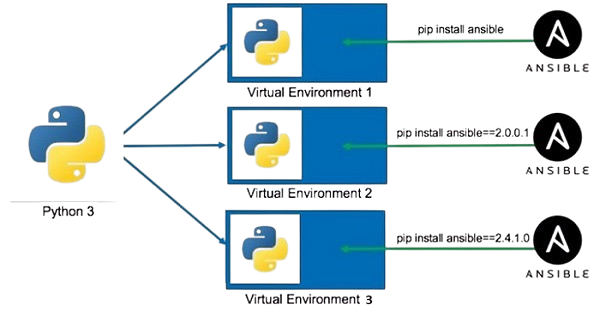
A Virtual Environment Is An Isolated Python Environment For Projects. It Allows Different Projects To Use Different Package Versions. Virtual Environments Prevent Dependency Conflicts. Python Provides Built-In Support Through Venv. They Improve Project Organization. Developers Use Them Extensively In Professional Work. Virtual Environments Enhance Reproducibility. They Are Essential For Python Development.
77. What Is Venv?
Ans:
- Venv Is Python’s Built-In Tool For Creating Virtual Environments. It Creates Isolated Workspaces For Projects.
- Venv Helps Manage Dependencies Efficiently. It Prevents Package Conflicts Between Applications. Developers Use Simple Commands To Create Environments.
- Venv Improves Development Flexibility. It Is Lightweight And Easy To Use. Venv Is Commonly Used In Python Projects.
78. What Is Machine Learning?
Ans:
Machine Learning Is A Branch Of Artificial Intelligence That Enables Systems To Learn From Data. It Uses Algorithms To Identify Patterns. Machine Learning Improves Decision-Making Automatically. It Is Widely Used In Prediction And Classification Tasks. Python Provides Libraries Such As Scikit-Learn. Machine Learning Powers Many Modern Applications. It Is A Fast-Growing Technology Field. Machine Learning Is Popular Among Data Scientists.
79. What Is Artificial Intelligence?
Ans:
Artificial Intelligence Refers To The Simulation Of Human Intelligence By Machines. AI Systems Perform Tasks Such As Learning And Reasoning. AI Is Used In Robotics And Automation. Python Is A Popular Language For AI Development. AI Improves Efficiency Across Industries. It Supports Intelligent Decision-Making. AI Is Transforming Modern Technology. It Plays A Major Role In Future Innovations.
80. What Is Deep Learning?
Ans:
Deep Learning Is A Subset Of Machine Learning Based On Neural Networks. It Uses Multiple Layers To Learn Complex Patterns. Deep Learning Excels In Image And Speech Recognition. Python Provides Frameworks Such As TensorFlow And PyTorch. Deep Learning Requires Large Amounts Of Data. It Produces Highly Accurate Results. Deep Learning Powers Advanced AI Applications. It Is Widely Used In Research And Industry.
81. What Is A Neural Network?
Ans:
- A Neural Network Is A Computational Model Inspired By The Human Brain. It Consists Of Connected Nodes Called Neurons. Neural Networks Learn Patterns From Data.
- They Are Used In Deep Learning Applications. Python Supports Neural Network Development Through Various Libraries. Neural Networks Improve Prediction Accuracy.
- They Handle Complex Problems Effectively. Neural Networks Are Core Components Of Modern AI.
82. What Is Scikit-Learn?
Ans:
Scikit-Learn Is A Popular Python Library For Machine Learning. It Provides Tools For Classification And Regression. The Library Includes Data Preprocessing Features. Scikit-Learn Is Easy To Learn And Use. It Supports Model Evaluation And Selection. Developers Use It For Rapid Prototyping. It Integrates Well With NumPy And Pandas. Scikit-Learn Is Widely Used In Data Science.
83. What Is TensorFlow?
Ans:
TensorFlow Is An Open-Source Deep Learning Framework Developed By Google. It Supports Building And Training Neural Networks. TensorFlow Provides Tools For Large-Scale Machine Learning. It Is Used In Research And Production Applications. The Framework Supports CPU And GPU Execution. TensorFlow Simplifies Deep Learning Development. It Is One Of The Most Popular AI Frameworks. TensorFlow Powers Many Intelligent Systems.
84. What Is PyTorch?
Ans:
PyTorch Is An Open-Source Deep Learning Framework Developed By Meta. It Provides Dynamic Computational Graphs. PyTorch Is Popular In Research Communities. The Framework Supports Deep Learning And Neural Networks. It Offers Flexibility And Ease Of Use. PyTorch Integrates Well With Python. It Is Widely Adopted In AI Projects. PyTorch Accelerates Model Development.
85. What Is Data Science?
Ans:
Data Science Combines Statistics, Programming, And Domain Knowledge To Extract Insights From Data. It Helps Organizations Make Better Decisions. Python Is Widely Used In Data Science. Data Scientists Analyze Large Datasets To Discover Patterns. The Field Includes Machine Learning And Visualization. Data Science Supports Business Growth. It Is In High Demand Across Industries. Data Science Drives Data-Driven Innovation.
86. What Is Data Visualization?
Ans:
Data Visualization Is The Graphical Representation Of Data. It Helps Present Information Clearly And Effectively. Python Libraries Such As Matplotlib And Seaborn Support Visualization. Charts And Graphs Improve Understanding Of Trends. Visualization Aids Decision-Making Processes. It Makes Complex Data Easier To Interpret. Data Visualization Is Important In Analytics. It Enhances Communication Of Insights
87. Write A Python Program To Find The Factorial Of A Number.
Ans:
This Program Calculates The Factorial Of A Number Using A For Loop. The Factorial Is Obtained By Multiplying Consecutive Numbers. It Demonstrates Iteration And Arithmetic Operations
- n, fact = 5, 1
- for i in range(1, n + 1):
- fact *= i
- print(fact)
88. What Is Seaborn?
Ans:
Seaborn Is A Python Visualization Library Built On Top Of Matplotlib. It Provides Attractive Statistical Graphics. Seaborn Simplifies Complex Visualizations. It Supports Data Exploration And Analysis. The Library Integrates Seamlessly With Pandas. Seaborn Improves Chart Readability. It Is Popular Among Data Analysts. Seaborn Makes Data Visualization More Effective.
89. What Is Git?
Ans:
Git Is A Distributed Version Control System. It Helps Track Changes In Source Code. Git Supports Collaboration Among Developers. It Maintains Project History Efficiently. Developers Use Git For Branching And Merging. It Improves Team Productivity. Git Is Widely Used In Software Development. It Is An Essential Tool For Modern Programmers.
90. What Is GitHub?
Ans:
GitHub Is A Cloud-Based Platform For Hosting Git Repositories. It Supports Collaboration And Code Sharing. Developers Use GitHub For Project Management. It Provides Features Such As Pull Requests And Issues. GitHub Facilitates Open-Source Contributions. It Integrates With Development Workflows. GitHub Enhances Team Collaboration. It Is One Of The Most Popular Development Platforms.
91. What Is Version Control?
Ans:
Version Control Is A System For Managing Changes To Files Over Time. It Helps Track Modifications In Source Code. Version Control Supports Team Collaboration. Developers Can Restore Previous Versions If Needed. It Improves Project Organization. Git Is A Common Version Control System. Version Control Enhances Development Efficiency. It Is Essential For Software Projects.
92. What Is Agile Methodology?
Ans:
Agile Methodology Is A Software Development Approach Focused On Iterative Progress. It Encourages Collaboration And Flexibility. Agile Projects Are Divided Into Small Iterations Called Sprints. Teams Deliver Features Incrementally. Agile Improves Adaptability To Changing Requirements. It Enhances Customer Satisfaction. Agile Is Widely Used In IT Projects. It Promotes Continuous Improvement.
93. What Is A Sprint In Agile?
Ans:
A Sprint Is A Fixed Time Period In Agile Development. Teams Complete Specific Tasks During Each Sprint. Sprints Usually Last One To Four Weeks. They Help Organize Work Efficiently. Sprint Reviews Evaluate Progress. Agile Teams Use Sprints To Deliver Value Continuously. Sprints Improve Productivity And Focus. They Are A Core Agile Practice.
94. What Is Code Optimization?
Ans:
- Code Optimization Is The Process Of Improving Program Efficiency. It Reduces Execution Time And Resource Usage.
- Optimized Code Performs Better Under Heavy Loads. Developers Analyze Algorithms And Data Structures For Improvement.
- Optimization Enhances Scalability. It Improves User Experience. Efficient Code Is Easier To Maintain. Optimization Is An Important Development Practice.
95. What Is Refactoring?
Ans:
Refactoring Is The Process Of Improving Existing Code Without Changing Its Functionality. It Enhances Readability And Maintainability. Refactoring Removes Redundant Code. It Helps Improve Software Design. Developers Perform Refactoring Regularly. It Reduces Technical Debt. Refactoring Makes Future Changes Easier. It Supports Long-Term Project Health.
96. What Is Clean Code?
Ans:
Clean Code Refers To Code That Is Easy To Read And Maintain. It Uses Meaningful Names And Proper Structure. Clean Code Reduces Complexity. It Improves Team Collaboration. Developers Follow Coding Standards To Write Clean Code. It Simplifies Debugging And Testing. Clean Code Enhances Software Quality. It Is A Goal Of Professional Programming.
97. What Is PEP 8?
Ans:
PEP 8 Is The Official Style Guide For Python Code. It Provides Rules For Formatting And Naming Conventions. Following PEP 8 Improves Readability. It Encourages Consistent Coding Practices. Developers Use It To Maintain High-Quality Code. Many Tools Check PEP 8 Compliance Automatically. PEP 8 Supports Team Collaboration. It Is Widely Followed In Python Development.
98. What Is Documentation In Python?
Ans:
- Documentation Explains How Code Works And How To Use It. It Helps Developers Understand Programs Quickly. Python Supports Documentation Through Comments And Docstrings.
- Good Documentation Improves Maintainability. It Simplifies Knowledge Sharing. Documentation Is Important In Team Projects.
- It Reduces Learning Curves For New Developers. Proper Documentation Enhances Software Quality.
99. What Are Python Best Practices?
Ans:
Python Best Practices Include Writing Readable Code And Following PEP 8 Guidelines. Developers Should Use Meaningful Variable Names. Functions Should Be Small And Focused. Exception Handling Should Be Implemented Properly. Code Reusability Should Be Encouraged. Testing Should Be Performed Regularly. Documentation Should Be Maintained Carefully. Best Practices Improve Software Quality And Maintainability.
100. Why Is Python Popular?
Ans:
Python Is Popular Because Of Its Simplicity And Versatility. It Supports Web Development, Data Science, Automation, And Artificial Intelligence. Python Has A Large Community And Extensive Libraries. Its Readable Syntax Makes Learning Easier. Developers Can Build Applications Quickly. Python Runs On Multiple Platforms. It Offers Excellent Career Opportunities. Python Continues To Grow In Popularity Worldwide.