LMS
LMS
Last updated on 18th Apr 2026| 7468

Google Technical Interview Questions for Freshers is a comprehensive resource designed to help candidates prepare for the technical hiring process at Google. It includes commonly asked questions on data structures, algorithms, coding problems, databases, operating systems, and basic system design, along with clear explanations and sample answers. This guide helps freshers understand the interview expectations, improve their problem-solving and coding skills, and gain the confidence required to perform well in technical interview rounds.
1. What is Data Structure?
Ans:
A data structure is a method of organizing and storing data in a computer system so that it can be accessed and modified efficiently when required. It defines the relationship between data elements and provides ways to perform operations such as insertion, deletion, and traversal effectively. Common data structures include arrays, linked lists, stacks, queues, trees, and graphs, each serving different purposes in problem-solving. Choosing the right data structure helps improve performance and optimize memory usage in applications. Understanding data structures is essential for solving coding problems and performing well in technical interviews.
2. Write a program to print elements of an Array.
Ans:
An array stores multiple values in contiguous memory locations. We can use a loop to access and print each element one by one.
- #include <stdio.h>
- int main() {
- int arr[5] = {10,20,30,40,50};
- for(int i=0; i<5; i++) {
- printf(“%d\n”, arr[i]);
- }
- return 0;
- }
In this example, the loop traverses the array and prints all stored elements.
3. What is an Array?
Ans:
An array is a collection of elements stored in contiguous memory locations, where each element is accessed using an index value. It allows efficient access to elements using constant time complexity, making it suitable for scenarios requiring quick data retrieval. Arrays can store homogeneous data types and are widely used in various algorithms and applications. However, arrays have fixed sizes, which limits flexibility in handling dynamic data. Understanding arrays is fundamental for solving many coding problems in technical interviews.
4. Write a program to insert an element into Array.
Ans:
Insertion in an array means adding a new element at a specific position and shifting remaining elements to the right.
- #include <stdio.h>
- int main() {
- int arr[6] = {1,2,3,4,5};
- int n = 5, pos = 2, value = 99;
- for(int i=n; i>pos; i–) {
- arr[i] = arr[i-1];
- }
- arr[pos] = value;
- n++;
- for(int i=0; i<n; i++) {
- printf(“%d “, arr[i]);
- }
- return 0;
- }
In this example, value 99 is inserted at index position 2.
5. What is a Linked List?
Ans:
A linked list is a linear data structure where elements are stored in nodes, and each node contains data and a reference to the next node in the sequence. It allows dynamic memory allocation, making it more flexible compared to arrays for handling varying data sizes. Linked lists support efficient insertion and deletion operations without shifting elements. However, accessing elements requires traversal from the beginning, which increases access time. Understanding linked lists is important for solving problems involving dynamic data storage and manipulation.
6. What are types of linked lists?
Ans:
- Singly linked lists contain nodes where each node points to the next node, enabling sequential traversal in one direction. This structure is simple and memory efficient for many applications. It is widely used in basic implementations.
- Doubly linked lists contain nodes with references to both previous and next nodes, allowing traversal in both directions and improving flexibility. Reverse movement becomes easier with this design. It is useful in navigation systems.
- Circular linked lists connect the last node back to the first node, forming a loop that is useful in applications requiring continuous traversal. This avoids null termination issues in some cases. It is common in round-robin scheduling.
- Multi-level linked lists contain nodes that point to other linked lists, allowing representation of complex hierarchical data structures. Nested structures become easier to model clearly. This is useful in advanced problems.
7. What is Stack?
Ans:
A stack is a linear data structure that follows the Last In First Out (LIFO) principle, where the last inserted element is the first to be removed. It supports operations such as push, pop, and peek for managing elements efficiently. Stacks are widely used in applications like expression evaluation, recursion, and backtracking algorithms. They can be implemented using arrays or linked lists depending on requirements. Understanding stacks is essential for solving many algorithmic problems in interviews.
8. What are applications of stack?
Ans:
- Stack is used in expression evaluation and syntax parsing, which helps in processing mathematical expressions and programming languages effectively. Compilers and calculators commonly depend on this concept. It is a major practical use.
- It is used in recursion to maintain function call information and manage execution flow efficiently. Each call is stored until completion. This supports nested function behavior.
- Stack is used in undo and redo operations in applications such as text editors and software tools. Recent actions can be reversed step by step easily. This improves user experience.
- It is also used in backtracking algorithms for solving problems like maze traversal and pathfinding efficiently. Previous states are stored for retry decisions. This is valuable in search problems.
9. What is Queue?
Ans:
A queue is a linear data structure that follows the First In First Out (FIFO) principle, where elements are inserted at the rear and removed from the front. It supports operations such as enqueue and dequeue for managing data flow efficiently. Queues are widely used in scheduling, buffering, and handling asynchronous data processing. They can be implemented using arrays or linked lists based on requirements. Understanding queues is important for solving problems related to data processing and system design.
10. Write a program for Linear Search.
Ans:
Linear search checks each element one by one until the target value is found.
- #include <stdio.h>
- int main() {
- int arr[5] = {2,4,6,8,10};
- int key = 6;
- for(int i=0; i<5; i++) {
- if(arr[i] == key) {
- printf(“Found at position %d”, i);
- }
- }
- return 0;
- }
In this example, the program searches value 6 in the array.
11. What is Tree Data Structure?
Ans:
A tree is a hierarchical data structure consisting of nodes connected by edges, with a single root node and multiple levels of child nodes. It is used to represent hierarchical relationships such as file systems and organizational structures. Trees support efficient searching, insertion, and deletion operations depending on their type. Common types include binary trees, binary search trees, and balanced trees. Understanding trees is essential for solving advanced data structure problems in interviews.
12. What are types of trees?
Ans:
- Binary tree consists of nodes where each node has at most two children, forming a hierarchical structure. It is one of the most common tree models in programming. Many advanced trees are based on it.
- Binary search tree organizes data such that left subtree contains smaller values and right subtree contains larger values for efficient searching. This ordering speeds lookup operations significantly. It is widely asked in interviews.
- AVL tree is a self-balancing tree that maintains height balance to ensure optimal performance. Rotations are used to preserve balance after updates. This avoids worst-case slowdown.
- Heap is a specialized tree used for priority-based operations and efficient retrieval of maximum or minimum elements. Priority queues commonly use heaps internally. It is important in scheduling problems.
13. What is Graph?
Ans:
A graph is a non-linear data structure consisting of vertices and edges used to represent relationships between different entities. Graphs can be directed or undirected depending on the direction of edges. They are widely used in applications such as social networks, navigation systems, and recommendation systems. Graph traversal techniques include depth-first search and breadth-first search. Understanding graphs is important for solving complex algorithmic problems in interviews.
14. What are types of graphs?
Ans:
- Directed graphs have edges with direction, representing one-way relationships between nodes. They are useful in dependency and workflow modeling. Direction changes problem behavior greatly.
- Undirected graphs have edges without direction, representing mutual relationships between nodes. Friend networks are common examples of this model. Connections work both ways.
- Weighted graphs assign values to edges, which are used in shortest path algorithms. Distances or costs are often stored as weights. This is common in routing systems.
- Cyclic and acyclic graphs represent structures with or without cycles, used in various applications. Acyclic graphs are useful in scheduling dependencies. Cycle detection is a common interview topic.
15. What is Algorithm?
Ans:
An algorithm is a step-by-step procedure used to solve a problem or perform a specific task efficiently. It defines a sequence of operations that transform input into desired output. Algorithms are evaluated based on time and space complexity for efficiency. Common examples include sorting, searching, and optimization algorithms. Understanding algorithms is essential for solving coding problems in technical interviews.
16. What are characteristics of algorithms?
Ans:
- Algorithms must have a clear and finite sequence of steps to ensure proper execution and termination. Ambiguous logic creates unreliable outcomes in programming. Clear steps are essential.
- They should produce correct output for given input, ensuring reliability and accuracy in problem-solving. Correctness is one of the main evaluation factors. Wrong outputs make solutions useless.
- Efficiency is important, requiring optimal use of time and space resources during execution. Better efficiency helps applications scale successfully. Optimization matters greatly.
- Algorithms should be general enough to handle different inputs and scenarios effectively. Flexible solutions are more practical in real systems. Generality increases usefulness.
17. What is Time Complexity?
Ans:
Time complexity measures the amount of time an algorithm takes to execute as a function of input size. It helps in evaluating efficiency and comparing different algorithms. Common time complexities include constant, linear, logarithmic, and quadratic. Efficient algorithms reduce execution time and improve performance. Understanding time complexity is essential for writing optimized code in interviews.
18. What are common time complexities?
Ans:
- O(1) represents constant time complexity where execution time does not depend on input size. Direct array access is a common example of this type. It is highly efficient.
- O(n) represents linear time complexity where execution time increases proportionally with input size. Single loops over arrays often follow this pattern. It is common in practice.
- O(log n) represents logarithmic time complexity used in efficient searching algorithms like binary search. Work reduces by halves repeatedly. This gives strong performance.
- O(n²) represents quadratic time complexity often seen in nested loop algorithms. Large inputs can slow performance significantly. Optimization is usually preferred.
19. What is Space Complexity?
Ans:
Space complexity measures the amount of memory required by an algorithm during execution. It helps in evaluating efficiency in terms of memory usage. Balancing time and space complexity is important for optimal performance. Efficient memory usage improves scalability of applications. Understanding space complexity is essential for solving coding problems effectively.
20. What are ways to optimize space complexity?
Ans:
- Using in-place algorithms reduces additional memory usage and improves efficiency in execution. Existing input structures are reused whenever possible. This saves memory greatly.
- Avoiding unnecessary data structures helps minimize memory consumption effectively. Simpler solutions often use fewer resources. Good design improves performance.
- Reusing variables and optimizing storage techniques improves memory management. Temporary allocations can be reduced with careful coding. This helps scalability.
- Analyzing trade-offs between time and space helps in selecting optimal solutions. Sometimes extra memory saves time or vice versa. Balanced decisions are important.
21. What is Recursion?
Ans:
Recursion is a programming technique where a function calls itself repeatedly until a base condition is met, enabling solutions to complex problems through smaller subproblems. It is widely used in algorithms such as tree traversal, factorial calculation, and divide-and-conquer approaches for efficient problem-solving. Recursion simplifies code structure by reducing the need for loops in certain scenarios and improves readability in many cases. However, improper use of recursion can lead to excessive memory usage and stack overflow errors due to deep recursive calls. Understanding recursion is essential for solving advanced algorithmic problems in technical interviews.
22. What are advantages of recursion?
Ans:
- Recursion provides a clear and concise way to solve complex problems by breaking them into smaller subproblems, making code easier to understand and maintain. Smaller repeated tasks become simpler to manage logically. This improves readability in many scenarios.
- It is particularly useful in problems involving hierarchical data structures such as trees and graphs, where recursive traversal simplifies implementation significantly. Parent-child relationships are naturally modeled through recursion. This makes coding elegant.
- Recursion helps in implementing divide-and-conquer algorithms efficiently, improving performance in problems like sorting and searching. Large tasks are split into manageable parts clearly. This supports optimized solutions.
- It reduces the need for explicit stack management, as function calls automatically handle execution flow and state preservation. Developers can focus more on logic than manual tracking. This saves coding effort.
23. What is Dynamic Programming?
Ans:
Dynamic programming is an optimization technique used to solve complex problems by breaking them into overlapping subproblems and storing their results for reuse. It helps in reducing redundant computations and improving efficiency compared to naive recursive solutions. Dynamic programming is commonly used in problems involving optimization, such as shortest paths and resource allocation. It can be implemented using memoization or tabulation approaches depending on the problem requirements. Understanding dynamic programming is essential for solving high-level coding interview problems effectively.
24. What is the difference between Memoization and Tabulation?
Ans:
| Criteria | Memoization | Tabulation |
|---|---|---|
| Approach | Top-down recursive method. | Bottom-up iterative method. |
| Storage | Stores values during recursion. | Uses table from start. |
| Execution | Calls only needed states. | Computes all states sequentially. |
| Usage | Easy to convert from recursion. | Faster without recursion overhead. |
25. What is Greedy Algorithm?
Ans:
A greedy algorithm is an approach that makes the locally optimal choice at each step with the hope of finding a global optimum solution. It is used in problems where making immediate optimal decisions leads to overall optimal results. Common examples include activity selection, Huffman coding, and minimum spanning tree algorithms. Greedy algorithms are efficient and easy to implement but may not always provide optimal solutions for all problems. Understanding greedy algorithms is important for solving optimization problems in technical interviews.
26. What are characteristics of greedy algorithms?
Ans:
- Greedy algorithms follow a step-by-step approach where each decision is made based on immediate benefit without considering future consequences. They focus on best current choice only. This makes them fast and simple.
- They rely on properties such as optimal substructure and greedy choice property to ensure correctness of solutions. Certain mathematical conditions must hold true. These properties justify the approach.
- Greedy algorithms are efficient and often have lower time complexity compared to other approaches. Fewer states are explored during execution. This improves speed significantly.
- They are suitable for specific problem types where local optimization leads to global optimization effectively. Not every problem supports greedy logic. Correct problem selection is important.
27. Write a program for Binary Search.
Ans:
Binary search finds an element in a sorted array by repeatedly checking the middle element.
- #include <stdio.h>
- int main() {
- int arr[5]={2,4,6,8,10};
- int key=8, low=0, high=4, mid;
- while(low<=high){
- mid=(low+high)/2;
- if(arr[mid]==key){
- printf(“Found”);
- break;
- }
- else if(arr[mid]<key)
- low=mid+1;
- else
- high=mid-1;
- }
- return 0;
- }
In this example, the program searches value 8 in the sorted array.
28. What are conditions for binary search?
Ans:
- The data structure must be sorted in either ascending or descending order for binary search to work correctly. Without sorted order comparisons become meaningless. Sorting is the first requirement.
- Random access to elements is required, making arrays more suitable than linked lists for binary search implementation. Direct middle access is important for efficiency. Arrays support this naturally.
- Proper calculation of middle index is important to avoid overflow issues in large datasets. Safe formulas improve correctness in production systems. This is a common interview point.
- Careful handling of edge cases ensures correctness and prevents infinite loops during execution. Wrong boundary updates may break the algorithm. Strong logic avoids errors.
29. What is Sorting Algorithm?
Ans:
Sorting algorithms are used to arrange elements in a specific order, such as ascending or descending, based on their values. They are fundamental for improving efficiency in searching, data processing, and problem-solving tasks. Common sorting algorithms include bubble sort, merge sort, quick sort, and heap sort. Each algorithm has different time and space complexities depending on its approach. Understanding sorting algorithms is essential for solving many technical interview questions effectively.
30. What are types of sorting algorithms?
Ans:
- Comparison-based sorting algorithms compare elements to determine their order, including bubble sort, insertion sort, and quick sort. Decisions are made through pair comparisons. These are widely taught methods.
- Non-comparison-based sorting algorithms use counting techniques, such as counting sort and radix sort, for faster performance in specific scenarios. They are useful when input constraints are known clearly. This can beat comparison limits.
- Stable sorting algorithms maintain the relative order of equal elements, which is important in certain applications. Existing order may contain meaningful information. Stability matters in multi-key sorting.
- In-place sorting algorithms reduce memory usage by sorting elements within the original data structure without extra space. Less additional memory improves efficiency. This is valuable for large datasets.
31. What is Hashing?
Ans:
Hashing is a technique used to map data to a fixed-size value using a hash function for efficient storage and retrieval. It is widely used in data structures like hash tables to achieve constant time complexity for operations. Hashing helps in reducing search time and improving performance in applications such as databases and caching. Collisions may occur when multiple values map to the same hash, requiring resolution techniques. Understanding hashing is essential for solving problems involving fast data lookup in interviews.
32. What are collision resolution techniques?
Ans:
- Chaining uses linked lists to store multiple elements that hash to the same index, ensuring efficient handling of collisions. Multiple values share one bucket safely. This is simple and common.
- Open addressing resolves collisions by finding another empty slot in the hash table using probing techniques. All values stay inside the main table. This avoids external lists.
- Linear probing searches sequentially for the next available slot, which is simple but may lead to clustering issues. Nearby occupied cells can slow performance. It is easy to implement though.
- Double hashing uses multiple hash functions to reduce clustering and improve distribution of elements. Better spreading improves lookup speed significantly. This is more advanced.
33. What is Heap?
Ans:
A heap is a specialized tree-based data structure that satisfies the heap property, where parent nodes are either greater or smaller than their children. It is commonly used to implement priority queues for efficient retrieval of highest or lowest priority elements. Heaps can be represented using arrays for efficient memory usage and faster access. Operations such as insertion and deletion maintain the heap property through reorganization. Understanding heaps is important for solving problems involving priority-based operations in interviews.
34. What are types of heaps?
Ans:
- Max heap ensures that the parent node is greater than its children, making it useful for retrieving maximum values efficiently. The largest value remains at the root always. This supports priority tasks.
- Min heap ensures that the parent node is smaller than its children, enabling quick access to minimum values. Smallest element stays at the root position. This is common in scheduling problems.
- Binary heap is a complete binary tree that supports efficient insertion and deletion operations. Balanced shape helps maintain logarithmic performance. It is widely implemented.
- Fibonacci heap is an advanced data structure used in complex algorithms for improved performance. It is useful in some graph algorithms specifically. This is a higher-level concept.
35. What is Graph Traversal?
Ans:
Graph traversal refers to the process of visiting all nodes in a graph systematically using specific algorithms. It is essential for exploring and analyzing graph structures in various applications. Common traversal methods include depth-first search and breadth-first search. Traversal helps in solving problems such as pathfinding and connectivity analysis. Understanding graph traversal is crucial for solving graph-related interview questions.
36. What are graph traversal techniques?
Ans:
- Depth-first search explores nodes deeply before backtracking, making it useful for pathfinding and cycle detection problems. It follows one route fully before switching paths. DFS uses stack behavior.
- Breadth-first search explores nodes level by level, ensuring shortest path discovery in unweighted graphs. Nearby nodes are processed first logically. BFS commonly uses queues.
- Iterative approaches use stacks or queues to simulate recursion for traversal operations. They avoid recursion depth issues in some cases. This is practical for large graphs.
- Recursive approaches simplify implementation and improve readability in graph traversal algorithms. Code often becomes shorter and cleaner. This is useful for interviews.
37. What is Backtracking?
Ans:
Backtracking is an algorithmic technique used to solve problems by exploring all possible solutions and discarding invalid ones. It is commonly used in problems like permutations, combinations, and puzzle solving. Backtracking builds solutions incrementally and abandons paths that do not satisfy constraints. It ensures that all possible solutions are explored efficiently. Understanding backtracking is essential for solving complex recursive problems in interviews.
38. What are applications of backtracking?
Ans:
- Backtracking is used in solving puzzles such as Sudoku and N-Queens by exploring all possible configurations efficiently. Invalid placements are removed early. This saves time.
- It is used in generating permutations and combinations for problems involving multiple arrangements. All valid possibilities can be produced systematically. This is common in interviews.
- Backtracking helps in solving constraint satisfaction problems by eliminating invalid solutions early. Early pruning improves efficiency significantly. Smart rejection is valuable.
- It is widely used in pathfinding and decision-making problems where multiple possibilities exist. Branch exploration helps choose workable solutions. This gives flexibility.
39. What is Divide and Conquer?
Ans:
Divide and conquer is an algorithmic approach that divides a problem into smaller subproblems, solves them independently, and combines results. It improves efficiency by reducing problem complexity and enabling parallel processing. Common examples include merge sort and quick sort algorithms. This approach helps in solving large problems efficiently. Understanding divide and conquer is essential for designing efficient algorithms.
40. What are advantages of divide and conquer?
Ans:
- Divide and conquer reduces complexity by breaking problems into smaller manageable parts, improving efficiency significantly. Smaller tasks are easier to solve clearly. Combined results give final answer.
- It enables parallel processing, allowing faster execution in modern computing systems. Independent parts can run simultaneously. This boosts performance greatly.
- This approach simplifies implementation of complex algorithms by focusing on smaller subproblems. Developers solve one piece at a time logically. This improves clarity.
- It improves scalability and performance for large datasets and computational tasks. Large inputs become easier to process efficiently. This is valuable in real systems.

41. What is Bit Manipulation?
Ans:
Bit manipulation refers to performing operations directly on binary representations of data using bitwise operators for efficient computation. It is widely used in low-level programming, optimization problems, and performance-critical applications. Bit manipulation techniques help reduce time complexity and improve efficiency in certain algorithms. Common operations include AND, OR, XOR, left shift, and right shift. Understanding bit manipulation is important for solving advanced coding problems in technical interviews.
42. What are applications of bit manipulation?
Ans:
- Bit manipulation is used in optimizing algorithms by reducing computational complexity and improving execution speed significantly in various problem scenarios. Binary operations are often faster than normal arithmetic methods. This improves performance in coding challenges.
- It is applied in solving problems involving subsets, permutations, and combinations efficiently using binary representations. Bit masks help represent selections clearly. This technique is common in advanced interview rounds.
- Bitwise operations are widely used in cryptography and data compression techniques for secure and efficient data handling. Low-level control improves speed and compact storage. Many systems rely on these methods.
- It is also used in system-level programming for memory management and hardware-level operations effectively. Direct binary control is useful in embedded systems. This gives strong practical importance.
43. Write a program for string concatenation.
Ans:
This example joins two strings using strcat function.
- #include <stdio.h>
- #include <string.h>
- int main() {
- char a[20]=”Hello “;
- char b[]=”World”;
- strcat(a,b);
- printf(“%s”,a);
- return 0;
- }
In this example, two strings are combined as Hello World.
44. What are common string operations?
Ans:
- Concatenation combines two or more strings into a single string, which is widely used in text processing and data manipulation tasks. Joining text is common in many applications. It is a basic but important operation.
- Searching operations help find specific patterns or substrings within a string, improving efficiency in various applications. Search logic is important in editors and browsers. Fast searching improves user experience.
- Replacement and modification operations allow updating characters or substrings to meet specific requirements. These operations are common in data cleaning tasks. Flexible editing is very useful.
- String comparison operations help determine equality or order between strings for sorting and validation purposes. Comparisons are used in authentication and ordering systems. Correct comparison logic matters greatly.
45. What is Pattern Matching?
Ans:
Pattern matching is a technique used to find occurrences of a specific pattern within a given text efficiently. It is widely used in text processing, search engines, and data analysis applications. Common algorithms include brute force, KMP, and Rabin-Karp methods. Efficient pattern matching improves performance in large datasets. Understanding pattern matching is essential for solving string-related problems in interviews.
46. What are pattern matching algorithms?
Ans:
- Brute force algorithm checks all possible positions of a pattern in the text, which is simple but less efficient for large datasets. It is easy to understand for beginners. Performance drops on bigger inputs.
- Knuth-Morris-Pratt algorithm improves efficiency by avoiding unnecessary comparisons using prefix tables. It reuses previous match information smartly. This gives linear-time searching.
- Rabin-Karp algorithm uses hashing to find patterns quickly, making it suitable for multiple pattern searches. Hash comparison reduces repeated character checks. It is useful in plagiarism detection.
- Boyer-Moore algorithm uses heuristics to skip unnecessary comparisons, improving performance significantly. Large jumps can save many operations. It performs well in practical text search.
47. What is Matrix?
Ans:
A matrix is a two-dimensional data structure consisting of rows and columns used to represent data in tabular form. It is widely used in mathematical computations, image processing, and graph representations. Matrix operations include addition, multiplication, and traversal. Efficient matrix handling is important for solving many algorithmic problems. Understanding matrices is essential for technical interview preparation.
48. What are matrix operations?
Ans:
- Matrix addition involves adding corresponding elements of two matrices to form a new matrix with the same dimensions. Matching positions are processed together clearly. This is common in mathematics.
- Matrix multiplication combines rows and columns to produce a new matrix, which is widely used in computations and transformations. It is important in graphics and machine learning. Efficient coding is valuable.
- Matrix traversal involves accessing elements row-wise or column-wise for processing data efficiently. Traversal patterns appear in many interview problems. Good indexing is important.
- Transpose operation swaps rows and columns, which is useful in various applications such as image processing. It changes matrix orientation clearly. This is a common coding task.
49. What is Sliding Window Technique?
Ans:
Sliding window is an algorithmic technique used to process a subset of elements within a given range efficiently. It reduces time complexity by avoiding repeated calculations for overlapping subarrays. This technique is widely used in problems involving arrays and strings. It improves performance compared to brute force approaches. Understanding sliding window is important for solving optimization problems in interviews.
50. What are applications of sliding window?
Ans:
- Sliding window is used to find maximum or minimum values in subarrays efficiently without recalculating values repeatedly. Reusing previous work saves time greatly. This often converts quadratic solutions to linear.
- It is applied in problems involving substring search and pattern matching in strings. Dynamic windows help manage character constraints clearly. Many interview questions use this pattern.
- Sliding window helps in solving problems related to fixed-size and variable-size subarrays effectively. Both types are common in coding rounds. Knowing both patterns is useful.
- It improves performance by reducing time complexity from quadratic to linear in many cases. Better complexity is highly valued in interviews. Optimization creates strong impact.
51. What is Two Pointer Technique?
Ans:
Two pointer technique involves using two indices to traverse a data structure efficiently for solving problems. It is commonly used in sorted arrays and linked lists for searching and pairing elements. This technique reduces time complexity compared to brute force methods. It is widely used in problems involving pairs, subarrays, and sorting. Understanding two pointer technique is essential for solving efficient algorithms in interviews.
52. What are applications of two pointer technique?
Ans:
- Two pointer technique is used to find pairs in sorted arrays that satisfy specific conditions efficiently. Opposite-end pointers are common in sum problems. This avoids nested loops.
- It helps in solving problems involving removal of duplicates and merging sorted arrays effectively. Pointer movement keeps logic simple and fast. This is common in interviews.
- This technique is applied in palindrome checking and substring problems for improved performance. Front and rear comparisons work naturally. It improves efficiency greatly.
- It reduces time complexity significantly compared to nested loop approaches. Many brute-force O(n²) solutions become O(n). This makes it valuable.
53. What is Recursion Tree?
Ans:
Recursion tree is a visual representation of recursive calls used to analyze time complexity of recursive algorithms. It helps in understanding how recursive functions break down problems into smaller subproblems. Recursion trees are useful for deriving recurrence relations. They provide insights into the number of function calls and operations performed. Understanding recursion trees is essential for analyzing recursive algorithms.
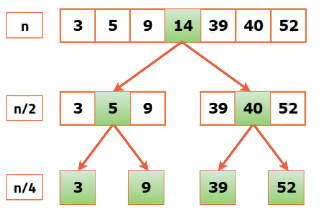
54. What are benefits of recursion tree?
Ans:
- Recursion tree helps visualize recursive calls, making it easier to understand algorithm behavior and execution flow. Visual structure improves conceptual clarity. This is useful for beginners.
- It assists in calculating time complexity by analyzing the number of operations at each level. Summing levels often reveals total cost clearly. This supports analysis skills.
- Recursion tree simplifies solving recurrence relations for divide-and-conquer algorithms. Many algorithms like merge sort use this idea. It is academically important.
- It improves understanding of recursive problem-solving techniques effectively. Seeing call expansion reduces confusion naturally. Practice builds confidence.
55. What is Topological Sorting?
Ans:
Topological sorting is an ordering of vertices in a directed acyclic graph such that for every directed edge, one vertex comes before the other. It is used in scheduling tasks and resolving dependencies in systems. Topological sorting can be performed using DFS or BFS approaches. It is applicable only to directed acyclic graphs. Understanding topological sorting is important for solving dependency-based problems in interviews.
56. What are applications of topological sorting?
Ans:
- Topological sorting is used in task scheduling where dependencies must be resolved before execution. Correct order prevents conflicts clearly. This is common in planning systems.
- It helps in determining the order of compilation in programming languages with dependencies. Required files are built before dependent files. This improves automation.
- It is applied in project management to organize tasks efficiently. Dependency chains become easier to manage. Proper ordering saves time.
- Topological sorting is also used in resolving package dependencies in software systems. Install order matters greatly in package managers. This is a real-world use case.
57. What is Shortest Path Algorithm?
Ans:
Shortest path algorithms are used to find the minimum distance between nodes in a graph. They are widely used in navigation systems and network routing. Common algorithms include Dijkstra, Bellman-Ford, and Floyd-Warshall. These algorithms help in optimizing pathfinding problems. Understanding shortest path algorithms is essential for solving graph problems in interviews.
58. What is the difference between Dijkstra and Bellman-Ford?
Ans:
| Criteria | Dijkstra | Bellman-Ford |
|---|---|---|
| Weights | Works with non-negative weights. | Works with negative weights also. |
| Speed | Usually faster. | Usually slower. |
| Negative Cycle | Cannot detect negative cycles. | Can detect negative cycles. |
| Usage | Routing and shortest path. | Special weighted graph problems. |
59. What is Minimum Spanning Tree?
Ans:
Minimum spanning tree is a subset of edges in a graph that connects all vertices with minimum total edge weight. It is used in network design and optimization problems. Common algorithms include Kruskal and Prim methods. MST ensures efficient connection with minimal cost. Understanding MST is essential for solving graph optimization problems.
60. What are MST algorithms?
Ans:
- Kruskal algorithm builds MST by selecting edges in increasing order of weight while avoiding cycles. Sorting edges first is a key step. It works well for sparse graphs.
- Prim algorithm grows MST from a starting vertex by selecting minimum weight edges. It expands one connected tree gradually. Priority queues often improve speed.
- Both algorithms ensure minimal total weight and efficient connectivity. They reach the same optimal cost when applied correctly. Choice depends on graph type.
- MST algorithms are widely used in network design and clustering problems. Cost-efficient connectivity is a common requirement. Real applications are significant.

Learn C & C++ Training with Advanced Concepts By Industry Experts
- Instructor-led Sessions
- Real-life Case Studies
- Assignments
61. What is Disjoint Set?
Ans:
Disjoint set is a data structure used to keep track of elements partitioned into separate sets. It supports operations such as union and find for managing sets efficiently. It is widely used in graph algorithms like Kruskal for cycle detection. Path compression improves performance significantly. Understanding disjoint set is essential for solving graph problems.
62. What are operations in disjoint set?
Ans:
- Find operation determines the representative element of a set, helping identify group membership efficiently. It tells whether two elements belong to the same component clearly. This operation is used frequently in graph problems.
- Union operation merges two sets into one, ensuring connectivity between elements. It combines separate groups after adding a valid connection. This is essential in spanning tree algorithms.
- Path compression optimizes find operation by flattening tree structure for faster access. Repeated future searches become much quicker after compression. This greatly improves overall efficiency.
- Union by rank improves efficiency by attaching smaller trees under larger ones. Balanced trees reduce unnecessary height growth significantly. This keeps operations near constant time.
63. What is the difference between BFS and DFS?
Ans:
| Criteria | BFS | DFS |
|---|---|---|
| Traversal | Explores nodes level by level. | Explores deeply before backtracking. |
| Data Structure | Uses queue. | Uses stack or recursion. |
| Best Use | Shortest path in unweighted graph. | Cycle detection and path exploration. |
| Memory | May use more memory. | Usually uses less memory. |
64. What are applications of BFS?
Ans:
- BFS is used in shortest path finding in unweighted graphs efficiently using level-based traversal. The first time a node is reached often gives minimum edges distance. This makes BFS highly useful.
- It helps in solving problems like connectivity and component detection in graphs. Visiting all reachable nodes reveals graph structure clearly. This is common in interviews.
- BFS is applied in web crawling and social network analysis. Level exploration naturally fits connection-based systems significantly. Real applications use this logic.
- It is also used in solving puzzles and pathfinding problems. Many grid and maze problems depend on BFS traversal naturally. This builds practical problem-solving skills.
65. What is DFS?
Ans:
Depth-first search is a graph traversal algorithm that explores nodes deeply before backtracking. It uses recursion or stack to manage traversal. DFS is useful for cycle detection and pathfinding problems. It explores all possible paths before moving to next node. Understanding DFS is essential for solving graph-related problems.
66. What are applications of DFS?
Ans:
- DFS is used in cycle detection and topological sorting in graphs. Deep traversal helps identify back edges and dependencies clearly. This is common in directed graphs.
- It helps in solving maze and pathfinding problems effectively. DFS explores paths deeply until solution or dead end appears. This is useful in recursion problems.
- DFS is used in connected component detection in graphs. Repeated traversals reveal isolated groups significantly. This is an important graph concept.
- It is also applied in backtracking and puzzle-solving problems. Many recursive search problems rely on DFS style exploration naturally. Examples include Sudoku and N-Queens.
67. What is Topological Sort?
Ans:
Topological sort arranges nodes of a directed acyclic graph in linear order based on dependencies. It ensures that each node appears before its dependent nodes. It is used in scheduling and dependency resolution problems. DFS or BFS can be used for implementation. Understanding topological sorting is important for solving dependency problems.
68. What are applications of topological sort?
Ans:
- Topological sorting is used in scheduling tasks with dependencies in project management. Tasks are completed only after prerequisites finish clearly. This prevents invalid ordering.
- It helps in resolving compilation order in programming languages. Modules depending on others must be built later significantly. This is common in build systems.
- It is used in dependency resolution in software systems. Package installation often needs valid order management effectively. Topological sort solves this neatly.
- Topological sort improves efficiency in task execution planning. Correct sequencing reduces delays and conflicts naturally. Planning becomes smoother.
69. What is Hash Table?
Ans:
Hash table is a data structure that stores key-value pairs using a hash function for indexing. It provides constant time complexity for search, insertion, and deletion operations. Collisions are handled using techniques like chaining or open addressing. Hash tables are widely used in databases and caching systems. Understanding hash tables is essential for solving lookup problems.
70. What are advantages of hash table?
Ans:
- Hash tables provide fast data access with constant time complexity in most cases. This makes them ideal for repeated lookup operations clearly. Speed is their major strength.
- They are efficient for storing and retrieving large datasets quickly. Direct indexing through hashes avoids linear scanning significantly. Performance scales well.
- Hash tables are widely used in caching and indexing applications. Many real systems depend on rapid retrieval effectively. They are practical structures.
- They improve performance in search operations significantly. Faster search saves processing time naturally. This is valuable in interviews and projects.
71. What is Trie Data Structure?
Ans:
Trie is a tree-based data structure used for storing strings efficiently based on prefixes. It allows fast search, insertion, and deletion operations. Trie is widely used in autocomplete and dictionary applications. It improves performance in prefix-based queries. Understanding trie is important for solving string problems.
72. What are advantages of trie?
Ans:
- Trie enables fast prefix-based searching, improving performance in text processing applications. Common prefixes are shared between words clearly. This saves time greatly.
- It supports efficient insertion and deletion operations for strings. Character-by-character navigation keeps updates organized significantly. This is useful for dynamic datasets.
- Trie is useful in autocomplete and dictionary implementations. Prefix suggestions can be generated quickly effectively. Many search systems use this idea.
- It reduces search time compared to traditional data structures. Prefix matching becomes faster naturally. This improves user experience.
73. What is Segment Tree?
Ans:
Segment tree is used for efficient range queries and updates in arrays. It divides array into segments and stores information for each segment. It supports operations like sum, minimum, and maximum queries. Segment tree improves performance significantly. Understanding segment tree is essential for advanced problems.
74. What are uses of segment tree?
Ans:
- Segment tree is used in range sum queries for efficient computation in large datasets. Query time becomes much faster than naive summation clearly. This is a key advantage.
- It supports dynamic updates while maintaining fast query performance. Changed values can be reflected efficiently significantly. This is useful in live systems.
- Segment tree is used in competitive programming for optimization problems. Many range query questions rely on this structure effectively. It is a popular advanced topic.
- It reduces time complexity significantly compared to naive approaches. Better performance helps with large inputs naturally. Optimization is the main goal.
75. What is Binary Tree Traversal?
Ans:
Binary tree traversal refers to visiting nodes in a specific order such as inorder, preorder, and postorder. It is used for processing tree data structures effectively. Traversal helps in performing operations like searching and printing elements. Different traversal methods serve different purposes. Understanding tree traversal is essential for solving tree problems.
76. What are types of tree traversal?
Ans:
- Inorder traversal visits left subtree, root, and right subtree, commonly used in binary search trees. This order returns sorted values in BST clearly. It is very important.
- Preorder traversal visits root before subtrees, useful in tree copying and prefix expressions. Parent nodes are processed first significantly. This helps reconstruction tasks.
- Postorder traversal visits subtrees before root, used in deletion operations. Child nodes are handled first effectively. This is safe for cleanup tasks.
- Level order traversal visits nodes level by level using queues. Breadth-first processing is useful in many shortest-level problems naturally. Queues support this well.
77. What is Balanced Tree?
Ans:
Balanced tree is a tree where height difference between subtrees is minimized. It ensures efficient operations like insertion, deletion, and search. Examples include AVL and Red-Black trees. Balanced trees improve performance compared to unbalanced trees. Understanding balanced trees is essential for efficient data handling.
78. What are advantages of balanced trees?
Ans:
- Balanced trees ensure logarithmic time complexity for operations. Search and updates remain efficient even with many nodes clearly. This improves scalability.
- They prevent skewed tree formation and improve performance. Long chain-like trees slow operations significantly. Balancing avoids this issue.
- Balanced trees support efficient data retrieval and updates. They are suitable for dynamic datasets effectively. This is valuable in real systems.
- They are widely used in databases and search applications. Reliable performance makes them practical naturally. Industry systems depend on them.
79. What is Red-Black Tree?
Ans:
Red-Black tree is a self-balancing binary search tree with color properties. It ensures balanced height for efficient operations. It maintains properties such as no two consecutive red nodes. It is used in many programming libraries. Understanding Red-Black trees is important for advanced data structures.
80. What are properties of Red-Black tree?
Ans:
- Every node is either red or black, ensuring structured balancing. Color rules help maintain tree efficiency clearly. This is the base property.
- Root node is always black, maintaining consistency. Standardized root coloring simplifies balancing logic significantly. It keeps rules stable.
- Red nodes cannot have red children, ensuring balance. Consecutive red chains are prevented effectively. This controls height growth.
- All paths from root to leaves have same number of black nodes. Equal black height preserves near balance naturally. Operations remain efficient.
81. What is AVL Tree?
Ans:
AVL tree is a self-balancing binary search tree where the difference between heights of left and right subtrees is at most one for every node. It ensures that tree remains balanced after insertion and deletion operations through rotations. AVL trees provide efficient search, insertion, and deletion operations with logarithmic time complexity. Balancing operations include left rotation, right rotation, and double rotations depending on imbalance conditions. Understanding AVL trees is essential for maintaining efficient data structures in advanced algorithmic problems.
82. What are advantages of AVL tree?
Ans:
- AVL tree maintains strict balance by ensuring height difference constraints, which guarantees efficient performance for search, insertion, and deletion operations. Strict balance gives fast access clearly. This is a major benefit.
- It provides consistent logarithmic time complexity for all operations, making it highly efficient for dynamic datasets. Predictable performance is valuable significantly. Large data remains manageable.
- AVL trees prevent skewed structures that can degrade performance in standard binary search trees. Balanced height avoids slow chains effectively. Efficiency is preserved.
- They are widely used in applications requiring frequent search operations and balanced data storage. Search-heavy systems benefit naturally. This makes AVL practical.
83. What is Heap Sort?
Ans:
Heap sort is a comparison-based sorting algorithm that uses a heap data structure to sort elements efficiently. It involves building a heap and repeatedly extracting the maximum or minimum element to form a sorted array. Heap sort has a time complexity of O(n log n) and does not require additional memory for sorting. It is considered an in-place sorting algorithm with consistent performance. Understanding heap sort is important for solving sorting problems in technical interviews.
84. What are features of heap sort?
Ans:
- Heap sort provides consistent time complexity of O(n log n), making it efficient for large datasets and reliable in performance. Runtime remains predictable clearly. This is useful in interviews.
- It is an in-place sorting algorithm, requiring minimal additional memory compared to other sorting methods. Lower extra space is beneficial significantly. Memory efficiency matters.
- Heap sort is not stable, meaning it does not preserve the relative order of equal elements during sorting. Stability may matter in some applications effectively. This is a limitation.
- It is widely used in priority queue implementations and situations requiring efficient sorting. Heap logic supports multiple practical tasks naturally. It has broad relevance.
85. What is the difference between merge sort and quick sort?
Ans:
| Criteria | Merge Sort | Quick Sort |
|---|---|---|
| Method | Divides array and merges sorted parts. | Partitions array around pivot element. |
| Time Complexity | Consistent O(n log n). | Average O(n log n), worst O(n²). |
| Memory | Requires extra memory. | Usually in-place sorting. |
| Stability | Stable sorting algorithm. | Generally not stable. |
86. What are advantages of merge sort?
Ans:
- Merge sort provides stable sorting, preserving the relative order of equal elements, which is important in many applications. Stability is valuable in multi-key sorting clearly. This is a major strength.
- It guarantees consistent performance with O(n log n) time complexity regardless of input distribution. Predictable runtime helps significantly. Worst cases remain controlled.
- Merge sort is suitable for large datasets and external sorting where data cannot fit entirely in memory. Divide-and-merge works effectively for disk data. This is practical.
- It is widely used in linked list sorting due to its efficient merging capabilities. Linked lists merge naturally without random access. This gives strong performance.
87. What is Quick Sort?
Ans:
Quick sort is a divide-and-conquer algorithm that selects a pivot element and partitions the array into smaller and larger elements. It recursively sorts partitions to achieve a fully sorted array. Quick sort has an average time complexity of O(n log n) but worst-case O(n²). It is an in-place sorting algorithm and widely used due to its efficiency. Understanding quick sort is essential for solving sorting and partitioning problems.
88. What are features of quick sort?
Ans:
- Quick sort is highly efficient in average cases with O(n log n) time complexity, making it suitable for practical applications. It is often very fast in real usage clearly. Average performance is strong.
- It is an in-place sorting algorithm, reducing memory usage compared to other sorting techniques. Lower space needs are useful significantly. This improves practicality.
- Performance depends on pivot selection, which can affect efficiency in worst-case scenarios. Poor pivots may create unbalanced partitions effectively. Strategy matters greatly.
- Quick sort is widely used in real-world systems due to its speed and simplicity. Good average behavior makes it popular naturally. It is an interview favorite.
89. What is Big-O Notation?
Ans:
Big-O notation is used to describe the upper bound of an algorithm’s time or space complexity as input size grows. It helps in analyzing and comparing efficiency of different algorithms. Common notations include O(1), O(n), O(log n), and O(n²). Big-O focuses on worst-case scenarios for performance evaluation. Understanding Big-O notation is essential for writing optimized algorithms in interviews.
90. What are important concepts in algorithm analysis?
Ans:
- Time complexity analysis helps evaluate how execution time grows with input size, ensuring efficient algorithm selection. Faster growth rates become problematic clearly. This guides optimization.
- Space complexity analysis measures memory usage and helps optimize resource utilization effectively. Memory efficiency matters in constrained systems significantly. Good design balances both.
- Best-case, average-case, and worst-case scenarios provide comprehensive understanding of algorithm performance. Different inputs create different behaviors naturally. Analysis becomes more complete.
- Asymptotic analysis helps compare algorithms independently of hardware and implementation details. It focuses on growth trends rather than machine speed clearly. This is widely used in theory.