LMS
LMS
Last updated on 25th Jul 2026| 8187

- Introduction to Resume Rejection and Its Causes
- Mistake 1: Poor Formatting and Inconsistent Structure
- Mistake 2: Spelling, Grammar, and Proofreading Errors
- Mistake 3: Including Irrelevant or Outdated Information
- Mistake 4: Lack of Measurable Achievements
- Mistakes 5 to 10: Additional Common Resume Mistakes
- Impact of Applicant Tracking Systems on Resume Screening
- How Recruiters Perceive These Mistakes
- How to Fix and Avoid These Mistakes
- Conclusion: Building an Error-Free, Recruiter-Ready Resume
Introduction to Resume Rejection and Its Causes
Every year, countless qualified candidates lose out on interview opportunities not because they lack the necessary skills or experience, but because their resumes contain avoidable mistakes that cause recruiters or automated screening systems to reject them before their qualifications are ever properly considered. In a competitive job market where a single opening can attract hundreds or even thousands of applications, recruiters often spend only a few seconds scanning each resume, meaning that even minor errors or structural issues can result in immediate elimination from consideration. These mistakes range from simple formatting inconsistencies and spelling errors to more substantial issues such as failing to demonstrate measurable achievements or including irrelevant information that dilutes the resume’s overall impact. Understanding the most common reasons resumes get rejected is essential for candidates who want to maximize their chances of being shortlisted, as many of these mistakes are entirely preventable with careful attention to detail and a clear understanding of recruiter expectations. Additionally, with the widespread use of applicant tracking systems in modern recruitment processes, certain formatting and content mistakes can cause a resume to be filtered out automatically before a human recruiter even reviews it. Candidates applying for technical roles should also ensure that their resumes clearly present relevant skills and practical expertise, particularly when pursuing specialized fields such as Software Testing Training. This article examines ten of the most common and damaging resume mistakes, explains why each one negatively affects a candidate’s chances, and provides practical guidance on how to identify and correct these issues before submitting an application.

Mistake 1: Poor Formatting and Inconsistent Structure
Poor formatting is one of the most immediately noticeable resume mistakes, as it creates a negative first impression before a recruiter has even had the chance to evaluate the actual content of the document. Inconsistent font sizes, mismatched heading styles, uneven spacing, and cluttered layouts make a resume difficult to scan quickly, which is particularly problematic given that recruiters often review resumes in a matter of seconds rather than minutes. Inconsistent formatting can also make it difficult to present information in a logical order, so candidates should understand the different Resume Types Explained before selecting a structure that best presents their qualifications. A resume with excessive text density, minimal white space, or overly small font sizes can appear overwhelming and unprofessional, discouraging recruiters from engaging with the content in detail. Similarly, using multiple different fonts or inconsistent bullet point styles throughout the document creates a disorganized appearance that suggests a lack of attention to detail, which is a quality recruiters actively screen against. Formatting problems also extend to file compatibility issues, such as submitting a resume in an unusual file format that does not display correctly across different devices or software, potentially distorting the entire layout when opened by a recruiter. A well-formatted resume, by contrast, uses consistent fonts, clear section headings, appropriate spacing, and a logical visual hierarchy that guides the reader’s eye naturally through the document, making key information easy to locate and absorb quickly, which significantly improves the overall impression a candidate makes during the initial screening process.
Get Your Software Testing Certification by Learning from Industry-Leading Experts and Advancing Your Career with ACTE’s Software Testing Course.
Mistake 2: Spelling, Grammar, and Proofreading Errors
Spelling and grammatical errors are among the most damaging mistakes a candidate can make on a resume, as they immediately signal a lack of attention to detail and can create doubts about a candidate’s overall professionalism and communication skills, regardless of how strong their actual qualifications may be. Even a single typo, misplaced comma, or inconsistent verb tense can distract a recruiter from the substance of the resume and lead them to question the candidate’s diligence, particularly for roles that require precision, documentation, or client-facing communication. Common proofreading oversights include inconsistent tense usage across different job entries, incorrect punctuation, misspelled company or technology names, and grammatical errors within bullet points that were written quickly without careful review. These mistakes often occur because candidates rely solely on their own review or informal spell-check tools, which may not catch every error, particularly those involving correctly spelled but contextually incorrect words. To avoid this mistake, candidates should read their resume multiple times, ideally aloud, to catch errors that might be missed during silent reading. Candidates should also ask a trusted friend, mentor, or professional to review the document with fresh eyes. For technical professionals pursuing specialized fields such as Software Testing Training, carefully proofreading technical terminology, tools, and project descriptions is especially important to ensure that their expertise is presented accurately. Using dedicated grammar-checking tools alongside manual proofreading provides an additional layer of protection against errors slipping through, ensuring that the final resume presents a polished, professional, and error-free representation of the candidate’s capabilities.

Learn Software Testing Training Course to Build Your Skills
Weekday / Weekend BatchesSee Batch DetailsMistake 3: Including Irrelevant or Outdated Information
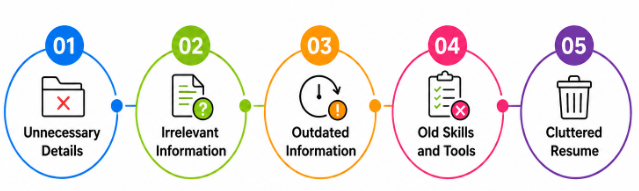
Including irrelevant or outdated information is a common mistake that dilutes the overall impact of a resume by forcing recruiters to sift through unnecessary content to find the details that actually matter for the role being applied for. Many candidates include every job, certification, or skill they have ever acquired, regardless of its relevance to the current application, which not only lengthens the resume unnecessarily but also obscures the most important and relevant qualifications among less significant details. Outdated information, such as skills in technologies that are no longer widely used, jobs from many years ago that have little bearing on the current application, or personal details like marital status and date of birth that are no longer standard practice in most regions, can make a resume feel cluttered and unfocused.

Get JOB Oriented Software TestingI Training for Beginners By MNC Experts
- Instructor-led Sessions
- Real-life Case Studies
- Assignments
Mistake 4: Lack of Measurable Achievements
A resume that lists only job responsibilities and duties without demonstrating measurable achievements fails to convey the actual impact a candidate had in their previous roles, making it significantly harder for recruiters to differentiate between candidates who simply performed their job functions and those who excelled and delivered exceptional results. Statements such as “responsible for managing a team” or “worked on improving processes” describe activities without providing any indication of scale, effectiveness, or outcome, leaving recruiters to guess at the actual value a candidate provided in their previous position. In contrast, quantifying achievements with specific numbers, percentages, or measurable outcomes, such as improving efficiency by a certain percentage, reducing costs, increasing customer satisfaction scores, or successfully completing projects within specific timeframes, provides concrete evidence of a candidate’s effectiveness and impact. Candidates can further strengthen this approach by learning how to present projects effectively through this Project Description In Resume, particularly when demonstrating project outcomes and practical contributions. This lack of measurable detail is particularly damaging for competitive roles, where recruiters are actively comparing multiple candidates and are naturally drawn to those who can demonstrate clear, quantifiable value rather than simply listing generic responsibilities. Even in roles where precise metrics may not be readily available, candidates can still use comparative or descriptive language to convey scale and impact, such as describing significant improvements or notable recognition received for their work. Failing to include measurable achievements represents a missed opportunity to differentiate a resume from the many others that rely solely on vague descriptions of duties, ultimately reducing a candidate’s competitiveness in the selection process.
Mistakes 5 to 10: Additional Common Resume Mistakes
| Mistake | Why It Causes Rejection |
|---|---|
| Mistake 5: Overly Long Resume | Excessive length dilutes key information and discourages full review by busy recruiters. |
| Mistake 6: Generic, Non-Tailored Content | Failing to customize for each role suggests a lack of genuine interest or effort. |
| Mistake 7: Unprofessional Email or Contact Info | Casual email addresses or missing contact details reduce perceived professionalism. |
| Mistake 8: Missing Keywords from Job Description | Resumes lacking relevant keywords may be filtered out by ATS software automatically. |
| Mistake 9: Overuse of Buzzwords Without Evidence | Terms like “hardworking” or “team player” without proof feel hollow and unconvincing. |
| Mistake 10: Inconsistent Employment Dates | Unexplained gaps or date mismatches raise doubts and can appear dishonest. |
Want to Master Software Testing? Explore the Software Testing Master Program Offered at ACTE Today!
Impact of Applicant Tracking Systems on Resume Screening
Applicant tracking systems have fundamentally changed the way resumes are screened, as many organizations now use automated software to filter and rank applications before a human recruiter ever reviews them, meaning that a resume must first satisfy technical parsing requirements before it can even be considered on its merits. These systems scan resumes for specific keywords related to skills, job titles, and qualifications mentioned in the job description, ranking candidates based on how closely their resume matches the required criteria, which means that resumes lacking relevant terminology may be automatically deprioritized or excluded entirely, regardless of the candidate’s actual suitability. Formatting choices that seem visually appealing to a human reader, such as complex tables, graphics, unusual fonts, or text placed within headers and footers, can often confuse applicant tracking software, causing information to be misread, misplaced, or omitted entirely from the parsed version of the resume. This makes it essential for candidates to use clean, simple formatting with standard section headings, avoiding overly creative layouts that may look impressive to a human eye but perform poorly when processed by automated systems. Candidates applying for technical positions, such as roles related to Software Testing Training, should also ensure that relevant technical skills, testing tools, methodologies, and project experience are clearly included using terminology that aligns with the target job description. Additionally, submitting resumes in compatible file formats, typically Word documents or properly formatted PDFs, further ensures that the content is accurately extracted and evaluated by the screening software. Understanding how applicant tracking systems function allows candidates to strategically incorporate relevant keywords and maintain ATS-friendly formatting, significantly improving their chances of passing this critical first stage of the recruitment process before reaching human evaluation.
How Recruiters Perceive These Mistakes
Beyond the mechanical impact of resume mistakes on ATS filtering, human recruiters often form strong subjective impressions based on the errors and shortcomings they observe within a resume, which can significantly influence their overall assessment of a candidate’s suitability for a role. Formatting inconsistencies and spelling errors are frequently interpreted as indicators of carelessness or a lack of attention to detail, qualities that recruiters generally consider undesirable across virtually all professional roles, regardless of industry. A resume cluttered with irrelevant information or lacking measurable achievements may lead recruiters to perceive a candidate as either inexperienced in effectively communicating their value or genuinely lacking substantial accomplishments, even if this perception does not accurately reflect the candidate’s true capabilities. Recruiters also tend to view generic, non-tailored resumes as a sign that a candidate is applying broadly without genuine interest in the specific role or organization, which can reduce enthusiasm for moving the application forward, particularly in competitive hiring processes where recruiters are seeking candidates who demonstrate clear intent and preparation. Candidates can gain additional insight into effective presentation by exploring these Resume Tips Inspired by Candidates, which highlight practices that can help create a stronger professional impression. Conversely, a well-structured, error-free resume with clear achievements creates a strong positive impression, suggesting that a candidate is organized, detail-oriented, and genuinely invested in presenting themselves professionally. Because these perceptions often form within seconds and can be difficult to reverse later in the process, understanding how recruiters interpret common resume mistakes underscores the importance of thorough review and careful presentation before submitting any application.
Want to Learn About Software Testing? Explore Our Software Testing Interview Questions and Answers Featuring the Most Frequently Asked Questions in Job Interviews.
How to Fix and Avoid These Mistakes
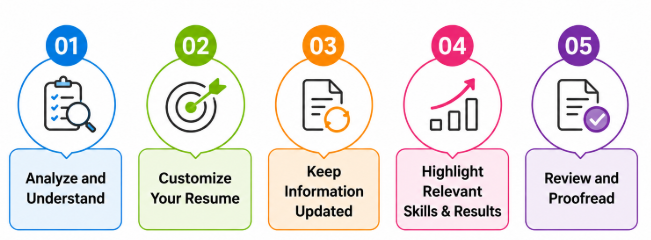
- Use Clean, Consistent Formatting: Stick to one or two professional fonts, consistent heading styles, and adequate spacing throughout the resume to ensure a polished and easily scannable appearance.
- Proofread Multiple Times and Get Feedback: Review the resume several times, use grammar-checking tools, and ask another person to review it before submission to catch errors that may otherwise be missed.
- Tailor Content for Each Application: Adjust the resume for each specific role by emphasizing the most relevant skills, experiences, and keywords that align directly with the job description.
- Quantify Achievements Wherever Possible: Replace generic responsibility statements with specific, measurable outcomes that clearly demonstrate the impact and value delivered in previous roles or projects.
- Keep the Resume Concise and Relevant: Remove outdated or irrelevant information, focusing only on content that directly supports the candidate’s suitability for the current application.
- Test ATS Compatibility: Use simple, standard formatting and verify that the resume parses correctly by reviewing it in plain text or using online ATS compatibility checking tools before submission. For additional guidance on creating an effective resume, explore these Tips to Build a Resume.
Conclusion: Building an Error-Free, Recruiter-Ready Resume
The difference between a resume that gets shortlisted and one that gets silently rejected often comes down to attention to detail, thoughtful structuring, and a clear demonstration of measurable value, rather than a fundamental lack of qualifications or capability. Mistakes such as poor formatting, grammatical errors, irrelevant content, missing metrics, and ATS incompatibility are entirely avoidable with careful review and a genuine understanding of what recruiters and automated systems are looking for during the screening process. By proactively addressing these common pitfalls, tailoring content for each specific application, and presenting achievements with clear, quantifiable evidence, candidates can significantly improve the professionalism and effectiveness of their resumes. Candidates pursuing technical careers should also clearly highlight relevant skills, tools, certifications, and practical experience, particularly when preparing for specialized fields such as Software Testing Training. In a competitive job market where recruiters make rapid decisions based on limited review time, eliminating these avoidable mistakes gives candidates a meaningful advantage over applicants who overlook these critical details. Ultimately, building an error-free, well-structured, and recruiter-ready resume is a controllable factor within every candidate’s power, and investing the necessary time and effort into this process can substantially increase the likelihood of securing interviews and advancing toward successful career opportunities.