LMS
LMS
Last updated on 05th Sep 2026| 13461

- Introduction to Data Analyst Careers at Deloitte
- Understanding the Role of a Data Analyst at Deloitte
- Deloitte Data Analyst Salary Expectations
- Factors That Influence Data Analyst Salaries at Deloitte
- Essential Technical Skills for Deloitte Data Analysts
- Data Visualization, SQL, Python, and Analytics Tools
- Business, Analytical, and Communication Skills for Deloitte Roles
- Career Growth and Advancement Opportunities at Deloitte
- How Freshers Can Prepare for Deloitte Data Analyst Jobs
- Conclusion: Building a Successful Data Analytics Career at Deloitte
Introduction to Data Analyst Careers at Deloitte
A Data Analyst career at Deloitte offers professionals an opportunity to work with data, business intelligence, reporting, and technology-driven decision-making across different industries. Data analysts help organizations transform raw information into meaningful insights that support business strategies, improve operations, and identify growth opportunities. For freshers, Deloitte can provide exposure to real-world business challenges, analytical projects, modern data technologies, and experienced professionals. Candidates can build their careers by developing skills in SQL, Excel, Python, statistics, data visualization, and business intelligence tools such as Power BI or Tableau. Pursuing a relevant Data Analytics Course can help aspiring professionals strengthen these technical and analytical skills through structured learning. Strong analytical thinking, problem-solving, communication, and teamwork abilities are also important for working effectively with business and technical teams. As data continues to influence organizational decisions, skilled analysts can explore opportunities across consulting, finance, healthcare, technology, retail, and other sectors. Building practical projects, gaining internship experience, earning relevant certifications, and continuously improving technical knowledge can help aspiring analysts prepare for Deloitte Data Analyst opportunities and establish a strong foundation for long-term career growth.
Understanding the Role of a Data Analyst at Deloitte
A Data Analyst at Deloitte works with data to identify patterns, generate insights, prepare reports, and support clients or internal teams in making informed business decisions. The role may involve collecting and cleaning data, writing SQL queries, performing exploratory analysis, creating dashboards, preparing reports, and presenting findings to stakeholders. Depending on the project, analysts may work with technologies such as Excel, SQL, Python, Power BI, Tableau, cloud platforms, and modern data analytics tools. Data analysts may also collaborate with consultants, data engineers, developers, business analysts, and clients to understand requirements and translate business problems into analytical solutions. Strong attention to detail is essential because analysts must ensure data accuracy and identify inconsistencies before presenting results. Understanding Data Analytics Salary Trends can also help aspiring analysts gain a broader perspective on career growth and earning potential in the field. Communication skills are equally important because technical findings need to be explained clearly to non-technical stakeholders. For freshers, developing a combination of technical expertise and business understanding can help them adapt to different projects and industries. The role provides opportunities to strengthen analytical capabilities while gaining experience in solving practical business problems through data.
Get Your Data Analytics Certification by Learning from Industry-Leading Experts and Advancing Your Career with ACTE’s Data Analytics Course.
Deloitte Data Analyst Salary Expectations
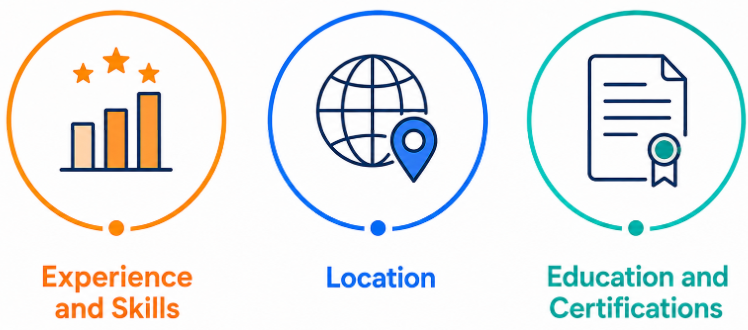
Deloitte Data Analyst salaries can vary depending on factors such as experience, location, technical expertise, job level, business unit, project requirements, and hiring program. Freshers generally begin at an entry-level compensation range, while professionals with several years of experience and specialized analytics skills can progress toward higher salary levels. Candidates with strong expertise in SQL, Python, Power BI, Tableau, statistics, cloud technologies, and advanced analytics may have better opportunities for career progression. Professionals looking to strengthen these capabilities can consider a structured Data Analytics Course to develop practical knowledge relevant to analytics roles. Compensation can also differ based on whether the role focuses primarily on reporting and business intelligence or involves advanced analytics, data science, consulting, or specialized technology solutions. Professionals should therefore treat salary figures available online as estimates rather than guaranteed packages. For freshers, gaining practical experience and developing in-demand skills can be more valuable for long-term earning potential than focusing only on the initial salary. Building a strong portfolio, earning relevant certifications, taking on challenging projects, and progressing toward senior analyst, analytics consultant, data scientist, or specialized technology roles can contribute to stronger compensation over time.

Learn Advanced Data Analytics Certification Training Course to Build Your Skills
Weekday / Weekend BatchesSee Batch DetailsFactors That Influence Data Analyst Salaries at Deloitte
Several factors can influence the salary and career progression of Data Analysts at Deloitte. Professional experience is a major factor because responsibilities and compensation generally increase as analysts move into senior and specialized positions. Technical expertise also plays an important role, particularly skills in SQL, Python, Power BI, Tableau, Excel, statistics, cloud platforms, data engineering, and advanced analytics. Building practical experience is especially valuable, and exploring Top 8 Real-World Data Analytics Projects can help beginners identify project ideas that strengthen their analytical skills and professional profile. Job location and the specific business unit or consulting practice can also affect compensation. Analysts working on complex client projects or specialized technology initiatives may develop additional expertise that supports career progression.

Get JOB Oriented Data Analytics Training for Beginners By MNC Experts
- Instructor-led Sessions
- Real-life Case Studies
- Assignments
Essential Technical Skills for Deloitte Data Analysts
- SQL and Database Management Strong SQL skills help Data Analysts extract, filter, join, and analyze information from databases. Candidates should understand queries, joins, subqueries, aggregations, views, indexes, and basic database design to work effectively with business data.
- Python Programming Python helps analysts perform data cleaning, transformation, automation, and exploratory analysis. Freshers should understand programming fundamentals and learn libraries such as Pandas and NumPy for practical data analysis.
- Excel and Spreadsheet Skills Excel is useful for organizing data, calculations, reporting, and business analysis. Candidates should learn formulas, PivotTables, lookups, conditional formatting, charts, and data-cleaning techniques. For additional practical knowledge, candidates can explore Master Excel Formulas for Smarter Data Analysis to improve their spreadsheet-based analytical skills.
- Statistics and Data Analysis Statistical knowledge helps analysts interpret datasets and identify meaningful patterns. Freshers should learn descriptive statistics, probability, correlation, distributions, sampling, and basic hypothesis testing.
- Data Cleaning and Preparation Data analysts should know how to identify missing values, duplicates, inconsistent formats, and inaccurate records. Proper data preparation ensures reliable analysis and improves the quality of business insights.
Data Visualization, SQL, Python, and Analytics Tools
- SQL and Database Management Strong SQL skills help Data Analysts extract, filter, join, and analyze information from databases. Candidates should understand queries, joins, subqueries, aggregations, views, indexes, and basic database design to work effectively with business data.
- Python for Data Analysis Python is useful for data cleaning, transformation, automation, and exploratory analysis. Freshers should become familiar with libraries such as Pandas and NumPy and understand how Python can simplify repetitive analytical tasks.
- Excel and Spreadsheet Analytics Excel remains valuable for organizing data, performing calculations, creating reports, and analyzing business information. Candidates should learn formulas, PivotTables, lookups, conditional formatting, charts, and basic data-cleaning techniques.
- Power BI and Tableau Data visualization skills help analysts convert complex datasets into understandable dashboards and reports. Learning Power BI or Tableau enables candidates to create interactive visualizations, identify trends, and communicate insights effectively. Freshers can also explore Why Metabase is a Powerful Tool for Data Analysts to understand how modern business intelligence tools can support data exploration and reporting.
- Statistics and Data Interpretation A strong understanding of statistics helps analysts interpret data accurately and support business decisions. Freshers should learn descriptive statistics, probability, correlation, distributions, sampling, and basic hypothesis testing to evaluate analytical results.
Want to Master Data Analytics? Explore the Data Analytics Master Program Offered at ACTE Today!
Business, Analytical, and Communication Skills for Deloitte Roles
- Business Understanding and Domain Knowledge Data analysts should understand how businesses operate and how data supports decisions. Learning basic concepts related to finance, sales, marketing, operations, and customer behavior helps freshers connect analytical findings with real business requirements.
- Analytical Thinking and Problem-Solving Strong analytical thinking enables candidates to identify patterns, investigate data problems, and develop logical solutions. Freshers should practice breaking complex business questions into smaller analytical tasks and using evidence to reach meaningful conclusions.
- Stakeholder Management and Collaboration Analysts often work with consultants, managers, developers, data engineers, and clients. Strong teamwork, active listening, requirement gathering, and professional communication help ensure that analytical solutions meet stakeholder expectations. Freshers can strengthen these capabilities by learning Data Analytics Internships, particularly through practical exposure to real-world analytical tasks and workplace collaboration.
- Data-Driven Decision-Making Analysts need to convert data into insights that support business decisions. Candidates should learn how to evaluate trends, compare performance, identify opportunities, and present recommendations based on accurate and relevant information.
- Communication and Presentation Skills Data analysts must explain technical findings to both technical and non-technical stakeholders. Clear writing, presentations, storytelling with data, and the ability to explain dashboards and analytical results are important professional skills.
Want to Learn About Data Analytics? Explore Our Data Analytics Interview Questions and Answers Featuring the Most Frequently Asked Questions in Job Interviews.
Career Growth and Advancement Opportunities at Deloitte
- Starting as an Entry-Level Data Analyst Freshers can begin by supporting data preparation, reporting, dashboard development, SQL analysis, and basic business analytics tasks. This stage helps professionals gain practical experience and understand real-world project requirements. A structured Data Analytics Course can help beginners build the foundational skills needed for entry-level analytics opportunities.
- Progressing to Senior Data Analyst Roles With experience, analysts can take responsibility for complex datasets, advanced reporting, analytical projects, and stakeholder communication. Senior roles also involve mentoring junior team members and contributing to important business decisions.
- Moving into Analytics Consulting Professionals with strong analytical and communication skills can explore analytics consulting opportunities. These roles involve understanding client problems, designing data-driven solutions, presenting insights, and helping organizations improve business performance.
- Exploring Data Science and Advanced Analytics Data analysts can transition toward data science by developing skills in statistics, machine learning, Python, predictive modeling, and advanced analytics. This pathway can lead to opportunities involving forecasting, automation, and intelligent decision-making.
- Developing Leadership and Management Skills Experienced professionals can move into team leadership and management positions. Developing project management, stakeholder handling, strategic thinking, mentoring, and decision-making abilities can support progression into senior leadership roles.
How Freshers Can Prepare for Deloitte Data Analyst Jobs
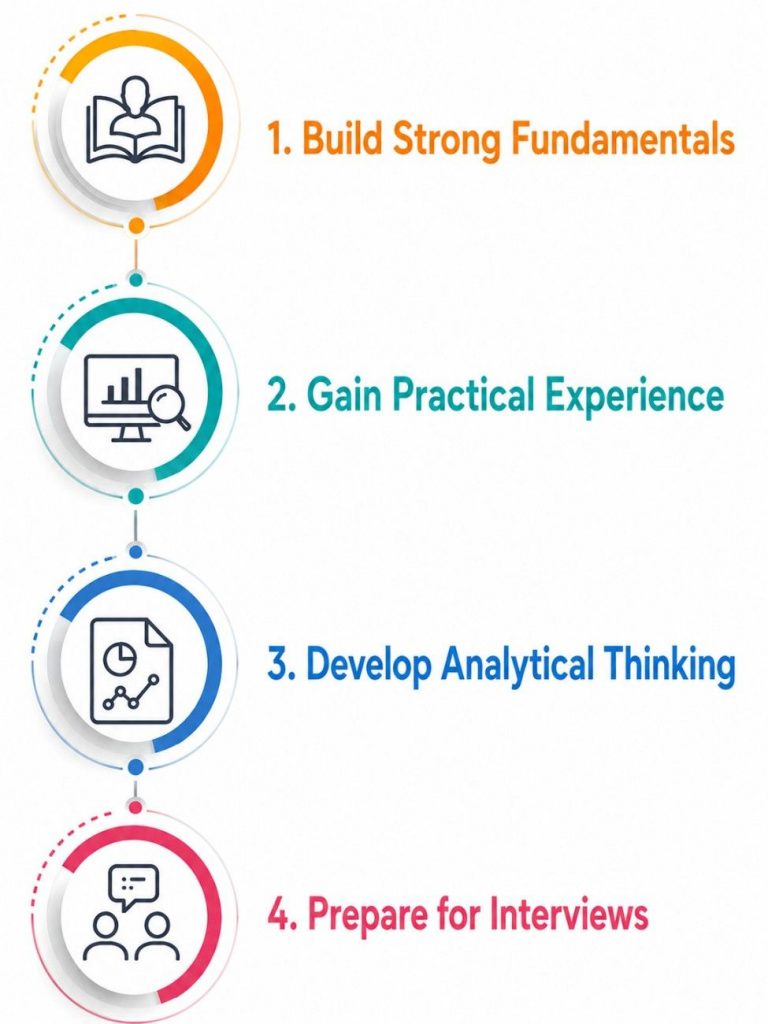
- Building Strong SQL and Python Skills Freshers should practice SQL queries, joins, aggregations, subqueries, data manipulation, and database concepts. Python skills in Pandas, NumPy, and data analysis can further strengthen their ability to work with larger and more complex datasets.
- Creating Real-World Data Analytics Projects Build projects using real datasets to demonstrate data cleaning, exploratory analysis, visualization, and insight generation. Projects involving sales, customer behavior, finance, or marketing can help showcase practical analytical abilities. Freshers can also explore Data Analytics Portfolio to understand how practical projects can be presented effectively to recruiters.
- Learning Power BI or Tableau Develop hands-on dashboard skills using Power BI or Tableau. Practice connecting datasets, creating visualizations, applying filters, and presenting important business insights through interactive reports.
- Preparing an ATS-Friendly Resume Create a concise resume highlighting SQL, Python, Excel, visualization tools, projects, internships, certifications, and measurable achievements. Use relevant data analytics keywords while keeping the format simple and easy for recruiters to scan.
- Practicing Technical and Behavioral Interviews Prepare for SQL, Python, statistics, data visualization, business case, and project-based questions. Also practice behavioral questions covering teamwork, communication, problem-solving, adaptability, and career goals to improve overall interview performance.
Conclusion: Building a Successful Data Analytics Career at Deloitte
Building a successful Data Analytics career at Deloitte requires a combination of technical expertise, analytical thinking, business understanding, and strong communication skills. Freshers should begin by developing a solid foundation in SQL, Python, Excel, statistics, data visualization, and business intelligence tools such as Power BI or Tableau. Candidates looking to strengthen these skills can consider a structured Data Analytics Course to build practical knowledge and prepare for analytics-focused career opportunities. Practical experience is equally important, so candidates should work on real-world projects involving data cleaning, exploratory analysis, dashboard creation, and business problem-solving. Internships, certifications, and hands-on assignments can further strengthen their professional profiles and demonstrate their ability to apply analytical concepts. Understanding how data supports business decisions can help analysts work more effectively with clients, consultants, and cross-functional teams. As professionals gain experience, they can explore opportunities in senior data analysis, analytics consulting, data science, business intelligence, and leadership roles. Continuous learning is essential because data technologies and analytical practices continue to evolve. By improving technical skills, building a strong portfolio, developing professional communication, and gaining practical project experience, aspiring analysts can prepare themselves for Deloitte opportunities and establish a rewarding long-term career in data analytics.