LMS
LMS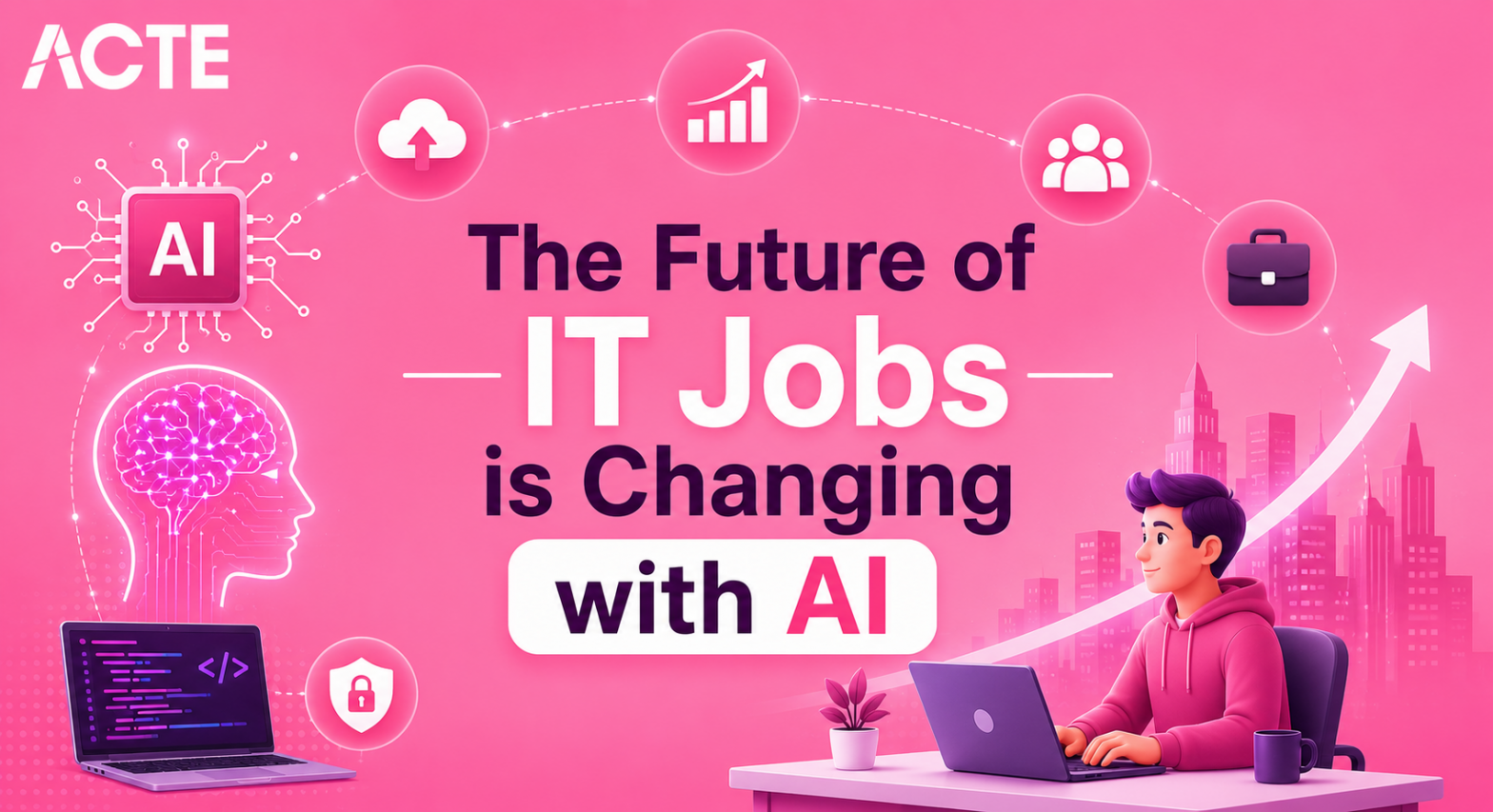
Last updated on 23rd May 2026| 13207

- Introduction Future of IT Jobs
- The Shift from Coding to Orchestration
- Core Areas Experiencing Rapid Automation
- New Roles Emerging in the Enterprise
- The Transformation of Cybersecurity Operations
- Adapting Your Skill Set for the AI Era
- Essential Evaluation Criteria for AI Adoption
- Actionable Steps to Integrate AI into Your Workflow
- Conclusion
Introduction: Future of IT Jobs
The technology sector is currently experiencing a massive structural shift, moving away from manual implementation tasks toward intelligent automation. The narrative that artificial intelligence will completely eradicate the need for human engineers is fundamentally flawed; instead, the technology is redefining what it means to work in IT jobs transformed by AI. Routine responsibilities like writing basic infrastructure code, monitoring server health, and creating repetitive SQL queries are rapidly being absorbed by intelligent systems, forcing professionals to upgrade their technical expertise and embrace AI-driven workflows. Building these in-demand skills through Artificial Intelligence Training can help professionals stay competitive in an increasingly automated industry. Those who understand how to orchestrate, monitor, and optimize AI systems are experiencing unprecedented demand, while traditional software configuration roles are gradually becoming less relevant. Recognizing that AI is changing IT jobs is the first step toward future-proofing your career, as organizations increasingly seek engineers who can collaborate with machine learning models to solve complex business problems. This guide explores how AI is transforming different sectors of the IT industry, the technical skills replacing outdated ones, and the strategies professionals can adopt to remain valuable in a rapidly evolving global technology landscape.
The Shift from Coding to Orchestration
The traditional career path in technology infrastructure involved deep specialization in a handful of specific vendor platforms or programming languages. However, the future of IT jobs with AI is moving decisively toward broader roles that require a strong understanding of system architecture, automation, and intelligent workflows. As AI-powered tools generate code in seconds, the value of professionals who only know programming syntax continues to decline. Instead, organizations seek engineers who can analyze business requirements and architect solutions by combining custom software with pre-trained AI models. Building expertise through Artificial Intelligence Training enables professionals to develop the practical skills needed to design, deploy, and manage these intelligent systems. Engineers must also evaluate different large language models based on performance, cost, accuracy, and scalability while ensuring secure and efficient implementation. As IT jobs continue to evolve, the role of an engineer is shifting from writing every line of code to reviewing AI-generated output, identifying security vulnerabilities, maintaining architectural integrity, and orchestrating complex AI-driven solutions that align with business objectives.
Ready to Get Certified in Artificial Intelligence ? Explore the Program Now Artificial Intelligence Online Training Offered By ACTE Right Now!
Core Areas Experiencing Rapid Automation
- Infrastructure Automation: The days of manually provisioning servers and configuring load balancers are ending. Intelligent operations platforms can now take a plain-text description of a desired infrastructure setup and automatically generate the necessary scripts to build it, drastically reducing the need for dedicated DevOps engineers to handle routine maintenance tasks.
- Data Pipeline Optimization: Extracting, transforming, and loading data used to take weeks of manual ETL scripting. Modern AI tools and AI Applications can ingest raw data, automatically identify anomalies, and generate the transformation logic, shifting the engineer’s role from writing the code to validating the AI’s proposed data mappings.
- Intelligent Testing and QA: Quality assurance has historically been a manual, time-consuming process. Intelligent testing frameworks can now automatically generate test cases based on application requirements, execute them, and identify the root cause of failures, allowing human testers to focus on complex edge cases and overall user experience.
- Automated Documentation: Keeping technical documentation synchronized with rapidly changing codebases is a constant struggle for development teams. AI and the future of work in IT are merging to allow systems to read codebases and automatically generate or update technical wikis, ensuring documentation is always perfectly accurate without human intervention.

Develop Your Skills with Artificial Intelligence Training
Weekday / Weekend BatchesSee Batch DetailsNew Roles Emerging in the Enterprise
- The Rise of Site Reliability Engineering: As AI takes over code generation, IT jobs transformed by AI are shifting focus toward keeping complex, distributed systems running smoothly. Engineers are becoming guardians of system uptime, using machine learning to predict infrastructure failures.
- AI Ethics and Governance Roles: With the rapid deployment of intelligent models, companies must ensure they are used responsibly. This creates a massive demand for professionals who understand AI impact on IT careers specifically in the realm of compliance, bias detection, and establishing strict governance frameworks.
- Natural Language System Administration: System administrators traditionally had to memorize complex command-line syntax and Top 5 Jobs in AI . The future of IT jobs with AI allows admins to simply type plain-English commands like “increase server capacity,” and let the system translate that into the necessary infrastructure code.
- Fusion of Development and Operations: The strict division between developers and operations is dissolving. Because AI can handle the operational deployment of code written by other AI, engineers are expected to understand the entire lifecycle, blurring the lines between creating software and maintaining it in production.
- Continuous Learning Requirements: The landscape of intelligent automation is evolving so rapidly that skills can become obsolete within months. Professionals must commit to continuous education, constantly evaluating new models, AI Movie List, frameworks, and security guidelines to ensure they are utilizing the most effective tools.
- Prioritizing Soft Skills: As technical execution becomes automated, your value shifts toward critical thinking, problem-solving, and emotional intelligence. The ability to negotiate with vendors, manage stakeholder expectations, and guide an AI project through ambiguous requirements is knowledge.
- Understanding AI and the Future of Work in IT: You do not need to be a data scientist to succeed, but you must understand how these models are trained, what data they were trained on, and why they might hallucinate or produce biased outputs thats Why AI Is a Promising Career Option for IT Freshers.
- Focus on System Architecture: Knowing how to write a function is no longer enough. You must elevate your perspective to design scalable, distributed systems that can handle the heavy computational loads required by modern AI tools and intelligent automation workflows.
- Building a Personal Brand: As the market floods with professionals claiming AI expertise, you must differentiate yourself. Document your experiments, share your insights on professional networks, and build a portfolio of AI-assisted solutions to prove your practical competence to future employers.
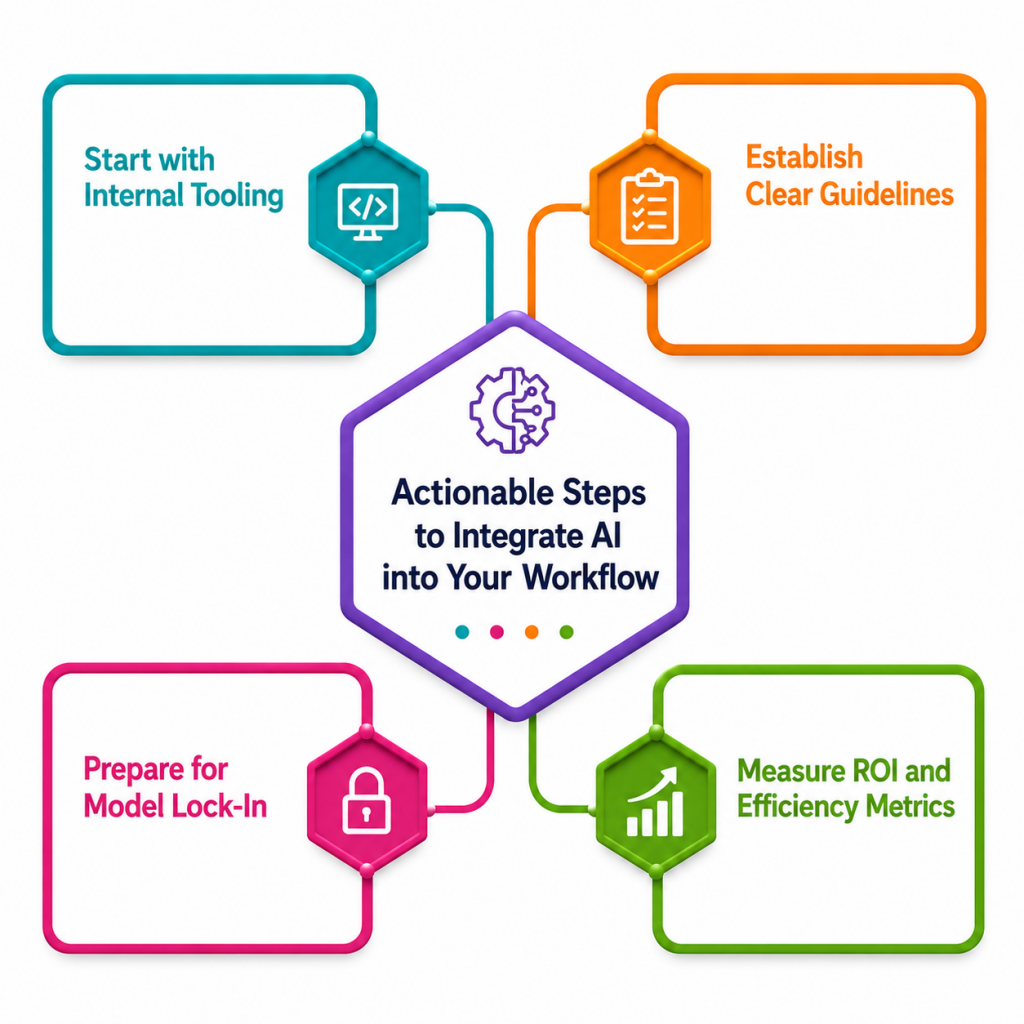
- Start with Internal Tooling: Rather than transforming your entire product ecosystem at once, begin by automating repetitive internal tasks such as generating test data, creating documentation, or writing regular expressions. Small AI-driven solutions help teams validate performance, improve productivity, and build confidence before expanding AI adoption.
- Establish Clear AI Usage Policies: Create well-defined guidelines that specify what organizational data can be shared with AI tools and what information must remain confidential. Strong governance reduces security risks, protects intellectual property, and ensures responsible AI adoption across teams.
- Implement Rigorous Peer Reviews: AI-generated code, documentation, and recommendations should undergo the same quality assurance processes as human-created work. Staying updated with Emerging AI Trends in the IT Industry helps organizations adopt best practices while encouraging engineers to validate AI outputs for accuracy, security vulnerabilities, compliance, and alignment with business requirements before deployment.
- Invest in Continuous Learning: Encourage employees to regularly explore new AI tools, attend technical workshops, and experiment with emerging technologies. Continuous upskilling ensures teams remain adaptable as AI capabilities and industry standards continue to evolve.
- Measure and Optimize Results: Track key performance indicators such as productivity improvements, error reduction, deployment speed, and cost savings after implementing AI solutions. Regular evaluation helps organizations refine workflows and maximize the long-term value of AI integration.
- Measure ROI and Efficiency Metrics: To prove the value of these new methodologies, track exactly how many hours your team saves on specific tasks in Artificial Intaligence Training. Quantifiable data on how IT jobs transformed by AI reduce operational costs is the most effective way to convince management to invest in further AI tooling.
- Prepare for Model Lock-In: Relying heavily on a single vendor’s ecosystem can be dangerous and Jasper AI. Ensure that the AI and the future of work in IT solutions you build are portable, allowing you to switch underlying models easily if a better, cheaper, or more secure option becomes available in the rapidly shifting market.
To ExploreArtificial Intelligence in Depth, Check Out Our Comprehensive Artificial Intelligence Online Training To Gain Insights From Our Experts!
The Transformation of Cybersecurity Operations
One of the most significant impacts of intelligent automation is the fundamental change in how enterprises approach cybersecurity. The AI impact on IT careers is profoundly visible in security operations centers, where human analysts are completely overwhelmed by millions of daily alerts. Intelligent systems are now taking the front line, automatically triaging alerts, distinguishing false positives from genuine threats, and even writing response scripts to isolate compromised machines and Advantages and Disadvantages Of AI. This shifts the human role from a reactive analyst to a strategic investigator who oversees the automated defense systems. Furthermore, as companies integrate more third-party AI models and APIs into their software, the attack surface expands exponentially. Security professionals must evolve from simply blocking known bad IP addresses to understanding how attackers might manipulate the AI models themselves through prompt injection or data poisoning.
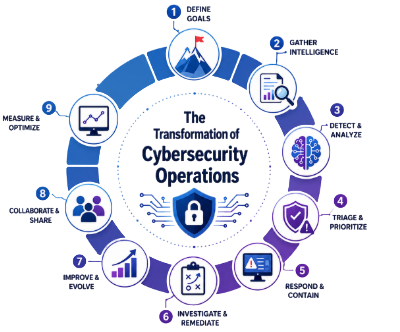
Cybersecurity professionals must learn to secure AI models with the same rigor applied to traditional databases and enterprise systems. As AI becomes an integral part of modern security operations, understanding emerging technologies and leveraging resources like Top AI Tools Every Developer Should Know helps professionals stay ahead of evolving threats and automation trends. While AI efficiently handles repetitive tasks such as threat detection, log analysis, and anomaly identification, the human element remains essential for strategic decision-making, proactive threat hunting, incident response, and addressing the ethical and legal implications of automated security systems. This evolution requires cybersecurity experts to adopt a more analytical, adaptive, and business-focused approach than traditional security engineering demanded.
Looking to Master Machine Learning? Discover the Artificial Intelligence Expert Masters Program Training Course Available at ACTE Now!
Adapting Your Skill Set for the AI Era
Adapting to the AI era requires a proactive commitment to continuous learning and skill development. Rather than relying solely on past experience, IT professionals must embrace modern AI technologies by experimenting with large language models, building AI-powered applications, and understanding their practical limitations. Staying informed about The Impact of AI on the Future of IT Careers helps professionals identify the evolving skills employers value most in an AI-driven workplace. Equally important is mastering prompt engineering, AI model evaluation, and responsible AI practices while strengthening communication skills to explain complex technical concepts to non-technical stakeholders. As AI becomes deeply integrated into business operations, professionals who can bridge the gap between intelligent automation and real-world business objectives will remain highly valuable. Taking the initiative to adopt AI tools, improve decision-making, and drive organizational efficiency will position engineers for long-term success in the rapidly evolving technology landscape.
Essential Evaluation Criteria for AI Adoption
Preparing for Artificial Intelligence Job Interviews? Have a Look at Our Blog on Artificial Intelligence Interview Questions and Answers To Ace Your Interview!
Actionable Steps to Integrate AI into Your Workflow
Conclusion
The transition happening across the technology industry is permanent and irreversible. Organizations that refuse to adapt their workflows will simply be outpaced by competitors who embrace intelligent automation to reduce costs and accelerate delivery times. For individual professionals, resisting this change is a recipe for career stagnation. The most successful engineers will be those who learn to view AI changing IT jobs as an amplifier of their own abilities rather than a replacement. By taking ownership of how AI impact on IT careers reshapes your specific domain, whether that is cybersecurity, cloud infrastructure, or software development, you position yourself as an indispensable leader in your organization. The era of the isolated, back-end coder who only understands one specific framework is fading in Artificial Intaligence Training. The future belongs to the versatile orchestrator who understands business requirements, can evaluate different machine learning models, and knows how to weave them together into a cohesive, secure, and scalable system. Embrace this disruption, actively refine your skills, and take control of your career trajectory before the next wave of technological advancements leaves you behind. The tools are here, the business value is proven, and the time to adapt is now.