LMS
LMS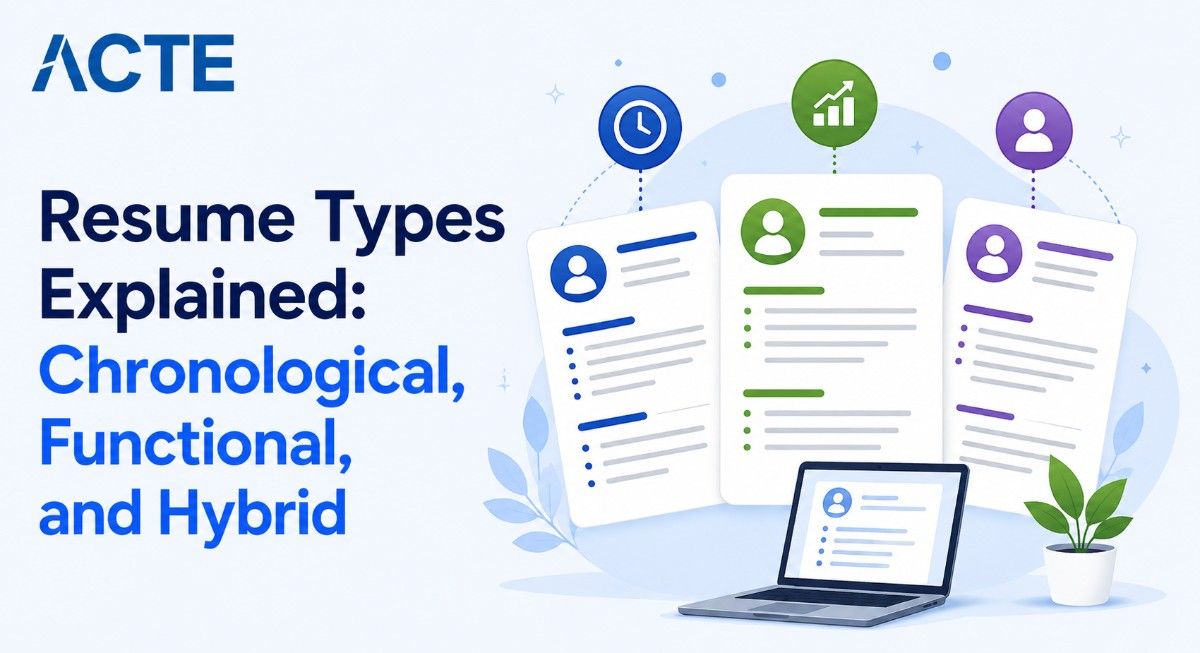
Last updated on 25th Jul 2026| 8193

- Introduction to Resume Types and Why They Matter
- Understanding the Chronological Resume Format
- Understanding the Functional Resume Format
- Understanding the Hybrid (Combination) Resume Format
- Comparison Between Chronological, Functional, and Hybrid Resumes
- Advantages and Limitations of Chronological Resumes
- Advantages and Limitations of Functional and Hybrid Resumes
- Which Resume Format Suits Different Career Situations
- Common Mistakes When Choosing a Resume Format
- Conclusion: Choosing the Right Resume Format for Career Success
Introduction to Resume Types and Why They Matter
Choosing the right resume format is one of the most overlooked yet decisive steps in the job application process, as it directly influences how recruiters perceive a candidate’s experience, skills, and career progression within the first few seconds of reading. A resume is not a one-size-fits-all document; instead, it must be structured according to the candidate’s background, career stage, and the expectations of the industry they are targeting. Freshers with limited work experience, professionals with a steady career path, and individuals transitioning between industries all require different approaches to presenting their information effectively. The three most widely used resume formats are the chronological resume, the functional resume, and the hybrid or combination resume, each of which organizes information in a distinct way to highlight different strengths. A chronological resume emphasizes work history in reverse order, a functional resume emphasizes skills and competencies over timeline, and a hybrid resume blends both approaches to provide a balanced presentation. For candidates targeting technical fields such as data analytics, machine learning, or artificial intelligence, presenting relevant technical skills, projects, certifications, and practical knowledge clearly can make a resume more effective. For example, candidates pursuing Data Science Training can highlight their knowledge of Python, machine learning, data analysis, projects, and industry-relevant tools to demonstrate their technical capabilities. Selecting the wrong format can bury a candidate’s strongest qualifications under irrelevant details or create confusion about their career trajectory, ultimately reducing their chances of being shortlisted. On the other hand, selecting the right format ensures that the most relevant and impressive information is presented first, making it easier for recruiters and applicant tracking systems to quickly identify a candidate’s suitability for a role. Understanding the purpose, structure, and ideal use cases of each format empowers candidates to make an informed decision rather than relying on generic templates. This article explores each resume type in detail, compares their strengths and weaknesses, and provides practical guidance on selecting the format that best supports individual career goals.
Understanding the Chronological Resume Format
The chronological resume is the most traditional and widely recognized resume format, structured around a candidate’s work history presented in reverse chronological order, starting with the most recent position and moving backward through earlier roles. This format places strong emphasis on job titles, company names, employment dates, and the responsibilities or achievements associated with each position, making it easy for recruiters to trace a candidate’s career progression at a glance. Because it follows a clear and predictable timeline, the chronological format is often preferred by recruiters and hiring managers, as it allows them to quickly understand where a candidate has worked, how long they stayed in each role, and how their responsibilities evolved over time. This format works particularly well for candidates who have a consistent and progressive work history within the same industry, as it naturally highlights growth, promotions, and increasing levels of responsibility. It is also the format most compatible with applicant tracking systems, since the straightforward structure is easy for automated software to parse and categorize accurately. Candidates who want to understand how resume structure and formatting can affect automated screening can also refer to this ATS Resume Guide for additional guidance. Within a chronological resume, each entry typically includes the job title, employer name, location, dates of employment, and a set of bullet points describing key responsibilities and measurable achievements. Education is usually listed after work experience unless the candidate is a recent graduate, in which case it may be placed near the top. Because recruiters are highly familiar with this format, candidates using it do not need to explain their structure, allowing the content itself to make the strongest impression. However, this format can be less forgiving for individuals with employment gaps, frequent job changes, or a career shift into a new industry, since the timeline draws attention to these patterns rather than allowing them to be minimized.
Ready to Pursue Your Data Science Certificate? View The Data Science Course Training Offered By ACTE Right Now!
Understanding the Functional Resume Format
The functional resume format shifts the primary focus away from a strict employment timeline and instead organizes the document around skills, competencies, and areas of expertise, making it particularly useful for candidates whose work history does not tell a clean or linear story. Rather than listing responsibilities under each job title in chronological order, a functional resume groups related skills into categories such as technical skills, leadership abilities, communication skills, or project management expertise, with supporting examples drawn from various roles, projects, or experiences placed underneath each category. This structure allows candidates to highlight their strongest and most relevant capabilities right at the top of the document, ensuring that recruiters see the most compelling information first, regardless of when or where those skills were developed. Candidates can also explore these Job Winning Strengths To Put In Resume to identify relevant abilities that can be effectively highlighted in a skills-focused format. The functional format is especially valuable for career changers who are moving into a new field and want to emphasize transferable skills rather than industry-specific job titles that may not seem directly relevant. It is also useful for candidates re-entering the workforce after an extended break, freelancers with non-traditional work arrangements, or individuals with significant gaps in employment, since the format naturally minimizes the visibility of dates and timelines. A brief employment history section is usually still included near the end of the resume, listing company names and dates without extensive detail, to satisfy the expectation that some work history be present. While the functional format offers flexibility in how skills and achievements are presented, it requires more thoughtful organization than a chronological resume, as candidates must carefully select which skills to highlight and ensure that each category is supported with credible, specific examples rather than vague statements.
Understanding the Hybrid (Combination) Resume Format
The hybrid resume, also known as the combination resume, merges the strongest elements of both the chronological and functional formats, presenting a skills-focused summary at the top of the document followed by a detailed, chronologically ordered work history below it. This structure allows candidates to immediately showcase their most relevant skills and qualifications, capturing recruiter attention within the first few lines, while still providing the familiar and trustworthy timeline that recruiters and applicant tracking systems expect to see. A typical hybrid resume begins with a strong summary or skills section that highlights core competencies, technical proficiencies, and standout achievements. Candidates building careers in technical fields can strengthen this section by highlighting relevant programming, analytical, and industry-specific skills gained through practical learning. For example, professionals pursuing Data Science Training can showcase skills such as Python, machine learning, data analysis, SQL, and relevant projects to demonstrate their technical capabilities. This is followed by a reverse chronological listing of work experience that includes specific accomplishments and responsibilities for each role. This format has become increasingly popular because it offers the flexibility of the functional resume without sacrificing the credibility and clarity of the chronological format, making it well suited for experienced professionals who want to lead with their expertise while still demonstrating a stable and coherent career history. It is also an excellent choice for candidates applying to highly competitive or specialized roles, where recruiters need to see both relevant skills and proof of practical application within real job settings. Because the hybrid format requires careful balancing of two different sections, candidates must avoid unnecessary repetition between the skills summary and the work experience details, ensuring that each section adds distinct value rather than restating the same information twice. When executed well, the hybrid resume provides one of the most persuasive and comprehensive presentations of a candidate’s professional profile.
Comparison Between Chronological, Functional, and Hybrid Resumes
| Feature | Chronological | Functional | Hybrid |
|---|---|---|---|
| Primary Focus | Work history timeline | Skills and competencies | Skills and timeline combined |
| Best For | Steady career progression | Career changers, gaps | Experienced professionals |
| ATS Compatibility | High | Moderate | High |
| Recruiter Familiarity | Very High | Moderate | High |
| Employment Gaps | Clearly visible | Minimized | Somewhat visible |
| Complexity to Write | Low | Moderate | High |
| Ideal Candidate | Consistent industry work | Career shift, freelancers | Skilled with solid history |
| Length | Moderate | Moderate | Slightly longer |

Advantages and Limitations of Chronological Resumes
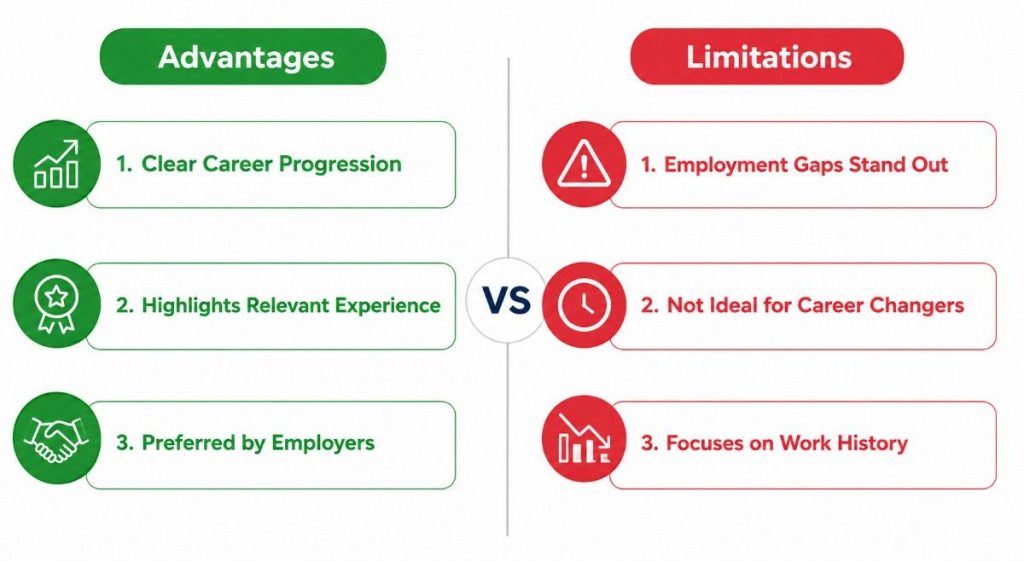
- Familiar and Trusted by Recruiters: Since most recruiters are highly accustomed to this format, they can review it quickly without needing to interpret an unfamiliar structure, which speeds up the shortlisting process significantly.
- Clearly Demonstrates Career Growth: The reverse chronological order naturally highlights promotions, increasing responsibilities, and consistent progress within an industry, which strengthens a candidate’s professional credibility.
- Highly Compatible with ATS Software: The predictable structure makes it easy for applicant tracking systems to correctly parse job titles, dates, and companies without formatting errors or misread information.
- Exposes Employment Gaps: Any breaks in employment or frequent job changes become immediately visible, which can raise questions for recruiters unless properly explained elsewhere in the resume. Reviewing common 10 Mistakes That Will Get Your Resume Rejected can help candidates identify and address issues that may weaken their resume.
- Less Effective for Career Changers: Candidates switching industries may find that their most relevant skills are buried within job titles that do not match the target role, reducing overall impact.
- Highlights Transferable Skills: The functional format allows candidates to present relevant abilities upfront, which is especially useful when past job titles do not directly reflect the skills required for a new role.
- Minimizes Visibility of Gaps: Since the format de-emphasizes dates, functional resumes are effective for candidates with career breaks, though recruiters may still ask about them during interviews.
- Hybrid Offers Balanced Strength: By combining a skills summary with a chronological work history, the hybrid format satisfies both the desire to showcase expertise and the recruiter’s need for a verifiable timeline.
- Requires More Careful Writing: Both formats demand thoughtful organization and specific, credible examples, as vague skill statements without context can appear unsubstantiated to recruiters. Candidates can review these Resume Mistakes That Are Costing You Interviews to identify common issues that may reduce the effectiveness of their resume.
- Some Recruiters Prefer Traditional Formats: A minority of recruiters may find functional resumes harder to evaluate quickly, since they are less accustomed to searching for a timeline within the document.
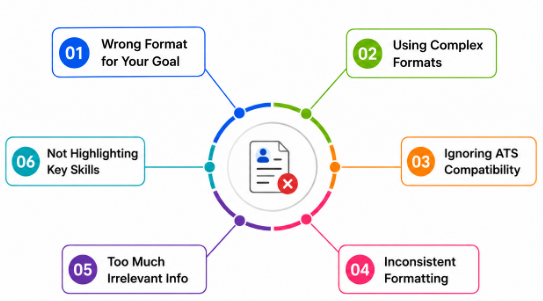
- Using the Wrong Format for the Situation: Applying a chronological format despite having significant employment gaps, or using a functional format despite having a strong and consistent career history, can undermine the resume’s effectiveness.
- Mixing Formats Inconsistently: Attempting to blend elements of different formats without a clear structure often results in a confusing document that is difficult for recruiters to follow.
- Ignoring ATS Compatibility: Choosing an overly creative or unconventional layout, particularly with functional resumes, can cause applicant tracking systems to misread or skip important information. Understanding the ATS-Friendly Resume Format can help candidates select a structure that remains readable for both recruiters and automated screening systems.
- Overloading the Skills Section: In functional and hybrid resumes, listing too many skill categories without sufficient supporting detail can make the resume appear unfocused and difficult to evaluate.
- Neglecting to Update Format as Career Progresses: Candidates sometimes continue using a fresher-oriented format years into their career, failing to shift toward a chronological or hybrid structure that better reflects their growing experience.
Excited to Obtaining Your Data Analytics Certificate? View The Data Science Course Training Offered By ACTE Right Now!
Advantages and Limitations of Functional and Hybrid Resumes
Are You Considering Pursuing a Data Analytics Master’s Degree? Enroll For Data Science Expert Masters Program Training Course Today!
Which Resume Format Suits Different Career Situations
Selecting the right resume format depends heavily on a candidate’s specific career situation rather than personal preference alone. Fresh graduates and interns with limited work experience often benefit from a hybrid approach that leads with academic projects, technical skills, and certifications, followed by any internships or part-time roles, since a purely chronological format may look sparse without substantial employment history. Candidates beginning their careers should focus on presenting relevant education, practical projects, certifications, and technical skills in a clear and organized manner. For those developing specialized expertise through Data Science Training, highlighting skills such as Python, SQL, machine learning, data visualization, and hands-on projects can help create a stronger skills-focused resume. Professionals with a consistent and upward career path within a single industry are best served by the chronological format, as it clearly demonstrates growth and stability, which recruiters value highly for mid-level and senior positions. Candidates who are changing careers or industries often find the functional or hybrid format more effective, since it allows them to foreground relevant skills gained through courses, personal projects, or adjacent roles rather than being constrained by unrelated job titles. Individuals returning to the workforce after an extended break, whether due to personal circumstances, further education, or other reasons, frequently benefit from the functional format, as it reduces the prominence of employment gaps while still demonstrating capability through a well-organized skills section. Freelancers and consultants who have worked on numerous short-term projects across different clients may also prefer a functional or hybrid structure, since a strict chronological listing of many brief engagements can appear fragmented or inconsistent. Ultimately, the right format should be chosen based on what best supports the specific narrative a candidate wants to present to a recruiter, ensuring that strengths are highlighted and potential concerns are minimized.
Set to Ace Your AWS Job Interview? Check Out Our Blog on Data Science Interview Questions & Answer
Common Mistakes When Choosing a Resume Format
Conclusion: Choosing the Right Resume Format for Career Success
The format of a resume is far more than a stylistic choice; it is a strategic decision that shapes how recruiters interpret a candidate’s professional story within the first few seconds of review. The chronological resume remains the gold standard for candidates with steady, progressive career histories, offering familiarity and strong compatibility with applicant tracking systems. The functional resume provides a valuable alternative for career changers, individuals with employment gaps, and those wanting to lead with skills rather than a strict timeline, though it requires more careful construction to remain credible. The hybrid resume, combining the strengths of both approaches, has emerged as an increasingly popular choice for professionals who want to showcase relevant expertise while still providing recruiters with the reassurance of a clear work history. There is no universally superior format; the most effective choice depends entirely on a candidate’s career stage, industry expectations, and the specific story they need to tell to stand out in a competitive job market. By understanding the structure, strengths, and limitations of each resume type, candidates can make an informed decision that presents their qualifications in the most compelling light possible. Candidates developing specialized technical careers can also strengthen their professional profiles through practical learning, such as Data Science Training, while showcasing relevant skills, projects, and certifications on their resumes. This combination of targeted skills and an appropriate resume format can improve their ability to demonstrate career readiness and pursue suitable opportunities.