LMS
Last updated on 05th Sep 2026| 8335

- Introduction to AWS Cloud Career Opportunities at Infosys
- AWS Cloud Engineer and Cloud Consultant Job Roles
- AWS Certification Requirements for Infosys Cloud Positions
- Choosing the Right AWS Certification for Your Career Path
- Cloud DevOps, Infrastructure, and Automation Opportunities
- AWS Solutions Architect and Cloud Migration Career Paths
- Essential AWS Services and Technical Skills to Learn
- Hands-On Projects and Experience for Infosys AWS Jobs
- Career Progression and Salary Growth for AWS Professionals
- Conclusion: Building a Successful AWS Cloud Career at Infosys
Introduction to AWS Cloud Career Opportunities at Infosys
AWS cloud career opportunities at Infosys can involve cloud engineering, consulting, migration, infrastructure management, DevOps, application modernization, security, data engineering, and solution architecture. As organizations move applications and workloads to cloud environments, professionals with AWS expertise can contribute to designing, deploying, securing, monitoring, and optimizing cloud solutions. Depending on the position, responsibilities may include configuring AWS resources, automating infrastructure, supporting migrations, troubleshooting cloud environments, developing CI/CD pipelines, and improving application reliability. Candidates should develop knowledge of core AWS services such as Amazon EC2, S3, VPC, RDS, IAM, Lambda, and CloudWatch along with Linux, networking, databases, scripting, and security fundamentals. Practical projects and role-relevant certifications can strengthen a candidate’s profile. Candidates looking to build these foundational skills can also explore AWS Training to gain structured knowledge and hands-on exposure. Communication, analytical thinking, troubleshooting, and teamwork are also important because cloud professionals frequently collaborate with developers, architects, business teams, and clients on enterprise transformation projects.
AWS Cloud Engineer and Cloud Consultant Job Roles
AWS Cloud Engineers and Cloud Consultants perform different but complementary responsibilities within cloud projects. Cloud Engineers typically focus on building, configuring, monitoring, and maintaining AWS infrastructure using compute, storage, networking, database, security, and automation services. Their responsibilities can include provisioning resources, troubleshooting infrastructure problems, implementing monitoring, automating deployments, and supporting cloud applications. Cloud Consultants generally combine technical expertise with business and client-facing responsibilities. They may assess existing environments, understand business requirements, recommend cloud solutions, support migration planning, and help organizations adopt cloud technologies effectively. Both career paths can benefit from knowledge of AWS architecture, Linux, networking, IAM, databases, Infrastructure as Code, DevOps, and security. Professionals exploring these career paths can also review the AWS Engineer Career Path to understand common responsibilities and progression opportunities. Professionals should also develop documentation, presentation, problem-solving, and stakeholder-management abilities. With experience, Cloud Engineers and Consultants can progress toward senior engineering, cloud architecture, DevOps, migration leadership, or broader cloud consulting responsibilities.
Get Your AWS Certification by Learning from Industry-Leading Experts and Advancing Your Career with ACTE’s AWS Course.
AWS Certification Requirements for Infosys Cloud Positions
AWS certification requirements at Infosys can vary according to the specific vacancy, experience level, technology specialization, project, and client requirements. Candidates should not assume that one AWS certification is mandatory for every cloud position. Some roles may list AWS certifications as required or preferred, while others may place greater emphasis on practical experience with cloud architecture, migration, DevOps, security, networking, or application development. Professionals should therefore review the individual job description before choosing a certification. Certifications can help demonstrate structured knowledge of AWS services and cloud concepts, particularly when combined with hands-on projects. Candidates looking to strengthen their AWS fundamentals can also consider AWS Training for structured learning and practical exposure. Candidates should develop practical experience with services relevant to their target position and understand architecture, security, monitoring, scalability, availability, and cost considerations. For freshers, certifications can strengthen a profile, but projects, labs, programming knowledge, troubleshooting skills, and fundamental cloud understanding remain important for demonstrating job readiness.
Choosing the Right AWS Certification for Your Career Path
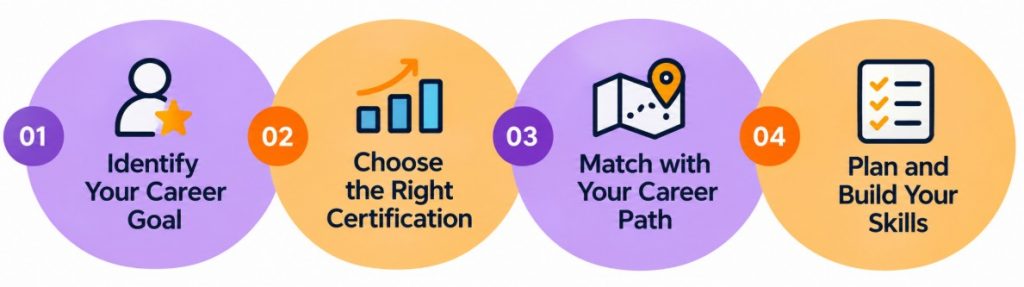
Choosing an AWS certification should depend on the cloud career path a candidate wants to pursue rather than simply selecting the most advanced certification available. Beginners can start with foundational cloud concepts before progressing toward role-specific certifications. Candidates interested in designing cloud architectures can pursue certifications aligned with solutions architecture, while developers can focus on cloud application development. Professionals interested in deployment, operations, automation, and CI/CD can select DevOps-oriented certification paths. Those targeting cybersecurity, networking, data, or machine learning careers can develop specialized AWS knowledge relevant to those areas.

Cloud DevOps, Infrastructure, and Automation Opportunities
- AWS DevOps Engineering DevOps professionals work on automating application development, testing, deployment, and cloud operations. Skills in CI/CD, scripting, monitoring, version control, and AWS services can help candidates prepare for DevOps-focused projects. Candidates can also explore AWS DevOps Certification to understand certification pathways and skills relevant to DevOps-oriented cloud roles.
- Cloud Infrastructure Management Cloud infrastructure professionals manage compute, storage, networking, databases, and security resources. They help maintain reliable AWS environments while monitoring availability, performance, scalability, and infrastructure utilization.
- CI/CD Pipeline Automation Professionals create automated pipelines that build, test, and deploy applications efficiently. Knowledge of Git, Jenkins, AWS CodePipeline, CodeBuild, and deployment concepts can strengthen preparation for cloud automation responsibilities.
- Infrastructure as Code Infrastructure as Code allows cloud resources to be created and managed through reusable configuration files. Candidates can develop skills in AWS CloudFormation and Terraform to automate infrastructure provisioning and maintain consistent environments.
- Container and Kubernetes Technologies Knowledge of Docker, Kubernetes, Amazon ECS, and Amazon EKS can help professionals deploy and manage containerized applications. These technologies are particularly useful for modern application development and microservices environments.

Get JOB Oriented AWS Training for Beginners By MNC Experts
- Instructor-led Sessions
- Real-life Case Studies
- Assignments
AWS Solutions Architect and Cloud Migration Career Paths
- AWS Solutions Architecture Solutions Architects design AWS environments based on business and technical requirements. They consider security, scalability, availability, performance, reliability, and cost when selecting services and developing cloud architectures. Candidates can strengthen their understanding of this role through AWS Solutions Architect learning resources.
- Cloud Migration Planning Migration professionals assess existing applications and infrastructure before determining appropriate cloud migration strategies. They help organizations plan how workloads, databases, applications, and data can transition to AWS environments.
- Application Modernization Cloud professionals can help transform traditional applications using containers, microservices, serverless technologies, managed databases, and other cloud-native approaches to improve scalability and operational efficiency.
- Cloud Security and Architecture Architects should incorporate identity management, encryption, network security, logging, monitoring, backup, and disaster recovery into cloud designs. Security knowledge is important throughout the architecture and migration lifecycle.
- Progressing to Cloud Architect Roles Professionals can progress from Cloud Engineer or Consultant positions toward Solutions Architect and Cloud Architect responsibilities by developing broader expertise in AWS services, architecture patterns, migrations, security, and stakeholder management.
Essential AWS Services and Technical Skills to Learn
- Compute and Storage Services Candidates should understand Amazon EC2 for cloud computing and Amazon S3 for object storage. Learn how these services are configured, secured, monitored, scaled, and integrated with other AWS technologies.
- AWS Networking and VPC Knowledge of Amazon VPC, subnets, route tables, security groups, load balancing, and DNS is important for designing connected cloud environments. Strong TCP/IP and networking fundamentals can further improve troubleshooting skills.
- Linux, Python, and Scripting Linux administration and scripting skills help professionals automate operational activities and troubleshoot cloud systems. Python, Bash, and related scripting knowledge can be valuable for cloud engineering and DevOps positions. Candidates who want structured learning in these areas can explore AWS Training for additional practical exposure.
- Databases and Data Management Develop knowledge of services such as Amazon RDS and DynamoDB along with SQL and database fundamentals. Candidates should understand availability, backups, scalability, security, and selecting appropriate database technologies.
- Identity and Cloud Security Learn AWS IAM concepts such as users, roles, policies, permissions, and least-privilege access. Candidates should also understand encryption, logging, authentication, security monitoring, and the AWS shared responsibility model.
- Monitoring and Troubleshooting Understanding Amazon CloudWatch, logs, metrics, alerts, and troubleshooting techniques helps professionals identify application and infrastructure problems and maintain reliable cloud environments.
Want to Master AWS? Explore the AWS Master Program Offered at ACTE Today!
Hands-On Projects and Experience for Infosys AWS Jobs
- Building a Highly Available Web Application Create a cloud-based web application using services such as EC2, load balancing, databases, and monitoring. This project can demonstrate understanding of availability, networking, application deployment, and cloud architecture.
- Creating a Serverless Application Develop a serverless project using AWS Lambda and related services. Candidates can demonstrate knowledge of event-driven architecture, APIs, permissions, monitoring, and scalable application development.
- Developing a CI/CD Pipeline Build an automated workflow that moves application code from development through testing and deployment. This demonstrates practical understanding of DevOps principles, version control, automation, and cloud deployment. Learning about Top AWS DevOps Tools can also help candidates identify tools commonly used for cloud build and deployment workflows.
- Designing a Secure AWS Network Create a VPC containing public and private subnets, routing, security controls, and appropriate access configurations. Documenting architecture decisions can demonstrate networking and cloud security knowledge.
- Building an AWS Portfolio Document projects with architecture diagrams, objectives, technologies, configuration steps, challenges, and results. A GitHub portfolio containing scripts, Infrastructure as Code, and project documentation can provide practical evidence of AWS skills.
Want to Learn About AWS? Explore Our AWS Interview Questions and Answers Featuring the Most Frequently Asked Questions in Job Interviews.
Career Progression and Salary Growth for AWS Professionals
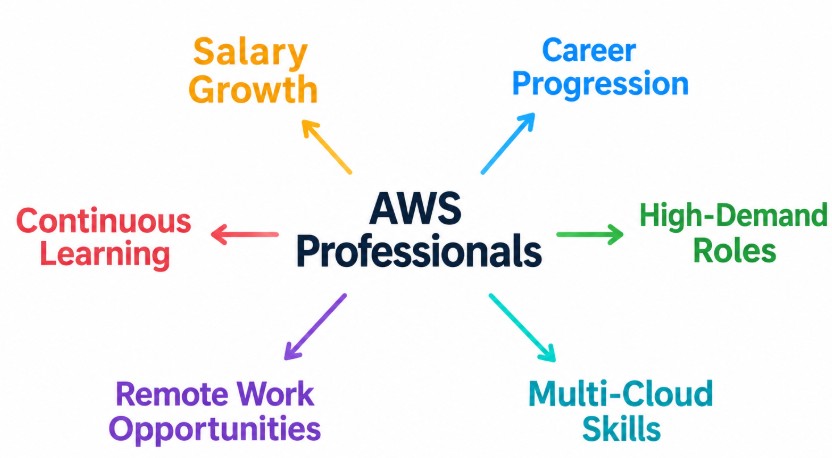
Career progression for AWS professionals at Infosys can depend on technical expertise, practical experience, specialization, project responsibilities, certifications, location, and overall performance. Professionals may begin in roles such as Cloud Support Engineer, AWS Cloud Engineer, Systems Engineer, or Junior DevOps Engineer before progressing toward Senior Cloud Engineer, Cloud Consultant, DevOps Engineer, Solutions Architect, or Technical Lead positions. As experience grows, professionals can specialize in areas such as cloud security, DevOps, infrastructure automation, networking, data engineering, application modernization, or cloud architecture. Salary growth generally accompanies increased technical depth, project ownership, leadership responsibilities, and the ability to handle complex cloud environments.
Conclusion: Building a Successful AWS Cloud Career at Infosys
Building a successful AWS cloud career at Infosys requires a combination of strong cloud fundamentals, practical technical expertise, certifications, project experience, and continuous learning. Candidates should develop knowledge of core AWS services such as EC2, S3, VPC, IAM, RDS, Lambda, and CloudWatch while strengthening complementary skills in Linux, networking, databases, Python, DevOps, containers, and automation. Hands-on projects involving cloud infrastructure, CI/CD pipelines, serverless applications, secure networks, monitoring, and Infrastructure as Code can demonstrate the ability to apply AWS concepts to practical scenarios. Candidates looking to strengthen their AWS knowledge through structured learning can also explore AWS Training for practical exposure to relevant cloud concepts and tools. Candidates should select AWS certifications that align with their intended career paths rather than pursuing certifications without relevant practical experience. Communication, troubleshooting, teamwork, documentation, and client-facing abilities are also valuable for enterprise cloud projects. As professionals gain experience, they can specialize in DevOps, cloud security, migration, data engineering, application modernization, or solution architecture. Staying current with evolving AWS technologies and taking responsibility for increasingly complex projects can help professionals build a sustainable career and progress toward senior technical, architecture, consulting, and leadership opportunities at Infosys.