LMS
LMS
Last updated on 03rd Sep 2026| 7085

- Overview of a Cybersecurity Analyst Role
- Key Responsibilities of a Cybersecurity Analyst
- Essential Skills Required for Cybersecurity Analysts
- Cybersecurity Tools and Technologies to Learn
- Educational Qualifications for Cybersecurity Analyst Jobs
- Experience and Certifications for Cybersecurity Careers
- Threat Detection and Incident Response Responsibilities
- Industries Hiring Cybersecurity Analysts
- Cybersecurity Analyst Salary and Career Growth
- Future Scope and Demand for Cybersecurity Analysts
Overview of a Cybersecurity Analyst Role
A Cybersecurity Analyst plays an important role in protecting an organization’s systems, networks, applications, and data from digital threats. Professionals can build the essential security knowledge required for this career through Cybersecurity Training, which covers important concepts and practical security skills. These professionals monitor security environments, identify suspicious activities, investigate potential incidents, and help implement measures to reduce cybersecurity risks. Their work may involve analyzing security alerts, detecting vulnerabilities, responding to incidents, and supporting security policies and compliance requirements. Cybersecurity Analysts commonly work with technologies such as Security Information and Event Management (SIEM) platforms, endpoint security solutions, firewalls, vulnerability scanners, and network monitoring tools. Strong knowledge of networking, operating systems, threat detection, incident response, and security principles is valuable for this career. Depending on their experience and specialization, analysts can progress toward roles such as Senior Security Analyst, Incident Response Specialist, Security Engineer, or Security Consultant. With increasing cyber threats and growing dependence on digital systems, skilled Cybersecurity Analysts continue to have opportunities across multiple industries.
Key Responsibilities of a Cybersecurity Analyst
- Security Monitoring: Monitor networks, systems, applications, and security platforms to identify unusual activities, suspicious behavior, and potential cyber threats.
- Threat Detection: Analyze security alerts, system logs, and network activity to detect malware, unauthorized access, phishing attempts, and other security incidents.
- Incident Response: Investigate reported security incidents, contain threats, document findings, and support recovery activities to reduce potential damage to organizational systems.
- Vulnerability Assessment: Identify security weaknesses in applications, networks, and infrastructure and assist teams in applying appropriate measures to reduce identified risks.
- Security Reporting: Prepare incident reports, security summaries, and risk documentation that help technical teams and management understand the organization’s security posture.
- Threat Intelligence: Research emerging Cybersecurity Threats, attack techniques, vulnerabilities, and security trends to help organizations improve their defensive strategies.
- Security Compliance: Support the implementation of security policies, procedures, controls, and compliance requirements relevant to organizational and industry standards.
- Team Collaboration: Work with IT, network, cloud, development, and infrastructure teams to strengthen security controls and respond effectively to cybersecurity challenges.
Get Your Cybersecurity Certification by Learning from Industry-Leading Experts and Advancing Your Career with ACTE’s Cybersecurity Course.
Essential Skills Required for Cybersecurity Analysts
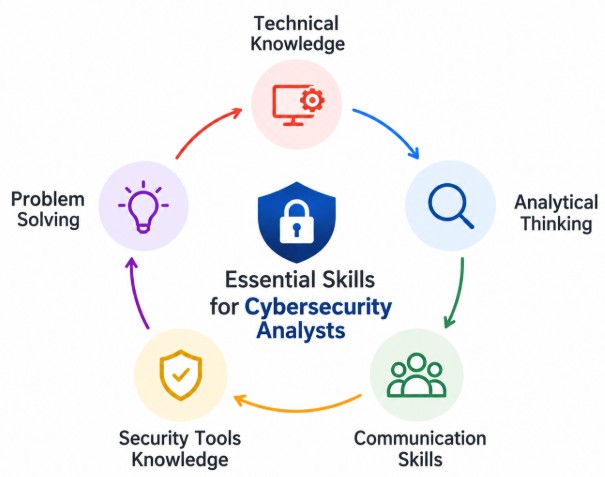
- Network Security: Understanding TCP/IP, DNS, VPNs, firewalls, network protocols, and common attack methods helps analysts identify and investigate suspicious network activity.
- Threat Detection: Analysts should know how to recognize malicious behavior, analyze security alerts, examine indicators of compromise, and identify potential cyber threats.
- Incident Response: Knowledge of incident investigation, threat containment, evidence collection, recovery procedures, and security documentation is important when handling cyber incidents.
- SIEM Knowledge: Familiarity with SIEM platforms helps professionals collect and analyze security logs, correlate events, investigate alerts, and identify unusual activities across IT environments.
- Security Tools: Practical experience with firewalls, endpoint protection, vulnerability scanners, network monitoring tools, and threat intelligence platforms can improve technical capabilities. Learners can strengthen these practical skills through Cybersecurity Training and gain exposure to commonly used security concepts.
- Vulnerability Management: Understanding vulnerability scanning, risk assessment, patch management, and security weaknesses helps analysts reduce exposure across systems and applications.
- Operating Systems: Strong knowledge of Windows and Linux environments enables analysts to examine system activity, investigate suspicious processes, and identify potential security issues.
- Communication Skills: Clear communication, analytical thinking, problem-solving, attention to detail, and effective documentation are essential for explaining security incidents and working with technical teams.
Cybersecurity Tools and Technologies to Learn
- SIEM Platforms: Learn SIEM solutions to collect security logs, correlate events, monitor alerts, investigate suspicious activity, and identify potential threats across enterprise environments.
- Network Security Tools: Gain practical knowledge of firewalls, intrusion detection systems, packet analyzers, and network monitoring tools used to examine and protect network traffic.
- Vulnerability Scanners: Understand tools used to discover security weaknesses, misconfigurations, outdated software, and potential vulnerabilities across systems and applications.
- Cloud Security: Understand basic security concepts across cloud environments, including identity management, access controls, monitoring and data protection. Learning more about Cyber Security in Cloud can help professionals strengthen their knowledge of protecting cloud-based systems and resources.
- Endpoint Security: Learn endpoint protection technologies that help monitor devices, detect malicious activities, investigate suspicious processes, and respond to security incidents.
- Threat Intelligence Platforms: Develop knowledge of threat intelligence tools for researching indicators of compromise, emerging attack techniques, malicious infrastructure, and cybersecurity threats.
- Linux and Windows: Build practical knowledge of both operating systems to analyze system logs, processes, permissions, configurations, and activities during security investigations.
- Security Automation: Learn basic scripting and automation techniques using technologies such as Python or PowerShell to simplify repetitive security monitoring and investigation tasks.

Educational Qualifications for Cybersecurity Analyst Jobs
- Relevant Degree: A degree in Computer Science, Information Technology, Cybersecurity, Computer Engineering, or a related discipline can provide a strong foundation for cybersecurity analyst careers.
- Networking Fundamentals: Academic or practical knowledge of computer networks, protocols, TCP/IP, routing, firewalls, and network security helps candidates understand common security threats.
- Security Knowledge: Candidates should understand cybersecurity fundamentals such as authentication, access control, encryption, malware, phishing, and common attack techniques. Learners can develop these essential concepts through Cybersecurity Training and strengthen their practical security knowledge.
- Operating Systems: Familiarity with Windows and Linux environments helps aspiring analysts understand system configurations, user permissions, processes, and security logs.
- Programming Basics: Basic knowledge of Python, PowerShell, or scripting can help candidates automate security tasks, analyze information, and improve investigation efficiency.
- Academic Projects: Cybersecurity projects involving network monitoring, vulnerability assessment, log analysis, or threat detection can demonstrate practical knowledge to potential employers.
- Industry Certifications: Certifications such as CompTIA Security+, Certified Ethical Hacker (CEH), or other relevant credentials can complement academic qualifications and strengthen a cybersecurity profile.

Get JOB Oriented Cybersecurity Training for Beginners By MNC Experts
- Instructor-led Sessions
- Real-life Case Studies
- Assignments
Experience and Certifications for Cybersecurity Careers
- Entry-Level Experience: Freshers can build practical exposure through internships, security labs, academic projects, and simulated environments involving monitoring, vulnerability assessment, and incident investigation.
- Security Certifications: Certifications such as CompTIA Security+, CEH, CySA+, or other recognized cybersecurity credentials can demonstrate foundational knowledge and improve professional credibility.
- Hands-On Practice: Working with SIEM platforms, network monitoring tools, vulnerability scanners, endpoint security solutions, and security logs helps candidates develop practical investigation skills.
- Professional Development: Combining certifications with hands-on projects, technical training, and workplace experience can help Cybersecurity Analysts explore different Cyber Security Career Path opportunities and progress toward specialized and senior security positions.
- Incident Response Experience: Experience analyzing alerts, identifying indicators of compromise, documenting incidents, and following containment procedures can prepare candidates for real-world security operations.
- Networking Experience: Practical knowledge of network traffic, protocols, firewalls, VPNs, and intrusion detection can help analysts investigate suspicious activities and security events.
- Continuous Learning: Cybersecurity professionals should regularly study emerging threats, vulnerabilities, attack techniques, security technologies, and industry practices to maintain relevant skills.
Want to master cybersecurity? Explore the Cybersecurity Master Program Offered at ACTE Today!
Threat Detection and Incident Response Responsibilities
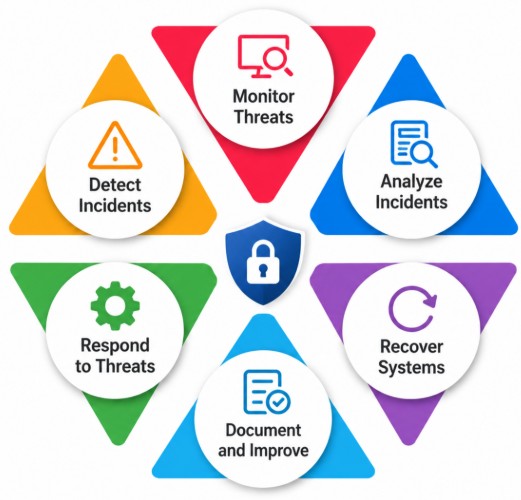
Cybersecurity Analysts play a critical role in identifying, investigating, and responding to security threats within an organization’s IT environment. They continuously monitor security alerts, network traffic, system logs, endpoint activities, and other sources to detect unusual behavior or potential attacks. When a suspicious event is identified, analysts investigate the available information to determine the nature, source, and impact of the incident. They may use SIEM platforms, endpoint detection tools, threat intelligence, and network security technologies to support their investigation.
Industries Hiring Cybersecurity Analysts
- Banking and Finance: Financial organizations hire Cybersecurity Analysts to protect online banking systems, payment platforms, customer information, and sensitive financial transactions from cyber threats.
- Healthcare: Healthcare companies require security professionals to safeguard patient records, medical systems, connected devices, and other sensitive information against unauthorized access.
- Information Technology: IT companies employ Cybersecurity Analysts to monitor enterprise networks, cloud environments, applications, endpoints, and infrastructure for potential security risks.
- Retail and E-Commerce: Retail businesses need cybersecurity expertise to protect customer data, payment systems, websites, mobile applications, and digital platforms from attacks.
- Telecommunications: Telecom organizations rely on security analysts to monitor large-scale networks, communication infrastructure, customer systems, and connected services for suspicious activities.
- Cloud and Technology Services: Cloud-based organizations require security professionals to monitor cloud infrastructure, identities and data while responding to potential incidents. The growing demand across these sectors is also creating diverse Career Opportunities in Cybersecurity for skilled professionals.
- Government: Government agencies require cybersecurity professionals to protect critical infrastructure, public information systems, networks, and sensitive digital services from security threats.
- Manufacturing: Manufacturing companies increasingly need analysts to secure industrial networks, connected systems, operational technology, and business applications against cyber risks.
Want to Learn About Cybersecurity? Explore Our Cybersecurity Interview Questions and Answers Featuring the Most Frequently Asked Questions in Job Interviews.
Cybersecurity Analyst Salary and Career Growth
Cybersecurity Analyst salaries can vary based on experience, technical expertise, location, industry, organization, and job responsibilities. Freshers may begin their careers in entry-level security roles while developing practical knowledge in security monitoring, vulnerability assessment, incident response, and threat detection. As professionals gain experience, they can take on more complex responsibilities and progress toward positions such as Senior Cybersecurity Analyst, Security Engineer, Incident Response Specialist, or Security Consultant. Advanced skills in SIEM platforms, network security, cloud security, threat intelligence, penetration testing, and security automation can improve career opportunities and earning potential. Professionals can also explore Top Cyber Security Jobs to understand different career opportunities available in the industry. Professional certifications and hands-on experience can also strengthen a candidate’s profile and support advancement into specialized positions. Strong analytical abilities, problem-solving skills, and knowledge of emerging cyber threats become increasingly valuable as responsibilities grow. By continuously developing technical capabilities and gaining exposure to real-world security environments, Cybersecurity Analysts can build a stable career path with opportunities for higher-level technical, consulting, and leadership roles.
Future Scope and Demand for Cybersecurity Analysts
The demand for Cybersecurity Analysts is expected to remain strong as organizations continue expanding their digital infrastructure, cloud services, connected devices, and online applications. The increasing frequency and complexity of cyber threats is creating a need for professionals who can monitor systems, detect suspicious activities, investigate incidents, and strengthen security controls. Cybersecurity Analysts can explore opportunities across banking, healthcare, IT, telecommunications, retail, manufacturing, government, and other industries. Professionals can improve their future career prospects by developing expertise in cloud security, threat intelligence, SIEM technologies, incident response, vulnerability management, and security automation. Learners looking to build these practical capabilities can consider Cybersecurity Training to strengthen their understanding of important security concepts and technologies. Knowledge of artificial intelligence and machine learning can also help analysts understand modern approaches to threat detection and security monitoring. With experience, professionals can advance into specialized roles such as Security Engineer, Incident Response Specialist, Threat Intelligence Analyst, Security Consultant, or Security Operations Manager. Continuous learning, practical experience, and relevant certifications can help Cybersecurity Analysts remain competitive and progress toward senior technical and leadership positions.