LMS
LMS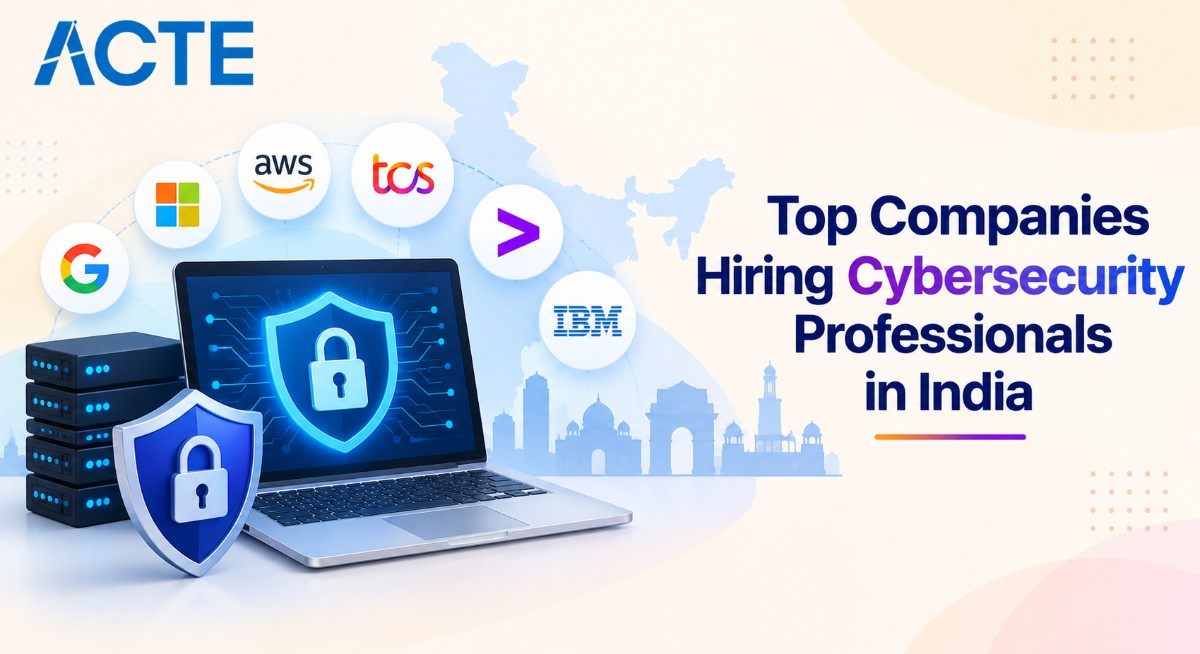
Last updated on 03rd Sep 2026| 7096

- Overview of the Cybersecurity Job Market in India
- Top Companies Hiring Cybersecurity Professionals in India
- Popular Cybersecurity Job Roles in India
- Essential Skills Required by Cybersecurity Employers
- Industries Offering Cybersecurity Career Opportunities
- Qualifications and Certifications for Cybersecurity Jobs
- Experience and Project Requirements for Cybersecurity Careers
- Cybersecurity Salary and Compensation in India
- Career Opportunities with Leading Cybersecurity Companies
- Future Scope of Cybersecurity Careers in India
Overview of the Cybersecurity Job Market in India
India has a growing demand for cybersecurity professionals as businesses increasingly depend on digital platforms, cloud infrastructure, online services, and connected technologies. Organizations across banking, healthcare, IT, e-commerce, telecommunications, manufacturing, and government sectors are strengthening their security teams to protect systems and sensitive information from evolving cyber threats. This growth has created opportunities for professionals in areas such as security operations, threat detection, incident response, vulnerability management, cloud security, and cybersecurity consulting. Leading technology companies, consulting firms, financial institutions, and specialized security organizations regularly seek candidates with practical knowledge of network security, SIEM platforms, ethical hacking, cloud technologies, and security monitoring. Freshers looking to build these practical skills can consider Cybersecurity Training to strengthen their understanding of essential security concepts and technologies. Freshers can enter the field through junior security analyst, SOC analyst, or cybersecurity support roles, while experienced professionals can pursue specialized and leadership positions. Developing relevant technical skills, earning industry certifications, and gaining hands-on experience can help candidates compete for cybersecurity opportunities with leading companies in India.
Top Companies Hiring Cybersecurity Professionals in India
- Tata Consultancy Services: TCS offers cybersecurity opportunities across security operations, risk management, cloud security, threat monitoring, and enterprise protection projects for clients across different industries.
- Infosys: Infosys hires cybersecurity professionals for roles involving security monitoring, vulnerability management, identity protection and digital security solutions. Freshers can also explore the Infosys Cybersecurity Internship for Freshers to understand internship opportunities and career preparation.
- Wipro: Wipro provides opportunities in cybersecurity consulting, SOC operations, threat detection, cloud security, security testing, and risk management across technology projects.
- Accenture: Accenture offers cybersecurity careers involving threat intelligence, incident response, application security, cloud protection, identity management, and security transformation services.
- HCLTech: HCLTech recruits professionals for cybersecurity operations, infrastructure protection, vulnerability assessment, security engineering, and managed security services.
- Tech Mahindra: Tech Mahindra provides cybersecurity roles focused on network protection, security monitoring, risk assessment, cloud security, and incident management for enterprise environments.
- Deloitte: Deloitte offers cybersecurity opportunities in areas such as security consulting, digital risk, cyber assessments, incident response, governance, and regulatory compliance.
- IBM: IBM provides cybersecurity career opportunities involving threat analysis, security operations, cloud security, identity management, automation, and enterprise security technologies.
Get Your Cybersecurity Certification by Learning from Industry-Leading Experts and Advancing Your Career with ACTE’s Cybersecurity Course.
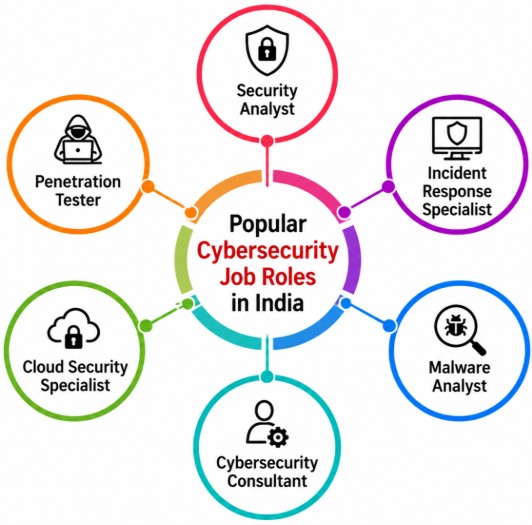
Popular Cybersecurity Job Roles in India
- SOC Analyst: Works within Security Operations Centers to monitor security events, investigate alerts, identify incidents, and support real-time threat detection and response.
- Security Engineer: Designs, implements, and maintains security controls such as firewalls, endpoint protection, access management, and network security solutions.
- Ethical Hacker: Performs authorized security testing to identify vulnerabilities in networks, applications, systems, and infrastructure before attackers can exploit them.
- Incident Response Specialist: Investigates cybersecurity incidents, analyzes affected systems, contains threats, supports recovery, and documents findings for future prevention.
- Cybersecurity Analyst: Monitors security environments, investigates suspicious activities, analyzes alerts, and helps organizations identify and respond to potential cyber threats. Those interested in this role can explore the Cybersecurity Analyst Job Description to understand its responsibilities and career opportunities.
- Cloud Security Engineer: Protects cloud infrastructure, applications, identities, and data by implementing appropriate security controls and monitoring cloud environments.
- Security Consultant: Advises organizations on cybersecurity strategies, risk management, security assessments, compliance requirements, and improvements to existing security frameworks.
- Threat Intelligence Analyst: Researches emerging threats, attacker techniques, vulnerabilities, and indicators of compromise to help organizations strengthen their defensive capabilities.
Essential Skills Required by Cybersecurity Employers
- Network Security: Understanding TCP/IP, DNS, VPNs, firewalls, network protocols, and intrusion detection helps professionals identify and respond to suspicious network activities.
- Threat Detection: Knowledge of security alerts, indicators of compromise, attack patterns, malware, phishing, and threat intelligence is important for identifying potential cybersecurity incidents.
- SIEM Expertise: Familiarity with SIEM platforms helps professionals collect and analyze logs, correlate security events, investigate alerts, and monitor enterprise environments effectively.
- Incident Response: Employers value knowledge of incident investigation, threat containment, evidence analysis, recovery procedures, and documentation for handling security incidents.
- Cloud Security: Understanding cloud platforms, identity management, access controls, secure configurations, and cloud monitoring is increasingly important as organizations adopt cloud infrastructure.
- Communication and Analysis: Strong analytical thinking, problem-solving, attention to detail, teamwork, and communication skills help professionals explain security findings. Candidates can further develop these technical and practical capabilities through Cybersecurity Training and hands-on security exercises.
- Vulnerability Management: Skills in vulnerability scanning, risk assessment, security testing, patch management, and remediation help organizations reduce weaknesses across their IT environments.
- Scripting and Automation: Basic knowledge of Python, PowerShell, or other scripting technologies can help cybersecurity professionals automate repetitive tasks and improve investigation efficiency.

Industries Offering Cybersecurity Career Opportunities
- Banking and Finance: Banks and financial institutions hire cybersecurity professionals to protect digital banking platforms, payment systems, financial data, and customer information from cyber threats.
- Information Technology: IT companies require security specialists to monitor networks, applications, cloud environments, endpoints, and enterprise infrastructure against evolving security risks. Understanding the Importance of Cyber Security can help professionals recognize why organizations across industries continue to strengthen their digital protection strategies.
- Healthcare: Healthcare organizations employ cybersecurity professionals to secure patient records, medical applications, connected devices, and sensitive healthcare information.
- E-Commerce: Online businesses need security experts to protect websites, payment gateways, customer accounts, databases, and digital transactions from unauthorized access and attacks.
- Telecommunications: Telecom companies offer cybersecurity roles focused on protecting communication networks, customer systems, infrastructure, and large-scale digital services.
- Government: Government departments and public organizations require cybersecurity professionals to safeguard critical infrastructure, digital services, networks, and confidential information.
- Manufacturing: Manufacturing companies increasingly hire security professionals to protect industrial systems, operational technology, connected devices, and enterprise networks from cyber risks.
- Consulting and Professional Services: Consulting firms recruit cybersecurity specialists to provide security assessments, risk management, compliance support, incident response, and security transformation services.

Get JOB Oriented Cybersecurity Training for Beginners By MNC Experts
- Instructor-led Sessions
- Real-life Case Studies
- Assignments
Qualifications and Certifications for Cybersecurity Jobs
- Educational Background: A degree in Computer Science, Information Technology, Cybersecurity, Computer Engineering, or a related field can provide a strong foundation for cybersecurity careers.
- Cybersecurity Fundamentals: Candidates should understand networking, operating systems, access control, encryption, vulnerabilities, malware, authentication, and common cyberattack techniques.
- Security Certifications: Certifications such as CompTIA Security+, CEH, CySA+, CISSP, or other relevant credentials can demonstrate cybersecurity knowledge and strengthen a professional profile.
- Practical Training: Hands-on training through security labs, simulations, internships, and technical projects helps candidates apply cybersecurity concepts in realistic environments. Learning the Key Skills Required for Cybersecurity Professionals can also help candidates identify important technical areas to strengthen for cybersecurity careers.
- Networking Knowledge: Understanding TCP/IP, DNS, VPNs, firewalls, routing, and network monitoring is valuable for professionals working in security operations and threat detection.
- Cloud Security Skills: Familiarity with cloud platforms, identity management, access controls, secure configurations, and cloud monitoring can improve eligibility for modern cybersecurity roles.
- Project Portfolio: Projects involving vulnerability assessment, log analysis, network monitoring, incident response, or security testing can demonstrate practical capabilities to potential employers.
Want to master cybersecurity? Explore the Cybersecurity Master Program Offered at ACTE Today!
Experience and Project Requirements for Cybersecurity Careers
- Entry-Level Experience: Freshers can gain relevant exposure through internships, cybersecurity labs, academic assignments, and simulated environments focused on security monitoring and threat analysis.
- Hands-On Projects: Projects involving vulnerability scanning, network monitoring, log analysis, malware investigation, or incident response can demonstrate practical cybersecurity knowledge. Candidates can explore Cybersecurity Project Ideas to build practical skills and strengthen their project portfolio.
- SOC Experience: Familiarity with Security Operations Center activities such as alert monitoring, event analysis, incident documentation, and escalation can prepare candidates for security analyst roles.
- Security Tools: Practical experience with SIEM platforms, vulnerability scanners, firewalls, endpoint protection, and network analysis tools can strengthen a candidate’s technical profile.
- Incident Response: Understanding how to identify, investigate, contain, and document security incidents helps professionals develop skills required for real-world cybersecurity environments.
- Certifications: Relevant industry certifications combined with practical experience can demonstrate technical knowledge and improve opportunities with cybersecurity employers.
- Continuous Learning: Keeping up with emerging threats, vulnerabilities, attack techniques, security technologies, and industry practices is essential for maintaining relevant cybersecurity expertise.
Cybersecurity Salary and Compensation in India
Cybersecurity salaries in India vary according to experience, technical expertise, job role, location, industry, certifications, and organization. Freshers can begin their careers in positions such as Junior Security Analyst, SOC Analyst, or Cybersecurity Support Specialist while developing practical knowledge of threat monitoring, vulnerability management, and incident response. With experience, professionals can move into specialized roles such as Security Engineer, Cloud Security Engineer, Incident Response Specialist, or Security Consultant, which can offer stronger compensation opportunities. Advanced skills in areas such as SIEM, ethical hacking, cloud security, threat intelligence, penetration testing, and security automation can improve career prospects. Professionals looking to strengthen these skills can consider Cybersecurity Training to gain practical knowledge of modern security concepts and technologies. Professional certifications and hands-on project experience can also strengthen a candidate’s profile when applying to leading companies. Professionals who continuously update their technical knowledge and gain experience with modern security technologies can improve their earning potential over time. Career progression, project responsibilities, performance, and specialized expertise are important factors that can influence long-term compensation in the Indian cybersecurity industry.
Want to Learn About Cybersecurity? Explore Our Cybersecurity Interview Questions and Answers Featuring the Most Frequently Asked Questions in Job Interviews.
Career Opportunities with Leading Cybersecurity Companies
Cybersecurity professionals in India can explore diverse career opportunities with leading technology companies, consulting firms, financial organizations, and specialized security service providers. Entry-level candidates may begin their careers as SOC Analysts, Junior Cybersecurity Analysts, Security Operations Associates, or vulnerability management professionals. With practical experience, they can move into specialized positions such as Security Engineer, Cloud Security Specialist, Threat Intelligence Analyst, Incident Response Specialist, or Security Consultant. Those planning long-term growth can explore Career Opportunities in Cybersecurity to understand different roles and professional pathways.
Future Scope of Cybersecurity Careers in India
The future of cybersecurity careers in India remains promising as organizations continue to expand their digital operations, cloud adoption, online services, and connected technologies. Increasing cyber risks are encouraging companies to strengthen their security teams and invest in advanced protection strategies. This creates opportunities for professionals in security operations, threat intelligence, cloud security, application security, vulnerability management, and incident response. Emerging technologies such as artificial intelligence, machine learning, automation, and cloud computing are also influencing the cybersecurity landscape and creating demand for professionals with updated technical expertise. Candidates who want to strengthen their practical knowledge and prepare for emerging security roles can explore Cybersecurity Training to develop skills in modern security technologies and practices. Candidates who develop skills in SIEM platforms, network security, ethical hacking, cloud protection, digital forensics, and security automation can explore a wider range of career paths. With experience, cybersecurity professionals can progress into senior analyst, security engineer, consultant, architect, or security management positions. Continuous learning, industry certifications, practical projects, and awareness of evolving threats can help professionals remain competitive and build long-term careers with leading companies in India.