LMS
LMS
Last updated on 05th Sep 2026| 7117

- Exploring Cybersecurity Career Opportunities at Microsoft
- Security Engineer and Cybersecurity Analyst Job Roles
- Cloud Security and Microsoft Azure Security Careers
- Identity, Access Management, and Zero Trust Security Roles
- Security Operations, Threat Detection, and Incident Response Careers
- Essential Technical Skills for Microsoft Cybersecurity Jobs
- Microsoft Security Tools and Technologies Professionals Should Learn
- Cybersecurity Salary Expectations and Factors Affecting Pay
- Certifications, Projects, and Experience for Microsoft Security Careers
- Career Progression and Long-Term Opportunities in Microsoft Cybersecurity
Exploring Cybersecurity Career Opportunities at Microsoft
Cybersecurity careers at Microsoft offer opportunities to work across cloud security, threat protection, identity management, security operations, application security, incident response, and security engineering. Professionals in these areas help protect users, applications, networks, devices, cloud environments, and organizational data from evolving cyber threats. Depending on the position, responsibilities may include identifying vulnerabilities, investigating suspicious activities, developing security controls, monitoring threats, responding to incidents, and improving security architecture. Candidates can benefit from strong foundations in networking, operating systems, cloud computing, identity and access management, cryptography, scripting, and security principles. Knowledge of Microsoft Azure and Microsoft security technologies can further strengthen career readiness. Practical Cybersecurity Training, certifications, internships, Capture the Flag exercises, and security projects can demonstrate hands-on abilities. Professionals who continuously develop their technical, analytical, communication, and problem-solving skills can explore diverse long-term opportunities across Microsoft’s security ecosystem.
Security Engineer and Cybersecurity Analyst Job Roles
Security Engineers and Cybersecurity Analysts focus on protecting technology environments, although their responsibilities can differ. Security Engineers generally design, implement, configure, and maintain security controls across applications, networks, endpoints, identities, and cloud infrastructure. Their work may include security automation, vulnerability management, access controls, threat protection, and secure architecture. Cybersecurity Analysts typically concentrate on monitoring security events, investigating alerts, analyzing suspicious behavior, identifying threats, and supporting incident response. Analysts should understand SIEM concepts, log analysis, threat intelligence, network security, endpoint protection, and common attack techniques. Both career paths require analytical thinking, troubleshooting, documentation, and collaboration because security professionals frequently work with developers, infrastructure teams, administrators, and other security specialists. Candidates exploring these career paths can also review the Cybersecurity Analyst Job Description to understand common responsibilities, skills, and career expectations. Developing practical skills through security labs, incident-response scenarios, cloud projects, and relevant certifications can help candidates prepare for these positions and eventually progress toward senior security engineering, threat hunting, security architecture, or leadership responsibilities.
Get Your Cybersecurity Certification by Learning from Industry-Leading Experts and Advancing Your Career with ACTE’s Cybersecurity Course.
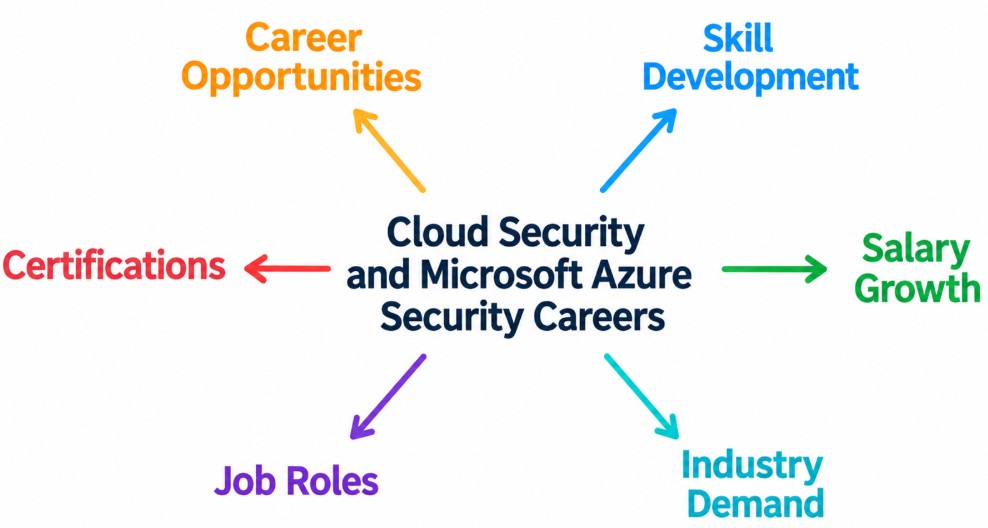
Cloud Security and Microsoft Azure Security Careers
Cloud security professionals focus on protecting applications, workloads, identities, networks, and data hosted in Microsoft Azure and other cloud environments. Their responsibilities can include configuring access controls, securing cloud resources, monitoring suspicious activity, implementing security policies, protecting sensitive information, and responding to cloud-based threats. Candidates should understand Azure architecture, networking, identity management, encryption, logging, vulnerability management, and cloud security principles. Knowledge of Microsoft Entra ID, Microsoft Defender for Cloud, Microsoft Sentinel, Azure Key Vault, network security groups, and related technologies can support cloud security career development.
Identity, Access Management, and Zero Trust Security Roles
- Microsoft Entra ID Security Security professionals working with Microsoft Entra ID manage identities, authentication methods, application access, and security policies. Understanding Conditional Access, multi-factor authentication, and identity protection is valuable for these roles.
- Zero Trust Security Zero Trust follows the principle of continuously verifying access rather than automatically trusting users or devices. Professionals apply identity verification, least-privilege access, device security, monitoring, and risk-based controls.
- Identity and Access Management IAM professionals manage how users, applications, and devices access organizational resources. They focus on authentication, authorization, permissions, identity governance, and access policies to reduce unauthorized access. Professionals can strengthen their understanding of Key Skills for Cybersecurity to build relevant capabilities for identity-focused security roles.
- Privileged Access Management Privileged access professionals protect administrator and other high-level accounts that can access critical systems. They implement stronger authentication, limited permissions, monitoring, approval processes, and privileged identity controls.
- Identity Governance and Compliance Identity governance helps organizations ensure that appropriate users have appropriate access. Professionals can work with access reviews, entitlement management, lifecycle processes, security policies, and compliance requirements.

Security Operations, Threat Detection, and Incident Response Careers
- Threat Detection and Hunting Threat detection professionals identify indicators of malicious activity across networks, endpoints, identities, and cloud environments. Threat hunters proactively investigate unusual patterns that automated security controls may not detect.
- Microsoft Sentinel and SIEM Professionals can use Microsoft Sentinel to collect and analyze security information from multiple sources. SIEM knowledge helps analysts correlate events, investigate alerts, develop detection rules, and support security monitoring.
- Security Operations Center Analyst SOC Analysts monitor security alerts, investigate suspicious activities and identify potential threats. They help organizations detect attacks quickly and determine whether security incidents require further investigation. Candidates can also explore Cybersecurity Project Ideas to develop practical experience relevant to security monitoring and incident investigation.
- Incident Response and Investigation Incident responders investigate cybersecurity events, determine their scope, contain threats, support recovery, and document findings. Knowledge of malware, network traffic, logs, attack techniques, and digital investigation is valuable.
- Security Automation and Threat Intelligence Security professionals use automation and threat intelligence to improve detection and response processes. Understanding scripting, automated workflows, indicators of compromise, and attacker techniques can help security teams respond more efficiently.

Get JOB Oriented Cybersecurity Training for Beginners By MNC Experts
- Instructor-led Sessions
- Real-life Case Studies
- Assignments
Essential Technical Skills for Microsoft Cybersecurity Jobs
| Technical Skill | Description | Key Areas to Learn |
|---|---|---|
| Network Security | Understand how networks operate and how to protect systems from unauthorized access, attacks, and suspicious traffic. | TCP/IP, DNS, VPN, firewalls, network protocols |
| Microsoft Azure Security | Learn how to secure cloud applications, workloads, networks, identities, and data within Microsoft Azure environments. | Azure security, NSGs, Key Vault, Defender for Cloud |
| Identity and Access Management | Develop skills for controlling user and application access while applying strong authentication and least-privilege principles. | Microsoft Entra ID, MFA, Conditional Access, RBAC |
| SIEM and Security Monitoring | Learn to collect, analyze, and correlate security events to identify suspicious activities and potential cybersecurity incidents. | Microsoft Sentinel, log analysis, alerts, KQL |
| Threat Detection | Understand how to recognize malicious behavior, indicators of compromise, vulnerabilities, and common attacker techniques. | Threat hunting, MITRE ATT&CK, IOCs, detection rules |
| Incident Response | Develop skills for investigating, containing, resolving, and documenting cybersecurity incidents while supporting system recovery. | Investigation, containment, remediation, recovery |
| Endpoint Security | Learn techniques for protecting laptops, desktops, servers, and other endpoints against malware and cyberattacks. | Microsoft Defender, EDR, malware protection |
| Vulnerability Management | Identify, evaluate, prioritize, and address security weaknesses before attackers can exploit them. | Vulnerability scanning, CVEs, patching, risk assessment |
| Security Automation | Use scripting and automation to improve repetitive security operations, alert handling, investigation, and response processes. | PowerShell, Python, APIs, security workflows |
| Cloud Security Architecture | Understand how to design secure and resilient cloud environments using appropriate identity, network, data, and monitoring controls. | Zero Trust, encryption, cloud security, architecture |
Want to master cybersecurity? Explore the Cybersecurity Master Program Offered at ACTE Today!
Microsoft Security Tools and Technologies Professionals Should Learn
- Microsoft Sentinel Microsoft Sentinel is a cloud-based SIEM and security operations platform used for collecting, analyzing, and investigating security data. Professionals should learn log management, KQL queries, analytics rules, incident investigation, workbooks, and automation.
- Microsoft Defender XDR Security professionals should understand Microsoft Defender XDR for detecting, investigating, and responding to threats across endpoints, identities, email, applications, and cloud environments. It supports centralized security monitoring and incident response.
- Microsoft Defender for Cloud Defender for Cloud helps organizations improve cloud security posture and protect workloads. Professionals should understand security recommendations, posture management, workload protection, vulnerability assessment, and cloud threat detection.
- PowerShell and KQL PowerShell supports administration and security automation, while Kusto Query Language (KQL) is widely used for querying security and monitoring data. Developing both skills through Cybersecurity Training can improve investigation, threat hunting, reporting, and automation capabilities.
- Microsoft Entra ID Microsoft Entra ID is important for identity and access management. Cybersecurity professionals should learn multi-factor authentication, Conditional Access, identity protection, role-based access, privileged identities, and Zero Trust principles.
- Azure Key Vault Azure Key Vault helps organizations securely manage secrets, encryption keys, and certificates. Professionals should understand access controls, key management, secret protection, encryption, and secure application integration.
Want to Learn About Cybersecurity? Explore Our Cybersecurity Interview Questions and Answers Featuring the Most Frequently Asked Questions in Job Interviews.
Cybersecurity Salary Expectations and Factors Affecting Pay
- Entry-Level Cybersecurity Salary Entry-level compensation varies by location, job level, qualifications, and specific security role. Positions in security operations, analysis, cloud security, or engineering can have different compensation structures and requirements.
- Mid-Level Security Professional Salary Professionals with practical experience in cloud security, incident response, threat detection, IAM, or security engineering may qualify for more advanced positions with greater technical and operational responsibilities.
- Senior Cybersecurity Compensation Senior Security Engineers, Security Architects, and experienced specialists may handle complex security environments, architecture, major incidents, and strategic initiatives. Greater responsibility can contribute to higher compensation.
- Skills That Can Influence Salary Specialized expertise in Azure security, cloud architecture, threat hunting, incident response, identity security, automation, and application security can strengthen career opportunities and earning potential. Understanding the Career Opportunities in Cybersecurity can also help candidates explore different specialization paths.
- Certifications and Experience Relevant security and cloud certifications can demonstrate specialized knowledge, while practical experience shows the ability to apply it. Hands-on expertise with security tools, projects, investigations, and cloud environments can support career progression.
- Location and Job Level Cybersecurity compensation can differ significantly across countries, cities, Microsoft job levels, and business teams. Candidates should evaluate salary information for the specific position and location rather than relying on a single general salary figure.
Certifications, Projects, and Experience for Microsoft Security Careers
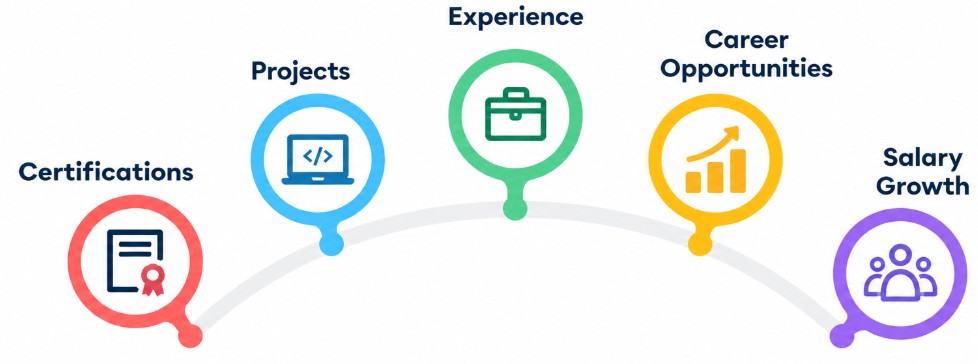
Certifications, practical projects, and hands-on experience can help candidates build a stronger profile for Microsoft cybersecurity careers. Professionals should select certifications based on their target specialization, such as security operations, identity management, Azure security, cloud administration, or cybersecurity architecture. Microsoft security certifications can demonstrate structured knowledge, but they are most valuable when combined with practical experience. Candidates can build projects involving Microsoft Sentinel, Microsoft Defender XDR, Microsoft Defender for Cloud, Microsoft Entra ID, Azure Key Vault, Conditional Access, and security monitoring. Practical labs involving threat detection, KQL queries, incident investigation, identity protection, vulnerability management, and security automation can demonstrate job-ready capabilities.
Career Progression and Long-Term Opportunities in Microsoft Cybersecurity
Microsoft cybersecurity careers can provide multiple progression paths based on a professional’s technical expertise, specialization, experience, and leadership abilities. Early-career professionals may begin in security analysis, security operations, identity management, cloud security, or engineering roles before developing deeper expertise. With experience, professionals can progress toward Senior Security Engineer, Threat Hunter, Incident Response Specialist, Cloud Security Engineer, Identity Security Specialist, Security Consultant, or Security Architect responsibilities. Specialists can deepen their knowledge in areas such as Zero Trust, Microsoft Sentinel, Defender technologies, Microsoft Entra, Azure security, threat intelligence, application security, and security automation. Professionals can strengthen these capabilities through practical Cybersecurity Training, certifications, and hands-on security projects. Professionals who develop broader architecture, business, communication, and stakeholder-management skills can move toward security architecture, technical leadership, engineering management, or cybersecurity strategy roles. Continuous learning is essential because attack techniques, cloud platforms, artificial intelligence, identity threats, and defensive technologies continue to evolve. Combining strong security fundamentals with practical Microsoft security expertise, automation skills, certifications, and real-world problem-solving experience can help professionals create flexible and sustainable long-term cybersecurity career paths.